Library
Browse and search books
311 novels found
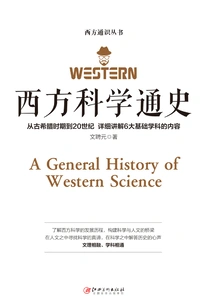
西方科学通史
Wen Pinyuan
The book "General History of Western Science" presents the development process of Western science and the wonderful lives of great scientists in front of readers in six fields: astronomy, mathematics, physics, chemistry, earth science and biology. Let people comprehensively understand our world from astronomy to geography, from macro to micro. In addition, the book also records anecdotes about great scientists, such as Archimedes, Euler, Newton, Darwin, Marie Curie, Einstein and others. The author uses rich subject classics, interesting biographies, and easy-to-understand texts to sort out the subject history of Western science, making the development context of the entire social sciences clearer.
The book "General History of Western Science" presents the development process of Western science and the wonderful lives of great scientists in front of readers in six fields: astronomy, mathematics, physics, chemistry, earth science and biology. Let people comprehensively understand our world from astronomy to geography, from macro to micro. In addition, the book also records anecdotes about great scientists, such as Archimedes, Euler, Newton, Darwin, Marie Curie, Einstein and others. The author uses rich subject classics, interesting biographies, and easy-to-understand texts to sort out the subject history of Western science, making the development context of the entire social sciences clearer.
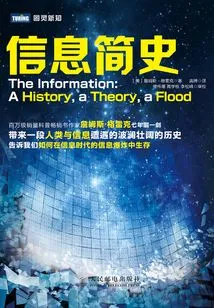
信息简史
(us) James Gleick
Human beings have a long history of encountering information. This history written by James Gleick unexpectedly begins with the African drum language. Before they made the leap directly to mobile phones, indigenous African tribes used drums to convey messages, but how did they do it? Subsequent chapters go on to recount several far-reaching key events in this history, including the invention of writing, Robert Cowdery's first English dictionary, Charles Babbage's difference engine and Ada Byron's program, the Sharpe brothers' signal tower and Morse code. But humans began to consciously understand and utilize information starting from the information theory founded by Claude Shannon in 1948. Shannon's information theory not only promoted the development of information technology, but also triggered the information turn in many disciplines, changing people's understanding of things such as Maxwell's demon, the coding of life, memes, randomness, quantum information theory, etc. Some scientists even believe that the basis of the world is not matter or energy, but information. As physicist John Wheeler said, "Everything starts with bits." Nowadays, information floods us like a torrent, causing us to suffer from information anxiety, information overload, and information fatigue. But looking back at history, this is nothing new, and people have always figured out ways to deal with it. Wikipedia and Google are one of our responses. Whatever your stance on the future of information, one thing is certain: we humans are the creatures of information.
Human beings have a long history of encountering information. This history written by James Gleick unexpectedly begins with the African drum language. Before they made the leap directly to mobile phones, indigenous African tribes used drums to convey messages, but how did they do it? Subsequent chapters go on to recount several far-reaching key events in this history, including the invention of writing, Robert Cowdery's first English dictionary, Charles Babbage's difference engine and Ada Byron's program, the Sharpe brothers' signal tower and Morse code. But humans began to consciously understand and utilize information starting from the information theory founded by Claude Shannon in 1948. Shannon's information theory not only promoted the development of information technology, but also triggered the information turn in many disciplines, changing people's understanding of things such as Maxwell's demon, the coding of life, memes, randomness, quantum information theory, etc. Some scientists even believe that the basis of the world is not matter or energy, but information. As physicist John Wheeler said, "Everything starts with bits." Nowadays, information floods us like a torrent, causing us to suffer from information anxiety, information overload, and information fatigue. But looking back at history, this is nothing new, and people have always figured out ways to deal with it. Wikipedia and Google are one of our responses. Whatever your stance on the future of information, one thing is certain: we humans are the creatures of information.
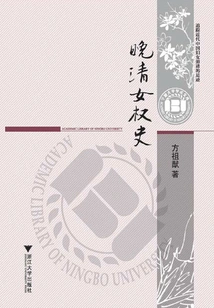
晚清女权史
Fang Zuyou
There are many historical monographs on the modern women's movement at home and abroad, many of which are just compilations of essays and not true historical works written chronologically. Although some of them are historical works, due to the modern era including the Republic of China period, the late Qing Dynasty content has been compressed. Moreover, the women's movement included peasant issues, such as women's issues in the Taiping Heavenly Kingdom and the Boxer Rebellion, as well as female workers' issues among workers, rather than women's rights issues. Therefore, the content of the history of women's rights discussed in these works on the history of the women's movement was further compressed. This book is currently the only monograph on the history of women's rights in the late Qing Dynasty in the world.
There are many historical monographs on the modern women's movement at home and abroad, many of which are just compilations of essays and not true historical works written chronologically. Although some of them are historical works, due to the modern era including the Republic of China period, the late Qing Dynasty content has been compressed. Moreover, the women's movement included peasant issues, such as women's issues in the Taiping Heavenly Kingdom and the Boxer Rebellion, as well as female workers' issues among workers, rather than women's rights issues. Therefore, the content of the history of women's rights discussed in these works on the history of the women's movement was further compressed. This book is currently the only monograph on the history of women's rights in the late Qing Dynasty in the world.
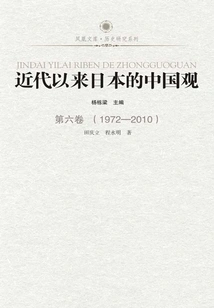
近代以来日本的中国观·第六卷 (1972-2010)
Tian Qingli Cheng Yongming
Taking time as the context, this paper discusses the evolving trends and main features of Japan's understanding of China in various periods from 1971 to 2010. It mainly includes the early days of the resumption of diplomatic relations between China and Japan, the period of advocating "friendship", the end of the Cold War and the new century's various periods of Japanese political circles, economic circles, public opinion circles and Japanese people's understanding of China.
Taking time as the context, this paper discusses the evolving trends and main features of Japan's understanding of China in various periods from 1971 to 2010. It mainly includes the early days of the resumption of diplomatic relations between China and Japan, the period of advocating "friendship", the end of the Cold War and the new century's various periods of Japanese political circles, economic circles, public opinion circles and Japanese people's understanding of China.
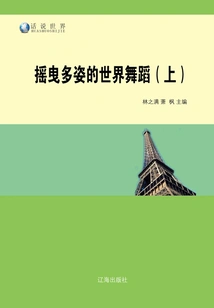
摇曳多姿的世界舞蹈(上)
Lin Zhiman Editor-in-chief Xiao Feng
History is to humanity as a whole what memory is to each of us, explaining what we do now, why we do it, and how we did it in the past. Therefore whoever wants to understand the world must know its history.
History is to humanity as a whole what memory is to each of us, explaining what we do now, why we do it, and how we did it in the past. Therefore whoever wants to understand the world must know its history.
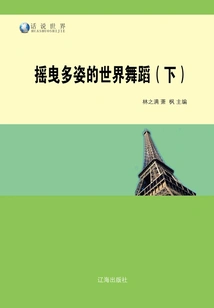
摇曳多姿的世界舞蹈(下)
Lin Zhiman Editor-in-chief Xiao Feng
History is to humanity as a whole what memory is to each of us, explaining what we do now, why we do it, and how we did it in the past. Therefore whoever wants to understand the world must know its history.
History is to humanity as a whole what memory is to each of us, explaining what we do now, why we do it, and how we did it in the past. Therefore whoever wants to understand the world must know its history.
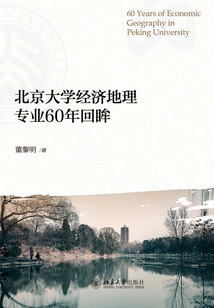
北京大学经济地理专业60年回眸
Dong Liming
This book was written by Professor Dong Liming to celebrate the 65th anniversary of the establishment of the geography discipline of Peking University and the 10th anniversary of the establishment of the School of Urban and Environment of Peking University. Professor Dong Liming graduated from the Department of Geology and Geography of Peking University in 1961, majoring in economic geography and stayed at the school to teach. He has made great contributions to the discipline construction of economic geography at Peking University and has his own unique insights. The economic geography major of Peking University was established in 1955. It has always adhered to the tenet of "paying equal attention to teaching and research, and theory serves practice". Over the past 60 years, it has continued to grow and develop, exploring an interdisciplinary teaching and research path, and building a unique and highly comprehensive economic geography subject group at Peking University. It is well-known at home and abroad. It has an important position and great influence in the field of Chinese geography and urban and rural planning, land science, regional science, landscape architecture and other disciplines.
This book was written by Professor Dong Liming to celebrate the 65th anniversary of the establishment of the geography discipline of Peking University and the 10th anniversary of the establishment of the School of Urban and Environment of Peking University. Professor Dong Liming graduated from the Department of Geology and Geography of Peking University in 1961, majoring in economic geography and stayed at the school to teach. He has made great contributions to the discipline construction of economic geography at Peking University and has his own unique insights. The economic geography major of Peking University was established in 1955. It has always adhered to the tenet of "paying equal attention to teaching and research, and theory serves practice". Over the past 60 years, it has continued to grow and develop, exploring an interdisciplinary teaching and research path, and building a unique and highly comprehensive economic geography subject group at Peking University. It is well-known at home and abroad. It has an important position and great influence in the field of Chinese geography and urban and rural planning, land science, regional science, landscape architecture and other disciplines.
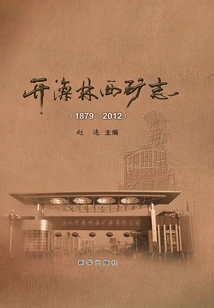
Kailuan Linxi Mine Records
History开滦林西矿志
Zhao Lian
This book comprehensively describes the enterprise development and historical evolution of Kailuan Linxi Mine over more than 130 years from 1879 to 2012. The book aims to faithfully record the development history of the enterprise from all aspects and angles, so that the century-old history of Linxi Mine can be passed down from generation to generation, so as to achieve the purpose of remembering the history, commemorating the sages, inspiring future generations, and educating people. It is a book with the value of historical documents of coal mining profession.
This book comprehensively describes the enterprise development and historical evolution of Kailuan Linxi Mine over more than 130 years from 1879 to 2012. The book aims to faithfully record the development history of the enterprise from all aspects and angles, so that the century-old history of Linxi Mine can be passed down from generation to generation, so as to achieve the purpose of remembering the history, commemorating the sages, inspiring future generations, and educating people. It is a book with the value of historical documents of coal mining profession.
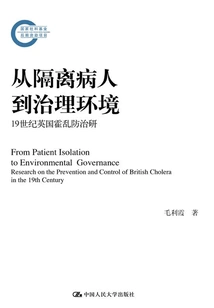
从隔离病人到治理环境
Mao Lixia
Taking the Industrial Revolution as the background, this book uses interdisciplinary research methods to explore the process of cholera prevention and control in the UK from the perspective of environmental history. It focuses on combing the development and evolution of cholera prevention and control in the UK in the 19th century from the traditional isolation of patients to the treatment of "social diseases", and then to the treatment of "environmental diseases". It also analyzes the inherent tensions and gains and losses between this conceptual change and policy evolution, thereby three-dimensionally showing the tortuousness and complexity of cholera prevention and control in the UK. It is believed that the success of cholera prevention and control in the UK is the result of the joint efforts of the government, local cooperation, social support, concept updates, and technological progress. Drawing a picture of the interaction between cholera, humans and the environment in the context of the Industrial Revolution is a useful exploration of disease research paradigms from the perspective of environmental history, and also provides a mirror for the harmonious coexistence of humans and nature.
Taking the Industrial Revolution as the background, this book uses interdisciplinary research methods to explore the process of cholera prevention and control in the UK from the perspective of environmental history. It focuses on combing the development and evolution of cholera prevention and control in the UK in the 19th century from the traditional isolation of patients to the treatment of "social diseases", and then to the treatment of "environmental diseases". It also analyzes the inherent tensions and gains and losses between this conceptual change and policy evolution, thereby three-dimensionally showing the tortuousness and complexity of cholera prevention and control in the UK. It is believed that the success of cholera prevention and control in the UK is the result of the joint efforts of the government, local cooperation, social support, concept updates, and technological progress. Drawing a picture of the interaction between cholera, humans and the environment in the context of the Industrial Revolution is a useful exploration of disease research paradigms from the perspective of environmental history, and also provides a mirror for the harmonious coexistence of humans and nature.
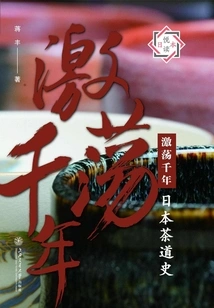
激荡千年:日本茶道史
Jiang Feng
This book introduces many celebrities in the history of Japanese tea ceremony in the form of short stories, introduces the development of tea ceremony in Japan, and the connection between tea ceremony and Japanese economy, politics, and culture. It is suitable for readers who are interested in Japanese culture, Japanese history, and Japanese tea ceremony.
This book introduces many celebrities in the history of Japanese tea ceremony in the form of short stories, introduces the development of tea ceremony in Japan, and the connection between tea ceremony and Japanese economy, politics, and culture. It is suitable for readers who are interested in Japanese culture, Japanese history, and Japanese tea ceremony.
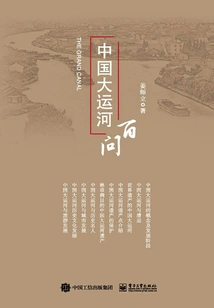
中国大运河百问
Jiang Shili
This book is the first book to comprehensively and systematically introduce the historical and cultural resources with the Grand Canal as the core after the Grand Canal was successfully applied for World Heritage. It comprehensively sorts out and studies the cultural symbols along the canal from the aspects of cultural inheritance, cultural identity and cultural going global. This book is divided into ten chapters: the concept and development stages of China's Grand Canal, China's Grand Canal and water transportation, China's Grand Canal as a world heritage, introduction to China's Grand Canal heritage sites, protection of China's Grand Canal heritage, dazzling array of China's Grand Canal heritage, China's Grand Canal and historical celebrities, China's Grand Canal and urban development, China's Grand Canal history and culture, China's Grand Canal and tourism development.
This book is the first book to comprehensively and systematically introduce the historical and cultural resources with the Grand Canal as the core after the Grand Canal was successfully applied for World Heritage. It comprehensively sorts out and studies the cultural symbols along the canal from the aspects of cultural inheritance, cultural identity and cultural going global. This book is divided into ten chapters: the concept and development stages of China's Grand Canal, China's Grand Canal and water transportation, China's Grand Canal as a world heritage, introduction to China's Grand Canal heritage sites, protection of China's Grand Canal heritage, dazzling array of China's Grand Canal heritage, China's Grand Canal and historical celebrities, China's Grand Canal and urban development, China's Grand Canal history and culture, China's Grand Canal and tourism development.
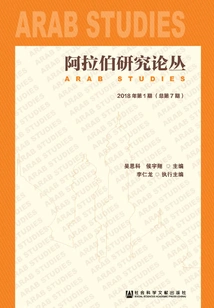
阿拉伯研究论丛(2018年第1期\u002F总第7期)
Hou Yuxiang Editor-in-chief Wu Sike
"Arab Studies Series" is a collection of Arab studies sponsored by the Arab Studies Center of Beijing International Studies University, the regional and national research base of the Ministry of Education. The content focuses on the politics, economy, society, culture and diplomacy of Arab countries. Based on the Arab Studies Forum, this journal selects academic papers published by scholars at the forum and compiles them into a volume to benefit the accumulation of domestic Arab studies.
"Arab Studies Series" is a collection of Arab studies sponsored by the Arab Studies Center of Beijing International Studies University, the regional and national research base of the Ministry of Education. The content focuses on the politics, economy, society, culture and diplomacy of Arab countries. Based on the Arab Studies Forum, this journal selects academic papers published by scholars at the forum and compiles them into a volume to benefit the accumulation of domestic Arab studies.
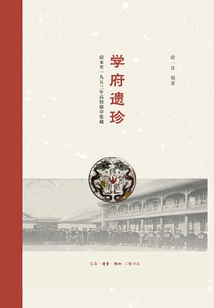
学府遗珍:清末至一九五三年高校徽章集藏
Xu Yiliang
The author selected more than 400 badges with exquisite designs and good condition from the collection of many old school badges and compiled them into this volume. It is not only a summary of his collection achievements in the past twenty years, but also brings readers an artistic feast about university badges. It also provides a simple review and combing of the development history of higher education in China over the past two decades. Many institutions in the book may have never appeared in the eyes of ordinary readers, and have not left detailed records in history. However, through these exquisite badges handed down, we can see the efforts and attempts made by modern Chinese intellectuals and educators in the process of developing higher education. Perhaps these attempts did not succeed in the end, but the wealth they left to future generations is not just a few exquisite badges, but also the deeper meaning contained in this book.
The author selected more than 400 badges with exquisite designs and good condition from the collection of many old school badges and compiled them into this volume. It is not only a summary of his collection achievements in the past twenty years, but also brings readers an artistic feast about university badges. It also provides a simple review and combing of the development history of higher education in China over the past two decades. Many institutions in the book may have never appeared in the eyes of ordinary readers, and have not left detailed records in history. However, through these exquisite badges handed down, we can see the efforts and attempts made by modern Chinese intellectuals and educators in the process of developing higher education. Perhaps these attempts did not succeed in the end, but the wealth they left to future generations is not just a few exquisite badges, but also the deeper meaning contained in this book.
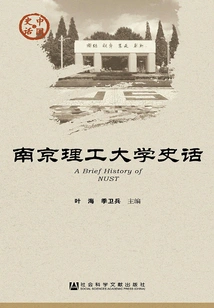
南京理工大学史话(中国史话·文化系列)
Ye Hai Editor-in-chief Ji Weibing
Nanjing University of Science and Technology is a national key university affiliated to the Ministry of Industry and Information Technology of the People's Republic of China. It was formed from the Chinese People's Liberation Army Military Engineering Institute (referred to as "Harbin Military Engineering"), which was founded in 1953 as the highest institution of military science and technology in New China. It has gone through several development stages of Artillery Engineering Institute, East China Institute of Engineering, and East China Institute of Technology, and was renamed in 1993. This book outlines the school's basic situation, historical evolution, cultural accumulation, major events, celebrities and scholars, development vision, etc. It takes the school's development history as the main line and highlights the glorious traditions and school achievements.
Nanjing University of Science and Technology is a national key university affiliated to the Ministry of Industry and Information Technology of the People's Republic of China. It was formed from the Chinese People's Liberation Army Military Engineering Institute (referred to as "Harbin Military Engineering"), which was founded in 1953 as the highest institution of military science and technology in New China. It has gone through several development stages of Artillery Engineering Institute, East China Institute of Engineering, and East China Institute of Technology, and was renamed in 1993. This book outlines the school's basic situation, historical evolution, cultural accumulation, major events, celebrities and scholars, development vision, etc. It takes the school's development history as the main line and highlights the glorious traditions and school achievements.
Research on "problematic Emperors" in the Ming Dynasty: an Investigation Based on Social Groups
History明代 “问题皇帝” 研究:一项基于社会类群的考察
Wu Qi Zhao Xiuli
This book attempts to analyze and explain what kind of group characteristics the emperors of the Ming Dynasty had? Why were the emperors in the middle and late Ming Dynasties incompetent? Why was the political operation of the Ming Dynasty still relatively stable despite the emperor's "role anomie"? What is the connection between the "problematic emperor" of the Ming Dynasty and the movements and trends of indulgence, money worship, hedonism, and the pursuit of individual liberation that were prevalent in society at that time? What role did the "problem emperor" play in the late Ming Dynasty? What is its relationship with social changes (especially changes in scholars)? How should we evaluate what scholars call a "highly developed civil service system"? How to evaluate the emperor's personal perceptual knowledge and the rational constraints of institutional norms? Is power dominating rationality, or is rationality constraining power?
This book attempts to analyze and explain what kind of group characteristics the emperors of the Ming Dynasty had? Why were the emperors in the middle and late Ming Dynasties incompetent? Why was the political operation of the Ming Dynasty still relatively stable despite the emperor's "role anomie"? What is the connection between the "problematic emperor" of the Ming Dynasty and the movements and trends of indulgence, money worship, hedonism, and the pursuit of individual liberation that were prevalent in society at that time? What role did the "problem emperor" play in the late Ming Dynasty? What is its relationship with social changes (especially changes in scholars)? How should we evaluate what scholars call a "highly developed civil service system"? How to evaluate the emperor's personal perceptual knowledge and the rational constraints of institutional norms? Is power dominating rationality, or is rationality constraining power?
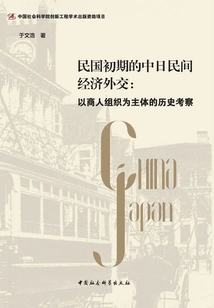
民国初期的中日民间经济外交:以商人组织为主体的历史考察
Yu Wenhao
This book defines the concept of non-governmental economic diplomacy on the premise of sorting out the background and development stages of the consciousness of non-governmental economic diplomacy. From the perspective of non-governmental economic diplomacy, with time as the warp and major historical events as the latitude, Sino-Japanese non-governmental economic diplomacy activities with business organizations as the main body are examined in the context of the domestic and international political and economic environments of China and Japan. Comprehensive use of theories and methods from various disciplines such as history, comparative economics, and political science, and through detailed comparison and textual research of historical materials between China and Japan, it focuses on reconstructing the historical process of the occurrence, development, and evolution of non-governmental economic diplomacy between China and Japan, as well as its relationship with the political diplomacy and mutual economic interests of the two countries.
This book defines the concept of non-governmental economic diplomacy on the premise of sorting out the background and development stages of the consciousness of non-governmental economic diplomacy. From the perspective of non-governmental economic diplomacy, with time as the warp and major historical events as the latitude, Sino-Japanese non-governmental economic diplomacy activities with business organizations as the main body are examined in the context of the domestic and international political and economic environments of China and Japan. Comprehensive use of theories and methods from various disciplines such as history, comparative economics, and political science, and through detailed comparison and textual research of historical materials between China and Japan, it focuses on reconstructing the historical process of the occurrence, development, and evolution of non-governmental economic diplomacy between China and Japan, as well as its relationship with the political diplomacy and mutual economic interests of the two countries.
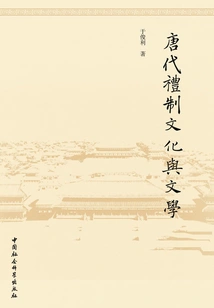
唐代礼制文化与文学
Yu Junli
This book starts from the description of the ritual system, which is the core content of the political system of the Tang Dynasty. With rich historical materials and detailed textual research analysis, it goes deep into the spiritual world of literati and the resulting literary field, and more clearly presents the complex interaction of ritual, literati, and literature in the historical context. From the perspective of the union of culture and literature, the author also conducts a detailed analysis and detailed investigation of the historical origins of the Tang Dynasty rituals such as suburban sacrifice, enshrinement, elegy, congratulations, and hunting rites under the Five Rites System of Ji, Bin, Jun, Jia, and Ou, as well as the evolutionary trends of related literary phenomena. He pays attention to the inherent rationale and multi-dimensional value of literary development in the context of ritual culture. Taking Du Fu's "Three Great Rituals" and Dunhuang calligraphy "Gantang Collection" as cases, he gave a unique interpretation of the ritual system embodied in the literature of the Tang Dynasty and the ritual system as literature. This book combines macroscopic understanding with microscopic empirical evidence, and pays equal attention to reflection on academic history and problem awareness. It has both an overall investigation of the relationship between rituals and literature in the Tang Dynasty, and a series of special studies from the perspective of the Five Rites. This opens a chapter on the ritual system for the study of Tang Dynasty literature, and adds new examples to the research fields of Tang Dynasty institutions and literature, and Tang Dynasty culture and literature.
This book starts from the description of the ritual system, which is the core content of the political system of the Tang Dynasty. With rich historical materials and detailed textual research analysis, it goes deep into the spiritual world of literati and the resulting literary field, and more clearly presents the complex interaction of ritual, literati, and literature in the historical context. From the perspective of the union of culture and literature, the author also conducts a detailed analysis and detailed investigation of the historical origins of the Tang Dynasty rituals such as suburban sacrifice, enshrinement, elegy, congratulations, and hunting rites under the Five Rites System of Ji, Bin, Jun, Jia, and Ou, as well as the evolutionary trends of related literary phenomena. He pays attention to the inherent rationale and multi-dimensional value of literary development in the context of ritual culture. Taking Du Fu's "Three Great Rituals" and Dunhuang calligraphy "Gantang Collection" as cases, he gave a unique interpretation of the ritual system embodied in the literature of the Tang Dynasty and the ritual system as literature. This book combines macroscopic understanding with microscopic empirical evidence, and pays equal attention to reflection on academic history and problem awareness. It has both an overall investigation of the relationship between rituals and literature in the Tang Dynasty, and a series of special studies from the perspective of the Five Rites. This opens a chapter on the ritual system for the study of Tang Dynasty literature, and adds new examples to the research fields of Tang Dynasty institutions and literature, and Tang Dynasty culture and literature.
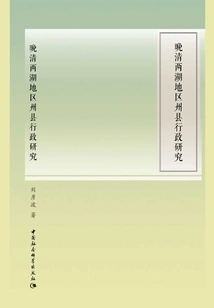
晚清两湖地区州县行政研究
Liu Yanbo
This book takes state and county administration in the late Qing Dynasty as the research object, uses the theories of sociology, political science, and psychology as analytical tools, and uses the functions of state and county governments as the basic framework and main line to analyze the administrative operations and evolution of states and counties in the two lakes areas in the late Qing Dynasty, including changes in judicial functions, the evolution of social security management models, etc. Clarify the specific circumstances of state and county changes in the two lakes areas and their impact on state and county administration, and provide a reasonable explanation.
This book takes state and county administration in the late Qing Dynasty as the research object, uses the theories of sociology, political science, and psychology as analytical tools, and uses the functions of state and county governments as the basic framework and main line to analyze the administrative operations and evolution of states and counties in the two lakes areas in the late Qing Dynasty, including changes in judicial functions, the evolution of social security management models, etc. Clarify the specific circumstances of state and county changes in the two lakes areas and their impact on state and county administration, and provide a reasonable explanation.
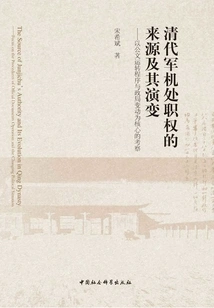
清代军机处职权的来源及其演变:以公文运转程序与政局变动为核心的考察
Song Xibin
This book uses a large number of official documents from the Qing Dynasty to provide a comprehensive review of the origin and evolution of the powers of the Military Aircraft Department, the central decision-making body of the Qing Dynasty. The book takes the changes in the official document operation procedures of the Qing court as the starting point, combines the evolution of the political situation and personnel changes in the Qing Dynasty, comprehensively examines the development of the Military Aircraft Department's powers, and makes an appropriate analysis of the status and role of the Military Aircraft Department in the central decision-making process of the Qing court in different historical periods. Through a comprehensive investigation of the functions and powers of the Military Aircraft Department, the book draws conclusions: (1) The Military Aircraft Department expanded its functions and powers from the original secret office of northwest military affairs to all confidential government affairs of the Qing court by assisting the emperor in handling memorials and title books, thereby establishing the Military Aircraft Department's position in the central decision-making system. (2) Most of the powers of the Military Aircraft Department are inherited from the Cabinet and the Council of Ministers. The power of the Military Aircraft Department to assist the emperor in handling this chapter was inherited from the Cabinet of Great Scholars, and the power of the Military Aircraft Minister to participate in the confidential government affairs of the Qing court was inherited from the Council of Imperial Ministers. (3) The exercise of the powers of the Military Aircraft Department was mostly affected by factors such as changes in the political situation and personnel changes. This was especially obvious in the late Qing Dynasty. This book's comprehensive study of the functions and powers of the Military Aircraft Department not only advances the academic community's understanding of the Military Aircraft Department itself, but is also of great significance to understanding the political activities of the Qing Dynasty.
This book uses a large number of official documents from the Qing Dynasty to provide a comprehensive review of the origin and evolution of the powers of the Military Aircraft Department, the central decision-making body of the Qing Dynasty. The book takes the changes in the official document operation procedures of the Qing court as the starting point, combines the evolution of the political situation and personnel changes in the Qing Dynasty, comprehensively examines the development of the Military Aircraft Department's powers, and makes an appropriate analysis of the status and role of the Military Aircraft Department in the central decision-making process of the Qing court in different historical periods. Through a comprehensive investigation of the functions and powers of the Military Aircraft Department, the book draws conclusions: (1) The Military Aircraft Department expanded its functions and powers from the original secret office of northwest military affairs to all confidential government affairs of the Qing court by assisting the emperor in handling memorials and title books, thereby establishing the Military Aircraft Department's position in the central decision-making system. (2) Most of the powers of the Military Aircraft Department are inherited from the Cabinet and the Council of Ministers. The power of the Military Aircraft Department to assist the emperor in handling this chapter was inherited from the Cabinet of Great Scholars, and the power of the Military Aircraft Minister to participate in the confidential government affairs of the Qing court was inherited from the Council of Imperial Ministers. (3) The exercise of the powers of the Military Aircraft Department was mostly affected by factors such as changes in the political situation and personnel changes. This was especially obvious in the late Qing Dynasty. This book's comprehensive study of the functions and powers of the Military Aircraft Department not only advances the academic community's understanding of the Military Aircraft Department itself, but is also of great significance to understanding the political activities of the Qing Dynasty.
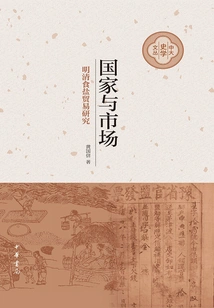
国家与市场:明清食盐贸易研究(中大史学文丛 )
Huang Guoxin
In the traditional Chinese period, property rights entities were dispersed. In this context, the dynasty salt trade reflected a high degree of market dependence on the one hand, and strong administrative control on the other. This can be regarded as one of the important entry points for understanding the traditional Chinese economy. This book, with approximately 258,000 words, is included in the "Sun Yat-sen University Historiography Series". The author is Professor Huang Guoxin from the Department of History, Sun Yat-sen University. The book is divided into six chapters. It deeply studies the salt trade issues in the Ming and Qing Dynasties from the perspectives of salt monopoly, national finance, salt smuggling, and official salt trade. On the basis of previous research, it focuses on the regional research perspective and the significance of salt trade in the dynasty's fiscal revenue. It examines the relationship between the market, society, and administrative operating mechanisms during the Ming and Qing Dynasties. It is expected to help the academic community understand the characteristics of the traditional Chinese economy.
In the traditional Chinese period, property rights entities were dispersed. In this context, the dynasty salt trade reflected a high degree of market dependence on the one hand, and strong administrative control on the other. This can be regarded as one of the important entry points for understanding the traditional Chinese economy. This book, with approximately 258,000 words, is included in the "Sun Yat-sen University Historiography Series". The author is Professor Huang Guoxin from the Department of History, Sun Yat-sen University. The book is divided into six chapters. It deeply studies the salt trade issues in the Ming and Qing Dynasties from the perspectives of salt monopoly, national finance, salt smuggling, and official salt trade. On the basis of previous research, it focuses on the regional research perspective and the significance of salt trade in the dynasty's fiscal revenue. It examines the relationship between the market, society, and administrative operating mechanisms during the Ming and Qing Dynasties. It is expected to help the academic community understand the characteristics of the traditional Chinese economy.
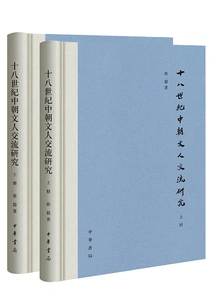
Research on Literary Exchanges between China and North Korea in the Eighteenth Century (full Volume)
History十八世纪中朝文人交流研究(全册)
Xu Yi
The exchanges between Chinese and Korean literati in the 18th century were particularly prominent in the entire history of academic exchanges between China and South Korea due to their richness and uniqueness and their pioneering contributions in many aspects of cultural exchanges between the two countries. Based on the careful comparison and arrangement of "fragmented" materials, this book outlines the overall picture of some important exchanges between Chinese and Korean literati in the 18th century, such as literary criticism, prefaces, inscriptions, and postscripts, etc., And analyzes their characteristics and significance in detail. It contains rich connotations such as periods, spaces, characters, families, and contents, and displays the historical reality with long series, event tables, and materials. It not only fills the gap in the current academic exchanges between China and South Korea in the Qing Dynasty based on the comprehensive analysis of previous achievements, but also provides exploratory results and research paradigms on why the excavation and use of overseas Chinese historical materials to construct the history of East Asian civilization exchanges.
The exchanges between Chinese and Korean literati in the 18th century were particularly prominent in the entire history of academic exchanges between China and South Korea due to their richness and uniqueness and their pioneering contributions in many aspects of cultural exchanges between the two countries. Based on the careful comparison and arrangement of "fragmented" materials, this book outlines the overall picture of some important exchanges between Chinese and Korean literati in the 18th century, such as literary criticism, prefaces, inscriptions, and postscripts, etc., And analyzes their characteristics and significance in detail. It contains rich connotations such as periods, spaces, characters, families, and contents, and displays the historical reality with long series, event tables, and materials. It not only fills the gap in the current academic exchanges between China and South Korea in the Qing Dynasty based on the comprehensive analysis of previous achievements, but also provides exploratory results and research paradigms on why the excavation and use of overseas Chinese historical materials to construct the history of East Asian civilization exchanges.
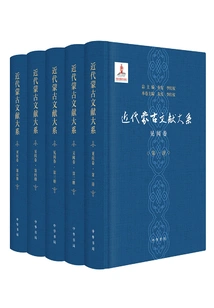
近代蒙古文献大系·见闻卷(全册)
Li Hongquan Editor-in-chief Zhu Xian
"Comprehensive Series of Modern Mongolian Documents" is a historical material series that categorizes and edits Chinese documents about Mongolia that were scattered in various periodicals and magazines, newspaper abstracts, memoirs and various government gazettes from 1840 to 1949. The content of this book covers the politics, economy, military, culture, education, religion, history and many other aspects of modern Mongolia. It comprehensively reflects the history, culture, social and economic changes and development trends of Mongolia and even northern China in modern times. It has strong ethnic and regional characteristics and is rich in information. It is a large and powerful tool and can provide detailed information for the study of modern Chinese history, modern frontier history, Mongolian history, etc. It can also provide basic documentary support and enhance background understanding for the establishment of "amity, sincerity, mutual benefit and tolerance" relations with neighboring countries and the construction of the "One Belt, One Road" initiative, which is of considerable practical significance. The volume of experiences is about 300,000 words, covering the political, economic, social, cultural and other aspects of Mongolia in the corresponding period. The travel notes included are rich in genres, with field visits and classics and documents corroborating each other. The writing is elegant, real and vivid.
"Comprehensive Series of Modern Mongolian Documents" is a historical material series that categorizes and edits Chinese documents about Mongolia that were scattered in various periodicals and magazines, newspaper abstracts, memoirs and various government gazettes from 1840 to 1949. The content of this book covers the politics, economy, military, culture, education, religion, history and many other aspects of modern Mongolia. It comprehensively reflects the history, culture, social and economic changes and development trends of Mongolia and even northern China in modern times. It has strong ethnic and regional characteristics and is rich in information. It is a large and powerful tool and can provide detailed information for the study of modern Chinese history, modern frontier history, Mongolian history, etc. It can also provide basic documentary support and enhance background understanding for the establishment of "amity, sincerity, mutual benefit and tolerance" relations with neighboring countries and the construction of the "One Belt, One Road" initiative, which is of considerable practical significance. The volume of experiences is about 300,000 words, covering the political, economic, social, cultural and other aspects of Mongolia in the corresponding period. The travel notes included are rich in genres, with field visits and classics and documents corroborating each other. The writing is elegant, real and vivid.
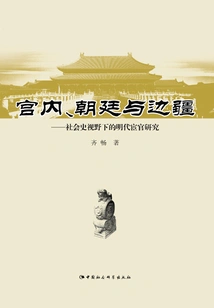
宫内、朝廷与边疆:社会史视野下的明代宦官研究
Qi Chang
Based on the overall study of the eunuch group in the Ming Dynasty, this book conducts case analysis of typical eunuchs. By comparing folk field historical materials such as eunuch epitaphs and inscriptions with official and private texts in the Ming Dynasty, we shift our focus from the political conspiracies of individual eunuchs to the personal life histories of ordinary eunuchs. We can find that the image of eunuchs we construct using social historical materials as clues is very different from previous understandings. Through the cases of eunuchs such as the Liu brothers, the Qian brothers, Gao Feng, Mai Fu, and Chen Ju, this paper examines the deeds of ethnic minority eunuchs in the Ming Dynasty and their role in the national frontier strategy in the early Ming Dynasty, the family profile of the eunuchs in the Ming Dynasty, the political situation and ecology of the eunuchs in the Jiajing Dynasty, and the complex relationship between eunuchs and the so-called Qing Dynasty courtiers, thereby reflecting on the past simple divisions of the so-called "Donglin" and "eunuch party" in the late Ming Dynasty. Eunuchs entered the political arena of the Ming Empire in a different way than courtiers. They played an important role in the Ming Dynasty's inner court, the government and the public, and even the frontiers, and were responsible for the rise and prominence of their entire family. However, precisely because of their status as eunuchs, the families who started their careers had their families' historical memories intentionally or unintentionally erased.
Based on the overall study of the eunuch group in the Ming Dynasty, this book conducts case analysis of typical eunuchs. By comparing folk field historical materials such as eunuch epitaphs and inscriptions with official and private texts in the Ming Dynasty, we shift our focus from the political conspiracies of individual eunuchs to the personal life histories of ordinary eunuchs. We can find that the image of eunuchs we construct using social historical materials as clues is very different from previous understandings. Through the cases of eunuchs such as the Liu brothers, the Qian brothers, Gao Feng, Mai Fu, and Chen Ju, this paper examines the deeds of ethnic minority eunuchs in the Ming Dynasty and their role in the national frontier strategy in the early Ming Dynasty, the family profile of the eunuchs in the Ming Dynasty, the political situation and ecology of the eunuchs in the Jiajing Dynasty, and the complex relationship between eunuchs and the so-called Qing Dynasty courtiers, thereby reflecting on the past simple divisions of the so-called "Donglin" and "eunuch party" in the late Ming Dynasty. Eunuchs entered the political arena of the Ming Empire in a different way than courtiers. They played an important role in the Ming Dynasty's inner court, the government and the public, and even the frontiers, and were responsible for the rise and prominence of their entire family. However, precisely because of their status as eunuchs, the families who started their careers had their families' historical memories intentionally or unintentionally erased.
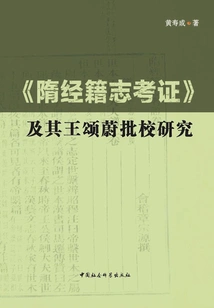
Research on "textual Research on Classical Records of Sui Dynasty" and Its Criticism by Wang Songwei
History《隋经籍志考证》及其王颂蔚批校研究
Huang Shoucheng
"Sui Shu Jing Ji Zhi" consists of four volumes. It is the second official historical Jing Ji Ji after "Han Shu Jing Ji Zhi". It is a summary of the academic history of nearly six hundred years from the Eastern Han Dynasty to the Sui Dynasty. During this period, the study of bibliography has made great progress, especially the separation of historical books from Jing Ji Ji, basically forming a four-part bibliography. Therefore, later generations of scholars also paid special attention to this "Sui Chronicles". Since the Qing Dynasty, some scholars have done a lot of supplementary textual research on "Sui Shu Jing Ji Zhi". Among them, Zhang Zongyuan's "Sui Jing Ji Zhi Textual Research" is one of the most famous works. Wang Songwei was a scholar from Suzhou in the late Qing Dynasty, and his review of "A Textual Research on Sui Jing Ji Zhi" added a lot to this book. Therefore, this book also makes some analysis of Wang Songwei's revised edition. The whole book is divided into three parts: inner chapter, outer chapter and supplementary chapter, which examines and analyzes the above issues.
"Sui Shu Jing Ji Zhi" consists of four volumes. It is the second official historical Jing Ji Ji after "Han Shu Jing Ji Zhi". It is a summary of the academic history of nearly six hundred years from the Eastern Han Dynasty to the Sui Dynasty. During this period, the study of bibliography has made great progress, especially the separation of historical books from Jing Ji Ji, basically forming a four-part bibliography. Therefore, later generations of scholars also paid special attention to this "Sui Chronicles". Since the Qing Dynasty, some scholars have done a lot of supplementary textual research on "Sui Shu Jing Ji Zhi". Among them, Zhang Zongyuan's "Sui Jing Ji Zhi Textual Research" is one of the most famous works. Wang Songwei was a scholar from Suzhou in the late Qing Dynasty, and his review of "A Textual Research on Sui Jing Ji Zhi" added a lot to this book. Therefore, this book also makes some analysis of Wang Songwei's revised edition. The whole book is divided into three parts: inner chapter, outer chapter and supplementary chapter, which examines and analyzes the above issues.
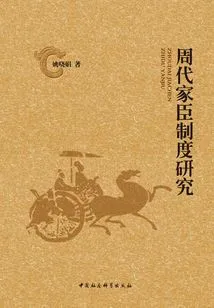
周代家臣制度研究
Yao Xiaojuan
Retainers, as a special group, are an important part of family politics. The retainer system of the Zhou Dynasty is closely related to the patriarchal system, the feudal system and the fief system, and together constitutes an important system with distinctive political characteristics of the Zhou Dynasty. This book takes the private retainers of the officials of the Zhou Dynasty as the research object, uses the vertical history of the emergence and development of retainers as a clue, and also pays attention to the new changes in the retainer system in different periods. With "change" as the core, it strives to comprehensively sort out and systematically explain the dynamic development process of the retainer system in the Zhou Dynasty.
Retainers, as a special group, are an important part of family politics. The retainer system of the Zhou Dynasty is closely related to the patriarchal system, the feudal system and the fief system, and together constitutes an important system with distinctive political characteristics of the Zhou Dynasty. This book takes the private retainers of the officials of the Zhou Dynasty as the research object, uses the vertical history of the emergence and development of retainers as a clue, and also pays attention to the new changes in the retainer system in different periods. With "change" as the core, it strives to comprehensively sort out and systematically explain the dynamic development process of the retainer system in the Zhou Dynasty.
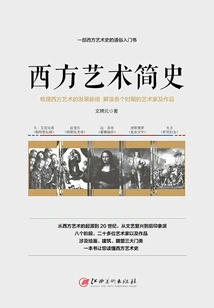
西方艺术简史
Wen Pinyuan
The book "A Brief History of Western Art" uses concise language to tell the essence of Western art knowledge in a popular way. The book introduces the architecture, sculptures, paintings and crafts of ancient Greece, Rome, the Middle Ages and the Renaissance. It uses a story-telling method and combines history, philosophy, literature, geography, science and other factors to trace the development of western art.
The book "A Brief History of Western Art" uses concise language to tell the essence of Western art knowledge in a popular way. The book introduces the architecture, sculptures, paintings and crafts of ancient Greece, Rome, the Middle Ages and the Renaissance. It uses a story-telling method and combines history, philosophy, literature, geography, science and other factors to trace the development of western art.
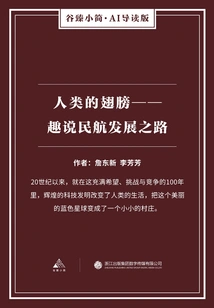
人类的翅膀:趣说民航发展之路(谷臻小简·AI导读版)
Zhan Dongxin Li Fangfang
Since the 20th century, in this 100 years full of hope, challenge and competition, brilliant scientific and technological inventions have changed human life and turned this beautiful blue planet into a small village.
Since the 20th century, in this 100 years full of hope, challenge and competition, brilliant scientific and technological inventions have changed human life and turned this beautiful blue planet into a small village.
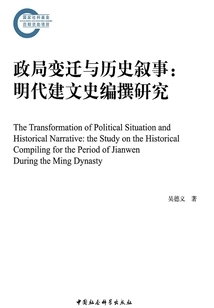
政局变迁与历史叙事: 明代建文史编撰研究
Wu Deyi
The study of Jianwen history is an important discipline in the history of Ming Dynasty. Due to the complexity of Jianwen history, a large number of Jianwen historical books appeared after the mid-Ming Dynasty, forming a unique Jianwen historiography. Based on a large number of historical books and historical materials of the Ming Dynasty, this book explains the evolution of Jianwen's calligraphy, Jianwen's historical views, Jianwen's historical construction, and the legend of Jianwen's subjugation in the Ming Dynasty. It reveals the development process of Jianwen's historiography from confinement to openness, from distortion to truth, from prejudice to objectivity, and from poverty to fullness. This book draws on a wide range of materials and conducts in-depth research and historical examination of important historical books and materials. It focuses on exploring the close connection between Ming Dynasty society and the development of Jianwen history. This will not only help consolidate the research foundation of Jianwen history and promote the study of Jianwen history, but also provide a more in-depth grasp of the political, economic, and cultural development context of the Ming Dynasty from a unique perspective.
The study of Jianwen history is an important discipline in the history of Ming Dynasty. Due to the complexity of Jianwen history, a large number of Jianwen historical books appeared after the mid-Ming Dynasty, forming a unique Jianwen historiography. Based on a large number of historical books and historical materials of the Ming Dynasty, this book explains the evolution of Jianwen's calligraphy, Jianwen's historical views, Jianwen's historical construction, and the legend of Jianwen's subjugation in the Ming Dynasty. It reveals the development process of Jianwen's historiography from confinement to openness, from distortion to truth, from prejudice to objectivity, and from poverty to fullness. This book draws on a wide range of materials and conducts in-depth research and historical examination of important historical books and materials. It focuses on exploring the close connection between Ming Dynasty society and the development of Jianwen history. This will not only help consolidate the research foundation of Jianwen history and promote the study of Jianwen history, but also provide a more in-depth grasp of the political, economic, and cultural development context of the Ming Dynasty from a unique perspective.
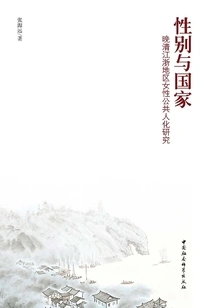
性别与国家:晚清江浙地区女性公共人化研究
Zhang Yuanyuan
Before the "transitional era", the living conditions of women in the Qing Dynasty were mostly small-footed and illiterate. They basically lived in a "shielded living area composed of family and friends" - that is, the private sphere, with almost no participation in public life. It was not until modern times that China's special historical changes brought opportunities for changes in women's status. This book combines regional history (Jiangsu and Zhejiang regions) with social history (gender history), introduces a new imported concept - "public person", and uses this perspective to conduct a considerable degree of research on women's education, non-foot-binding and other aspects involved in the women's liberation movement in the Jiangnan region of the late Qing Dynasty, as well as the thoughts of women's liberation, the relationship with the country, etc.
Before the "transitional era", the living conditions of women in the Qing Dynasty were mostly small-footed and illiterate. They basically lived in a "shielded living area composed of family and friends" - that is, the private sphere, with almost no participation in public life. It was not until modern times that China's special historical changes brought opportunities for changes in women's status. This book combines regional history (Jiangsu and Zhejiang regions) with social history (gender history), introduces a new imported concept - "public person", and uses this perspective to conduct a considerable degree of research on women's education, non-foot-binding and other aspects involved in the women's liberation movement in the Jiangnan region of the late Qing Dynasty, as well as the thoughts of women's liberation, the relationship with the country, etc.
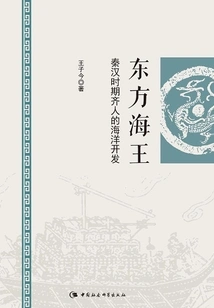
Oriental Neptune
History东方海王
Wang Zijin
This book is the final result of the key project of the Qilu Cultural Research Center of Shandong Normal University, a key research base for humanities and social sciences of the Ministry of Education, "Ocean Development of Qi People in the Qin and Han Dynasties", and a phased result of the key project of the National Social Science Fund "Ocean Exploration and Early Oceanographic Research in the Qin and Han Dynasties". It is the first academic monograph to conduct a serious historical investigation on this academic topic. The author pays attention to the combination of documentary and archaeological data, and provides a comprehensive and detailed explanation of the Qi people's achievements in ocean exploration and development during the Qin and Han Dynasties, and conducts historical analysis from the perspectives of economic history, cultural history, and social life history. Some discussions are also of significance for advancing the academic summary of the history of world oceanography.
This book is the final result of the key project of the Qilu Cultural Research Center of Shandong Normal University, a key research base for humanities and social sciences of the Ministry of Education, "Ocean Development of Qi People in the Qin and Han Dynasties", and a phased result of the key project of the National Social Science Fund "Ocean Exploration and Early Oceanographic Research in the Qin and Han Dynasties". It is the first academic monograph to conduct a serious historical investigation on this academic topic. The author pays attention to the combination of documentary and archaeological data, and provides a comprehensive and detailed explanation of the Qi people's achievements in ocean exploration and development during the Qin and Han Dynasties, and conducts historical analysis from the perspectives of economic history, cultural history, and social life history. Some discussions are also of significance for advancing the academic summary of the history of world oceanography.
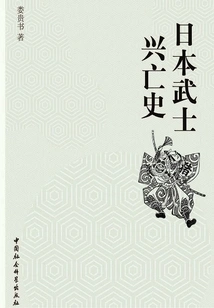
日本武士兴亡史
Lou Guishu
During the Heian period, samurai were private armed forces and rebels against the emperor's regime; during the shogunate period, samurai were the ruling class and national role models who took orders from the emperor; during the Meiji, Taisho, and early Showa eras, samurai were the helmsmen of the bourgeois regime, which not only shaped Japan's world-renowned modernization achievements, but also made Japan sink deeper and deeper into the quagmire of militarism. This book takes samurai as the main line and discusses "the rise and fall of samurai", "the military rule of samurai", and "the war spirit and ideal value of samurai". Elucidate the historical process of how samurai developed from a private armed group to a feudal ruling class and national model that exercised political authority, and then evolved into the protagonists of Japan's modernization, reproducing the true and complete picture of samurai. Elucidate how the military rule of samurai changed the historical direction and social system of Japan, leading Japan to embark on the path of militarism that emphasized military force over civility, and the impact of the political legacy of samurai governance on modern Japan. Elucidate how bushido developed from the moral norms and code of conduct of private violent groups to the ideal values and ruling ideas of the shogunate era, and then became the ideal values and ruling ideas of modern society. How it interpenetrated and nourished each other with Japanese national culture, and became the core content of the Japanese national spirit.
During the Heian period, samurai were private armed forces and rebels against the emperor's regime; during the shogunate period, samurai were the ruling class and national role models who took orders from the emperor; during the Meiji, Taisho, and early Showa eras, samurai were the helmsmen of the bourgeois regime, which not only shaped Japan's world-renowned modernization achievements, but also made Japan sink deeper and deeper into the quagmire of militarism. This book takes samurai as the main line and discusses "the rise and fall of samurai", "the military rule of samurai", and "the war spirit and ideal value of samurai". Elucidate the historical process of how samurai developed from a private armed group to a feudal ruling class and national model that exercised political authority, and then evolved into the protagonists of Japan's modernization, reproducing the true and complete picture of samurai. Elucidate how the military rule of samurai changed the historical direction and social system of Japan, leading Japan to embark on the path of militarism that emphasized military force over civility, and the impact of the political legacy of samurai governance on modern Japan. Elucidate how bushido developed from the moral norms and code of conduct of private violent groups to the ideal values and ruling ideas of the shogunate era, and then became the ideal values and ruling ideas of modern society. How it interpenetrated and nourished each other with Japanese national culture, and became the core content of the Japanese national spirit.
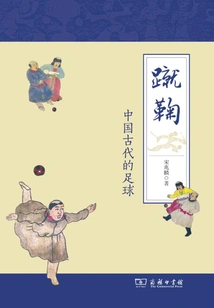
蹴鞠:中国古代的足球
Song Zhaolin
The book is divided into six chapters: the first chapter is "Cuju in historical data", which mainly explains the history of Chinese Cuju based on historical data; the second chapter is "Liao Dynasty Cuju Paintings", including paper paintings, silk paintings, and embroidery paintings, which vividly restore the Cuju activities at that time; the third chapter is "Cuju Game Rules", which talks about the ball, court and game rules; the fourth chapter is "The Development of Cuju", which talks about the step ball. What they have in common with polo is that they still use their arms and sticks, but the difference is that one is on foot and the other is on horseback; Chapter 5 is "Water Cuju", that is, water polo and ice hockey, which is an extension of land Cuju on the water in the north; Chapter 6 is "Other ball games", including ancient ball jumping, ball throwing, wood shooting, stepping on the ball, as well as the popular folk kicking stone ball, high ball, etc. Although this book is named after Cuju, it actually covers all aspects of traditional ball games.
The book is divided into six chapters: the first chapter is "Cuju in historical data", which mainly explains the history of Chinese Cuju based on historical data; the second chapter is "Liao Dynasty Cuju Paintings", including paper paintings, silk paintings, and embroidery paintings, which vividly restore the Cuju activities at that time; the third chapter is "Cuju Game Rules", which talks about the ball, court and game rules; the fourth chapter is "The Development of Cuju", which talks about the step ball. What they have in common with polo is that they still use their arms and sticks, but the difference is that one is on foot and the other is on horseback; Chapter 5 is "Water Cuju", that is, water polo and ice hockey, which is an extension of land Cuju on the water in the north; Chapter 6 is "Other ball games", including ancient ball jumping, ball throwing, wood shooting, stepping on the ball, as well as the popular folk kicking stone ball, high ball, etc. Although this book is named after Cuju, it actually covers all aspects of traditional ball games.
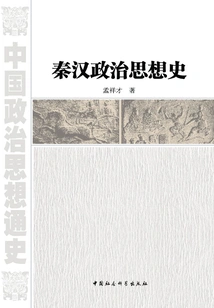
秦汉政治思想史
Meng Xiangcai
This book is the Qin and Han volumes of the general history of Chinese political thought. The whole book is divided into 6 chapters. It mainly includes the political thoughts of the Qin Dynasty and the Western Han Dynasty, the political thoughts of the Eastern Han Dynasty, etc. The Qin and Han Dynasties were the initial stage of China's feudal society. During this period, China created the leading political and economic systems in the world at that time, such as the land system that combined state land ownership and landlords' private ownership of land, the tenant system, the main way for landlords to exploit farmers, and the system of men farming and women weaving on a household basis. Most of the agricultural management methods, "focusing on the roots and suppressing the end", the government-run industrial and commercial policies of Yantie, and the city as a political, economic and cultural center were inherited and continued by the later feudal dynasties, which had an extremely important impact on China's feudal society for more than two thousand years. It was also during this period that the core contents of ancient Chinese social and political thought for the next two thousand years were established, namely, monarchy and centralization. Political thinkers since then have conducted long-term and profound thinking around a series of related issues such as "monarch and ministers", "people-oriented", "inner saints and outer kings", virtue as the master, punishment as assistant, and the defense of barbarians and Xia.
This book is the Qin and Han volumes of the general history of Chinese political thought. The whole book is divided into 6 chapters. It mainly includes the political thoughts of the Qin Dynasty and the Western Han Dynasty, the political thoughts of the Eastern Han Dynasty, etc. The Qin and Han Dynasties were the initial stage of China's feudal society. During this period, China created the leading political and economic systems in the world at that time, such as the land system that combined state land ownership and landlords' private ownership of land, the tenant system, the main way for landlords to exploit farmers, and the system of men farming and women weaving on a household basis. Most of the agricultural management methods, "focusing on the roots and suppressing the end", the government-run industrial and commercial policies of Yantie, and the city as a political, economic and cultural center were inherited and continued by the later feudal dynasties, which had an extremely important impact on China's feudal society for more than two thousand years. It was also during this period that the core contents of ancient Chinese social and political thought for the next two thousand years were established, namely, monarchy and centralization. Political thinkers since then have conducted long-term and profound thinking around a series of related issues such as "monarch and ministers", "people-oriented", "inner saints and outer kings", virtue as the master, punishment as assistant, and the defense of barbarians and Xia.

儿童健康管理全书
Xin Zhirong
"Children's Health Management Book" is divided into two parts: the first part focuses on children's physical health, and elaborates on eating habits, sleeping habits, exercise habits, behavioral habits, disease prevention, environmental sanitation, food hygiene, elimination of pollution sources, etc.; The second part focuses on children's mental health, and elaborates on emotional control, external stimulation, social habits, adaptability cultivation, and prevention of mental illnesses. This book aims to reduce the probability of children suffering from physical and mental diseases and help children grow up healthily.
"Children's Health Management Book" is divided into two parts: the first part focuses on children's physical health, and elaborates on eating habits, sleeping habits, exercise habits, behavioral habits, disease prevention, environmental sanitation, food hygiene, elimination of pollution sources, etc.; The second part focuses on children's mental health, and elaborates on emotional control, external stimulation, social habits, adaptability cultivation, and prevention of mental illnesses. This book aims to reduce the probability of children suffering from physical and mental diseases and help children grow up healthily.

服装:服饰史话
Zhao Hansheng Xing Shengyuan
This book systematically introduces the development history and current situation of clothing in traditional Chinese culture. It pays attention to historical data, science, knowledge, interest and practicality when writing. For each variety, the content includes its emergence time, development and evolution process, variety and characteristics, how to wear or use, etc. It can be used as a reference for clothing researchers, designers, teachers and students in colleges and universities, marketers and consumers.
This book systematically introduces the development history and current situation of clothing in traditional Chinese culture. It pays attention to historical data, science, knowledge, interest and practicality when writing. For each variety, the content includes its emergence time, development and evolution process, variety and characteristics, how to wear or use, etc. It can be used as a reference for clothing researchers, designers, teachers and students in colleges and universities, marketers and consumers.
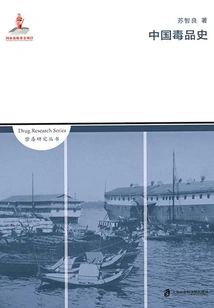
History of Drugs in China
History中国毒品史
Su Zhiliang
This book comprehensively combs the historical process of the occurrence, development and spread of drugs in China. The author uses a large number of domestic and foreign materials to describe the spread of opium in China before the Opium War and its social impact, narrates the facts and consequences of drug infringement in modern China, discusses the reasons for the proliferation of drugs, and summarizes the successful historical experience of drug control in the early days of New China. This book is rich in information, clear in context, detailed in cases, and vivid in text; reading this book will help solve the current drug problem.
This book comprehensively combs the historical process of the occurrence, development and spread of drugs in China. The author uses a large number of domestic and foreign materials to describe the spread of opium in China before the Opium War and its social impact, narrates the facts and consequences of drug infringement in modern China, discusses the reasons for the proliferation of drugs, and summarizes the successful historical experience of drug control in the early days of New China. This book is rich in information, clear in context, detailed in cases, and vivid in text; reading this book will help solve the current drug problem.
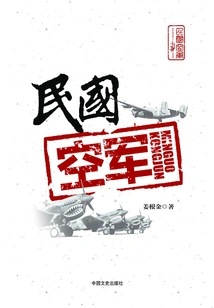
Republic of China Air Force
History民国空军
Ginger Root Gold
This book takes the birth and development of the Air Force of the Republic of China and its final farewell to the historical stage as the main line, with the changes in its historical functions as the auxiliary line. It places this army in the historical background of China's great upheavals and changes in the early 20th century. From the perspective of military modernization and military nationalization, it comprehensively introduces the past and present life of the Army of the Republic of China, tells its glory and sins, and at the same time shows readers the magnificent historical picture of that era.
This book takes the birth and development of the Air Force of the Republic of China and its final farewell to the historical stage as the main line, with the changes in its historical functions as the auxiliary line. It places this army in the historical background of China's great upheavals and changes in the early 20th century. From the perspective of military modernization and military nationalization, it comprehensively introduces the past and present life of the Army of the Republic of China, tells its glory and sins, and at the same time shows readers the magnificent historical picture of that era.
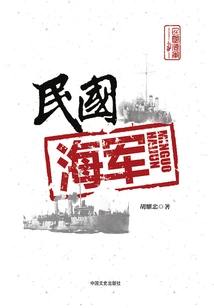
Republic of China Navy
History民国海军
Hu Yaozhong
This book takes the birth and development of the Navy of the Republic of China and its final farewell to the historical stage as the main line, with the changes in its historical functions as the auxiliary line. It places this army in the historical background of China's great upheavals and changes in the early 20th century. From the perspective of military modernization and military nationalization, it comprehensively introduces the past and present life of the Navy of the Republic of China, tells its glory and crimes, and at the same time shows readers the magnificent historical picture of that era.
This book takes the birth and development of the Navy of the Republic of China and its final farewell to the historical stage as the main line, with the changes in its historical functions as the auxiliary line. It places this army in the historical background of China's great upheavals and changes in the early 20th century. From the perspective of military modernization and military nationalization, it comprehensively introduces the past and present life of the Navy of the Republic of China, tells its glory and crimes, and at the same time shows readers the magnificent historical picture of that era.
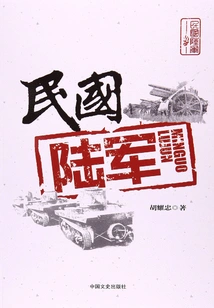
Republic of China Army
History民国陆军
Hu Yaozhong
This book takes the birth and development of the Army of the Republic of China and its final farewell to the historical stage as the main line, with the changes in its historical functions as the auxiliary line. It places this army in the historical context of China's great upheavals and changes in the early 20th century. From the perspective of military modernization and military nationalization, it comprehensively introduces the past and present life of the Army of the Republic of China, tells its glory and sins, and at the same time shows readers the magnificent historical picture of that era.
This book takes the birth and development of the Army of the Republic of China and its final farewell to the historical stage as the main line, with the changes in its historical functions as the auxiliary line. It places this army in the historical context of China's great upheavals and changes in the early 20th century. From the perspective of military modernization and military nationalization, it comprehensively introduces the past and present life of the Army of the Republic of China, tells its glory and sins, and at the same time shows readers the magnificent historical picture of that era.
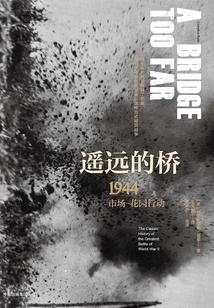
遥远的桥:1944市场—花园行动(二战史诗三部曲:修订珍藏版)
I
"A Bridge Far Away: Operation Market Garden 1944" is the most authoritative historical work on "Operation Market Garden". While suffering from a terminal illness, the author Cornelius Ryan devoted the rest of his life to interviewing more than 1,200 people over a period of 7 years. He searched for the historical truth and details from a vast sea of diaries, letters, reports and other materials, and completely restored the entire process of this most dramatic battle from planning to failure. This is a thrilling fight, a war epic that trembles the soul. The cruelty, despair, grief, and tragic heroism faced by the airborne troops who went deep behind enemy lines and were isolated and helpless were vividly written through Ryan's touching words. This was a failure of strategy, this was a feat of execution, this was the history of the nine days and nights of the Battle of Arnhem. It turned a frustrating and tragic defeat into an eternal memory and lesson for future generations. This great battle cannot be repeated, and this ancient classic cannot be rewritten. In a modern business society far away from the smoke and smoke of battlefields, "A Bridge Far Away: Operation Market Garden 1944" is still a good book that everyone should read over and over again and use for life.
"A Bridge Far Away: Operation Market Garden 1944" is the most authoritative historical work on "Operation Market Garden". While suffering from a terminal illness, the author Cornelius Ryan devoted the rest of his life to interviewing more than 1,200 people over a period of 7 years. He searched for the historical truth and details from a vast sea of diaries, letters, reports and other materials, and completely restored the entire process of this most dramatic battle from planning to failure. This is a thrilling fight, a war epic that trembles the soul. The cruelty, despair, grief, and tragic heroism faced by the airborne troops who went deep behind enemy lines and were isolated and helpless were vividly written through Ryan's touching words. This was a failure of strategy, this was a feat of execution, this was the history of the nine days and nights of the Battle of Arnhem. It turned a frustrating and tragic defeat into an eternal memory and lesson for future generations. This great battle cannot be repeated, and this ancient classic cannot be rewritten. In a modern business society far away from the smoke and smoke of battlefields, "A Bridge Far Away: Operation Market Garden 1944" is still a good book that everyone should read over and over again and use for life.
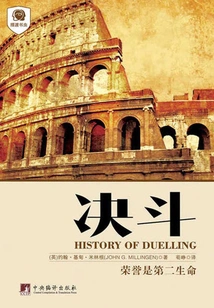
Duel
History决斗
(english) John Gideon Millingen
This book describes the dueling events that occurred in France, Britain, Italy, Spain, Germany, Northern Europe, the United States and other countries from the rise of dueling to 1840 - including the causes, participants, weapons used, specific steps, results and even the court trial of the events, etc.
This book describes the dueling events that occurred in France, Britain, Italy, Spain, Germany, Northern Europe, the United States and other countries from the rise of dueling to 1840 - including the causes, participants, weapons used, specific steps, results and even the court trial of the events, etc.
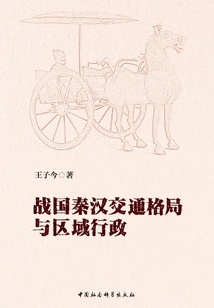
Transportation Pattern and Regional Administration During the Warring States, Qin and Han Dynasties
History战国秦汉交通格局与区域行政
Wang Zijin
This book is a treatise that examines several historical and cultural phenomena in the Warring States, Qin and Han Dynasties from the perspectives of transportation history, administrative history and regional cultural history. The author combines archaeological cultural relics and handed down historical documents to examine the following topics: the formation and evolution of the center of cultural center of the Central Plains, the path and trend of Qin's expansion, the transportation situation and political culture between Pengcheng and "Liang Dang", the transportation management and administrative construction of the "north", and the transportation history and regional cultural history significance of population mobility issues. We also conducted several case studies on transportation patterns and regional administration during the Warring States, Qin and Han Dynasties, and put forward some new insights.
This book is a treatise that examines several historical and cultural phenomena in the Warring States, Qin and Han Dynasties from the perspectives of transportation history, administrative history and regional cultural history. The author combines archaeological cultural relics and handed down historical documents to examine the following topics: the formation and evolution of the center of cultural center of the Central Plains, the path and trend of Qin's expansion, the transportation situation and political culture between Pengcheng and "Liang Dang", the transportation management and administrative construction of the "north", and the transportation history and regional cultural history significance of population mobility issues. We also conducted several case studies on transportation patterns and regional administration during the Warring States, Qin and Han Dynasties, and put forward some new insights.
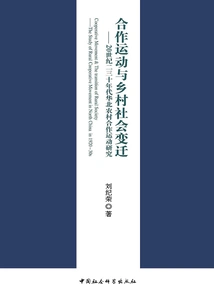
合作运动与乡村社会变迁:20世纪二三十年代华北农村合作运动研究
Liu Jirong
The North China Rural Cooperation Movement was a far-reaching social and economic movement in modern Chinese history that aimed to promote rural social change. It was the first to effectively "graft" Western cooperative ideas with Chinese rural areas, achieving a preliminary combination of the two and initiating large-scale cooperative practices in the history of Chinese rural areas. Cooperatives have become an important symbol of rural social transformation and economic organization modernization in modern China. Cooperation theory believes that by organizing cooperatives and establishing a cooperative economic system in rural society, the traditional social and economic structure can be gradually improved, thereby realizing the modern transformation of rural society. The emergence and development of the rural cooperative movement in North China was precisely based on the premise of "rescuing and revitalizing the countryside" and striving to transform various inherent lifestyles in rural society. It seems to be developing in the general direction of the modern transformation of my country's rural society, and has made positive and beneficial attempts and efforts for the transformation of my country's rural society. This should be the real purpose of the rural cooperative movement in North China. \U003C\u002Fp\u003E\u003Cpclass=\
The North China Rural Cooperation Movement was a far-reaching social and economic movement in modern Chinese history that aimed to promote rural social change. It was the first to effectively "graft" Western cooperative ideas with Chinese rural areas, achieving a preliminary combination of the two and initiating large-scale cooperative practices in the history of Chinese rural areas. Cooperatives have become an important symbol of rural social transformation and economic organization modernization in modern China. Cooperation theory believes that by organizing cooperatives and establishing a cooperative economic system in rural society, the traditional social and economic structure can be gradually improved, thereby realizing the modern transformation of rural society. The emergence and development of the rural cooperative movement in North China was precisely based on the premise of "rescuing and revitalizing the countryside" and striving to transform various inherent lifestyles in rural society. It seems to be developing in the general direction of the modern transformation of my country's rural society, and has made positive and beneficial attempts and efforts for the transformation of my country's rural society. This should be the real purpose of the rural cooperative movement in North China. \U003C\u002Fp\u003E\u003Cpclass=\
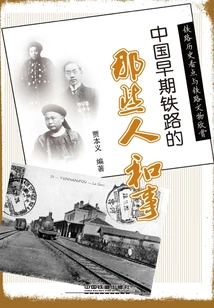
中国早期铁路的那些人和事
Jia Benyi
It mainly reflects the major historical events and the promulgation of major policies in the history of China's railway construction (1876 to 1965), with a little storyline to tell it to readers; it introduces the railway cultural relics that are left over from each stage of railway development (1876 to 1965) that the author has mastered, as well as their origins and social, scientific and technological, and artistic values, so that readers can enjoy them together; and it increases readers' interest. To inherit, publicize and disseminate the history of railway science and technology development, understand the difficult and tortuous experience of railways, and attract young intellectuals to join the railway industry.
It mainly reflects the major historical events and the promulgation of major policies in the history of China's railway construction (1876 to 1965), with a little storyline to tell it to readers; it introduces the railway cultural relics that are left over from each stage of railway development (1876 to 1965) that the author has mastered, as well as their origins and social, scientific and technological, and artistic values, so that readers can enjoy them together; and it increases readers' interest. To inherit, publicize and disseminate the history of railway science and technology development, understand the difficult and tortuous experience of railways, and attract young intellectuals to join the railway industry.
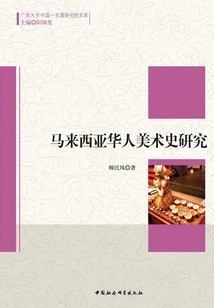
马来西亚华人美术史研究
Handsome Folk Style
By sorting out, analyzing and writing the information, this book combines the political, economic and cultural background of Malaysia to form its own opinions. Taking the evolution of art trends and art concepts as the context, combined with characters, events, and some related works, starting from the perspective of historical development, basic plastics and geographical humanities, and based on the social development sequence of overseas Chinese in British Singapore and Malaysia and Malaysian Chinese as the main line, this paper discusses Malaysian Chinese art. This book uses a combination of review and classification to study the art education, art activities, art publications, etc. Of Malaysian Chinese. It is clearly organized and focuses on the process of Malaysian Chinese art and the changes in consciousness. Although this book is titled "Research on the History of Chinese Art in Malaysia", the actual content contains some content from Singapore. Mainly due to historical reasons, the Chinese art in Malaysia is divided into two periods, with the separation of Malaysia and Singapore in 1965 as the watershed.
By sorting out, analyzing and writing the information, this book combines the political, economic and cultural background of Malaysia to form its own opinions. Taking the evolution of art trends and art concepts as the context, combined with characters, events, and some related works, starting from the perspective of historical development, basic plastics and geographical humanities, and based on the social development sequence of overseas Chinese in British Singapore and Malaysia and Malaysian Chinese as the main line, this paper discusses Malaysian Chinese art. This book uses a combination of review and classification to study the art education, art activities, art publications, etc. Of Malaysian Chinese. It is clearly organized and focuses on the process of Malaysian Chinese art and the changes in consciousness. Although this book is titled "Research on the History of Chinese Art in Malaysia", the actual content contains some content from Singapore. Mainly due to historical reasons, the Chinese art in Malaysia is divided into two periods, with the separation of Malaysia and Singapore in 1965 as the watershed.
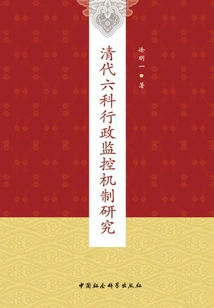
清代六科行政监控机制研究
Xu Mingyi
On the basis of inheriting the system of the previous dynasty, the Qing Dynasty built a multi-ethnic, multi-level, three-dimensional and complex administrative monitoring system. As an important link, the six-section administrative monitoring mechanism combines the characteristics of aristocracy and bureaucracy and plays an important role in monitoring the operation of the entire bureaucracy and improving administrative efficiency. At the same time, due to the inherent flaws of aristocracy and bureaucracy, the normal performance of the six subjects' administrative monitoring effectiveness is also restricted to a certain extent.
On the basis of inheriting the system of the previous dynasty, the Qing Dynasty built a multi-ethnic, multi-level, three-dimensional and complex administrative monitoring system. As an important link, the six-section administrative monitoring mechanism combines the characteristics of aristocracy and bureaucracy and plays an important role in monitoring the operation of the entire bureaucracy and improving administrative efficiency. At the same time, due to the inherent flaws of aristocracy and bureaucracy, the normal performance of the six subjects' administrative monitoring effectiveness is also restricted to a certain extent.
晚清民国时期杭州对外贸易研究:1895~1937
Martin
Starting from the opening of Hangzhou as a port in 1895, this book studies the development of Hangzhou's foreign trade throughout the late Qing Dynasty and the Republic of China. It analyzes the natural and social historical background of Hangzhou during this period, explains the development situation and characteristics of Hangzhou's foreign trade, and discusses the geopolitical tendency of Hangzhou's foreign trade development. At the same time, this book especially conducts a systematic comparative analysis of Hangzhou's trade conditions before and after the opening of the port, customs import and export trade, and other customs trade conditions that were opened at the same time. It reproduces the development of Hangzhou's foreign trade during the late Qing Dynasty and the Republic of China, as well as the changes in Hangzhou society during this period. It provides a new perspective and basis for us to further expand and deepen the study of Hangzhou's history of the Republic of China and understand the inherent laws of historical evolution.
Starting from the opening of Hangzhou as a port in 1895, this book studies the development of Hangzhou's foreign trade throughout the late Qing Dynasty and the Republic of China. It analyzes the natural and social historical background of Hangzhou during this period, explains the development situation and characteristics of Hangzhou's foreign trade, and discusses the geopolitical tendency of Hangzhou's foreign trade development. At the same time, this book especially conducts a systematic comparative analysis of Hangzhou's trade conditions before and after the opening of the port, customs import and export trade, and other customs trade conditions that were opened at the same time. It reproduces the development of Hangzhou's foreign trade during the late Qing Dynasty and the Republic of China, as well as the changes in Hangzhou society during this period. It provides a new perspective and basis for us to further expand and deepen the study of Hangzhou's history of the Republic of China and understand the inherent laws of historical evolution.
复兴之路:百年中国教科书与社会变革
Wu Xiaoou
A century of Chinese textbooks is a subject that requires constant interpretation as the "historical horizon" expands. This book is based on a large number of textbooks and historical materials. Through systematic analysis and in-depth research on "the survival of the nation and textbook reform", "the war years and textbook strengthening", "national will and textbook revolution", "rejuvenating the country through science and education and textbook modernization", it reveals that Chinese textbooks over the past century have carried the hopes and dreams of different eras, purposefully inherited and transmitted knowledge with different value orientations, become a basic constraint on social change, and contributed a huge amount of enlightenment to the realization of the great rejuvenation of the Chinese nation.
A century of Chinese textbooks is a subject that requires constant interpretation as the "historical horizon" expands. This book is based on a large number of textbooks and historical materials. Through systematic analysis and in-depth research on "the survival of the nation and textbook reform", "the war years and textbook strengthening", "national will and textbook revolution", "rejuvenating the country through science and education and textbook modernization", it reveals that Chinese textbooks over the past century have carried the hopes and dreams of different eras, purposefully inherited and transmitted knowledge with different value orientations, become a basic constraint on social change, and contributed a huge amount of enlightenment to the realization of the great rejuvenation of the Chinese nation.
宋辽西夏金社会生活史
Zhu Ruixi; Liu Fusheng; Zhang Bangwei; Cai Chongbang; Wang Zengyu
This book is one of the series of books on the history of social life in ancient China. It uses a large number of documents and other relevant materials to conduct an in-depth examination of all aspects of social life in the Song, Liao, Xixia, and Jin dynasties. The content covers food, clothing, transportation, marriage, religious beliefs, etc. It is a high-level monograph on the history of social life.
This book is one of the series of books on the history of social life in ancient China. It uses a large number of documents and other relevant materials to conduct an in-depth examination of all aspects of social life in the Song, Liao, Xixia, and Jin dynasties. The content covers food, clothing, transportation, marriage, religious beliefs, etc. It is a high-level monograph on the history of social life.