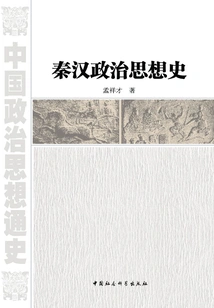
History of Political Thought of Qin and Han Dynasties
About This Novel
This book is the Qin and Han volumes of the general history of Chinese political thought. The whole book is divided into 6 chapters. It mainly includes the political thoughts of the Qin Dynasty and the Western Han Dynasty, the political thoughts of the Eastern Han Dynasty, etc. The Qin and Han Dynasties were the initial stage of China's feudal society. During this period, China created the leading political and economic systems in the world at that time, such as the land system that combined state land ownership and landlords' private ownership of land, the tenant system, the main way for landlords to exploit farmers, and the system of men farming and women weaving on a household basis. Most of the agricultural management methods, "focusing on the roots and suppressing the end", the government-run industrial and commercial policies of Yantie, and the city as a political, economic and cultural center were inherited and continued by the later feudal dynasties, which had an extremely important impact on China's feudal society for more than two thousand years. It was also during this period that the core contents of ancient Chinese social and political thought for the next two thousand years were established, namely, monarchy and centralization. Political thinkers since then have conducted long-term and profound thinking around a series of related issues such as "monarch and ministers", "people-oriented", "inner saints and outer kings", virtue as the master, punishment as assistant, and the defense of barbarians and Xia.
Official Sources
What Readers Think
Rating
Community(0)
Official(1)Scraped 1mo ago
This book provides a relatively comprehensive analysis of the history of political thought in Qin and Han Dynasties.
This book is divided into three parts: the Qin Dynasty, the Western Han Dynasty and the Eastern Han Dynasty. It provides a systematic summary of the political thought of this period. It analyzes both the historical level and the character level. It is clearly organized, fluent in writing, easy to understand, and combines history and theory. It is very helpful for understanding the history of political thought in the Qin and Han Dynasties. Personally, I believe that political thought should be about how to govern a country, which mainly includes two points. One is the theory of governing the country, and the other is the practice of governing the country. For a specific person, if he has one of the above, it can be said that he has political thought. However, the book also mentions that people such as Liang Ji, Dou Xian, etc. Also name their ideas as political thoughts. I personally feel that this may not be appropriate, because these people have neither thought about how to govern the country, nor have specific practices in governing the country. They just rely on their own power to satisfy their personal desires. This is not political thought. Personally, I think some of them, such as Liang Ji and Dou Xian, can be deleted from this book.
Rating
Community(0)
Official(1)Scraped 1mo ago
This book provides a relatively comprehensive analysis of the history of political thought in Qin and Han Dynasties.
This book is divided into three parts: the Qin Dynasty, the Western Han Dynasty and the Eastern Han Dynasty. It provides a systematic summary of the political thought of this period. It analyzes both the historical level and the character level. It is clearly organized, fluent in writing, easy to understand, and combines history and theory. It is very helpful for understanding the history of political thought in the Qin and Han Dynasties. Personally, I believe that political thought should be about how to govern a country, which mainly includes two points. One is the theory of governing the country, and the other is the practice of governing the country. For a specific person, if he has one of the above, it can be said that he has political thought. However, the book also mentions that people such as Liang Ji, Dou Xian, etc. Also name their ideas as political thoughts. I personally feel that this may not be appropriate, because these people have neither thought about how to govern the country, nor have specific practices in governing the country. They just rely on their own power to satisfy their personal desires. This is not political thought. Personally, I think some of them, such as Liang Ji and Dou Xian, can be deleted from this book.