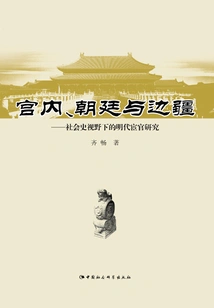
The Palace, the Imperial Court and the Frontier: a Study of Eunuchs in the Ming Dynasty from the Perspective of Social History
by Qi Chang
About This Novel
Based on the overall study of the eunuch group in the Ming Dynasty, this book conducts case analysis of typical eunuchs. By comparing folk field historical materials such as eunuch epitaphs and inscriptions with official and private texts in the Ming Dynasty, we shift our focus from the political conspiracies of individual eunuchs to the personal life histories of ordinary eunuchs. We can find that the image of eunuchs we construct using social historical materials as clues is very different from previous understandings. Through the cases of eunuchs such as the Liu brothers, the Qian brothers, Gao Feng, Mai Fu, and Chen Ju, this paper examines the deeds of ethnic minority eunuchs in the Ming Dynasty and their role in the national frontier strategy in the early Ming Dynasty, the family profile of the eunuchs in the Ming Dynasty, the political situation and ecology of the eunuchs in the Jiajing Dynasty, and the complex relationship between eunuchs and the so-called Qing Dynasty courtiers, thereby reflecting on the past simple divisions of the so-called "Donglin" and "eunuch party" in the late Ming Dynasty. Eunuchs entered the political arena of the Ming Empire in a different way than courtiers. They played an important role in the Ming Dynasty's inner court, the government and the public, and even the frontiers, and were responsible for the rise and prominence of their entire family. However, precisely because of their status as eunuchs, the families who started their careers had their families' historical memories intentionally or unintentionally erased.
Official Sources
What Readers Think
Rating
Community(0)
Rating
Community(0)
