Library
Browse and search books
2,823 novels found
Consciousness and Translation
Literature意识与翻译
Yue Feng
This book is the result of a late-stage project funded by the National Social Science Fund. "Consciousness and Translation" is the first book to study translation from the perspective of consciousness. It explores the dominance of consciousness on translation and the reaction force of translation on translators from five perspectives: personal consciousness, group consciousness, regional consciousness, social consciousness and national consciousness. It forms a new interpretation model, clarifies some translation disputes and translation evolutions in the history of Chinese translation, and provides reference for the export of Chinese elements. This book talks about cases from the Ming and Qing dynasties to the present day, sorting out the intricate cultural intersections in the process of the transmission of Chinese classics to the west in modern times and the evolution of foreign literature introduced into China. It also sorts out the various debates caused by Westerners' translation of Chinese classics during the Ming and Qing dynasties and the Chinese people's response to Western literature. It comprehensively displays the translators, translations, translations and their social and historical environment, reveals the interactive rules of consciousness and translation, and provides reference for Chinese culture to go abroad and enter the West.
This book is the result of a late-stage project funded by the National Social Science Fund. "Consciousness and Translation" is the first book to study translation from the perspective of consciousness. It explores the dominance of consciousness on translation and the reaction force of translation on translators from five perspectives: personal consciousness, group consciousness, regional consciousness, social consciousness and national consciousness. It forms a new interpretation model, clarifies some translation disputes and translation evolutions in the history of Chinese translation, and provides reference for the export of Chinese elements. This book talks about cases from the Ming and Qing dynasties to the present day, sorting out the intricate cultural intersections in the process of the transmission of Chinese classics to the west in modern times and the evolution of foreign literature introduced into China. It also sorts out the various debates caused by Westerners' translation of Chinese classics during the Ming and Qing dynasties and the Chinese people's response to Western literature. It comprehensively displays the translators, translations, translations and their social and historical environment, reveals the interactive rules of consciousness and translation, and provides reference for Chinese culture to go abroad and enter the West.
视角与方法:中国文学史探索
Jiang Yin
"Perspectives and Methods: An Exploration of the History of Chinese Literature" is a collection of Jiang Yin, a famous scholar in the history of Chinese literature, looking back on decades of student history and reviewing his academic achievements in his 19th year. The book is based on thirty-one cases and includes "The Spiritual Historical Significance and Research of Classical Literature", "Li Yin: Dali Poets' Acceptance of Xie Tiao", "Du Fu and the Laojing of Chinese Poetry Aesthetics", "Lu You's Silence and Popularity", "The Effect of the Imperial Examination Poems in the Twenty-Two Years of Qianlong on Qing Dynasty Poetics" "The Influence of Chinese Literature" and many other representative works, covering four aspects: first, the discussion of the basic theories and basic concepts of Chinese literary history; second, the analysis of specific literary history issues; third, the revelation of the significance of individual writers' literary history; and fourth, the study of literary influence and reception. Because it involves many aspects of literary history research, it is given the subtitle of Exploration of Literary History.
"Perspectives and Methods: An Exploration of the History of Chinese Literature" is a collection of Jiang Yin, a famous scholar in the history of Chinese literature, looking back on decades of student history and reviewing his academic achievements in his 19th year. The book is based on thirty-one cases and includes "The Spiritual Historical Significance and Research of Classical Literature", "Li Yin: Dali Poets' Acceptance of Xie Tiao", "Du Fu and the Laojing of Chinese Poetry Aesthetics", "Lu You's Silence and Popularity", "The Effect of the Imperial Examination Poems in the Twenty-Two Years of Qianlong on Qing Dynasty Poetics" "The Influence of Chinese Literature" and many other representative works, covering four aspects: first, the discussion of the basic theories and basic concepts of Chinese literary history; second, the analysis of specific literary history issues; third, the revelation of the significance of individual writers' literary history; and fourth, the study of literary influence and reception. Because it involves many aspects of literary history research, it is given the subtitle of Exploration of Literary History.
History of World Literature
Literature世界文学史
Zhang Deming
This book is revised based on the textbook "History of World Literature" that the author has published for many years. Since the 1990s, many Nobel Prize winners in literature have been outside Europe and the United States, gradually changing the European and American-centered landscape of world literature. In view of this, many universities and ordinary readers have gradually expanded their horizons from Europe and the United States to South America, the Middle East, Africa, the Far East and other entire worlds. Related course designs in universities have also been gradually adjusted, but there has never been a satisfactory teaching material to choose from. Unlike similar textbooks currently on the market that are co-edited by multiple people, this book is written by one person, and its concepts and writing are relatively unified and vivid. This book has been used in many universities for many years, with more than 3,000 copies sold every year, and market expectations are guaranteed. In this revision, in addition to focusing on Europe and the United States, the author will also focus on Nobel Prize winners and examine literary circles in different regions, thereby presenting a distinct world literary landscape.
This book is revised based on the textbook "History of World Literature" that the author has published for many years. Since the 1990s, many Nobel Prize winners in literature have been outside Europe and the United States, gradually changing the European and American-centered landscape of world literature. In view of this, many universities and ordinary readers have gradually expanded their horizons from Europe and the United States to South America, the Middle East, Africa, the Far East and other entire worlds. Related course designs in universities have also been gradually adjusted, but there has never been a satisfactory teaching material to choose from. Unlike similar textbooks currently on the market that are co-edited by multiple people, this book is written by one person, and its concepts and writing are relatively unified and vivid. This book has been used in many universities for many years, with more than 3,000 copies sold every year, and market expectations are guaranteed. In this revision, in addition to focusing on Europe and the United States, the author will also focus on Nobel Prize winners and examine literary circles in different regions, thereby presenting a distinct world literary landscape.
Language, Space and Art
Literature语言、空间与艺术
Zhao Kuiying
This book is the result of the author's intensive discussion of language, space and art issues. It consists of five parts that are closely related and progressively related, that is, "five articles". The first article mainly discusses the "linguistic turn" and the construction of contemporary poetic culture theory; the second article mainly discusses the formation of ancient Chinese language philosophy and Chinese traditional poetic culture; the third article mainly examines the spatial turn that has emerged in the field of Western philosophy and culture from the perspective of the change of language concepts, and specifically discusses Derrida, The spatialization turn of Foucault and Heidegger and its revolutionary consequences; the fourth chapter mainly examines the spatialization of ancient Chinese cosmic space-time consciousness from multiple perspectives such as language, way of thinking, etc. And its impact on the spirit and structure of traditional Chinese art. It also reflects on and cleans up the "emphasis on time and space" theory that was once popular in Chinese academic circles. The fifth article expands from the study of linguistic poetics to the fields of art theory and art semiotics in the philosophy of language. It combines Heidegger's phenomenological ontological view of language to explore the relationship between art and technology and the salvation of objects by art. Through an examination of the dispute between Heidegger and Shapiro, it considers the dialogue between art philosophy and art history research, and rethinks the overall philosophy of Heidegger's art philosophy with the spirit of ecological ethics and its future enlightenment significance for the construction of contemporary art theory. This article also combines Heidegger's phenomenological ontological view of semiotics to raise issues of reflection and reconstruction of the semiotic foundation of today's art. This book is committed to seeking new paths into art theoretical research from the perspective of interdisciplinary research, and exploring the construction of Chinese contemporary art theory that can not only adhere to the laws of art itself but also have an ecological and humanistic spirit.
This book is the result of the author's intensive discussion of language, space and art issues. It consists of five parts that are closely related and progressively related, that is, "five articles". The first article mainly discusses the "linguistic turn" and the construction of contemporary poetic culture theory; the second article mainly discusses the formation of ancient Chinese language philosophy and Chinese traditional poetic culture; the third article mainly examines the spatial turn that has emerged in the field of Western philosophy and culture from the perspective of the change of language concepts, and specifically discusses Derrida, The spatialization turn of Foucault and Heidegger and its revolutionary consequences; the fourth chapter mainly examines the spatialization of ancient Chinese cosmic space-time consciousness from multiple perspectives such as language, way of thinking, etc. And its impact on the spirit and structure of traditional Chinese art. It also reflects on and cleans up the "emphasis on time and space" theory that was once popular in Chinese academic circles. The fifth article expands from the study of linguistic poetics to the fields of art theory and art semiotics in the philosophy of language. It combines Heidegger's phenomenological ontological view of language to explore the relationship between art and technology and the salvation of objects by art. Through an examination of the dispute between Heidegger and Shapiro, it considers the dialogue between art philosophy and art history research, and rethinks the overall philosophy of Heidegger's art philosophy with the spirit of ecological ethics and its future enlightenment significance for the construction of contemporary art theory. This article also combines Heidegger's phenomenological ontological view of semiotics to raise issues of reflection and reconstruction of the semiotic foundation of today's art. This book is committed to seeking new paths into art theoretical research from the perspective of interdisciplinary research, and exploring the construction of Chinese contemporary art theory that can not only adhere to the laws of art itself but also have an ecological and humanistic spirit.
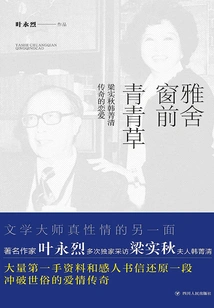
雅舍窗前青青草:梁实秋韩菁清传奇的恋爱
Ye Yonglie
Liang Shiqiu is a veteran of Taiwanese literary circles, and his "Ya She Xiao Xiao" has had a wide impact. When Liang Shiqiu was 73 years old, when he and his first wife Cheng Jishu went to the supermarket in the United States, an iron ladder suddenly fell and hit Cheng Jishu on the head, causing her death on the spot. Liang Shiqiu, who was deeply saddened, wrote the touching book "Memories of Sophora Garden Dreams". The owner of Taiwan's Far Eastern Publishing House was Liang Shiqiu's old friend for many years. In the name of proofreading the book, he invited Liang Shiqiu to return to Taipei to relax. Liang Shiqiu accidentally met Han Jingqing, a singer 30 years younger than him, in Taipei, and fell in love - a legendary love. Those readers who were immersed in tears in "Memories of Sophora Garden" learned about Liang Shiqiu's dusk love, which immediately set off a news storm. Liang Shiqiu's students even organized a "nursing group" to resolutely oppose the teacher's love affair in order to maintain Liang Shiqiu's "Confucius" image. The year-long love between Liang Shiqiu and Han Jingqing has withstood the test of 13 years. The author of this book exclusively interviewed Liang Shiqiu's wife, Han Jingqing, for many times, and described Liang Shiqiu's twilight love with first-hand information, and wrote this documentary, which has been widely welcomed by readers in the Mainland, Hong Kong and Taiwan. Taiwanese newspapers commented that Liang Shiqiu's Love at Dusk should have been written about by a Taiwanese writer, but unexpectedly the Shanghai writer Ye Yonglie took the lead. Instead, Taiwanese readers could only read the story that happened in Taiwan from the Shanghai writer's pen.
Liang Shiqiu is a veteran of Taiwanese literary circles, and his "Ya She Xiao Xiao" has had a wide impact. When Liang Shiqiu was 73 years old, when he and his first wife Cheng Jishu went to the supermarket in the United States, an iron ladder suddenly fell and hit Cheng Jishu on the head, causing her death on the spot. Liang Shiqiu, who was deeply saddened, wrote the touching book "Memories of Sophora Garden Dreams". The owner of Taiwan's Far Eastern Publishing House was Liang Shiqiu's old friend for many years. In the name of proofreading the book, he invited Liang Shiqiu to return to Taipei to relax. Liang Shiqiu accidentally met Han Jingqing, a singer 30 years younger than him, in Taipei, and fell in love - a legendary love. Those readers who were immersed in tears in "Memories of Sophora Garden" learned about Liang Shiqiu's dusk love, which immediately set off a news storm. Liang Shiqiu's students even organized a "nursing group" to resolutely oppose the teacher's love affair in order to maintain Liang Shiqiu's "Confucius" image. The year-long love between Liang Shiqiu and Han Jingqing has withstood the test of 13 years. The author of this book exclusively interviewed Liang Shiqiu's wife, Han Jingqing, for many times, and described Liang Shiqiu's twilight love with first-hand information, and wrote this documentary, which has been widely welcomed by readers in the Mainland, Hong Kong and Taiwan. Taiwanese newspapers commented that Liang Shiqiu's Love at Dusk should have been written about by a Taiwanese writer, but unexpectedly the Shanghai writer Ye Yonglie took the lead. Instead, Taiwanese readers could only read the story that happened in Taiwan from the Shanghai writer's pen.
诗画融通论
Wu Qiming
This book is a general work on the theory of the integration of poetry and painting. It takes the aesthetic concept of the integration of poetry and painting as the guiding ideology, and uses the aesthetic method of reading poetry and painting as the basic means to deduce the various expression forms, meeting points and channels of the integration of poetry and painting. The purpose is to examine the deep communication of the art of poetry and painting, carry forward the artistic spirit of the integration of poetry and painting in the Chinese nation, and build an aesthetic system for the integration of poetry and painting. The writing is civilized and quick, the writing is beautiful, the argument is clear, the evidence is abundant, and the explanation is profound and simple.
This book is a general work on the theory of the integration of poetry and painting. It takes the aesthetic concept of the integration of poetry and painting as the guiding ideology, and uses the aesthetic method of reading poetry and painting as the basic means to deduce the various expression forms, meeting points and channels of the integration of poetry and painting. The purpose is to examine the deep communication of the art of poetry and painting, carry forward the artistic spirit of the integration of poetry and painting in the Chinese nation, and build an aesthetic system for the integration of poetry and painting. The writing is civilized and quick, the writing is beautiful, the argument is clear, the evidence is abundant, and the explanation is profound and simple.
师友记往:余英时怀旧集
Yu Yingshi
"Memories of Teachers and Friends" is one of the "Yu Yingshi's Works Series". This is a very meaningful "memoir", which contains Mr. Yu's words of remembering and commemorating his teachers and friends over decades. The objects of remembrance include not only Fairbank, Qian Zhongshu and Qian Mu, who are famous among readers, but also Liu Dazhong, Yu Jizhong, Wu Huoshi and other famous names in the academic, journalistic and even economic circles in overseas Hong Kong and Taiwan. They are full of affection and long-lasting phonology. Through these "warm as jade" reminiscences, readers can deeply feel the deep friendship of the older generation of Chinese intellectuals like Mr. Yu, as well as the true cultural people's pursuit and commitment to values, ideals and academics.
"Memories of Teachers and Friends" is one of the "Yu Yingshi's Works Series". This is a very meaningful "memoir", which contains Mr. Yu's words of remembering and commemorating his teachers and friends over decades. The objects of remembrance include not only Fairbank, Qian Zhongshu and Qian Mu, who are famous among readers, but also Liu Dazhong, Yu Jizhong, Wu Huoshi and other famous names in the academic, journalistic and even economic circles in overseas Hong Kong and Taiwan. They are full of affection and long-lasting phonology. Through these "warm as jade" reminiscences, readers can deeply feel the deep friendship of the older generation of Chinese intellectuals like Mr. Yu, as well as the true cultural people's pursuit and commitment to values, ideals and academics.
The Fourth Criticism
Literature第四种批评
Liu Xiaonan
The main content of "The Fourth Criticism": Writer-scholar criticism, which is both a writer and a scholar, is an objective existence in the history of Chinese and foreign literature, but it has never attracted the attention of the academic community. "The Fourth Criticism" is the first to make this argument, and regards it as the "Fourth Criticism" alongside media criticism, scholar criticism, and writer criticism. The book has both theoretical depth and practical breadth. The theoretical construction in the first part and the case analysis in the second part complement each other. The interviews with three typical writers and scholars, Ge Fei, Cao Wenxuan, and Zhang Dachun in the appendix provide strong practical evidence for the arguments of "The Fourth Criticism".
The main content of "The Fourth Criticism": Writer-scholar criticism, which is both a writer and a scholar, is an objective existence in the history of Chinese and foreign literature, but it has never attracted the attention of the academic community. "The Fourth Criticism" is the first to make this argument, and regards it as the "Fourth Criticism" alongside media criticism, scholar criticism, and writer criticism. The book has both theoretical depth and practical breadth. The theoretical construction in the first part and the case analysis in the second part complement each other. The interviews with three typical writers and scholars, Ge Fei, Cao Wenxuan, and Zhang Dachun in the appendix provide strong practical evidence for the arguments of "The Fourth Criticism".
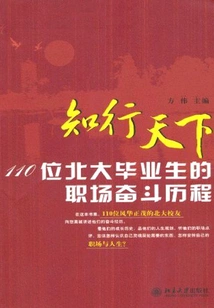
Knowledge and Practice in the World: the Career Struggles of 110 Peking University Graduates
Literature知行天下:110位北大毕业生的职场奋斗历程
Fang Wei
"Knowing the World: The Workplace Struggles of 110 Peking University Graduates" is a collection of interviews conducted by the Peking University Student Reporter Group on the workplace struggles of 110 Peking University graduates. The interviewees are mainly targeted at young alumni who have made their mark in various fields. These Alumni have accumulated valuable workplace experience and life insights. "Knowing the World: The Workplace Struggles of 110 Peking University Graduates" truly presents their growth and career development experiences in the form of interviews, focusing on life planning and development issues. The 110 figures in "Knowing the World: The Workplace Struggles of 110 Peking University Graduates" are distributed in various fields such as IT, finance, culture, etc. Their experiences are of great reference value for contemporary college students and people who are new to the workplace in seeking employment. It is also of great reference value for middle school students to choose their professional direction and establish their life goals. We hope that the wisdom extracted from the personal experiences of professional elites will bring useful inspiration to your career and life planning.
"Knowing the World: The Workplace Struggles of 110 Peking University Graduates" is a collection of interviews conducted by the Peking University Student Reporter Group on the workplace struggles of 110 Peking University graduates. The interviewees are mainly targeted at young alumni who have made their mark in various fields. These Alumni have accumulated valuable workplace experience and life insights. "Knowing the World: The Workplace Struggles of 110 Peking University Graduates" truly presents their growth and career development experiences in the form of interviews, focusing on life planning and development issues. The 110 figures in "Knowing the World: The Workplace Struggles of 110 Peking University Graduates" are distributed in various fields such as IT, finance, culture, etc. Their experiences are of great reference value for contemporary college students and people who are new to the workplace in seeking employment. It is also of great reference value for middle school students to choose their professional direction and establish their life goals. We hope that the wisdom extracted from the personal experiences of professional elites will bring useful inspiration to your career and life planning.
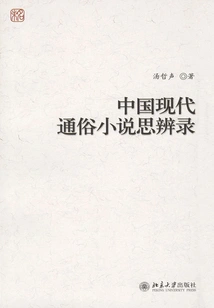
中国现代通俗小说思辨录
Tang Zhesheng
The author of "Thoughts on Modern Chinese Popular Novels" is one of the most accomplished scholars in contemporary China studying modern popular novels. "Thoughts on Modern Chinese Popular Novels" starts from the author's decades of research experience on modern Chinese popular novels, concisely and concisely cuts into many key issues of modern Chinese popular novels in the form of questions, and conducts popular and vivid thinking and elaboration on them. Many of the discussions are refreshing. The content of "Thoughts on Modern Chinese Popular Novels" shows the latest achievements in the study of modern Chinese popular literature.
The author of "Thoughts on Modern Chinese Popular Novels" is one of the most accomplished scholars in contemporary China studying modern popular novels. "Thoughts on Modern Chinese Popular Novels" starts from the author's decades of research experience on modern Chinese popular novels, concisely and concisely cuts into many key issues of modern Chinese popular novels in the form of questions, and conducts popular and vivid thinking and elaboration on them. Many of the discussions are refreshing. The content of "Thoughts on Modern Chinese Popular Novels" shows the latest achievements in the study of modern Chinese popular literature.
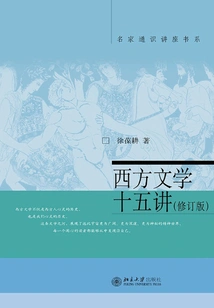
西方文学十五讲(修订版)
Xu Baogeng
The content of "Fifteen Lectures on Western Literature (Revised Edition)" spans three thousand years and spans two continents, Europe and the United States, from ancient Greek mythology and art, medieval biblical literature and chivalry literature, the Renaissance and the Enlightenment to the modern romantic movement, realism literature, modernism literature, and postmodernism literature. It covers the main trends in the development of Western literature and the most classic writers and works of each period, revealing the endless movement of Western literature from the depths of the soul. At the same time, it pays attention to connecting with the reality of contemporary life, exploring the modernity of Western classical literature, and conducting comparative interpretations with Chinese culture, striving to make some useful discoveries in the connection of China and the West, and the connection between ancient and modern times.
The content of "Fifteen Lectures on Western Literature (Revised Edition)" spans three thousand years and spans two continents, Europe and the United States, from ancient Greek mythology and art, medieval biblical literature and chivalry literature, the Renaissance and the Enlightenment to the modern romantic movement, realism literature, modernism literature, and postmodernism literature. It covers the main trends in the development of Western literature and the most classic writers and works of each period, revealing the endless movement of Western literature from the depths of the soul. At the same time, it pays attention to connecting with the reality of contemporary life, exploring the modernity of Western classical literature, and conducting comparative interpretations with Chinese culture, striving to make some useful discoveries in the connection of China and the West, and the connection between ancient and modern times.
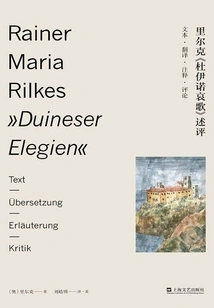
里尔克《杜伊诺哀歌》述评:文本·翻译·注释·评论
(austrian) Rilke Liu Haoming
Rilke, a famous Austrian poet, is known as one of the great German poets of the 20th century. "Duino Elegy" is Rilke's late masterpiece and a masterpiece of German poetry in the 20th century. As the crystallization of Rilke's life experience and speculation, it represents the supreme achievement of Rilke's poetic creation and is also the culmination of Rilke's mature artistic style. The author of this book, Professor Liu Haoming, has long been committed to the study of German literature and philosophy. He also spent more than ten years translating and researching Rilke's "Duino Elegy". Therefore, this book can be said to be the most profound, thick and broad study of Rilke's works in China so far, and is of great academic and cultural value. This book integrates translation, annotation, interpretation and review. It not only provides detailed annotations on the words of the poem "Duino Elegy", but also analyzes and interprets the work line by line in the commentary section. It also explains the generation process of the work in the poet's poetics and its broader poetic significance. These interpretations and poetic discussions are based on a comprehensive investigation of the existing Western studies of "Duino Elegy" and even Rilke, and at the same time fully reflect and integrate the author's own original views and research.
Rilke, a famous Austrian poet, is known as one of the great German poets of the 20th century. "Duino Elegy" is Rilke's late masterpiece and a masterpiece of German poetry in the 20th century. As the crystallization of Rilke's life experience and speculation, it represents the supreme achievement of Rilke's poetic creation and is also the culmination of Rilke's mature artistic style. The author of this book, Professor Liu Haoming, has long been committed to the study of German literature and philosophy. He also spent more than ten years translating and researching Rilke's "Duino Elegy". Therefore, this book can be said to be the most profound, thick and broad study of Rilke's works in China so far, and is of great academic and cultural value. This book integrates translation, annotation, interpretation and review. It not only provides detailed annotations on the words of the poem "Duino Elegy", but also analyzes and interprets the work line by line in the commentary section. It also explains the generation process of the work in the poet's poetics and its broader poetic significance. These interpretations and poetic discussions are based on a comprehensive investigation of the existing Western studies of "Duino Elegy" and even Rilke, and at the same time fully reflect and integrate the author's own original views and research.
Read and Grow
Literature阅读与成长
Zhan Jiahui
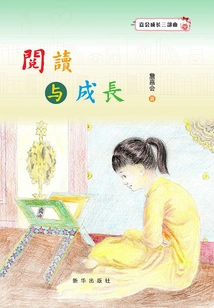
How can I record my growth? How to face growing pains? How can we find the right way to open a happy childhood? The author of this book has collected many diaries and reading insights. With a childish perspective and sincere writing style, he has recorded his insights on reading while growing up, as well as his thoughts on childhood, family, family relationships, etc.
How can I record my growth? How to face growing pains? How can we find the right way to open a happy childhood? The author of this book has collected many diaries and reading insights. With a childish perspective and sincere writing style, he has recorded his insights on reading while growing up, as well as his thoughts on childhood, family, family relationships, etc.
Those Who Have Experienced It
Literature亲历者
Lin Xue
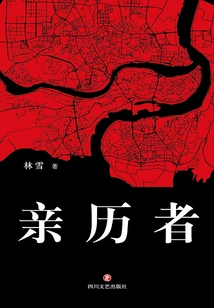
"The Witness" is a literary biography about his father Lin Xiangbei written by the writer Lin Xue. The narrative begins in the early 20th century and ends with the founding of New China. It is a long historical scroll of the revolution in eastern Sichuan. Lin Xiangbei was born in a dilapidated salt merchant family in 1918. He joined the Communist Party in 1938. In 1945, he began to participate in the preparations and instigation of the Huayingshan Uprising. After the failure of the uprising, he covered the retreat of a large number of comrades and organized the rescue of comrades imprisoned in Zhazidong and Baigongguan, Chongqing. The manuscript focuses on the revolutionary lives and emotions of Lin Peiyao, Lin Xiangbei and his son, Chen Lianshi, and Liao Ningjun's mother and daughter, laying out a legendary family portrait. In two generations, a total of eight underground members of the Communist Party of China appeared, and four relatives were sacrificed for the revolution. The youngest was only four years old... The author created many characters with vivid personalities. Chen Lianshi, who has always been shown as a tough image of the "old lady with two guns", also reproduced her scholarly upbringing and affection for her children.
"The Witness" is a literary biography about his father Lin Xiangbei written by the writer Lin Xue. The narrative begins in the early 20th century and ends with the founding of New China. It is a long historical scroll of the revolution in eastern Sichuan. Lin Xiangbei was born in a dilapidated salt merchant family in 1918. He joined the Communist Party in 1938. In 1945, he began to participate in the preparations and instigation of the Huayingshan Uprising. After the failure of the uprising, he covered the retreat of a large number of comrades and organized the rescue of comrades imprisoned in Zhazidong and Baigongguan, Chongqing. The manuscript focuses on the revolutionary lives and emotions of Lin Peiyao, Lin Xiangbei and his son, Chen Lianshi, and Liao Ningjun's mother and daughter, laying out a legendary family portrait. In two generations, a total of eight underground members of the Communist Party of China appeared, and four relatives were sacrificed for the revolution. The youngest was only four years old... The author created many characters with vivid personalities. Chen Lianshi, who has always been shown as a tough image of the "old lady with two guns", also reproduced her scholarly upbringing and affection for her children.
文艺复兴史研究入门
Zhou Chunsheng
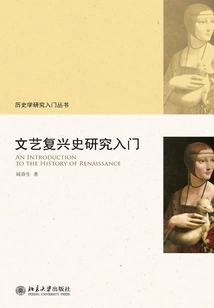
The Renaissance in early modern Europe was a rebirth era with infinite meaning and charm. The main purpose of "Introduction to the Study of Renaissance History" is to provide introductory guidance for readers who are interested in engaging in or understanding the study of Renaissance history. First, it outlines the origins of the history of Renaissance research. Secondly, it outlines the essence of the Renaissance in terms of thought and culture, literature and art, social economy, state and politics, education and science and technology, as well as the research status and results at home and abroad. Finally, the available academic resources and key academic keywords are introduced. In addition, recommended reading lists are provided to facilitate readers to further expand their reading.
The Renaissance in early modern Europe was a rebirth era with infinite meaning and charm. The main purpose of "Introduction to the Study of Renaissance History" is to provide introductory guidance for readers who are interested in engaging in or understanding the study of Renaissance history. First, it outlines the origins of the history of Renaissance research. Secondly, it outlines the essence of the Renaissance in terms of thought and culture, literature and art, social economy, state and politics, education and science and technology, as well as the research status and results at home and abroad. Finally, the available academic resources and key academic keywords are introduced. In addition, recommended reading lists are provided to facilitate readers to further expand their reading.
Postcolonial Theory
Literature后殖民理论
Zhao Xifang
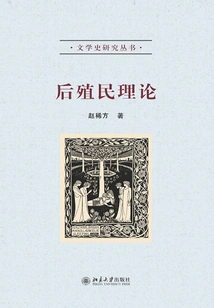
Introduction to "Postcolonial Theory": Western anti-colonial thought is as old as colonial history. Early Western anti-colonial thought can be roughly divided into two types: one is humanitarian moral criticism, and the other is liberal economic criticism. The former can be represented by the article "A Short Account of the Degtruction of America" written in 1542 by Bishop Las Casas, who is known as the father of European colonialism criticism, and the latter can be represented by Adam Smith's "The Wealth of Nations" written in 1776. It should be said that Marxism in the 19th century both inherited and surpassed the two European intellectual traditions of humanitarian moral criticism and liberal economic criticism. Economically, Marx and Engels contradicted Adam Smith and others who believed that colonialism could not benefit the mother country, and believed that Western capitalism was fundamentally a product of colonialism.
Introduction to "Postcolonial Theory": Western anti-colonial thought is as old as colonial history. Early Western anti-colonial thought can be roughly divided into two types: one is humanitarian moral criticism, and the other is liberal economic criticism. The former can be represented by the article "A Short Account of the Degtruction of America" written in 1542 by Bishop Las Casas, who is known as the father of European colonialism criticism, and the latter can be represented by Adam Smith's "The Wealth of Nations" written in 1776. It should be said that Marxism in the 19th century both inherited and surpassed the two European intellectual traditions of humanitarian moral criticism and liberal economic criticism. Economically, Marx and Engels contradicted Adam Smith and others who believed that colonialism could not benefit the mother country, and believed that Western capitalism was fundamentally a product of colonialism.
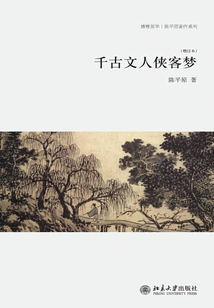
千古文人侠客梦(增订本)(图文全版)
Chen Pingyuan
Counting the Peking University version, this is already the sixth version. This small book was first published by People's Literature Publishing House in 1992, and was published in traditional Chinese by Maitian Publishing House in Taipei in 1995. In 1997, Hebei People's Publishing House included it in the three-volume "History of Chen Pingyuan's Novels", which is the "basic type" of this book. Ten years later, in September 2002, New World Publishing House released a beautifully bound "illustrated collector's edition", which can be regarded as an "improved edition". In the spring and summer of last year, almost at the same time, Peking University Press and Baihua Literature and Art Publishing House approached me, hoping to republish the book. The two parties negotiated and reached the following agreement: "Hundred Flowers" will publish the illustrated version and only accept the first version of the text, which is pleasing to the eye; "Peking University" will also include various appendices, add indexes, and highlight the academic nature. When I talk about "martial arts", apart from this small book, I only have "The Chivalric Mentality of Patriots in the Late Qing Dynasty" in "The Establishment of Modern Chinese Academics", "Martial Arts Novels and Kung Fu Movies" in "Contemporary Chinese Humanities Observation", and "Popular Novels in China" in "Literary History as a Subject". Such achievements in twenty years are really meager. To put it bluntly, I am not loyal enough and I am not professional enough. That is because I do not want to make this my "main job". As for why and how to use "martial arts" to talk about the genre of novels and also to relate to ideology and culture, "Myself and Martial Arts Novels" was originally used as the "Preface" to the humanities edition, and "Me and Research on Martial Arts Novels" was written as the "Postscript" to the New World Edition, plus seven appendices such as "Martial Arts Novels and Chinese Culture", everything that needs to be said has been said, and it would be annoying to go on about it any longer. When asked about my research experience, just one sentence: watching popular novels (martial arts or romance) and genre movies (detective or thriller) may be very enjoyable, but being a research subject is not very fun. I am afraid of lacking theoretical consciousness and blindly retelling charming stories; I am also afraid of being indulged in it, getting carried away, and "over-explaining" when speaking. In such a dialogue between ancient and modern times and communication between literature and history, a sense of proportion is very important. How to handle it depends on the scholar's interest and skill. With my ability, I can only stop here, so I have to say goodbye to those rangers who "draw their swords and look around in confusion" for the time being.
Counting the Peking University version, this is already the sixth version. This small book was first published by People's Literature Publishing House in 1992, and was published in traditional Chinese by Maitian Publishing House in Taipei in 1995. In 1997, Hebei People's Publishing House included it in the three-volume "History of Chen Pingyuan's Novels", which is the "basic type" of this book. Ten years later, in September 2002, New World Publishing House released a beautifully bound "illustrated collector's edition", which can be regarded as an "improved edition". In the spring and summer of last year, almost at the same time, Peking University Press and Baihua Literature and Art Publishing House approached me, hoping to republish the book. The two parties negotiated and reached the following agreement: "Hundred Flowers" will publish the illustrated version and only accept the first version of the text, which is pleasing to the eye; "Peking University" will also include various appendices, add indexes, and highlight the academic nature. When I talk about "martial arts", apart from this small book, I only have "The Chivalric Mentality of Patriots in the Late Qing Dynasty" in "The Establishment of Modern Chinese Academics", "Martial Arts Novels and Kung Fu Movies" in "Contemporary Chinese Humanities Observation", and "Popular Novels in China" in "Literary History as a Subject". Such achievements in twenty years are really meager. To put it bluntly, I am not loyal enough and I am not professional enough. That is because I do not want to make this my "main job". As for why and how to use "martial arts" to talk about the genre of novels and also to relate to ideology and culture, "Myself and Martial Arts Novels" was originally used as the "Preface" to the humanities edition, and "Me and Research on Martial Arts Novels" was written as the "Postscript" to the New World Edition, plus seven appendices such as "Martial Arts Novels and Chinese Culture", everything that needs to be said has been said, and it would be annoying to go on about it any longer. When asked about my research experience, just one sentence: watching popular novels (martial arts or romance) and genre movies (detective or thriller) may be very enjoyable, but being a research subject is not very fun. I am afraid of lacking theoretical consciousness and blindly retelling charming stories; I am also afraid of being indulged in it, getting carried away, and "over-explaining" when speaking. In such a dialogue between ancient and modern times and communication between literature and history, a sense of proportion is very important. How to handle it depends on the scholar's interest and skill. With my ability, I can only stop here, so I have to say goodbye to those rangers who "draw their swords and look around in confusion" for the time being.
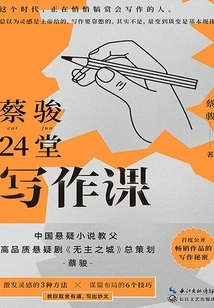
Cai Jun's 24 Writing Lessons
Literature蔡骏24堂写作课
Cai Jun
Cai Jun has systematically organized a set of practical writing courses based on nearly 20 years of continuous writing and more than 10 years of industry guidance experience. Each class uses Chinese and foreign literary works, combined with one's own creative experience, to accurately analyze each writing technique. Relaxing, interesting, and easy to understand, it helps you solve difficult writing problems. Preliminary preparation for writing - three methods to train the ability to associate; techniques for planning and layout - a good ending is the art of leaving blank space; advanced writing - only by making good choices can you write a wonderful article; the key to staying focused - method is more important than attitude; no one is born with the ability to write. From observing life to conceiving and writing, from accumulating materials to using foreshadowing, this is a writing secret book that readers can quickly learn whether it is a proposition composition or a novel creation.
Cai Jun has systematically organized a set of practical writing courses based on nearly 20 years of continuous writing and more than 10 years of industry guidance experience. Each class uses Chinese and foreign literary works, combined with one's own creative experience, to accurately analyze each writing technique. Relaxing, interesting, and easy to understand, it helps you solve difficult writing problems. Preliminary preparation for writing - three methods to train the ability to associate; techniques for planning and layout - a good ending is the art of leaving blank space; advanced writing - only by making good choices can you write a wonderful article; the key to staying focused - method is more important than attitude; no one is born with the ability to write. From observing life to conceiving and writing, from accumulating materials to using foreshadowing, this is a writing secret book that readers can quickly learn whether it is a proposition composition or a novel creation.
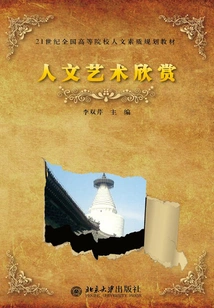
21世纪全国高职高专人文素质规划教材人文艺术欣赏
Li Shuangqin
"Humanities and Art Appreciation" is a humanistic quality education textbook for higher vocational colleges, covering the five main fields of humanistic quality education: literature, drama, film, music, and fine arts. Each chapter not only selects outstanding works for "classic appreciation", but also links to relevant basic knowledge, such as the development history of the art field, the main aesthetic characteristics and appreciation elements of the art form, etc. Finally, it also provides "thinking and practice" content for students to practice. The content of "Humanities and Art Appreciation" is written close to the actual life and ability level of students, and combines scientificity, knowledge and interest, which is beneficial to: improve students' knowledge structure, cultivate students' art appreciation, and cultivate students' all-round development of personality.
"Humanities and Art Appreciation" is a humanistic quality education textbook for higher vocational colleges, covering the five main fields of humanistic quality education: literature, drama, film, music, and fine arts. Each chapter not only selects outstanding works for "classic appreciation", but also links to relevant basic knowledge, such as the development history of the art field, the main aesthetic characteristics and appreciation elements of the art form, etc. Finally, it also provides "thinking and practice" content for students to practice. The content of "Humanities and Art Appreciation" is written close to the actual life and ability level of students, and combines scientificity, knowledge and interest, which is beneficial to: improve students' knowledge structure, cultivate students' art appreciation, and cultivate students' all-round development of personality.
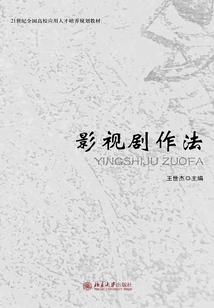
影视剧作法
Wang Shijie
"Film and Television Drama Methods" is an applied teaching material on the basic knowledge of film and television scripts. This textbook has two biggest features: on the one hand, it has a comprehensive combination of traditional knowledge points and the elements of dramas in the new era, and it also extends knowledge points such as genre film drama writing strategies and TV drama operations. On the other hand, this textbook combines the latest film and television materials for analysis and explanation, which is very contemporary and innovative. This textbook has a very good inspiration for script creation enthusiasts and film and television majors learning script creation.
"Film and Television Drama Methods" is an applied teaching material on the basic knowledge of film and television scripts. This textbook has two biggest features: on the one hand, it has a comprehensive combination of traditional knowledge points and the elements of dramas in the new era, and it also extends knowledge points such as genre film drama writing strategies and TV drama operations. On the other hand, this textbook combines the latest film and television materials for analysis and explanation, which is very contemporary and innovative. This textbook has a very good inspiration for script creation enthusiasts and film and television majors learning script creation.
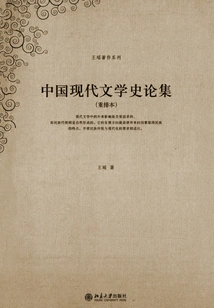
中国现代文学史论集(重排本)
Wang Yao
The author of "Collection of Modern Chinese Literary History (Rearranged Edition)" explores the development process of literary history and its laws through the rich and complex phenomena of literary history, from a holistic perspective and the intrinsic relationship between the generation and development of the discipline. Its spirit and methods have "model significance" for the study of modern literary history. Medieval literature research, Lu Xun research, and modern literature research represent the three peaks of Mr. Wang Yao's academic achievements in his life. "Collection of Modern Chinese Literature History (Rearranged Edition)" collects representative papers on the latter two aspects.
The author of "Collection of Modern Chinese Literary History (Rearranged Edition)" explores the development process of literary history and its laws through the rich and complex phenomena of literary history, from a holistic perspective and the intrinsic relationship between the generation and development of the discipline. Its spirit and methods have "model significance" for the study of modern literary history. Medieval literature research, Lu Xun research, and modern literature research represent the three peaks of Mr. Wang Yao's academic achievements in his life. "Collection of Modern Chinese Literature History (Rearranged Edition)" collects representative papers on the latter two aspects.
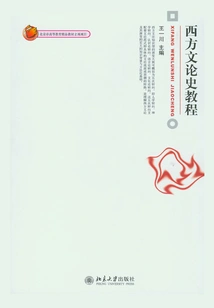
西方文论史教程
Wang Yichuan
"A Course on the History of Western Literary Theory" summarizes the evolution of the "intellectual type" of Western literary theory into five "turns", namely the humanistic turn, theological turn, epistemological turn, linguistic theory turn, and cultural theory turn. It believes that these five "turns" dominate the "paradigm" of literary theory, that is, the conversion of specific literary schools or trends of thought, and are the grand intellectual background and methodological basis for understanding Western literary theory and its evolution. The textbook uses the five "turns" as a breakthrough point and makes various attempts based on teaching practice, striving to enable college students to see as clearly as possible the history of Western literary theory that is closely intertwined with Chinese literary theory in limited class time.
"A Course on the History of Western Literary Theory" summarizes the evolution of the "intellectual type" of Western literary theory into five "turns", namely the humanistic turn, theological turn, epistemological turn, linguistic theory turn, and cultural theory turn. It believes that these five "turns" dominate the "paradigm" of literary theory, that is, the conversion of specific literary schools or trends of thought, and are the grand intellectual background and methodological basis for understanding Western literary theory and its evolution. The textbook uses the five "turns" as a breakthrough point and makes various attempts based on teaching practice, striving to enable college students to see as clearly as possible the history of Western literary theory that is closely intertwined with Chinese literary theory in limited class time.
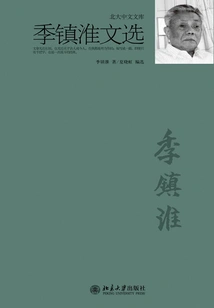
Selected Works of Ji Zhenhuai
Literature季镇淮文选
Ji Zhenhuai
Brief introduction to "Selected Works of Ji Zhenhuai": Mr. Ji Zhenhuai has been engaged in the teaching and research of Chinese literary history for a long time and has made outstanding achievements. His many writings on Sima Qian, Han Yu and modern literature are particularly influential in the academic world. This edition selects 19 representative papers, academic essays, reviews, and scholar biographies, in order to fully demonstrate his intellectual process.
Brief introduction to "Selected Works of Ji Zhenhuai": Mr. Ji Zhenhuai has been engaged in the teaching and research of Chinese literary history for a long time and has made outstanding achievements. His many writings on Sima Qian, Han Yu and modern literature are particularly influential in the academic world. This edition selects 19 representative papers, academic essays, reviews, and scholar biographies, in order to fully demonstrate his intellectual process.
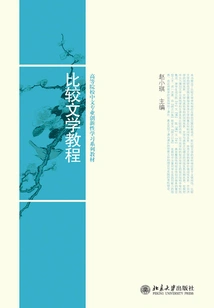
Comparative Literature Tutorial
Literature比较文学教程
Zhao Xiaoqi
"Comparative Literature Course" is a basic course textbook on comparative literature for Chinese majors (also used by colleges of foreign languages). It is one of the "Innovative Learning Series Textbooks for Chinese Majors in Colleges and Universities". The whole book puts forward a new perspective on the subject characteristics and research scope of comparative literature, that is, the subject characteristic of comparative literature lies in intersubjectivity. The research scope of comparative literature mainly refers to the inter-relations between facts and materials of heterogeneous literature, the inter-relations between the aesthetic values of heterogeneous literature, the inter-relations between different poetics, the inter-relations between literature and other disciplines, and the inter-relations between literature and other disciplines. There are five types of intersexual relationships with other cultural theories, based on which five chapters are divided into five chapters in terms of the large system; in terms of subsystems, each section is a small section, which specifically explains the research methods corresponding to each intersexual relationship, such as circulation studies, origin studies, media studies, image studies, thematic studies, genre studies, elucidation research, archetypal criticism, hermeneutics, etc. After the basic knowledge of each section, "Guidance Training", "Seminar Platform" and "Expansion Guide" are further provided for students to study in depth.
"Comparative Literature Course" is a basic course textbook on comparative literature for Chinese majors (also used by colleges of foreign languages). It is one of the "Innovative Learning Series Textbooks for Chinese Majors in Colleges and Universities". The whole book puts forward a new perspective on the subject characteristics and research scope of comparative literature, that is, the subject characteristic of comparative literature lies in intersubjectivity. The research scope of comparative literature mainly refers to the inter-relations between facts and materials of heterogeneous literature, the inter-relations between the aesthetic values of heterogeneous literature, the inter-relations between different poetics, the inter-relations between literature and other disciplines, and the inter-relations between literature and other disciplines. There are five types of intersexual relationships with other cultural theories, based on which five chapters are divided into five chapters in terms of the large system; in terms of subsystems, each section is a small section, which specifically explains the research methods corresponding to each intersexual relationship, such as circulation studies, origin studies, media studies, image studies, thematic studies, genre studies, elucidation research, archetypal criticism, hermeneutics, etc. After the basic knowledge of each section, "Guidance Training", "Seminar Platform" and "Expansion Guide" are further provided for students to study in depth.
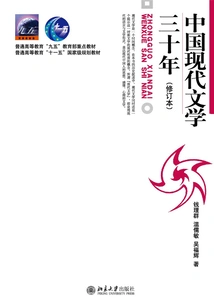
中国现代文学三十年(修订本)
Qian Liqun
Although "Thirty Years of Modern Chinese Literature" is also classified according to genres, it focuses on highlighting the nature and trends of various genres and the characteristics of different schools. It also provides special chapters on the works of certain writers who represent the peak of art, and each chapter also appends a chronology. The revised version of "Thirty Years of Modern Chinese Literature" written by Qian Liqun and three other scholars has been listed as a key textbook for general higher education by the Ministry of Education during the "Ninth Five-Year Plan". This nearly 600,000-word work on the history of modern literature not only pays attention to absorbing the results of previous research on writers, works, and styles, but also overcomes the narrative mode and narrow pattern of previous literary history, broadens the research field, and forms a unique feature with strong academic taste under the proposition of "literary modernization." First of all, in terms of structural layout, the book is divided into three parts according to the historical period from 1917 to 1949, but only briefly explains the social and political situation in each period, focusing on explaining the important literary trends and phenomena in each stage, and analyzing the laws and characteristics of literature itself from the process of literary evolution and historical connections. In its reviews of important writers, the book strives to avoid listing the writers' lives and lengthy retellings of the plots of their works. Instead, it emphasizes the artistic achievements and aesthetic values of the works, and pays special attention to analyzing the reasons for the long-lasting impact of the works. For example, in the second chapter of Lu Xun (1), when commenting on the structural patterns and profound implications of Lu Xun's novels, the section "Indescribable Lu Xun" is specially marked, which synthesizes recent academic discussions on the anthropological connotation of "Ah Q spirit". The book also lists Shen Congwen as a special chapter, expressing sympathy and understanding for this cultural figure who built the "Western Hunan World" and "played the role of critic of modern Chinese culture." These are things that were not available or omitted in previous literary history works. Regarding literary schools, the book not only emphasizes mainstream literature, but also takes care of literary schools with different tastes such as Beijing School, Shanghai School, New Sensation School, and Avant-Garde School from the perspective of region and cultural environment, striving to restore the colorful and luxuriant original appearance of modern literature.
Although "Thirty Years of Modern Chinese Literature" is also classified according to genres, it focuses on highlighting the nature and trends of various genres and the characteristics of different schools. It also provides special chapters on the works of certain writers who represent the peak of art, and each chapter also appends a chronology. The revised version of "Thirty Years of Modern Chinese Literature" written by Qian Liqun and three other scholars has been listed as a key textbook for general higher education by the Ministry of Education during the "Ninth Five-Year Plan". This nearly 600,000-word work on the history of modern literature not only pays attention to absorbing the results of previous research on writers, works, and styles, but also overcomes the narrative mode and narrow pattern of previous literary history, broadens the research field, and forms a unique feature with strong academic taste under the proposition of "literary modernization." First of all, in terms of structural layout, the book is divided into three parts according to the historical period from 1917 to 1949, but only briefly explains the social and political situation in each period, focusing on explaining the important literary trends and phenomena in each stage, and analyzing the laws and characteristics of literature itself from the process of literary evolution and historical connections. In its reviews of important writers, the book strives to avoid listing the writers' lives and lengthy retellings of the plots of their works. Instead, it emphasizes the artistic achievements and aesthetic values of the works, and pays special attention to analyzing the reasons for the long-lasting impact of the works. For example, in the second chapter of Lu Xun (1), when commenting on the structural patterns and profound implications of Lu Xun's novels, the section "Indescribable Lu Xun" is specially marked, which synthesizes recent academic discussions on the anthropological connotation of "Ah Q spirit". The book also lists Shen Congwen as a special chapter, expressing sympathy and understanding for this cultural figure who built the "Western Hunan World" and "played the role of critic of modern Chinese culture." These are things that were not available or omitted in previous literary history works. Regarding literary schools, the book not only emphasizes mainstream literature, but also takes care of literary schools with different tastes such as Beijing School, Shanghai School, New Sensation School, and Avant-Garde School from the perspective of region and cultural environment, striving to restore the colorful and luxuriant original appearance of modern literature.
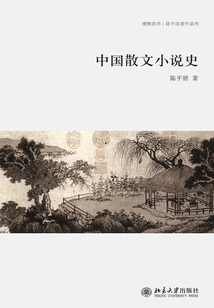
History of Chinese Prose Novels
Literature中国散文小说史
Chen Pingyuan
"History of Chinese Prose Novels" is a monographic work that explains the development history of Chinese prose and novels. The whole book is divided into "Introduction" and two parts. The first part describes the development process of Chinese prose in chronological order; the second part explains the development trajectory of Chinese novels through the evolution of genres.
"History of Chinese Prose Novels" is a monographic work that explains the development history of Chinese prose and novels. The whole book is divided into "Introduction" and two parts. The first part describes the development process of Chinese prose in chronological order; the second part explains the development trajectory of Chinese novels through the evolution of genres.
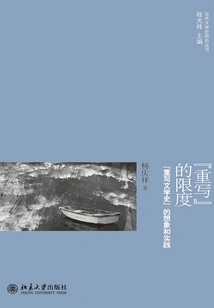
Rewrite Limit: \
Literature重写的限度:\
Yang Qingxiang
"The Limits of "Rewriting": The Imagination and Practice of "Rewriting Literary History"" takes "rewriting literary history" as the research object, comprehensively examines the multiple connections between "rewriting literary history" and the historical context of the 1980s, analyzes the knowledge composition, aesthetic interests and political demands of the "rewriting" subject, and determines the complex interaction between the history of discourse changes and specific behavioral practices.
"The Limits of "Rewriting": The Imagination and Practice of "Rewriting Literary History"" takes "rewriting literary history" as the research object, comprehensively examines the multiple connections between "rewriting literary history" and the historical context of the 1980s, analyzes the knowledge composition, aesthetic interests and political demands of the "rewriting" subject, and determines the complex interaction between the history of discourse changes and specific behavioral practices.
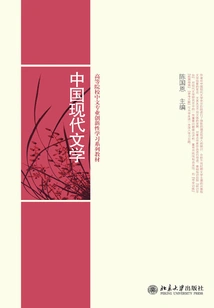
Chinese Modern Literature
Literature中国现代文学
Chen Guoen
"Modern Chinese Literature" has been in the works for seven years. In 2002, I was appointed as the deputy director of the Chinese Department of Wuhan University, in charge of undergraduate teaching. At the beginning of the new century, the process of economic globalization is accelerating and my country's modernization drive is advancing in an all-round way. Higher education is also facing new opportunities and challenges. Facing the new situation, how to better cultivate high-quality talents that adapt to the requirements of the times? This is an urgent task that our higher education workers must think about and deal with. It was against this background that in order to adapt to the changes in the concept of talents and educational concepts, I and Professor Long Quanming, then the head of the department, planned to carry out comprehensive undergraduate teaching reform using the Chinese Language and Literature major as a pilot and starting from revising the training plan. One of the measures is to drastically adjust the curriculum system, compress general history and introductory courses, and increase original classic study courses and practical courses, aiming to strengthen the cultivation of students' quality and ability. Accordingly, we plan to compile supporting teaching materials. At first, in order to increase the intensity of reading original classics and cooperate with the new series of courses on the introduction to the classics of language and literature in the new training plan, we first compiled the "Series of Textbooks for the Introduction to the Classical Readings of Language and Literature in Colleges and Universities", which was officially published in 2003. At the same time, we are also planning to compile a set of basic course textbooks that adapt to new needs and have new concepts. Since then, I have started thinking, researching, and discussing with colleagues. After several years of preparation, systematic planning and comprehensive design began in 2006. In 2007, the editorial committee was formally established and the writing work started. After the unremitting efforts of many colleagues, we finally have the results today, which is gratifying.
"Modern Chinese Literature" has been in the works for seven years. In 2002, I was appointed as the deputy director of the Chinese Department of Wuhan University, in charge of undergraduate teaching. At the beginning of the new century, the process of economic globalization is accelerating and my country's modernization drive is advancing in an all-round way. Higher education is also facing new opportunities and challenges. Facing the new situation, how to better cultivate high-quality talents that adapt to the requirements of the times? This is an urgent task that our higher education workers must think about and deal with. It was against this background that in order to adapt to the changes in the concept of talents and educational concepts, I and Professor Long Quanming, then the head of the department, planned to carry out comprehensive undergraduate teaching reform using the Chinese Language and Literature major as a pilot and starting from revising the training plan. One of the measures is to drastically adjust the curriculum system, compress general history and introductory courses, and increase original classic study courses and practical courses, aiming to strengthen the cultivation of students' quality and ability. Accordingly, we plan to compile supporting teaching materials. At first, in order to increase the intensity of reading original classics and cooperate with the new series of courses on the introduction to the classics of language and literature in the new training plan, we first compiled the "Series of Textbooks for the Introduction to the Classical Readings of Language and Literature in Colleges and Universities", which was officially published in 2003. At the same time, we are also planning to compile a set of basic course textbooks that adapt to new needs and have new concepts. Since then, I have started thinking, researching, and discussing with colleagues. After several years of preparation, systematic planning and comprehensive design began in 2006. In 2007, the editorial committee was formally established and the writing work started. After the unremitting efforts of many colleagues, we finally have the results today, which is gratifying.
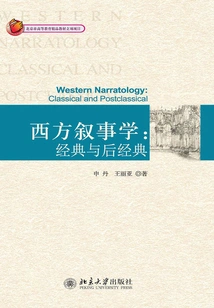
西方叙事学:经典与后经典
Shendan
"Western Narratology: Classics and Post-Classics" provides an in-depth and simple introduction to the relevant theories and research methods of narratology, as well as the relationship between narratology and related disciplines, so that students can comprehensively and clearly understand the purpose, nature, characteristics, role and disciplinary positioning of narratology, more accurately grasp relevant concepts and methods, and focus on introducing practical narratology research methods, as well as research methods in related disciplines that are complementary to narratology methods. At the same time, the analysis of Chinese narrative works and the analysis of Western narrative works will be organically combined, so that students can have a better understanding of the structural techniques of both Chinese and foreign narrative works.
"Western Narratology: Classics and Post-Classics" provides an in-depth and simple introduction to the relevant theories and research methods of narratology, as well as the relationship between narratology and related disciplines, so that students can comprehensively and clearly understand the purpose, nature, characteristics, role and disciplinary positioning of narratology, more accurately grasp relevant concepts and methods, and focus on introducing practical narratology research methods, as well as research methods in related disciplines that are complementary to narratology methods. At the same time, the analysis of Chinese narrative works and the analysis of Western narrative works will be organically combined, so that students can have a better understanding of the structural techniques of both Chinese and foreign narrative works.
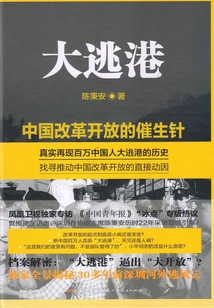
Great Escape
Literature大逃港
Chen Bingan
After the founding of the People's Republic of China, the exodus along the Shenzhen River continued for thirty years. Chinese citizens: farmers, workers, intellectuals, cadres, soldiers... Cannot bear the various political and economic sufferings caused by the leftist misfortunes such as the anti-rightist movement, the Four Cleans-ups, the Cultural Revolution, and the Great Famine. At the risk of his life under police dogs and bullets, he forcibly crossed the Shenzhen River and fled to the "free world" in Hong Kong! The fleeing people involved Guangdong, Hunan, Fujian, Heilongjiang... 12 Provinces and 62 cities (counties) in China, and the actual number exceeded one million! The border guards guarding the riverside with loaded guns and bayonets unsheathed faced hundreds of thousands of people pouring in like black clouds... An old soldier who took off his military uniform once told me that the young hands holding bayonets often trembled because of the conflict between conscience and military orders in front of their brothers and sisters! It was a bloody collision between defending the dignity of the Republic's laws and regulations and the people's escape from hunger and suffering, looking for freedom and happiness!
After the founding of the People's Republic of China, the exodus along the Shenzhen River continued for thirty years. Chinese citizens: farmers, workers, intellectuals, cadres, soldiers... Cannot bear the various political and economic sufferings caused by the leftist misfortunes such as the anti-rightist movement, the Four Cleans-ups, the Cultural Revolution, and the Great Famine. At the risk of his life under police dogs and bullets, he forcibly crossed the Shenzhen River and fled to the "free world" in Hong Kong! The fleeing people involved Guangdong, Hunan, Fujian, Heilongjiang... 12 Provinces and 62 cities (counties) in China, and the actual number exceeded one million! The border guards guarding the riverside with loaded guns and bayonets unsheathed faced hundreds of thousands of people pouring in like black clouds... An old soldier who took off his military uniform once told me that the young hands holding bayonets often trembled because of the conflict between conscience and military orders in front of their brothers and sisters! It was a bloody collision between defending the dignity of the Republic's laws and regulations and the people's escape from hunger and suffering, looking for freedom and happiness!
theoretical" Literature
Literature“理论”文学
Du Maosheng
I went on the road with "confusion". In the first half of each class, I first solve the confusion and then get to the point. Solve one puzzle in each lesson until all are cleared. I don't know if I can actually solve the students' confusion, I just know that they are interested. When teaching theory, I originally wanted to "explain it in a simple way", but later I couldn't "explain it in a simple way", so I had to "explain it in a simple way", but it liberated teaching. In order to cultivate students' literary sensibility, I read a literary work aloud in every class. Later, I added a link for students to read aloud on stage. After reading the work, I also asked my classmates to comment and give scores at the same time. This format persists to this day. In fact, in this process, the "dialogue" between me and the students has already begun.
I went on the road with "confusion". In the first half of each class, I first solve the confusion and then get to the point. Solve one puzzle in each lesson until all are cleared. I don't know if I can actually solve the students' confusion, I just know that they are interested. When teaching theory, I originally wanted to "explain it in a simple way", but later I couldn't "explain it in a simple way", so I had to "explain it in a simple way", but it liberated teaching. In order to cultivate students' literary sensibility, I read a literary work aloud in every class. Later, I added a link for students to read aloud on stage. After reading the work, I also asked my classmates to comment and give scores at the same time. This format persists to this day. In fact, in this process, the "dialogue" between me and the students has already begun.
中国新文学史稿(上)
Wang Yao
The book is divided into four periods, namely the first ten years of New Literature, the ten years of the Leftist League, the early period of the Anti-Japanese War, and after the Yan'an Forum on Literature and Art. Each volume begins with a chapter that provides a general overview of the social and historical background, literary trends, associations, debates, etc. Of this period, and then discusses it in chapters using poetry, novels, dramas, essays and other literary styles to introduce writers and works of various schools and tendencies.
The book is divided into four periods, namely the first ten years of New Literature, the ten years of the Leftist League, the early period of the Anti-Japanese War, and after the Yan'an Forum on Literature and Art. Each volume begins with a chapter that provides a general overview of the social and historical background, literary trends, associations, debates, etc. Of this period, and then discusses it in chapters using poetry, novels, dramas, essays and other literary styles to introduce writers and works of various schools and tendencies.
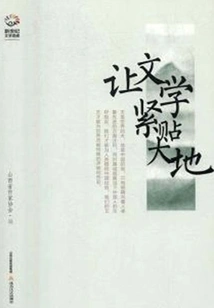
Keep Literature Close to the Earth
Literature让文学紧贴大地
Shanxi Provincial Writers Association
"Let Literature Close to the Earth" focuses on the First Secretary's speech at the symposium on literary and art work. It collects the thoughts and feelings of Shanxi writers and critics after the study and discussion. It discusses the thoughts and thoughts of literary and art workers after the speech from four aspects: theoretical exploration, critical thinking, creative insights, and experience. It is a positive response and thinking to the new direction and new requirements proposed by the Secretary in literary and artistic work.
"Let Literature Close to the Earth" focuses on the First Secretary's speech at the symposium on literary and art work. It collects the thoughts and feelings of Shanxi writers and critics after the study and discussion. It discusses the thoughts and thoughts of literary and art workers after the speech from four aspects: theoretical exploration, critical thinking, creative insights, and experience. It is a positive response and thinking to the new direction and new requirements proposed by the Secretary in literary and artistic work.
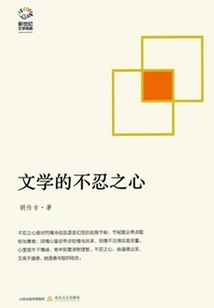
Literary Intolerance
Literature文学的不忍之心
Hu Chuanji
"The Intolerable Heart of Literature" is a treatise that uses contemporary literature to study the history of experience and the history of ideas. It can be said to be a treatise on the history of literary ideas. This book prefers the method of discussion, like a kind of spiritual textual research. Although literary creation, literary criticism and literary theory are separate from each other, through Hu Chuanji's discussion, they are connected with each other and the spiritual connection between "disciplines" is found, which is an effective way to record the history of literary concepts. The writing style of this book is innovative and has a certain experimental flavor.
"The Intolerable Heart of Literature" is a treatise that uses contemporary literature to study the history of experience and the history of ideas. It can be said to be a treatise on the history of literary ideas. This book prefers the method of discussion, like a kind of spiritual textual research. Although literary creation, literary criticism and literary theory are separate from each other, through Hu Chuanji's discussion, they are connected with each other and the spiritual connection between "disciplines" is found, which is an effective way to record the history of literary concepts. The writing style of this book is innovative and has a certain experimental flavor.
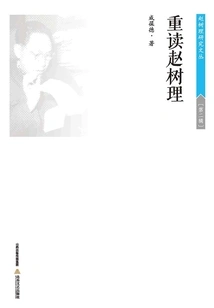
Rereading Zhao Shuli
Literature重读赵树理
Cheng Baode
This book collects the essays written by the author over the past few years. It is not only a re-reading of Zhao Shuli's learning experience, but also a record of exchanges with colleagues. He expressed his own opinions on controversial issues in "Zhao Yan", provided new materials, and corrected some mistakes. The shining moments in Zhao Shuli's life are emphatically described. It is a ray of heart dedicated to his hometown, Zhao Shuli and his comrades.
This book collects the essays written by the author over the past few years. It is not only a re-reading of Zhao Shuli's learning experience, but also a record of exchanges with colleagues. He expressed his own opinions on controversial issues in "Zhao Yan", provided new materials, and corrected some mistakes. The shining moments in Zhao Shuli's life are emphatically described. It is a ray of heart dedicated to his hometown, Zhao Shuli and his comrades.
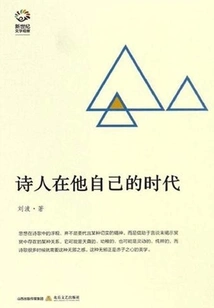
The Poet in His Own Time
Literature诗人在他自己的时代
Liu Bo
This book is a collection of literary criticism by the author Liu Bo. It is not so much a comment on poetry, an analysis of the current situation of the poetry world, and an interpretation of the current situation of poets as it is the author's sincere description of "poetry". This article not only talks about the evolution of different stages in the history of poetry development, but also contains concerns about the current situation of poets.
This book is a collection of literary criticism by the author Liu Bo. It is not so much a comment on poetry, an analysis of the current situation of the poetry world, and an interpretation of the current situation of poets as it is the author's sincere description of "poetry". This article not only talks about the evolution of different stages in the history of poetry development, but also contains concerns about the current situation of poets.
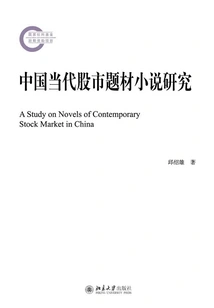
中国当代股市题材小说研究
Qiu Shaoxiong
This book takes Chinese contemporary stock market novels as the research object, conducts cultural interpretation and commentary on them, and uses them as a "window" to observe the relationship between the rise of the stock market and social and cultural transformation in Chinese society. The stock market is an indispensable part of China's reform and opening up. The prosperity and development of the stock market is a new political, economic and cultural phenomenon in contemporary Chinese society. Although the contemporary Chinese stock market has a short history, it has its own distinctive characteristics. The study of stock market-themed novels helps people reflect on our era in a broader historical context. Behind all changes in contemporary Chinese society there is a common figure - the market. The greatest value of contemporary Chinese stock market novels is to vividly express the connection between the great historical changes in contemporary Chinese society and the market.
This book takes Chinese contemporary stock market novels as the research object, conducts cultural interpretation and commentary on them, and uses them as a "window" to observe the relationship between the rise of the stock market and social and cultural transformation in Chinese society. The stock market is an indispensable part of China's reform and opening up. The prosperity and development of the stock market is a new political, economic and cultural phenomenon in contemporary Chinese society. Although the contemporary Chinese stock market has a short history, it has its own distinctive characteristics. The study of stock market-themed novels helps people reflect on our era in a broader historical context. Behind all changes in contemporary Chinese society there is a common figure - the market. The greatest value of contemporary Chinese stock market novels is to vividly express the connection between the great historical changes in contemporary Chinese society and the market.
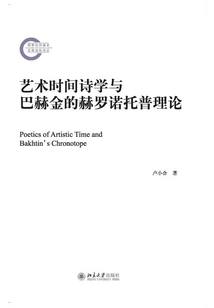
艺术时间诗学与巴赫金的赫罗诺托普理论
Lu Xiaohe
The poetics of artistic time is an important research field in contemporary literature and art. As a well-known thinker and literary theorist in the 20th century, Bakhtin's "chronotope" theory (i. E., The Hronotrop theory) has also had a huge impact on Chinese poetics, philology, semiotics and other humanities disciplines. This book attempts to connect these two theories and explore the issue of artistic time in literary creation and literary studies in the context of European cultural history. It can be regarded as an important supplement to the study of contemporary Chinese artistic time poetics and Bakhtin's research.
The poetics of artistic time is an important research field in contemporary literature and art. As a well-known thinker and literary theorist in the 20th century, Bakhtin's "chronotope" theory (i. E., The Hronotrop theory) has also had a huge impact on Chinese poetics, philology, semiotics and other humanities disciplines. This book attempts to connect these two theories and explore the issue of artistic time in literary creation and literary studies in the context of European cultural history. It can be regarded as an important supplement to the study of contemporary Chinese artistic time poetics and Bakhtin's research.
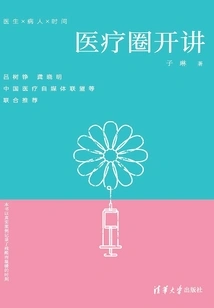
Medical Circle Lecture
Literature医疗圈开讲
Zi Lin
This book is a true story of an in-depth excavation and interview on medical topics by a senior medical media person through many years of working experience. It records the real process of treating diseases and saving lives by the country's top experts, and tells the thrilling story of medical staff bringing patients back from the brink of death. While writing the story, he also conveyed popular science knowledge about the disease to everyone in easy-to-understand language.
This book is a true story of an in-depth excavation and interview on medical topics by a senior medical media person through many years of working experience. It records the real process of treating diseases and saving lives by the country's top experts, and tells the thrilling story of medical staff bringing patients back from the brink of death. While writing the story, he also conveyed popular science knowledge about the disease to everyone in easy-to-understand language.
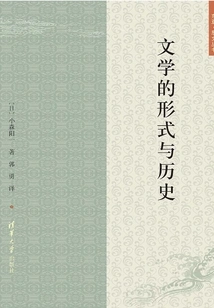
Literary Form and History
Literature文学的形式与历史
Yoichi Komori
This book is a re-deconstructed literary and cultural research work selected by the author from many representative works. It combines Marxism with deconstruction and post-colonial criticism to re-interpret classic literary texts and create a new research perspective and method. The author interprets literary classics in a brand-new way. While activating literary imagination, it provides a new perspective for us to understand the human situation in the era of globalization. He makes a sharp criticism of the global expansion of capitalism and suggests a possible breakthrough path.
This book is a re-deconstructed literary and cultural research work selected by the author from many representative works. It combines Marxism with deconstruction and post-colonial criticism to re-interpret classic literary texts and create a new research perspective and method. The author interprets literary classics in a brand-new way. While activating literary imagination, it provides a new perspective for us to understand the human situation in the era of globalization. He makes a sharp criticism of the global expansion of capitalism and suggests a possible breakthrough path.
走,回中国:美国终身教授海归南方科技大学全纪录
Deng Weiwei
"Go Back to China - A Complete Record of American Tenured Professors Returned to Southern University of Science and Technology" is a phenomenon-level communication event of China's new academic media. It has attracted widespread attention and discussion after it was first published in the "Zhishe Academic Circle". Whether it is local or overseas academic circles, everyone can find inspiration and resonance in it. It is a must-read.
"Go Back to China - A Complete Record of American Tenured Professors Returned to Southern University of Science and Technology" is a phenomenon-level communication event of China's new academic media. It has attracted widespread attention and discussion after it was first published in the "Zhishe Academic Circle". Whether it is local or overseas academic circles, everyone can find inspiration and resonance in it. It is a must-read.
I'm Waiting for You in Tsinghua·part 4
Literature我在清华等你来·第四辑
Liu Zhen
Tsinghua University is a century-old institution that many students yearn for! Tsinghua students are undoubtedly the best among their peers. Behind the blooming flowers is long-term accumulation, and behind the realization of the Tsinghua dream are wonderful stories. This edition recommends the outstanding students who were admitted to Tsinghua University in 2017: among them are students who were selected for Tsinghua University's "Leading Talent Selection" and "Self-improvement Plan" in 2017; there are talented teenagers who won international gold medals in subject competitions; there are also "students" and "dark horses" who won first place in each province in the college entrance examination; there are also orienteering students, pilot students, students with literary and artistic talents, world champions, as well as students from Hong Kong, Taiwan and overseas. Some of them have great ambitions, pursue excellence, have both good character and academic skills, and have comprehensive qualities; some are constantly striving for self-improvement in a difficult environment and are full of positive energy. Their wonderful stories and secrets of success bear witness to their encounter with Tsinghua University in their youthful years! It also reflects Tsinghua University's educational philosophy of diversified selection of students!
Tsinghua University is a century-old institution that many students yearn for! Tsinghua students are undoubtedly the best among their peers. Behind the blooming flowers is long-term accumulation, and behind the realization of the Tsinghua dream are wonderful stories. This edition recommends the outstanding students who were admitted to Tsinghua University in 2017: among them are students who were selected for Tsinghua University's "Leading Talent Selection" and "Self-improvement Plan" in 2017; there are talented teenagers who won international gold medals in subject competitions; there are also "students" and "dark horses" who won first place in each province in the college entrance examination; there are also orienteering students, pilot students, students with literary and artistic talents, world champions, as well as students from Hong Kong, Taiwan and overseas. Some of them have great ambitions, pursue excellence, have both good character and academic skills, and have comprehensive qualities; some are constantly striving for self-improvement in a difficult environment and are full of positive energy. Their wonderful stories and secrets of success bear witness to their encounter with Tsinghua University in their youthful years! It also reflects Tsinghua University's educational philosophy of diversified selection of students!
浪漫主义的根源(伯林文集)
H
This book is compiled based on the recording of Berlin's "Romanticism" Mellon lectures in 1965. Starting from the definition of romanticism, he experienced its origin, growth and expansion, and revealed its huge and lasting influence. Berlin used the perspective of the history of ideas that his predecessors had not developed to show the incomparable power of the romantic revolution as a way of cognition and ideology. Berlin's speech has a clear structure, meticulous thinking, allusions like overwhelming mountains, and rows like torrents. It is a heroic thought and music, and a moment of genius blessed by God.
This book is compiled based on the recording of Berlin's "Romanticism" Mellon lectures in 1965. Starting from the definition of romanticism, he experienced its origin, growth and expansion, and revealed its huge and lasting influence. Berlin used the perspective of the history of ideas that his predecessors had not developed to show the incomparable power of the romantic revolution as a way of cognition and ideology. Berlin's speech has a clear structure, meticulous thinking, allusions like overwhelming mountains, and rows like torrents. It is a heroic thought and music, and a moment of genius blessed by God.
Ci Shu Literary History
Literature词说文学史
Liu Chengqun
A comprehensive review of the writers of the past dynasties based on the style of poetry, starting from the pre-Qin Dynasty to the late Qing Dynasty, all famous writers and giants commented on them. The diligence, scale, scope and precision of the evaluation are unprecedented.
A comprehensive review of the writers of the past dynasties based on the style of poetry, starting from the pre-Qin Dynasty to the late Qing Dynasty, all famous writers and giants commented on them. The diligence, scale, scope and precision of the evaluation are unprecedented.
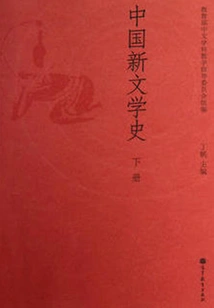
中国新文学史稿(下)
Wang Yao
The book is divided into four periods, namely the first ten years of New Literature, the ten years of the Leftist League, the early period of the Anti-Japanese War, and after the Yan'an Forum on Literature and Art. Each volume begins with a chapter that provides a general overview of the social and historical background, literary trends, associations, debates, etc. Of this period, and then discusses it in chapters using poetry, novels, dramas, essays and other literary styles to introduce writers and works of various schools and tendencies.
The book is divided into four periods, namely the first ten years of New Literature, the ten years of the Leftist League, the early period of the Anti-Japanese War, and after the Yan'an Forum on Literature and Art. Each volume begins with a chapter that provides a general overview of the social and historical background, literary trends, associations, debates, etc. Of this period, and then discusses it in chapters using poetry, novels, dramas, essays and other literary styles to introduce writers and works of various schools and tendencies.
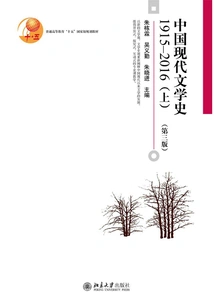
中国现代文学史1915—2016(上)(第三版)
Zhu Donglin Wu Yiqin Zhu Xiaojin
History of Modern Chinese Literature 1915-2016" (Volume 1 and Volume 2) was revised and revised from "History of Modern Chinese Literature 1917-2012" edited by Professor Zhu Donglin. It is a national planning textbook for the "Tenth Five-Year Plan" of the Ministry of Education and a supporting textbook for the Ministry of Education's national quality resource sharing course "Chinese Modern and Contemporary Literature". The first volume is the history of modern literature (1915-1949), and the second volume is the history of contemporary literature (1949-2016). This textbook reinterprets the development of Chinese literature since modern times with a new view of literature and literary history, and advocates open, inquiry-based, and interactive professional course teaching. Compared with "History of Modern Chinese Literature 1917-2012" (volumes 1 and 2), this version of the textbook has two updates: 1. Each chapter has a QR code, which contains videos of lectures given by experts and scholars on the topics of each chapter, as well as academic papers selected by the editor. By scanning the QR code in the book, students can learn about the teaching style of Bai Xianyong, Qian Liqun, Fan Boqun, Chen Zishan, Chen Pingyuan, Wu Fuhui, Wang Zhongchen, Ge Fei, Bi Feiyu and others. 2. Add a "Voice" column to each chapter to list the controversial voices from different periods and different viewpoints on important literary historical phenomena and writers' works. In addition, this textbook comes with a full set of multimedia courseware. ?
History of Modern Chinese Literature 1915-2016" (Volume 1 and Volume 2) was revised and revised from "History of Modern Chinese Literature 1917-2012" edited by Professor Zhu Donglin. It is a national planning textbook for the "Tenth Five-Year Plan" of the Ministry of Education and a supporting textbook for the Ministry of Education's national quality resource sharing course "Chinese Modern and Contemporary Literature". The first volume is the history of modern literature (1915-1949), and the second volume is the history of contemporary literature (1949-2016). This textbook reinterprets the development of Chinese literature since modern times with a new view of literature and literary history, and advocates open, inquiry-based, and interactive professional course teaching. Compared with "History of Modern Chinese Literature 1917-2012" (volumes 1 and 2), this version of the textbook has two updates: 1. Each chapter has a QR code, which contains videos of lectures given by experts and scholars on the topics of each chapter, as well as academic papers selected by the editor. By scanning the QR code in the book, students can learn about the teaching style of Bai Xianyong, Qian Liqun, Fan Boqun, Chen Zishan, Chen Pingyuan, Wu Fuhui, Wang Zhongchen, Ge Fei, Bi Feiyu and others. 2. Add a "Voice" column to each chapter to list the controversial voices from different periods and different viewpoints on important literary historical phenomena and writers' works. In addition, this textbook comes with a full set of multimedia courseware. ?
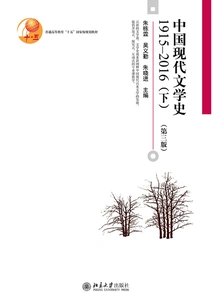
中国现代文学史1915—2016(下)(第三版)
Zhu Donglin Wu Yiqin Zhu Xiaojin
"History of Modern Chinese Literature 1915-2016" (volumes 1 and 2) was revised and revised from "History of Modern Chinese Literature 1917-2012" edited by Professor Zhu Donglin. It is a national-level planning textbook for the Ministry of Education's "Tenth Five-Year Plan" and a supporting textbook for the Ministry of Education's national-level quality resource sharing course "Chinese Modern and Contemporary Literature." The first volume is the history of modern literature (1915-1949), and the second volume is the history of contemporary literature (1949-2016). This textbook reinterprets the development of Chinese literature since modern times with a new view of literature and literary history, and advocates open, inquiry-based, and interactive professional course teaching. Compared with "History of Modern Chinese Literature 1917-2012" (volumes 1 and 2), this book has two innovations: 1. Each chapter is equipped with a QR code, which contains videos of lectures given by experts and scholars on the topics of each chapter, as well as academic papers selected by the editor. By scanning the QR code in the book, students can learn about the teaching style of Bai Xianyong, Qian Liqun, Fan Boqun, Chen Zishan, Chen Pingyuan, Wu Fuhui, Wang Zhongchen, Ge Fei, Bi Feiyu and others. 2. Add a "Voice" column to each chapter to list the controversial voices from different periods and different viewpoints on important literary historical phenomena and writers' works. In addition, this book also comes with teaching courseware.
"History of Modern Chinese Literature 1915-2016" (volumes 1 and 2) was revised and revised from "History of Modern Chinese Literature 1917-2012" edited by Professor Zhu Donglin. It is a national-level planning textbook for the Ministry of Education's "Tenth Five-Year Plan" and a supporting textbook for the Ministry of Education's national-level quality resource sharing course "Chinese Modern and Contemporary Literature." The first volume is the history of modern literature (1915-1949), and the second volume is the history of contemporary literature (1949-2016). This textbook reinterprets the development of Chinese literature since modern times with a new view of literature and literary history, and advocates open, inquiry-based, and interactive professional course teaching. Compared with "History of Modern Chinese Literature 1917-2012" (volumes 1 and 2), this book has two innovations: 1. Each chapter is equipped with a QR code, which contains videos of lectures given by experts and scholars on the topics of each chapter, as well as academic papers selected by the editor. By scanning the QR code in the book, students can learn about the teaching style of Bai Xianyong, Qian Liqun, Fan Boqun, Chen Zishan, Chen Pingyuan, Wu Fuhui, Wang Zhongchen, Ge Fei, Bi Feiyu and others. 2. Add a "Voice" column to each chapter to list the controversial voices from different periods and different viewpoints on important literary historical phenomena and writers' works. In addition, this book also comes with teaching courseware.
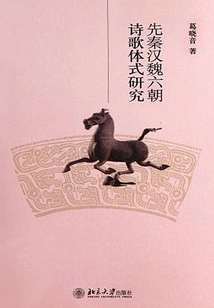
先秦汉魏六朝诗歌体式研究
Ge Xiaoyin
The Pre-Qin, Han, Wei, Jin, Southern and Northern Dynasties were the periods when various styles of Chinese classical poetry originated and matured. This book deeply and systematically explores the principles of the emergence and development of various poetic styles from the Book of Songs and Songs of Chu to five-character, seven-character, and miscellaneous words, as well as the relationship between various poetic styles, as well as the relationship between the formation of styles and the artistic expression feelings and creative traditions of various poetic types from various perspectives such as language, rhythm, structure, and expression methods. It can be said that this book is a development history of the generation and evolution of poetry styles in pre-Tang Dynasty with a novel perspective.
The Pre-Qin, Han, Wei, Jin, Southern and Northern Dynasties were the periods when various styles of Chinese classical poetry originated and matured. This book deeply and systematically explores the principles of the emergence and development of various poetic styles from the Book of Songs and Songs of Chu to five-character, seven-character, and miscellaneous words, as well as the relationship between various poetic styles, as well as the relationship between the formation of styles and the artistic expression feelings and creative traditions of various poetic types from various perspectives such as language, rhythm, structure, and expression methods. It can be said that this book is a development history of the generation and evolution of poetry styles in pre-Tang Dynasty with a novel perspective.
刻在灵魂深处:80年代之北大记忆(上、下)
A Yi
From thought to action, from science to literature, from the tension of human nature to the liberation of nationality, the 1980s had a significance that cannot be ignored in China's modernization in the 20th century. As the youngest, most enthusiastic and passionate witnesses of that era, the thoughts and lives, ideals and reality of the young people of Peking University in the 1980s are undoubtedly very representative and typical. This book selects Peking University, the most cutting-edge window of modern Chinese thought and culture, and collects more than 100 recollections of young people from Peking University in the 1980s, hoping to reflect the overall style of Chinese society in a small way. It is a documentary youth literature with vitality, connotation and depth.
From thought to action, from science to literature, from the tension of human nature to the liberation of nationality, the 1980s had a significance that cannot be ignored in China's modernization in the 20th century. As the youngest, most enthusiastic and passionate witnesses of that era, the thoughts and lives, ideals and reality of the young people of Peking University in the 1980s are undoubtedly very representative and typical. This book selects Peking University, the most cutting-edge window of modern Chinese thought and culture, and collects more than 100 recollections of young people from Peking University in the 1980s, hoping to reflect the overall style of Chinese society in a small way. It is a documentary youth literature with vitality, connotation and depth.