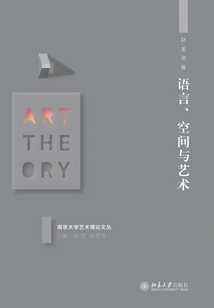
Language, Space and Art
by Zhao Kuiying
About This Novel
This book is the result of the author's intensive discussion of language, space and art issues. It consists of five parts that are closely related and progressively related, that is, "five articles". The first article mainly discusses the "linguistic turn" and the construction of contemporary poetic culture theory; the second article mainly discusses the formation of ancient Chinese language philosophy and Chinese traditional poetic culture; the third article mainly examines the spatial turn that has emerged in the field of Western philosophy and culture from the perspective of the change of language concepts, and specifically discusses Derrida, The spatialization turn of Foucault and Heidegger and its revolutionary consequences; the fourth chapter mainly examines the spatialization of ancient Chinese cosmic space-time consciousness from multiple perspectives such as language, way of thinking, etc. And its impact on the spirit and structure of traditional Chinese art. It also reflects on and cleans up the "emphasis on time and space" theory that was once popular in Chinese academic circles. The fifth article expands from the study of linguistic poetics to the fields of art theory and art semiotics in the philosophy of language. It combines Heidegger's phenomenological ontological view of language to explore the relationship between art and technology and the salvation of objects by art. Through an examination of the dispute between Heidegger and Shapiro, it considers the dialogue between art philosophy and art history research, and rethinks the overall philosophy of Heidegger's art philosophy with the spirit of ecological ethics and its future enlightenment significance for the construction of contemporary art theory. This article also combines Heidegger's phenomenological ontological view of semiotics to raise issues of reflection and reconstruction of the semiotic foundation of today's art. This book is committed to seeking new paths into art theoretical research from the perspective of interdisciplinary research, and exploring the construction of Chinese contemporary art theory that can not only adhere to the laws of art itself but also have an ecological and humanistic spirit.
Official Sources
What Readers Think
Rating
Community(0)
Rating
Community(0)