Library
Browse and search books
2,273 novels found

Blood Splattered in Jinguyuan
General Fiction血溅金谷园
Zhang Yao
The Three Kingdoms returned to Jin, the swords and guns were stored in the treasury, and the horses were released in Nanshan. During the Taikang period of Emperor Wu of the Jin Dynasty, the world was clear, the eight wastelands were in charge, the weather was good, the people were in Yinfu, and the country was peaceful and happy. In late spring, Luoyang, Kyoto, has towering green mountains, green willows and smoke, a ten-mile long street, pearls in the city, and beautiful houses. "Dede, get..." A white-drawn Cuimei oil truck slowly drove into the downtown area. In the car sat Pan Yue, the servant of Huangmen. This Pan Yue is from Zhongmu County, Henan Province, and his courtesy name is Anren.
The Three Kingdoms returned to Jin, the swords and guns were stored in the treasury, and the horses were released in Nanshan. During the Taikang period of Emperor Wu of the Jin Dynasty, the world was clear, the eight wastelands were in charge, the weather was good, the people were in Yinfu, and the country was peaceful and happy. In late spring, Luoyang, Kyoto, has towering green mountains, green willows and smoke, a ten-mile long street, pearls in the city, and beautiful houses. "Dede, get..." A white-drawn Cuimei oil truck slowly drove into the downtown area. In the car sat Pan Yue, the servant of Huangmen. This Pan Yue is from Zhongmu County, Henan Province, and his courtesy name is Anren.
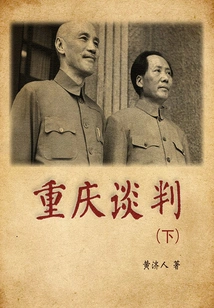
Chongqing Negotiations (part 2)
General Fiction重庆谈判(下)
Huang Jiren
On June 6, 1944, the Allied forces opened the second battlefield in Europe and launched the Normandy landing in "Operation Overlord", destroying the German "Atlantic Barrier" in one fell swoop. Therefore, Roosevelt turned his attention to Asia, focusing on China. This novel has a grand and novel conception. It places the 43 days of Chongqing negotiations between Mao Zedong and Chiang Kai-shek in the international environment. Various contradictions are complicated, the plot is designed to be relaxed, the scene description is intense, the atmosphere is rich, and the language is concise and concise. It created a touching artistic image of Mao Zedong who was both great and ordinary. Other historical figures, such as Zhou Enlai, Wang Ruofei, Stalin, Churchill, Roosevelt, Hurley, Stilwell, Guo Moruo, Zhang Lan, Liu Yazi, etc. Are all lifelike. This is a magnificent historical picture that is highly readable.
On June 6, 1944, the Allied forces opened the second battlefield in Europe and launched the Normandy landing in "Operation Overlord", destroying the German "Atlantic Barrier" in one fell swoop. Therefore, Roosevelt turned his attention to Asia, focusing on China. This novel has a grand and novel conception. It places the 43 days of Chongqing negotiations between Mao Zedong and Chiang Kai-shek in the international environment. Various contradictions are complicated, the plot is designed to be relaxed, the scene description is intense, the atmosphere is rich, and the language is concise and concise. It created a touching artistic image of Mao Zedong who was both great and ordinary. Other historical figures, such as Zhou Enlai, Wang Ruofei, Stalin, Churchill, Roosevelt, Hurley, Stilwell, Guo Moruo, Zhang Lan, Liu Yazi, etc. Are all lifelike. This is a magnificent historical picture that is highly readable.

Emperor Tongzhi's Prostitution
General Fiction同治皇帝狎妓
Lu Chun
Zaichun, the only son of the Empress Dowager Cixi who ascended the throne as Emperor Tongzhi at the age of six due to the violent death of his father Xianfeng in Rehe, was not a mediocre and uninhibited person as some historical sources say. Regarding the evaluation of Qing history, Emperor Tongzhi was "talented and intelligent" and "good at learning and asking questions." It could have established him as an enlightened monarch, but due to the Queen Mother's desire for power, lack of family warmth, and indulgence in discipline, she often left the palace incognito to find happiness and relieve her worries. Realistic articles about his young and extravagant life often appeared in newspapers, and there were rumors that he contracted syphilis while visiting a brothel. The Queen Mother of the West took her own initiative, insisted on treating smallpox, and died prematurely due to misdiagnosis. These nonsense stories have also confused many historians and have become unsolved historical issues.
Zaichun, the only son of the Empress Dowager Cixi who ascended the throne as Emperor Tongzhi at the age of six due to the violent death of his father Xianfeng in Rehe, was not a mediocre and uninhibited person as some historical sources say. Regarding the evaluation of Qing history, Emperor Tongzhi was "talented and intelligent" and "good at learning and asking questions." It could have established him as an enlightened monarch, but due to the Queen Mother's desire for power, lack of family warmth, and indulgence in discipline, she often left the palace incognito to find happiness and relieve her worries. Realistic articles about his young and extravagant life often appeared in newspapers, and there were rumors that he contracted syphilis while visiting a brothel. The Queen Mother of the West took her own initiative, insisted on treating smallpox, and died prematurely due to misdiagnosis. These nonsense stories have also confused many historians and have become unsolved historical issues.

Jagged Heroes
General Fiction铁血雄风
Ji Yu
This year marks the 100th anniversary of the Revolution of 1911. In order to commemorate this great revolution, in this issue we excerpt some chapters from Mr. Ji Yu's new work "Iron-Blooded Heroes" for readers' enjoyment. On October 10, 1911, a new army uprising broke out in Wuchang, and the insurgents quickly occupied Wuchang. The next day, Hanyang and Hankou were recovered one after another, and then various parts of Hubei responded to the uprising. The uprising became more and more powerful and spread rapidly around Hubei. On the night of the rapid expansion of the Wuchang Uprising, news spread to Anhui, and Anhui reporters disclosed the news as quickly as possible. On November 5, Shouxian County, located in the center of Huaishang, first raised the flag of rebellion; then, the Anqing New Army also launched an uprising on November 8. After that, the Jianghuai land was turbulent, and Luzhou, Wuhu and other places successively declared independence. By late November, Anhui, except for a few places such as Bozhou, all responded to the revolution.
This year marks the 100th anniversary of the Revolution of 1911. In order to commemorate this great revolution, in this issue we excerpt some chapters from Mr. Ji Yu's new work "Iron-Blooded Heroes" for readers' enjoyment. On October 10, 1911, a new army uprising broke out in Wuchang, and the insurgents quickly occupied Wuchang. The next day, Hanyang and Hankou were recovered one after another, and then various parts of Hubei responded to the uprising. The uprising became more and more powerful and spread rapidly around Hubei. On the night of the rapid expansion of the Wuchang Uprising, news spread to Anhui, and Anhui reporters disclosed the news as quickly as possible. On November 5, Shouxian County, located in the center of Huaishang, first raised the flag of rebellion; then, the Anqing New Army also launched an uprising on November 8. After that, the Jianghuai land was turbulent, and Luzhou, Wuhu and other places successively declared independence. By late November, Anhui, except for a few places such as Bozhou, all responded to the revolution.
Tomb Robbers: Robbery of the Tombs of Chinese Princes
General Fiction盗墓贼:中国历代王侯陵墓之劫
Xu Zhilong, Shang Chengyong, Yue Nan
The author talks about the heavy topic of tomb robbing with ease, explaining the wonders in the ordinary, and containing philosophy in the simplicity. Covering the book and meditating, a sense of national pride, a sense of historical mission, and a sense of urgency to protect the national quintessence arise spontaneously... Did the overlord of Western Chu, who was so angry that he was fighting against the mountains, robbed the Qin Mausoleum underground palace? How does the heroic Cao Cao, who deceived heaven in life and deceived others in death, fight against tomb robbers? Why was Emperor Taizong of the Tang Dynasty astonishingly extravagant in his Zhaoling Mausoleum? Why does "Qi Chao Valley", the burial place of a generation of prodigies who opened up new territories by bending bows and shooting eagles, make thieves calm down? Why is the Dongling Bandit, who has no conscience and is full of crimes, at large?
The author talks about the heavy topic of tomb robbing with ease, explaining the wonders in the ordinary, and containing philosophy in the simplicity. Covering the book and meditating, a sense of national pride, a sense of historical mission, and a sense of urgency to protect the national quintessence arise spontaneously... Did the overlord of Western Chu, who was so angry that he was fighting against the mountains, robbed the Qin Mausoleum underground palace? How does the heroic Cao Cao, who deceived heaven in life and deceived others in death, fight against tomb robbers? Why was Emperor Taizong of the Tang Dynasty astonishingly extravagant in his Zhaoling Mausoleum? Why does "Qi Chao Valley", the burial place of a generation of prodigies who opened up new territories by bending bows and shooting eagles, make thieves calm down? Why is the Dongling Bandit, who has no conscience and is full of crimes, at large?

Films from the Opium War
General Fiction鸦片战争的底片
Lu Shuhuai
What Viscount Macartney resented all his life was his trip to China in the summer of 1793. It was not all because he failed to live up to the sacred mission of His Majesty King George III. What he could not forgive was himself. He stupidly allowed officials of the Qing Empire to hang a notice written in Chinese on the mast of the envoy ship. The four Chinese characters for "Red Barbarians Pay Tribute" written in the notice were obviously humiliating and hurt the face of the British Empire. There was no proper reason to explain, so he must have been blown away by the hot eastern sun. The summer of the fifty-eighth year of Qianlong's reign (1793) was extremely hot. Even at Dagukou, the mouth of Tianjin Wei, the sun was baking the sea surface like an iron, and the sea water was like boiling soup, with bursts of foam.
What Viscount Macartney resented all his life was his trip to China in the summer of 1793. It was not all because he failed to live up to the sacred mission of His Majesty King George III. What he could not forgive was himself. He stupidly allowed officials of the Qing Empire to hang a notice written in Chinese on the mast of the envoy ship. The four Chinese characters for "Red Barbarians Pay Tribute" written in the notice were obviously humiliating and hurt the face of the British Empire. There was no proper reason to explain, so he must have been blown away by the hot eastern sun. The summer of the fifty-eighth year of Qianlong's reign (1793) was extremely hot. Even at Dagukou, the mouth of Tianjin Wei, the sun was baking the sea surface like an iron, and the sea water was like boiling soup, with bursts of foam.

Gongmei Escorted to the Capital
General Fiction押往京师的贡米
Yitun
In the sixth year of the Apocalypse, Houjin Nurhachi personally led an army of 130,000 people to cross the Liao River and invade the Ming Dynasty. However, the south of the Yangtze River suffered from waterlogging, and the farmland failed to harvest. Shaanxi suffered from a severe drought, and the red land was thousands of miles away. There are internal and external troubles, officials and gentry are rampant, strongmen are out and about, and the people are hungry and cold, crying for food. Emperor Xizong changed the tribute of Zhefang Xuanfu Division from "HaoMuxi" rice to "HaoMuxi" rice. A handwriting from Wei's father-in-law Wei Zhongxian was also passed to Zhefang Chieftain's Mansion through the Ministry of War: "Synopsis of the Cultivation of HaoMuxi" should be completed as soon as possible and submitted to the capital immediately. The imperial court will distribute the improved varieties of "Haomuxi" to the disaster-stricken counties and prefectures in the south of the Yangtze River for planting to help the victims rebuild after the disaster; the "Haomuxi Cultivation Guide" will also be published by the court and distributed to the disaster-stricken counties and prefectures in the south of the Yangtze River to guide people in their cultivation.
In the sixth year of the Apocalypse, Houjin Nurhachi personally led an army of 130,000 people to cross the Liao River and invade the Ming Dynasty. However, the south of the Yangtze River suffered from waterlogging, and the farmland failed to harvest. Shaanxi suffered from a severe drought, and the red land was thousands of miles away. There are internal and external troubles, officials and gentry are rampant, strongmen are out and about, and the people are hungry and cold, crying for food. Emperor Xizong changed the tribute of Zhefang Xuanfu Division from "HaoMuxi" rice to "HaoMuxi" rice. A handwriting from Wei's father-in-law Wei Zhongxian was also passed to Zhefang Chieftain's Mansion through the Ministry of War: "Synopsis of the Cultivation of HaoMuxi" should be completed as soon as possible and submitted to the capital immediately. The imperial court will distribute the improved varieties of "Haomuxi" to the disaster-stricken counties and prefectures in the south of the Yangtze River for planting to help the victims rebuild after the disaster; the "Haomuxi Cultivation Guide" will also be published by the court and distributed to the disaster-stricken counties and prefectures in the south of the Yangtze River to guide people in their cultivation.

I'm Going to Take You to a Beautiful Place
General Fiction我要带你去一个美丽的地方
Yang Jinyuan
After Yang Jinyuan's novel "The Lawsuit" was published in this magazine in April 2002, it was reprinted by "Novel Monthly" in the same year. Famous director Feng Xiaogang bought the film adaptation rights after taking a fancy to it, and made the war blockbuster "Assembly" as a 2007 New Year blockbuster, which was screened nationwide. Recently, Yang Jinyuan wrote another masterpiece of war novel "I Want to Take You to a Beautiful Place", which was first published by this magazine for the readers. Tao Hongjun, a young Red Army soldier, was completely unconscious when he was lying in front of the thatched house of the Luhua family in Luhua Village. At that time, the genius had just begun to shine, and the thick layer of frost that had fallen on Luhua's thatched house at night was glowing with a cold white light in the morning light. Women in the mountains get up early and have a lot of things to do at dawn, such as washing, cooking and going to the fields to do farm work.
After Yang Jinyuan's novel "The Lawsuit" was published in this magazine in April 2002, it was reprinted by "Novel Monthly" in the same year. Famous director Feng Xiaogang bought the film adaptation rights after taking a fancy to it, and made the war blockbuster "Assembly" as a 2007 New Year blockbuster, which was screened nationwide. Recently, Yang Jinyuan wrote another masterpiece of war novel "I Want to Take You to a Beautiful Place", which was first published by this magazine for the readers. Tao Hongjun, a young Red Army soldier, was completely unconscious when he was lying in front of the thatched house of the Luhua family in Luhua Village. At that time, the genius had just begun to shine, and the thick layer of frost that had fallen on Luhua's thatched house at night was glowing with a cold white light in the morning light. Women in the mountains get up early and have a lot of things to do at dawn, such as washing, cooking and going to the fields to do farm work.
Thirty-six Riders
General Fiction三十六骑
Miss People Far Away
Highly recommended by Ma Boyong, Zhang Yang, Yu Minhong, Ye Fu, and Hu Jiujiu, this is the most anticipated historical fantasy novel! Thirty-six people traveled to the Western Regions, and princes from thousands of miles away returned home late in life! During the Eastern Han Dynasty, the Northern Xiongnu repeatedly invaded the border, and Emperor Ming decided to send troops to deter them and then connect to the Western Regions. Ban Chao was ordered to go on an envoy and recruited thirty-six capable people and strangers to accompany the army. The army marched north to attack the city, and the envoys marched south to make conquests, and they agreed to meet north and south in Shule! Emperor Ming suddenly became critically ill, and the Western Expedition army was urgently recalled. The Chanyu army pressed the border, and the Kucha and Gumo coalition forces besieged Shule. And Yu Youxuan, who claims to be an orthodox historian, has always wanted to kill Ban Chao... Ban Chao was isolated and helpless, so he could only defend according to danger. No one knew whether reinforcements could arrive... After several months of western expedition, the Huns were initially driven back, but the court suddenly changed and recalled the army. How can thirty-six people regulate fifty-five countries? A thrilling and bloody historical legend is officially staged.
Highly recommended by Ma Boyong, Zhang Yang, Yu Minhong, Ye Fu, and Hu Jiujiu, this is the most anticipated historical fantasy novel! Thirty-six people traveled to the Western Regions, and princes from thousands of miles away returned home late in life! During the Eastern Han Dynasty, the Northern Xiongnu repeatedly invaded the border, and Emperor Ming decided to send troops to deter them and then connect to the Western Regions. Ban Chao was ordered to go on an envoy and recruited thirty-six capable people and strangers to accompany the army. The army marched north to attack the city, and the envoys marched south to make conquests, and they agreed to meet north and south in Shule! Emperor Ming suddenly became critically ill, and the Western Expedition army was urgently recalled. The Chanyu army pressed the border, and the Kucha and Gumo coalition forces besieged Shule. And Yu Youxuan, who claims to be an orthodox historian, has always wanted to kill Ban Chao... Ban Chao was isolated and helpless, so he could only defend according to danger. No one knew whether reinforcements could arrive... After several months of western expedition, the Huns were initially driven back, but the court suddenly changed and recalled the army. How can thirty-six people regulate fifty-five countries? A thrilling and bloody historical legend is officially staged.

Wuqiao Comes Out of the Mountain
General Fiction午桥出山
I
Just before his death, Duanwu Bridge saw a ship sailing towards him from the horizon. This is the mail ship "Siberia" that started from Shanghai in the winter of 1905 and sailed to San Francisco via Yokohama. At this moment - in the early morning of November 27, 1911 - its magnificent four-story hull suddenly appeared without warning in the dying eyes of the Duanwu Bridge through the gray sky of Zizhou City in eastern Sichuan Province, China's inland province. The sea and the sky meet, and there is no shore on all sides. There are a few seagulls here and there, chasing the black smoke from the boiler room at the stern. Suddenly there was a heavy rain, and the white waves were like mountains, reaching as high as the surface of the ship. The ship's hull was shaking, as if it was about to capsize in the rough waves. The raindrops turned into bright white blades and came forward with a biting cold air. The Duanwu Bridge subconsciously closed its eyes.
Just before his death, Duanwu Bridge saw a ship sailing towards him from the horizon. This is the mail ship "Siberia" that started from Shanghai in the winter of 1905 and sailed to San Francisco via Yokohama. At this moment - in the early morning of November 27, 1911 - its magnificent four-story hull suddenly appeared without warning in the dying eyes of the Duanwu Bridge through the gray sky of Zizhou City in eastern Sichuan Province, China's inland province. The sea and the sky meet, and there is no shore on all sides. There are a few seagulls here and there, chasing the black smoke from the boiler room at the stern. Suddenly there was a heavy rain, and the white waves were like mountains, reaching as high as the surface of the ship. The ship's hull was shaking, as if it was about to capsize in the rough waves. The raindrops turned into bright white blades and came forward with a biting cold air. The Duanwu Bridge subconsciously closed its eyes.

The Crown Prince under the Monk's Robe
General Fiction僧袍下的皇太子
Chen Qiyin
Tang Tianfu four years later. Chang'an, Zhongshu Lingfu. It is already spring, and the spring breeze is waving its soft, boneless hands and gently caressing the earth. All things that have been dusty for a long time are revived in the lingering call of the spring breeze. In the courtyard of Zhongshu Ling's Mansion, through the light leaking from the center, you can clearly see that many flowers are in bud and ready to bloom, and some of them have shyly revealed their colorful faces. It was obviously a spring night full of vitality. But the man in the room who was still standing in the late night light still had his eyebrows furrowed, as if the chill of last winter was still tightly locked on his face. This man is about sixty years old, slightly thin, but looks capable.
Tang Tianfu four years later. Chang'an, Zhongshu Lingfu. It is already spring, and the spring breeze is waving its soft, boneless hands and gently caressing the earth. All things that have been dusty for a long time are revived in the lingering call of the spring breeze. In the courtyard of Zhongshu Ling's Mansion, through the light leaking from the center, you can clearly see that many flowers are in bud and ready to bloom, and some of them have shyly revealed their colorful faces. It was obviously a spring night full of vitality. But the man in the room who was still standing in the late night light still had his eyebrows furrowed, as if the chill of last winter was still tightly locked on his face. This man is about sixty years old, slightly thin, but looks capable.

Diao Chan Travels Thousands of Miles
General Fiction千里走貂蝉
Zhao Yan
Zhao Yan is a member of the Chinese Writers Association and vice chairman of the Anhui Writers Association. His creations are diverse and he has published more than 20 books including the novel "Impermanence", eight series of essays on Huizhou culture, and the historical biography "Trilogy of the Late Qing Dynasty". A variety of works have great influence across the country. The inscribed truth is like a maze-like town with many streets. Now, let's walk through these streets. When we walk on these streets, we get to know them. --Calvino I am Guan Yu. Many years later, when I could no longer carry the heavy Qinglong Yanyue Sword, I always asked Zhou Cang to carry it on my shoulders and walk and chat with him. I like walking on the city walls of Xiangyang and looking at the meandering Han River not far away.
Zhao Yan is a member of the Chinese Writers Association and vice chairman of the Anhui Writers Association. His creations are diverse and he has published more than 20 books including the novel "Impermanence", eight series of essays on Huizhou culture, and the historical biography "Trilogy of the Late Qing Dynasty". A variety of works have great influence across the country. The inscribed truth is like a maze-like town with many streets. Now, let's walk through these streets. When we walk on these streets, we get to know them. --Calvino I am Guan Yu. Many years later, when I could no longer carry the heavy Qinglong Yanyue Sword, I always asked Zhou Cang to carry it on my shoulders and walk and chat with him. I like walking on the city walls of Xiangyang and looking at the meandering Han River not far away.

Great Victory of Chetong
General Fiction澈通大捷
Yin Dechao
Wang Hongzhang stood upright in front of a rectangular table. After accepting some instructions from Li Changpu, commander of the new 22nd Army of the National Revolutionary Army, he said: "Yes." It was not very loud, and it could be heard that he accepted it reluctantly. He swallowed a mouthful of saliva, and his large throat slid up and down. He didn't sit down immediately, thinking, Li Changpu, don't you want my wife to be a widow? The room was very quiet, filled with the dry and choking smell of tobacco from the land of northern Anhui. The two female confidential officers sitting behind him occasionally made soft coughing sounds.
Wang Hongzhang stood upright in front of a rectangular table. After accepting some instructions from Li Changpu, commander of the new 22nd Army of the National Revolutionary Army, he said: "Yes." It was not very loud, and it could be heard that he accepted it reluctantly. He swallowed a mouthful of saliva, and his large throat slid up and down. He didn't sit down immediately, thinking, Li Changpu, don't you want my wife to be a widow? The room was very quiet, filled with the dry and choking smell of tobacco from the land of northern Anhui. The two female confidential officers sitting behind him occasionally made soft coughing sounds.

The Legend of the Persian Crown
General Fiction波斯王冠传奇
Forest Flowers In The Rain
During the reign of Emperor Xuanzong of the Tang Dynasty. The sun was turning west, and several fast horses were galloping on Zhuque Street in Chang'an City. The riders on the horses were all young, handsome and energetic. An elegant scholar sat on the horse running in front. When he reached the intersection, he reined in the horse, looked back at the man behind him, and asked doubtfully: "Twelve Master, is this the place you mentioned?" The young man behind him was riding a splendid white horse, carrying a slingshot on his back, and wearing light yellow linen clothes with his lapels open casually. He looked indescribably handsome and free. He nodded and pointed to his right: "Master Li, my home is in Jingshanfang, just a few steps away."
During the reign of Emperor Xuanzong of the Tang Dynasty. The sun was turning west, and several fast horses were galloping on Zhuque Street in Chang'an City. The riders on the horses were all young, handsome and energetic. An elegant scholar sat on the horse running in front. When he reached the intersection, he reined in the horse, looked back at the man behind him, and asked doubtfully: "Twelve Master, is this the place you mentioned?" The young man behind him was riding a splendid white horse, carrying a slingshot on his back, and wearing light yellow linen clothes with his lapels open casually. He looked indescribably handsome and free. He nodded and pointed to his right: "Master Li, my home is in Jingshanfang, just a few steps away."

Supplementary Group
General Fiction补充团
Yan Xinning
The weather was hot and dry, and everyone was burning with anger. Except for the officers, the soldiers and brothers couldn't shout loudly like cicadas on the trees. People were like tightly tied explosive bags, all they needed was a fire twister. Meng Erluzi is that spark. Meng Erluzi's sudden attack surprised everyone present. Indeed, Mr. Shi had no warning. The instructor Li Lun was holding a rifle and lazily explaining the structure of the gun. The gun is an imitation of the German 6.8 Caliber Mauser gun from Guangdong Ishii Arsenal, but the name was changed to "Yuan Nian Style". The weather was too hot and Li Lun was listless. In fact, the rifles in Li Lun's head were all original rifles made in Germany. They were obtained from Germany by the Nationalist government in exchange for installment payments and rare minerals. The non-main force of the National Defense Forces had not yet changed their equipment.
The weather was hot and dry, and everyone was burning with anger. Except for the officers, the soldiers and brothers couldn't shout loudly like cicadas on the trees. People were like tightly tied explosive bags, all they needed was a fire twister. Meng Erluzi is that spark. Meng Erluzi's sudden attack surprised everyone present. Indeed, Mr. Shi had no warning. The instructor Li Lun was holding a rifle and lazily explaining the structure of the gun. The gun is an imitation of the German 6.8 Caliber Mauser gun from Guangdong Ishii Arsenal, but the name was changed to "Yuan Nian Style". The weather was too hot and Li Lun was listless. In fact, the rifles in Li Lun's head were all original rifles made in Germany. They were obtained from Germany by the Nationalist government in exchange for installment payments and rare minerals. The non-main force of the National Defense Forces had not yet changed their equipment.

Tea Horse Road
General Fiction茶马古道
Cao Bin
The story took place in mid-spring of 1915, nearly a hundred years ago. On Christmas Day of that year, Cai E, the general of the Revolution of 1911, declared the independence of Yunnan, organized the National Defense Army and launched the National Defense War to overthrow Yuan. The story takes place in Pu'er City, Yunnan. It is an old and dilapidated old city, but on the most lively East Street, there is a rather trendy large house with two large black doors. There is a sign nailed to the door with the four characters "Zhennan Escort Bureau" written on it, which is very majestic. At this moment, it was noon. I opened the door and entered a spacious courtyard. There were several weapon racks lined up on both sides of the courtyard, filled with eighteen kinds of weapons, but empty.
The story took place in mid-spring of 1915, nearly a hundred years ago. On Christmas Day of that year, Cai E, the general of the Revolution of 1911, declared the independence of Yunnan, organized the National Defense Army and launched the National Defense War to overthrow Yuan. The story takes place in Pu'er City, Yunnan. It is an old and dilapidated old city, but on the most lively East Street, there is a rather trendy large house with two large black doors. There is a sign nailed to the door with the four characters "Zhennan Escort Bureau" written on it, which is very majestic. At this moment, it was noon. I opened the door and entered a spacious courtyard. There were several weapon racks lined up on both sides of the courtyard, filled with eighteen kinds of weapons, but empty.

The Western Han Dynasty: a Dynasty That Started but Ended
General Fiction西汉:一个王朝的虎头蛇尾
Fan Jun
"Start, inherit, turn and combine" is a stipulated pattern in the eight-legged essay, but for a dynasty, its fate cannot escape these four words. The difference is that each dynasty is different in the form and length of succession. The Qin Dynasty's "rising" and "inheritance" were very brilliant, and those with great strength were sinking, but there was a problem with the "inheritance". Just like a slender neck cannot support a heavy head, Qin Er was soon out of breath, "Qin" was so embarrassed. So the situation then took a turn for the worse, with one dynasty hurriedly ending in the joy of another dynasty's "very busy dividing up the fields" - although the firecrackers and confetti left on the ground when it opened had not yet been cleaned up, the fate of being eliminated was already a living reality.
"Start, inherit, turn and combine" is a stipulated pattern in the eight-legged essay, but for a dynasty, its fate cannot escape these four words. The difference is that each dynasty is different in the form and length of succession. The Qin Dynasty's "rising" and "inheritance" were very brilliant, and those with great strength were sinking, but there was a problem with the "inheritance". Just like a slender neck cannot support a heavy head, Qin Er was soon out of breath, "Qin" was so embarrassed. So the situation then took a turn for the worse, with one dynasty hurriedly ending in the joy of another dynasty's "very busy dividing up the fields" - although the firecrackers and confetti left on the ground when it opened had not yet been cleaned up, the fate of being eliminated was already a living reality.

The Talented Eunuch Kou Liancai
General Fiction英才太监寇连材
Li Yuanyuan
The "knife maker" moved his crotch-touching hand away from Kou Liancai, and then asked seriously: "Are you voluntarily purifying yourself?" "Yes." A teardrop rolled out of the child's eyes. A moment later, a scream as sharp as a ghost came from the room. One early morning in May of the eighth year of Xianfeng's reign, in a dilapidated mud house at the root of Chaoyangmen City in Beijing, Kou Binghe, a barber who hesitated and couldn't make up his mind, went to wake up a child who was still sleeping soundly on the kang. "Let him sleep a little longer to regain his energy..." Before the child's mother could finish her words, she suddenly choked up. Ever since the family decided to let the child take the path of becoming a eunuch, the mother-in-law has not cried a day. From that day on, she burned a stick of incense every night in the dead of night and asked for the blessings of the Bodhisattva.
The "knife maker" moved his crotch-touching hand away from Kou Liancai, and then asked seriously: "Are you voluntarily purifying yourself?" "Yes." A teardrop rolled out of the child's eyes. A moment later, a scream as sharp as a ghost came from the room. One early morning in May of the eighth year of Xianfeng's reign, in a dilapidated mud house at the root of Chaoyangmen City in Beijing, Kou Binghe, a barber who hesitated and couldn't make up his mind, went to wake up a child who was still sleeping soundly on the kang. "Let him sleep a little longer to regain his energy..." Before the child's mother could finish her words, she suddenly choked up. Ever since the family decided to let the child take the path of becoming a eunuch, the mother-in-law has not cried a day. From that day on, she burned a stick of incense every night in the dead of night and asked for the blessings of the Bodhisattva.

The Famous Patriotic General Zhang Xun
General Fiction爱国名将张巡
Wang Jingtao
The moon and stars are sparse, and the crows fly south. The horse's hooves were hurried and he was in front of the door in an instant. Mr. Lu signaled his daughter to hide in the firewood. He closed the door and window, leaned over and looked out from the crack in the door. The shadows of the trees were dancing in front of the door, and a dozen men in black were passing by on horseback. Then I heard a roar: "Thieves, please leave!" Accompanied by the shout, another person came from behind with a prancing horse and a spear in pursuit. The crack in the door was narrow, and Lu Langzhong had no vision. He could only hear the sound of swords and guns clashing. After a while, the noise gradually faded away. Mr. Lu sighed softly: "The war is in chaos. I don't know when it will end." After waiting for a moment, he whispered to his daughter: "Come out." Half an hour later, someone knocked on the door. The doctor hid his daughter and approached the door. He saw a strong man standing outside the door. He suddenly felt suspicious and stopped moving forward.
The moon and stars are sparse, and the crows fly south. The horse's hooves were hurried and he was in front of the door in an instant. Mr. Lu signaled his daughter to hide in the firewood. He closed the door and window, leaned over and looked out from the crack in the door. The shadows of the trees were dancing in front of the door, and a dozen men in black were passing by on horseback. Then I heard a roar: "Thieves, please leave!" Accompanied by the shout, another person came from behind with a prancing horse and a spear in pursuit. The crack in the door was narrow, and Lu Langzhong had no vision. He could only hear the sound of swords and guns clashing. After a while, the noise gradually faded away. Mr. Lu sighed softly: "The war is in chaos. I don't know when it will end." After waiting for a moment, he whispered to his daughter: "Come out." Half an hour later, someone knocked on the door. The doctor hid his daughter and approached the door. He saw a strong man standing outside the door. He suddenly felt suspicious and stopped moving forward.

Eight Treasures Ink Pad
General Fiction八宝印泥
Wang Xiong
This is a day in the early years of the Republic of China. Just after the Mid-Autumn Festival, a strong wind blew in Xiangyang City, and the weather suddenly became cold. After nightfall, the wind at the ancient ferry wharf in Mabei Lane outside the city became even stronger. The river wind screamed like a whistle, and the river mist was swept by the wind and scattered in fine pieces on the granite steps of the ancient ferry, adding a bit of coolness to the night. A tired little passenger ship quietly docked at the ancient ferry dock through the river fog. The boat passengers were the family of Wang Yunsheng, a native of Xiangyang who came from afar.
This is a day in the early years of the Republic of China. Just after the Mid-Autumn Festival, a strong wind blew in Xiangyang City, and the weather suddenly became cold. After nightfall, the wind at the ancient ferry wharf in Mabei Lane outside the city became even stronger. The river wind screamed like a whistle, and the river mist was swept by the wind and scattered in fine pieces on the granite steps of the ancient ferry, adding a bit of coolness to the night. A tired little passenger ship quietly docked at the ancient ferry dock through the river fog. The boat passengers were the family of Wang Yunsheng, a native of Xiangyang who came from afar.

Yuan Shikai: Lingering Autocracy and Imperial Power
General Fiction袁世凯:挥之不去的专制与皇权
Zeng Jixin
Throughout Yuan Shikai's life, it can be roughly divided into four important stages: stationing in North Korea and serving as the plenipotentiary representative of the Qing court in North Korea. His personal talents were demonstrated to a certain extent and attracted widespread attention from the government and the public; Members of the New Party took advantage of this to obtain qualifications and became governor-general of Zhili and minister of Beiyang, and then were awarded the title of Minister of Foreign Affairs and Minister of Military Aircraft. After resigning from office and returning home, they made a comeback and successively served as prime minister of the Qing court, interim president of the Republic of China, and official president.
Throughout Yuan Shikai's life, it can be roughly divided into four important stages: stationing in North Korea and serving as the plenipotentiary representative of the Qing court in North Korea. His personal talents were demonstrated to a certain extent and attracted widespread attention from the government and the public; Members of the New Party took advantage of this to obtain qualifications and became governor-general of Zhili and minister of Beiyang, and then were awarded the title of Minister of Foreign Affairs and Minister of Military Aircraft. After resigning from office and returning home, they made a comeback and successively served as prime minister of the Qing court, interim president of the Republic of China, and official president.

Yuan Dynasty: Those Intrigues, Those Turmoils
General Fiction元朝:那些钩心斗角,那些风生水起
Fan Jun
In the fourth month of the lunar calendar in 1294 AD, Kublai Khan, one of the most powerful emperors of the Yuan Dynasty, died unwillingly. However, there was a problem with the succession of the throne of the Yuan Dynasty. Because there is no prince - the prince Zhenjin died quietly nine years ago. Fortunately, Zhenjin left behind three sons during his lifetime. After repeated consideration, Kublai Khan decided a year before his death to give the Prince's Seal to Zhenjin's youngest son, Temu'er. One year after Kublai Khan's death, Temu'er became the emperor of the Yuan Dynasty, namely Yuan Chengzong. This man's later behavior was indeed as predicted by Kublai Khan during his lifetime. He was filial to his mother and other elders, and also treated his brother who failed to become emperor favorably. Of course, he also likes to drink some wine in private, and he likes to put on grand scenes to show the grandeur of the Great Yuan Dynasty.
In the fourth month of the lunar calendar in 1294 AD, Kublai Khan, one of the most powerful emperors of the Yuan Dynasty, died unwillingly. However, there was a problem with the succession of the throne of the Yuan Dynasty. Because there is no prince - the prince Zhenjin died quietly nine years ago. Fortunately, Zhenjin left behind three sons during his lifetime. After repeated consideration, Kublai Khan decided a year before his death to give the Prince's Seal to Zhenjin's youngest son, Temu'er. One year after Kublai Khan's death, Temu'er became the emperor of the Yuan Dynasty, namely Yuan Chengzong. This man's later behavior was indeed as predicted by Kublai Khan during his lifetime. He was filial to his mother and other elders, and also treated his brother who failed to become emperor favorably. Of course, he also likes to drink some wine in private, and he likes to put on grand scenes to show the grandeur of the Great Yuan Dynasty.

Kublai Khan (finale)
General Fiction忽必烈大帝(大结局)
Bagan
In the yamen of Yushitai Mansion, Yuxi Timur patted a thick memorial and said to Chen Tianxiang: "You are really good at writing. I can't write a few memorials a year, and the emperor bothers me with nagging me to keep his ears clear. When will the emperor finish reading so many memorials when you submit them? You, you have become a nerd in writing articles. I Let me tell you, you condensed this whole pile into a memorial, deleted all the gorgeous and unrealistic words, and chopped off all the insignificant criticisms, leaving only the dry stuff, just like killing a cow, peeling off the skin and trimming the flesh, leaving only the bones. You can tell at a glance whether the bones are black or white, do you understand?"
In the yamen of Yushitai Mansion, Yuxi Timur patted a thick memorial and said to Chen Tianxiang: "You are really good at writing. I can't write a few memorials a year, and the emperor bothers me with nagging me to keep his ears clear. When will the emperor finish reading so many memorials when you submit them? You, you have become a nerd in writing articles. I Let me tell you, you condensed this whole pile into a memorial, deleted all the gorgeous and unrealistic words, and chopped off all the insignificant criticisms, leaving only the dry stuff, just like killing a cow, peeling off the skin and trimming the flesh, leaving only the bones. You can tell at a glance whether the bones are black or white, do you understand?"

Kublai Khan (serial 1)
General Fiction忽必烈大帝(连载1)
Bagan
After the death of Genghis Khan, the struggle for the throne of Khan continued for decades. First, his son Ogedai succeeded to the throne, and later, his grandsons Guyu and Meng Ge succeeded to the throne. Meng Ge was the eldest brother of Kublai Khan. After his death in the war, Kublai Khan and his younger brother Alibu Ge competed for the throne. In the end, Kublai Khan, who was both wise and brave, won and became the fifth khan of the Great Mongol Khanate. After years of conquests and outsmarting, Kublai Khan wiped out all powerful enemies and unified the north and south of China. He then changed the name of the country to "Dayuan", and the Yuan Dynasty began. Kublai Khan became a great emperor in Chinese history.
After the death of Genghis Khan, the struggle for the throne of Khan continued for decades. First, his son Ogedai succeeded to the throne, and later, his grandsons Guyu and Meng Ge succeeded to the throne. Meng Ge was the eldest brother of Kublai Khan. After his death in the war, Kublai Khan and his younger brother Alibu Ge competed for the throne. In the end, Kublai Khan, who was both wise and brave, won and became the fifth khan of the Great Mongol Khanate. After years of conquests and outsmarting, Kublai Khan wiped out all powerful enemies and unified the north and south of China. He then changed the name of the country to "Dayuan", and the Yuan Dynasty began. Kublai Khan became a great emperor in Chinese history.

The End of the Dynasty
General Fiction皇朝末日
Wang Yuebin
At nearly noon, the little sun in the southwest hung high, like a burning brazier, scorching the land of Jianghuai in August of the Jiashen year (1644), baking a loess road until it was cracked and hot. The people fleeing on the loess road formed a line, in groups of three and five, and they were all dejected. Who would have thought that in such a team fleeing south, there would be the Crown Prince Zhu Ci and the inner palace Gao Qiqian mixed in. The crown prince is the first son of Emperor Chongzhen. On March 19 of this year, Li Zicheng defeated Beijing, Emperor Chongzhen hanged himself, and the crown prince was captured. Later, the crown prince followed Li Zicheng to attack Shanhaiguan, and Li Zicheng was completely defeated. After the crown prince took advantage of the chaos to escape, he met Gao Qiqian, and the two fled south together.
At nearly noon, the little sun in the southwest hung high, like a burning brazier, scorching the land of Jianghuai in August of the Jiashen year (1644), baking a loess road until it was cracked and hot. The people fleeing on the loess road formed a line, in groups of three and five, and they were all dejected. Who would have thought that in such a team fleeing south, there would be the Crown Prince Zhu Ci and the inner palace Gao Qiqian mixed in. The crown prince is the first son of Emperor Chongzhen. On March 19 of this year, Li Zicheng defeated Beijing, Emperor Chongzhen hanged himself, and the crown prince was captured. Later, the crown prince followed Li Zicheng to attack Shanhaiguan, and Li Zicheng was completely defeated. After the crown prince took advantage of the chaos to escape, he met Gao Qiqian, and the two fled south together.

Three Topics of Yellow Fish Novel
General Fiction黄鱼小说三题
Yellow Croaker
Let me tell you something. Last year, the Chinese People's Political Consultative Conference released an album of literary and historical materials, focusing on the history of the Anti-Japanese War in our region. It records how a small group of Japanese invaders passed through the county on a certain day in 1940, burning, killing and looting. I don't want to tell you about the Anti-Japanese War. In this aspect, I don't know much and can't talk about it. Moreover, my thinking is interrupted here and I need to clarify it. I think that when a person wants to tell someone something, there must be a reason; if there is a reason, he will know more about it than others, and he will have something good to talk about.
Let me tell you something. Last year, the Chinese People's Political Consultative Conference released an album of literary and historical materials, focusing on the history of the Anti-Japanese War in our region. It records how a small group of Japanese invaders passed through the county on a certain day in 1940, burning, killing and looting. I don't want to tell you about the Anti-Japanese War. In this aspect, I don't know much and can't talk about it. Moreover, my thinking is interrupted here and I need to clarify it. I think that when a person wants to tell someone something, there must be a reason; if there is a reason, he will know more about it than others, and he will have something good to talk about.
Yimen Calligraphers
General Fiction夷门书家
Zhang Xiaolin
"Yimen Calligrapher" is the second part of Zhang Xiaolin's 10-volume series of notebook novels "Calligraphy Bodhi". The author inherited the essence of excellent traditional culture and incorporated modern consciousness to innovate and develop the form of notebook novels with the most national characteristics. Based on the real historical background and historical figures, it penetrates into the gaps of human nature and deconstructs and reorganizes it. The protagonists in his novels, whether they are scholars, professors or celebrities from all walks of life, have all stepped down from the altar of history and been endowed with ordinary people's characters and ordinary people's thoughts.
"Yimen Calligrapher" is the second part of Zhang Xiaolin's 10-volume series of notebook novels "Calligraphy Bodhi". The author inherited the essence of excellent traditional culture and incorporated modern consciousness to innovate and develop the form of notebook novels with the most national characteristics. Based on the real historical background and historical figures, it penetrates into the gaps of human nature and deconstructs and reorganizes it. The protagonists in his novels, whether they are scholars, professors or celebrities from all walks of life, have all stepped down from the altar of history and been endowed with ordinary people's characters and ordinary people's thoughts.

Kublai Khan (serial 4)
General Fiction忽必烈大帝(连载4)
Bagan
No one expected that the chaos in Haidu would be so protracted and difficult to resolve. Na Muhan was helpless and anxious, wishing he could swallow the whole ocean in one gulp. After thinking for a long time, he said: "It is impossible to wait for An Tong to be released from Haidu. It is possible only by sending troops to fight." Xiban hurriedly stopped him and said, how can we do it without the order of the Great Khan? Namuhan said, just go and fight, the Khan won't say anything if you beat him. The army made preparations and launched an army to attack Haidu a month later.
No one expected that the chaos in Haidu would be so protracted and difficult to resolve. Na Muhan was helpless and anxious, wishing he could swallow the whole ocean in one gulp. After thinking for a long time, he said: "It is impossible to wait for An Tong to be released from Haidu. It is possible only by sending troops to fight." Xiban hurriedly stopped him and said, how can we do it without the order of the Great Khan? Namuhan said, just go and fight, the Khan won't say anything if you beat him. The army made preparations and launched an army to attack Haidu a month later.

Kublai Khan (serial 3)
General Fiction忽必烈大帝(连载3)
Bagan
Under a tree by the river, Dong Xiaoyang's body covered with arrows lay flat. Kublai Khan squatted beside the body with a solemn expression. Dong Wenbing, Yao Shu, Wu Lianghetai, Liu Bingzhong and others stood next to them. They watched Kublai Khan pull out the arrows from Dong Xiaoyang one by one without daring to speak. After all the arrows were pulled out, Kublai Khan looked up to the sky and shouted: "Seventy-eight arrows. God has taken away my beloved general. This revenge must be avenged, this revenge must be avenged!"
Under a tree by the river, Dong Xiaoyang's body covered with arrows lay flat. Kublai Khan squatted beside the body with a solemn expression. Dong Wenbing, Yao Shu, Wu Lianghetai, Liu Bingzhong and others stood next to them. They watched Kublai Khan pull out the arrows from Dong Xiaoyang one by one without daring to speak. After all the arrows were pulled out, Kublai Khan looked up to the sky and shouted: "Seventy-eight arrows. God has taken away my beloved general. This revenge must be avenged, this revenge must be avenged!"

Veterans of Red Army Lane
General Fiction红军巷的老兵们
Wang Huairong
Nowadays, the courtyard of the Army Rest House in Red Army Alley has lost its aura of being well-known in the past and has gradually become indifferent to the people of this city. However, this unique tribe is difficult to assimilate to the outside world and still maintains its own operating order. Early morning is the most noisy time in this compound. A group of old women, dressed in bright red and green clothes, performed Yangko to the beat of the music played by the cassette recorder. In the reading room, a few quiet old men wearing reading glasses were reading newspapers and periodicals in a silent manner. The old man returned from his morning exercise walk; the old ladies were chatting at the gathering again. The former leaders of these troops were bathing in the morning light on the grass with newspapers of the day, worrying about the country and the people, and analyzing current events.
Nowadays, the courtyard of the Army Rest House in Red Army Alley has lost its aura of being well-known in the past and has gradually become indifferent to the people of this city. However, this unique tribe is difficult to assimilate to the outside world and still maintains its own operating order. Early morning is the most noisy time in this compound. A group of old women, dressed in bright red and green clothes, performed Yangko to the beat of the music played by the cassette recorder. In the reading room, a few quiet old men wearing reading glasses were reading newspapers and periodicals in a silent manner. The old man returned from his morning exercise walk; the old ladies were chatting at the gathering again. The former leaders of these troops were bathing in the morning light on the grass with newspapers of the day, worrying about the country and the people, and analyzing current events.

Flower Farmer·empty Lantern
General Fiction花农·空灯
Anonymous
The emperor's uncle came to seize the imperial seal. The palace people were panic-stricken and knelt down in the courtyard. The queen called Song Xiaoman into the back room: "Take Yuxi and Hang'er away." The two-year-old prince Lu Yuanhang was fed half a tranquilizing pill by the queen and fell asleep soundly. His biological mother, Concubine Cen, held him in her arms and wept. There was a moment of sadness in the queen's eyes. Her emperor husband had been assassinated, and her son Lu Shunqi, the prince, had been imprisoned. She could not save him. The secret passage is under the lotus pond. When the queen first moved into Beichen Palace, she secretly ordered the craftsmen to dig and build it, but the power was stronger than the others. Song Xiaoman cried and begged the queen to go with him. He was good at water and would protect her even if he died. The queen smiled: "Have you ever seen a queen living among the people? In the forbidden palace, you have to be conscious of death. What's more -"
The emperor's uncle came to seize the imperial seal. The palace people were panic-stricken and knelt down in the courtyard. The queen called Song Xiaoman into the back room: "Take Yuxi and Hang'er away." The two-year-old prince Lu Yuanhang was fed half a tranquilizing pill by the queen and fell asleep soundly. His biological mother, Concubine Cen, held him in her arms and wept. There was a moment of sadness in the queen's eyes. Her emperor husband had been assassinated, and her son Lu Shunqi, the prince, had been imprisoned. She could not save him. The secret passage is under the lotus pond. When the queen first moved into Beichen Palace, she secretly ordered the craftsmen to dig and build it, but the power was stronger than the others. Song Xiaoman cried and begged the queen to go with him. He was good at water and would protect her even if he died. The queen smiled: "Have you ever seen a queen living among the people? In the forbidden palace, you have to be conscious of death. What's more -"

Death of Stamen
General Fiction花蕊之死
Zhang Yao
During the chaotic times of the late Tang Dynasty and the Five Dynasties, vassal towns were divided and attacked each other. In fifty-four years, the Central Plains region experienced five dynasties in chaos, and more than ten small countries coexisted with them. It is known as the Five Dynasties and Ten Kingdoms in history. After decades of great division, great melee, and great destruction, the countryside has been desolate and lives have been devastated. People are struggling on the verge of death, praying that God will send down the real dragon emperor as soon as possible so that the people can live and work in peace and contentment. In the first month of the seventh year of Xiande in the Later Zhou Dynasty (AD 960), Zhao Kuangyin, the general of the Later Zhou Dynasty, launched the Chenqiao Mutiny under the planning and command of his brother Zhao Kuangyi and his close aide Zhao Pu.
During the chaotic times of the late Tang Dynasty and the Five Dynasties, vassal towns were divided and attacked each other. In fifty-four years, the Central Plains region experienced five dynasties in chaos, and more than ten small countries coexisted with them. It is known as the Five Dynasties and Ten Kingdoms in history. After decades of great division, great melee, and great destruction, the countryside has been desolate and lives have been devastated. People are struggling on the verge of death, praying that God will send down the real dragon emperor as soon as possible so that the people can live and work in peace and contentment. In the first month of the seventh year of Xiande in the Later Zhou Dynasty (AD 960), Zhao Kuangyin, the general of the Later Zhou Dynasty, launched the Chenqiao Mutiny under the planning and command of his brother Zhao Kuangyi and his close aide Zhao Pu.

Red Traffic Officer
General Fiction红色交通员
Zhong Faquan
Zhong Faquan, born in Jingmen, Hubei Province in the 1960s, is currently the political commissar of the Military Preventive Medicine School of the Fourth Military Medical University with the rank of senior colonel. Member of the Chinese Writers Association, student of the 21st Advanced Research Class of Lu Xun Institute of Literature. He was awarded third-class merit three times and second-class merit once. He has published more than 100 novels, essays, and reportages in newspapers and magazines such as "Chinese Writers", "People's Liberation Army Literature and Art", "Youth Literature", and "Beijing Literature", and published novel collections "Love Letter Writer", "Walking Voice", "Facial Makeup", novel "Bathing in Fire", and long reportage "That Year, This Life", "Sunshine on the Ruins", "Chen Duxiu Jiangjin Evening Song" and "Snow Lotus Blooming". In recent years, novels, essays, and reportages have been selected into the "Chinese Novel Ranking List", "Chinese Prose Ranking List" and "Chinese Reportage Ranking List" every year. In October 1934, in the Hubei-Henan-Anhui base areas of Yingshan, Shangcheng and Taihu counties that were encroached by the Kuomintang troops, the rice fields should have been golden ears of grain, but now they looked like withered yellow weeds after a drought; the scattered villages were so desolate that it was unbelievable. A few months ago it was a vibrant red base area, but now there is little smoke from cooking, the sound of chickens and dogs is rarely heard, and young men and women are rarely seen. In such a deserted countryside, two young monks appeared.
Zhong Faquan, born in Jingmen, Hubei Province in the 1960s, is currently the political commissar of the Military Preventive Medicine School of the Fourth Military Medical University with the rank of senior colonel. Member of the Chinese Writers Association, student of the 21st Advanced Research Class of Lu Xun Institute of Literature. He was awarded third-class merit three times and second-class merit once. He has published more than 100 novels, essays, and reportages in newspapers and magazines such as "Chinese Writers", "People's Liberation Army Literature and Art", "Youth Literature", and "Beijing Literature", and published novel collections "Love Letter Writer", "Walking Voice", "Facial Makeup", novel "Bathing in Fire", and long reportage "That Year, This Life", "Sunshine on the Ruins", "Chen Duxiu Jiangjin Evening Song" and "Snow Lotus Blooming". In recent years, novels, essays, and reportages have been selected into the "Chinese Novel Ranking List", "Chinese Prose Ranking List" and "Chinese Reportage Ranking List" every year. In October 1934, in the Hubei-Henan-Anhui base areas of Yingshan, Shangcheng and Taihu counties that were encroached by the Kuomintang troops, the rice fields should have been golden ears of grain, but now they looked like withered yellow weeds after a drought; the scattered villages were so desolate that it was unbelievable. A few months ago it was a vibrant red base area, but now there is little smoke from cooking, the sound of chickens and dogs is rarely heard, and young men and women are rarely seen. In such a deserted countryside, two young monks appeared.

Dreams in the Red Mansion Mantou'an
General Fiction红楼补梦 馒头庵
Miao Peishi
Spring returns to summer, and autumn comes again. The sequence of years makes people grow gray. Although the moonlight is beautiful in the Mid-Autumn Festival, the golden wind and yellow leaves always add to the sadness. This poem talks about the passing of spring and summer, the coming of summer and autumn, the coming of cold and the coming of summer, and the sequence of years is urging people; the ruthless years are unwilling to stay longer, pulling people on the path of aging. Even those flowers, plants, branches and leaves, as soon as the golden wind rustles and the chilly cicadas hiss, will wither and wither, and the yellow leaves will appear one after another, suddenly reducing the infinite vitality. Therefore, the ancients said that autumn is a sad season. This day was the eve of the Mid-Autumn Festival in August, and the Qin Mansion was shrouded in gloom and mist, which made everyone feel less happy. The master of the Qin Mansion has a surname of Qin and a given name of Bang Ye, and his official residence is Ying Zun Lang. This person is the coldest and poorest official in Beijing. The income is meager and the family is poor.
Spring returns to summer, and autumn comes again. The sequence of years makes people grow gray. Although the moonlight is beautiful in the Mid-Autumn Festival, the golden wind and yellow leaves always add to the sadness. This poem talks about the passing of spring and summer, the coming of summer and autumn, the coming of cold and the coming of summer, and the sequence of years is urging people; the ruthless years are unwilling to stay longer, pulling people on the path of aging. Even those flowers, plants, branches and leaves, as soon as the golden wind rustles and the chilly cicadas hiss, will wither and wither, and the yellow leaves will appear one after another, suddenly reducing the infinite vitality. Therefore, the ancients said that autumn is a sad season. This day was the eve of the Mid-Autumn Festival in August, and the Qin Mansion was shrouded in gloom and mist, which made everyone feel less happy. The master of the Qin Mansion has a surname of Qin and a given name of Bang Ye, and his official residence is Ying Zun Lang. This person is the coldest and poorest official in Beijing. The income is meager and the family is poor.

Civil War Storms: War in the Northeast (continued 4)
General Fiction内战风云:东北烽火(续四)
Zhang Gaofeng Zhang Ren
The Lonely Yalu River In late February 1947, fighting was raging in the Jilin and Changchun areas on the northern front, while the southern front was relatively calm. I went to Andong for interviews, mainly because I wanted to see the Yalu River, which I had heard of for so long. The Yalu River is a natural water boundary between China and North Korea. Historically, it has been an important waterway for the export of timber produced in the Changbai Mountains. It is said that during the logging season, a large number of wooden rafts flow down the river from the upper reaches, which is a spectacular sight. However, in the sense of national defense, the Yalu River has never become a defense barrier due to the decline of the country. During the Sino-Japanese Sino-Japanese War of 1898-1894, the Japanese army came from the Yalu River and invaded Northeast China. China lost Korea as a barrier to the south of the Yangtze River. During the Russo-Japanese War, the Japanese army once again crossed the river and marched northward, defeating Russia. Korea completely became Japan's base for invading China, and the Yalu River was its bridge to the northeast. The "September 18th" Incident, the fall of Northeast China, the national border shrank by more than a thousand miles, and Shanhaiguan became the "national border line."
The Lonely Yalu River In late February 1947, fighting was raging in the Jilin and Changchun areas on the northern front, while the southern front was relatively calm. I went to Andong for interviews, mainly because I wanted to see the Yalu River, which I had heard of for so long. The Yalu River is a natural water boundary between China and North Korea. Historically, it has been an important waterway for the export of timber produced in the Changbai Mountains. It is said that during the logging season, a large number of wooden rafts flow down the river from the upper reaches, which is a spectacular sight. However, in the sense of national defense, the Yalu River has never become a defense barrier due to the decline of the country. During the Sino-Japanese Sino-Japanese War of 1898-1894, the Japanese army came from the Yalu River and invaded Northeast China. China lost Korea as a barrier to the south of the Yangtze River. During the Russo-Japanese War, the Japanese army once again crossed the river and marched northward, defeating Russia. Korea completely became Japan's base for invading China, and the Yalu River was its bridge to the northeast. The "September 18th" Incident, the fall of Northeast China, the national border shrank by more than a thousand miles, and Shanhaiguan became the "national border line."

Why Didn't Hu Feng "surrender"?
General Fiction胡风为何不“投降”?
Yang Xuewu
At the beginning of 1949, the civil war between the Kuomintang and the Communist Party was coming to an end. Chiang Kai-shek, the president of the Kuomintang, gathered up his defeated troops and "prepared for the aftermath" and prepared to flee to Taiwan; while Mao Zedong, the leader of the Communist Party of China, was strategizing that "it would be better to use the remaining brave men to chase the poor bandits", he was also working hard to plan the establishment of a new regime. At this time, the Kuomintang and the Communist Party launched a fierce battle for cultural celebrities on another battlefield where no gunpowder could be seen. Although the Kuomintang was gone, it still wanted to make a comeback, and some cultural celebrities were still "dead-hearted" to follow Chiang Kai-shek to Taiwan. The Communist Party was about to come to power and "take the world" and needed a large number of cultural celebrities to support it. Therefore, under the careful planning and careful organization of the top leaders of the Communist Party, a group of cultural celebrities who secretly sneaked into Hong Kong went north in batches and arrived in Peking to prepare for the new CPPCC meeting that marked the "great reunion."
At the beginning of 1949, the civil war between the Kuomintang and the Communist Party was coming to an end. Chiang Kai-shek, the president of the Kuomintang, gathered up his defeated troops and "prepared for the aftermath" and prepared to flee to Taiwan; while Mao Zedong, the leader of the Communist Party of China, was strategizing that "it would be better to use the remaining brave men to chase the poor bandits", he was also working hard to plan the establishment of a new regime. At this time, the Kuomintang and the Communist Party launched a fierce battle for cultural celebrities on another battlefield where no gunpowder could be seen. Although the Kuomintang was gone, it still wanted to make a comeback, and some cultural celebrities were still "dead-hearted" to follow Chiang Kai-shek to Taiwan. The Communist Party was about to come to power and "take the world" and needed a large number of cultural celebrities to support it. Therefore, under the careful planning and careful organization of the top leaders of the Communist Party, a group of cultural celebrities who secretly sneaked into Hong Kong went north in batches and arrived in Peking to prepare for the new CPPCC meeting that marked the "great reunion."

Wangershan
General Fiction望儿山
Chen Dengke
Beside the Pei River, there is a high mountain with steep cliffs and tall pines, which is called Yulong Mountain. People call it Yulong Mountain not because it is tall and majestic, but because there is a hole in its belly, and there is a pool in the hole, which is extremely deep and leads directly to the Dragon Palace of the East China Sea. The children of the Dragon King of the East China Sea often come to the pool to play and scatter countless dragon lice, which turn into a rare small fish in the world. No matter what fish is called, this mountain is named after fish, so it is called Yulong Mountain. This is of course folklore. However, there is a kind of fish in the pond, which is very rare.
Beside the Pei River, there is a high mountain with steep cliffs and tall pines, which is called Yulong Mountain. People call it Yulong Mountain not because it is tall and majestic, but because there is a hole in its belly, and there is a pool in the hole, which is extremely deep and leads directly to the Dragon Palace of the East China Sea. The children of the Dragon King of the East China Sea often come to the pool to play and scatter countless dragon lice, which turn into a rare small fish in the world. No matter what fish is called, this mountain is named after fish, so it is called Yulong Mountain. This is of course folklore. However, there is a kind of fish in the pond, which is very rare.

Celebrity Gu Yanwu
General Fiction名士顾炎武
Zhou Gang
Gu Yanwu (AD 1613-1682), named Tinglin, was born in Qiandun Town, Kunshan, Jiangsu Province. His original name was Jiang, but he changed his name to Yanwu after entering the Qing Dynasty. Gu Jiang was smart and studious. When she was 13 years old, she ranked first in the annual examination and became a scholar. She was called a child prodigy. However, Gu Jiang has an upright temper, hates evil as much as hatred, and refuses to go along with the secular world. Therefore, after he was selected as a scholar, although he took part in many provincial examinations, he failed to pass the examination. The only one who had the same problem as him was Guizhuang. In the 13th year of Chongzhen in the Ming Dynasty (1640 AD), on the 15th day of the first lunar month, Gu Jiang left Qiandun and came to Kunshan to visit his friend Guizhuang who shared the same illness. Guizhuang, courtesy name Xuan Gong, was the great-grandson of Gui Youguang, a great prose writer. He was well versed in his family's studies and was especially good at writing large characters in wild cursive and ink bamboo.
Gu Yanwu (AD 1613-1682), named Tinglin, was born in Qiandun Town, Kunshan, Jiangsu Province. His original name was Jiang, but he changed his name to Yanwu after entering the Qing Dynasty. Gu Jiang was smart and studious. When she was 13 years old, she ranked first in the annual examination and became a scholar. She was called a child prodigy. However, Gu Jiang has an upright temper, hates evil as much as hatred, and refuses to go along with the secular world. Therefore, after he was selected as a scholar, although he took part in many provincial examinations, he failed to pass the examination. The only one who had the same problem as him was Guizhuang. In the 13th year of Chongzhen in the Ming Dynasty (1640 AD), on the 15th day of the first lunar month, Gu Jiang left Qiandun and came to Kunshan to visit his friend Guizhuang who shared the same illness. Guizhuang, courtesy name Xuan Gong, was the great-grandson of Gui Youguang, a great prose writer. He was well versed in his family's studies and was especially good at writing large characters in wild cursive and ink bamboo.

Red International Female Agent
General Fiction红色国际女特工
Zhang Xiaohong Xu Wenlong
In the autumn of 1930, a dignified European woman was sitting on the Orient Express from Manzhouli to Dalian. She was Ursula Hamburg, a member of the German Communist Party. The tall and burly man beside her is her husband Rolf. At this moment, the two were sent to China by their superiors to perform a secret mission. It was a long journey, starting from Changchun along the South Manchuria Railway. The train traveled for a total of 14 days before they arrived in Dalian and took a boat from there. There is still about 1,000 kilometers to Shanghai. As soon as he arrived at the Shanghai pier, Hanburg was shocked by the conditions in Shili Foreign Market. On one side, there was the feasting and luxury of the city, and on the other side, there was the underlying reality of poverty and hunger. In the eyes of a European, this huge contrast between rich and poor is simply unbelievable.
In the autumn of 1930, a dignified European woman was sitting on the Orient Express from Manzhouli to Dalian. She was Ursula Hamburg, a member of the German Communist Party. The tall and burly man beside her is her husband Rolf. At this moment, the two were sent to China by their superiors to perform a secret mission. It was a long journey, starting from Changchun along the South Manchuria Railway. The train traveled for a total of 14 days before they arrived in Dalian and took a boat from there. There is still about 1,000 kilometers to Shanghai. As soon as he arrived at the Shanghai pier, Hanburg was shocked by the conditions in Shili Foreign Market. On one side, there was the feasting and luxury of the city, and on the other side, there was the underlying reality of poverty and hunger. In the eyes of a European, this huge contrast between rich and poor is simply unbelievable.

Tiger General Chu Daming and Confucian General Wu Xiaomin
General Fiction虎将楚大明与儒将吴效闵
Wang Yongchun
On the Shanxi battlefield of the Anti-Japanese War, there were two people's armed forces who fought side by side and repeatedly defeated the Japanese invaders. One was the 386th Brigade of the 129th Division of the Eighth Route Army commanded by the famous general Chen Geng, and the other was the Shanxi Youth Anti-Japanese Death Team led by Comrade Bo Yibo, an expert in the United Front. These two heroic people's anti-Japanese armed forces each have their own characteristics and advantages. The 386th Brigade was adapted from the 31st Army of the Fourth Red Army. It once fought fiercely in the Dabie Mountains, moved to the Sichuan-Shaanxi border, and participated in the Long March.
On the Shanxi battlefield of the Anti-Japanese War, there were two people's armed forces who fought side by side and repeatedly defeated the Japanese invaders. One was the 386th Brigade of the 129th Division of the Eighth Route Army commanded by the famous general Chen Geng, and the other was the Shanxi Youth Anti-Japanese Death Team led by Comrade Bo Yibo, an expert in the United Front. These two heroic people's anti-Japanese armed forces each have their own characteristics and advantages. The 386th Brigade was adapted from the 31st Army of the Fourth Red Army. It once fought fiercely in the Dabie Mountains, moved to the Sichuan-Shaanxi border, and participated in the Long March.

Hongdu Knight
General Fiction洪都侠客
A Yong
In the twenty-third year of Zhizheng (1363 AD), the rule of the Yuan Dynasty collapsed, the world was in chaos, and the peasant uprisings continued to peak. To unify the world, heroes and patriots from all walks of life went to war again. After Yuanzhang came to Yuanzhang, he sent an order to Xu Da to lead his army to Nanchang, which was renamed Hongdu. He then ordered his adopted son, the governor, Zhu Wenzheng, and Marshal Zhao Deshengzhi to join the attack on Deng Yu and other generals stationed in Hongdu. In Jiangzhou (Ling Jiujiang), Chen Youliang changed the name of the country to Han. Feeling that the territory was getting smaller and smaller, he actively drove out troops to recover the lost territory from Zhu Yuanzhang. He quickly repaired huge ships and carried Jiang and officials on a cruise. He claimed that he had 600,000 owed troops. He marched out from the Yangtze River into Duyang Lake and went deep into Zhangjiang River (Ling Gan River). In April, he launched a siege on Hongdu City. The Tengwang Pavilion competes with swords to identify enemies. Seeing Chen Youliang's army arriving soon, people in Hongdu Mansion were in panic and chaos.
In the twenty-third year of Zhizheng (1363 AD), the rule of the Yuan Dynasty collapsed, the world was in chaos, and the peasant uprisings continued to peak. To unify the world, heroes and patriots from all walks of life went to war again. After Yuanzhang came to Yuanzhang, he sent an order to Xu Da to lead his army to Nanchang, which was renamed Hongdu. He then ordered his adopted son, the governor, Zhu Wenzheng, and Marshal Zhao Deshengzhi to join the attack on Deng Yu and other generals stationed in Hongdu. In Jiangzhou (Ling Jiujiang), Chen Youliang changed the name of the country to Han. Feeling that the territory was getting smaller and smaller, he actively drove out troops to recover the lost territory from Zhu Yuanzhang. He quickly repaired huge ships and carried Jiang and officials on a cruise. He claimed that he had 600,000 owed troops. He marched out from the Yangtze River into Duyang Lake and went deep into Zhangjiang River (Ling Gan River). In April, he launched a siege on Hongdu City. The Tengwang Pavilion competes with swords to identify enemies. Seeing Chen Youliang's army arriving soon, people in Hongdu Mansion were in panic and chaos.

Civil War (2): Brief Peace
General Fiction内战风云(二):短暂和平
Zhang Gaofeng
On December 1, 1945, Tianjin Ta Kung Pao published an editorial titled "Revisiting the Elders from the North", saying: "We have not seen each other for more than eight years, and today we are reunited with the elders from the North. We are really gratified and moved beyond words. ... Ta Kung Pao grew up in the north. Since it was first published in Tianjin in 1902, ... In these decades Over the years, Ta Kung Pao has continued to fulfill its reporting and speech responsibilities for the country and the people. Ta Kung Pao is inseparable from the North, and the North will feel lonely without Ta Kung Pao. However, Ta Kung Pao has left the north for more than eight years! Who told Ta Kung Pao to leave the north? This is an unprecedented foreign crisis and a serious national crisis.
On December 1, 1945, Tianjin Ta Kung Pao published an editorial titled "Revisiting the Elders from the North", saying: "We have not seen each other for more than eight years, and today we are reunited with the elders from the North. We are really gratified and moved beyond words. ... Ta Kung Pao grew up in the north. Since it was first published in Tianjin in 1902, ... In these decades Over the years, Ta Kung Pao has continued to fulfill its reporting and speech responsibilities for the country and the people. Ta Kung Pao is inseparable from the North, and the North will feel lonely without Ta Kung Pao. However, Ta Kung Pao has left the north for more than eight years! Who told Ta Kung Pao to leave the north? This is an unprecedented foreign crisis and a serious national crisis.

A Brief Account of the Water West in the Ming Dynasty
General Fiction明季水西记略
(qing Dynasty) Written By Li Zhen, Edited By Chen Xunming And Edited By Chen Xiaojing
One volume of "A Brief Story of Water West in the Ming Dynasty" was written by Li Zhen (Yufeng) in the ninth year of Qianlong's reign in the Qing Dynasty (AD 1744). This is based on the punctuation points on pages 763 to 780 of Volume 12 of the "Beijing Library Ancient Books and Rare Books Series". The author's life is yet to be examined. The original text is a photocopy of the transcript. "Shuixi Jiluo in the Ming Dynasty" systematically records the war between the She and An clans against the Ming Dynasty in Sichuan, Yunnan, and especially Guizhou from the first year of the Apocalypse to the tenth year of the Apocalypse. It vividly depicts major battles such as the ten-month-long, extremely tragic and wonderful Guiyang offensive and defensive battle, reveals the cause and effect of the war, and comments on the performance of the main parties. There is no description of this book, and it has not been cited in any historical records since the Qianlong reign. The manuscript in the Beijing Library is probably the only one in China. Its content shows that it has referred to historical books such as "History of Ming Dynasty" and Kangxi's "Guizhou General Chronicles" and made corrections to them; some of its finishing touches are also better than Qianlong's "Guizhou General Chronicles".
One volume of "A Brief Story of Water West in the Ming Dynasty" was written by Li Zhen (Yufeng) in the ninth year of Qianlong's reign in the Qing Dynasty (AD 1744). This is based on the punctuation points on pages 763 to 780 of Volume 12 of the "Beijing Library Ancient Books and Rare Books Series". The author's life is yet to be examined. The original text is a photocopy of the transcript. "Shuixi Jiluo in the Ming Dynasty" systematically records the war between the She and An clans against the Ming Dynasty in Sichuan, Yunnan, and especially Guizhou from the first year of the Apocalypse to the tenth year of the Apocalypse. It vividly depicts major battles such as the ten-month-long, extremely tragic and wonderful Guiyang offensive and defensive battle, reveals the cause and effect of the war, and comments on the performance of the main parties. There is no description of this book, and it has not been cited in any historical records since the Qianlong reign. The manuscript in the Beijing Library is probably the only one in China. Its content shows that it has referred to historical books such as "History of Ming Dynasty" and Kangxi's "Guizhou General Chronicles" and made corrections to them; some of its finishing touches are also better than Qianlong's "Guizhou General Chronicles".

That Year of the War (novelette)
General Fiction那年打仗(中篇小说)
Zhang Tingzhu
The novel takes the historical mood of "that year of war" as the main line, describing the life experiences and fate of several "Vietnam War" veterans such as Chen Chunsheng and Huang Huchen. It uses the huge contrast between war and peace to reveal the taste of life in different periods. It is a mixed and emotional read. Chen Chunsheng is a city dweller, but he always exudes a mixed smell of hay and cow dung. This smell seems to have been rubbed into his skin. When I see him, the cowshed that is often cleaned when I jump in line will appear in front of me. I guess that when he was eight years old, he was taken away by someone wearing a red sleeve, and maybe he was locked up for a long time in a dark room where cows were raised. But I never dared to ask him, for fear of triggering his unbearable childhood memories. I remember that when I arrived at that ancient city by the Yangtze River, he had already been released and returned home for a week.
The novel takes the historical mood of "that year of war" as the main line, describing the life experiences and fate of several "Vietnam War" veterans such as Chen Chunsheng and Huang Huchen. It uses the huge contrast between war and peace to reveal the taste of life in different periods. It is a mixed and emotional read. Chen Chunsheng is a city dweller, but he always exudes a mixed smell of hay and cow dung. This smell seems to have been rubbed into his skin. When I see him, the cowshed that is often cleaned when I jump in line will appear in front of me. I guess that when he was eight years old, he was taken away by someone wearing a red sleeve, and maybe he was locked up for a long time in a dark room where cows were raised. But I never dared to ask him, for fear of triggering his unbearable childhood memories. I remember that when I arrived at that ancient city by the Yangtze River, he had already been released and returned home for a week.

Tiger La
General Fiction虎烈拉
Mao Jianjun
It can be said that this is a grand narrative, in which war, plague, death, hatred, humanity, family affection... Are all included; however, this is also a small story, a story between a young carpenter and a small boss of a Japanese wood factory. They belong to hostile countries, but they have witnessed the endless beauty of human nature in the midst of disasters. Let a good novel bring a solemn baptism to your soul! In 1942, 16-year-old Wang Shuncai worked in Xingye Woodware Factory in Peking. That year, the Japanese secretly carried out bacteriological warfare and released viruses everywhere, causing cholera to become prevalent in the city of Peiping, which the common people called tiger fever and cholera. Once infected, it is difficult to cure with traditional Chinese medicine. Rich people can spend a lot of money to see Western medicine. If treated in time, they may be able to survive. It is difficult for the poor to put food on the table, so how can they afford to see Western medicine? All we can do is wait for death.
It can be said that this is a grand narrative, in which war, plague, death, hatred, humanity, family affection... Are all included; however, this is also a small story, a story between a young carpenter and a small boss of a Japanese wood factory. They belong to hostile countries, but they have witnessed the endless beauty of human nature in the midst of disasters. Let a good novel bring a solemn baptism to your soul! In 1942, 16-year-old Wang Shuncai worked in Xingye Woodware Factory in Peking. That year, the Japanese secretly carried out bacteriological warfare and released viruses everywhere, causing cholera to become prevalent in the city of Peiping, which the common people called tiger fever and cholera. Once infected, it is difficult to cure with traditional Chinese medicine. Rich people can spend a lot of money to see Western medicine. If treated in time, they may be able to survive. It is difficult for the poor to put food on the table, so how can they afford to see Western medicine? All we can do is wait for death.

The Whole Story of Killing Isoroku Yamamoto
General Fiction击毙山本五十六始末
Ji Chun
On December 8, 1941, the Japanese army successfully attacked Pearl Harbor, causing the U. S. Pacific Fleet to suffer an unprecedented and devastating blow. The commander of this major operation was the unique Commander of the Navy Isoroku Yamamoto in Japanese history. From then on, the U. S. Navy Department marked this name with the symbol of death, waiting for an opportunity to avenge the arrow and avenge the shame of Pearl Harbor. Two years later... - April 10-6, 1943, at 23:20, the sky over Washington was freezing and windy, and snowflakes were flying. A black "Bentley" car drove across Wisconsin Avenue and entered a busy area of the city. The streets were brightly lit.
On December 8, 1941, the Japanese army successfully attacked Pearl Harbor, causing the U. S. Pacific Fleet to suffer an unprecedented and devastating blow. The commander of this major operation was the unique Commander of the Navy Isoroku Yamamoto in Japanese history. From then on, the U. S. Navy Department marked this name with the symbol of death, waiting for an opportunity to avenge the arrow and avenge the shame of Pearl Harbor. Two years later... - April 10-6, 1943, at 23:20, the sky over Washington was freezing and windy, and snowflakes were flying. A black "Bentley" car drove across Wisconsin Avenue and entered a busy area of the city. The streets were brightly lit.

Kill "franco of the East
General Fiction击毙“东方佛朗哥”
Hao Lizeng
On July 1, 1926, the Northern Expedition began. Sun Yat-sen implemented three major policies and formed an alliance with the Communist Party of China, established a revolutionary government in Guangzhou, and issued the "Declaration of the Northern Expedition." One hundred thousand Northern Expedition troops set out from Guangdong in fierce battles, killing the Beiyang warlords and fleeing. When the Northern Expeditionary Army attacked Wuchang City, warlord Wu Peifu's army fled in all directions. At that time, Huang Yuyu, who was the artillery platoon leader in the army of warlord Wu Peifu, led the artillery platoon and the German-made Krupp cannon to participate in the Northern Expedition and became the independent artillery company commander of the 129th Division of the Tenth Army of the Northern Expedition. He led an independent artillery company to attack the warlord Sun Chuanfang. Sun Chuanfang's troops were stationed in Jiujiang at that time, and the defense was very tight. Sun Chuanfang personally supervised the battle. Attacking Jiujiang was the key battle to defeat Sun Chuanfang.
On July 1, 1926, the Northern Expedition began. Sun Yat-sen implemented three major policies and formed an alliance with the Communist Party of China, established a revolutionary government in Guangzhou, and issued the "Declaration of the Northern Expedition." One hundred thousand Northern Expedition troops set out from Guangdong in fierce battles, killing the Beiyang warlords and fleeing. When the Northern Expeditionary Army attacked Wuchang City, warlord Wu Peifu's army fled in all directions. At that time, Huang Yuyu, who was the artillery platoon leader in the army of warlord Wu Peifu, led the artillery platoon and the German-made Krupp cannon to participate in the Northern Expedition and became the independent artillery company commander of the 129th Division of the Tenth Army of the Northern Expedition. He led an independent artillery company to attack the warlord Sun Chuanfang. Sun Chuanfang's troops were stationed in Jiujiang at that time, and the defense was very tight. Sun Chuanfang personally supervised the battle. Attacking Jiujiang was the key battle to defeat Sun Chuanfang.

Tooth Extraction
General Fiction虎口拔牙
Lan Xizi
During the Jiajing period of the Ming Dynasty, there was a county magistrate in Chun'an County, Zhejiang Province. His name was Hai Rui, also named Ruxian and Gangfeng. He was a native of Qiongshan, Guangdong. Hai Rui was later promoted to the imperial censor and governor. He was always honest, clean and upright, promoted advantages and eliminated disadvantages, restrained the powerful, supported the poor and weak, and promulgated the "One Whip Law". It can be said that "the prince bends the law and uses flogging for personal gain, and the prince violates the law and the people do the same." According to historical records and folklore, Hai Rui was reborn, dismissed from office... And it has not been said that he pulled a tooth from a tiger's mouth.
During the Jiajing period of the Ming Dynasty, there was a county magistrate in Chun'an County, Zhejiang Province. His name was Hai Rui, also named Ruxian and Gangfeng. He was a native of Qiongshan, Guangdong. Hai Rui was later promoted to the imperial censor and governor. He was always honest, clean and upright, promoted advantages and eliminated disadvantages, restrained the powerful, supported the poor and weak, and promulgated the "One Whip Law". It can be said that "the prince bends the law and uses flogging for personal gain, and the prince violates the law and the people do the same." According to historical records and folklore, Hai Rui was reborn, dismissed from office... And it has not been said that he pulled a tooth from a tiger's mouth.

Tibetan Tianbao Chinese Tianbao
General Fiction藏族天宝 中华天宝
Jiangbian Gyatso
Sangyue Yuesi joined the Red Army in 1935 and experienced the 25,000-mile Long March; in September 1949, he attended the first plenary session of the first Chinese People's Political Consultative Conference and became the first Tibetan member of the National Committee of the Chinese People's Political Consultative Conference. He also spoke at the conference on behalf of the Tibetan compatriots, wholeheartedly supporting the leadership of the Communist Party of China and Chairman Mao, supporting the "Common Program", unequivocally safeguarding the unity of the motherland and ethnic unity, and warmly applauding the founding of New China. On the morning of October 1, 1949, he stood on the Tiananmen viewing platform and witnessed Chairman Mao personally pressing the button to raise the five-star red flag; he actively participated in the preparations for the establishment of the Xikang Tibetan Autonomous Region, the first ethnic autonomous region in New China, and served as the first chairman. At the same time, he also served as the chairman of the People's Government of the Sichuan Tibetan Autonomous Region.
Sangyue Yuesi joined the Red Army in 1935 and experienced the 25,000-mile Long March; in September 1949, he attended the first plenary session of the first Chinese People's Political Consultative Conference and became the first Tibetan member of the National Committee of the Chinese People's Political Consultative Conference. He also spoke at the conference on behalf of the Tibetan compatriots, wholeheartedly supporting the leadership of the Communist Party of China and Chairman Mao, supporting the "Common Program", unequivocally safeguarding the unity of the motherland and ethnic unity, and warmly applauding the founding of New China. On the morning of October 1, 1949, he stood on the Tiananmen viewing platform and witnessed Chairman Mao personally pressing the button to raise the five-star red flag; he actively participated in the preparations for the establishment of the Xikang Tibetan Autonomous Region, the first ethnic autonomous region in New China, and served as the first chairman. At the same time, he also served as the chairman of the People's Government of the Sichuan Tibetan Autonomous Region.