Library
Browse and search books
115 novels found
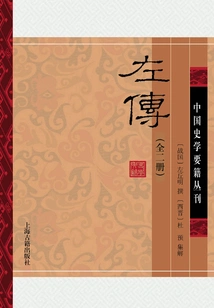
Zuo Zhuan (two Volumes)
History左传(全二册)
(warring States) Zuo Qiuming (western Jin) Du Yuji Jiji
"Chun Qiu Zuo Shi Zhuan" mainly explains the "Spring and Autumn" with historical facts. It started from the first year of Lu Yin (722 BC) and ended in the 14th year of Lu Daogong (454 BC). It is 27 years longer than "Spring and Autumn". It mainly records events and also contains remarks. It comprehensively reflects the social and historical situation at that time. It is not only an important Confucian classic, but also the first complete chronological history book in China. It also has high achievements in literature.
"Chun Qiu Zuo Shi Zhuan" mainly explains the "Spring and Autumn" with historical facts. It started from the first year of Lu Yin (722 BC) and ended in the 14th year of Lu Daogong (454 BC). It is 27 years longer than "Spring and Autumn". It mainly records events and also contains remarks. It comprehensively reflects the social and historical situation at that time. It is not only an important Confucian classic, but also the first complete chronological history book in China. It also has high achievements in literature.
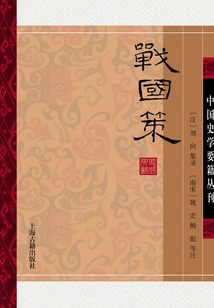
战国策(全二册)
(han) Collection Of Liu Xiang (southern Song Dynasty) Notes By Yao Hong, Bao Biao And Others
"Warring States Policy" is referred to as "National Policy". It is said that it was compiled by historians or strategists from various countries during the Warring States Period. It has different names such as "National Policy", "State Affairs", "Shiyu", "Short and Long", and "Long Book". Liu Xiang of the Western Han Dynasty compiled it into thirty-three chapters according to the order of the twelve kingdoms of the Warring States Period, including Qin, Qi, Chu, and Zhao, deleting duplications, and gave it its current name. This book mainly records the political opinions and struggle strategies put forward by the counselors and strategists at that time when they lobbied various countries or debated with each other. It reflects the sharp and complex contradictions and struggles between various countries and groups during the Warring States Period. The text is vivid and fluent, and it is an important material for studying the history of the Warring States Period.
"Warring States Policy" is referred to as "National Policy". It is said that it was compiled by historians or strategists from various countries during the Warring States Period. It has different names such as "National Policy", "State Affairs", "Shiyu", "Short and Long", and "Long Book". Liu Xiang of the Western Han Dynasty compiled it into thirty-three chapters according to the order of the twelve kingdoms of the Warring States Period, including Qin, Qi, Chu, and Zhao, deleting duplications, and gave it its current name. This book mainly records the political opinions and struggle strategies put forward by the counselors and strategists at that time when they lobbied various countries or debated with each other. It reflects the sharp and complex contradictions and struggles between various countries and groups during the Warring States Period. The text is vivid and fluent, and it is an important material for studying the history of the Warring States Period.
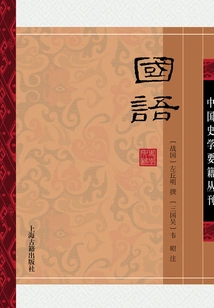
Mandarin
History国语
(warring States) Written By Zuo Qiuming (three Kingdoms Of Wu) Annotated By Wei Zhao
"Guoyu" is said to have been written by Zuo Qiuming, a historian of the State of Lu during the Spring and Autumn Period. The book consists of 21 volumes, respectively recording the historical events of the eight kingdoms of Zhou, Lu, Qi, Jin, Zheng, Chu, Wu and Yue from the Western Zhou Dynasty to the Spring and Autumn Period (about BC967BC453). It is the earliest country history in my country. The Mandarin language preserves rich historical materials, and the detailed and vivid historical facts are important reference materials for studying the history of Pre-Qin Dynasty.
"Guoyu" is said to have been written by Zuo Qiuming, a historian of the State of Lu during the Spring and Autumn Period. The book consists of 21 volumes, respectively recording the historical events of the eight kingdoms of Zhou, Lu, Qi, Jin, Zheng, Chu, Wu and Yue from the Western Zhou Dynasty to the Spring and Autumn Period (about BC967BC453). It is the earliest country history in my country. The Mandarin language preserves rich historical materials, and the detailed and vivid historical facts are important reference materials for studying the history of Pre-Qin Dynasty.
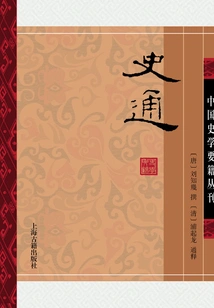
Stone
History史通
(tang Dynasty) Liu Zhiji (qing Dynasty) Pu Qilong Tongshi
"Shi Tong" has a total of 20 volumes, divided into internal and external chapters, 10 volumes each. There are 39 inner chapters, explaining the origin, style and compilation methods of history books; 13 outer chapters, discussing the history of the establishment of historians and the gains and losses of historical books. Three of the inner chapters, namely Titong, Wanmiao, and Zhangzhang, have long been lost, and only 49 have been handed down. It is the earliest theoretical work on history in my country.
"Shi Tong" has a total of 20 volumes, divided into internal and external chapters, 10 volumes each. There are 39 inner chapters, explaining the origin, style and compilation methods of history books; 13 outer chapters, discussing the history of the establishment of historians and the gains and losses of historical books. Three of the inner chapters, namely Titong, Wanmiao, and Zhangzhang, have long been lost, and only 49 have been handed down. It is the earliest theoretical work on history in my country.
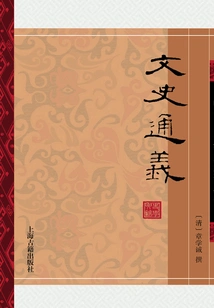
文史通义
Zhang Xuecheng
"Wen Shi Tong Yi" written by Zhang Xuecheng is a pioneering work. The book advocates borrowing from the past to connect with the present. The discussion involves many fields such as history, literature, and typology, and has made many achievements. Among them, the famous thesis such as "Jiang Shi Yi", "Six Classics are all history", and "Shi De" have a particularly far-reaching influence. "Wen Shi Tong" and "Shi Tong" are regarded as the twin gems of ancient Chinese historical theory.
"Wen Shi Tong Yi" written by Zhang Xuecheng is a pioneering work. The book advocates borrowing from the past to connect with the present. The discussion involves many fields such as history, literature, and typology, and has made many achievements. Among them, the famous thesis such as "Jiang Shi Yi", "Six Classics are all history", and "Shi De" have a particularly far-reaching influence. "Wen Shi Tong" and "Shi Tong" are regarded as the twin gems of ancient Chinese historical theory.
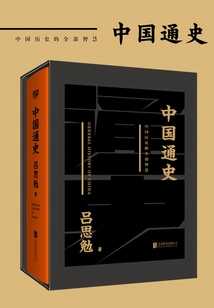
General History of China
History中国通史
Lu Simian
"General History of China" is Mr. Lu Simian's famous historical work. It is also the first general history of China written in vernacular in the history of our country. The book is divided into two volumes. The first volume is the cultural history of China, drawing on the canonical system of ancient history books. It is divided into eighteen topics according to chapters, such as marriage, clan system, political system, class, property, official system, and elections. The extensive content is completely consistent with the meaning of today's "big culture"; the second volume is the political history of China, starting from the origin of the nation and narrating the historical events of the past dynasties until the founding of the Republic of China. Five thousand years of Chinese history are condensed into one book. "General History of China" is permeated with Lu Simian's spirit of using new methods and new ideas to organize the old country. The whole book "writes general history with rich historical knowledge and smooth writing style, so as to open a new era for the writing of general history."
"General History of China" is Mr. Lu Simian's famous historical work. It is also the first general history of China written in vernacular in the history of our country. The book is divided into two volumes. The first volume is the cultural history of China, drawing on the canonical system of ancient history books. It is divided into eighteen topics according to chapters, such as marriage, clan system, political system, class, property, official system, and elections. The extensive content is completely consistent with the meaning of today's "big culture"; the second volume is the political history of China, starting from the origin of the nation and narrating the historical events of the past dynasties until the founding of the Republic of China. Five thousand years of Chinese history are condensed into one book. "General History of China" is permeated with Lu Simian's spirit of using new methods and new ideas to organize the old country. The whole book "writes general history with rich historical knowledge and smooth writing style, so as to open a new era for the writing of general history."
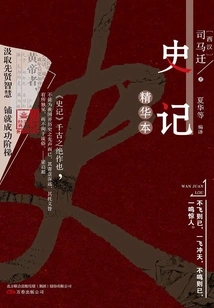
史记精华本
G
The whole book consists of twelve chapters on chronicles, ten on tables, eight on books, thirty on famous families, and seventy on biographies, for a total of one hundred and thirty chapters. "Historical Records" is a very large volume with more than 520,000 words, which is very difficult for ordinary readers to read. Therefore, this book excerpts the essence of "Historical Records" and selects the best parts of famous epochs, aristocratic families, and biographies in history, and arranges them in historical chronological order, so that readers can have a macro grasp of the "Historical Records". In order to facilitate readers' reading, this book uses detailed and accurate vernacular translations and many exquisite illustrations to reinterpret this great classic of Chinese classics using modern language and today's perspectives and standards.
The whole book consists of twelve chapters on chronicles, ten on tables, eight on books, thirty on famous families, and seventy on biographies, for a total of one hundred and thirty chapters. "Historical Records" is a very large volume with more than 520,000 words, which is very difficult for ordinary readers to read. Therefore, this book excerpts the essence of "Historical Records" and selects the best parts of famous epochs, aristocratic families, and biographies in history, and arranges them in historical chronological order, so that readers can have a macro grasp of the "Historical Records". In order to facilitate readers' reading, this book uses detailed and accurate vernacular translations and many exquisite illustrations to reinterpret this great classic of Chinese classics using modern language and today's perspectives and standards.
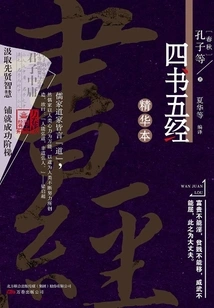
四书五经精华本
(spring And Autumn Period) Confucius Waiting Compiled By Xia Hua
"Four Books and Five Classics" is the collective name of "Four Books" and "Five Classics". The essence of nine core classics, suitable for reading and collection. 2. A collection of classics among Chinese classics, standing at the pinnacle of Confucianism, a must-read book for Chinese people. The essence of the nine classics is Daxue, Doctrine of the Mean, Analects of Confucius, Mencius, Zhouyi, Book of Songs, Book of Rites, Spring and Autumn Annals, and Shangshu. One book is enough to understand the essence of Chinese studies. The explanations are simple and easy to understand, and women and children can understand them. It opens the door to Confucianism for you. 3. The interpretation is straightforward and easy to understand, the pictures are detailed and systematic, and the profound principles are interpreted in simple language. It has guiding significance and reference value for strengthening personal cultivation, understanding all things in the universe, world changes, and all aspects of life.
"Four Books and Five Classics" is the collective name of "Four Books" and "Five Classics". The essence of nine core classics, suitable for reading and collection. 2. A collection of classics among Chinese classics, standing at the pinnacle of Confucianism, a must-read book for Chinese people. The essence of the nine classics is Daxue, Doctrine of the Mean, Analects of Confucius, Mencius, Zhouyi, Book of Songs, Book of Rites, Spring and Autumn Annals, and Shangshu. One book is enough to understand the essence of Chinese studies. The explanations are simple and easy to understand, and women and children can understand them. It opens the door to Confucianism for you. 3. The interpretation is straightforward and easy to understand, the pictures are detailed and systematic, and the profound principles are interpreted in simple language. It has guiding significance and reference value for strengthening personal cultivation, understanding all things in the universe, world changes, and all aspects of life.
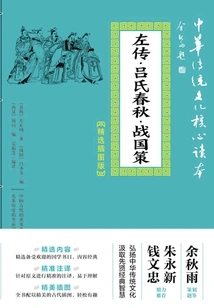
左传·吕氏春秋·战国策
(spring And Autumn Period) Zuo Qiuming (warring States Period) Lu Buwei (western Han Dynasty) Compiled By Liu Xiang
"Zuo Zhuan" is a chronological historical work that tells the political, economic, military, diplomatic and other aspects of the history of the vassal states from 722 BC to 468 BC, focusing on the contradictions and struggles among the vassal states. It also pioneered historical literature and had a great influence on later biographical literature, such as "Historical Records". "Lu's Spring and Autumn Annals" is a collection of nine schools of thought, integrating the best of Confucianism, Taoism, Mohism, Legalism, and military strategists to form a theoretical system covering politics, economics, philosophy, morality, and military affairs. The author Lu Buwei's intention is to summarize historical experience and lessons and provide the Qin Dynasty with strategies for governing the country. "Warring States Policy" is a country-specific history book compiled in the order of Eastern Zhou, Western Zhou, Qin, Qi, Chu, Zhao, Wei, Han, Yan, Song, Wei, and Zhongshan. It describes the political opinions and strategies of the politicians during the Warring States period, shows the historical characteristics and social features of the Warring States period, and is an important classic for studying the history of the Warring States.
"Zuo Zhuan" is a chronological historical work that tells the political, economic, military, diplomatic and other aspects of the history of the vassal states from 722 BC to 468 BC, focusing on the contradictions and struggles among the vassal states. It also pioneered historical literature and had a great influence on later biographical literature, such as "Historical Records". "Lu's Spring and Autumn Annals" is a collection of nine schools of thought, integrating the best of Confucianism, Taoism, Mohism, Legalism, and military strategists to form a theoretical system covering politics, economics, philosophy, morality, and military affairs. The author Lu Buwei's intention is to summarize historical experience and lessons and provide the Qin Dynasty with strategies for governing the country. "Warring States Policy" is a country-specific history book compiled in the order of Eastern Zhou, Western Zhou, Qin, Qi, Chu, Zhao, Wei, Han, Yan, Song, Wei, and Zhongshan. It describes the political opinions and strategies of the politicians during the Warring States period, shows the historical characteristics and social features of the Warring States period, and is an important classic for studying the history of the Warring States.
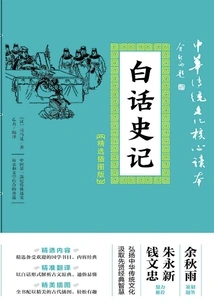
白话史记
(han) Sima Qian Compiled By Yili
Sima Qian was a great historian and writer during the Western Han Dynasty in my country. His "Historical Records" is a great historical work and a great literary work. "Historical Records" is my country's first biographical general history. It records the political, economic, cultural and other aspects of the situation for about three thousand years starting from the legendary Yellow Emperor and ending with Emperor Wu of the Han Dynasty, as well as the deeds of emperors, generals, scholars, knights and other figures. The whole book is divided into twelve chronicles, ten tables, eight books, thirty aristocratic families and seventy biographies, with a total of 130 chapters and more than 520,000 words. It was praised by Mr. Lu Xun as "the swan song of historians and the unrhymed Li Sao". "Historical Records" has high literary and ideological value. To this day, people are still studying it, studying it, learning from it, and constantly drawing nutrients from it. This book selects 38 works from the "Historical Records" such as "The Chronicles of the Five Emperors", "The Chronicles of Xiang Yu", "The Family of Dukes of Lu and Zhou", "The Family of Xiao Xiangguo", "Biographies of Boyi" and "Biographies of Huo Shi", translated into vernacular, with vivid words and touching stories.
Sima Qian was a great historian and writer during the Western Han Dynasty in my country. His "Historical Records" is a great historical work and a great literary work. "Historical Records" is my country's first biographical general history. It records the political, economic, cultural and other aspects of the situation for about three thousand years starting from the legendary Yellow Emperor and ending with Emperor Wu of the Han Dynasty, as well as the deeds of emperors, generals, scholars, knights and other figures. The whole book is divided into twelve chronicles, ten tables, eight books, thirty aristocratic families and seventy biographies, with a total of 130 chapters and more than 520,000 words. It was praised by Mr. Lu Xun as "the swan song of historians and the unrhymed Li Sao". "Historical Records" has high literary and ideological value. To this day, people are still studying it, studying it, learning from it, and constantly drawing nutrients from it. This book selects 38 works from the "Historical Records" such as "The Chronicles of the Five Emperors", "The Chronicles of Xiang Yu", "The Family of Dukes of Lu and Zhou", "The Family of Xiao Xiangguo", "Biographies of Boyi" and "Biographies of Huo Shi", translated into vernacular, with vivid words and touching stories.
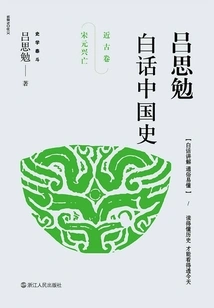
吕思勉白话中国史·近古卷·宋元兴亡
Lu Simian
"Lü Simian's Vernacular History of China" is divided into "Lü Simian's Vernacular History of China·Ancient Scrolls·Early Rise of China", "Lü Simian's Vernacular History of China·Middle Ancient Scrolls·The First Sound of the Han and Tang Dynasties", "Lü Simian's Vernacular History of China·Modern Scrolls·The Rise and Fall of the Song and Yuan Dynasties", "Lü Simian's Vernacular History of China·Modern Scrolls·Ming and Qing Dynasties" The five books in the series "The Changes" and "Lü Simian's Vernacular Chinese History·Modern Volume·What Was the Republic of China" are the first comprehensive histories written in vernacular with complete meaning. They respectively describe the political history, social economy, and cultural phenomena at each stage, and also describe the relationship between various countries and China. This version is based on the first edition of the Commercial Press in 1923. In order to make it easier to understand and read, the era of the Republic of China was changed to the AD era. The changed place names were also marked in detail, and the text was completely revised.
"Lü Simian's Vernacular History of China" is divided into "Lü Simian's Vernacular History of China·Ancient Scrolls·Early Rise of China", "Lü Simian's Vernacular History of China·Middle Ancient Scrolls·The First Sound of the Han and Tang Dynasties", "Lü Simian's Vernacular History of China·Modern Scrolls·The Rise and Fall of the Song and Yuan Dynasties", "Lü Simian's Vernacular History of China·Modern Scrolls·Ming and Qing Dynasties" The five books in the series "The Changes" and "Lü Simian's Vernacular Chinese History·Modern Volume·What Was the Republic of China" are the first comprehensive histories written in vernacular with complete meaning. They respectively describe the political history, social economy, and cultural phenomena at each stage, and also describe the relationship between various countries and China. This version is based on the first edition of the Commercial Press in 1923. In order to make it easier to understand and read, the era of the Republic of China was changed to the AD era. The changed place names were also marked in detail, and the text was completely revised.
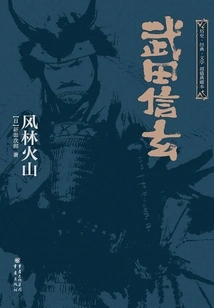
武田信玄:风林山火(上下全集)
(japan) Nitta Jiro
"Takeda Shingen: Furin Volcano" is a full-length historical novel written by the famous Japanese historical novelist Jiro Nitta, with Takeda Shingen as the protagonist, "Napoleon" and "the first strategist of the Warring States Period" in Japan's Warring States Period. During the turbulent Warring States Period in Japan, the 20-year-old young hero Takeda Shingen, with the support of his family and the people, expelled his tyrannical and unscrupulous father without bloodshed. The pulse of youth is full of desire and ambition. After proclaiming himself the lord of the Kai Kingdom, he immediately attacked Shinano with a thunderous force. He worked hard to expand his territory and fought everywhere. On his military flag is Sun Tzu's famous saying: "As fast as the wind, as slow as the forest, as aggressive as fire, and as motionless as the mountain." The flag points to an invincible battle. After pacifying Shinano, Shingen dreamed of marching westward and directly entering Kyoto, but his old enemy Uesugi Kenshin always restrained him, so the Tiger of Kai had to fight against the Dragon of Echigo on Kawanaka Island. Takeda Shingen, who won the battle of Kawanakajima, walked step by step towards the road of commanding the world. The entire territory of Koshu and Shinano has been included in the territory, and the dominating Takeda Shingen is unfortunately suffering from illness. But decades of dreams supported Shingen, and he still visited the tombs of his relatives, said goodbye to his beloved wives and concubines, and embarked on the road to the west. This is the last ditch effort of a generation of famous generals. Unfortunately, when the final victory was about to be within reach, Shingen was knocked down by the disease for no reason, and he could only look at Kyoto, which was just around the corner, with regret. Based on a large number of historical research and legends, Nitta Jiro combined his own imagination to restore and reshape Takeda Shingen's life, and narrated four major events in Shingen's life: "The exile of his biological father Nobutora, the Battle of Kawanakajima, the pacification of the eldest son Yoshinobu's rebellion, and the Battle of Mikatahara" in four volumes: "Wind", "Forest", "Fire", and "Mountain". "Takeda Shingen: Fenglin Volcano" is so majestic and exquisitely structured that it's hard to put it down as soon as you start reading it.
"Takeda Shingen: Furin Volcano" is a full-length historical novel written by the famous Japanese historical novelist Jiro Nitta, with Takeda Shingen as the protagonist, "Napoleon" and "the first strategist of the Warring States Period" in Japan's Warring States Period. During the turbulent Warring States Period in Japan, the 20-year-old young hero Takeda Shingen, with the support of his family and the people, expelled his tyrannical and unscrupulous father without bloodshed. The pulse of youth is full of desire and ambition. After proclaiming himself the lord of the Kai Kingdom, he immediately attacked Shinano with a thunderous force. He worked hard to expand his territory and fought everywhere. On his military flag is Sun Tzu's famous saying: "As fast as the wind, as slow as the forest, as aggressive as fire, and as motionless as the mountain." The flag points to an invincible battle. After pacifying Shinano, Shingen dreamed of marching westward and directly entering Kyoto, but his old enemy Uesugi Kenshin always restrained him, so the Tiger of Kai had to fight against the Dragon of Echigo on Kawanaka Island. Takeda Shingen, who won the battle of Kawanakajima, walked step by step towards the road of commanding the world. The entire territory of Koshu and Shinano has been included in the territory, and the dominating Takeda Shingen is unfortunately suffering from illness. But decades of dreams supported Shingen, and he still visited the tombs of his relatives, said goodbye to his beloved wives and concubines, and embarked on the road to the west. This is the last ditch effort of a generation of famous generals. Unfortunately, when the final victory was about to be within reach, Shingen was knocked down by the disease for no reason, and he could only look at Kyoto, which was just around the corner, with regret. Based on a large number of historical research and legends, Nitta Jiro combined his own imagination to restore and reshape Takeda Shingen's life, and narrated four major events in Shingen's life: "The exile of his biological father Nobutora, the Battle of Kawanakajima, the pacification of the eldest son Yoshinobu's rebellion, and the Battle of Mikatahara" in four volumes: "Wind", "Forest", "Fire", and "Mountain". "Takeda Shingen: Fenglin Volcano" is so majestic and exquisitely structured that it's hard to put it down as soon as you start reading it.
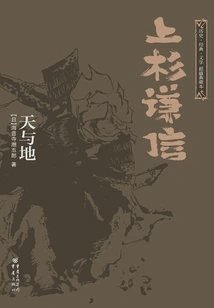
上杉谦信:天与地
(japan) Kaionji Shiogoro
Although he was born into a noble family of the guardian generation of Echigo Kingdom, he was not loved by his father. He lost his mother at the age of four and his father at a young age. He was once again hostile and persecuted by his jealous brother, and suffered from homelessness. He went into battle for the first time at the age of fifteen. He repelled the intrusions of hostile forces many times and quickly captured the powerful families in the country. Later, he repeatedly showed valor in the war to recover the lost land of Shinshu heroes, and finally became the governor of Kanto at Kamakura Hachimangu Shrine, which shocked the world. He was born with an upright mind, attracting a group of heroic counselors to join him in conquering the world, and together with Takeda Shingen, a generation of heroes at that time, the most intense and tragic war in the history of Japan's Warring States Period - the Battle of Kawanakajima. He is a rare military genius in Japanese history, Uesugi Kenshin, known as the "Dragon of Echigo" and the "Military God of Japan's Warring States Period". The author of this book, Shiigoro Kaionji, a master of Japanese historical novels, outlines the legendary life of a generation of famous Warring States generals in a magnificent yet gentle literary style. The writing is concise, the characters are detailed, and the war scenes are grand, making people feel immersed in the war.
Although he was born into a noble family of the guardian generation of Echigo Kingdom, he was not loved by his father. He lost his mother at the age of four and his father at a young age. He was once again hostile and persecuted by his jealous brother, and suffered from homelessness. He went into battle for the first time at the age of fifteen. He repelled the intrusions of hostile forces many times and quickly captured the powerful families in the country. Later, he repeatedly showed valor in the war to recover the lost land of Shinshu heroes, and finally became the governor of Kanto at Kamakura Hachimangu Shrine, which shocked the world. He was born with an upright mind, attracting a group of heroic counselors to join him in conquering the world, and together with Takeda Shingen, a generation of heroes at that time, the most intense and tragic war in the history of Japan's Warring States Period - the Battle of Kawanakajima. He is a rare military genius in Japanese history, Uesugi Kenshin, known as the "Dragon of Echigo" and the "Military God of Japan's Warring States Period". The author of this book, Shiigoro Kaionji, a master of Japanese historical novels, outlines the legendary life of a generation of famous Warring States generals in a magnificent yet gentle literary style. The writing is concise, the characters are detailed, and the war scenes are grand, making people feel immersed in the war.
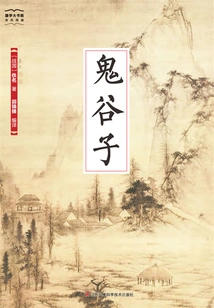
鬼谷子(国学大书院)
(warring States) Anonymous
"Chronicles of the States of the Eastern Zhou Dynasty" once commented on Guiguzi: "He is a man who knows everything about heaven and earth, and has several knowledges: one is mathematics, the sun and stars are like latitude, and he can observe the coming and going in his palm, and everything he says can be verified; the other is military science, including six Taoist strategies and three strategies. There are endless changes, forming formations and marching troops, unpredictable ghosts and gods; the third is travel, remembering a lot, understanding the situation, speaking out words, and not being able to speak a thousand words; the fourth is transcendental learning, cultivating one's nature, taking food and guidance, curing diseases and prolonging life, and avoiding conflicts. "
"Chronicles of the States of the Eastern Zhou Dynasty" once commented on Guiguzi: "He is a man who knows everything about heaven and earth, and has several knowledges: one is mathematics, the sun and stars are like latitude, and he can observe the coming and going in his palm, and everything he says can be verified; the other is military science, including six Taoist strategies and three strategies. There are endless changes, forming formations and marching troops, unpredictable ghosts and gods; the third is travel, remembering a lot, understanding the situation, speaking out words, and not being able to speak a thousand words; the fourth is transcendental learning, cultivating one's nature, taking food and guidance, curing diseases and prolonging life, and avoiding conflicts. "
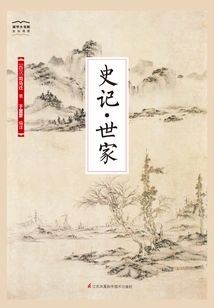
史记·世家(国学大书院)
H
"Historical Records: Family" mainly records the history of hereditary princes and feudal states and the deeds of particularly important figures. Although Confucius and Chen She were not princes or nobles, they were described in detail in the aristocratic family because of their extraordinary role and influence in history. The successes and failures of various princes and kings more truly restore the face of history, and provide a deeper understanding of the characteristics and origins of ancient Chinese social politics and culture.
"Historical Records: Family" mainly records the history of hereditary princes and feudal states and the deeds of particularly important figures. Although Confucius and Chen She were not princes or nobles, they were described in detail in the aristocratic family because of their extraordinary role and influence in history. The successes and failures of various princes and kings more truly restore the face of history, and provide a deeper understanding of the characteristics and origins of ancient Chinese social politics and culture.

半小时喵星哲学史
Fat Le Fat Le
Meow Meow Comics Philosophy Book for Busy People. If you don't read philosophy, it lacks a sense of literary youth. Want to read philosophy, but are afraid of it being too esoteric and difficult to understand? This set of books will break your understanding of philosophy! This is the first book in China that uses cat images to explain philosophy. It uses an original comic format and follows the timeline as the horizontal axis. It integrates Chinese and Western philosophical thoughts. If you open it casually, you can enter the relaxed and interesting world of philosophy. This set of books is divided into three volumes: ancient times, medieval times, modern times and modern times, all of which feature the most representative celebrities of the time! 37 Philosophical cats with great human wisdom, such as Socrates (Earth name: Socrates) who "philosophy is enough", Newton (Earth name: Newton), the great god who changed the world; Kant (Earth name: Kant) who unified the world of philosophy; Nietzsche (Earth name: Nietzsche) who "went crazy young" and so on. We are usually familiar with them, but we may not really understand their life stories and opinions. We have drawn them for you to ensure that you can understand and learn them even if you are a novice in philosophy!
Meow Meow Comics Philosophy Book for Busy People. If you don't read philosophy, it lacks a sense of literary youth. Want to read philosophy, but are afraid of it being too esoteric and difficult to understand? This set of books will break your understanding of philosophy! This is the first book in China that uses cat images to explain philosophy. It uses an original comic format and follows the timeline as the horizontal axis. It integrates Chinese and Western philosophical thoughts. If you open it casually, you can enter the relaxed and interesting world of philosophy. This set of books is divided into three volumes: ancient times, medieval times, modern times and modern times, all of which feature the most representative celebrities of the time! 37 Philosophical cats with great human wisdom, such as Socrates (Earth name: Socrates) who "philosophy is enough", Newton (Earth name: Newton), the great god who changed the world; Kant (Earth name: Kant) who unified the world of philosophy; Nietzsche (Earth name: Nietzsche) who "went crazy young" and so on. We are usually familiar with them, but we may not really understand their life stories and opinions. We have drawn them for you to ensure that you can understand and learn them even if you are a novice in philosophy!
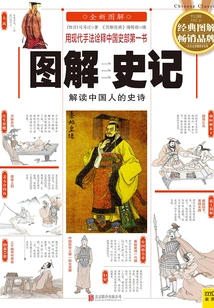
图解史记(2015版)
Compiled By The Editorial Department Of "illustrated Classics"
According to the five major styles of the original work, "Illustrated Historical Records" divides the main text into five parts: overview, chronicle, family, biographies, and books, and the table is attached as an appendix at the back of the book. At the same time, it highly condenses the contents of the 130 volumes of "Historical Records", seizes the general trend of historical development, focuses on analyzing the key historical turning points and heroes, and vividly tells the three thousand years of history from the Yellow Emperor to the Emperor Wu of the Han Dynasty. In addition, this book also adopts a new editing method of "one page of text and one page of illustrations" to make it easier for you to read "Historical Records" and gain life wisdom from it. According to the five major styles of the original work, "Illustrated Historical Records" divides the main text into five parts: overview, chronicle, family, biographies, and books, and the table is attached as an appendix at the back of the book. In addition, this book also adopts a new editing method of "one page of text and one page of illustrations" to make it easier for you to read "Historical Records" and gain life wisdom from it.
According to the five major styles of the original work, "Illustrated Historical Records" divides the main text into five parts: overview, chronicle, family, biographies, and books, and the table is attached as an appendix at the back of the book. At the same time, it highly condenses the contents of the 130 volumes of "Historical Records", seizes the general trend of historical development, focuses on analyzing the key historical turning points and heroes, and vividly tells the three thousand years of history from the Yellow Emperor to the Emperor Wu of the Han Dynasty. In addition, this book also adopts a new editing method of "one page of text and one page of illustrations" to make it easier for you to read "Historical Records" and gain life wisdom from it. According to the five major styles of the original work, "Illustrated Historical Records" divides the main text into five parts: overview, chronicle, family, biographies, and books, and the table is attached as an appendix at the back of the book. In addition, this book also adopts a new editing method of "one page of text and one page of illustrations" to make it easier for you to read "Historical Records" and gain life wisdom from it.
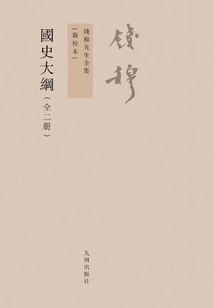
国史大纲(全2册)
Qian Mu
"Outline of National History" is a general history of China. It strives to be concise, giving its outline and omitting trivial details. In less than 1,000 pages, the details of the characters and the preparation of the career also show the author's great power to control the complicated history. The whole book outline is clear and simple, and the complexity is appropriate. "National History Outline" discusses the evolution and development of traditional Chinese academic thoughts, political systems, and social trends, as well as domestic and foreign situations, in order to integrate the history of our country, clarify the reasons for the rise and fall of its governance, elucidate its system of continuous succession, and indicate the source of the life and spirit of our nation. Mr. Qian Mu wrote this book during the Anti-Japanese War. When the country was in peril, scholars used their pen as an army. With "the country with the most complete history" as the deep foundation of the writing, it was written in nearly 800,000 words, which is soul-stirring. It aims to inspire the national spirit of the people, respond to the reality, and serve as a mirror for the founding of the country during the Anti-Japanese War.
"Outline of National History" is a general history of China. It strives to be concise, giving its outline and omitting trivial details. In less than 1,000 pages, the details of the characters and the preparation of the career also show the author's great power to control the complicated history. The whole book outline is clear and simple, and the complexity is appropriate. "National History Outline" discusses the evolution and development of traditional Chinese academic thoughts, political systems, and social trends, as well as domestic and foreign situations, in order to integrate the history of our country, clarify the reasons for the rise and fall of its governance, elucidate its system of continuous succession, and indicate the source of the life and spirit of our nation. Mr. Qian Mu wrote this book during the Anti-Japanese War. When the country was in peril, scholars used their pen as an army. With "the country with the most complete history" as the deep foundation of the writing, it was written in nearly 800,000 words, which is soul-stirring. It aims to inspire the national spirit of the people, respond to the reality, and serve as a mirror for the founding of the country during the Anti-Japanese War.
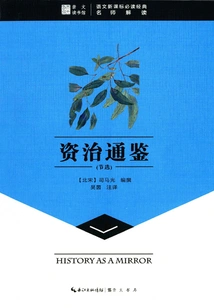
崇文读书馆:资治通鉴(节选)
(northern Song Dynasty) Sima Guang, Annotated By Wu Yin
Classics and masterpieces are the accumulation of human civilization and the crystallization of cultural thoughts. They condense human wisdom and have a significant impact on human history. They have withstood the test of time and have been recognized by readers. In today's society, we need to read classics to travel through the tunnel of history and understand the wonderful historical, cultural and artistic achievements of various countries in the world, so as to gain inspiration and expand our lives.
Classics and masterpieces are the accumulation of human civilization and the crystallization of cultural thoughts. They condense human wisdom and have a significant impact on human history. They have withstood the test of time and have been recognized by readers. In today's society, we need to read classics to travel through the tunnel of history and understand the wonderful historical, cultural and artistic achievements of various countries in the world, so as to gain inspiration and expand our lives.
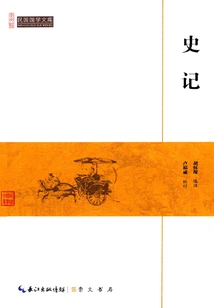
民国国学文库:史记
Selected Annotations By Hu Huaichen And Edited By Lu Fujian
"Historical Records" is the first biographical general history in Chinese history. It was originally called "Tai Shi Gong Shu", or "Tai Shi Gong Ji" or "Tai Shi Ji". The author is Sima Qian during the Western Han Dynasty. "Historical Records" is the first general history of ancient China. It is not only huge in scale and complete in system, but also has a profound influence on subsequent biographical history books. Official histories of all dynasties have been written in this style. At the same time, the vividness of the text and the imageness of the narrative in the book are also the highest achievements. Hu Huaichen's "Historical Records" annotated and annotated 35 chapters of "Historical Records", including historical records, aristocratic families, and biographies, and the lengthy articles have been appropriately deleted.
"Historical Records" is the first biographical general history in Chinese history. It was originally called "Tai Shi Gong Shu", or "Tai Shi Gong Ji" or "Tai Shi Ji". The author is Sima Qian during the Western Han Dynasty. "Historical Records" is the first general history of ancient China. It is not only huge in scale and complete in system, but also has a profound influence on subsequent biographical history books. Official histories of all dynasties have been written in this style. At the same time, the vividness of the text and the imageness of the narrative in the book are also the highest achievements. Hu Huaichen's "Historical Records" annotated and annotated 35 chapters of "Historical Records", including historical records, aristocratic families, and biographies, and the lengthy articles have been appropriately deleted.
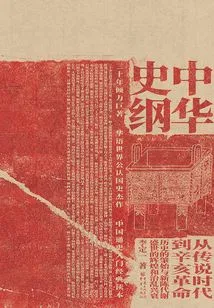
Outline of Chinese History
History中华史纲
Li Dingyi
"Outline of Chinese History" is recognized by the contemporary Chinese world as a masterpiece of general history of China. The author, Professor Li Dingyi, has been working hard for thirty years. His original intention was to create a popular history book that would allow readers to quickly and clearly understand the history of his nation. This book begins with the formation and growth of the Chinese world, and then goes through turbulent waves, ups and downs. During this period, there are glorious and glorious eras, and there are also dark, corrosive, degenerate and unruly eras; there are stories of blood and tears, songs and tears, and there are also despicable, despicable, corrupt and despicable filthy things. No matter from which angle we criticize and evaluate its value, and no matter how diverse and complex the contents of these criticisms and evaluations are, one thing we can be sure of is that it forms a cultural system of its own and develops independently. It is one of the three major types of human culture along with ancient India and modern Western culture, and each has made very different contributions.
"Outline of Chinese History" is recognized by the contemporary Chinese world as a masterpiece of general history of China. The author, Professor Li Dingyi, has been working hard for thirty years. His original intention was to create a popular history book that would allow readers to quickly and clearly understand the history of his nation. This book begins with the formation and growth of the Chinese world, and then goes through turbulent waves, ups and downs. During this period, there are glorious and glorious eras, and there are also dark, corrosive, degenerate and unruly eras; there are stories of blood and tears, songs and tears, and there are also despicable, despicable, corrupt and despicable filthy things. No matter from which angle we criticize and evaluate its value, and no matter how diverse and complex the contents of these criticisms and evaluations are, one thing we can be sure of is that it forms a cultural system of its own and develops independently. It is one of the three major types of human culture along with ancient India and modern Western culture, and each has made very different contributions.
三国志讲义
Dai Yan
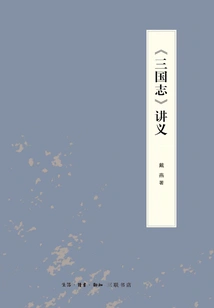
This manuscript focuses on ten biographies of Cao Cao and his son, Empress Bian, the Zhen family, He Yan, Hua Tuo, Zhuge Liang, Lu Xun and other nationalities, such as Karasuma and Japanese, and tells the history of the Three Kingdoms in a simple and easy-to-understand way. Different from traditional history, historiography, or popular novels, this article mainly relies on a specific interpretation of the text of "Three Kingdoms" and uses corresponding perspectives such as political history, women's history, literary history, intellectual history, medical history, ethnic history, and East Asian history to restore the splendid and magnificent picture of the history of the Three Kingdoms written by Chen Shou. In the past, people always paid attention to politics and military in related research, but the characteristic of this book is that in addition to paying attention to military and politics, it pays more attention to issues such as culture, gender, and ethnicity.
This manuscript focuses on ten biographies of Cao Cao and his son, Empress Bian, the Zhen family, He Yan, Hua Tuo, Zhuge Liang, Lu Xun and other nationalities, such as Karasuma and Japanese, and tells the history of the Three Kingdoms in a simple and easy-to-understand way. Different from traditional history, historiography, or popular novels, this article mainly relies on a specific interpretation of the text of "Three Kingdoms" and uses corresponding perspectives such as political history, women's history, literary history, intellectual history, medical history, ethnic history, and East Asian history to restore the splendid and magnificent picture of the history of the Three Kingdoms written by Chen Shou. In the past, people always paid attention to politics and military in related research, but the characteristic of this book is that in addition to paying attention to military and politics, it pays more attention to issues such as culture, gender, and ethnicity.
帝国之河(人文与社会译丛)
(us) Donald Worster
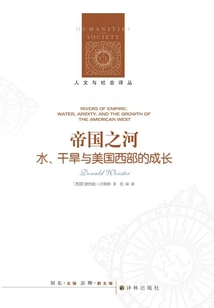
Rivers of Empire is a history of water and its conquest. The author strives to decipher the existing myths of the American West through two approaches: first, discovering and analyzing the role that nature, especially water in nature, played in the evolution of Western history; second, transcending the West, understanding the relationship between water and humans in the West in a far broader and longer time and space, and examining the history of water and water control. These two pathways "join into a single circle of their basin" in the flowing water, reflecting the theme that spans the dams and ditches of the West: domination of nature through technology and capital, and the control of others by those who master technology and capital. This book has caused great controversy since its publication. Praisers regard it as a masterpiece of environmental history and New West historiography, while critics often think its arguments are excessive. However, it cannot be denied that this book is excellent in terms of writing and discussion, and it is still a must-read for scholars of environmental history, Western history, and other American histories.
Rivers of Empire is a history of water and its conquest. The author strives to decipher the existing myths of the American West through two approaches: first, discovering and analyzing the role that nature, especially water in nature, played in the evolution of Western history; second, transcending the West, understanding the relationship between water and humans in the West in a far broader and longer time and space, and examining the history of water and water control. These two pathways "join into a single circle of their basin" in the flowing water, reflecting the theme that spans the dams and ditches of the West: domination of nature through technology and capital, and the control of others by those who master technology and capital. This book has caused great controversy since its publication. Praisers regard it as a masterpiece of environmental history and New West historiography, while critics often think its arguments are excessive. However, it cannot be denied that this book is excellent in terms of writing and discussion, and it is still a must-read for scholars of environmental history, Western history, and other American histories.
彩色图解史记(彩图精装)
Sima Qian Zheng Chen
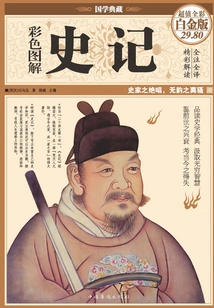
The content is classic and the style is scientific. In order to help readers better understand the original work, the book has added auxiliary columns such as introduction, annotations, translations, and refined explanations of famous sentences to help readers eliminate reading obstacles, deeply appreciate the connotation of the work, and grasp the essence of the original work conveniently and quickly. Full text and pictures make it easy to read and read. More than 600 exquisite pictures complement the text, giving readers an immersive experience, as if they are in a three-dimensional and real history museum. They can fully enjoy the fun of reading and gain more visual experience and imagination space.
The content is classic and the style is scientific. In order to help readers better understand the original work, the book has added auxiliary columns such as introduction, annotations, translations, and refined explanations of famous sentences to help readers eliminate reading obstacles, deeply appreciate the connotation of the work, and grasp the essence of the original work conveniently and quickly. Full text and pictures make it easy to read and read. More than 600 exquisite pictures complement the text, giving readers an immersive experience, as if they are in a three-dimensional and real history museum. They can fully enjoy the fun of reading and gain more visual experience and imagination space.
南明史(上)
Gu Cheng
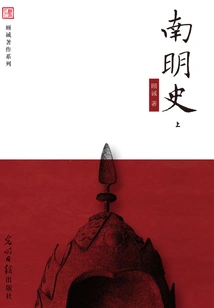
The characteristic of the book "History of the Southern Ming Dynasty" is that it basically focuses on the struggle of the Dashun Army, the remnants of the Daxi Army, and Zheng Chenggong and other people against the Qing Dynasty. The thread throughout the book emphasizes that the main reason for the failure of the twenty-year anti-Qing struggle was that the anti-Qing forces were riddled with internal contradictions and were severely dispersed, which offset the anti-Qing forces. The history of the Southern Ming Dynasty includes the history of the anti-Qing movements in various places since the Dashun army conquered Beijing and the Qing army entered the Pass to conquer the Central Plains, until the fall of the Kuidong anti-Qing base in the year of Kangxi. It is a struggle for hegemony among heroes and a continuation of the Ming Dynasty. It is also an important part of the history of the early Qing Dynasty. It was called "Southern Ming" because the Ming Dynasty with Beijing as its capital had fallen. The battles during this period were mainly fought in the south, and they were fought under the banner of reviving the Ming Dynasty. The Hongguang, Longwu, Lu Jianguo, and Yongli dynasties were all established in the south. However, the fight against the tyrannical rule of the Qing Dynasty was not limited to the south. There were continuous anti-Qing movements in Shaanxi, Gansu, Shanxi, Hebei, Shandong, Henan and other places. "History of the Southern Ming Dynasty" has solid historical materials and rich content. It is known as a milestone in the study of the history of the Southern Ming Dynasty. It has won the China National Book Award and the first prize for outstanding achievements in philosophy and social sciences in Beijing.
The characteristic of the book "History of the Southern Ming Dynasty" is that it basically focuses on the struggle of the Dashun Army, the remnants of the Daxi Army, and Zheng Chenggong and other people against the Qing Dynasty. The thread throughout the book emphasizes that the main reason for the failure of the twenty-year anti-Qing struggle was that the anti-Qing forces were riddled with internal contradictions and were severely dispersed, which offset the anti-Qing forces. The history of the Southern Ming Dynasty includes the history of the anti-Qing movements in various places since the Dashun army conquered Beijing and the Qing army entered the Pass to conquer the Central Plains, until the fall of the Kuidong anti-Qing base in the year of Kangxi. It is a struggle for hegemony among heroes and a continuation of the Ming Dynasty. It is also an important part of the history of the early Qing Dynasty. It was called "Southern Ming" because the Ming Dynasty with Beijing as its capital had fallen. The battles during this period were mainly fought in the south, and they were fought under the banner of reviving the Ming Dynasty. The Hongguang, Longwu, Lu Jianguo, and Yongli dynasties were all established in the south. However, the fight against the tyrannical rule of the Qing Dynasty was not limited to the south. There were continuous anti-Qing movements in Shaanxi, Gansu, Shanxi, Hebei, Shandong, Henan and other places. "History of the Southern Ming Dynasty" has solid historical materials and rich content. It is known as a milestone in the study of the history of the Southern Ming Dynasty. It has won the China National Book Award and the first prize for outstanding achievements in philosophy and social sciences in Beijing.
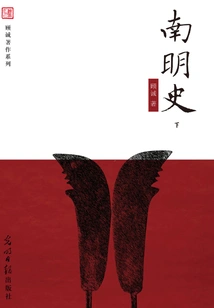
南明史(下)
Gu Cheng
The characteristic of the book "History of the Southern Ming Dynasty" is that it basically focuses on the struggle of the Dashun Army, the remnants of the Daxi Army, and Zheng Chenggong and other people against the Qing Dynasty. The thread throughout the book emphasizes that the main reason for the failure of the twenty-year anti-Qing struggle was that the anti-Qing forces were riddled with internal contradictions and were severely dispersed, which offset the anti-Qing forces. The history of the Southern Ming Dynasty includes the history of the anti-Qing movements in various places since the Dashun army conquered Beijing and the Qing army entered the Pass to conquer the Central Plains, until the fall of the Kuidong anti-Qing base in the year of Kangxi. It is a struggle for hegemony among heroes and a continuation of the Ming Dynasty. It is also an important part of the history of the early Qing Dynasty. It was called "Southern Ming" because the Ming Dynasty with Beijing as its capital had fallen. The battles during this period were mainly fought in the south, and they were fought under the banner of reviving the Ming Dynasty. The Hongguang, Longwu, Lu Jianguo, and Yongli dynasties were all established in the south. However, the fight against the tyrannical rule of the Qing Dynasty was not limited to the south. There were continuous anti-Qing movements in Shaanxi, Gansu, Shanxi, Hebei, Shandong, Henan and other places. "History of the Southern Ming Dynasty" has solid historical materials and rich content. It is known as a milestone in the study of the history of the Southern Ming Dynasty. It has won the China National Book Award and the first prize for outstanding achievements in philosophy and social sciences in Beijing.
The characteristic of the book "History of the Southern Ming Dynasty" is that it basically focuses on the struggle of the Dashun Army, the remnants of the Daxi Army, and Zheng Chenggong and other people against the Qing Dynasty. The thread throughout the book emphasizes that the main reason for the failure of the twenty-year anti-Qing struggle was that the anti-Qing forces were riddled with internal contradictions and were severely dispersed, which offset the anti-Qing forces. The history of the Southern Ming Dynasty includes the history of the anti-Qing movements in various places since the Dashun army conquered Beijing and the Qing army entered the Pass to conquer the Central Plains, until the fall of the Kuidong anti-Qing base in the year of Kangxi. It is a struggle for hegemony among heroes and a continuation of the Ming Dynasty. It is also an important part of the history of the early Qing Dynasty. It was called "Southern Ming" because the Ming Dynasty with Beijing as its capital had fallen. The battles during this period were mainly fought in the south, and they were fought under the banner of reviving the Ming Dynasty. The Hongguang, Longwu, Lu Jianguo, and Yongli dynasties were all established in the south. However, the fight against the tyrannical rule of the Qing Dynasty was not limited to the south. There were continuous anti-Qing movements in Shaanxi, Gansu, Shanxi, Hebei, Shandong, Henan and other places. "History of the Southern Ming Dynasty" has solid historical materials and rich content. It is known as a milestone in the study of the history of the Southern Ming Dynasty. It has won the China National Book Award and the first prize for outstanding achievements in philosophy and social sciences in Beijing.
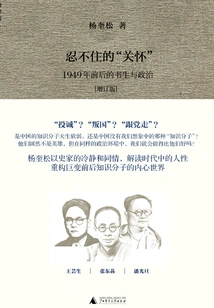
忍不住的“关怀”:1949年前后的书生与政治(增订版)
Yang Kuisong
Scholars and politics around 1949. For China's intellectuals in the 20th century, one of the greatest historical tragedies is that they were the first group of people to devote themselves to saving the country and the people. They thought they understood the political trends best, but in the end they were at a loss in the political field, easily blamed, and despised by others. The three people discussed in this book are Zhang Dongsun, a professor of philosophy at Yenching University, who has been immersed in political activities for a long time, and served as a member of the Government Affairs Council after 1949; Wang Yunsheng, a newspaperman, is good at political commentary and has been the chief writer of Ta Kung Pao for many years; and Pan Guangdan, a professor at Tsinghua University, was born in science, but even as a political layman, he actively wanted to make suggestions for Chinese politics. All three of them had performed outstandingly in different fields before 1949. However, after 1949, they encountered Waterloo one after another, and their lives and careers never recovered.
Scholars and politics around 1949. For China's intellectuals in the 20th century, one of the greatest historical tragedies is that they were the first group of people to devote themselves to saving the country and the people. They thought they understood the political trends best, but in the end they were at a loss in the political field, easily blamed, and despised by others. The three people discussed in this book are Zhang Dongsun, a professor of philosophy at Yenching University, who has been immersed in political activities for a long time, and served as a member of the Government Affairs Council after 1949; Wang Yunsheng, a newspaperman, is good at political commentary and has been the chief writer of Ta Kung Pao for many years; and Pan Guangdan, a professor at Tsinghua University, was born in science, but even as a political layman, he actively wanted to make suggestions for Chinese politics. All three of them had performed outstandingly in different fields before 1949. However, after 1949, they encountered Waterloo one after another, and their lives and careers never recovered.
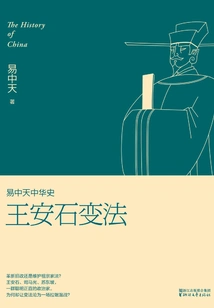
易中天中华史:王安石变法
Yi Zhongtian
Facing the many crises in the Song Dynasty, the newly ascended young emperor Song Shenzong planned to get rid of the bad government and restore the country's prestige. He needs a revolution and a helper. The talented Wang Anshi stepped onto the stage of reform. He recruited reformist talents and established relevant institutions to promote reform. A series of new laws were quickly launched. Unexpectedly, although the desire for reform is good, its implementation has many drawbacks. Opposition groups rose up to attack, and Wang Anshi resigned as prime minister twice, insisting that Sima Guang, who protected the ancestral family law, take power and abolish the new law. The rational Su Dongpo did not please both the old and the new, and almost died because of the "Wutai Poetry Case". A group of smart and upright politicians eventually turned the reform into a tug-of-war, and the fate of the Song Dynasty was changed as a result. Scholar Yi Zhongtian subverts the writing methods of traditional historical works. With beautiful poetic language and a unique and innovative global perspective, he will spend five years writing six massive works, "Yi Zhongtian History of China" with a total of thirty-two volumes: the first "Pre-Qin", the second "Qin, Han, Wei, Jin, Southern and Northern Dynasties", the third "Sui and Tang", the fourth "Song and Yuan", the fifth "Ming and Qing", and the sixth "Modern and Modern Times". The first eighteen volumes have been published. Following "Yi Zhongtian's History of China", we will go on a journey of historical roots, experience the simplicity of the Xia, the splendor of the Shang, the elegance of the Zhou, the strength of the Han, the cosmopolitanism of the Tang, the delicacy of the Song, the etherealness of the Yuan, the secularity of the Ming, and the official accent of the Qing. This solves many historical doubts: Were Xia, Shang and Zhou dynasties? Who are the scholars of the pre-Qin period? What does the style of Wei and Jin look like? Have you heard the sound of the prosperous Tang Dynasty? When the journey ends, we may understand: what are Chinese roots, Chinese dreams, and Chinese souls.
Facing the many crises in the Song Dynasty, the newly ascended young emperor Song Shenzong planned to get rid of the bad government and restore the country's prestige. He needs a revolution and a helper. The talented Wang Anshi stepped onto the stage of reform. He recruited reformist talents and established relevant institutions to promote reform. A series of new laws were quickly launched. Unexpectedly, although the desire for reform is good, its implementation has many drawbacks. Opposition groups rose up to attack, and Wang Anshi resigned as prime minister twice, insisting that Sima Guang, who protected the ancestral family law, take power and abolish the new law. The rational Su Dongpo did not please both the old and the new, and almost died because of the "Wutai Poetry Case". A group of smart and upright politicians eventually turned the reform into a tug-of-war, and the fate of the Song Dynasty was changed as a result. Scholar Yi Zhongtian subverts the writing methods of traditional historical works. With beautiful poetic language and a unique and innovative global perspective, he will spend five years writing six massive works, "Yi Zhongtian History of China" with a total of thirty-two volumes: the first "Pre-Qin", the second "Qin, Han, Wei, Jin, Southern and Northern Dynasties", the third "Sui and Tang", the fourth "Song and Yuan", the fifth "Ming and Qing", and the sixth "Modern and Modern Times". The first eighteen volumes have been published. Following "Yi Zhongtian's History of China", we will go on a journey of historical roots, experience the simplicity of the Xia, the splendor of the Shang, the elegance of the Zhou, the strength of the Han, the cosmopolitanism of the Tang, the delicacy of the Song, the etherealness of the Yuan, the secularity of the Ming, and the official accent of the Qing. This solves many historical doubts: Were Xia, Shang and Zhou dynasties? Who are the scholars of the pre-Qin period? What does the style of Wei and Jin look like? Have you heard the sound of the prosperous Tang Dynasty? When the journey ends, we may understand: what are Chinese roots, Chinese dreams, and Chinese souls.
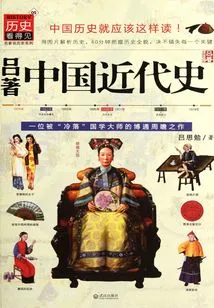
Lu's Modern History of China
History吕著中国近代史
Lu Simian
"Modern Chinese History by Lu" is divided into five parts, including "Lecture Notes on Modern Chinese History", "Prehistory of Modern China", "An Overview of Chinese History in the Past Hundred Years", "Supplement to the Modern Cultural History of China" and "The Russo-Japanese War". The content of the first three parts is basically the same, and they are all compiled from the author's lecture notes on the same content in different periods. The last two parts are further in-depth explanations of the previous part in certain areas. The writing scope of this book is broad, the essence is used widely, and there are many unique features. The narrative is concise and precise, the context is smooth, and the discussion is lively. It can have a very positive effect on general readers' familiarity with modern Chinese history.
"Modern Chinese History by Lu" is divided into five parts, including "Lecture Notes on Modern Chinese History", "Prehistory of Modern China", "An Overview of Chinese History in the Past Hundred Years", "Supplement to the Modern Cultural History of China" and "The Russo-Japanese War". The content of the first three parts is basically the same, and they are all compiled from the author's lecture notes on the same content in different periods. The last two parts are further in-depth explanations of the previous part in certain areas. The writing scope of this book is broad, the essence is used widely, and there are many unique features. The narrative is concise and precise, the context is smooth, and the discussion is lively. It can have a very positive effect on general readers' familiarity with modern Chinese history.
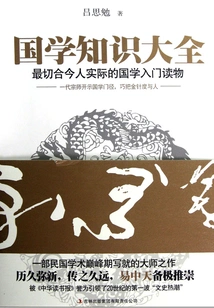
国学知识大全
Lu Simian
"Encyclopedia of Chinese Studies Knowledge" is Mr. Lu Simian's work to guide young students in reading Chinese studies. It was written in Mr. Lu's academic prime. Once it was published during the Republic of China, it was highly sought after by Chinese studies enthusiasts and organizers at that time, and it was known as the noblest paper in Luoyang. Although times have changed, its value remains timeless and it still has strong guiding significance and reference value for contemporary Chinese studies enthusiasts and researchers. This book compiles "Introduction to Chinese Studies", "Explanations of Jingzi", "Outline of Neo-Confucianism", "History of Chinese Culture", "Historical Research Methods", "History and Historical Records" and "How to Read Chinese Historical Records", etc. It can be called a comprehensive and complete masterpiece of Chinese studies. The author's views are authoritative, his exposition is rigorous, and his research is detailed. He aims to bring readers a more profound and pure reading experience. It is indeed a rare introductory work on Chinese studies.
"Encyclopedia of Chinese Studies Knowledge" is Mr. Lu Simian's work to guide young students in reading Chinese studies. It was written in Mr. Lu's academic prime. Once it was published during the Republic of China, it was highly sought after by Chinese studies enthusiasts and organizers at that time, and it was known as the noblest paper in Luoyang. Although times have changed, its value remains timeless and it still has strong guiding significance and reference value for contemporary Chinese studies enthusiasts and researchers. This book compiles "Introduction to Chinese Studies", "Explanations of Jingzi", "Outline of Neo-Confucianism", "History of Chinese Culture", "Historical Research Methods", "History and Historical Records" and "How to Read Chinese Historical Records", etc. It can be called a comprehensive and complete masterpiece of Chinese studies. The author's views are authoritative, his exposition is rigorous, and his research is detailed. He aims to bring readers a more profound and pure reading experience. It is indeed a rare introductory work on Chinese studies.
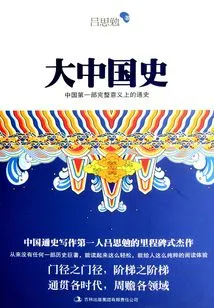
History of Great China
History大中国史
Lu Simian
"History of Greater China", formerly known as "History of the Country in Vernacular Chinese", is the famous work of the great historian Mr. Lu Simian. It is also the first general history work written in vernacular Chinese in the history of our country. It takes historical events as its warp and politics, economy, culture, ethnicity, religion, etc. As its latitude, and details China's five thousand years of dynasty changes, system evolution, custom changes, territorial changes and other issues, covering a wide range of content. Since this book was published by the Commercial Press in September 1923, it has been continuously reprinted and has endured for a long time. It is the largest circulation and most widely circulated history book in the 20th century.
"History of Greater China", formerly known as "History of the Country in Vernacular Chinese", is the famous work of the great historian Mr. Lu Simian. It is also the first general history work written in vernacular Chinese in the history of our country. It takes historical events as its warp and politics, economy, culture, ethnicity, religion, etc. As its latitude, and details China's five thousand years of dynasty changes, system evolution, custom changes, territorial changes and other issues, covering a wide range of content. Since this book was published by the Commercial Press in September 1923, it has been continuously reprinted and has endured for a long time. It is the largest circulation and most widely circulated history book in the 20th century.
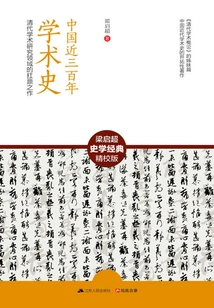
中国近三百年学术史
Liang Qichao
"The Academic History of China in the Past Three Hundred Years" is Liang Qichao's historical masterpiece. It was originally a lecture notes compiled when he taught at Tsinghua University, Nankai University and other universities. It fully explains the development of academics in the Qing Dynasty and its value and position in the development of Chinese history and culture. This book is divided into 16 lectures, taking social trends of thought, school figures and subject development as clues to show the changes in Chinese academics from the 17th century to the 19th century. The content is informative and the viewpoints are novel. In the research and writing of academic history, this book has groundbreaking value and has become a must-read for researchers in related professions. Through this book, readers can not only feel the author's rigorous academic attitude, but also gain a comprehensive and systematic understanding of Qing Dynasty scholarship, as well as the connection between China's historical development and ideological culture.
"The Academic History of China in the Past Three Hundred Years" is Liang Qichao's historical masterpiece. It was originally a lecture notes compiled when he taught at Tsinghua University, Nankai University and other universities. It fully explains the development of academics in the Qing Dynasty and its value and position in the development of Chinese history and culture. This book is divided into 16 lectures, taking social trends of thought, school figures and subject development as clues to show the changes in Chinese academics from the 17th century to the 19th century. The content is informative and the viewpoints are novel. In the research and writing of academic history, this book has groundbreaking value and has become a must-read for researchers in related professions. Through this book, readers can not only feel the author's rigorous academic attitude, but also gain a comprehensive and systematic understanding of Qing Dynasty scholarship, as well as the connection between China's historical development and ideological culture.
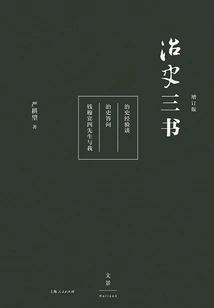
治史三书(增订版)
Yan Gengwang
Yan Gengwang, Qian Mu's favorite student, "a simple model in the field of Chinese history" and an academician of Taiwan's "Academia Sinica", taught him his life experience. Recognized as a must-read for introductory history studies by the history departments of the three places across the Taiwan Strait, it covers the basic methods of historical research, specific rules, topic selection, essay standards, essay style, citation and annotation methods, essay writing and revision, as well as many issues such as efforts and life cultivation. An expanded edition to commemorate the 100th anniversary of the birth of Yan Gengwang; a new 20,000-word "Qian Mu Biography" is released for the first time in mainland China. 35 Years of classic marketing upgrades? Special guide? Special name index. "Three Books on History" is a work on historical methodology written by the historian Yan Gengwang based on his personal academic experience and integrating the historical experience of generations of historians such as Liang Qichao, Chen Yinke, Fu Sinian, Qian Mu, etc. It is considered to be an introductory book on academic study that "a golden needle can save people". The language is simple and fluent, sincere and friendly, and practical.
Yan Gengwang, Qian Mu's favorite student, "a simple model in the field of Chinese history" and an academician of Taiwan's "Academia Sinica", taught him his life experience. Recognized as a must-read for introductory history studies by the history departments of the three places across the Taiwan Strait, it covers the basic methods of historical research, specific rules, topic selection, essay standards, essay style, citation and annotation methods, essay writing and revision, as well as many issues such as efforts and life cultivation. An expanded edition to commemorate the 100th anniversary of the birth of Yan Gengwang; a new 20,000-word "Qian Mu Biography" is released for the first time in mainland China. 35 Years of classic marketing upgrades? Special guide? Special name index. "Three Books on History" is a work on historical methodology written by the historian Yan Gengwang based on his personal academic experience and integrating the historical experience of generations of historians such as Liang Qichao, Chen Yinke, Fu Sinian, Qian Mu, etc. It is considered to be an introductory book on academic study that "a golden needle can save people". The language is simple and fluent, sincere and friendly, and practical.
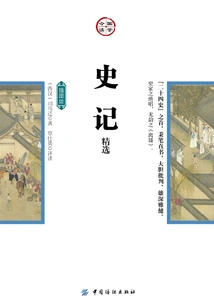
史记精选(插图版)
G
"Historical Records", formerly known as "Tai Shi Gong Shu", is the first general history of our country. There are more than 500,000 words in total, recording about three thousand years of history from the Yellow Emperor to the second year of Yuanshou (122 BC) of Emperor Wu of the Han Dynasty. Liu Zhiji, a historian of the Tang Dynasty, divided historical works into two categories: "chronological style" and "biographical style" in his book "Shi Tong". "Historical Records" was the founder of the chronicle style. Since then, official histories of all dynasties have followed this system of "records" and "biography". According to Sima Qian's preface, the book has a total of 130 chapters, including 12 chronicles, 10 tables, 8 books, 30 family members, and 70 biographies (including "Taishigong's Preface").
"Historical Records", formerly known as "Tai Shi Gong Shu", is the first general history of our country. There are more than 500,000 words in total, recording about three thousand years of history from the Yellow Emperor to the second year of Yuanshou (122 BC) of Emperor Wu of the Han Dynasty. Liu Zhiji, a historian of the Tang Dynasty, divided historical works into two categories: "chronological style" and "biographical style" in his book "Shi Tong". "Historical Records" was the founder of the chronicle style. Since then, official histories of all dynasties have followed this system of "records" and "biography". According to Sima Qian's preface, the book has a total of 130 chapters, including 12 chronicles, 10 tables, 8 books, 30 family members, and 70 biographies (including "Taishigong's Preface").
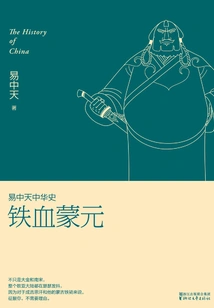
易中天中华史:铁血蒙元
Yi Zhongtian
Genghis Khan, the "genius of a generation", was born, and the Mongolian cavalry swept across the Eurasian continent in just a few decades. Where did they come from? Is he the chosen one or a short-lived troublemaker? The pattern of world civilization is being reshuffled. Where will the wheel of Chinese history go? Welcome to the war world of Genghis Khan.
Genghis Khan, the "genius of a generation", was born, and the Mongolian cavalry swept across the Eurasian continent in just a few decades. Where did they come from? Is he the chosen one or a short-lived troublemaker? The pattern of world civilization is being reshuffled. Where will the wheel of Chinese history go? Welcome to the war world of Genghis Khan.
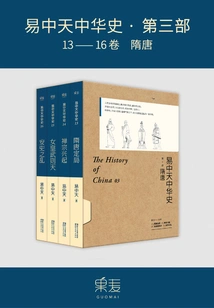
易中天中华史·第三部:隋唐(4册)
Yi Zhongtian
From Emperor Yang of the Sui Dynasty to Taizong of the Tang Dynasty, from Wu Zetian to Concubine Yang Guifei, from Anlu Mountain to Huang Chao. The Xuanwumen Revolution, the Wuzhou Revolution, the Anshi Rebellion, the rise of Zen Buddhism, and the unprecedentedly powerful Sui and Tang dynasties were all exciting. The set version of "Yi Zhongtian Chinese History Part 3: Sui and Tang Dynasties" contains 4 volumes in total: "The Final Destiny of Sui and Tang Dynasties", "The Rise of Zen Buddhism", "Empress Wu Zetian" and "The Rebellion of Anshi". Scholar Yi Zhongtian subverts the writing method of traditional historical works. With beautiful poetic language and a unique and innovative global perspective, he will spend five to six years at the rate of two volumes per quarter to write five 36-volume masterpiece "Yi Zhongtian History of China": the first "Pre-Qin", the second "Qin, Han, Wei, Jin, Southern and Northern Dynasties", the third "Sui and Tang", the fourth "Song and Yuan", the fifth "Ming and Qing", and the sixth "Modern Times". Following "Yi Zhongtian's History of China", we will go on a journey of historical roots, experience the simplicity of the Xia, the splendor of the Shang, the elegance of the Zhou, the strength of the Han, the cosmopolitanism of the Tang, the delicacy of the Song, the etherealness of the Yuan, the secularity of the Ming, and the official accent of the Qing. This solves many historical doubts: Were Xia, Shang and Zhou dynasties? Who are the scholars of the pre-Qin period? What does the style of Wei and Jin look like? Have you heard the sound of the prosperous Tang Dynasty? When the journey ends, we may understand: what are Chinese roots, Chinese dreams, and Chinese souls.
From Emperor Yang of the Sui Dynasty to Taizong of the Tang Dynasty, from Wu Zetian to Concubine Yang Guifei, from Anlu Mountain to Huang Chao. The Xuanwumen Revolution, the Wuzhou Revolution, the Anshi Rebellion, the rise of Zen Buddhism, and the unprecedentedly powerful Sui and Tang dynasties were all exciting. The set version of "Yi Zhongtian Chinese History Part 3: Sui and Tang Dynasties" contains 4 volumes in total: "The Final Destiny of Sui and Tang Dynasties", "The Rise of Zen Buddhism", "Empress Wu Zetian" and "The Rebellion of Anshi". Scholar Yi Zhongtian subverts the writing method of traditional historical works. With beautiful poetic language and a unique and innovative global perspective, he will spend five to six years at the rate of two volumes per quarter to write five 36-volume masterpiece "Yi Zhongtian History of China": the first "Pre-Qin", the second "Qin, Han, Wei, Jin, Southern and Northern Dynasties", the third "Sui and Tang", the fourth "Song and Yuan", the fifth "Ming and Qing", and the sixth "Modern Times". Following "Yi Zhongtian's History of China", we will go on a journey of historical roots, experience the simplicity of the Xia, the splendor of the Shang, the elegance of the Zhou, the strength of the Han, the cosmopolitanism of the Tang, the delicacy of the Song, the etherealness of the Yuan, the secularity of the Ming, and the official accent of the Qing. This solves many historical doubts: Were Xia, Shang and Zhou dynasties? Who are the scholars of the pre-Qin period? What does the style of Wei and Jin look like? Have you heard the sound of the prosperous Tang Dynasty? When the journey ends, we may understand: what are Chinese roots, Chinese dreams, and Chinese souls.
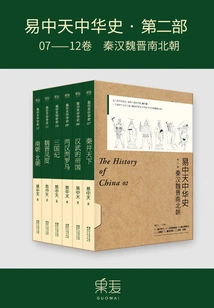
易中天中华史·第二部:秦汉魏晋南北朝(套装共6册)
Yi Zhongtian
There are two short-lived dynasties: Qin and Jin, one or two long-lived dynasties: Western Han and Eastern Han, as well as the division of the world and the confrontation between north and south. The second volume of "Yi Zhongtian's History of China", "Qin, Han, Wei, Jin, Southern and Northern Dynasties", will show eight hundred years of history, including "Qin's Merger of the World", "Han Wu's Empire", "Two Han and Two Rome", "Three Kingdoms", "Wei and Jin Styles", and "Southern and Northern Dynasties" in 6 volumes. Scholar Yi Zhongtian subverts the writing method of traditional historical works. With beautiful poetic language and a unique and innovative global perspective, he will spend five to six years writing a total of 36 volumes of "History of China" in five volumes at the rate of two volumes per quarter: the first volume is "Pre-Qin", the second volume is "Qin, Han, Wei, Jin, Southern and Northern Dynasties", the third volume is "Sui, Tang, Song and Yuan", the fourth volume is "Ming and Qing", and the fifth volume is "Modern Times". Following "Yi Zhongtian's History of China", we will go on a journey of historical roots, experience the simplicity of the Xia, the splendor of the Shang, the elegance of the Zhou, the strength of the Han, the cosmopolitanism of the Tang, the delicacy of the Song, the etherealness of the Yuan, the secularity of the Ming, and the official accent of the Qing. This solves many historical doubts: Were Xia, Shang and Zhou dynasties? Who are the scholars of the pre-Qin period? What does the style of Wei and Jin look like? Have you heard the sound of the prosperous Tang Dynasty? When the journey ends, we may understand: what are Chinese roots, Chinese dreams, and Chinese souls.
There are two short-lived dynasties: Qin and Jin, one or two long-lived dynasties: Western Han and Eastern Han, as well as the division of the world and the confrontation between north and south. The second volume of "Yi Zhongtian's History of China", "Qin, Han, Wei, Jin, Southern and Northern Dynasties", will show eight hundred years of history, including "Qin's Merger of the World", "Han Wu's Empire", "Two Han and Two Rome", "Three Kingdoms", "Wei and Jin Styles", and "Southern and Northern Dynasties" in 6 volumes. Scholar Yi Zhongtian subverts the writing method of traditional historical works. With beautiful poetic language and a unique and innovative global perspective, he will spend five to six years writing a total of 36 volumes of "History of China" in five volumes at the rate of two volumes per quarter: the first volume is "Pre-Qin", the second volume is "Qin, Han, Wei, Jin, Southern and Northern Dynasties", the third volume is "Sui, Tang, Song and Yuan", the fourth volume is "Ming and Qing", and the fifth volume is "Modern Times". Following "Yi Zhongtian's History of China", we will go on a journey of historical roots, experience the simplicity of the Xia, the splendor of the Shang, the elegance of the Zhou, the strength of the Han, the cosmopolitanism of the Tang, the delicacy of the Song, the etherealness of the Yuan, the secularity of the Ming, and the official accent of the Qing. This solves many historical doubts: Were Xia, Shang and Zhou dynasties? Who are the scholars of the pre-Qin period? What does the style of Wei and Jin look like? Have you heard the sound of the prosperous Tang Dynasty? When the journey ends, we may understand: what are Chinese roots, Chinese dreams, and Chinese souls.
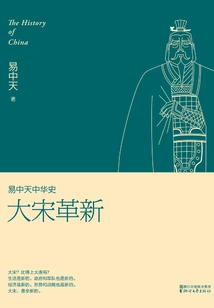
Song Dynasty Innovation
History大宋革新
Yi Zhongtian
Zhao Kuangyin wears a yellow robe, and Liu Yong lingers in the brothel singing about the dawn wind and the waning moon. Di Tiantian went on a rampage, while Bao Gong sat in Kaifeng Mansion and acted impartially. In Liao, Jin, and Xixia, powerful enemies were all around, but in Bianliang City and Lin'an Prefecture, Cuju and sumo wrestling were still singing and dancing. Da Song lived his own new flavor, which was definitely different from the past. The latest volume of "History of China" written by the well-known scholar Yi Zhongtian focuses on the theme of "innovation", sorting out the historical trends during the changes in the Tang and Song Dynasties, and analyzing the many aspects of the Song Dynasty that were different from the past: new life, new economy, new regime, new situation, new strategy. The Song Dynasty was brand new and different from the past, and the successes and failures of innovation are also worthy of review by today's people. Yi Zhongtian's unique "Yi's Reading" style narrates the originally boring historical battles in a way that is humorous and easy to understand, but also profound. This book observes the Song Dynasty from the perspective of big history and a global perspective, analyzes the strategic deployment and decision-making since the founding of the Song Dynasty, and also focuses on small details to discover the deep context of big history from specific examples and historical figures. What happened to the yellow robe? What historical details are hidden in "Along the River During the Qingming Festival"? Who is Bao Zheng? Why did Di Qing die? "Revolution of the Song Dynasty" answers these questions, and not only gives the answers, but also reveals the inner context and logic of the 3,700-year history of Chinese civilization. Scholar Yi Zhongtian subverts the writing methods of traditional historical works. With beautiful poetic language and a unique and innovative global perspective, he will spend five years writing six 32-volume masterpiece "Yi Zhongtian Chinese History": the first "Pre-Qin", the second "Qin, Han, Wei, Jin, Southern and Northern Dynasties", the third "Sui and Tang", the fourth "Song and Yuan", the fifth "Ming and Qing", and the sixth "Modern and Modern Times". The first seventeen volumes have been published and are entering the fourth volume. Following "Yi Zhongtian's History of China", we will go on a journey of historical roots, experience the simplicity of the Xia, the splendor of the Shang, the elegance of the Zhou, the strength of the Han, the cosmopolitanism of the Tang, the delicacy of the Song, the etherealness of the Yuan, the secularity of the Ming, and the official accent of the Qing. This solves many historical doubts: Were Xia, Shang and Zhou dynasties? Who are the scholars of the pre-Qin period? What does the style of Wei and Jin look like? Have you heard the sound of the prosperous Tang Dynasty? When the journey ends, we may understand: what are Chinese roots, Chinese dreams, and Chinese souls.
Zhao Kuangyin wears a yellow robe, and Liu Yong lingers in the brothel singing about the dawn wind and the waning moon. Di Tiantian went on a rampage, while Bao Gong sat in Kaifeng Mansion and acted impartially. In Liao, Jin, and Xixia, powerful enemies were all around, but in Bianliang City and Lin'an Prefecture, Cuju and sumo wrestling were still singing and dancing. Da Song lived his own new flavor, which was definitely different from the past. The latest volume of "History of China" written by the well-known scholar Yi Zhongtian focuses on the theme of "innovation", sorting out the historical trends during the changes in the Tang and Song Dynasties, and analyzing the many aspects of the Song Dynasty that were different from the past: new life, new economy, new regime, new situation, new strategy. The Song Dynasty was brand new and different from the past, and the successes and failures of innovation are also worthy of review by today's people. Yi Zhongtian's unique "Yi's Reading" style narrates the originally boring historical battles in a way that is humorous and easy to understand, but also profound. This book observes the Song Dynasty from the perspective of big history and a global perspective, analyzes the strategic deployment and decision-making since the founding of the Song Dynasty, and also focuses on small details to discover the deep context of big history from specific examples and historical figures. What happened to the yellow robe? What historical details are hidden in "Along the River During the Qingming Festival"? Who is Bao Zheng? Why did Di Qing die? "Revolution of the Song Dynasty" answers these questions, and not only gives the answers, but also reveals the inner context and logic of the 3,700-year history of Chinese civilization. Scholar Yi Zhongtian subverts the writing methods of traditional historical works. With beautiful poetic language and a unique and innovative global perspective, he will spend five years writing six 32-volume masterpiece "Yi Zhongtian Chinese History": the first "Pre-Qin", the second "Qin, Han, Wei, Jin, Southern and Northern Dynasties", the third "Sui and Tang", the fourth "Song and Yuan", the fifth "Ming and Qing", and the sixth "Modern and Modern Times". The first seventeen volumes have been published and are entering the fourth volume. Following "Yi Zhongtian's History of China", we will go on a journey of historical roots, experience the simplicity of the Xia, the splendor of the Shang, the elegance of the Zhou, the strength of the Han, the cosmopolitanism of the Tang, the delicacy of the Song, the etherealness of the Yuan, the secularity of the Ming, and the official accent of the Qing. This solves many historical doubts: Were Xia, Shang and Zhou dynasties? Who are the scholars of the pre-Qin period? What does the style of Wei and Jin look like? Have you heard the sound of the prosperous Tang Dynasty? When the journey ends, we may understand: what are Chinese roots, Chinese dreams, and Chinese souls.
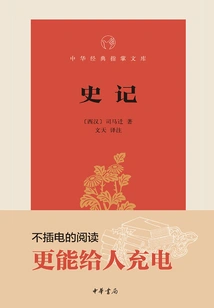
史记(中华经典指掌文库)
H
"Historical Records" is a biographical history book written by Sima Qian, a famous historian in the Western Han Dynasty. It is the first biographical general history in Chinese history and is listed as the first of the "Twenty-Four Histories". It records a history of more than 3,000 years from the legendary Yellow Emperor era to the Yuanshou Yuan Dynasty of Emperor Wu of the Han Dynasty. Together with the later "Hanshu", "Houhanshu" and "Three Kingdoms", it is called the "First Four Histories". This book selects representative chapters from "Historical Records" for annotation, translation and explanation.
"Historical Records" is a biographical history book written by Sima Qian, a famous historian in the Western Han Dynasty. It is the first biographical general history in Chinese history and is listed as the first of the "Twenty-Four Histories". It records a history of more than 3,000 years from the legendary Yellow Emperor era to the Yuanshou Yuan Dynasty of Emperor Wu of the Han Dynasty. Together with the later "Hanshu", "Houhanshu" and "Three Kingdoms", it is called the "First Four Histories". This book selects representative chapters from "Historical Records" for annotation, translation and explanation.
资治通鉴故事(中华经典故事)
Lu Lingyi Julie
There are a vast number of Chinese history books, among which "Zizhi Tongjian" is an unprecedented masterpiece. It was compiled by Sima Guang, a famous historian in the Northern Song Dynasty. It records more than 1,300 years of history. The content is mainly important historical facts in politics, military and ethnic relations, as well as economics, culture and evaluation of historical figures. It is broad and profound. This book selects more than 40 independent and complete classic stories that are the most praised in the original work. It uses story-based language and perspective to present this masterpiece of Chinese civilization to readers in an all-round and multi-faceted manner, making history reading easier and more interesting, allowing readers to immerse themselves in rich and profound historical experience, and deepen and expand their life experiences.
There are a vast number of Chinese history books, among which "Zizhi Tongjian" is an unprecedented masterpiece. It was compiled by Sima Guang, a famous historian in the Northern Song Dynasty. It records more than 1,300 years of history. The content is mainly important historical facts in politics, military and ethnic relations, as well as economics, culture and evaluation of historical figures. It is broad and profound. This book selects more than 40 independent and complete classic stories that are the most praised in the original work. It uses story-based language and perspective to present this masterpiece of Chinese civilization to readers in an all-round and multi-faceted manner, making history reading easier and more interesting, allowing readers to immerse themselves in rich and profound historical experience, and deepen and expand their life experiences.
吕氏春秋通诠(全集)
G
"Lü's Spring and Autumn Annals (Complete Works)" is based on the original part of "Lü's Spring and Autumn Annals" written by Mr. Chen Qiyou, and also refers to the translation parts of "Lü's Spring and Autumn Annals" and "Quli·Liyun" published by Guangzhou Publishing House in 2004. The author has re-examined and annotated the parts that he considered to be incomplete or inappropriate, trying to be as close to the original work as possible; at the same time, he also referred to Bi Yuan's "Lu's Spring and Autumn Annals" and Xu Wei's "Lu's Spring and Autumn Collection". The two editions of "Lü's Spring and Autumn Annals" have been valued and referred to by other annotators. Especially the Xu edition, which has collected multiple annotations of "Lü's Spring and Autumn Annals". It is also a great benefit to be able to correct the errors in the original text by comparing the strengths of the various annotations. Therefore, when quoting this text, try to retain the author's original intention, and omit the complex and simplify it.
"Lü's Spring and Autumn Annals (Complete Works)" is based on the original part of "Lü's Spring and Autumn Annals" written by Mr. Chen Qiyou, and also refers to the translation parts of "Lü's Spring and Autumn Annals" and "Quli·Liyun" published by Guangzhou Publishing House in 2004. The author has re-examined and annotated the parts that he considered to be incomplete or inappropriate, trying to be as close to the original work as possible; at the same time, he also referred to Bi Yuan's "Lu's Spring and Autumn Annals" and Xu Wei's "Lu's Spring and Autumn Collection". The two editions of "Lü's Spring and Autumn Annals" have been valued and referred to by other annotators. Especially the Xu edition, which has collected multiple annotations of "Lü's Spring and Autumn Annals". It is also a great benefit to be able to correct the errors in the original text by comparing the strengths of the various annotations. Therefore, when quoting this text, try to retain the author's original intention, and omit the complex and simplify it.
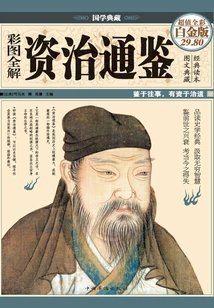
彩图全解资治通鉴(彩图精装)
Sima Guang
"Zizhi Tongjian" is an unprecedented historical masterpiece compiled under the leadership of Sima Guang, a famous historian in the Northern Song Dynasty. It was named by Emperor Shenzong of the Song Dynasty because "in view of the past, it is qualified to govern Taoism". It occupies a pivotal position both in the history of historiography and in the history of literature. Together with Sima Qian's "Historical Records", it is called the "Twin Jewels of Historiography". The book is voluminous, with a total of 294 volumes and more than 3 million words. It records a history of 1,362 years from the 23rd year of King Weilie of the Zhou Dynasty (403 BC) to the 6th year of Xiande of Emperor Shizong of the Later Zhou Dynasty (959 AD). The content covers political, civil and ethnic relations. It mainly focuses on important historical facts in the field, as well as economic, cultural and historical figures evaluation. It is broad and profound, and understands the changes of ancient and modern times. It has the reputation of "unprecedented in ancient times with a vast network of riches, a large body of work and a refined mind". It has been favored by rulers and scholars of all ages and regarded it as a must-read book.
"Zizhi Tongjian" is an unprecedented historical masterpiece compiled under the leadership of Sima Guang, a famous historian in the Northern Song Dynasty. It was named by Emperor Shenzong of the Song Dynasty because "in view of the past, it is qualified to govern Taoism". It occupies a pivotal position both in the history of historiography and in the history of literature. Together with Sima Qian's "Historical Records", it is called the "Twin Jewels of Historiography". The book is voluminous, with a total of 294 volumes and more than 3 million words. It records a history of 1,362 years from the 23rd year of King Weilie of the Zhou Dynasty (403 BC) to the 6th year of Xiande of Emperor Shizong of the Later Zhou Dynasty (959 AD). The content covers political, civil and ethnic relations. It mainly focuses on important historical facts in the field, as well as economic, cultural and historical figures evaluation. It is broad and profound, and understands the changes of ancient and modern times. It has the reputation of "unprecedented in ancient times with a vast network of riches, a large body of work and a refined mind". It has been favored by rulers and scholars of all ages and regarded it as a must-read book.
历史(希罗多德新译详注本)(套装共2册)
I
The Histories written by Herodotus is the first historical masterpiece in the West. It focuses on the Greco-Persian War and narrates a large number of historical events and materials. In fact, it became an "investigation and research report" on the history and culture of various peoples in the world that the Greeks knew at that time. The whole book takes the relationship between Greeks and foreigners as the main line, describing the geographical environment, ethnic distribution, economic life, political system, historical events, customs, religious beliefs, places of interest, etc. In Lydia, Media, Babylon, Egypt, Persia, India, Scythia, Libya and the Greek Aegean Sea region.
The Histories written by Herodotus is the first historical masterpiece in the West. It focuses on the Greco-Persian War and narrates a large number of historical events and materials. In fact, it became an "investigation and research report" on the history and culture of various peoples in the world that the Greeks knew at that time. The whole book takes the relationship between Greeks and foreigners as the main line, describing the geographical environment, ethnic distribution, economic life, political system, historical events, customs, religious beliefs, places of interest, etc. In Lydia, Media, Babylon, Egypt, Persia, India, Scythia, Libya and the Greek Aegean Sea region.
后汉书
Ma Biao
"Book of the Later Han" is a biographical history book that records the history of the Eastern Han Dynasty. The book is divided into 120 volumes, including 10 volumes of chronicles, 80 volumes of biographies and 30 volumes of chronicles. It records about 200 years of history from the last years of Wang Mang to Emperor Xian of the Han Dynasty. Its value is as Zhang Taiyan said: "After "History" and "Han", the "Book of the Later Han" is the first to be recommended." Chen Yinke also said: "Weizong (characterized by Fan Ye) is called the "Book of the Later Han". It is a great book with a great style and a fine thought. It is believed to be a good history."
"Book of the Later Han" is a biographical history book that records the history of the Eastern Han Dynasty. The book is divided into 120 volumes, including 10 volumes of chronicles, 80 volumes of biographies and 30 volumes of chronicles. It records about 200 years of history from the last years of Wang Mang to Emperor Xian of the Han Dynasty. Its value is as Zhang Taiyan said: "After "History" and "Han", the "Book of the Later Han" is the first to be recommended." Chen Yinke also said: "Weizong (characterized by Fan Ye) is called the "Book of the Later Han". It is a great book with a great style and a fine thought. It is believed to be a good history."
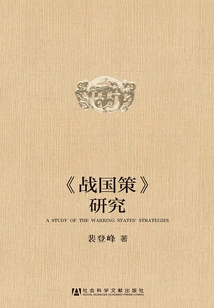
《战国策》研究
Pei Dengfeng
This book is divided into upper and lower parts. The above section is titled "Background Research on "Warring States Policy"", which mainly discusses the reasons for the formation of "Warring States Policy", the spread of "Warring States Policy" materials in the Warring States Period, and examines the authors of "Warring States Policy". The next part is "Research on the Text of "Warring States"". The author elaborates on his views on the series of "Warring States" and the innovations in the style of "Warring States", analyzes the significance of the exaggeration and fictional expression techniques of "Warring States" in literary history, summarizes the artistic achievements of "Warring States" in the portrayal of women and assassins, explores the literary value of "Warring States" from the transformation of narrative methods, and finally puts forward the concept of literary self-consciousness in "Warring States". This book is a revised edition. The first edition was published by Gansu People's Publishing House in 2003. This time the author has made extensive revisions based on research in the past ten years, showing the latest research results of the study of "Warring States Policy".
This book is divided into upper and lower parts. The above section is titled "Background Research on "Warring States Policy"", which mainly discusses the reasons for the formation of "Warring States Policy", the spread of "Warring States Policy" materials in the Warring States Period, and examines the authors of "Warring States Policy". The next part is "Research on the Text of "Warring States"". The author elaborates on his views on the series of "Warring States" and the innovations in the style of "Warring States", analyzes the significance of the exaggeration and fictional expression techniques of "Warring States" in literary history, summarizes the artistic achievements of "Warring States" in the portrayal of women and assassins, explores the literary value of "Warring States" from the transformation of narrative methods, and finally puts forward the concept of literary self-consciousness in "Warring States". This book is a revised edition. The first edition was published by Gansu People's Publishing House in 2003. This time the author has made extensive revisions based on research in the past ten years, showing the latest research results of the study of "Warring States Policy".
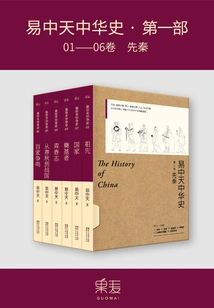
易中天中华史·第一部:先秦(套装共6册)
Yi Zhongtian
Nuwa, the root of blood; Zhou Gong, the root of the system; Confucius and Mencius, the root of etiquette. To understand the "civilization genome" of the Chinese nation, please read the first volume of "Yi Zhongtian's History of China" "Pre-Qin" (including "Ancestors", "Country", "Founders", "Youth", "From the Spring and Autumn Period to the Warring States" and "A Hundred Schools of Thought", a total of 6 volumes). Scholar Yi Zhongtian subverts the writing method of traditional historical works. With beautiful poetic language and a unique and innovative global perspective, he will spend five to six years writing a total of 36 volumes of "History of China" in five volumes at the rate of two volumes per quarter: the first volume is "Pre-Qin", the second volume is "Qin, Han, Wei, Jin, Southern and Northern Dynasties", the third volume is "Sui, Tang, Song and Yuan", the fourth volume is "Ming and Qing", and the fifth volume is "Modern Times". We will follow Yi Zhongtian on a historical journey to find his roots, experience the simplicity of the Xia, the splendor of the Shang, the elegance of the Zhou, the strength of the Han, the cosmopolitan Tang Dynasty, and taste the delicacy of the Song, the etherealness of the Yuan, and the secularity of the Ming and the official accent of the Qing.
Nuwa, the root of blood; Zhou Gong, the root of the system; Confucius and Mencius, the root of etiquette. To understand the "civilization genome" of the Chinese nation, please read the first volume of "Yi Zhongtian's History of China" "Pre-Qin" (including "Ancestors", "Country", "Founders", "Youth", "From the Spring and Autumn Period to the Warring States" and "A Hundred Schools of Thought", a total of 6 volumes). Scholar Yi Zhongtian subverts the writing method of traditional historical works. With beautiful poetic language and a unique and innovative global perspective, he will spend five to six years writing a total of 36 volumes of "History of China" in five volumes at the rate of two volumes per quarter: the first volume is "Pre-Qin", the second volume is "Qin, Han, Wei, Jin, Southern and Northern Dynasties", the third volume is "Sui, Tang, Song and Yuan", the fourth volume is "Ming and Qing", and the fifth volume is "Modern Times". We will follow Yi Zhongtian on a historical journey to find his roots, experience the simplicity of the Xia, the splendor of the Shang, the elegance of the Zhou, the strength of the Han, the cosmopolitan Tang Dynasty, and taste the delicacy of the Song, the etherealness of the Yuan, and the secularity of the Ming and the official accent of the Qing.
王阳明集(全2册)
I
The core of Yangming's theory of mind is "the heart is reason", "leading to conscience" and "the unity of knowledge and action". He advocates speaking according to the requirements of one's own nature, advocating that one should try one's best to express thoughts and feelings that have been suppressed for a long time, and advocating that people use the original "conscience" of "my heart" to distinguish right from wrong and act in accordance with their own wishes. This kind of practical spirit and values of achievement reflect the subjective spirit of human beings and have the shadow of modern enlightenment philosophy. Wang Yangming's pursuit of independent consciousness and the concept of individual liberation caused huge waves in the ideological circles at that time and injected fresh academic air. Years are passing and times are changing, but Wang Yangming's philosophy of mind remains timeless and still exudes great spiritual charm. In order to allow readers to comprehensively understand Wang Yangming's philosophy from multiple angles, we took the Longqing Xie's engraving of "Wang Wencheng Gongquan Shu" as the base, carefully edited, organized, and checked, and finally formed this set of "Wang Yangming Collection".
The core of Yangming's theory of mind is "the heart is reason", "leading to conscience" and "the unity of knowledge and action". He advocates speaking according to the requirements of one's own nature, advocating that one should try one's best to express thoughts and feelings that have been suppressed for a long time, and advocating that people use the original "conscience" of "my heart" to distinguish right from wrong and act in accordance with their own wishes. This kind of practical spirit and values of achievement reflect the subjective spirit of human beings and have the shadow of modern enlightenment philosophy. Wang Yangming's pursuit of independent consciousness and the concept of individual liberation caused huge waves in the ideological circles at that time and injected fresh academic air. Years are passing and times are changing, but Wang Yangming's philosophy of mind remains timeless and still exudes great spiritual charm. In order to allow readers to comprehensively understand Wang Yangming's philosophy from multiple angles, we took the Longqing Xie's engraving of "Wang Wencheng Gongquan Shu" as the base, carefully edited, organized, and checked, and finally formed this set of "Wang Yangming Collection".
天人之际:薛仁明读《史记》
Xue Renming
This book is a book that explores the foundation of Chinese civilization, retrieves the life style that Chinese people should have, and explores the differences between Chinese and Western civilizations. Xue Renming is a practitioner, and what he values more is the state of human life. The same is true when he talks about "Historical Records". He hopes that through the historical details of Liu Bang, Xiang Yu, Chen Ping, Zhang Liang and others, he can get a glimpse of personal life conditions, and he also hopes to explain the true meaning of the fall of Qin and the rise of Han. Xue Renming focused on the similarities and differences between the entire Chinese civilization and Western civilization. By repeatedly citing evidence and comparing Confucianism, Buddhism, and Taoism, we hope to find the fundamental differences between Chinese and Western civilizations.
This book is a book that explores the foundation of Chinese civilization, retrieves the life style that Chinese people should have, and explores the differences between Chinese and Western civilizations. Xue Renming is a practitioner, and what he values more is the state of human life. The same is true when he talks about "Historical Records". He hopes that through the historical details of Liu Bang, Xiang Yu, Chen Ping, Zhang Liang and others, he can get a glimpse of personal life conditions, and he also hopes to explain the true meaning of the fall of Qin and the rise of Han. Xue Renming focused on the similarities and differences between the entire Chinese civilization and Western civilization. By repeatedly citing evidence and comparing Confucianism, Buddhism, and Taoism, we hope to find the fundamental differences between Chinese and Western civilizations.
罗马史(诺贝尔文学奖大系)
(germany) Mommsen
Mommsen's main achievement is the study of ancient Roman history. "History of Rome" is a masterpiece of history that he completed after 30 years of hard work. His profound knowledge and democratic beliefs enabled him to illuminate this ancient society of more than two thousand years with new brilliance. He warmly praised Caesar, who was full of democratic spirit and rewarded science and art, but regarded Pang Ye only as a low-level officer who was good at training soldiers. This masterpiece has an encyclopedic breadth in presenting the politics, economy, military, culture, and customs of ancient Roman society. The writing style of the work is refined, the narrative is vivid, dramatic, and the characters are distinctive, which has high literary value. The great achievements of "History of Rome" have won the author a high reputation.
Mommsen's main achievement is the study of ancient Roman history. "History of Rome" is a masterpiece of history that he completed after 30 years of hard work. His profound knowledge and democratic beliefs enabled him to illuminate this ancient society of more than two thousand years with new brilliance. He warmly praised Caesar, who was full of democratic spirit and rewarded science and art, but regarded Pang Ye only as a low-level officer who was good at training soldiers. This masterpiece has an encyclopedic breadth in presenting the politics, economy, military, culture, and customs of ancient Roman society. The writing style of the work is refined, the narrative is vivid, dramatic, and the characters are distinctive, which has high literary value. The great achievements of "History of Rome" have won the author a high reputation.