Library
Browse and search books
2,037 novels found
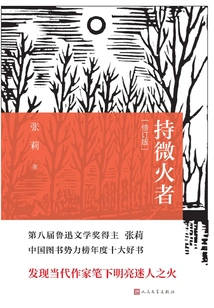
持微火者(修订本)
Zhang Li
This book selects the works of Zhang Li, a judge of the Mao Dun Literature Award and a critic born in the 1970s, who have had a wide impact on the literary world and the media in recent years. With vivid, friendly and sharp writing, it outlines the vibrant scene of contemporary Chinese literature, and pays tribute to Mo Yan, Jia Pingwa, Yu Hua, Tiening, Wang Contemporary classic writers such as An Yi, Chi Zijian, and Bi Feiyu, as well as emerging authors such as Wei Wei, Lu Min, Xu Zechen, Zhang Chu, and Ge Liang, provide personalized observations and descriptions, discovering the subtle fires flickering in silent texts, and the hearts behind the words dedicated to change and perfection. It is not only a collection of literary essays with a unique style, but also a microscopic history of contemporary literature with a unique style.
This book selects the works of Zhang Li, a judge of the Mao Dun Literature Award and a critic born in the 1970s, who have had a wide impact on the literary world and the media in recent years. With vivid, friendly and sharp writing, it outlines the vibrant scene of contemporary Chinese literature, and pays tribute to Mo Yan, Jia Pingwa, Yu Hua, Tiening, Wang Contemporary classic writers such as An Yi, Chi Zijian, and Bi Feiyu, as well as emerging authors such as Wei Wei, Lu Min, Xu Zechen, Zhang Chu, and Ge Liang, provide personalized observations and descriptions, discovering the subtle fires flickering in silent texts, and the hearts behind the words dedicated to change and perfection. It is not only a collection of literary essays with a unique style, but also a microscopic history of contemporary literature with a unique style.
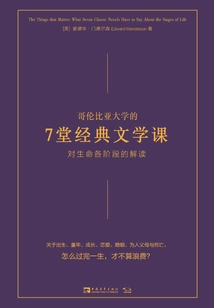
7 Classic Literature Lessons from Columbia University: Interpretations of Various Stages of Life
Literature哥伦比亚大学的7堂经典文学课:对生命各阶段的解读
(us) Edward Mendelsohn
This book starts with the seven greatest British novels from the 19th to the 20th centuries, aiming to explore the seven major stages that life must pass through. Edward Mendelson, a professor in the Department of Comparative Literature at Columbia University, showed the real life corresponding to each novel, and presented the author's suppressed complex personality and true purpose through the works. Each chapter of this book has a dual theme: on the one hand, it is the interpretation of a literary work; on the other hand, it is also the interpretation of life. For example, Mendelsohn regarded the morals and emotions of childhood described in "Wuthering Heights" as a simple response to the adult world, and regarded "Mrs. Dalloway" as a portrayal of adult ideal love that is almost impossible to achieve. Mendelsohn's interpretation gives us a fascinating new feeling about these seven novels, and reminds us that after reading the last chapter of the book, "Intermission", it is the beginning of our thinking about personal life.
This book starts with the seven greatest British novels from the 19th to the 20th centuries, aiming to explore the seven major stages that life must pass through. Edward Mendelson, a professor in the Department of Comparative Literature at Columbia University, showed the real life corresponding to each novel, and presented the author's suppressed complex personality and true purpose through the works. Each chapter of this book has a dual theme: on the one hand, it is the interpretation of a literary work; on the other hand, it is also the interpretation of life. For example, Mendelsohn regarded the morals and emotions of childhood described in "Wuthering Heights" as a simple response to the adult world, and regarded "Mrs. Dalloway" as a portrayal of adult ideal love that is almost impossible to achieve. Mendelsohn's interpretation gives us a fascinating new feeling about these seven novels, and reminds us that after reading the last chapter of the book, "Intermission", it is the beginning of our thinking about personal life.
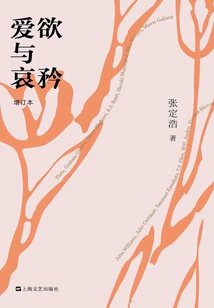
Love and Pity (updated Edition)
Literature爱欲与哀矜(增订本)
Zhang Dinghao
This book is an expanded edition of the critic Zhang Dinghao's masterpiece "Love and Sorrow". After six years, it finally added more than 40,000 words. Love is not just passion, it also means loss of control, and it is a complex mental life; compassion represents morality and responsibility. Both are often overwhelming, but are the choices of most brilliant novelists who aim to write about human life. From Graham Greene and Alice Munro to Auden and Brodsky, from "Stoner" to "The Bohemian", the book covers basically all the authors and works that the author loves. In a sense, this is a book of reading and writing, as well as a book of self-examination. One is simultaneously aware of the power and impotence of words, the abundance and poverty of love. But he still writes to please those unattainable shadows.
This book is an expanded edition of the critic Zhang Dinghao's masterpiece "Love and Sorrow". After six years, it finally added more than 40,000 words. Love is not just passion, it also means loss of control, and it is a complex mental life; compassion represents morality and responsibility. Both are often overwhelming, but are the choices of most brilliant novelists who aim to write about human life. From Graham Greene and Alice Munro to Auden and Brodsky, from "Stoner" to "The Bohemian", the book covers basically all the authors and works that the author loves. In a sense, this is a book of reading and writing, as well as a book of self-examination. One is simultaneously aware of the power and impotence of words, the abundance and poverty of love. But he still writes to please those unattainable shadows.
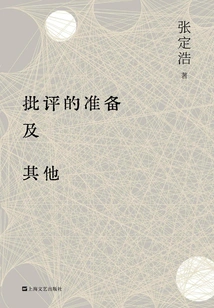
Preparation for Criticism and Others
Literature批评的准备及其他
Zhang Dinghao
This book is the latest revised version of Zhang Dinghao's first collection of literary essays "Preparation for Criticism" published in 2015. The author replaced one-third of the original book to reorganize his literary theory writing of more than ten years to express his basic understanding of contemporary literature and literary criticism. Although most of the articles focus on a specific work published that year, what they ultimately talk about are the universal issues felt from these specific works. He believes that in the contemporary literary criticism scene where everyone is struggling alone and seems to be at a loss what to do, accuracy is the most relevant moral law. It first means talking about the work "as it is", and to achieve this goal, it is necessary to constantly doubt, verify, express, reflect on existing experience, and finally obtain a holistic judgment. Only in this way can criticism no longer be an intellectual game for critics, but can face ordinary readers; can it no longer be reduced to a appendage of literary creation and the appendix of knowledge, but truly become an exciting undertaking; can it start from here and now and try to understand the human emotions and creations that have existed in the past.
This book is the latest revised version of Zhang Dinghao's first collection of literary essays "Preparation for Criticism" published in 2015. The author replaced one-third of the original book to reorganize his literary theory writing of more than ten years to express his basic understanding of contemporary literature and literary criticism. Although most of the articles focus on a specific work published that year, what they ultimately talk about are the universal issues felt from these specific works. He believes that in the contemporary literary criticism scene where everyone is struggling alone and seems to be at a loss what to do, accuracy is the most relevant moral law. It first means talking about the work "as it is", and to achieve this goal, it is necessary to constantly doubt, verify, express, reflect on existing experience, and finally obtain a holistic judgment. Only in this way can criticism no longer be an intellectual game for critics, but can face ordinary readers; can it no longer be reduced to a appendage of literary creation and the appendix of knowledge, but truly become an exciting undertaking; can it start from here and now and try to understand the human emotions and creations that have existed in the past.
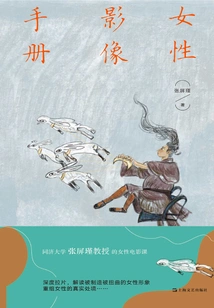
Female Image Handbook
Literature女性影像手册
Zhang Pingjin
Professor Zhang Pingjin of Tongji University's film review collection "Handbook of Female Images" uses themes such as "girls", "working women", "mothers" and "crazy women" to cut into classic movies and analyze female images in detail: presentation, fiction and sensory effects. Women's survival has always been discussed, and women's plight and reality have never subsided.
Professor Zhang Pingjin of Tongji University's film review collection "Handbook of Female Images" uses themes such as "girls", "working women", "mothers" and "crazy women" to cut into classic movies and analyze female images in detail: presentation, fiction and sensory effects. Women's survival has always been discussed, and women's plight and reality have never subsided.
文艺学与古典文学论稿
Gong Gang
The book is divided into upper, middle and lower parts. The first part is a general introduction to philosophy and art, which respectively explores the nature of "history of the mind" and the literary value of classics and philosophical writings in Jing, Zi and Ji, the philosophical and literary nature of the writing style of "Historical Records", the rhetorical phenomenon and its philosophical basis manifested in "The Three Changes", and the similarities between Heidegger's poetic proposition "poetically dwelling" and Zhuangzi's philosophical proposition "happy wandering". The middle part is a study of cross-cultural literary theory, using Qian Zhongshu's so-called "Books of the Two Wests" to connect the art of China and the earth, and carefully studying the poetic categories of "poetic flavor", "synesthesia", "speed" and "distance", and the last chapter discusses in detail the paradigmatic significance of poetic style. The next part is a new theory of classical literature. The first chapter analyzes two poems of "Magpies Stepping on the Branches", and then analyzes Li Yu's poems, Lu You's poems, Zheng Guanying's poems, "The Romance of the Three Kingdoms", one of the four great books of the Ming Dynasty, and "The Peony Pavilion", a pair of classical operas. In general, this book focuses on both theoretical research and textual interpretation, and attempts to connect literature and history, and combine China and the West to examine Chinese aesthetic culture and literary literature.
The book is divided into upper, middle and lower parts. The first part is a general introduction to philosophy and art, which respectively explores the nature of "history of the mind" and the literary value of classics and philosophical writings in Jing, Zi and Ji, the philosophical and literary nature of the writing style of "Historical Records", the rhetorical phenomenon and its philosophical basis manifested in "The Three Changes", and the similarities between Heidegger's poetic proposition "poetically dwelling" and Zhuangzi's philosophical proposition "happy wandering". The middle part is a study of cross-cultural literary theory, using Qian Zhongshu's so-called "Books of the Two Wests" to connect the art of China and the earth, and carefully studying the poetic categories of "poetic flavor", "synesthesia", "speed" and "distance", and the last chapter discusses in detail the paradigmatic significance of poetic style. The next part is a new theory of classical literature. The first chapter analyzes two poems of "Magpies Stepping on the Branches", and then analyzes Li Yu's poems, Lu You's poems, Zheng Guanying's poems, "The Romance of the Three Kingdoms", one of the four great books of the Ming Dynasty, and "The Peony Pavilion", a pair of classical operas. In general, this book focuses on both theoretical research and textual interpretation, and attempts to connect literature and history, and combine China and the West to examine Chinese aesthetic culture and literary literature.
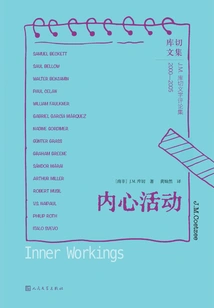
Inner Activities
Literature内心活动
H
"Inner Activity" selects 20 literary reviews written between 2000 and 2005 by J. M. Coetzee, the winner of the 2003 Nobel Prize for Literature. Here, Coetzee discusses in depth many 20th century literary masters such as Samuel Beckett, Günter Grass, García Márquez, and Philip Roth. Every article and every word he writes is full of profound insights and keen insight. This book may seem challenging, but in fact the writing style is friendly. The plain and precise writing opens a literary window for readers to appreciate those immortal works. The writers who commented in the book have played a great role in guiding readers and publishers in the Chinese-speaking world, and I believe this is still the case today.
"Inner Activity" selects 20 literary reviews written between 2000 and 2005 by J. M. Coetzee, the winner of the 2003 Nobel Prize for Literature. Here, Coetzee discusses in depth many 20th century literary masters such as Samuel Beckett, Günter Grass, García Márquez, and Philip Roth. Every article and every word he writes is full of profound insights and keen insight. This book may seem challenging, but in fact the writing style is friendly. The plain and precise writing opens a literary window for readers to appreciate those immortal works. The writers who commented in the book have played a great role in guiding readers and publishers in the Chinese-speaking world, and I believe this is still the case today.
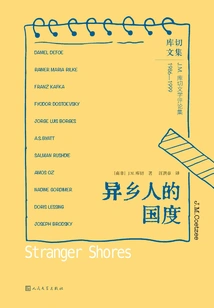
Country of Strangers
Literature异乡人的国度
L
"The Country of Strangers" selects 26 literary reviews written by J. M. Coetzee, the winner of the 2003 Nobel Prize for Literature, between 1986 and 1999. It is the author's first collection of literary reviews. In the first chapter, Coetzee asks the question "What is a classic?" And looks for the answer in the works and views of Eliot, Bach and Herbert. He then conducted in-depth discussions on literary masters of the 18th and 19th centuries such as Defoe, Turgenev, and Dostoevsky, as well as modernist German writers such as Rilke, Kafka, and Musil. At the same time, it also analyzes 20th century literary giants such as Borges, Brodsky, Gordimer, Oz, Rushdie, and Lessing. Coetzee's literary criticism has a more historical feel than other criticisms.
"The Country of Strangers" selects 26 literary reviews written by J. M. Coetzee, the winner of the 2003 Nobel Prize for Literature, between 1986 and 1999. It is the author's first collection of literary reviews. In the first chapter, Coetzee asks the question "What is a classic?" And looks for the answer in the works and views of Eliot, Bach and Herbert. He then conducted in-depth discussions on literary masters of the 18th and 19th centuries such as Defoe, Turgenev, and Dostoevsky, as well as modernist German writers such as Rilke, Kafka, and Musil. At the same time, it also analyzes 20th century literary giants such as Borges, Brodsky, Gordimer, Oz, Rushdie, and Lessing. Coetzee's literary criticism has a more historical feel than other criticisms.
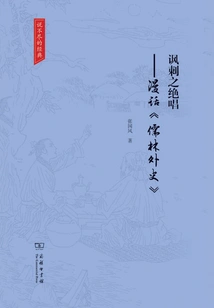
讽刺之绝唱:漫话《儒林外史》
Zhang Guofeng
In the form of casual essays, the book analyzes various issues in the long satirical novel "The Scholars", including "Fortunateness and Misfortune", "Proud Family Status", "Six Dynasties Complex", "Wei and Jin Styles", "It is important for people to have self-knowledge", "Miscellaneous Readings and Miscellaneous Studies", "Principles and Talents", "Winners, Princes and Losers", "Right Roads and Strange Roads", "The Ship Arrives at the Wharf, the Car Arrives at the Station", "He" Chapters such as "Stinginess", "The Tiredness of a Good Reputation", "Money, Talent and Family" and "All Working on the Rules" are not commentary but have the interest of commentary, not textual research but the depth of textual research, and are not historiography but the seriousness of history. They are eclectic, rejecting formulas, twisting and turning, and making fun of writing, such as joking in opera, drunken boxing in martial arts, and wild cursive writing in calligraphy. With a scroll in hand, people forget about gains and losses and become intoxicated with it.
In the form of casual essays, the book analyzes various issues in the long satirical novel "The Scholars", including "Fortunateness and Misfortune", "Proud Family Status", "Six Dynasties Complex", "Wei and Jin Styles", "It is important for people to have self-knowledge", "Miscellaneous Readings and Miscellaneous Studies", "Principles and Talents", "Winners, Princes and Losers", "Right Roads and Strange Roads", "The Ship Arrives at the Wharf, the Car Arrives at the Station", "He" Chapters such as "Stinginess", "The Tiredness of a Good Reputation", "Money, Talent and Family" and "All Working on the Rules" are not commentary but have the interest of commentary, not textual research but the depth of textual research, and are not historiography but the seriousness of history. They are eclectic, rejecting formulas, twisting and turning, and making fun of writing, such as joking in opera, drunken boxing in martial arts, and wild cursive writing in calligraphy. With a scroll in hand, people forget about gains and losses and become intoxicated with it.
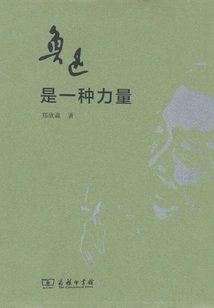
Lu Xun is a Force
Literature鲁迅是一种力量
Zheng Xinmiao
"Lu Xun is a Force" has a total of about 228,000 words. It collects the author's various articles on Lu Xun research since the 1970s. It is divided into three series: the first series includes papers and speeches from the 1980s to the first decade of the 21st century, including "A Brief Discussion on the Titles of Lu Xun's Essays", "Wu Guanzhong and the World of Lu Xun" and other articles The second volume includes speeches and interviews about Lu Xun's activities since the 21st century, including "Lu Xun in Cross-Cultural Dialogue" and "Lu Xun's Reading Life"; the third volume includes more than ten short essays and poems written from the mid-to-late 1970s to the early 1980s, including "Interpretation of Lu Xun's Era" and "Impressions of Reading Lu Xun".
"Lu Xun is a Force" has a total of about 228,000 words. It collects the author's various articles on Lu Xun research since the 1970s. It is divided into three series: the first series includes papers and speeches from the 1980s to the first decade of the 21st century, including "A Brief Discussion on the Titles of Lu Xun's Essays", "Wu Guanzhong and the World of Lu Xun" and other articles The second volume includes speeches and interviews about Lu Xun's activities since the 21st century, including "Lu Xun in Cross-Cultural Dialogue" and "Lu Xun's Reading Life"; the third volume includes more than ten short essays and poems written from the mid-to-late 1970s to the early 1980s, including "Interpretation of Lu Xun's Era" and "Impressions of Reading Lu Xun".
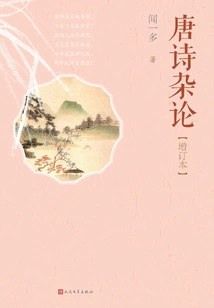
唐诗杂论(增订本)
Wen Yiduo
Mr. Wen Yiduo's "Miscellaneous Comments on Tang Poetry" is a classic work in the study of Tang poetry. It covers many aspects such as the themes of Tang Dynasty poetry, famous poets, and the chronology of poets. He has unique and profound comments and analyzes on the poetic achievements of famous poets in the Tang Dynasty, such as the "Four Heroes of the Early Tang Dynasty", Meng Haoran, Jia Dao, Cen Shen, Du Fu, Li Bai and others. Mr. Wen Yiduo analyzed and studied the crystallization of Tang poetry from a historical perspective, breaking through the traditional narrow and closed academic research methods. He looked at and studied poetry from the perspective of a poet, and he made many outstanding achievements. As a pioneering work, its historical status in the study of Tang poetry is unshakable and it still has a very inspiring effect on our scholars today.
Mr. Wen Yiduo's "Miscellaneous Comments on Tang Poetry" is a classic work in the study of Tang poetry. It covers many aspects such as the themes of Tang Dynasty poetry, famous poets, and the chronology of poets. He has unique and profound comments and analyzes on the poetic achievements of famous poets in the Tang Dynasty, such as the "Four Heroes of the Early Tang Dynasty", Meng Haoran, Jia Dao, Cen Shen, Du Fu, Li Bai and others. Mr. Wen Yiduo analyzed and studied the crystallization of Tang poetry from a historical perspective, breaking through the traditional narrow and closed academic research methods. He looked at and studied poetry from the perspective of a poet, and he made many outstanding achievements. As a pioneering work, its historical status in the study of Tang poetry is unshakable and it still has a very inspiring effect on our scholars today.
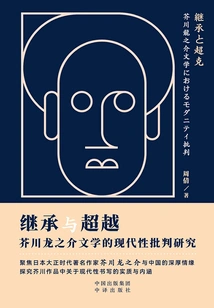
Inheritance and Transcendence: a Critical Study of Modernity in Ryunosuke Akutagawa's Literature
Literature继承与超越:芥川龙之介文学的现代性批判研究
Zhou Qian
"Modernity" has various meanings, and it is still one of the hot topics in politics, literature, economics and other fields. The creations of Ryuyuki Akutagawa, a representative writer of the Japanese New Thought Movement around the 1920s, involve multiple perspectives such as space construction, body writing, and civilization criticism. They also contain two narrative dimensions, Chinese and Japanese, and provide a textual reference for us to understand the multiple aspects of "modernity." This book takes the modern Chinese-themed novels written by Akutagawa before and after his trip to China in 1921 as the main line, and uses the "Gendaimono" that describes Japan's Meiji period as a reference. It explores the essence and connotation of "modernity" writing in Akutagawa's literature from multiple dimensions, clarifies his reflection and criticism of Japan's modernization process, and opens a new horizon for re-examining the characteristics of Akutagawa's literature.
"Modernity" has various meanings, and it is still one of the hot topics in politics, literature, economics and other fields. The creations of Ryuyuki Akutagawa, a representative writer of the Japanese New Thought Movement around the 1920s, involve multiple perspectives such as space construction, body writing, and civilization criticism. They also contain two narrative dimensions, Chinese and Japanese, and provide a textual reference for us to understand the multiple aspects of "modernity." This book takes the modern Chinese-themed novels written by Akutagawa before and after his trip to China in 1921 as the main line, and uses the "Gendaimono" that describes Japan's Meiji period as a reference. It explores the essence and connotation of "modernity" writing in Akutagawa's literature from multiple dimensions, clarifies his reflection and criticism of Japan's modernization process, and opens a new horizon for re-examining the characteristics of Akutagawa's literature.
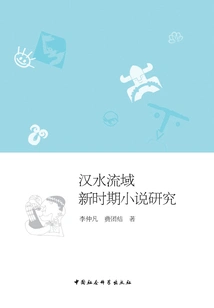
汉水流域新时期小说研究
Li Zhongfan Fei Tuanjie
The research object of "Research on Novels of the New Period in the Han River Basin" is the novels in the new period of the Han River Basin. Based on the brief description of novel creation in the three major areas of southern Shaanxi, Nanyang and Wuhan, representative novelists such as Jia Pingwa, Yao Xueyin, Zhou Daxin, Qiao Dianyun, Chi Li, Fang Fang, etc. Are selected to conduct a detailed interpretation of their important works from the aspects of text narrative method, character image, language style, literary prototype, etc. In terms of research methods, we focus on the perspective of regional culture, paying special attention to unique cultural phenomena such as dialects, folk customs, and folk literature and art in the novels of the Han River Basin in the new period. The literary geography perspective of "Research on Novels of the Han River Basin in the New Period" highlights the unique status and value of Han River Basin literature in the Chinese literary landscape.
The research object of "Research on Novels of the New Period in the Han River Basin" is the novels in the new period of the Han River Basin. Based on the brief description of novel creation in the three major areas of southern Shaanxi, Nanyang and Wuhan, representative novelists such as Jia Pingwa, Yao Xueyin, Zhou Daxin, Qiao Dianyun, Chi Li, Fang Fang, etc. Are selected to conduct a detailed interpretation of their important works from the aspects of text narrative method, character image, language style, literary prototype, etc. In terms of research methods, we focus on the perspective of regional culture, paying special attention to unique cultural phenomena such as dialects, folk customs, and folk literature and art in the novels of the Han River Basin in the new period. The literary geography perspective of "Research on Novels of the Han River Basin in the New Period" highlights the unique status and value of Han River Basin literature in the Chinese literary landscape.
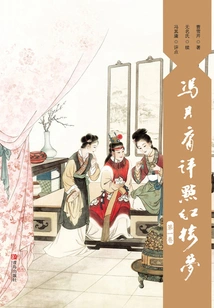
冯其庸评点《红楼梦》(第一卷)
Feng Qiyong
1. It brings together Mr. Feng Qiyong's important achievements in all aspects of Red Studies research over decades, and is a comprehensive interpretation of Red Mansions. 2. Use "Zhiyanzhai's Commentary on Stones" (Gengchen edition) as the original version, use Jiaxu, Jimao, Liezang, Mengfu, Qixu and other editions as the revised edition, and refer to Shixian's new annotated edition. The content includes comments on sentences, paragraphs and each chapter, as well as explanations of the historical background of the writing of "Dream of Red Mansions", the author's family background and special sentences, etc. It is a model in terms of the depth of interpretation, the way of commenting, the practicality of evidence analysis, and the accuracy of collation. 3. Not only are Mr. Feng Qiyong's own comments, but also selected comments from the Jiaxu, Jimao and Gengchen editions are included for readers' reference and research.
1. It brings together Mr. Feng Qiyong's important achievements in all aspects of Red Studies research over decades, and is a comprehensive interpretation of Red Mansions. 2. Use "Zhiyanzhai's Commentary on Stones" (Gengchen edition) as the original version, use Jiaxu, Jimao, Liezang, Mengfu, Qixu and other editions as the revised edition, and refer to Shixian's new annotated edition. The content includes comments on sentences, paragraphs and each chapter, as well as explanations of the historical background of the writing of "Dream of Red Mansions", the author's family background and special sentences, etc. It is a model in terms of the depth of interpretation, the way of commenting, the practicality of evidence analysis, and the accuracy of collation. 3. Not only are Mr. Feng Qiyong's own comments, but also selected comments from the Jiaxu, Jimao and Gengchen editions are included for readers' reference and research.
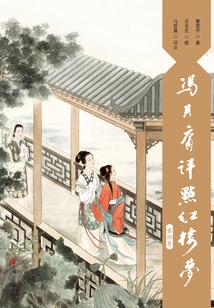
冯其庸评点《红楼梦》(第四卷)
Feng Qiyong
1. It brings together Mr. Feng Qiyong's important achievements in all aspects of Red Studies research over decades, and is a comprehensive interpretation of Red Mansions. 2. Use "Zhiyanzhai's Commentary on Stones" (Gengchen edition) as the original version, use Jiaxu, Jimao, Liezang, Mengfu, Qixu and other editions as the revised edition, and refer to Shixian's new annotated edition. The content includes comments on sentences, paragraphs and each chapter, as well as explanations of the historical background of the writing of "Dream of Red Mansions", the author's family background and special sentences, etc. It is a model in terms of the depth of interpretation, the way of commenting, the practicality of evidence analysis, and the accuracy of collation. 3. Not only are Mr. Feng Qiyong's own comments, but also selected comments from the Jiaxu, Jimao and Gengchen editions are included for readers' reference and research.
1. It brings together Mr. Feng Qiyong's important achievements in all aspects of Red Studies research over decades, and is a comprehensive interpretation of Red Mansions. 2. Use "Zhiyanzhai's Commentary on Stones" (Gengchen edition) as the original version, use Jiaxu, Jimao, Liezang, Mengfu, Qixu and other editions as the revised edition, and refer to Shixian's new annotated edition. The content includes comments on sentences, paragraphs and each chapter, as well as explanations of the historical background of the writing of "Dream of Red Mansions", the author's family background and special sentences, etc. It is a model in terms of the depth of interpretation, the way of commenting, the practicality of evidence analysis, and the accuracy of collation. 3. Not only are Mr. Feng Qiyong's own comments, but also selected comments from the Jiaxu, Jimao and Gengchen editions are included for readers' reference and research.
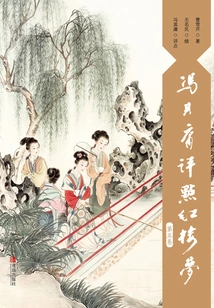
冯其庸评点《红楼梦》(第五卷)
Feng Qiyong
1. It brings together Mr. Feng Qiyong's important achievements in all aspects of Red Studies research over decades, and is a comprehensive interpretation of Red Mansions. 2. Use "Zhiyanzhai's Commentary on Stones" (Gengchen edition) as the original version, use Jiaxu, Jimao, Liezang, Mengfu, Qixu and other editions as the revised edition, and refer to Shixian's new annotated edition. The content includes comments on sentences, paragraphs and each chapter, as well as explanations of the historical background of the writing of "Dream of Red Mansions", the author's family background and special sentences, etc. It is a model in terms of the depth of interpretation, the way of commenting, the practicality of evidence analysis, and the accuracy of collation. 3. Not only are Mr. Feng Qiyong's own comments, but also selected comments from the Jiaxu, Jimao and Gengchen editions are included for readers' reference and research.
1. It brings together Mr. Feng Qiyong's important achievements in all aspects of Red Studies research over decades, and is a comprehensive interpretation of Red Mansions. 2. Use "Zhiyanzhai's Commentary on Stones" (Gengchen edition) as the original version, use Jiaxu, Jimao, Liezang, Mengfu, Qixu and other editions as the revised edition, and refer to Shixian's new annotated edition. The content includes comments on sentences, paragraphs and each chapter, as well as explanations of the historical background of the writing of "Dream of Red Mansions", the author's family background and special sentences, etc. It is a model in terms of the depth of interpretation, the way of commenting, the practicality of evidence analysis, and the accuracy of collation. 3. Not only are Mr. Feng Qiyong's own comments, but also selected comments from the Jiaxu, Jimao and Gengchen editions are included for readers' reference and research.
冯其庸评点《红楼梦》(第六卷)
Feng Qiyong
1. It brings together Mr. Feng Qiyong's important achievements in all aspects of Red Studies research over decades, and is a comprehensive interpretation of Red Mansions. 2. Use "Zhiyanzhai's Commentary on Stones" (Gengchen edition) as the original version, use Jiaxu, Jimao, Liezang, Mengfu, Qixu and other editions as the revised edition, and refer to Shixian's new annotated edition. The content includes comments on sentences, paragraphs and each chapter, as well as explanations of the historical background of the writing of "Dream of Red Mansions", the author's family background and special sentences, etc. It is a model in terms of the depth of interpretation, the way of commenting, the practicality of evidence analysis, and the accuracy of collation. 3. Not only are Mr. Feng Qiyong's own comments, but also selected comments from the Jiaxu, Jimao and Gengchen editions are included for readers' reference and research.
1. It brings together Mr. Feng Qiyong's important achievements in all aspects of Red Studies research over decades, and is a comprehensive interpretation of Red Mansions. 2. Use "Zhiyanzhai's Commentary on Stones" (Gengchen edition) as the original version, use Jiaxu, Jimao, Liezang, Mengfu, Qixu and other editions as the revised edition, and refer to Shixian's new annotated edition. The content includes comments on sentences, paragraphs and each chapter, as well as explanations of the historical background of the writing of "Dream of Red Mansions", the author's family background and special sentences, etc. It is a model in terms of the depth of interpretation, the way of commenting, the practicality of evidence analysis, and the accuracy of collation. 3. Not only are Mr. Feng Qiyong's own comments, but also selected comments from the Jiaxu, Jimao and Gengchen editions are included for readers' reference and research.
冯其庸评点《红楼梦》(第二卷)
Feng Qiyong
1. It brings together Mr. Feng Qiyong's important achievements in all aspects of Red Studies research over decades, and is a comprehensive interpretation of Red Mansions. 2. Use "Zhiyanzhai's Commentary on Stones" (Gengchen edition) as the original version, use Jiaxu, Jimao, Liezang, Mengfu, Qixu and other editions as the revised edition, and refer to Shixian's new annotated edition. The content includes comments on sentences, paragraphs and each chapter, as well as explanations of the historical background of the writing of "Dream of Red Mansions", the author's family background and special sentences, etc. It is a model in terms of the depth of interpretation, the way of commenting, the practicality of evidence analysis, and the accuracy of collation. 3. Not only are Mr. Feng Qiyong's own comments, but also selected comments from the Jiaxu, Jimao and Gengchen editions are included for readers' reference and research.
1. It brings together Mr. Feng Qiyong's important achievements in all aspects of Red Studies research over decades, and is a comprehensive interpretation of Red Mansions. 2. Use "Zhiyanzhai's Commentary on Stones" (Gengchen edition) as the original version, use Jiaxu, Jimao, Liezang, Mengfu, Qixu and other editions as the revised edition, and refer to Shixian's new annotated edition. The content includes comments on sentences, paragraphs and each chapter, as well as explanations of the historical background of the writing of "Dream of Red Mansions", the author's family background and special sentences, etc. It is a model in terms of the depth of interpretation, the way of commenting, the practicality of evidence analysis, and the accuracy of collation. 3. Not only are Mr. Feng Qiyong's own comments, but also selected comments from the Jiaxu, Jimao and Gengchen editions are included for readers' reference and research.
冯其庸评点《红楼梦》(第三卷)
Feng Qiyong
1. It brings together Mr. Feng Qiyong's important achievements in all aspects of Red Studies research over decades, and is a comprehensive interpretation of Red Mansions. 2. Use "Zhiyanzhai's Commentary on Stones" (Gengchen edition) as the original version, use Jiaxu, Jimao, Liezang, Mengfu, Qixu and other editions as the revised edition, and refer to Shixian's new annotated edition. The content includes comments on sentences, paragraphs and each chapter, as well as explanations of the historical background of the writing of "Dream of Red Mansions", the author's family background and special sentences, etc. It is a model in terms of the depth of interpretation, the way of commenting, the practicality of evidence analysis, and the accuracy of collation. 3. Not only are Mr. Feng Qiyong's own comments, but also selected comments from the Jiaxu, Jimao and Gengchen editions are included for readers' reference and research.
1. It brings together Mr. Feng Qiyong's important achievements in all aspects of Red Studies research over decades, and is a comprehensive interpretation of Red Mansions. 2. Use "Zhiyanzhai's Commentary on Stones" (Gengchen edition) as the original version, use Jiaxu, Jimao, Liezang, Mengfu, Qixu and other editions as the revised edition, and refer to Shixian's new annotated edition. The content includes comments on sentences, paragraphs and each chapter, as well as explanations of the historical background of the writing of "Dream of Red Mansions", the author's family background and special sentences, etc. It is a model in terms of the depth of interpretation, the way of commenting, the practicality of evidence analysis, and the accuracy of collation. 3. Not only are Mr. Feng Qiyong's own comments, but also selected comments from the Jiaxu, Jimao and Gengchen editions are included for readers' reference and research.
冯其庸评点《红楼梦》(全六卷)
Feng Qiyong
1. It brings together Mr. Feng Qiyong's important achievements in all aspects of Red Studies research over decades, and is a comprehensive interpretation of Red Mansions. 2. Use "Zhiyanzhai's Commentary on Stones" (Gengchen edition) as the original version, use Jiaxu, Jimao, Liezang, Mengfu, Qixu and other editions as the revised edition, and refer to Shixian's new annotated edition. The content includes comments on sentences, paragraphs and each chapter, as well as explanations of the historical background of the writing of "Dream of Red Mansions", the author's family background and special sentences, etc. It is a model in terms of the depth of interpretation, the way of commenting, the practicality of evidence analysis, and the accuracy of collation. 3. Not only are Mr. Feng Qiyong's own comments, but also selected comments from the Jiaxu, Jimao and Gengchen editions are included for readers' reference and research.
1. It brings together Mr. Feng Qiyong's important achievements in all aspects of Red Studies research over decades, and is a comprehensive interpretation of Red Mansions. 2. Use "Zhiyanzhai's Commentary on Stones" (Gengchen edition) as the original version, use Jiaxu, Jimao, Liezang, Mengfu, Qixu and other editions as the revised edition, and refer to Shixian's new annotated edition. The content includes comments on sentences, paragraphs and each chapter, as well as explanations of the historical background of the writing of "Dream of Red Mansions", the author's family background and special sentences, etc. It is a model in terms of the depth of interpretation, the way of commenting, the practicality of evidence analysis, and the accuracy of collation. 3. Not only are Mr. Feng Qiyong's own comments, but also selected comments from the Jiaxu, Jimao and Gengchen editions are included for readers' reference and research.
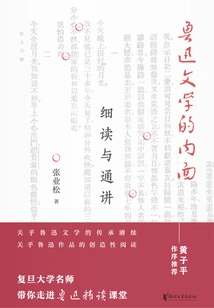
鲁迅文学的内面:细读与通讲
Zhang Yesong
This book is a Lu Xun research monograph compiled by the author based on the Lu Xun research lecture notes and academic papers published in recent years. It reflects the author's representative achievements on related topics in a concentrated way and is highly original and cutting-edge. Among them, there are close readings of classic works such as "Diary of a Madman", "Kong Yiji", "The True Story of Ah Q", "Blessings", "Sorrow" and "Forging Swords", research on "Wild Grass", "Morning Blossoms Plucked at Dusk", "the whole book" and difficult issues such as the ideological background, classic value, and subsequent impact of Lu Xun's literature, and discussions on the theories and methods of classroom teaching and text close reading, etc., All of which have the effect of reopening the text, activating the field, and leading the trend. The publication of this book will make the author's achievements in related fields more visible, and will also have a positive impact on leading the reading and popularization of Lu Xun literature in the new era.
This book is a Lu Xun research monograph compiled by the author based on the Lu Xun research lecture notes and academic papers published in recent years. It reflects the author's representative achievements on related topics in a concentrated way and is highly original and cutting-edge. Among them, there are close readings of classic works such as "Diary of a Madman", "Kong Yiji", "The True Story of Ah Q", "Blessings", "Sorrow" and "Forging Swords", research on "Wild Grass", "Morning Blossoms Plucked at Dusk", "the whole book" and difficult issues such as the ideological background, classic value, and subsequent impact of Lu Xun's literature, and discussions on the theories and methods of classroom teaching and text close reading, etc., All of which have the effect of reopening the text, activating the field, and leading the trend. The publication of this book will make the author's achievements in related fields more visible, and will also have a positive impact on leading the reading and popularization of Lu Xun literature in the new era.
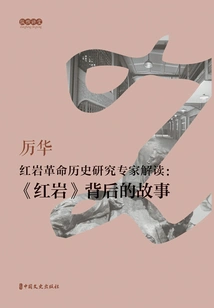
红岩革命历史研究专家解读:《红岩》背后的故事
Li Hua
"Red Rock" is a revolutionary novel that was popular in the 1960s and 1970s. It was written by Luo Guangbin and Yang Yiyan, survivors of the Kuomintang concentration camp, based on their own personal experiences. We are familiar with the heroes such as Xu Wenfeng and Jiang Jie in "Red Rock", but the novel has been artistically processed after all. Who are the prototypes of the heroes of "Red Rock"? What kind of life experiences and stories do you have? How can they use their lives to defend their beliefs? Li Hua, director of the Hongyan Revolutionary History Museum, gave his own answers to these questions after years of hard visits and painstaking research.
"Red Rock" is a revolutionary novel that was popular in the 1960s and 1970s. It was written by Luo Guangbin and Yang Yiyan, survivors of the Kuomintang concentration camp, based on their own personal experiences. We are familiar with the heroes such as Xu Wenfeng and Jiang Jie in "Red Rock", but the novel has been artistically processed after all. Who are the prototypes of the heroes of "Red Rock"? What kind of life experiences and stories do you have? How can they use their lives to defend their beliefs? Li Hua, director of the Hongyan Revolutionary History Museum, gave his own answers to these questions after years of hard visits and painstaking research.
飞花令·合(中国文化·古典诗词品鉴)
Compiled By Su Xin Luoxue
In accordance with the rules of the traditional Chinese poetry culture game "Feihua Ling", this book carefully selects 106 classic ancient poems containing the word "" from more than 70 poets. Each poem is followed by corresponding annotations, brief analysis, background and comments by famous experts, leading readers to embark on a beautiful and moving journey of poetry culture among the sea of books and ink. This book is reasonably organized, with pictures and texts. It is a popular cultural book that combines knowledge, aesthetics and culture.
In accordance with the rules of the traditional Chinese poetry culture game "Feihua Ling", this book carefully selects 106 classic ancient poems containing the word "" from more than 70 poets. Each poem is followed by corresponding annotations, brief analysis, background and comments by famous experts, leading readers to embark on a beautiful and moving journey of poetry culture among the sea of books and ink. This book is reasonably organized, with pictures and texts. It is a popular cultural book that combines knowledge, aesthetics and culture.
飞花令·欢(中国文化·古典诗词品鉴)
Compiled By Su Xin Luoxue
In accordance with the rules of the traditional Chinese poetry culture game "Feihua Ling", this book carefully selects 106 classic ancient poems containing the word "huan" by more than 70 poets. Each poem is followed by corresponding annotations, brief analysis, background and comments by famous experts, leading readers to embark on a beautiful and moving journey of poetry culture in the sea of books and ink. This book is reasonably organized, with pictures and texts. It is a popular cultural book that combines knowledge, aesthetics and culture.
In accordance with the rules of the traditional Chinese poetry culture game "Feihua Ling", this book carefully selects 106 classic ancient poems containing the word "huan" by more than 70 poets. Each poem is followed by corresponding annotations, brief analysis, background and comments by famous experts, leading readers to embark on a beautiful and moving journey of poetry culture in the sea of books and ink. This book is reasonably organized, with pictures and texts. It is a popular cultural book that combines knowledge, aesthetics and culture.
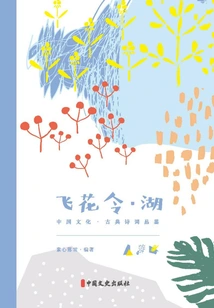
飞花令·湖(中国文化·古典诗词品鉴)
Compiled By Su Xin Luoxue
In accordance with the rules of the traditional Chinese poetry culture game "Feihua Ling", this book carefully selects 106 classic ancient poems containing the word "lake" by more than 70 poets. Each poem is followed by corresponding annotations, brief analysis, background and comments by famous experts, leading readers to embark on a beautiful and moving journey of poetry culture among the sea of books and ink. This book is reasonably organized, with pictures and texts. It is a popular cultural book that combines knowledge, aesthetics and culture.
In accordance with the rules of the traditional Chinese poetry culture game "Feihua Ling", this book carefully selects 106 classic ancient poems containing the word "lake" by more than 70 poets. Each poem is followed by corresponding annotations, brief analysis, background and comments by famous experts, leading readers to embark on a beautiful and moving journey of poetry culture among the sea of books and ink. This book is reasonably organized, with pictures and texts. It is a popular cultural book that combines knowledge, aesthetics and culture.
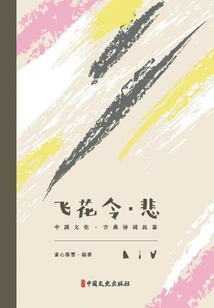
飞花令·悲(中国文化·古典诗词品鉴)
Compiled By Su Xin Luoxue
In accordance with the rules of the traditional Chinese poetry culture game "Feihua Ling", this book carefully selects 106 classic ancient poems containing the word "sadness" from more than 70 poets. Each poem is followed by corresponding annotations, brief analysis, background and comments from famous experts, leading readers to embark on a beautiful and moving journey of poetry culture in the sea of books and ink. This book is reasonably organized, with pictures and texts. It is a popular cultural book that combines knowledge, aesthetics and culture.
In accordance with the rules of the traditional Chinese poetry culture game "Feihua Ling", this book carefully selects 106 classic ancient poems containing the word "sadness" from more than 70 poets. Each poem is followed by corresponding annotations, brief analysis, background and comments from famous experts, leading readers to embark on a beautiful and moving journey of poetry culture in the sea of books and ink. This book is reasonably organized, with pictures and texts. It is a popular cultural book that combines knowledge, aesthetics and culture.
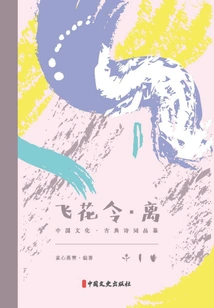
飞花令·离(中国文化·古典诗词品鉴)
Compiled By Su Xin Luoxue
In accordance with the rules of the traditional Chinese poetry culture game "Fei Hua Ling", this book carefully selects 106 classic ancient poems containing the word "Li" by more than 70 poets. Each poem is followed by corresponding notes, brief analysis, background and comments from famous experts, leading readers to embark on a beautiful and moving journey of poetry culture in the sea of books and ink. This book is reasonably organized, with pictures and texts. It is a popular cultural book that combines knowledge, aesthetics and culture.
In accordance with the rules of the traditional Chinese poetry culture game "Fei Hua Ling", this book carefully selects 106 classic ancient poems containing the word "Li" by more than 70 poets. Each poem is followed by corresponding notes, brief analysis, background and comments from famous experts, leading readers to embark on a beautiful and moving journey of poetry culture in the sea of books and ink. This book is reasonably organized, with pictures and texts. It is a popular cultural book that combines knowledge, aesthetics and culture.
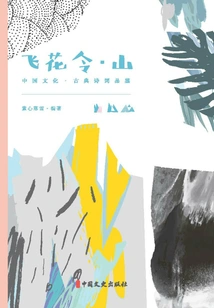
飞花令·山(中国文化·古典诗词品鉴)
Compiled By Su Xin Luoxue
In accordance with the rules of the traditional Chinese poetry culture game "Feihua Ling", this book carefully selects 106 classic ancient poems containing the word "mountain" by more than 70 poets. Each poem is followed by corresponding annotations, brief analysis, background and comments by famous experts, leading readers to embark on a beautiful and moving journey of poetry culture among the sea of books and ink. This book is reasonably organized, with pictures and texts. It is a popular cultural book that combines knowledge, aesthetics and culture.
In accordance with the rules of the traditional Chinese poetry culture game "Feihua Ling", this book carefully selects 106 classic ancient poems containing the word "mountain" by more than 70 poets. Each poem is followed by corresponding annotations, brief analysis, background and comments by famous experts, leading readers to embark on a beautiful and moving journey of poetry culture among the sea of books and ink. This book is reasonably organized, with pictures and texts. It is a popular cultural book that combines knowledge, aesthetics and culture.
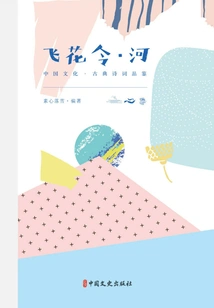
飞花令·河(中国文化·古典诗词品鉴)
Compiled By Su Xin Luoxue
In accordance with the rules of the traditional Chinese poetry culture game "Feihua Ling", this book carefully selects 100 classic ancient poems containing the word "river" by more than 70 poets. Each poem is followed by corresponding annotations, brief analysis, background and comments from famous experts, leading readers to embark on a beautiful and moving journey of poetry culture among the sea of books and ink. This book is reasonably organized, with pictures and texts. It is a popular cultural book that combines knowledge, aesthetics and culture.
In accordance with the rules of the traditional Chinese poetry culture game "Feihua Ling", this book carefully selects 100 classic ancient poems containing the word "river" by more than 70 poets. Each poem is followed by corresponding annotations, brief analysis, background and comments from famous experts, leading readers to embark on a beautiful and moving journey of poetry culture among the sea of books and ink. This book is reasonably organized, with pictures and texts. It is a popular cultural book that combines knowledge, aesthetics and culture.
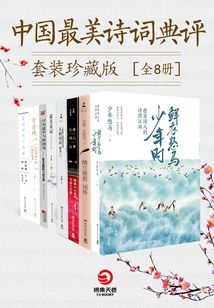
中国诗词典评套装珍藏版(全8册)
Su Ying Young Angry Horse Wei Qi
Tang poetry and Song lyrics, the two twin pearls of Chinese classical literature, have been fragrant for thousands of years and remain fresh for a long time. Su Ying has studied ancient poetry since she was a child, and is good at using poetry to interpret the emotions of modern society. Her clear, sensual, gentle and sensational writing style has created a critical aesthetic that is unique to Su Ying, which is deeply loved by readers, and her works continue to sell well. The young angry horse likes Tang poetry, Song poetry, and Dream of Red Mansions. He loves telling stories and teasing, and can write complex and boring knowledge into jokes. Wei Qi used a beautiful and romantic writing style to intensively read the only fifty existing Yi An poems. This set of books is accompanied by a selection of Tang poems and Song lyrics: "A Boy in Fresh Clothes and Angry Horses: Poems and Wine of Poets of Tang and Song Dynasties", "Li Qingzhao: Life is Just a Splendid Flower Event", "Past Stories of the Tang Poet: Flying and Submerging in the Splendid Country", "Biography of Nalan Rongruo's Ci", "It's Useless to Miss Love on a Straight Road: A Biography of Li Shangyin's Poems", "The Most Beautiful Song Ci", "Just to Meet You on the Road", "Intensive Reading of Words in the World". Under the observation of contemporary aesthetic perspective, the author quotes from many sources, uses allusions flexibly, makes new discoveries, is meticulous and to the point, has clear words, full of wit and profound insights, and every article is a beautiful article. A blend of romantic poetry and prose, it is the pinnacle of appreciation. Walking along this river of poetry that is sometimes gentle and sometimes agitated, I reunite with the names in my heart: Li Bai, Du Fu, Meng Haoran, Wen Tingyun, Li Yu, Su Shi, Li Qingzhao, Xin Qiji, Nalan Rongruo, Wang Guowei... Listen to their elegance and affection, openness and sadness.
Tang poetry and Song lyrics, the two twin pearls of Chinese classical literature, have been fragrant for thousands of years and remain fresh for a long time. Su Ying has studied ancient poetry since she was a child, and is good at using poetry to interpret the emotions of modern society. Her clear, sensual, gentle and sensational writing style has created a critical aesthetic that is unique to Su Ying, which is deeply loved by readers, and her works continue to sell well. The young angry horse likes Tang poetry, Song poetry, and Dream of Red Mansions. He loves telling stories and teasing, and can write complex and boring knowledge into jokes. Wei Qi used a beautiful and romantic writing style to intensively read the only fifty existing Yi An poems. This set of books is accompanied by a selection of Tang poems and Song lyrics: "A Boy in Fresh Clothes and Angry Horses: Poems and Wine of Poets of Tang and Song Dynasties", "Li Qingzhao: Life is Just a Splendid Flower Event", "Past Stories of the Tang Poet: Flying and Submerging in the Splendid Country", "Biography of Nalan Rongruo's Ci", "It's Useless to Miss Love on a Straight Road: A Biography of Li Shangyin's Poems", "The Most Beautiful Song Ci", "Just to Meet You on the Road", "Intensive Reading of Words in the World". Under the observation of contemporary aesthetic perspective, the author quotes from many sources, uses allusions flexibly, makes new discoveries, is meticulous and to the point, has clear words, full of wit and profound insights, and every article is a beautiful article. A blend of romantic poetry and prose, it is the pinnacle of appreciation. Walking along this river of poetry that is sometimes gentle and sometimes agitated, I reunite with the names in my heart: Li Bai, Du Fu, Meng Haoran, Wen Tingyun, Li Yu, Su Shi, Li Qingzhao, Xin Qiji, Nalan Rongruo, Wang Guowei... Listen to their elegance and affection, openness and sadness.
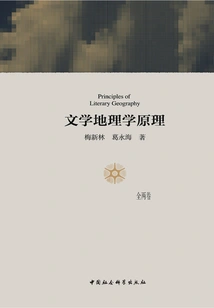
文学地理学原理:全两卷
Mei Xinlin Ge Yonghai
Based on the historical and academic logic of "geography - new geography", "cultural geography - new cultural geography" and "literary geography - new literary geography", this book clearly proposes a new proposition of "new literary geography" for the first time, with the academic purpose of creating a "new literary geography" system and "edition" The "Three Principles" theory of "Picture Restoration, Scene Restoration, and Spiritual Exploration of the Original" is the theoretical guide, with conceptual definition, subject positioning, theoretical construction and method integration as the four pillars, and is finally integrated into the five major sections of "Historical Review", "Discipline Theory", "Spatial Dynamics", "Research Pathways" and "Academic Relevance". The whole book focuses on a systematic discussion around the four major links of "restoration, reconstruction, transcendence and return", striving to achieve new breakthroughs and transcendences in the "ancient and modern, Chinese and Western" and academic dimensions. It embodies the organic unity of international vision, local feelings, the spirit of the times and theoretical innovation. It has important theoretical value and practical significance for promoting the discipline construction of literary geography and the cross-border integration and innovation of literary research.
Based on the historical and academic logic of "geography - new geography", "cultural geography - new cultural geography" and "literary geography - new literary geography", this book clearly proposes a new proposition of "new literary geography" for the first time, with the academic purpose of creating a "new literary geography" system and "edition" The "Three Principles" theory of "Picture Restoration, Scene Restoration, and Spiritual Exploration of the Original" is the theoretical guide, with conceptual definition, subject positioning, theoretical construction and method integration as the four pillars, and is finally integrated into the five major sections of "Historical Review", "Discipline Theory", "Spatial Dynamics", "Research Pathways" and "Academic Relevance". The whole book focuses on a systematic discussion around the four major links of "restoration, reconstruction, transcendence and return", striving to achieve new breakthroughs and transcendences in the "ancient and modern, Chinese and Western" and academic dimensions. It embodies the organic unity of international vision, local feelings, the spirit of the times and theoretical innovation. It has important theoretical value and practical significance for promoting the discipline construction of literary geography and the cross-border integration and innovation of literary research.
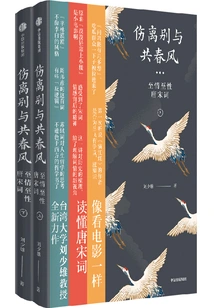
伤离别与共春风:至情至性唐宋词(套装共2册)
Liu Shaoxiong
Liu Shaoxiong, a master of poetry studies, has a novel interpretation of Tang and Song poetry, teaching you how to read Tang and Song poetry like watching a movie. It's so good that you can't help but scroll through the comments! 115 Que Ci, 40 poets, take you into the true painting scene of thousands of years. I believe that when reading Jin Yong's martial arts novel "The Legend of the Condor Heroes", many readers felt sad when they read Yang Guo reciting Su Shi's "Jiangchengzi", "Ten years of life and death. If you don't think about it, you will never forget it."; They also felt speechless when they heard Li Mochou, the evil demon who kills without blinking an eye, repeatedly reciting Yuan Haowen's "Moyu'er" - "Ask what love is in the world, and teach life and death." In our young years, when we read such plots, we can't help but feel some kind of inexplicable emotion. The reason why Song poetry can easily touch people's hearts is because the author is emotionally inspired and writes sincerely. Writers write lyrics mainly to sort out their feelings and thoughts by creating lyrics. When we read words and face our own emotions, we can not only identify with the poet's experience, but also get inspiration from them to relieve the sorrow and resentment in our hearts. What is achieved between reading and writing is the most beautiful spiritual communication between each other, as well as a world of affection that cannot bear to be left to waste. Professor Liu Shaoxiong, a famous poet in poetry, offers a general course on the appreciation of Tang and Song poetry at National Taiwan University. Every time the class starts, the seats are packed. His explanations are full of imagination and emotion. Listening to every word he speaks is like watching a movie full of pictures. Encountering a collection of good words is like walking into a real time travel.
Liu Shaoxiong, a master of poetry studies, has a novel interpretation of Tang and Song poetry, teaching you how to read Tang and Song poetry like watching a movie. It's so good that you can't help but scroll through the comments! 115 Que Ci, 40 poets, take you into the true painting scene of thousands of years. I believe that when reading Jin Yong's martial arts novel "The Legend of the Condor Heroes", many readers felt sad when they read Yang Guo reciting Su Shi's "Jiangchengzi", "Ten years of life and death. If you don't think about it, you will never forget it."; They also felt speechless when they heard Li Mochou, the evil demon who kills without blinking an eye, repeatedly reciting Yuan Haowen's "Moyu'er" - "Ask what love is in the world, and teach life and death." In our young years, when we read such plots, we can't help but feel some kind of inexplicable emotion. The reason why Song poetry can easily touch people's hearts is because the author is emotionally inspired and writes sincerely. Writers write lyrics mainly to sort out their feelings and thoughts by creating lyrics. When we read words and face our own emotions, we can not only identify with the poet's experience, but also get inspiration from them to relieve the sorrow and resentment in our hearts. What is achieved between reading and writing is the most beautiful spiritual communication between each other, as well as a world of affection that cannot bear to be left to waste. Professor Liu Shaoxiong, a famous poet in poetry, offers a general course on the appreciation of Tang and Song poetry at National Taiwan University. Every time the class starts, the seats are packed. His explanations are full of imagination and emotion. Listening to every word he speaks is like watching a movie full of pictures. Encountering a collection of good words is like walking into a real time travel.
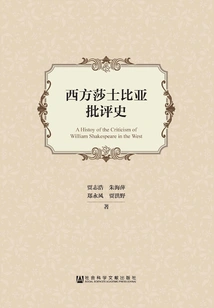
History of Western Shakespeare Criticism
Literature西方莎士比亚批评史
Jia Zhihao Et Al.
This book gathers a large number of previous research results, decrypts the code of Shakespeare's creation through the perspectives of various schools and major Shakespeare critics, reveals the relationship between Shakespeare and the times, and reproduces the style of Shakespeare's drama masters. This book has an objective argument and rich and detailed historical materials, which is helpful to the research and development of Shakespeare in my country.
This book gathers a large number of previous research results, decrypts the code of Shakespeare's creation through the perspectives of various schools and major Shakespeare critics, reveals the relationship between Shakespeare and the times, and reproduces the style of Shakespeare's drama masters. This book has an objective argument and rich and detailed historical materials, which is helpful to the research and development of Shakespeare in my country.
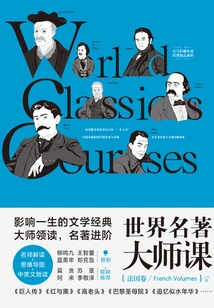
World Famous Master Class: French Volume
Literature世界名大师课:法国卷
Editor-in-chief Liu Mingjiu Wang Zhiliang Lan Yingnian
This book is a French volume. The explanation is mainly from four angles: the first is to explain the original classics, from the author, the background of the times, the storyline to the essence of the book, closely following the original work, telling readers what is good about each classic and how to read a good book; the second is to highlight the point of view, using the accumulation of reading history and lectures, starting from the perspective of literature, history and philosophy, comparing texts, themes, writers, and protagonists, and digging out Explore the various ways of reading classics; the third is to talk about aesthetics, and use the teachers' overseas study experience to lead readers to jump out of words, experience reality, and enter Notre Dame de Paris written by Hugo and the streets of Paris written by Balzac; the fourth is to explore values, return to the present, sort out reading methods at different stages of life, and explore youth growth and dream struggle.
This book is a French volume. The explanation is mainly from four angles: the first is to explain the original classics, from the author, the background of the times, the storyline to the essence of the book, closely following the original work, telling readers what is good about each classic and how to read a good book; the second is to highlight the point of view, using the accumulation of reading history and lectures, starting from the perspective of literature, history and philosophy, comparing texts, themes, writers, and protagonists, and digging out Explore the various ways of reading classics; the third is to talk about aesthetics, and use the teachers' overseas study experience to lead readers to jump out of words, experience reality, and enter Notre Dame de Paris written by Hugo and the streets of Paris written by Balzac; the fourth is to explore values, return to the present, sort out reading methods at different stages of life, and explore youth growth and dream struggle.
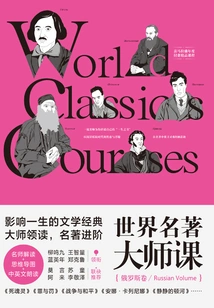
世界名大师课:俄罗斯卷
Editor-in-chief Liu Mingjiu Wang Zhiliang Lan Yingnian
"Master Class of World Masterpieces: Russian Volume" is an in-depth interpretation of the 11 most representative masterpieces of Russian literature by translators and authoritative scholars in the field of world literature, such as "Eugene Onegin", "The Captain's Daughter", "The Imperial Envoy", "Dead Souls", "Crime and Punishment", "The Brothers Karamazov", "War and Peace", "Anna Karenina", "Resurrection", "The Quiet Don", "Doctor Zhivago", etc. Famous writers analyzed the classic works from different angles such as the author's experience, historical background, storyline, characters, and creative techniques, and deeply discussed themes closely related to real life such as youth growth, dream struggle, relationships and wealth, love, hate, life and death, etc. For example, Wang Zhiliang discussed how Pushkin created the first "superfluous man" image in Russian literature, and the contradiction between romance and fragility in Onegin; Liu Wenfei analyzed the poetic language and the structure of the "lyrical epic" in "Doctor Zhivago" to explain the poetic beauty of this novel...
"Master Class of World Masterpieces: Russian Volume" is an in-depth interpretation of the 11 most representative masterpieces of Russian literature by translators and authoritative scholars in the field of world literature, such as "Eugene Onegin", "The Captain's Daughter", "The Imperial Envoy", "Dead Souls", "Crime and Punishment", "The Brothers Karamazov", "War and Peace", "Anna Karenina", "Resurrection", "The Quiet Don", "Doctor Zhivago", etc. Famous writers analyzed the classic works from different angles such as the author's experience, historical background, storyline, characters, and creative techniques, and deeply discussed themes closely related to real life such as youth growth, dream struggle, relationships and wealth, love, hate, life and death, etc. For example, Wang Zhiliang discussed how Pushkin created the first "superfluous man" image in Russian literature, and the contradiction between romance and fragility in Onegin; Liu Wenfei analyzed the poetic language and the structure of the "lyrical epic" in "Doctor Zhivago" to explain the poetic beauty of this novel...
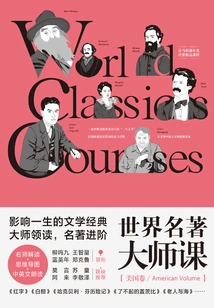
世界名大师课:美国卷
Editor-in-chief Liu Mingjiu Wang Zhiliang Lan Yingnian
The content of this book is an in-depth and simple interpretation of 16 of the most representative masterpieces in the history of American literature by translators and authoritative scholars in the field of world literature from more than a dozen prestigious universities in China. From the author's experience, historical background, storyline to the essence of the book, they closely follow the original work and explain it step by step, telling readers what is good about the classic and how to read a good book, and the story is vivid, interesting and fascinating. World famous books such as "The Scarlet Letter", "The Old Man and the Sea", "Gone with the Wind", "The Catcher in the Rye" and "Walden Pond" basically cover the required readings for junior high school and high school courses. They are very suitable for middle school students to expand their extracurricular reading horizons and enrich their reading. Reading the best books in a limited time, this set of books is of great benefit to awakening interest in reading and improving humanistic literacy.
The content of this book is an in-depth and simple interpretation of 16 of the most representative masterpieces in the history of American literature by translators and authoritative scholars in the field of world literature from more than a dozen prestigious universities in China. From the author's experience, historical background, storyline to the essence of the book, they closely follow the original work and explain it step by step, telling readers what is good about the classic and how to read a good book, and the story is vivid, interesting and fascinating. World famous books such as "The Scarlet Letter", "The Old Man and the Sea", "Gone with the Wind", "The Catcher in the Rye" and "Walden Pond" basically cover the required readings for junior high school and high school courses. They are very suitable for middle school students to expand their extracurricular reading horizons and enrich their reading. Reading the best books in a limited time, this set of books is of great benefit to awakening interest in reading and improving humanistic literacy.
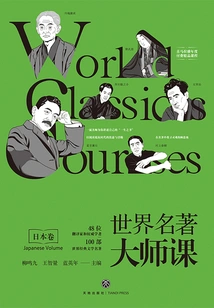
世界名大师课:日本卷
Editor-in-chief Liu Mingjiu Wang Zhiliang Lan Yingnian
"World Famous Master Class: Japanese Volume" is an in-depth interpretation by translators and authoritative scholars in the field of world literature of 15 of the most representative famous works in the history of American literature, such as "Man'yoshu", "The Tale of Genji", "I am a Cat", "Heart", "In the Bamboo Forest", "Disqualification in the World", "Snow Country", "The Ancient Capital", etc. Famous writers analyzed the classic names from different angles such as the author's experience, historical background, storyline, characters, and creative skills, and deeply discussed themes closely related to real life such as youth growth, dream struggle, relationships and wealth, love, hate, life and death, etc. For example, Zhang Zhejun introduced why the ancient Japanese female writer Murasaki Shikibu was able to create the earliest novel "The Tale of Genji". Song Gang analyzed Natsume Soseki's "I Am a Cat" and discussed how the author panoramically presented Meiji society through the eyes of a cat...
"World Famous Master Class: Japanese Volume" is an in-depth interpretation by translators and authoritative scholars in the field of world literature of 15 of the most representative famous works in the history of American literature, such as "Man'yoshu", "The Tale of Genji", "I am a Cat", "Heart", "In the Bamboo Forest", "Disqualification in the World", "Snow Country", "The Ancient Capital", etc. Famous writers analyzed the classic names from different angles such as the author's experience, historical background, storyline, characters, and creative skills, and deeply discussed themes closely related to real life such as youth growth, dream struggle, relationships and wealth, love, hate, life and death, etc. For example, Zhang Zhejun introduced why the ancient Japanese female writer Murasaki Shikibu was able to create the earliest novel "The Tale of Genji". Song Gang analyzed Natsume Soseki's "I Am a Cat" and discussed how the author panoramically presented Meiji society through the eyes of a cat...
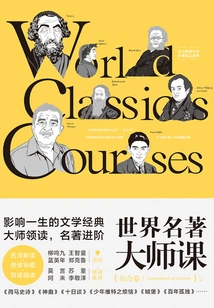
世界名大师课(综合卷)
Editor-in-chief Liu Mingjiu Wang Zhiliang Lan Yingnian
"World Famous Master Class: Comprehensive Volume" is an in-depth interpretation of 16 most representative titles in the history of foreign literature by translators and authoritative scholars in the field of world literature, such as "Homer's Epic", "The Divine Comedy", "The Decameron", "Crazy Roland", "The Sorrows of Young Werther", "Gitanjali", "The Prophet", "The Castle", "One Hundred Years of Solitude", "The Unbearable Lightness of Being", etc. Famous writers analyzed the classic names from different angles such as the author's experience, historical background, storyline, characters, and creative skills, and deeply discussed themes closely related to real life such as youth growth, dream struggle, relationships and wealth, love, hate, life and death, etc. For example, Ye Tingfang used easy-to-understand language to give an in-depth explanation of the "alienation" world described by Kafka in "The Castle". Ding Junjun walked into the heart of Young Werther and re-examined "The Sorrows of Young Werther" with a modern perspective...
"World Famous Master Class: Comprehensive Volume" is an in-depth interpretation of 16 most representative titles in the history of foreign literature by translators and authoritative scholars in the field of world literature, such as "Homer's Epic", "The Divine Comedy", "The Decameron", "Crazy Roland", "The Sorrows of Young Werther", "Gitanjali", "The Prophet", "The Castle", "One Hundred Years of Solitude", "The Unbearable Lightness of Being", etc. Famous writers analyzed the classic names from different angles such as the author's experience, historical background, storyline, characters, and creative skills, and deeply discussed themes closely related to real life such as youth growth, dream struggle, relationships and wealth, love, hate, life and death, etc. For example, Ye Tingfang used easy-to-understand language to give an in-depth explanation of the "alienation" world described by Kafka in "The Castle". Ding Junjun walked into the heart of Young Werther and re-examined "The Sorrows of Young Werther" with a modern perspective...
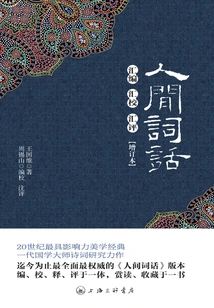
人间词话:汇编汇校汇评(增订本)
Written By Wang Guowei And Edited By Zhou Xishan
This book collects all versions of "Human Words": the manuscript, the final version, the unpublished version, the revised version, the selected version and the current version, as well as the appendices in the current version. This book has compiled the above books to make it easier for readers to read and think. The annotations include an introduction to the names of people and explanations of the original poems and their difficulties cited in the poems, providing readers with relatively comprehensive knowledge. The review section covers various commentaries in the 20th century and collects wonderful and unique comments for readers to refer to and make more in-depth thinking on this basis.
This book collects all versions of "Human Words": the manuscript, the final version, the unpublished version, the revised version, the selected version and the current version, as well as the appendices in the current version. This book has compiled the above books to make it easier for readers to read and think. The annotations include an introduction to the names of people and explanations of the original poems and their difficulties cited in the poems, providing readers with relatively comprehensive knowledge. The review section covers various commentaries in the 20th century and collects wonderful and unique comments for readers to refer to and make more in-depth thinking on this basis.
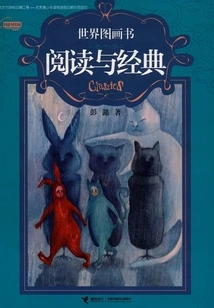
World Picture Book Reading and Classics
Literature世界图画书阅读与经典
Peng Yi
"World Picture Book Reading and Classics" is a reading guide that teaches readers how to read and appreciate picture books. The whole book is divided into two parts. The first part is an introduction to picture books as a book category. The next part selects more than 60 world classic picture books that have been introduced and published in China for a wonderful interpretation. The appendix not only includes an introduction to important picture book awards and authoritative recommended books, but also provides a subject index for readers' in-depth reading and research.
"World Picture Book Reading and Classics" is a reading guide that teaches readers how to read and appreciate picture books. The whole book is divided into two parts. The first part is an introduction to picture books as a book category. The next part selects more than 60 world classic picture books that have been introduced and published in China for a wonderful interpretation. The appendix not only includes an introduction to important picture book awards and authoritative recommended books, but also provides a subject index for readers' in-depth reading and research.
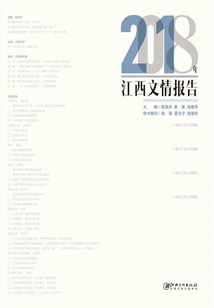
Jiangxi Literary Situation Report 2018
Literature2018年江西文情报告
Editor-in-chief Zhang Zebing Yuan Yan Tang Jianping
"Jiangxi Literary Situation Report 2018" is an annual theoretical reading of the province's primary school literature, poetry, prose, film and television drama literature, online novels, and literary criticism founded by the Institute of Literature of the Provincial Academy of Social Sciences in 2009. It describes the general situation of Jiangxi's literature and art in that year, displays the achievements of Jiangxi's literature and art in that year, and takes stock of Jiangxi's literary and artistic gains and losses in that year. Conduct special research on Jiangxi's annual novels, prose, poetry, children's literature, literary theories, activities, etc., And set up columns to reflect it.
"Jiangxi Literary Situation Report 2018" is an annual theoretical reading of the province's primary school literature, poetry, prose, film and television drama literature, online novels, and literary criticism founded by the Institute of Literature of the Provincial Academy of Social Sciences in 2009. It describes the general situation of Jiangxi's literature and art in that year, displays the achievements of Jiangxi's literature and art in that year, and takes stock of Jiangxi's literary and artistic gains and losses in that year. Conduct special research on Jiangxi's annual novels, prose, poetry, children's literature, literary theories, activities, etc., And set up columns to reflect it.
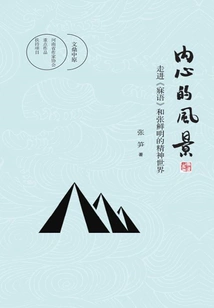
内心的风景:走进《寐语》和张鲜明的精神世界
Zhang Sun
"Inner Landscape" is one of the "Wending Central Plains" series of key works supported by the Henan Provincial Writers Association. The author uses the collection of essays "Sleeping Words" (Guangming Daily Press, 2017) as the starting point to interpret the "avant-garde literature" of Henan poet Zhang Xianming. As a text to be interpreted, the fragmented stories, scenes and details of "Sleeping Words" are full of extraordinary imagination and surrealism. As a literary review, "Inner Landscape" involves subjects such as philosophy, psychology and semiotics, with a color of deconstruction, modernity and high literary theory value.
"Inner Landscape" is one of the "Wending Central Plains" series of key works supported by the Henan Provincial Writers Association. The author uses the collection of essays "Sleeping Words" (Guangming Daily Press, 2017) as the starting point to interpret the "avant-garde literature" of Henan poet Zhang Xianming. As a text to be interpreted, the fragmented stories, scenes and details of "Sleeping Words" are full of extraordinary imagination and surrealism. As a literary review, "Inner Landscape" involves subjects such as philosophy, psychology and semiotics, with a color of deconstruction, modernity and high literary theory value.
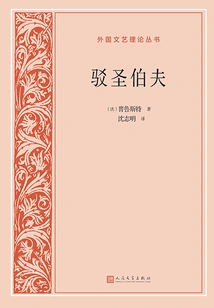
Refuting Sainte-beuve
Literature驳圣伯夫
H
Western literary trends and schools have many names, have risen and fallen, and theoretical works on literature and art emerge in endlessly. In almost every era, there have been far-reaching literary theorists. As a literary theorist, he usually has a complete set of theories, which guides and even dominates the literary world at that time. This book is neither an essay nor a novel, but a work of art. A piece of small madeleine cake brought out endless unconscious memories, and then the pen turned sharply. The author strongly criticizes the mechanical and erroneous criticism methods of the authoritative critic Saint-Beuve, and the resulting contempt and misunderstanding of all the literary geniuses in the French literary world at that time. The whole book contains both lyrical narrative and rational speculation. The two complement each other and reflect each other. The style of nearly half of the book is similar to or echoes that of "Reminiscence of Lost Time". It is a condensation of the essence of the author's thoughts and laid the first cornerstone for later textualist and structuralist criticism.
Western literary trends and schools have many names, have risen and fallen, and theoretical works on literature and art emerge in endlessly. In almost every era, there have been far-reaching literary theorists. As a literary theorist, he usually has a complete set of theories, which guides and even dominates the literary world at that time. This book is neither an essay nor a novel, but a work of art. A piece of small madeleine cake brought out endless unconscious memories, and then the pen turned sharply. The author strongly criticizes the mechanical and erroneous criticism methods of the authoritative critic Saint-Beuve, and the resulting contempt and misunderstanding of all the literary geniuses in the French literary world at that time. The whole book contains both lyrical narrative and rational speculation. The two complement each other and reflect each other. The style of nearly half of the book is similar to or echoes that of "Reminiscence of Lost Time". It is a condensation of the essence of the author's thoughts and laid the first cornerstone for later textualist and structuralist criticism.
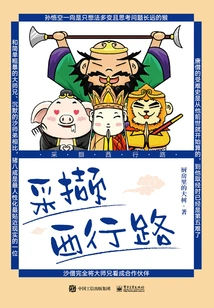
Pick up the Westbound Road
Literature采撷西行路
Big Tree In The Kitchen
In recent years, there has been a lot of enthusiasm about the theme of "Journey to the West". Whether it is a TV series or a book, they are all different interpretations of the story of Journey to the West. For example, in the TV series "Journey to the West", Sun Wukong is super invincible, the generals in the Heavenly Palace are useless, Sha Monk is honest and kind, Tang Monk's emotional world is colorful, and all kinds of fairies are vulnerable. However, if you really take the original work and chew it slowly, and comment on and think about it chapter by chapter, there is really not much. This book is based on the original work of "Journey to the West". It uses a contemporary perspective and the most relaxed and vivid way of expression to analyze relevant characters, events and the clues hidden behind the story of Journey to the West. It also shares some of the author's gains and insights with interested friends. It is also a tribute to the classic masterpiece.
In recent years, there has been a lot of enthusiasm about the theme of "Journey to the West". Whether it is a TV series or a book, they are all different interpretations of the story of Journey to the West. For example, in the TV series "Journey to the West", Sun Wukong is super invincible, the generals in the Heavenly Palace are useless, Sha Monk is honest and kind, Tang Monk's emotional world is colorful, and all kinds of fairies are vulnerable. However, if you really take the original work and chew it slowly, and comment on and think about it chapter by chapter, there is really not much. This book is based on the original work of "Journey to the West". It uses a contemporary perspective and the most relaxed and vivid way of expression to analyze relevant characters, events and the clues hidden behind the story of Journey to the West. It also shares some of the author's gains and insights with interested friends. It is also a tribute to the classic masterpiece.
Return of Criticism
Literature批评的返场
He Ping
He Ping is not an academic critic in the usual sense. In the past five or six years, he has hosted the "Flower City Concern" column, convened the "Shanghai-Nanjing Twin Cities Literary Workshop", and edited the "On-site Literature Series" and the "Literary Community Book Series" to realistically influence the current literary production and ecology in order to fulfill his critical ideal of rebuilding the dialogue and publicity of literary criticism. "The Return of Criticism" is based on the long-term literary history and the integrity of the macro-literary view. It uses field surveys to explore and redraw the panoramic map of contemporary Chinese literature. It is a native archive of the literary scene. Not only that, in He Ping's view, it is an important tradition of modern Chinese literary criticism that critics take root in the literary scene and participate in literary production and the construction of literary history. Adhering to this tradition, "The Return of Criticism" presents a unique personal critical style in its concepts, postures, practices, paradigms and styles. The book is divided into three volumes: "Ideology", "Writers" and "Scene". "Trend of Thought" is He Ping's exploration and reflection on Chinese literature as a whole in the era of reform and opening up, especially the 20 years of the new century; "Writer" is a series of case studies of writers, in which he reflects on the aesthetic creation of contemporary Chinese writers using five writers, including Alai, Chi Zijian, Li Er, Ai Wei, and Qiu Huadong; "Site" is a private literary archive that contains the general comments of thirty issues of the "Flower City Concern" column hosted by the author from 2017 to 2021. He Ping uses a critic's aesthetic sensitivity and independent judgment to sort out and identify the rich literary scene, extract new literary trends and aesthetic experiences, and pay attention to the era of reform and opening up, especially important literary issues in the new century: local and world literature, media revolution, the impact of AI technology on literature, literary generations and youth writing, reform The historical logic of Chinese literature in the era of reform and opening up, multi-ethnic literature and literary communities, emerging literary styles, social changes, etc., Starting from the literary issues of the times, realize the return of literary criticism to contemporary Chinese literature and the reality of China it is related to, demonstrating the effectiveness and reality of literary criticism with attitude, temperature, and emotion.
He Ping is not an academic critic in the usual sense. In the past five or six years, he has hosted the "Flower City Concern" column, convened the "Shanghai-Nanjing Twin Cities Literary Workshop", and edited the "On-site Literature Series" and the "Literary Community Book Series" to realistically influence the current literary production and ecology in order to fulfill his critical ideal of rebuilding the dialogue and publicity of literary criticism. "The Return of Criticism" is based on the long-term literary history and the integrity of the macro-literary view. It uses field surveys to explore and redraw the panoramic map of contemporary Chinese literature. It is a native archive of the literary scene. Not only that, in He Ping's view, it is an important tradition of modern Chinese literary criticism that critics take root in the literary scene and participate in literary production and the construction of literary history. Adhering to this tradition, "The Return of Criticism" presents a unique personal critical style in its concepts, postures, practices, paradigms and styles. The book is divided into three volumes: "Ideology", "Writers" and "Scene". "Trend of Thought" is He Ping's exploration and reflection on Chinese literature as a whole in the era of reform and opening up, especially the 20 years of the new century; "Writer" is a series of case studies of writers, in which he reflects on the aesthetic creation of contemporary Chinese writers using five writers, including Alai, Chi Zijian, Li Er, Ai Wei, and Qiu Huadong; "Site" is a private literary archive that contains the general comments of thirty issues of the "Flower City Concern" column hosted by the author from 2017 to 2021. He Ping uses a critic's aesthetic sensitivity and independent judgment to sort out and identify the rich literary scene, extract new literary trends and aesthetic experiences, and pay attention to the era of reform and opening up, especially important literary issues in the new century: local and world literature, media revolution, the impact of AI technology on literature, literary generations and youth writing, reform The historical logic of Chinese literature in the era of reform and opening up, multi-ethnic literature and literary communities, emerging literary styles, social changes, etc., Starting from the literary issues of the times, realize the return of literary criticism to contemporary Chinese literature and the reality of China it is related to, demonstrating the effectiveness and reality of literary criticism with attitude, temperature, and emotion.
Poetry Interpretation and Criticism of Selected Ancient Poems of the Ming and Qing Dynasties
Literature明清古诗选本的诗歌阐释与批评
Jing Xianli
This book takes the anthology of ancient poems from the Ming and Qing dynasties as the main line, and places the anthology in the context of the poetic thought and cultural development of the times. It begins with the debate between the "teacher's heart" and "retroversion" of the Ming people. After cultural selection and integration, it finally ends with the "return to tradition" of the Qing people. The book is divided into two parts, the upper and lower parts. The first part focuses on the detailed analysis of each selection, aiming to extract its main ideas and inner spirit through specific criticism, and outline the process and evolution of the selection's participation in the construction of poetic theory through comparison with other selections. The second part will vertically sort out the confrontation and integration of poetic concepts of various schools, and explore the process of gradual clarity of poetic concepts in the confrontation and integration.
This book takes the anthology of ancient poems from the Ming and Qing dynasties as the main line, and places the anthology in the context of the poetic thought and cultural development of the times. It begins with the debate between the "teacher's heart" and "retroversion" of the Ming people. After cultural selection and integration, it finally ends with the "return to tradition" of the Qing people. The book is divided into two parts, the upper and lower parts. The first part focuses on the detailed analysis of each selection, aiming to extract its main ideas and inner spirit through specific criticism, and outline the process and evolution of the selection's participation in the construction of poetic theory through comparison with other selections. The second part will vertically sort out the confrontation and integration of poetic concepts of various schools, and explore the process of gradual clarity of poetic concepts in the confrontation and integration.
族裔、地方与话语:文学批评集
Qi Fahui
This book is divided into two parts. The poetry criticism part mainly focuses on the criticism of contemporary Tibetan Chinese poetry, and conducts case and group research on Tibetan Chinese poetry since the 1980s from the two dimensions of ethnic attributes and local knowledge; the novel criticism part takes the works of Wanma Tseden, Yan Yingxiu, Lhasenjia, and Yun Cairang as the main research objects. Through close reading of the text, it analyzes the local, ethnic, and modern characteristics presented in contemporary Tibetan novels, and explores the literary concepts, writing experiences, and insights of contemporary Tibetan novel authors. In addition, the book includes novels and poetry criticism by authors from other ethnic groups such as Zhang Shuguang, Gao Chunlin, Qiao Dianyun, Cheng Ran, etc., Aiming to show the differences and richness of literary discourse influenced by different ethnic groups and regional cultures.
This book is divided into two parts. The poetry criticism part mainly focuses on the criticism of contemporary Tibetan Chinese poetry, and conducts case and group research on Tibetan Chinese poetry since the 1980s from the two dimensions of ethnic attributes and local knowledge; the novel criticism part takes the works of Wanma Tseden, Yan Yingxiu, Lhasenjia, and Yun Cairang as the main research objects. Through close reading of the text, it analyzes the local, ethnic, and modern characteristics presented in contemporary Tibetan novels, and explores the literary concepts, writing experiences, and insights of contemporary Tibetan novel authors. In addition, the book includes novels and poetry criticism by authors from other ethnic groups such as Zhang Shuguang, Gao Chunlin, Qiao Dianyun, Cheng Ran, etc., Aiming to show the differences and richness of literary discourse influenced by different ethnic groups and regional cultures.
韦应物诗集笺释
Zhang Zhaoyong
This book is the author's research monograph on Wei Yingwu's poetry and prose. It is divided into two parts: the main text and the appendix. The main text is the author's historical and cultural reinterpretation of Wei Yingwu's Chuancun works based on the research of Sun Wang, Tao Min, Wang Yousheng, Liao Zhongan and other scholars in the context of the transformation period of the prosperous Tang Dynasty. The appendix contains some of the author's published papers, including research on Wei Yingwu and research on the relationship between temperament and aesthetics in Chinese poetry involving Wei Yingwu. It is a development of the main text and has been the author's research interest for many years.
This book is the author's research monograph on Wei Yingwu's poetry and prose. It is divided into two parts: the main text and the appendix. The main text is the author's historical and cultural reinterpretation of Wei Yingwu's Chuancun works based on the research of Sun Wang, Tao Min, Wang Yousheng, Liao Zhongan and other scholars in the context of the transformation period of the prosperous Tang Dynasty. The appendix contains some of the author's published papers, including research on Wei Yingwu and research on the relationship between temperament and aesthetics in Chinese poetry involving Wei Yingwu. It is a development of the main text and has been the author's research interest for many years.
励耘学刊(2020年第2辑·总第32辑)
Editor-in-chief Du Guiping
This book is an academic journal sponsored by the School of Liberal Arts of Beijing Normal University. It is published twice a year. Its research fields include ancient Chinese literature, modern and contemporary Chinese literature, literature and art, Chinese classical philology, comparative literature, folklore, etc. This book has been selected as a source journal in the Chinese Social Sciences Citation Index (CSSCI) (2017-2018). The book mainly publishes original literary research works at home and abroad, aiming to exchange academic information, display academic excellence, maintain academic norms, and promote healthy academic development.
This book is an academic journal sponsored by the School of Liberal Arts of Beijing Normal University. It is published twice a year. Its research fields include ancient Chinese literature, modern and contemporary Chinese literature, literature and art, Chinese classical philology, comparative literature, folklore, etc. This book has been selected as a source journal in the Chinese Social Sciences Citation Index (CSSCI) (2017-2018). The book mainly publishes original literary research works at home and abroad, aiming to exchange academic information, display academic excellence, maintain academic norms, and promote healthy academic development.