Library
Browse and search books
2,823 novels found
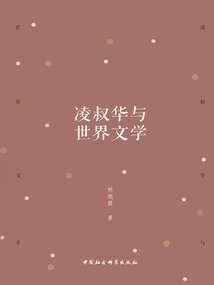
Ling Shuhua and World Literature
Literature凌叔华与世界文学
Lin Xiaoxia
World literature has now become a cutting-edge theoretical topic, and famous scholars from both East and West, such as Franco Moretti, David Damrosch, Theo D'haen, Wang Ning, and Zhang Longxi, have published a large number of works on this topic. Ling Shuhua is an important writer who has not been paid much attention in the history of modern Chinese literature. Ling Shuhua has lived in China for a long time and has a profound foundation in Chinese culture. During her diasporic experience from China to Europe, Ling Shuhua introduced modern Chinese literature to Western readers and used her own way to make Western readers pay attention to and read Chinese literary works, especially those interested in Chinese history, literature, women's studies, and autobiography. In a sense, the development process of world literature can be regarded as the diasporic writing of diasporic writers and intellectuals. Based on this, this book attempts to use the example of modern Chinese diasporic writers represented by Ling Shuhua to explore the two-way journey of world literature and provide a new interpretation of the concept of "world literature".
World literature has now become a cutting-edge theoretical topic, and famous scholars from both East and West, such as Franco Moretti, David Damrosch, Theo D'haen, Wang Ning, and Zhang Longxi, have published a large number of works on this topic. Ling Shuhua is an important writer who has not been paid much attention in the history of modern Chinese literature. Ling Shuhua has lived in China for a long time and has a profound foundation in Chinese culture. During her diasporic experience from China to Europe, Ling Shuhua introduced modern Chinese literature to Western readers and used her own way to make Western readers pay attention to and read Chinese literary works, especially those interested in Chinese history, literature, women's studies, and autobiography. In a sense, the development process of world literature can be regarded as the diasporic writing of diasporic writers and intellectuals. Based on this, this book attempts to use the example of modern Chinese diasporic writers represented by Ling Shuhua to explore the two-way journey of world literature and provide a new interpretation of the concept of "world literature".
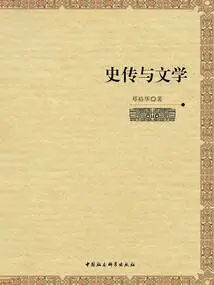
History and Literature
Literature史传与文学
Deng Yuhua
The "historical biography" mentioned in this book refers to the concept of "historical biography" mentioned in Liu Xie's "Wen Xin Diao Long·Historical Biography", which refers to the history books from the pre-Qin to the Jin and Song Dynasties (that is, discussed in "Wen Xin Diao Long"), including "Spring and Autumn", "Zuo Zhuan", "Guoyu", "Warring States Policy", "Historical Records", "Han Shu", "Three Kingdoms", "Book of the Later Han", etc. The relationship between historical biography and literature can be understood from two levels: First, historical biography itself is literature. Historical biography is literature, which is first of all a conceptual recognition, that is, early people's recognition of the homogeneous and homogeneous relationship between history and literature. At the same time, historical biographies contain the nature, characteristics and charm of literature. Secondly, as literature, historical biography itself is inextricably linked with various types and genres of literature, such as folk literature, poetry, prose, novels, and dramas, and has great relevance. Such as the symbiosis and co-prosperity of themes and mutual sources; the interoperability of genres; the mutual reference of expression techniques; the insertion and compatibility of historical biographies into various literary texts; the collection and commentary of various literary historical materials, etc. This book is based on the latter relationship. This framework incorporates the content of the former relationship into the discussion process, trying to more comprehensively explore the relationship between historical biography and folk literature, ancient poetry, ancient prose, ancient novels, ancient opera and other types of literature, and reveal the interaction and symbiosis between historical biography and literature.
The "historical biography" mentioned in this book refers to the concept of "historical biography" mentioned in Liu Xie's "Wen Xin Diao Long·Historical Biography", which refers to the history books from the pre-Qin to the Jin and Song Dynasties (that is, discussed in "Wen Xin Diao Long"), including "Spring and Autumn", "Zuo Zhuan", "Guoyu", "Warring States Policy", "Historical Records", "Han Shu", "Three Kingdoms", "Book of the Later Han", etc. The relationship between historical biography and literature can be understood from two levels: First, historical biography itself is literature. Historical biography is literature, which is first of all a conceptual recognition, that is, early people's recognition of the homogeneous and homogeneous relationship between history and literature. At the same time, historical biographies contain the nature, characteristics and charm of literature. Secondly, as literature, historical biography itself is inextricably linked with various types and genres of literature, such as folk literature, poetry, prose, novels, and dramas, and has great relevance. Such as the symbiosis and co-prosperity of themes and mutual sources; the interoperability of genres; the mutual reference of expression techniques; the insertion and compatibility of historical biographies into various literary texts; the collection and commentary of various literary historical materials, etc. This book is based on the latter relationship. This framework incorporates the content of the former relationship into the discussion process, trying to more comprehensively explore the relationship between historical biography and folk literature, ancient poetry, ancient prose, ancient novels, ancient opera and other types of literature, and reveal the interaction and symbiosis between historical biography and literature.
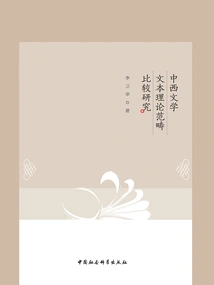
中西文学文本理论范畴比较研究
Li Weihua
"Comparative study of theoretical categories of Chinese and Western literary texts" belongs to the "theoretical comparison" in comparative literature and the "comparative study" in literary theory. Text analysis characterized by "close reading" includes three major steps: word analysis, structural analysis, and contextual analysis. This book extracts eight comparable groups of related categories involving these three aspects from Chinese and Western literary text theories, namely: "close reading" and "familiar reading", "Zhiyan", "Buluo Yanquan" and "hazy", "tension", and "paradox" ", "irony", "authentic language", "metaphor" and "bixing", "framework-texture" and "shape-spiritual principle", "seeking avoidance in crime" and "narrative frequency", "intertextuality" and "coexistence of text and text", "intentional fallacy" and "intentional rebellion", "style" and "qi", "ti", etc., To conduct comparative research. This book attempts to use the issues of common concern between Chinese and Western literary theories as the connecting point, using categories as the entry point, and focusing on solving the current practical problems in the field of literary theory in my country. It focuses on the different expressions of common theoretical issues in Chinese and Western literary theories, distinguishes the similarities from the differences, seeks similarities from the differences, and deepens the understanding and understanding of the two in the similarities and differences.
"Comparative study of theoretical categories of Chinese and Western literary texts" belongs to the "theoretical comparison" in comparative literature and the "comparative study" in literary theory. Text analysis characterized by "close reading" includes three major steps: word analysis, structural analysis, and contextual analysis. This book extracts eight comparable groups of related categories involving these three aspects from Chinese and Western literary text theories, namely: "close reading" and "familiar reading", "Zhiyan", "Buluo Yanquan" and "hazy", "tension", and "paradox" ", "irony", "authentic language", "metaphor" and "bixing", "framework-texture" and "shape-spiritual principle", "seeking avoidance in crime" and "narrative frequency", "intertextuality" and "coexistence of text and text", "intentional fallacy" and "intentional rebellion", "style" and "qi", "ti", etc., To conduct comparative research. This book attempts to use the issues of common concern between Chinese and Western literary theories as the connecting point, using categories as the entry point, and focusing on solving the current practical problems in the field of literary theory in my country. It focuses on the different expressions of common theoretical issues in Chinese and Western literary theories, distinguishes the similarities from the differences, seeks similarities from the differences, and deepens the understanding and understanding of the two in the similarities and differences.
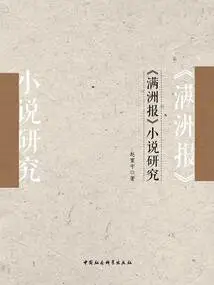
Research on the Novels of "manzhoubao
Literature《满洲报》小说研究
Zhao Huanyu
Among the many newspapers that gave birth to Northeast literature, "Manzhou Bao" occupies an important position and is an important newspaper in the history of Northeast China. Among the many literary historical materials in "Manchuria Newspaper", the novel creation deserves special attention. The novelists in "Manchuria Newspaper" coexisted old and new writers. There were old-style literati who were infiltrated by traditional culture, and there were also new-school writers who were influenced by new ideological trends. The novels published in "Manzhou Bao" face reality and reflect reality, describe the living conditions of people in Northeast China in the old era, and reflect the world, human feelings and national cultural mentality in special periods. From the perspective of literary history research, the novel "Manzhoubao" outlines the original ecological picture of the development of Northeastern novels, witnesses the historical changes in the integration and development of new and old novels in Northeastern modern times, and is of positive significance for understanding the literary activities in the Northeast during the specific historical period of the 1920s and 1930s.
Among the many newspapers that gave birth to Northeast literature, "Manzhou Bao" occupies an important position and is an important newspaper in the history of Northeast China. Among the many literary historical materials in "Manchuria Newspaper", the novel creation deserves special attention. The novelists in "Manchuria Newspaper" coexisted old and new writers. There were old-style literati who were infiltrated by traditional culture, and there were also new-school writers who were influenced by new ideological trends. The novels published in "Manzhou Bao" face reality and reflect reality, describe the living conditions of people in Northeast China in the old era, and reflect the world, human feelings and national cultural mentality in special periods. From the perspective of literary history research, the novel "Manzhoubao" outlines the original ecological picture of the development of Northeastern novels, witnesses the historical changes in the integration and development of new and old novels in Northeastern modern times, and is of positive significance for understanding the literary activities in the Northeast during the specific historical period of the 1920s and 1930s.
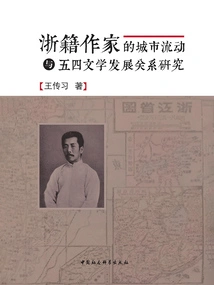
浙籍作家的城市流动与五四文学发展关系研究
Wang Chuanxi
The May Fourth Movement was an era of social and cultural transformation in China, and it was also a period of high-frequency intellectual mobility. Writers from Zhejiang broke the tradition of relocating to their homeland, inherited the legacy of leaving the capital and going abroad in modern times, and introduced the new movement of the May Fourth movement, becoming a powerful force in the new literary world. From the regional and urban spatial dimensions, this book uses methods such as human geography, urban sociology and cultural studies to deeply explain the historical origins, geographical conditions and modern characteristics of Zhejiang writers' urban mobility. It draws a detailed road map to show the dynamic trajectories of traveling from one place to another, leaving and tired travel, traveling alone and gathering together, and clarifies the difference between urban mobility and ancient travel, wandering and war displacement. This book focuses on exploring the inner relationship between Zhejiang writers' urban mobility and the development of new literature, revealing the profound impact of their mobility behavior on the identity transformation of writers; the powerful promotion of new literature groups and societies through the convergence of rural, academic, and professional connections; the role of urban mobility in promoting the absorption and digestion of the enlightenment spirit by new literature writers; and the pioneering significance of mobility experience in new literary narratives and aesthetic paradigms. These conclusions highlight the historical grace of Zhejiang writers in inheriting the past and opening up new paths in cultural transformation. They help summarize the unique experiences Zhejiang writers have brought to the development of new literature in China, and provide useful inspiration for understanding the flow of writers and the construction of literature in the new era.
The May Fourth Movement was an era of social and cultural transformation in China, and it was also a period of high-frequency intellectual mobility. Writers from Zhejiang broke the tradition of relocating to their homeland, inherited the legacy of leaving the capital and going abroad in modern times, and introduced the new movement of the May Fourth movement, becoming a powerful force in the new literary world. From the regional and urban spatial dimensions, this book uses methods such as human geography, urban sociology and cultural studies to deeply explain the historical origins, geographical conditions and modern characteristics of Zhejiang writers' urban mobility. It draws a detailed road map to show the dynamic trajectories of traveling from one place to another, leaving and tired travel, traveling alone and gathering together, and clarifies the difference between urban mobility and ancient travel, wandering and war displacement. This book focuses on exploring the inner relationship between Zhejiang writers' urban mobility and the development of new literature, revealing the profound impact of their mobility behavior on the identity transformation of writers; the powerful promotion of new literature groups and societies through the convergence of rural, academic, and professional connections; the role of urban mobility in promoting the absorption and digestion of the enlightenment spirit by new literature writers; and the pioneering significance of mobility experience in new literary narratives and aesthetic paradigms. These conclusions highlight the historical grace of Zhejiang writers in inheriting the past and opening up new paths in cultural transformation. They help summarize the unique experiences Zhejiang writers have brought to the development of new literature in China, and provide useful inspiration for understanding the flow of writers and the construction of literature in the new era.
故事形态学研究新进展
Editor-in-chief Li Yang
The morphological study of folktales is an important theoretical research method and has extensive influence in domestic and foreign academic circles. This book collects the latest paper results of story morphology research in the past 10 years, reflecting the expanded application of morphological theory in folk tales and other literary, artistic and cultural fields (such as novels, movies, games, etc.). The authors include famous professors and experts, as well as emerging academics and young students. Some papers are published publicly for the first time. This book will help readers understand the latest progress in story morphology research, deepen their understanding of the theoretical significance of this research, and has high academic reference value.
The morphological study of folktales is an important theoretical research method and has extensive influence in domestic and foreign academic circles. This book collects the latest paper results of story morphology research in the past 10 years, reflecting the expanded application of morphological theory in folk tales and other literary, artistic and cultural fields (such as novels, movies, games, etc.). The authors include famous professors and experts, as well as emerging academics and young students. Some papers are published publicly for the first time. This book will help readers understand the latest progress in story morphology research, deepen their understanding of the theoretical significance of this research, and has high academic reference value.
视觉文化时代的文学图景
Zhao Xiaofang
With the advent of the era of visual culture, the literary and art world is experiencing a "war" between "pictures" and "literature." Literature based on language and characters is squeezed and challenged by "image hegemony." Some scholars even pessimistically lamented: "The dusk of literature has arrived" and "literature has come to an end." In order to respond to the above-mentioned cultural phenomena, this book starts from the perspective of visual culture and selects many hot literary phenomena at the turn of the century, such as "pictorialization of literary journals", "picture books", "film and television adaptations of novels" and "new generation", "post-70s", "Shanghai nostalgia", "body writing", "petty bourgeoisie writing", "beauty literature", etc., To comprehensively consider the survival scene of Chinese literature at the turn of the century from both aesthetic and communication perspectives. By placing literature in a literary field where many powers and sights are intertwined, it highlights the hidden or blind relationship between desire, power, consumption, media and literature, thus revealing the richness and complexity of literature and helping readers clearly grasp the overall appearance of literature at the turn of the century.
With the advent of the era of visual culture, the literary and art world is experiencing a "war" between "pictures" and "literature." Literature based on language and characters is squeezed and challenged by "image hegemony." Some scholars even pessimistically lamented: "The dusk of literature has arrived" and "literature has come to an end." In order to respond to the above-mentioned cultural phenomena, this book starts from the perspective of visual culture and selects many hot literary phenomena at the turn of the century, such as "pictorialization of literary journals", "picture books", "film and television adaptations of novels" and "new generation", "post-70s", "Shanghai nostalgia", "body writing", "petty bourgeoisie writing", "beauty literature", etc., To comprehensively consider the survival scene of Chinese literature at the turn of the century from both aesthetic and communication perspectives. By placing literature in a literary field where many powers and sights are intertwined, it highlights the hidden or blind relationship between desire, power, consumption, media and literature, thus revealing the richness and complexity of literature and helping readers clearly grasp the overall appearance of literature at the turn of the century.
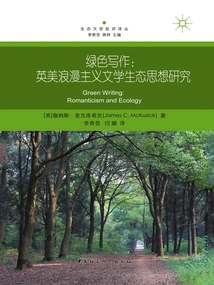
绿色写作:英美浪漫主义文学生态思想研究
(us) James Mccusick
Professor McCusick, a famous American ecological literary critic, skillfully uses the theory and method of ecological literary criticism to reinterpret the "green writing" of Coleridge, Wordsworth, John Clare, William Blake, Mary Shelley, Emerson, Thoreau, John Muir and Mary Austin, and explore the profound and mysterious ecological thoughts in their works. It is believed that they re-conceptualized, emotionalized and historicized the relationship between man and nature, expressed extremely rich "green thoughts", not only provided a new paradigm for perceiving nature, but also created a tradition of "green writing" and spread modern ecological thoughts and ecological civilization concepts.
Professor McCusick, a famous American ecological literary critic, skillfully uses the theory and method of ecological literary criticism to reinterpret the "green writing" of Coleridge, Wordsworth, John Clare, William Blake, Mary Shelley, Emerson, Thoreau, John Muir and Mary Austin, and explore the profound and mysterious ecological thoughts in their works. It is believed that they re-conceptualized, emotionalized and historicized the relationship between man and nature, expressed extremely rich "green thoughts", not only provided a new paradigm for perceiving nature, but also created a tradition of "green writing" and spread modern ecological thoughts and ecological civilization concepts.
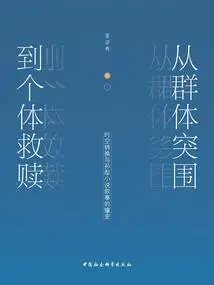
从群体突围到个体救赎:时空转换与孙犁小说叙事的嬗变
Li Huaxiu
This book takes Sun Li's novels as the research object, including Sun Li's novels written during the Anti-Japanese War, the land reform period and the "Yunzhai Novels" in his later years. Through careful analysis and in-depth dissection of the text, we find the relationship between the themes and narrative styles of Sun Li's novels in different periods; we discover the hidden mechanism of the deep integration between the narrative models of Sun Li's novels in different periods and the themes of the times under the perspective of heterogeneous space; we find that the historical evolution of Sun Li's novels and the sudden change of style in his later years are unified under his literary ideals. In other words, Sun Li's literary "ambition" unites his novels in different periods, and his "changes" are not only reasonable, but also preset.
This book takes Sun Li's novels as the research object, including Sun Li's novels written during the Anti-Japanese War, the land reform period and the "Yunzhai Novels" in his later years. Through careful analysis and in-depth dissection of the text, we find the relationship between the themes and narrative styles of Sun Li's novels in different periods; we discover the hidden mechanism of the deep integration between the narrative models of Sun Li's novels in different periods and the themes of the times under the perspective of heterogeneous space; we find that the historical evolution of Sun Li's novels and the sudden change of style in his later years are unified under his literary ideals. In other words, Sun Li's literary "ambition" unites his novels in different periods, and his "changes" are not only reasonable, but also preset.
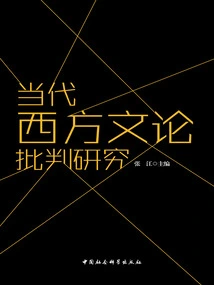
当代西方文论批判研究
Editor-in-chief Zhang Jiang
"Critical Research on Contemporary Western Literary Theory" is divided into six chapters, the contents of which are: 1. Turning inward and deviating from society and life; 2. "Egocentrism" and the elimination of public values; 3. The irrational turn of modern Western literary theory; 4. "Form worship" and the inversion of the relationship between content and form; 5. "Anti-educational theory" and the extreme misunderstanding of aesthetic pursuit; 6. Elitism orientation and the niche crisis of literature and art. It peels off the cocoons from six aspects and analyzes the reception of contemporary Western literary theory in China and the problems in depth. In today's theoretical world where only Western literary theories follow the lead, this book is full of theoretical cutting-edge and practical significance.
"Critical Research on Contemporary Western Literary Theory" is divided into six chapters, the contents of which are: 1. Turning inward and deviating from society and life; 2. "Egocentrism" and the elimination of public values; 3. The irrational turn of modern Western literary theory; 4. "Form worship" and the inversion of the relationship between content and form; 5. "Anti-educational theory" and the extreme misunderstanding of aesthetic pursuit; 6. Elitism orientation and the niche crisis of literature and art. It peels off the cocoons from six aspects and analyzes the reception of contemporary Western literary theory in China and the problems in depth. In today's theoretical world where only Western literary theories follow the lead, this book is full of theoretical cutting-edge and practical significance.
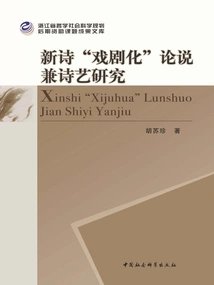
新诗“戏剧化”论说兼诗艺研究
Hu Suzhen
This book overall explores the "dramatization" theory and poetic effects in the development of new poetry. On the basis of examining cross-lingual influences and combing historical materials, this article examines the "dramatic" poetic discourse and poet text strategies in several concentrated stages of the development of new poetry from the perspective of genre integration such as "novel poeticization", and clarifies the vertical connections or similarities and differences between the New Moon Poetry School, the Nine-leaf School of Poetry and the "dramatization" of poetry in the 1990s in terms of connotative forms, foreign influences and poetic mechanisms, and in On the premise of retaining the non-poetry pursuit of "dramatization", this paper analyzes three "dramatic" poetic connotations of "dramatic subject", "conflict poetic thought" and "dramatic scene". Based on the representative texts of outstanding poets, it explains the poetic validity of "dramatic" writing in new poetry at three levels: alienating or extending subjective consciousness, condensing contradictory emotional experiences, and activating daily language.
This book overall explores the "dramatization" theory and poetic effects in the development of new poetry. On the basis of examining cross-lingual influences and combing historical materials, this article examines the "dramatic" poetic discourse and poet text strategies in several concentrated stages of the development of new poetry from the perspective of genre integration such as "novel poeticization", and clarifies the vertical connections or similarities and differences between the New Moon Poetry School, the Nine-leaf School of Poetry and the "dramatization" of poetry in the 1990s in terms of connotative forms, foreign influences and poetic mechanisms, and in On the premise of retaining the non-poetry pursuit of "dramatization", this paper analyzes three "dramatic" poetic connotations of "dramatic subject", "conflict poetic thought" and "dramatic scene". Based on the representative texts of outstanding poets, it explains the poetic validity of "dramatic" writing in new poetry at three levels: alienating or extending subjective consciousness, condensing contradictory emotional experiences, and activating daily language.
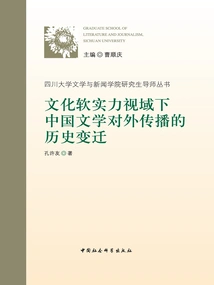
文化软实力视域下中国文学对外传播的历史变迁
Kong Xuyou
The external dissemination of Chinese culture and literature is closely related to the issue of cultural soft power. From a historical perspective, the contrast between the strength and weakness of cultural soft power has a clear role in promoting or hindering the spread of literature. The rise and fall of Chinese literature is a probe of the inner foundation of China's cultural soft power. The external communication of Chinese literature also reflects the waxing and waning of cultural soft power. The basic content of this book is to re-examine the historical changes in the external communication of Chinese literature from the perspective of cultural soft power, demonstrate the characteristics, laws and strategies of cultural soft power with a large number of examples of Chinese literary communication, analyze the relationship between cultural soft power and the external communication of literature, and explore the ways in which the two interact.
The external dissemination of Chinese culture and literature is closely related to the issue of cultural soft power. From a historical perspective, the contrast between the strength and weakness of cultural soft power has a clear role in promoting or hindering the spread of literature. The rise and fall of Chinese literature is a probe of the inner foundation of China's cultural soft power. The external communication of Chinese literature also reflects the waxing and waning of cultural soft power. The basic content of this book is to re-examine the historical changes in the external communication of Chinese literature from the perspective of cultural soft power, demonstrate the characteristics, laws and strategies of cultural soft power with a large number of examples of Chinese literary communication, analyze the relationship between cultural soft power and the external communication of literature, and explore the ways in which the two interact.
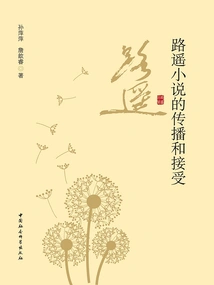
路遥小说的传播和接受
Sun Pingping Zhan Xinrui
Lu Yao's novel is a warm and inspiring work that has been repeatedly confirmed by communication data and acceptance examples. The number of Lu Yao's works is limited, and his creation also has certain limitations, but in terms of dissemination and acceptance, it surpasses many contemporary writers, forming a huge "Lu Yao group" and the indescribable "Lu Yao phenomenon". Based on Lu Yao's life research and analysis of historical materials, this book examines the dissemination of Lu Yao's novels by mass media (paper media, radio, film and television, etc.), The two-way interaction between editing work and Lu Yao's literary creation, and the data and examples of readers' acceptance of Lu Yao's novels. Combined with a close reading of the text of Lu Yao's novels, this book focuses on examining and thinking about the dissemination and reception of Lu Yao's novels in China from 1980 to the present forty years at the reader level.
Lu Yao's novel is a warm and inspiring work that has been repeatedly confirmed by communication data and acceptance examples. The number of Lu Yao's works is limited, and his creation also has certain limitations, but in terms of dissemination and acceptance, it surpasses many contemporary writers, forming a huge "Lu Yao group" and the indescribable "Lu Yao phenomenon". Based on Lu Yao's life research and analysis of historical materials, this book examines the dissemination of Lu Yao's novels by mass media (paper media, radio, film and television, etc.), The two-way interaction between editing work and Lu Yao's literary creation, and the data and examples of readers' acceptance of Lu Yao's novels. Combined with a close reading of the text of Lu Yao's novels, this book focuses on examining and thinking about the dissemination and reception of Lu Yao's novels in China from 1980 to the present forty years at the reader level.
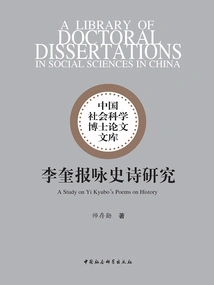
Research on Li Kuibao's Epic Poem
Literature李奎报咏史诗研究
Shi Cunxun
This book aims to gain a glimpse of the long-standing interdependence between Korean Peninsula literature and Chinese literature through the study of the historical and Chinese poems written by Yi Kyu Bo in the mid-Goryeo Dynasty from the perspective of the influence of comparative literature. The national characteristics and strong inclusiveness of Korean Peninsula literature are revealed in this process. The dictatorship of Goryeo warriors and the plunder of the Korean peninsula by foreign enemies in the era of Li Kuibo were undoubtedly important driving forces for the creation of Li Kuibo's epic poem. As a result, the characteristics of Li Kuibo's epic poems such as strong national consciousness, love for the country's history and culture, allusions to warriors, the tendency to entertain oneself with poetry, wine and women, and the transformation of the poetic style from heroic to plain were presented one by one. As a result, the epic poems on the Korean Peninsula flourished further during the late period of the late Li Dynasty and early early Xian Dynasty.
This book aims to gain a glimpse of the long-standing interdependence between Korean Peninsula literature and Chinese literature through the study of the historical and Chinese poems written by Yi Kyu Bo in the mid-Goryeo Dynasty from the perspective of the influence of comparative literature. The national characteristics and strong inclusiveness of Korean Peninsula literature are revealed in this process. The dictatorship of Goryeo warriors and the plunder of the Korean peninsula by foreign enemies in the era of Li Kuibo were undoubtedly important driving forces for the creation of Li Kuibo's epic poem. As a result, the characteristics of Li Kuibo's epic poems such as strong national consciousness, love for the country's history and culture, allusions to warriors, the tendency to entertain oneself with poetry, wine and women, and the transformation of the poetic style from heroic to plain were presented one by one. As a result, the epic poems on the Korean Peninsula flourished further during the late period of the late Li Dynasty and early early Xian Dynasty.
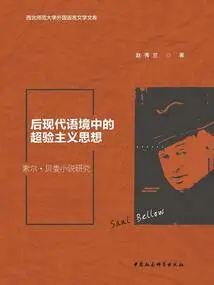
后现代语境中的超验主义思想:索尔·贝娄小说研究
Zhao Xiulan
The transcendentalist ideas and their presentation techniques at the formal level in the novels "The Adventures of Augie March", "Rain King Henderson", "Herzog", "Mr. Sammler's Planet" and "Humboldt's Gift" by American Jewish writer Saul Bellow show that Bellow was influenced by traditional transcendentalist ideas during his creation. However, due to the differences in historical context, Bellow sublated traditional transcendentalist ideas. Based on the theory of literary sociology, this book uses interviews, Bellow's critical articles, biographies, etc. As evidence to focus on the dominant themes throughout Bellow's novels - spiritual pursuit and moral purpose. The conclusion points out: Although Bellow's novels have both realism and romanticism characteristics, Bellow's criticism of society, the construction of a utopian vision and his moral sentiments for saving the world cannot be ignored.
The transcendentalist ideas and their presentation techniques at the formal level in the novels "The Adventures of Augie March", "Rain King Henderson", "Herzog", "Mr. Sammler's Planet" and "Humboldt's Gift" by American Jewish writer Saul Bellow show that Bellow was influenced by traditional transcendentalist ideas during his creation. However, due to the differences in historical context, Bellow sublated traditional transcendentalist ideas. Based on the theory of literary sociology, this book uses interviews, Bellow's critical articles, biographies, etc. As evidence to focus on the dominant themes throughout Bellow's novels - spiritual pursuit and moral purpose. The conclusion points out: Although Bellow's novels have both realism and romanticism characteristics, Bellow's criticism of society, the construction of a utopian vision and his moral sentiments for saving the world cannot be ignored.
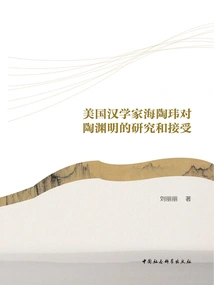
美国汉学家海陶玮对陶渊明的研究和接受
Liu Lili
James Robert Hightower (1915-2006) served as a professor at Harvard University in the United States for a long time during his lifetime. He was the first scholar trained in the United States to specialize in the study of Chinese literature. He especially made outstanding achievements in the study of Tao Yuanming and held an important historical position. However, there has been no thematic research on his work at home and abroad. Based on a comprehensive collection of archival documents collected by Harvard University in the United States and the University of Alberta in Canada, as well as domestic and foreign research materials, this book provides an in-depth analysis of Hai Taowei's contribution to the study of Tao Yuanming's poetry and his acceptance of Tao Yuanming's thoughts and lifestyle, revealing Hai Taowei's significant influence in the history of world ceramics and Western Sinology.
James Robert Hightower (1915-2006) served as a professor at Harvard University in the United States for a long time during his lifetime. He was the first scholar trained in the United States to specialize in the study of Chinese literature. He especially made outstanding achievements in the study of Tao Yuanming and held an important historical position. However, there has been no thematic research on his work at home and abroad. Based on a comprehensive collection of archival documents collected by Harvard University in the United States and the University of Alberta in Canada, as well as domestic and foreign research materials, this book provides an in-depth analysis of Hai Taowei's contribution to the study of Tao Yuanming's poetry and his acceptance of Tao Yuanming's thoughts and lifestyle, revealing Hai Taowei's significant influence in the history of world ceramics and Western Sinology.
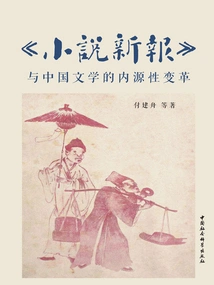
《小说新报》与中国文学的内源性变革
Fu Jianzhou Et Al.
"Novel News" (1915-1923) was a stronghold for citizen writers in the early Republic of China (the so-called old-school writers or Mandarin Duck and Butterfly School writers). It was a representative large-scale popular literature journal that lasted for a long time (9 years), had many issues (94 issues in total), had a wide distribution range, and had great influence. This book abandons the "impact-reaction model" commonly used in the study of the modernization process of Chinese literature, and adopts the "self-sense-reaction model", emphasizing "endogenous" rather than "exogenous". The whole book includes "Novel New News" and the orthodoxy and transformation of novels in the early Republic of China, "Novel New News" and the orthodoxy and transformation of short stories in the early Republic of China, "Novel New News" and the endogenous changes of the novel art in the early Republic of China, "Novel New News" and the continuation of traditional poetry and prose, "Novel New News" and the singing and singing in the early Republic of China Nine chapters include literature and its minor traditions, "Novel New News" and the transformation of traditional opera, "Novel New News" and my country's small tradition of harmonious literature, "Novel New News" and the traditional literary criticism style and its new changes, "Novel New News" and the adaptation of the old school literature in the early Republic of China. The content is rich and creative.
"Novel News" (1915-1923) was a stronghold for citizen writers in the early Republic of China (the so-called old-school writers or Mandarin Duck and Butterfly School writers). It was a representative large-scale popular literature journal that lasted for a long time (9 years), had many issues (94 issues in total), had a wide distribution range, and had great influence. This book abandons the "impact-reaction model" commonly used in the study of the modernization process of Chinese literature, and adopts the "self-sense-reaction model", emphasizing "endogenous" rather than "exogenous". The whole book includes "Novel New News" and the orthodoxy and transformation of novels in the early Republic of China, "Novel New News" and the orthodoxy and transformation of short stories in the early Republic of China, "Novel New News" and the endogenous changes of the novel art in the early Republic of China, "Novel New News" and the continuation of traditional poetry and prose, "Novel New News" and the singing and singing in the early Republic of China Nine chapters include literature and its minor traditions, "Novel New News" and the transformation of traditional opera, "Novel New News" and my country's small tradition of harmonious literature, "Novel New News" and the traditional literary criticism style and its new changes, "Novel New News" and the adaptation of the old school literature in the early Republic of China. The content is rich and creative.
20世纪中国文学理想人格流变论
Huang Chuanbo
This book is based on a large number of Chinese literary works in the 20th century. It analyzes and examines these works through close text reading to explore the understanding and expression of ideal personality by writers in various periods. Based on the longitudinal analysis of the evolution of ideal personality, we try to systematically elaborate on the basic characteristics, formation background, significance and realization of ideal personality in each period, revealing and elucidating the profound understanding of "people" by intellectuals in the 20th century. This book divides the ideal personality of the 20th century into five diachronic stages in chronological order, and selects the most representative ideal personality images for analysis. It also conducts an in-depth analysis of the differences in the understanding of ideal personality caused by factors such as the identity of the characters in the same period. It comprehensively and systematically explains the understanding of ideal personality and its ideological significance by all classes in the 20th century, and explains its significance in shaping the core socialist values and building a harmonious society.
This book is based on a large number of Chinese literary works in the 20th century. It analyzes and examines these works through close text reading to explore the understanding and expression of ideal personality by writers in various periods. Based on the longitudinal analysis of the evolution of ideal personality, we try to systematically elaborate on the basic characteristics, formation background, significance and realization of ideal personality in each period, revealing and elucidating the profound understanding of "people" by intellectuals in the 20th century. This book divides the ideal personality of the 20th century into five diachronic stages in chronological order, and selects the most representative ideal personality images for analysis. It also conducts an in-depth analysis of the differences in the understanding of ideal personality caused by factors such as the identity of the characters in the same period. It comprehensively and systematically explains the understanding of ideal personality and its ideological significance by all classes in the 20th century, and explains its significance in shaping the core socialist values and building a harmonious society.
喧嚣的文本:庞德《诗章》研究
Guo Yingjie
As a noisy text, the literary value and unique artistic charm of Pound's "Cantos" lie in the fact that it integrates personal subjective life perceptions, experiences, and meditations with the objective existence of human culture, history, politics, economy, philosophy, etc., And uses its magnificent and unique structure and rich and complex content to form "a waterfall of jade and mud", thus becoming a wonder in the history of modern American poetry. With the help of text theory and intertextuality perspective, you will find that "The Cantos" is not only a poetic and artistic text, but also a human cultural text, a social historical text, a political economics text and a moral philosophy text. Of course, the "Cantos" is essentially a heterogeneous text, a collection of symbols composed of various referents and countless discourses, full of complex meanings, so its interpretation is also full of openness.
As a noisy text, the literary value and unique artistic charm of Pound's "Cantos" lie in the fact that it integrates personal subjective life perceptions, experiences, and meditations with the objective existence of human culture, history, politics, economy, philosophy, etc., And uses its magnificent and unique structure and rich and complex content to form "a waterfall of jade and mud", thus becoming a wonder in the history of modern American poetry. With the help of text theory and intertextuality perspective, you will find that "The Cantos" is not only a poetic and artistic text, but also a human cultural text, a social historical text, a political economics text and a moral philosophy text. Of course, the "Cantos" is essentially a heterogeneous text, a collection of symbols composed of various referents and countless discourses, full of complex meanings, so its interpretation is also full of openness.
南中国海研究文录:近代文学的连通地气与吸纳西风
Li Siqing Long Qilin Leng Chuan
This book is a phased result of the "Research on the History and Culture of the South China Sea" project chaired by Professor Yang Yi at the University of Macau. The topics include the spread of Western learning to the east, the arrival of Catholic and Protestant missionaries in China, Chinese and English newspapers and periodicals in South China in the 19th century, and nationalism in the first half of the 20th century. The three authors focus on specific and nuanced individuals, textual cases or typical events, and use the analysis of original historical materials or representative literary works such as newspapers, archives, etc. To try to examine the encounter and collision of Chinese and Western cultures in modern times from a longer historical context. From the arrival of Catholic and Protestant missionaries to China, to the new changes in the printing and publishing industry and the large-scale publication and circulation of Western and New Learning reading materials in the second half of the 19th century, to the rise of nationalist trends in the "May 30", "Shaji" and "Wanxian Incident" in the first half of the 20th century, this long and bumpy history of encounters and negotiations between China and the West is worthy of our review and consideration again and again. As for the "South China Sea" in the title, it refers to China's South China and southeastern coastal areas; "Modern Literature" is the research interest and professional background of several authors, and the meaning of "Modern Times" is relatively broad and is not limited to 1840 to 1919; "Connecting the Earth" is the hope that literary research can connect history, geography and living people; "Absorbing the West Wind" is the main theme that runs through each section of the book.
This book is a phased result of the "Research on the History and Culture of the South China Sea" project chaired by Professor Yang Yi at the University of Macau. The topics include the spread of Western learning to the east, the arrival of Catholic and Protestant missionaries in China, Chinese and English newspapers and periodicals in South China in the 19th century, and nationalism in the first half of the 20th century. The three authors focus on specific and nuanced individuals, textual cases or typical events, and use the analysis of original historical materials or representative literary works such as newspapers, archives, etc. To try to examine the encounter and collision of Chinese and Western cultures in modern times from a longer historical context. From the arrival of Catholic and Protestant missionaries to China, to the new changes in the printing and publishing industry and the large-scale publication and circulation of Western and New Learning reading materials in the second half of the 19th century, to the rise of nationalist trends in the "May 30", "Shaji" and "Wanxian Incident" in the first half of the 20th century, this long and bumpy history of encounters and negotiations between China and the West is worthy of our review and consideration again and again. As for the "South China Sea" in the title, it refers to China's South China and southeastern coastal areas; "Modern Literature" is the research interest and professional background of several authors, and the meaning of "Modern Times" is relatively broad and is not limited to 1840 to 1919; "Connecting the Earth" is the hope that literary research can connect history, geography and living people; "Absorbing the West Wind" is the main theme that runs through each section of the book.
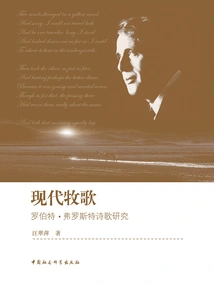
现代牧歌:罗伯特·弗罗斯特诗歌研究
Wang Cuiping
This book uses the pastoral perspective to comprehensively study Robert Frost's poetry, mainly exploring the connection between Frost's poetry and pastoral from four aspects: tradition, locality, reality and popularity, analyzing his description of the New England region and his revelation of real social problems in the United States, as well as the impact of his artistic characteristics on public readers. Frost is a modern pastoral poet, and his poems have the significance of carrying forward the past and ushering in the future.
This book uses the pastoral perspective to comprehensively study Robert Frost's poetry, mainly exploring the connection between Frost's poetry and pastoral from four aspects: tradition, locality, reality and popularity, analyzing his description of the New England region and his revelation of real social problems in the United States, as well as the impact of his artistic characteristics on public readers. Frost is a modern pastoral poet, and his poems have the significance of carrying forward the past and ushering in the future.
问题与方法:中国现代文学史料研究论稿
Fu Xiangxi
Based on "problem awareness" and "method awareness", this book attempts to summarize the problems existing in the study of modern Chinese literary historical materials and summarize its basic methods and principles. Conduct special research on some important issues and methods, such as: a group of articles on the excavation, arrangement and application of modern literary historical materials, pointing out the problems that arise in the collection, arrangement and compilation of modern literary historical materials, complete works and anthologies, and proposing corresponding solutions; in view of the many errors in historical materials in the compilation of Chinese literary history, several influential and representative works Taking the most recent works on the history of Chinese literature as the research object, we examine the issues of documentary and historical materials in the compilation of literary history; we also focus on the two monographs on the study of modern Chinese literary history published in recent years (Xie Yong's "Research Methods for the History of Modern Chinese Literature" and Liu Zengjie's "Historical Materials of Modern Chinese Literature") as the center to explore the construction of modern Chinese literary historical materials.
Based on "problem awareness" and "method awareness", this book attempts to summarize the problems existing in the study of modern Chinese literary historical materials and summarize its basic methods and principles. Conduct special research on some important issues and methods, such as: a group of articles on the excavation, arrangement and application of modern literary historical materials, pointing out the problems that arise in the collection, arrangement and compilation of modern literary historical materials, complete works and anthologies, and proposing corresponding solutions; in view of the many errors in historical materials in the compilation of Chinese literary history, several influential and representative works Taking the most recent works on the history of Chinese literature as the research object, we examine the issues of documentary and historical materials in the compilation of literary history; we also focus on the two monographs on the study of modern Chinese literary history published in recent years (Xie Yong's "Research Methods for the History of Modern Chinese Literature" and Liu Zengjie's "Historical Materials of Modern Chinese Literature") as the center to explore the construction of modern Chinese literary historical materials.
日本无赖派作家的叙事艺术与批评话语研究
Ren Jianghui
By using the theories of classical narratology and post-classical narratology, this book overcomes the "metaphysical flaws" of the author theory and work theory in the study of Japanese rogue writers by Chinese and Japanese academic circles. Taking the perspective of social transformation as the research entry point, this book organically combines the narrative artistic connotation and literary criticism construction of Japanese rogue writers for analysis, systematically interprets the texts of each writer's works, and analyzes Analyze the narrative artistic connotations of different rogue writers such as narrative themes, narrative perspectives, narrative structures, narrative discourses, and narrative strategies, analyze their narrative characteristics and literary ideas, and then discuss the literary propositions and literary criticism discourse of Japanese rogue writers, reveal the inner connection between their narrative artistic connotations and the construction of literary criticism discourse, and explain the true connotation and philosophical concepts of literary criticism of writers of this genre.
By using the theories of classical narratology and post-classical narratology, this book overcomes the "metaphysical flaws" of the author theory and work theory in the study of Japanese rogue writers by Chinese and Japanese academic circles. Taking the perspective of social transformation as the research entry point, this book organically combines the narrative artistic connotation and literary criticism construction of Japanese rogue writers for analysis, systematically interprets the texts of each writer's works, and analyzes Analyze the narrative artistic connotations of different rogue writers such as narrative themes, narrative perspectives, narrative structures, narrative discourses, and narrative strategies, analyze their narrative characteristics and literary ideas, and then discuss the literary propositions and literary criticism discourse of Japanese rogue writers, reveal the inner connection between their narrative artistic connotations and the construction of literary criticism discourse, and explain the true connotation and philosophical concepts of literary criticism of writers of this genre.
味:一个诗学语词的理论批评
Jin Yaomin
Taking historical development as a clue, this book explores the Confucian and Taoist origins of the theory of "poetic taste" and selects poetic taste categories such as "interesting taste", "flavor", "charming flavor", "light taste", "Zen taste" and "interesting" from various historical periods from the pre-Qin Dynasty to the Ming and Qing Dynasties. On this basis, the reasons for the emergence of different forms of "poetic flavor" are explained, especially the changing process of literary ideological trends reflected in the different forms of "poetic flavor". This book adopts the research method of vertical historical synthesis and horizontal "flavor" interweaving research methods to expand the theory of "poetic flavor" in two directions: depth and breadth. Both the vertical history of "flavor" theory and the horizontal "flavor" concept are sorted out in detail, with special emphasis on the cultural and poetic origins of the concept's origin and evolution, so that "flavor" as a poetic concept can be presented in an all-round way and its connotation is deeply understood.
Taking historical development as a clue, this book explores the Confucian and Taoist origins of the theory of "poetic taste" and selects poetic taste categories such as "interesting taste", "flavor", "charming flavor", "light taste", "Zen taste" and "interesting" from various historical periods from the pre-Qin Dynasty to the Ming and Qing Dynasties. On this basis, the reasons for the emergence of different forms of "poetic flavor" are explained, especially the changing process of literary ideological trends reflected in the different forms of "poetic flavor". This book adopts the research method of vertical historical synthesis and horizontal "flavor" interweaving research methods to expand the theory of "poetic flavor" in two directions: depth and breadth. Both the vertical history of "flavor" theory and the horizontal "flavor" concept are sorted out in detail, with special emphasis on the cultural and poetic origins of the concept's origin and evolution, so that "flavor" as a poetic concept can be presented in an all-round way and its connotation is deeply understood.
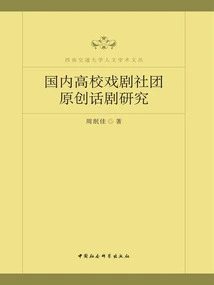
国内高校戏剧社团原创话剧研究
Zhou Minjia
Domestic college drama societies and their original plays have become the most representative and influential carriers of youth culture. They can reflect the cultural literacy, way of thinking and humanistic spirit of contemporary college students, and have outstanding aesthetic education research value. Art is important in nourishing the heart. In today's era of Internet information explosion and popular entertainment culture, original dramas by university drama clubs not only pay attention to society, but also reflect the life outlook and emotional world of contemporary college students, and interpret the campus cultural characteristics of truth, goodness, beauty, and improvement. Through observation, research, analysis and refinement, this book integrates drama theory, play interpretation, and humanistic aesthetic education with a vivid style and an attitude close to the student body. It deepens the understanding of young drama creation and provides a new way of thinking to promote and improve the research on the domestic war drama industry chain. It has important innovative value and guiding significance.
Domestic college drama societies and their original plays have become the most representative and influential carriers of youth culture. They can reflect the cultural literacy, way of thinking and humanistic spirit of contemporary college students, and have outstanding aesthetic education research value. Art is important in nourishing the heart. In today's era of Internet information explosion and popular entertainment culture, original dramas by university drama clubs not only pay attention to society, but also reflect the life outlook and emotional world of contemporary college students, and interpret the campus cultural characteristics of truth, goodness, beauty, and improvement. Through observation, research, analysis and refinement, this book integrates drama theory, play interpretation, and humanistic aesthetic education with a vivid style and an attitude close to the student body. It deepens the understanding of young drama creation and provides a new way of thinking to promote and improve the research on the domestic war drama industry chain. It has important innovative value and guiding significance.
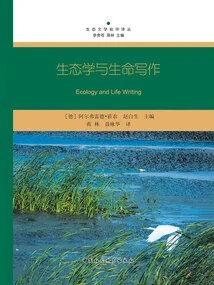
Ecology and Life Writing
Literature生态学与生命写作
(germany) Alfred Hornung Editor-in-chief Zhao Baisheng
"Ecology and Life Writing" is a collection of essays co-edited by Alfred Hornung, a well-known German scholar in the field of ecological research, and Professor Zhao Baisheng of Peking University. In the collection of essays, ecologists from around the world present to us the most inspiring research results in the field of life writing from cross-cultural, cross-disciplinary, and cross-border perspectives. The 24 papers in the collection explore the relationship between ecological literature and life writing methods, and also provide new methods for the theoretical basis of ecocriticism and life writing. It is a must-read for us to understand the latest achievements in the field of life writing.
"Ecology and Life Writing" is a collection of essays co-edited by Alfred Hornung, a well-known German scholar in the field of ecological research, and Professor Zhao Baisheng of Peking University. In the collection of essays, ecologists from around the world present to us the most inspiring research results in the field of life writing from cross-cultural, cross-disciplinary, and cross-border perspectives. The 24 papers in the collection explore the relationship between ecological literature and life writing methods, and also provide new methods for the theoretical basis of ecocriticism and life writing. It is a must-read for us to understand the latest achievements in the field of life writing.
A Study of Alice Walker's Hybrid Writing
Literature艾丽丝·沃克的混杂性书写研究
Wang Xiujie
Based on Homi Bhabha's theory of hybridity, this book explores how the American novelist Alice Walker combines traditional African American and Indian cultural elements with modern Western writing techniques and ideas in her novels, highlighting the hybridity of the text in terms of narrative, mythology, religious beliefs, and character creation, constructing a unique African American-Indian literary paradigm, showing the creative strategies and national consciousness they adopted to construct their own mixed identity under the oppression of white culture, and questioning the simplistic racial identity defined by the mainstream group. Analyzing Walker's works from the perspective of hybridity can not only further understand the characteristics of Walker's literary creation, but also help reveal the creative modes and literary characteristics of writers with similar mixed identities as Walker.
Based on Homi Bhabha's theory of hybridity, this book explores how the American novelist Alice Walker combines traditional African American and Indian cultural elements with modern Western writing techniques and ideas in her novels, highlighting the hybridity of the text in terms of narrative, mythology, religious beliefs, and character creation, constructing a unique African American-Indian literary paradigm, showing the creative strategies and national consciousness they adopted to construct their own mixed identity under the oppression of white culture, and questioning the simplistic racial identity defined by the mainstream group. Analyzing Walker's works from the perspective of hybridity can not only further understand the characteristics of Walker's literary creation, but also help reveal the creative modes and literary characteristics of writers with similar mixed identities as Walker.
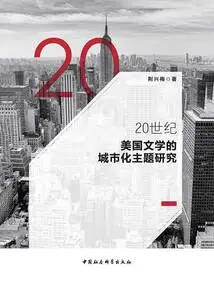
20世纪美国文学的城市化主题研究
Jing Xingmei
This book mainly involves American writers Toni Morrison, Willa Cather, and Carson McCullers. They are respectively winners of the Nobel Prize for Literature and the Pulitzer Prize for Literature, and classic writers with distinctive characteristics. They are respectively famous for describing the northern, western, and southern United States in the context of urbanization. Using their works as research content, people seem to be looking at a panorama, and can gain a comprehensive and systematic insight into the various aspects of life and social changes in American urbanization. The specific content includes four parts: (1) Northern American cities as described by Toni Morrison; (2) The development of the American West in the eyes of Willa Cather; (3) Carson McCullers and the American rural South; (4) References and reflections on the American urbanization movement.
This book mainly involves American writers Toni Morrison, Willa Cather, and Carson McCullers. They are respectively winners of the Nobel Prize for Literature and the Pulitzer Prize for Literature, and classic writers with distinctive characteristics. They are respectively famous for describing the northern, western, and southern United States in the context of urbanization. Using their works as research content, people seem to be looking at a panorama, and can gain a comprehensive and systematic insight into the various aspects of life and social changes in American urbanization. The specific content includes four parts: (1) Northern American cities as described by Toni Morrison; (2) The development of the American West in the eyes of Willa Cather; (3) Carson McCullers and the American rural South; (4) References and reflections on the American urbanization movement.
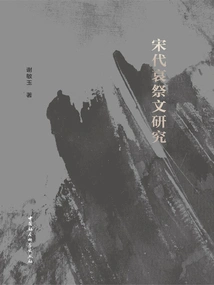
宋代哀祭文研究
Xie Minyu
This book takes "Song Dynasty mourning texts" as the research object. It conducts literature research, sorting out and studying various styles of mourning texts in the Song Dynasty, such as elegies, lamentations, condolences, memorial texts, etc., And conducts a preliminary examination of the origin, evolution, characteristics, definitions and related stylistic concepts of different styles. It strives to provide a comprehensive, detailed, in-depth and multi-angle description and research on the existence, main content and stylistic characteristics of the literature. It places the Song Dynasty mourning poems in the context of historical development, reveals the stylistic characteristics and cultural significance of the Song Dynasty mourning poems, and examines the changes in Song people's life consciousness and cultural concepts.
This book takes "Song Dynasty mourning texts" as the research object. It conducts literature research, sorting out and studying various styles of mourning texts in the Song Dynasty, such as elegies, lamentations, condolences, memorial texts, etc., And conducts a preliminary examination of the origin, evolution, characteristics, definitions and related stylistic concepts of different styles. It strives to provide a comprehensive, detailed, in-depth and multi-angle description and research on the existence, main content and stylistic characteristics of the literature. It places the Song Dynasty mourning poems in the context of historical development, reveals the stylistic characteristics and cultural significance of the Song Dynasty mourning poems, and examines the changes in Song people's life consciousness and cultural concepts.
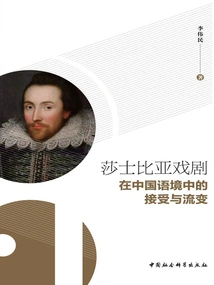
莎士比亚戏剧在中国语境中的接受与流变
Li Weimin
This book is a comprehensive and systematic study of the dissemination, translation, adaptation and performance of Shakespeare's plays in China in the field of domestic Shakespeare studies. The study closely follows an important case in the influence of Chinese and foreign literature in the 20th century: the deformation and variation of Shakespeare's drama. It examines the aesthetic characteristics of drama Shakespeare and opera Shakespeare on the Chinese stage from the perspective of text adaptation and stage combination, and examines the collision and integration of Shakespeare's drama and Chinese drama with Chinese culture under the different aesthetic principles of realism and freehand brushwork. This book studies the reception and dissemination of Shakespeare's plays from the perspective of influence, deformation, and variation. It is different from pure text research. Through the Chinese adaptation of Shakespeare's plays, it clarifies the different performance forms and aesthetic presentation methods displayed in the blending and collision of Chinese and Western drama concepts. Through the study of dialogue dramas and opera adaptations of Shakespeare plays, the national characteristics of Chinese Shakespeare studies in the field of world Shakespeare studies are highlighted, and it is hoped that "stones from other mountains can become the jade of the East" to establish a Shakespeare research system with Chinese characteristics.
This book is a comprehensive and systematic study of the dissemination, translation, adaptation and performance of Shakespeare's plays in China in the field of domestic Shakespeare studies. The study closely follows an important case in the influence of Chinese and foreign literature in the 20th century: the deformation and variation of Shakespeare's drama. It examines the aesthetic characteristics of drama Shakespeare and opera Shakespeare on the Chinese stage from the perspective of text adaptation and stage combination, and examines the collision and integration of Shakespeare's drama and Chinese drama with Chinese culture under the different aesthetic principles of realism and freehand brushwork. This book studies the reception and dissemination of Shakespeare's plays from the perspective of influence, deformation, and variation. It is different from pure text research. Through the Chinese adaptation of Shakespeare's plays, it clarifies the different performance forms and aesthetic presentation methods displayed in the blending and collision of Chinese and Western drama concepts. Through the study of dialogue dramas and opera adaptations of Shakespeare plays, the national characteristics of Chinese Shakespeare studies in the field of world Shakespeare studies are highlighted, and it is hoped that "stones from other mountains can become the jade of the East" to establish a Shakespeare research system with Chinese characteristics.
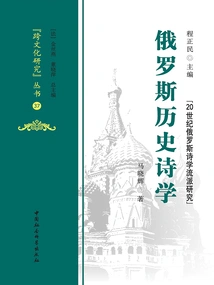
Russian Historical Poetry
Literature俄罗斯历史诗学
Ma Xiaohui
This book mainly studies the historical poetics pioneered by the famous Russian scholar Veselovsky, who advocated "clarifying the essence of poetry from the history of poetry." This book explains the academic background, theoretical framework and internal mechanism of historical poetics, as well as the study of the historical evolution of literary genres and literary forms; it studies how Bakhtin, Zhirmonsky, Meledinsky and Khrapchenko developed historical poetics after the 20th century. They successively proposed that the dialectical relationship between synchronic research and diachronic research should be properly handled, that the research object should be expanded from the evolution of form to the evolution of poetic consciousness, and that the study of historical poetics should be conducted in a broader cultural context.
This book mainly studies the historical poetics pioneered by the famous Russian scholar Veselovsky, who advocated "clarifying the essence of poetry from the history of poetry." This book explains the academic background, theoretical framework and internal mechanism of historical poetics, as well as the study of the historical evolution of literary genres and literary forms; it studies how Bakhtin, Zhirmonsky, Meledinsky and Khrapchenko developed historical poetics after the 20th century. They successively proposed that the dialectical relationship between synchronic research and diachronic research should be properly handled, that the research object should be expanded from the evolution of form to the evolution of poetic consciousness, and that the study of historical poetics should be conducted in a broader cultural context.
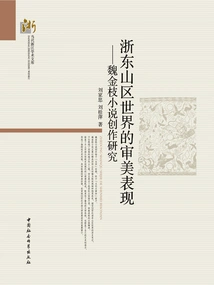
浙东山区世界的审美表现:魏金枝小说创作研究
Liu Jiasi Liu Guiping
"The Aesthetic Expression of the Mountain World in Eastern Zhejiang-A Study on the Creation of Wei Jinzhi's Novels" is a monograph full of academic value. The whole book has a scientific framework, rigorous structure and strong logic. In the discussion, the argument is fair, the viewpoint is novel, the argument is sufficient, and the argument is penetrating. The operation of the whole book is very standardized, and the citations are very clear, showing a rigorous academic attitude.
"The Aesthetic Expression of the Mountain World in Eastern Zhejiang-A Study on the Creation of Wei Jinzhi's Novels" is a monograph full of academic value. The whole book has a scientific framework, rigorous structure and strong logic. In the discussion, the argument is fair, the viewpoint is novel, the argument is sufficient, and the argument is penetrating. The operation of the whole book is very standardized, and the citations are very clear, showing a rigorous academic attitude.
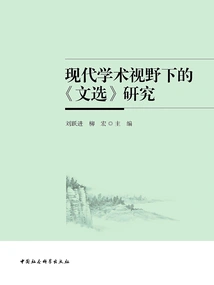
现代学术视野下的《文选》研究
Liu Yuejin Editor-in-chief Liu Hong
"Research on Selected Works from a Modern Academic Perspective" edited by Liu Yuejin and Liu Hong is a collection of research papers on ancient literary theory. The authors are all experts and scholars with high academic levels in this research field. It is divided into two parts. The first part is a comprehensive study and contains 12 papers. It mainly focuses on the study of the methods of famous scholars in studying ancient literature, that is, the study of research. The second part is mostly focused on the proofreading and criticism of various versions of "Selected Works".
"Research on Selected Works from a Modern Academic Perspective" edited by Liu Yuejin and Liu Hong is a collection of research papers on ancient literary theory. The authors are all experts and scholars with high academic levels in this research field. It is divided into two parts. The first part is a comprehensive study and contains 12 papers. It mainly focuses on the study of the methods of famous scholars in studying ancient literature, that is, the study of research. The second part is mostly focused on the proofreading and criticism of various versions of "Selected Works".
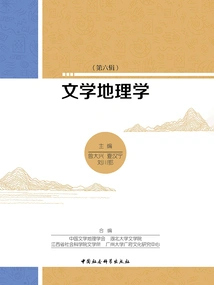
Literary Geography (sixth Series)
Literature文学地理学(第六辑)
Editor-in-chief Zeng Daxing Xia Hanning Liu Chuan'e
In the disciplinary theory of literary geography, there are two core aspects: one is the conceptual category of the discipline; the other is the basic idea of the discipline. The primary issues closely related to these two aspects are the nature, tasks and characteristics of the discipline. Only when the nature, tasks and characteristics of the discipline are clearly discussed can other theoretical issues have a direction. This article discusses the literary and cultural aspects of literary geography from the perspective of its subject nature and tasks, and proposes the foothold of the subject theory.
In the disciplinary theory of literary geography, there are two core aspects: one is the conceptual category of the discipline; the other is the basic idea of the discipline. The primary issues closely related to these two aspects are the nature, tasks and characteristics of the discipline. Only when the nature, tasks and characteristics of the discipline are clearly discussed can other theoretical issues have a direction. This article discusses the literary and cultural aspects of literary geography from the perspective of its subject nature and tasks, and proposes the foothold of the subject theory.
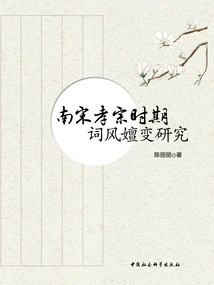
A Study on the Evolution of Ci Style During the Xiaozong Period of the Southern Song Dynasty
Literature南宋孝宗时期词风嬗变研究
Chen Lili
During the Qian and Chun reigns of Emperor Xiaozong of the Southern Song Dynasty, Xin Qiji and Jiang Kui stepped onto the stage one after another, and the poetry world of later generations has never been freed from their barriers. Lyricists of all generations have recognized the importance of this period but have different opinions. Specifically, Xiaozong's poetry broke the dominance of erotic poetry since the late Tang Dynasty. Themes such as chanting objects, describing feelings, reasoning, birthday wishes, and stanzas were highlighted. "Using poetry as lyrics" was completely realized, and discussions and allusions were extremely common. At the same time, there was a separation between the creation of literati and the entertainment needs of the society, and the songbooks compiled and selected by the public were still mainly composed of Northern Song Dynasty poems. "Poems in the Thatched Cottage" is a typical representative. By comparing the two great poets Su Shi and Xin Qiji, we can also see the differences in the times and the maturity and establishment of the style of poetry in the Southern Song Dynasty.
During the Qian and Chun reigns of Emperor Xiaozong of the Southern Song Dynasty, Xin Qiji and Jiang Kui stepped onto the stage one after another, and the poetry world of later generations has never been freed from their barriers. Lyricists of all generations have recognized the importance of this period but have different opinions. Specifically, Xiaozong's poetry broke the dominance of erotic poetry since the late Tang Dynasty. Themes such as chanting objects, describing feelings, reasoning, birthday wishes, and stanzas were highlighted. "Using poetry as lyrics" was completely realized, and discussions and allusions were extremely common. At the same time, there was a separation between the creation of literati and the entertainment needs of the society, and the songbooks compiled and selected by the public were still mainly composed of Northern Song Dynasty poems. "Poems in the Thatched Cottage" is a typical representative. By comparing the two great poets Su Shi and Xin Qiji, we can also see the differences in the times and the maturity and establishment of the style of poetry in the Southern Song Dynasty.
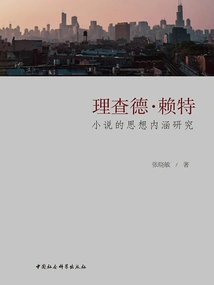
理查德·赖特小说的思想内涵研究
Zhang Xiaomin
This book mainly studies the ideological connotation of Richard Wright's novels, covering four aspects: first, the source of Wright's creation, that is, the life experiences he has seen and felt since his childhood; second, the cultural logic and ethical and political thoughts of Wright's novels, which are Wright's ideological program for literary creation; third, the textual interpretation of Wright's representative works created in different periods; fourth, a discussion of Wright's chain role in the development history of African-American literature.
This book mainly studies the ideological connotation of Richard Wright's novels, covering four aspects: first, the source of Wright's creation, that is, the life experiences he has seen and felt since his childhood; second, the cultural logic and ethical and political thoughts of Wright's novels, which are Wright's ideological program for literary creation; third, the textual interpretation of Wright's representative works created in different periods; fourth, a discussion of Wright's chain role in the development history of African-American literature.
抗战与延安文学现代性
Yuan Shengyong
Yan'an literature is a relatively independent literary form in the history of modern Chinese literature. Yan'an literary modernity also embodies a certain degree of humanistic care and enlightenment, and is a complex existence. Its formation has gone through a dynamic process and was formed historically in the course of historical development. The modernity presented in late Yan'an literature has its self-transcendence character, and also strengthens its own modernity color derived from faith. This is literature based on faith and tending to faith. As an objective historical existence, Yan'an literature should also be an open existence when reconstructed under restoration and reflection, and its contemporary value should be highlighted through continuous exploration.
Yan'an literature is a relatively independent literary form in the history of modern Chinese literature. Yan'an literary modernity also embodies a certain degree of humanistic care and enlightenment, and is a complex existence. Its formation has gone through a dynamic process and was formed historically in the course of historical development. The modernity presented in late Yan'an literature has its self-transcendence character, and also strengthens its own modernity color derived from faith. This is literature based on faith and tending to faith. As an objective historical existence, Yan'an literature should also be an open existence when reconstructed under restoration and reflection, and its contemporary value should be highlighted through continuous exploration.
文化生态与山水诗文论稿
Zhao Hailing
This book puts writers and their works into specific environments for investigation, and examines their relevance and integration with nature, people, society, education, ethics, customs, etc. It breaks through the boundaries of the subject and conducts multi-faceted reflections and explorations on ancient Chinese landscape poetry with an ecological system view and ecological values. This book is divided into three parts: the upper, middle and lower parts. The first part uses the description of landscapes in Aodian's poems to reveal its cultural connotation and social background; the middle part analyzes the most representative aesthetic paradigms of landscapes in the Chinese literary tradition, from which we can understand our nation. Unique ecological wisdom and artistic appeal; the second part uses the standpoint of literature and history, with reference to and integration into various other humanities disciplines such as archaeology, anthropology, folklore, philology, etc., To conduct literature research on the author, year, and theme of some famous landscape poems.
This book puts writers and their works into specific environments for investigation, and examines their relevance and integration with nature, people, society, education, ethics, customs, etc. It breaks through the boundaries of the subject and conducts multi-faceted reflections and explorations on ancient Chinese landscape poetry with an ecological system view and ecological values. This book is divided into three parts: the upper, middle and lower parts. The first part uses the description of landscapes in Aodian's poems to reveal its cultural connotation and social background; the middle part analyzes the most representative aesthetic paradigms of landscapes in the Chinese literary tradition, from which we can understand our nation. Unique ecological wisdom and artistic appeal; the second part uses the standpoint of literature and history, with reference to and integration into various other humanities disciplines such as archaeology, anthropology, folklore, philology, etc., To conduct literature research on the author, year, and theme of some famous landscape poems.
Stylistic Research on Purish Writing
Literature普里什文创作的文体研究
Li Junsheng
Prishvin is an outstanding Russian literary master. His novels, essays, fairy tales, and literary creation theories are all handed down from generation to generation. This book is based on the historical facts of the writer's creation and uses genre types as methods to study his creation. Gorky praised Plishvan: "After Leskov, there is no such sophisticated Russian in our literary language." Prishwen's clear words and beautiful sentences are beyond the language. He has a profound Russian cultural heritage and is soaked in the charm of Eastern culture. With just a few strokes, the Russian landscape is outlined, and the work is full of rich painterly meaning. His pen is concise and his intention is clear. The moral philosophy soaked in language makes his stylistic innovation unique and unique.
Prishvin is an outstanding Russian literary master. His novels, essays, fairy tales, and literary creation theories are all handed down from generation to generation. This book is based on the historical facts of the writer's creation and uses genre types as methods to study his creation. Gorky praised Plishvan: "After Leskov, there is no such sophisticated Russian in our literary language." Prishwen's clear words and beautiful sentences are beyond the language. He has a profound Russian cultural heritage and is soaked in the charm of Eastern culture. With just a few strokes, the Russian landscape is outlined, and the work is full of rich painterly meaning. His pen is concise and his intention is clear. The moral philosophy soaked in language makes his stylistic innovation unique and unique.
晚清域外游记的现代性考察
Yang Tangchen
This book deeply explores the modern elements of the late Qing's overseas travel notes from the aspects of the turning point of the spiritual structure, the evolution of ideas, and the fission of the travel writing style, and details the complex evolution of its textual writing, thereby pointing out that the late Qing's overseas travel notes contain the basic elements needed to construct the modernity of Chinese prose. This element, which originated from the occurrence of overseas experiences, broke through the righteousness barriers of ancient prose and broke away from the rigid language symbol system. It played a role in promoting the generation of modern prose in terms of spiritual awareness, language awareness, and stylistic awareness, thereby constituting an important link in the modern transformation of Chinese prose. At the same time, while discussing the modernity of overseas travel notes in the late Qing Dynasty, this article always places it in the interactive relationship between "self" and "other", and the local and foreign lands. It not only emphasizes the impact of "other" on "self", but also emphasizes the subjective resistance of "self" when facing "other". It also points out that in addition to impact and resistance, there is also a complex and ambiguous communication picture of mutual penetration and mutual shaping between the two parties. In short, the study of the modernity of travel notes outside the city in the late Qing Dynasty not only explores the modernity of the travel notes outside the city in the late Qing Dynasty, traces the fundamental motivations and realistic basis for the emergence of modern consciousness in the travel notes outside the city in the late Qing Dynasty from a historical perspective, and grasps its evolving historical form relatively objectively, which is of great significance in the history of thought. It also effectively tracks the occurrence process of modern Chinese prose, providing reference and reference for the study of the occurrence of modern literature.
This book deeply explores the modern elements of the late Qing's overseas travel notes from the aspects of the turning point of the spiritual structure, the evolution of ideas, and the fission of the travel writing style, and details the complex evolution of its textual writing, thereby pointing out that the late Qing's overseas travel notes contain the basic elements needed to construct the modernity of Chinese prose. This element, which originated from the occurrence of overseas experiences, broke through the righteousness barriers of ancient prose and broke away from the rigid language symbol system. It played a role in promoting the generation of modern prose in terms of spiritual awareness, language awareness, and stylistic awareness, thereby constituting an important link in the modern transformation of Chinese prose. At the same time, while discussing the modernity of overseas travel notes in the late Qing Dynasty, this article always places it in the interactive relationship between "self" and "other", and the local and foreign lands. It not only emphasizes the impact of "other" on "self", but also emphasizes the subjective resistance of "self" when facing "other". It also points out that in addition to impact and resistance, there is also a complex and ambiguous communication picture of mutual penetration and mutual shaping between the two parties. In short, the study of the modernity of travel notes outside the city in the late Qing Dynasty not only explores the modernity of the travel notes outside the city in the late Qing Dynasty, traces the fundamental motivations and realistic basis for the emergence of modern consciousness in the travel notes outside the city in the late Qing Dynasty from a historical perspective, and grasps its evolving historical form relatively objectively, which is of great significance in the history of thought. It also effectively tracks the occurrence process of modern Chinese prose, providing reference and reference for the study of the occurrence of modern literature.
Literary Geography (7th Series)
Literature文学地理学(第7辑)
Editor-in-chief Zeng Daxing Xia Hanning Fang Liping
The seventh volume of "Literary Geography" contains 25 papers from the 7th Annual Conference of the Chinese Literary Geography Society, selected from 172 participating papers, including "Spatial Perception and Literary Communication on the Nakdong River and Its Coast in South Korea" by Professor Zheng Yuluo from Kyungpook University in South Korea, and "Spatial Perception and Literary Communication on the Nakdong River and Its Coast in South Korea" by Nanyang Technological University in Singapore. Professor Ruofen's "The Spirit of East Asian Civilization and the Cultural Image of Eight Scenes of Xiaoxiang", Professor Zeng Daxing's "The Connotation and Research Methods of "Regional Literature"", Professor Gao Jianxin's "War Fires in Tang Poetry and Its Cultural Landscape Value", Professor Han Luhua's "Comparison of Jia Pingwa and Mo Yan's Local Narratives - Based on Regional Ecology" Culture as a Perspective", Professor Wang Jianguo's "Xizhou Song - An Examination of the Geographic Environment in which it was Produced", Professor Tao Litian's "Literary Hearts and Carving Dragons - A Study of Geographical Criticism", Associate Professor Du Xueqin's "The Starting Point and Development Process of the Literary Landscape - Taking Three Famous Buildings in Jiangnan as an Example", Associate Professor Long Qilin's "Geography" "Physical Image Historical Materials, Literary Geography Discipline Background and Professional Spirit - Issues and Reflections on Geographic Image Historical Materials in Chinese Literary Research Works", etc. The literature is rich in material, rigorous in argumentation, new ideas, standardized writing, has high academic value, and is of great significance in promoting the healthy development of literary geography.
The seventh volume of "Literary Geography" contains 25 papers from the 7th Annual Conference of the Chinese Literary Geography Society, selected from 172 participating papers, including "Spatial Perception and Literary Communication on the Nakdong River and Its Coast in South Korea" by Professor Zheng Yuluo from Kyungpook University in South Korea, and "Spatial Perception and Literary Communication on the Nakdong River and Its Coast in South Korea" by Nanyang Technological University in Singapore. Professor Ruofen's "The Spirit of East Asian Civilization and the Cultural Image of Eight Scenes of Xiaoxiang", Professor Zeng Daxing's "The Connotation and Research Methods of "Regional Literature"", Professor Gao Jianxin's "War Fires in Tang Poetry and Its Cultural Landscape Value", Professor Han Luhua's "Comparison of Jia Pingwa and Mo Yan's Local Narratives - Based on Regional Ecology" Culture as a Perspective", Professor Wang Jianguo's "Xizhou Song - An Examination of the Geographic Environment in which it was Produced", Professor Tao Litian's "Literary Hearts and Carving Dragons - A Study of Geographical Criticism", Associate Professor Du Xueqin's "The Starting Point and Development Process of the Literary Landscape - Taking Three Famous Buildings in Jiangnan as an Example", Associate Professor Long Qilin's "Geography" "Physical Image Historical Materials, Literary Geography Discipline Background and Professional Spirit - Issues and Reflections on Geographic Image Historical Materials in Chinese Literary Research Works", etc. The literature is rich in material, rigorous in argumentation, new ideas, standardized writing, has high academic value, and is of great significance in promoting the healthy development of literary geography.
英语世界的茅盾研究
Zhou Jiaoyan
This book takes the study of Mao Dun in the English-speaking world as the research object. Based on a close reading of the text, it carefully and systematically sorts out and studies the translation, introduction and research results of Mao Dun's works in the English-speaking world. It reviews the translation, introduction and research of Mao Dun and his works from the perspective of Western culture, hoping to provide reference for domestic studies of Mao Dun and even modern and contemporary literature research.
This book takes the study of Mao Dun in the English-speaking world as the research object. Based on a close reading of the text, it carefully and systematically sorts out and studies the translation, introduction and research results of Mao Dun's works in the English-speaking world. It reviews the translation, introduction and research of Mao Dun and his works from the perspective of Western culture, hoping to provide reference for domestic studies of Mao Dun and even modern and contemporary literature research.
司马辽太郎研究:东亚题材历史小说创作
Guan Lidan
Ryotaro Shiba (1923-1996) was the most influential historical novelist in Japan after World War II. He had extensive influence in the political and economic circles and was known as the "national writer" (Japan). Ryotaro Shima has written a large number of historical novels, essays, and travel notes on topics related to China, Japan, Korea and other East Asian countries, totaling more than 60 volumes. This book conducts a comparative study of the creations of Ryotaro Shiba and related writers, analyzes Ryotaro Shiba's literary narrative of East Asian history, and his thoughts on East Asia and Japan. It can help readers gain a deeper understanding of Ryotaro Shiba's literature, Japanese writers' understanding of East Asian history, and then gain a deeper understanding of Japan and East Asia.
Ryotaro Shiba (1923-1996) was the most influential historical novelist in Japan after World War II. He had extensive influence in the political and economic circles and was known as the "national writer" (Japan). Ryotaro Shima has written a large number of historical novels, essays, and travel notes on topics related to China, Japan, Korea and other East Asian countries, totaling more than 60 volumes. This book conducts a comparative study of the creations of Ryotaro Shiba and related writers, analyzes Ryotaro Shiba's literary narrative of East Asian history, and his thoughts on East Asia and Japan. It can help readers gain a deeper understanding of Ryotaro Shiba's literature, Japanese writers' understanding of East Asian history, and then gain a deeper understanding of Japan and East Asia.
多民族文学史观与中国文学研究范式转型
Li Xiaofeng Liu Daxian
This book is an important achievement in the theory and criticism of Chinese ethnic minority literature since the 21st century. It is an integrated work of the study of "Chinese Multi-ethnic Literature Historical View". On the basis of a comprehensive explanation of the theoretical basis, basic connotation, structural elements, practical value and academic significance of the multi-ethnic literary historical perspective, the author re-explored the basic issues of Chinese literature research such as time, space, and the national knowledge attributes of Chinese literary history. He summarized the relationship between the multi-ethnic literary historical perspective and the transformation of Chinese history and philosophy, and examined the cultural policies and multi-literary ecology of the world's major multi-ethnic countries. The "multi-ethnic literature" in this book is not the "multi-ethnic literature" within ethnic minorities, but refers to the objective form of multi-ethnic literature in multi-ethnic countries. Therefore, the purpose of this book is not only to promote a theoretical shift in the study of Chinese minority literature, but also to re-examine the multi-ethnic, multi-historical, multi-traditional, multi-form, and multi-lingual characteristics of Chinese literature as well as the historical laws of integration, coexistence, and common development based on the theoretical basis of a multi-ethnic literary historical perspective, thereby promoting the fundamental transformation of Chinese literary research paradigms and the innovation and consolidation of literary discourse in a world-wide sense. Therefore, the construction of the Chinese discourse system of world vision, national consciousness and Chinese multi-ethnic literature research is the theoretical innovation and academic contribution of this book.
This book is an important achievement in the theory and criticism of Chinese ethnic minority literature since the 21st century. It is an integrated work of the study of "Chinese Multi-ethnic Literature Historical View". On the basis of a comprehensive explanation of the theoretical basis, basic connotation, structural elements, practical value and academic significance of the multi-ethnic literary historical perspective, the author re-explored the basic issues of Chinese literature research such as time, space, and the national knowledge attributes of Chinese literary history. He summarized the relationship between the multi-ethnic literary historical perspective and the transformation of Chinese history and philosophy, and examined the cultural policies and multi-literary ecology of the world's major multi-ethnic countries. The "multi-ethnic literature" in this book is not the "multi-ethnic literature" within ethnic minorities, but refers to the objective form of multi-ethnic literature in multi-ethnic countries. Therefore, the purpose of this book is not only to promote a theoretical shift in the study of Chinese minority literature, but also to re-examine the multi-ethnic, multi-historical, multi-traditional, multi-form, and multi-lingual characteristics of Chinese literature as well as the historical laws of integration, coexistence, and common development based on the theoretical basis of a multi-ethnic literary historical perspective, thereby promoting the fundamental transformation of Chinese literary research paradigms and the innovation and consolidation of literary discourse in a world-wide sense. Therefore, the construction of the Chinese discourse system of world vision, national consciousness and Chinese multi-ethnic literature research is the theoretical innovation and academic contribution of this book.
宗风与宝训:宋代禅宗写作传统研究
Qi Wei Zhou Yukai
This book takes as the research object the individual cases of Zen writing in the Song Dynasty. The first part focuses on the poetry tradition of Qian Zong, and studies the special form of the poetry paradigm passed down from generation to generation by Qian Zong in the Song Dynasty. The content includes songs at twelve o'clock, mountain dwelling poems, pastoral songs, "Eight Scenes of Xiaoxiang" poems, etc. It also studies the writing characteristics of Qian Lin's notes in the Song Dynasty. The second part is mainly based on the writing conventions and folk taboos of the monks. The content includes special language phenomena such as monks' Dharma names and epithets, nunneries and Taoist names, death dates and birthdays, clavicle and bolts, fetus abduction and reincarnation.
This book takes as the research object the individual cases of Zen writing in the Song Dynasty. The first part focuses on the poetry tradition of Qian Zong, and studies the special form of the poetry paradigm passed down from generation to generation by Qian Zong in the Song Dynasty. The content includes songs at twelve o'clock, mountain dwelling poems, pastoral songs, "Eight Scenes of Xiaoxiang" poems, etc. It also studies the writing characteristics of Qian Lin's notes in the Song Dynasty. The second part is mainly based on the writing conventions and folk taboos of the monks. The content includes special language phenomena such as monks' Dharma names and epithets, nunneries and Taoist names, death dates and birthdays, clavicle and bolts, fetus abduction and reincarnation.
The Construction and Extension of Tradition: Research on Literature in Liberated Areas and Others
Literature传统的建构与延拓:解放区文学研究及其他
Hu Yuwei
This book restores and reveals the complex elements contained in the literature of the liberated areas, explores the reasons for the existence and changes of the literature of the liberated areas, and also covers the works of contemporary literary writers and literary phenomena. Literature in the liberated areas has constructed a special tradition, which is renewable. As a latent force, it controls the basic direction and basic way of literary behavior after the founding of New China. Its role is more "original". For later literature, it is by no means just an external restrictive factor and a "shaping" force, but through its effective penetration and refraction, it eventually becomes the spiritual rationale that runs through the writer's thinking and the logical force that affects the internal laws of literary creation.
This book restores and reveals the complex elements contained in the literature of the liberated areas, explores the reasons for the existence and changes of the literature of the liberated areas, and also covers the works of contemporary literary writers and literary phenomena. Literature in the liberated areas has constructed a special tradition, which is renewable. As a latent force, it controls the basic direction and basic way of literary behavior after the founding of New China. Its role is more "original". For later literature, it is by no means just an external restrictive factor and a "shaping" force, but through its effective penetration and refraction, it eventually becomes the spiritual rationale that runs through the writer's thinking and the logical force that affects the internal laws of literary creation.
反讽的魅力:1978年以来中国当代小说研究
Chen Hengjin
This book sorts out and examines Chinese contemporary novels since 1978 from the perspective of irony, and focuses on the novels of five writers: Wang Meng, Wang Shuo, Wang Xiaobo, Liu Zhenyun and Yan Lianke. From the inside to the outside, from grand history to the grassroots, it analyzes the role of irony in the process of deconstructing revolutionary political discourse. Five representative forms of irony and ironic emotions: protection in questioning, pleasure after subversion, pursuit in laughter, confusion in alienation, and tenderness in edge, explore the ironic features of novels that coexist in multiple symbiosis in contemporary Chinese novels since 1978 in a discourse system in which enlightenment and subversion mutually penetrate and dissolve.
This book sorts out and examines Chinese contemporary novels since 1978 from the perspective of irony, and focuses on the novels of five writers: Wang Meng, Wang Shuo, Wang Xiaobo, Liu Zhenyun and Yan Lianke. From the inside to the outside, from grand history to the grassroots, it analyzes the role of irony in the process of deconstructing revolutionary political discourse. Five representative forms of irony and ironic emotions: protection in questioning, pleasure after subversion, pursuit in laughter, confusion in alienation, and tenderness in edge, explore the ironic features of novels that coexist in multiple symbiosis in contemporary Chinese novels since 1978 in a discourse system in which enlightenment and subversion mutually penetrate and dissolve.
中亚东干文学论稿
Chang Wenchang Chang Lini
This book displays the latest results of Dungan research, places Dungan literature in the coordinates of world Chinese literature, covers Dungan written literature and folk oral literature with thematic research, lays the poetic foundation for Dungan literature research, and outlines the research framework of Dungan literature. At the same time, it also makes key breakthroughs, or digs deeply into certain key points of Dongqian literature, or explores the historical context. Based on the latest information in Dungan and Russian, it is interpreted with new references and perspectives, especially the study of complementarity and mutual support between Dungan literature and Chinese culture, and the comparison of the original Dungan colloquialism and the colloquialism of Chinese writers. It subverts some common views of popular textbooks and draws unique new conclusions.
This book displays the latest results of Dungan research, places Dungan literature in the coordinates of world Chinese literature, covers Dungan written literature and folk oral literature with thematic research, lays the poetic foundation for Dungan literature research, and outlines the research framework of Dungan literature. At the same time, it also makes key breakthroughs, or digs deeply into certain key points of Dongqian literature, or explores the historical context. Based on the latest information in Dungan and Russian, it is interpreted with new references and perspectives, especially the study of complementarity and mutual support between Dungan literature and Chinese culture, and the comparison of the original Dungan colloquialism and the colloquialism of Chinese writers. It subverts some common views of popular textbooks and draws unique new conclusions.
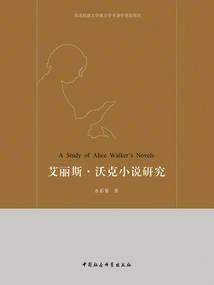
Alice Walker Novels Research
Literature艾丽斯·沃克小说研究
Watercolor Piano
Alice Walker (1944-) is an outstanding contemporary black female writer and social activist in the United States. She not only created a large number of excellent novels, poems, and prose works, but also became a leading figure in American society concerned about the human living environment by advocating women's ideas. This book is a thematic study of Walker's novels (mainly novels), covering author evaluation, literature review, exploration of women's theory, text analysis, etc. Textual analysis (chapters 4 to 7) is the focus of the book. It brings Walker's novels into a womanist perspective and interprets common themes related to the survival of black Americans and even the entire human race, such as the return of black masculinity and humanity, the struggle of black women to subvert male and white hegemony, the inheritance of black folk culture, and gender harmony, racial harmony, and even the harmony between man and nature.
Alice Walker (1944-) is an outstanding contemporary black female writer and social activist in the United States. She not only created a large number of excellent novels, poems, and prose works, but also became a leading figure in American society concerned about the human living environment by advocating women's ideas. This book is a thematic study of Walker's novels (mainly novels), covering author evaluation, literature review, exploration of women's theory, text analysis, etc. Textual analysis (chapters 4 to 7) is the focus of the book. It brings Walker's novels into a womanist perspective and interprets common themes related to the survival of black Americans and even the entire human race, such as the return of black masculinity and humanity, the struggle of black women to subvert male and white hegemony, the inheritance of black folk culture, and gender harmony, racial harmony, and even the harmony between man and nature.