Library
Browse and search novels
25,832 novels found
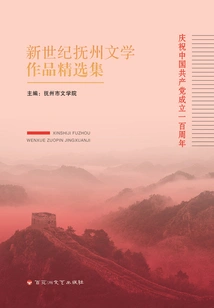
新世纪抚州文学作品精选集
Editor-in-chief Of Fuzhou University Of Literature
"Selected Collection of Fuzhou Literary Works in the New Century" is edited by the Fuzhou Federation of Literary and Art Circles. It is a collection of works that reflects the achievements of Fuzhou literary creation. It mainly includes the literary works of Fuzhou writers since the new century. It reflects the rapid changes in Fuzhou since the new century. It is of certain value for understanding the current situation of Fuzhou literary creation and Fuzhou humanities.
"Selected Collection of Fuzhou Literary Works in the New Century" is edited by the Fuzhou Federation of Literary and Art Circles. It is a collection of works that reflects the achievements of Fuzhou literary creation. It mainly includes the literary works of Fuzhou writers since the new century. It reflects the rapid changes in Fuzhou since the new century. It is of certain value for understanding the current situation of Fuzhou literary creation and Fuzhou humanities.
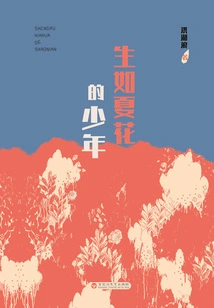
A Young Man Born Like a Summer Flower
Literature生如夏花的少年
Hong Hu Lang
"A Boy Born Like a Summer Flower" is a collection of essays, including more than 10 essays published in magazines by Dongguan writer Hong Hulang. These include the essay "Mother's New House", which won the Guangdong Youwei Literature Award; "A Boy Born Like a Summer Flower", which won the Dongguan Lotus Literature Award; and "Chang'an Seal", which was published in "October" magazine and "Selected Prose Issues". The book reflects reality, and all the articles generally express the author's nostalgia and attachment to a foreign land.
"A Boy Born Like a Summer Flower" is a collection of essays, including more than 10 essays published in magazines by Dongguan writer Hong Hulang. These include the essay "Mother's New House", which won the Guangdong Youwei Literature Award; "A Boy Born Like a Summer Flower", which won the Dongguan Lotus Literature Award; and "Chang'an Seal", which was published in "October" magazine and "Selected Prose Issues". The book reflects reality, and all the articles generally express the author's nostalgia and attachment to a foreign land.
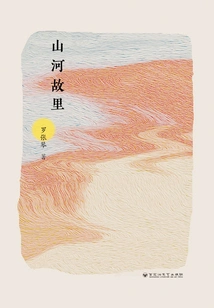
Hometown of Mountains and Rivers
Literature山河故里
Luo Zhangqin
The book "Hometown of Mountains and Rivers" contains 20 articles and is a collection of coordinate series essays. The author Luo Zhangqin chose 20 geographical coordinates to write in his constantly running life. No matter whether it is a dead end or a wrong road, whether it is empty or prosperous, every geographical coordinate in the book echoes the fate of a group of people, and the perspective is very unique. These fates, mixed with labor pains and joys, present struggles and redemptions. Together with the mountains and rivers, they will eventually constitute the testimony of time and reflect the progress of the times. It reminds people of what Mr. Lu Xun once said: The infinite distance and countless people are all related to me. These destinies are pursuits and yearnings, aiming at the happy life of ordinary people. When compiled into a book, it is a tribute to the centenary of the founding of the party.
The book "Hometown of Mountains and Rivers" contains 20 articles and is a collection of coordinate series essays. The author Luo Zhangqin chose 20 geographical coordinates to write in his constantly running life. No matter whether it is a dead end or a wrong road, whether it is empty or prosperous, every geographical coordinate in the book echoes the fate of a group of people, and the perspective is very unique. These fates, mixed with labor pains and joys, present struggles and redemptions. Together with the mountains and rivers, they will eventually constitute the testimony of time and reflect the progress of the times. It reminds people of what Mr. Lu Xun once said: The infinite distance and countless people are all related to me. These destinies are pursuits and yearnings, aiming at the happy life of ordinary people. When compiled into a book, it is a tribute to the centenary of the founding of the party.
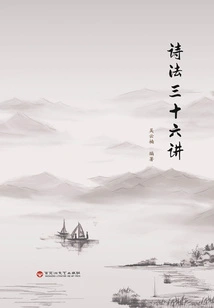
Thirty-six Lectures on Poetry
Literature诗法三十六讲
Compiled By Wu Yunnan
"Thirty-six Lectures on Poetry" is a book about the creation methods of metrical poetry. Involving aspects such as conception, conception, planning, wording, and expression, it lists thirty-six common and effective specific techniques such as image thinking, scene blending, using less to make more, that is, turning movement into stillness, turning stillness into movement, the method of opening, the method of ending, the refining of words and sentences, the poetry of noble and implicit poetry, and the poetry of chanting objects. It also analyzes a large number of poetry works, striving to be both detailed and exhaustive at the technical level. This book focuses on promoting traditional culture and introducing poetry practices. Effectively improve readers' appreciation and writing skills of classical poetry.
"Thirty-six Lectures on Poetry" is a book about the creation methods of metrical poetry. Involving aspects such as conception, conception, planning, wording, and expression, it lists thirty-six common and effective specific techniques such as image thinking, scene blending, using less to make more, that is, turning movement into stillness, turning stillness into movement, the method of opening, the method of ending, the refining of words and sentences, the poetry of noble and implicit poetry, and the poetry of chanting objects. It also analyzes a large number of poetry works, striving to be both detailed and exhaustive at the technical level. This book focuses on promoting traditional culture and introducing poetry practices. Effectively improve readers' appreciation and writing skills of classical poetry.
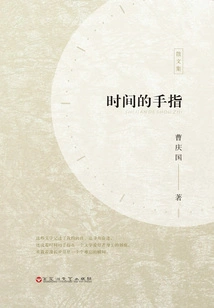
Fingers of Time
Literature时间的手指
Cao Qingguo
This is a collection of prose essays, which collects the essence of prose written by the author Cao Qingguo over the past 30 years, most of which have been published in newspapers such as China Discipline Inspection and Supervision News, Workers Daily, and Xiangyang Daily. The book is divided into six parts: the first is about the vicissitudes of the hometown, which is the memory and yearning for home and relatives; the second is about looking back in time, telling the unforgettable marks in growing up; the third is about walking through the text to leave a lingering fragrance, narrating one's own reading stories and mental journey; the fourth is about poetry and the distance Searching hard is the sound and echo of wandering around the world; the fifth is thinking about life and understanding philosophy, expressing the open-mindedness of maintaining calmness and analyzing things clearly in the world of mortals; the sixth is nostalgia and love in dreams, expressing sweet and deep thoughts about hometown, and describing the melancholy and excitement of traveling and returning from long distances.
This is a collection of prose essays, which collects the essence of prose written by the author Cao Qingguo over the past 30 years, most of which have been published in newspapers such as China Discipline Inspection and Supervision News, Workers Daily, and Xiangyang Daily. The book is divided into six parts: the first is about the vicissitudes of the hometown, which is the memory and yearning for home and relatives; the second is about looking back in time, telling the unforgettable marks in growing up; the third is about walking through the text to leave a lingering fragrance, narrating one's own reading stories and mental journey; the fourth is about poetry and the distance Searching hard is the sound and echo of wandering around the world; the fifth is thinking about life and understanding philosophy, expressing the open-mindedness of maintaining calmness and analyzing things clearly in the world of mortals; the sixth is nostalgia and love in dreams, expressing sweet and deep thoughts about hometown, and describing the melancholy and excitement of traveling and returning from long distances.
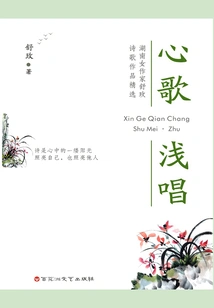
Singing the Song of the Heart
Literature心歌浅唱
Shu Mei
This book is a collection of poetry works by the female poet Shu Mei, divided into two volumes: the first volume is the old-style poems (including ancient and modern styles) created by the author, and is divided into three chapters. The first chapter is ancient-style poems, including four unique, four-character, five-character, seven-character, five-character, and seven-character; the second chapter is modern poetry, including modern five unique, modern seven unique, modern five rhymes, and modern seven rhymes; the third chapter is lyrics, including two word cards: Die Lianhua and Meng Jiangnan. The second part contains modern poems composed by the author, mainly lyric poems. Each chapter in the first volume is classified and sorted according to genre, and the second volume is classified and sorted according to the content and artistic conception expressed by the works. The forms are diverse, the ancient and the modern are blended, and the works are free and organized. In terms of the content of poetry creation, the author integrates the small self into the big self, small feelings into big love, promotes truth, goodness, and beauty, denounces falsehood, evil, and ugliness, and strives to make his works full of positive energy.
This book is a collection of poetry works by the female poet Shu Mei, divided into two volumes: the first volume is the old-style poems (including ancient and modern styles) created by the author, and is divided into three chapters. The first chapter is ancient-style poems, including four unique, four-character, five-character, seven-character, five-character, and seven-character; the second chapter is modern poetry, including modern five unique, modern seven unique, modern five rhymes, and modern seven rhymes; the third chapter is lyrics, including two word cards: Die Lianhua and Meng Jiangnan. The second part contains modern poems composed by the author, mainly lyric poems. Each chapter in the first volume is classified and sorted according to genre, and the second volume is classified and sorted according to the content and artistic conception expressed by the works. The forms are diverse, the ancient and the modern are blended, and the works are free and organized. In terms of the content of poetry creation, the author integrates the small self into the big self, small feelings into big love, promotes truth, goodness, and beauty, denounces falsehood, evil, and ugliness, and strives to make his works full of positive energy.
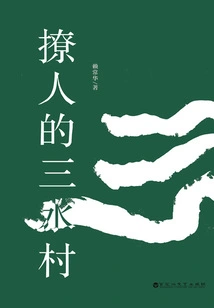
The Alluring Sanshui Village
Literature撩人的三水村
Lai Changhua
This book is a collection of Lai Changhua's essays in recent years, which is divided into four units when compiled into this book. The first unit, "Hometown Love Stories", is set in Sanshui Village, a Hakka village in southern Jiangxi. The story spans eighty years from the 1940s to the present, and each article is a growth ring of this Hakka-style tree. These rings of growth are filled with the sorrow and happiness of the people at the bottom, and their endurance and resistance are full of powerful vitality. The second unit, "Social Chatting", involves people's folk customs, things seen and heard, and family ethics. Between the lines, they sometimes criticize evil practices or make fun of themselves. Sometimes they see the scenery of the earth and sometimes hear the monologues. The third unit, "Education Fragments", is the author's experience in teaching for decades. Although the author is in a grassroots school in a rural area, he is by no means satisfied with being a teacher who makes a living by writing chalk. His speculations on the current situation and direction of education in our country are of considerable breadth and depth, especially his vigorous exploration of quality education. The fourth unit, "Speaking and Interpreting Chinese Characters," collects articles divided into literary criticism and language examination. In the former, the author captures a unique perspective and analyzes ancient and modern famous works from the outside to the inside, and explores the ideological significance of famous works by looking at the big and small. In the latter, he mainly conducts a tentative study on the relationship between Hakka dialect and Mandarin, from which we can see his personal opinions on learning Mandarin and writing with the help of dialect.
This book is a collection of Lai Changhua's essays in recent years, which is divided into four units when compiled into this book. The first unit, "Hometown Love Stories", is set in Sanshui Village, a Hakka village in southern Jiangxi. The story spans eighty years from the 1940s to the present, and each article is a growth ring of this Hakka-style tree. These rings of growth are filled with the sorrow and happiness of the people at the bottom, and their endurance and resistance are full of powerful vitality. The second unit, "Social Chatting", involves people's folk customs, things seen and heard, and family ethics. Between the lines, they sometimes criticize evil practices or make fun of themselves. Sometimes they see the scenery of the earth and sometimes hear the monologues. The third unit, "Education Fragments", is the author's experience in teaching for decades. Although the author is in a grassroots school in a rural area, he is by no means satisfied with being a teacher who makes a living by writing chalk. His speculations on the current situation and direction of education in our country are of considerable breadth and depth, especially his vigorous exploration of quality education. The fourth unit, "Speaking and Interpreting Chinese Characters," collects articles divided into literary criticism and language examination. In the former, the author captures a unique perspective and analyzes ancient and modern famous works from the outside to the inside, and explores the ideological significance of famous works by looking at the big and small. In the latter, he mainly conducts a tentative study on the relationship between Hakka dialect and Mandarin, from which we can see his personal opinions on learning Mandarin and writing with the help of dialect.
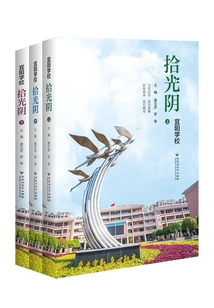
Picking up Time (all 3 Volumes)
Literature拾光阴(全3册)
Editor-in-chief Yan Wenyan Luo Jun
"Recovering Time" is a collection of works. The works are based on the tenth anniversary of the founding of Yiyang School in Yichun City. The outstanding works of teachers and students are selected as gifts for the tenth anniversary of Yiyang. The works of Yiyang students reflect their growth process since entering the school and express their respect for their alma mater and teachers. The teachers in Yiyang share their teaching experience since they started teaching, full of love and care for students, and make teaching and learning fun, demonstrating the good qualities of contemporary teachers who work hard to teach and educate people.
"Recovering Time" is a collection of works. The works are based on the tenth anniversary of the founding of Yiyang School in Yichun City. The outstanding works of teachers and students are selected as gifts for the tenth anniversary of Yiyang. The works of Yiyang students reflect their growth process since entering the school and express their respect for their alma mater and teachers. The teachers in Yiyang share their teaching experience since they started teaching, full of love and care for students, and make teaching and learning fun, demonstrating the good qualities of contemporary teachers who work hard to teach and educate people.
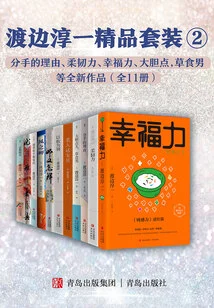
渡边淳一精品套装2(全11册)
H
We are not swayed by the world, we are full of curiosity, and pursue the love of life; we do not hesitate to praise others, and do not forget to appreciate ourselves and love ourselves. Being elegant and free is a bit bad!
We are not swayed by the world, we are full of curiosity, and pursue the love of life; we do not hesitate to praise others, and do not forget to appreciate ourselves and love ourselves. Being elegant and free is a bit bad!
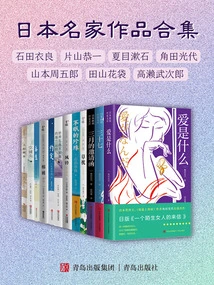
日本名家精品合集(共12册)
(japan) Natsume Soseki And Others
Love does not require experience. Love does not require youth. A soul that cannot be defeated by suffering will eventually become stronger in setbacks.
Love does not require experience. Love does not require youth. A soul that cannot be defeated by suffering will eventually become stronger in setbacks.
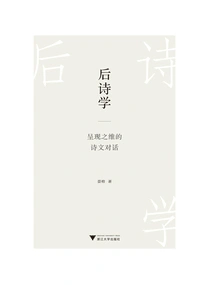
后诗学:呈现之维的诗文对话
Yan Rong
This book is the latest masterpiece of poet and poetry researcher Yan Rong. The book is divided into three volumes, namely "The Dimension of Presentation: Toward a New Poetics", "Ecological Reshaping: Commemoration and Criticism" and "The Supreme Fiction: Confirmation and Imagination". The first volume is developed from the perspective of "presentation" of poetry. It is the author's unique interpretation and textual reading of classic poets such as Pound, Eliot, and Stevens, as well as important contemporary poets such as Robert Creeley and John Berryman. The middle volume combines the author's own creative experience, starting from the entire poetry creation ecosystem, commenting on important domestic poets, introducing important foreign poetry forums, and thinking about the reshaping of cultural creativity and cultural ecology in the context of capital and consumption. The second volume presents the author's representative poetry works over the past 30 years.
This book is the latest masterpiece of poet and poetry researcher Yan Rong. The book is divided into three volumes, namely "The Dimension of Presentation: Toward a New Poetics", "Ecological Reshaping: Commemoration and Criticism" and "The Supreme Fiction: Confirmation and Imagination". The first volume is developed from the perspective of "presentation" of poetry. It is the author's unique interpretation and textual reading of classic poets such as Pound, Eliot, and Stevens, as well as important contemporary poets such as Robert Creeley and John Berryman. The middle volume combines the author's own creative experience, starting from the entire poetry creation ecosystem, commenting on important domestic poets, introducing important foreign poetry forums, and thinking about the reshaping of cultural creativity and cultural ecology in the context of capital and consumption. The second volume presents the author's representative poetry works over the past 30 years.
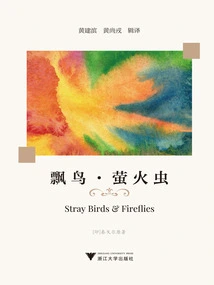
飘鸟·萤火虫:汉英对照
(indian) Original Works By Rabindranath Tagore
This book is the Chinese translation of the short poem "Flying Birds" by the famous Indian poet and Nobel Prize winner Rabindranath Tagore. It is typed in English-Chinese format. This book is innovative: every syllable in English contains a vowel, and every Chinese character is also a syllable containing a vowel. All the poems in this book are translated one note for one note, which reflects the beauty of the rhythm of English poetry. This method of translation is not the first of its kind, but this book takes this method to its extreme. This book also changes the style of prose poems to arranged in separate lines, which further reflects the formal beauty of poetry. The popular translations are all "Flying Birds", and the book is renamed "Flying Birds", which not only embodies the concept of "corresponding number of words", but also restores Tagore's original meaning. These approaches are innovative and targeted, providing lovers of English poetry with a new way to appreciate the beauty of English poetry.
This book is the Chinese translation of the short poem "Flying Birds" by the famous Indian poet and Nobel Prize winner Rabindranath Tagore. It is typed in English-Chinese format. This book is innovative: every syllable in English contains a vowel, and every Chinese character is also a syllable containing a vowel. All the poems in this book are translated one note for one note, which reflects the beauty of the rhythm of English poetry. This method of translation is not the first of its kind, but this book takes this method to its extreme. This book also changes the style of prose poems to arranged in separate lines, which further reflects the formal beauty of poetry. The popular translations are all "Flying Birds", and the book is renamed "Flying Birds", which not only embodies the concept of "corresponding number of words", but also restores Tagore's original meaning. These approaches are innovative and targeted, providing lovers of English poetry with a new way to appreciate the beauty of English poetry.
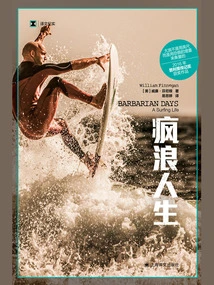
Crazy Life (translated Documentary)
Literature疯浪人生(译文纪实)
(us) William Finnegan
A surfing version of "On the Road," which won the 2016 Pulitzer Prize for Biography. How many ways can you describe a wave? Finnegan said, you'll never get tired of watching it. A young mind occupied by free and pure literary thoughts throws his fragile and insignificant human body into the distance of the world, plunging into the most ruthless and powerful waves again and again, looking for fear and ecstasy. Finnegan, a teenager, moved frequently due to his father's job, and was estranged from his family and had no solid friendships. He moved to Hawaii in the 1960s, at a time when society was undergoing great changes, including psychedelic drugs, rock music, the civil rights movement, sexual liberation, hippies... After leaving the orderly white world, he not only had to face the racial impact of Hawaii, but also had to deal with school bullying. Fortunately, there was the ocean outside his home, and he became obsessed with surfing at the age of 10. The dreamy surfing paradise of Honolulu became his spiritual refuge and allowed him to make friends in the surfing circle. Surfing seems to be just a sport, but for those who are obsessed with it, it is a rigorous learning process, a morally dangerous pastime, and a way to explore human beings' own limits and life ideals. "Crazy Life" is an old-school adventure story, an intellectual autobiography, a social history, and a paper road movie. Despite the clamor, Finnegan finally found a way to talk to the three major life issues of "who am I", "where am I going" and "what can I achieve".
A surfing version of "On the Road," which won the 2016 Pulitzer Prize for Biography. How many ways can you describe a wave? Finnegan said, you'll never get tired of watching it. A young mind occupied by free and pure literary thoughts throws his fragile and insignificant human body into the distance of the world, plunging into the most ruthless and powerful waves again and again, looking for fear and ecstasy. Finnegan, a teenager, moved frequently due to his father's job, and was estranged from his family and had no solid friendships. He moved to Hawaii in the 1960s, at a time when society was undergoing great changes, including psychedelic drugs, rock music, the civil rights movement, sexual liberation, hippies... After leaving the orderly white world, he not only had to face the racial impact of Hawaii, but also had to deal with school bullying. Fortunately, there was the ocean outside his home, and he became obsessed with surfing at the age of 10. The dreamy surfing paradise of Honolulu became his spiritual refuge and allowed him to make friends in the surfing circle. Surfing seems to be just a sport, but for those who are obsessed with it, it is a rigorous learning process, a morally dangerous pastime, and a way to explore human beings' own limits and life ideals. "Crazy Life" is an old-school adventure story, an intellectual autobiography, a social history, and a paper road movie. Despite the clamor, Finnegan finally found a way to talk to the three major life issues of "who am I", "where am I going" and "what can I achieve".
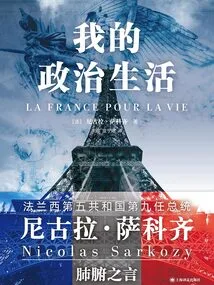
My Political Life
Literature我的政治生活
(france) Nicolas Sarkozy
Former French President Nicolas Sarkozy devoted all his efforts to this work, personally visited the historical scene and entered the hearts of influential figures in the political arena. "My Political Life" is the painstaking work of Nicolas Sarkozy, the ninth president of the Fifth Republic of France. The author reviews his political experience as president of France from 2007 to 2012, tells the stories behind several important reforms, and lists the new policies on tax law, culture, higher education, immigration, etc. Promulgated during his term. He also took the opportunity to analyze in detail the important factors that led to his defeat to Hollande in 2012, criticized the shortcomings of the French president's five-year term, proposed solutions to the new conflicts in French society in recent years, and actively responded to the issues that the French are most concerned about.
Former French President Nicolas Sarkozy devoted all his efforts to this work, personally visited the historical scene and entered the hearts of influential figures in the political arena. "My Political Life" is the painstaking work of Nicolas Sarkozy, the ninth president of the Fifth Republic of France. The author reviews his political experience as president of France from 2007 to 2012, tells the stories behind several important reforms, and lists the new policies on tax law, culture, higher education, immigration, etc. Promulgated during his term. He also took the opportunity to analyze in detail the important factors that led to his defeat to Hollande in 2012, criticized the shortcomings of the French president's five-year term, proposed solutions to the new conflicts in French society in recent years, and actively responded to the issues that the French are most concerned about.
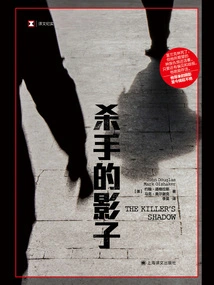
杀手的影子(译文纪实)
R
FBI psychological profiling expert confronts the white supremacist serial killer who shocked the United States! Why does hatred keep spreading? Why do prejudice and discrimination persist to this day? The shadow cast by racists is long and dark. Franklin died, but the racial hatred he expected remained alive. As long as there is prejudice and discrimination, he can survive. The shadow he brought continues to this day. Among all the serial killers studied, Douglas, an FBI psychological profiling expert, has always been faced with one question: "Are they born, or are they man-made? Are they born naturally or through nurture?" The answer, as far as the research results are known, is both. In fact, out of a lively interaction between the two. Despite his horrific achievements as a serial killer, Franklin was nothing special, and his shadow lingers. Franklin himself told Douglas how he used white supremacist newspapers. In the same way a sexual predator uses violent pornography, these newspapers both fueled his fantasies about racial violence and reinforced his belief that he was playing a heroic role in a larger movement. Today's internet is filled with spaces where people do exactly the same thing, cultivating and spreading hateful lies and conspiracies. The shadows cast by Joseph Paul Franklin and his ilk are long and dark, and the sunlight that removes them must shine brighter and stronger.
FBI psychological profiling expert confronts the white supremacist serial killer who shocked the United States! Why does hatred keep spreading? Why do prejudice and discrimination persist to this day? The shadow cast by racists is long and dark. Franklin died, but the racial hatred he expected remained alive. As long as there is prejudice and discrimination, he can survive. The shadow he brought continues to this day. Among all the serial killers studied, Douglas, an FBI psychological profiling expert, has always been faced with one question: "Are they born, or are they man-made? Are they born naturally or through nurture?" The answer, as far as the research results are known, is both. In fact, out of a lively interaction between the two. Despite his horrific achievements as a serial killer, Franklin was nothing special, and his shadow lingers. Franklin himself told Douglas how he used white supremacist newspapers. In the same way a sexual predator uses violent pornography, these newspapers both fueled his fantasies about racial violence and reinforced his belief that he was playing a heroic role in a larger movement. Today's internet is filled with spaces where people do exactly the same thing, cultivating and spreading hateful lies and conspiracies. The shadows cast by Joseph Paul Franklin and his ilk are long and dark, and the sunlight that removes them must shine brighter and stronger.
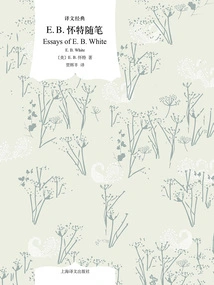
E.B.怀特随笔(译文经典)
I
"Facing Complexity, Remaining Joyful" is the greatest American essayist of the 20th century, who single-handedly established "The New Yorker's style of writing" and is a self-selected collection of classic essays by White, the author of "Charlotte's Web". E. B. White (1899-1985), "the greatest American essayist of the twentieth century." As the main writer of The New Yorker, White single-handedly established the far-reaching "New Yorker style of writing". White is full of care for everything in this world, and his morals are as high as his articles. In addition to his lifelong love of essays, he also wrote three books for children, "The Elf," "Charlotte's Web" and "The Trumpeting Swan," which have become literary classics loved by children and adults alike. "The Essays of E. B. White" was selected by the author himself and includes the most important essays of this greatest essayist.
"Facing Complexity, Remaining Joyful" is the greatest American essayist of the 20th century, who single-handedly established "The New Yorker's style of writing" and is a self-selected collection of classic essays by White, the author of "Charlotte's Web". E. B. White (1899-1985), "the greatest American essayist of the twentieth century." As the main writer of The New Yorker, White single-handedly established the far-reaching "New Yorker style of writing". White is full of care for everything in this world, and his morals are as high as his articles. In addition to his lifelong love of essays, he also wrote three books for children, "The Elf," "Charlotte's Web" and "The Trumpeting Swan," which have become literary classics loved by children and adults alike. "The Essays of E. B. White" was selected by the author himself and includes the most important essays of this greatest essayist.
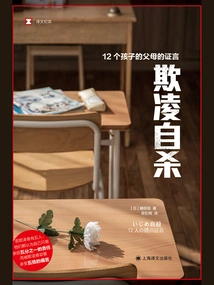
欺凌自杀(译文纪实)
(japan) Kamata Kei
If there are five bullies, they all believe that they only bear one-fifth of the responsibility, while the bullied person has to bear five times the pain. I visited parents of children who committed suicide to understand what it was like for children who were bullied. Because the victims are no longer alive, we cannot directly listen to their voices. However, through repeated visits to the parents of the victims and listening to their laments, the world of contemporary schools that pushed their children to suicide, or failed to fulfill their responsibility to save their lives, and the cruel and indifferent children gradually emerged. Even the cruelty of bullying people to death spread to the victim's parents after the incident, turning into a problem of isolation of the victim's family in the region. This is simply beyond our imagination.
If there are five bullies, they all believe that they only bear one-fifth of the responsibility, while the bullied person has to bear five times the pain. I visited parents of children who committed suicide to understand what it was like for children who were bullied. Because the victims are no longer alive, we cannot directly listen to their voices. However, through repeated visits to the parents of the victims and listening to their laments, the world of contemporary schools that pushed their children to suicide, or failed to fulfill their responsibility to save their lives, and the cruel and indifferent children gradually emerged. Even the cruelty of bullying people to death spread to the victim's parents after the incident, turning into a problem of isolation of the victim's family in the region. This is simply beyond our imagination.
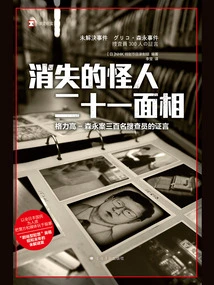
消失的怪人二十一面相:格力高-森永案三百名搜查员的证言(译文纪实)
(japan) Compiled By Nhk Special Program Recording Team
The originator of "theatrical crime", an unsolved mystery in the late Showa era! With 1.3 Million police personnel deployed, why are the criminals still unable to be caught? Interviewed more than 300 relevant personnel to review the key moments of the Glico-Morinaga case; used the latest technology to analyze the "voice of the criminal" and revealed a new criminal profile! The Glico-Morinaga case occurred in the late Showa era (1980s). It is one of Japan's well-known unsolved cases and the originator of Japanese theater crime. Its dramatic criminal methods are still talked about today. This case has been adapted into film and television works many times, and the Smiling Man incident in "Ghost in the Shell" is based on this case. The criminal gang calling themselves "Twenty-One Faces" left more than 140 threatening letters and letters of challenge, as well as blackmail phone recordings, surveillance videos and a large number of items left behind at crime scenes. The case seemed to be full of clues, but the police failed to catch a suspect. The performance of the police has been criticized by the public and the media for failing to investigate the "fox-eyed man" who appeared at the crime scene twice, and "let go" of the suspicious vehicle at the scene where the extortion money was delivered. How close were the police to solving the case, and how far had the investigation progressed? Is the failure to solve the case an unfortunate coincidence or some kind of necessity? The NHK special program recording team interviewed frontline investigators and police senior officials involved in solving the case, comprehensively reviewed the details of the case, and reviewed the search process of the Glico-Morinaga case. In addition, the recording team commissioned experts to use the latest technology to re-analyze the blackmail phone recordings and came up with brand-new criminal profiling results, which overturned the police and the public's understanding of the composition of criminal gangs for many years.
The originator of "theatrical crime", an unsolved mystery in the late Showa era! With 1.3 Million police personnel deployed, why are the criminals still unable to be caught? Interviewed more than 300 relevant personnel to review the key moments of the Glico-Morinaga case; used the latest technology to analyze the "voice of the criminal" and revealed a new criminal profile! The Glico-Morinaga case occurred in the late Showa era (1980s). It is one of Japan's well-known unsolved cases and the originator of Japanese theater crime. Its dramatic criminal methods are still talked about today. This case has been adapted into film and television works many times, and the Smiling Man incident in "Ghost in the Shell" is based on this case. The criminal gang calling themselves "Twenty-One Faces" left more than 140 threatening letters and letters of challenge, as well as blackmail phone recordings, surveillance videos and a large number of items left behind at crime scenes. The case seemed to be full of clues, but the police failed to catch a suspect. The performance of the police has been criticized by the public and the media for failing to investigate the "fox-eyed man" who appeared at the crime scene twice, and "let go" of the suspicious vehicle at the scene where the extortion money was delivered. How close were the police to solving the case, and how far had the investigation progressed? Is the failure to solve the case an unfortunate coincidence or some kind of necessity? The NHK special program recording team interviewed frontline investigators and police senior officials involved in solving the case, comprehensively reviewed the details of the case, and reviewed the search process of the Glico-Morinaga case. In addition, the recording team commissioned experts to use the latest technology to re-analyze the blackmail phone recordings and came up with brand-new criminal profiling results, which overturned the police and the public's understanding of the composition of criminal gangs for many years.
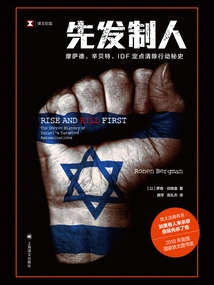
先发制人(译文纪实)
(by) Ronan Bergman
This is the first authoritative history of the Mossad, Shin Bet, and IDF targeted killing programs. The Talmud says: "If someone comes to kill you, kill him first." This instinct to take all measures, even the most extreme means, to protect the Jewish people is deeply rooted in the DNA of Israel. After the establishment of the state, this became the responsibility of the Israeli intelligence services and armed forces. Israel is the undisputed global leader in many weapons technologies. There is another method used to deal with the most serious threats that also attracts the attention of the world, and that is targeted killing. Hunting down Nazis around the world, solving frequent hijackings, killing identified terrorists, and assassinating dangerous personnel such as enemy nuclear physicists and biochemists... So far, Israel has used countless targeted killings against enemies large and small. Targeted killings require cross-departmental coordination, precise planning and arrangements, and operators must also be skilled in all kinds of martial arts. Even so, face-to-face assassinations may be subject to objective surprises, and the success may be undone due to momentary hesitation on the part of the operators. However, with the development of science and technology, the executors of targeted killing operations have become drones. Operators can walk into office buildings like ordinary office workers, press buttons with expressionless faces, and end lives... In short, this method of killing to stop killing has plunged Israel into a protracted retaliation with various armed forces. The casualties are increasing, and relations with neighboring countries and regions have always been tense. The author Bergman is known as "Israel's best investigative reporter."
This is the first authoritative history of the Mossad, Shin Bet, and IDF targeted killing programs. The Talmud says: "If someone comes to kill you, kill him first." This instinct to take all measures, even the most extreme means, to protect the Jewish people is deeply rooted in the DNA of Israel. After the establishment of the state, this became the responsibility of the Israeli intelligence services and armed forces. Israel is the undisputed global leader in many weapons technologies. There is another method used to deal with the most serious threats that also attracts the attention of the world, and that is targeted killing. Hunting down Nazis around the world, solving frequent hijackings, killing identified terrorists, and assassinating dangerous personnel such as enemy nuclear physicists and biochemists... So far, Israel has used countless targeted killings against enemies large and small. Targeted killings require cross-departmental coordination, precise planning and arrangements, and operators must also be skilled in all kinds of martial arts. Even so, face-to-face assassinations may be subject to objective surprises, and the success may be undone due to momentary hesitation on the part of the operators. However, with the development of science and technology, the executors of targeted killing operations have become drones. Operators can walk into office buildings like ordinary office workers, press buttons with expressionless faces, and end lives... In short, this method of killing to stop killing has plunged Israel into a protracted retaliation with various armed forces. The casualties are increasing, and relations with neighboring countries and regions have always been tense. The author Bergman is known as "Israel's best investigative reporter."
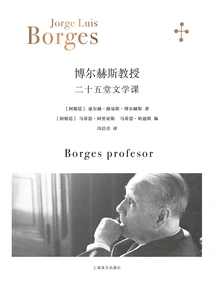
博尔赫斯教授:二十五堂文学课(博尔赫斯全集)
H
"I taught English literature at the university for a full forty semesters, and not only that, I also tried to convey my love for English literature." "Professor Borges: Twenty-Five Literature Lessons" brings together the complete content of the English literature course that Borges taught at the School of Philosophy and Literature at the University of Buenos Aires in 1966. In these twenty-five lessons, Borges takes us on a true journey through English literature, always staying close to his own readings and works. The journey begins in the mists of time, beginning with the arrival of the Angles, Jutes, and Saxons in England, continuing to the work of Samuel Johnson; wandering to Macpherson, the Romantic poets, and the Victorian era; offering a panoramic view of the lives and works of the Pre-Raphaelites; and ending in nineteenth-century Samoa with one of Borges's favorite writers, Robert Louis Stevenson. What ties these lectures together is an authentic enjoyment of literature, the affection with which Borges approached each work, and his desire to share his enthusiasm for each author and period he studied.
"I taught English literature at the university for a full forty semesters, and not only that, I also tried to convey my love for English literature." "Professor Borges: Twenty-Five Literature Lessons" brings together the complete content of the English literature course that Borges taught at the School of Philosophy and Literature at the University of Buenos Aires in 1966. In these twenty-five lessons, Borges takes us on a true journey through English literature, always staying close to his own readings and works. The journey begins in the mists of time, beginning with the arrival of the Angles, Jutes, and Saxons in England, continuing to the work of Samuel Johnson; wandering to Macpherson, the Romantic poets, and the Victorian era; offering a panoramic view of the lives and works of the Pre-Raphaelites; and ending in nineteenth-century Samoa with one of Borges's favorite writers, Robert Louis Stevenson. What ties these lectures together is an authentic enjoyment of literature, the affection with which Borges approached each work, and his desire to share his enthusiasm for each author and period he studied.
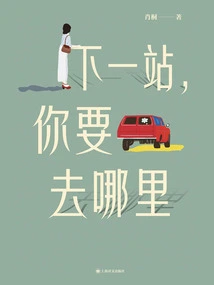
下一站,你要去哪里(全世界平凡人的故事)
Xiao Tong
It selects the encounter and mutual understanding between an entrepreneurial woman and 10 taxi drivers, and shares the sour or sweet stories of lonely people in 23 cities. A human observation guide with a global perspective and humanistic thinking, focusing on ordinary people's life choices and ideal pursuits. From New York to Ninglang, from planes to online ride-hailing, follow the author to get to know ordinary people in different countries and cities over a glass of wine and a bowl of noodles. "Next Stop, Where Are You Going" is a collection of urban travel essays written by Xiao Tong, a contracted author of Harvest Story Factory. Each article is based on the experience of a city, and the author's conversations with local ordinary people reveal the common emotions and concerns of the general public, especially taxi drivers. Most of the cities covered in the book are inclusive international metropolises or characteristic small towns. By following the author's true and detailed description, readers can not only experience the difficulties of working women in their careers, but also follow New York taxi drivers as they imagine the American dream. They can also look back on their bad exes with the female drivers in Shenyang, and resonate with the literary passion of the old lady Kirkland Parkinson.
It selects the encounter and mutual understanding between an entrepreneurial woman and 10 taxi drivers, and shares the sour or sweet stories of lonely people in 23 cities. A human observation guide with a global perspective and humanistic thinking, focusing on ordinary people's life choices and ideal pursuits. From New York to Ninglang, from planes to online ride-hailing, follow the author to get to know ordinary people in different countries and cities over a glass of wine and a bowl of noodles. "Next Stop, Where Are You Going" is a collection of urban travel essays written by Xiao Tong, a contracted author of Harvest Story Factory. Each article is based on the experience of a city, and the author's conversations with local ordinary people reveal the common emotions and concerns of the general public, especially taxi drivers. Most of the cities covered in the book are inclusive international metropolises or characteristic small towns. By following the author's true and detailed description, readers can not only experience the difficulties of working women in their careers, but also follow New York taxi drivers as they imagine the American dream. They can also look back on their bad exes with the female drivers in Shenyang, and resonate with the literary passion of the old lady Kirkland Parkinson.
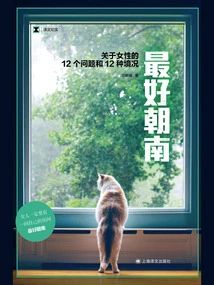
最好朝南(译文纪实·当代中国女性生存实录)
Sandwich
Let women speak for themselves and tell their own stories. Contemporary Chinese women's response to Woolf's "A Room of One's Own" nearly 100 years later. Do women know about the possible harm to their bodies before giving birth? Will a 22-year marriage that has raised three children continue due to inertia? If I have suffered domestic violence for a long time, can I get divorced and get married on my own? Is it right to move to a strange city with your husband, your career has stagnated, and you should take advantage of the situation and become a "housewife"? Is it allowed for a mother to say she doesn't love her child? Do you do IVF because you want to have a child, or because you don't want to accept that you are "reproductively incompetent"? As a woman, is it okay if I don't want to have my period? 22 Female authors, 24 real life stories. Woolf said in "A Room of One's Own": "If a woman plans to write a novel, she must have money and a room of her own." In "Best Facing South", these female writers use words to construct their own "south-facing rooms". Most of them do not make a living by writing. The purpose of writing down stories is to understand themselves. These stories are very personal personal encounters, episodes of life that are of great significance to individuals, experiences that are not easily mentioned to others in daily life, and are not even known to even the closest family and friends. Through writing, they ask questions about their situation: As women, what have "I" experienced? Why am I going through this? What do these experiences mean to "me"? How do they form part of "me"?
Let women speak for themselves and tell their own stories. Contemporary Chinese women's response to Woolf's "A Room of One's Own" nearly 100 years later. Do women know about the possible harm to their bodies before giving birth? Will a 22-year marriage that has raised three children continue due to inertia? If I have suffered domestic violence for a long time, can I get divorced and get married on my own? Is it right to move to a strange city with your husband, your career has stagnated, and you should take advantage of the situation and become a "housewife"? Is it allowed for a mother to say she doesn't love her child? Do you do IVF because you want to have a child, or because you don't want to accept that you are "reproductively incompetent"? As a woman, is it okay if I don't want to have my period? 22 Female authors, 24 real life stories. Woolf said in "A Room of One's Own": "If a woman plans to write a novel, she must have money and a room of her own." In "Best Facing South", these female writers use words to construct their own "south-facing rooms". Most of them do not make a living by writing. The purpose of writing down stories is to understand themselves. These stories are very personal personal encounters, episodes of life that are of great significance to individuals, experiences that are not easily mentioned to others in daily life, and are not even known to even the closest family and friends. Through writing, they ask questions about their situation: As women, what have "I" experienced? Why am I going through this? What do these experiences mean to "me"? How do they form part of "me"?
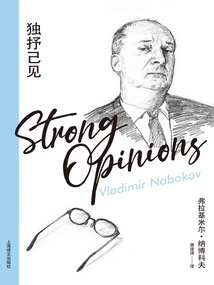
独抒己见(纳博科夫精选集IV)
H
An interview with Nabokov, the master of novels, full of witty words, Lolita, butterflies, creative cards, memory, death, inspiration, Russia... Everything about Nabokov. Interviewed by well-known media such as "Paris Review", "Playboy", "Time", "New York Times", BBC Radio, etc., With vicious tongue + charming + wisdom, a true self-narration. "On My Own" is a self-edited collection of essays by Nabokov, the author of "Lolita" and the master of novels. It is based on interviews from well-known media such as "The Paris Review", "Time", "The New York Times", "Playboy", and BBC Radio. 22 Interviews, 11 letters to the editor, and 14 essays outline a clear and firm self-portrait. Different from other works of fiction, "Expressing My Own Opinions" is a true self-narration; most of the classic "venomous tongue" quotations circulating in the world with a unique Na-style style come from this book. Facing various tough questions raised by the media, Nabokov put forward a series of firm opinions on life, literature, education, movies and other topics: how "Lolita" almost burned down; how he was obsessed with butterflies for a lifetime; what is the most ideal way of travel; what is the ultimate standard of translation and creative art... He ignored the mediocre people who could not understand his works and was happy to slaughter those sacred cows in the literary world that he did not agree with. Readers can understand Nabokov through these sparkling words and embark on the charming, dangerous and challenging spiritual island in his mind.
An interview with Nabokov, the master of novels, full of witty words, Lolita, butterflies, creative cards, memory, death, inspiration, Russia... Everything about Nabokov. Interviewed by well-known media such as "Paris Review", "Playboy", "Time", "New York Times", BBC Radio, etc., With vicious tongue + charming + wisdom, a true self-narration. "On My Own" is a self-edited collection of essays by Nabokov, the author of "Lolita" and the master of novels. It is based on interviews from well-known media such as "The Paris Review", "Time", "The New York Times", "Playboy", and BBC Radio. 22 Interviews, 11 letters to the editor, and 14 essays outline a clear and firm self-portrait. Different from other works of fiction, "Expressing My Own Opinions" is a true self-narration; most of the classic "venomous tongue" quotations circulating in the world with a unique Na-style style come from this book. Facing various tough questions raised by the media, Nabokov put forward a series of firm opinions on life, literature, education, movies and other topics: how "Lolita" almost burned down; how he was obsessed with butterflies for a lifetime; what is the most ideal way of travel; what is the ultimate standard of translation and creative art... He ignored the mediocre people who could not understand his works and was happy to slaughter those sacred cows in the literary world that he did not agree with. Readers can understand Nabokov through these sparkling words and embark on the charming, dangerous and challenging spiritual island in his mind.
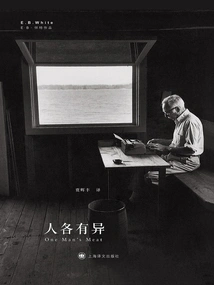
Everyone is Different
Literature人各有异
(u. S.) E. B. White
Simplicity and joy in a complex world, peace and clarity in a feather. The most famous collection of essays by E. B. White, the greatest American essayist of the 20th century, returns to nature and sees sincerity in the trivial, which is the farm life essay that hatched "Charlotte's Web". E. B. White's "People Are Different" is a summary of what he saw, heard, thought, and did during five years on his farm in Maine. In the winter of 1938, just as his career at The New Yorker was going smoothly, White suddenly turned around and ran to Maine to work as a farmer. From spring to summer, and from autumn to winter, he personally managed a farm. The reason here may have a lot to do with Thoreau. From White's writings, we can always see the connection between the two. However, the more important point is that White, like Thoreau, is always wary of the deprivation and infringement of personal freedom in the name of the country, government, collective, etc. Even The New Yorker's requirement that editors always speak as "we" made him uncomfortable. It was in the countryside of Maine that "he found his subject (himself) and a gentle but sincere tone." He replaced "we" with "I" and achieved the independent existence of intellectuals as individuals. From this we can see that this book is a slow book, so we might as well read it slowly. There is no subtle statement in the book, but when it comes to society, it is still common sense. What he wrote is an attitude and a state of mind. What he wants to build is a simple, aesthetic life, although this simple life sometimes requires miserable management and a lot of work.
Simplicity and joy in a complex world, peace and clarity in a feather. The most famous collection of essays by E. B. White, the greatest American essayist of the 20th century, returns to nature and sees sincerity in the trivial, which is the farm life essay that hatched "Charlotte's Web". E. B. White's "People Are Different" is a summary of what he saw, heard, thought, and did during five years on his farm in Maine. In the winter of 1938, just as his career at The New Yorker was going smoothly, White suddenly turned around and ran to Maine to work as a farmer. From spring to summer, and from autumn to winter, he personally managed a farm. The reason here may have a lot to do with Thoreau. From White's writings, we can always see the connection between the two. However, the more important point is that White, like Thoreau, is always wary of the deprivation and infringement of personal freedom in the name of the country, government, collective, etc. Even The New Yorker's requirement that editors always speak as "we" made him uncomfortable. It was in the countryside of Maine that "he found his subject (himself) and a gentle but sincere tone." He replaced "we" with "I" and achieved the independent existence of intellectuals as individuals. From this we can see that this book is a slow book, so we might as well read it slowly. There is no subtle statement in the book, but when it comes to society, it is still common sense. What he wrote is an attitude and a state of mind. What he wants to build is a simple, aesthetic life, although this simple life sometimes requires miserable management and a lot of work.
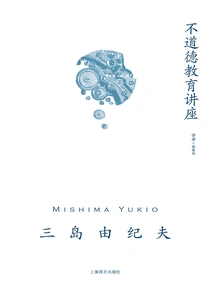
不道德教育讲座(三岛由纪夫作品系列)
(japan) Mishima Yukio
A non-vegetarian and non-vegetarian way of commentating on the Japanese state of affairs, laughing, cursing, and pungently satirizing the weaknesses of Japanese human nature - Mishima Yukio and "Morality" as the Enemy 69 Lectures, a rare masterpiece of Mishima Yukio's editorial essays. "Lectures on Immoral Education" is a collection of essays by the famous Japanese writer, novelist, and playwright Yukio Mishima. It contains 69 articles. These articles were first published in the Japanese magazine "Star Weekly" and were social and cultural columns written by Mishima for "Star Weekly". They were published from July 27, 1958 to November 29, 1959. In 1959 and 1960, they were published in two volumes by Chuo Koron Publishing House of Japan. These 69 articles describe, analyze, and comment on specific phenomena and issues from Japan's daily life, interpersonal interactions, social trends, and Japanese morality, emotions, and thinking inertia. Mishima expresses his opinions on Japanese national character in an ironic way, sings the opposite and speaks harsh words. Mishima's insight, psychological analysis ability, dialectical logic, and wild and bold expressions are fully revealed.
A non-vegetarian and non-vegetarian way of commentating on the Japanese state of affairs, laughing, cursing, and pungently satirizing the weaknesses of Japanese human nature - Mishima Yukio and "Morality" as the Enemy 69 Lectures, a rare masterpiece of Mishima Yukio's editorial essays. "Lectures on Immoral Education" is a collection of essays by the famous Japanese writer, novelist, and playwright Yukio Mishima. It contains 69 articles. These articles were first published in the Japanese magazine "Star Weekly" and were social and cultural columns written by Mishima for "Star Weekly". They were published from July 27, 1958 to November 29, 1959. In 1959 and 1960, they were published in two volumes by Chuo Koron Publishing House of Japan. These 69 articles describe, analyze, and comment on specific phenomena and issues from Japan's daily life, interpersonal interactions, social trends, and Japanese morality, emotions, and thinking inertia. Mishima expresses his opinions on Japanese national character in an ironic way, sings the opposite and speaks harsh words. Mishima's insight, psychological analysis ability, dialectical logic, and wild and bold expressions are fully revealed.
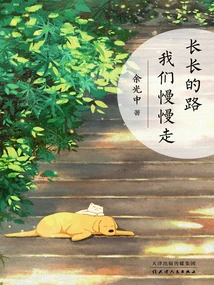
It's a Long Road, Let's Walk Slowly
Literature长长的路 我们慢慢走
Yu Guangzhong
Selected 36 essays by Mr. Yu Guangzhong, including five parts: travel notes, emotional experiences, life wisdom, worldly feelings, and cultural reflections. Materials support people's lives, while beliefs support people's souls. In this journey of life, "going far away" is the most romantic impulse in everyone's life, and it is also the source of everyone's strength to fight against loneliness and reality. Our lives are short but long. What is short is external materials and time, but what is long is people's pursuit and faith. In this book, Mr. Yu Guangzhong uses the attitude of a person who has experienced life to provide every reader with inspiration for life and the strength to move forward. May everyone who reads this book have a happy life and abundant faith!
Selected 36 essays by Mr. Yu Guangzhong, including five parts: travel notes, emotional experiences, life wisdom, worldly feelings, and cultural reflections. Materials support people's lives, while beliefs support people's souls. In this journey of life, "going far away" is the most romantic impulse in everyone's life, and it is also the source of everyone's strength to fight against loneliness and reality. Our lives are short but long. What is short is external materials and time, but what is long is people's pursuit and faith. In this book, Mr. Yu Guangzhong uses the attitude of a person who has experienced life to provide every reader with inspiration for life and the strength to move forward. May everyone who reads this book have a happy life and abundant faith!
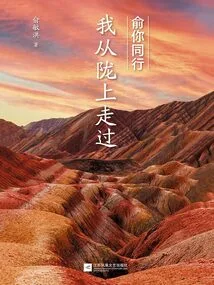
俞你同行:我从陇上走过
Yu Minhong
The travel prose written by Yu Minhong during his two trips to Gansu is the first in the "Yu You Walk With You" series. Faced with where to go in life, Yu Minhong believes that "walking seriously" is the only answer. He decided to spend about five years traveling through all important areas in China, and another five years around visiting important countries in the world, and share his insights and experiences with everyone in the form of words, pictures, and videos. Gansu is the important birthplace of Chinese civilization. The Silk Road passed through here and ancient China traveled to the world through here. At the first stop of a ten-year journey, Yu Minhong deeply analyzed the historical and cultural connotations of Gansu's scenic spots and historical sites, and described Gansu's natural scenery poetically and philosophically. With down-to-earth walking and erudite explanations, he gave readers a highly condensed lesson in Chinese history and culture, leading readers to see the world, all living beings, and themselves, and let their lives expand while walking.
The travel prose written by Yu Minhong during his two trips to Gansu is the first in the "Yu You Walk With You" series. Faced with where to go in life, Yu Minhong believes that "walking seriously" is the only answer. He decided to spend about five years traveling through all important areas in China, and another five years around visiting important countries in the world, and share his insights and experiences with everyone in the form of words, pictures, and videos. Gansu is the important birthplace of Chinese civilization. The Silk Road passed through here and ancient China traveled to the world through here. At the first stop of a ten-year journey, Yu Minhong deeply analyzed the historical and cultural connotations of Gansu's scenic spots and historical sites, and described Gansu's natural scenery poetically and philosophically. With down-to-earth walking and erudite explanations, he gave readers a highly condensed lesson in Chinese history and culture, leading readers to see the world, all living beings, and themselves, and let their lives expand while walking.
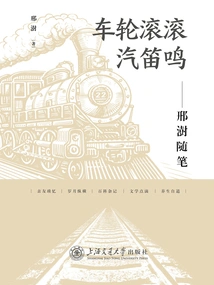
车轮滚滚汽笛鸣:邢澍随笔
Xing Shu
This book is an essay written by Xing Shu, an alumnus of Shanghai Jiao Tong University. It records every detail of Xing Shu's study, work and life, reflecting the mark of the times and the changes over the years.
This book is an essay written by Xing Shu, an alumnus of Shanghai Jiao Tong University. It records every detail of Xing Shu's study, work and life, reflecting the mark of the times and the changes over the years.
The Far Place I Will Go To
Literature我将前往的远方
Guo Qiangsheng
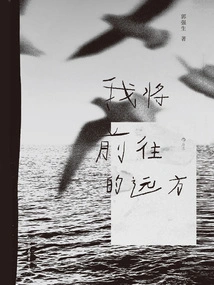
After the mother and brother died one after another, only the demented old father and the single old son were left in the once perfect family. In "The Far Place I Will Go", the well-known writer Guo Qiangsheng chooses to cross the previous estrangement between father and son, honestly analyzes his inner uneasiness and agitation, and embarks on a journey of healing and repair. "Perhaps those who can still change are free." What Guo Qiangsheng did was change. In this work, Guo Qiangsheng talks about family relationships, the reconciliation and getting along with his elderly and demented father in the daily process of serving his father; he talks about others, about the life seen from the night market stalls and the city streets; he talks about himself, about the old collections in the boxes and the old tastes from his childhood. With his always gentle and affectionate writing, Guo Qiangsheng teaches people to refine those familiar, reassuring and non-disappointing memories in life experience, so as to serve as a true companion in the second half of life and guide the confused people in the city to the distance of life.
After the mother and brother died one after another, only the demented old father and the single old son were left in the once perfect family. In "The Far Place I Will Go", the well-known writer Guo Qiangsheng chooses to cross the previous estrangement between father and son, honestly analyzes his inner uneasiness and agitation, and embarks on a journey of healing and repair. "Perhaps those who can still change are free." What Guo Qiangsheng did was change. In this work, Guo Qiangsheng talks about family relationships, the reconciliation and getting along with his elderly and demented father in the daily process of serving his father; he talks about others, about the life seen from the night market stalls and the city streets; he talks about himself, about the old collections in the boxes and the old tastes from his childhood. With his always gentle and affectionate writing, Guo Qiangsheng teaches people to refine those familiar, reassuring and non-disappointing memories in life experience, so as to serve as a true companion in the second half of life and guide the confused people in the city to the distance of life.
人间烟火,最抚人心
Wang Zengqi
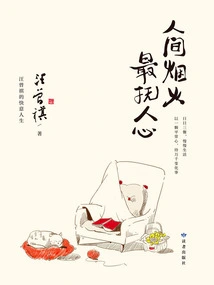
How to live every day well? Live a happy and comfortable life? This book selects 42 articles by Wang Zengqi, reflecting Wang Zengqi's happy life from five different aspects of life: reading a good book, eating a good meal, seeing a good scenery, getting to know some plants, trees, insects and fish, and sticking to his own spiritual world. Let us ordinary people suddenly realize that we are walking in the hustle and bustle of the world. Although we are tired, we are full of all kinds of loveliness and charm of life. Every plant, every tree, every food, every taste, this world is worth it.
How to live every day well? Live a happy and comfortable life? This book selects 42 articles by Wang Zengqi, reflecting Wang Zengqi's happy life from five different aspects of life: reading a good book, eating a good meal, seeing a good scenery, getting to know some plants, trees, insects and fish, and sticking to his own spiritual world. Let us ordinary people suddenly realize that we are walking in the hustle and bustle of the world. Although we are tired, we are full of all kinds of loveliness and charm of life. Every plant, every tree, every food, every taste, this world is worth it.
北京与南京:明清小说中抹不去的京都之恋
Zhang Xu
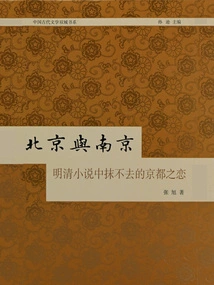
This book is one of the "Two Cities Book Series of Ancient Chinese Literature" series. It discusses the images of the two major cities of Beijing and Nanjing reflected in the novels of the Ming and Qing Dynasties. During the Ming and Qing Dynasties, Beijing and Nanjing became the two most important cities in the north and south with their irreplaceable roles in politics, culture, and economy. This book focuses on the urban writing of Beijing and Nanjing in popular novels of the Ming and Qing Dynasties. It studies the relationship between the city and its citizens presented in the novel text, the similarities and differences in the urban cultural spirit of Beijing and Nanjing, and the mentality behind the urban writing of the novel authors, in order to provide a three-dimensional and relatively complete presentation of the urban images of Beijing and Nanjing in the Ming and Qing Dynasties.
This book is one of the "Two Cities Book Series of Ancient Chinese Literature" series. It discusses the images of the two major cities of Beijing and Nanjing reflected in the novels of the Ming and Qing Dynasties. During the Ming and Qing Dynasties, Beijing and Nanjing became the two most important cities in the north and south with their irreplaceable roles in politics, culture, and economy. This book focuses on the urban writing of Beijing and Nanjing in popular novels of the Ming and Qing Dynasties. It studies the relationship between the city and its citizens presented in the novel text, the similarities and differences in the urban cultural spirit of Beijing and Nanjing, and the mentality behind the urban writing of the novel authors, in order to provide a three-dimensional and relatively complete presentation of the urban images of Beijing and Nanjing in the Ming and Qing Dynasties.
近代日本中国俗文学研究史论
Zhang Zhen
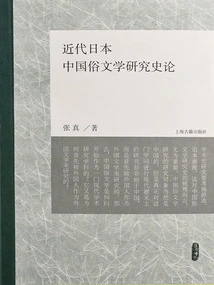
The manuscript examines the background of the formation of the history of Chinese popular literature in modern Japan, the research on Chinese popular literature by the two major schools in Tokyo and Kyoto and outside the two major schools, and puts the study of Chinese popular literature in modern Japan into an international perspective, outlining the academic connections and interactions between the West, Japan, China, and East Asia, including China, Japan, and South Korea, in the history of Chinese popular literature research.
The manuscript examines the background of the formation of the history of Chinese popular literature in modern Japan, the research on Chinese popular literature by the two major schools in Tokyo and Kyoto and outside the two major schools, and puts the study of Chinese popular literature in modern Japan into an international perspective, outlining the academic connections and interactions between the West, Japan, China, and East Asia, including China, Japan, and South Korea, in the history of Chinese popular literature research.
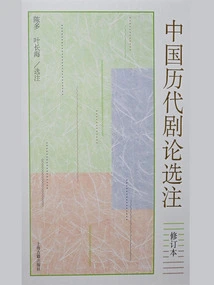
中国历代剧论选注(修订本)
Selected Notes By Chen Duo And Ye Changhai
This book selects 138 representative articles on Chinese drama theory in past dynasties, divided into four chapters: "Pre-Qin to Yuan Dynasty", "Ming Dynasty", "Qing Dynasty" and "Early Twentieth Century". It strives to summarize and reflect the development trajectory of the history of Chinese drama theory and highlight its main achievements. This book provides popular annotations for the selected chapters, and provides brief explanations or hints of their main arguments or related issues.
This book selects 138 representative articles on Chinese drama theory in past dynasties, divided into four chapters: "Pre-Qin to Yuan Dynasty", "Ming Dynasty", "Qing Dynasty" and "Early Twentieth Century". It strives to summarize and reflect the development trajectory of the history of Chinese drama theory and highlight its main achievements. This book provides popular annotations for the selected chapters, and provides brief explanations or hints of their main arguments or related issues.
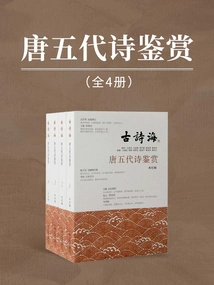
唐五代诗鉴赏(全四册)
Shanghai Ancient Books Publishing House
This book selects more than 700 poems from the Tang and Five Dynasties. The whole book provides an overview of the style of the Tang and Five Dynasties poems. Each work adopts the method of appreciation to give a precise description and interpretation of its creative background and theme, with special emphasis on artistic analysis and exploration of aesthetic value.
This book selects more than 700 poems from the Tang and Five Dynasties. The whole book provides an overview of the style of the Tang and Five Dynasties poems. Each work adopts the method of appreciation to give a precise description and interpretation of its creative background and theme, with special emphasis on artistic analysis and exploration of aesthetic value.
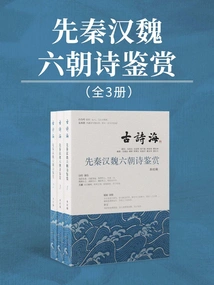
先秦汉魏六朝诗鉴赏(全三册)
Shanghai Ancient Books Publishing House
This book selects more than 300 famous works from the pre-Qin, Han, Wei and Six Dynasties periods. The whole book adopts a form that combines selection, annotation, appreciation and research on the history of poetry, giving a comprehensive and in-depth introduction to the poetry of this period.
This book selects more than 300 famous works from the pre-Qin, Han, Wei and Six Dynasties periods. The whole book adopts a form that combines selection, annotation, appreciation and research on the history of poetry, giving a comprehensive and in-depth introduction to the poetry of this period.
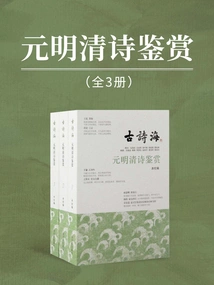
元明清诗鉴赏(全三册)
Shanghai Ancient Books Publishing House
This book selects nearly 600 poems from a large number of poems from the Yuan, Ming, and Qing dynasties. It not only explains the creation background, theme ideas, and difficult words of the works, but also provides mutual comparison and in-depth analysis of the art. It also explores the style of the poems of the Yuan, Ming, and Qing dynasties, and explains the writer's life and creative characteristics.
This book selects nearly 600 poems from a large number of poems from the Yuan, Ming, and Qing dynasties. It not only explains the creation background, theme ideas, and difficult words of the works, but also provides mutual comparison and in-depth analysis of the art. It also explores the style of the poems of the Yuan, Ming, and Qing dynasties, and explains the writer's life and creative characteristics.
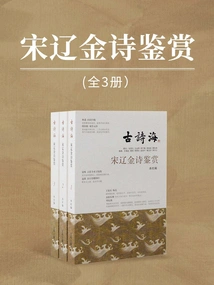
宋辽金诗鉴赏(全三册)
Shanghai Ancient Books Publishing House
This book selects more than 400 poems from the Song, Liao and Jin dynasties, which are appreciated and analyzed by experts and scholars to reveal their themes and artistic features and explore their aesthetic value. The book also contains an overview of the poetry styles of the Song, Liao and Jin dynasties, as well as a brief introduction to each writer's life and creative characteristics.
This book selects more than 400 poems from the Song, Liao and Jin dynasties, which are appreciated and analyzed by experts and scholars to reveal their themes and artistic features and explore their aesthetic value. The book also contains an overview of the poetry styles of the Song, Liao and Jin dynasties, as well as a brief introduction to each writer's life and creative characteristics.
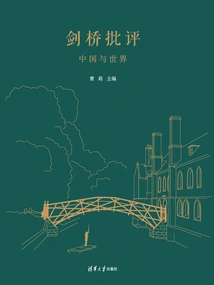
Cambridge Criticism: China and the World
Literature剑桥批评:中国与世界
Editor-in-chief Cao Li
As a historical process and academic phenomenon, "Cambridge Criticism" has experienced ups and downs, inheritance and fission. Its acceptance and discussion in China and the world show that the rise of Cambridge literary research and criticism methods is not only a local experience and academic concern. Different cultural missions and disciplinary visions determine the value connotation and development trajectory of "Cambridge Criticism" and its research in various historical periods. Its echo and influence in the 20th century and now are worth exploring. Dialogue with China and communication with the world were the pursuit and dream of Richard Chiaci and Yanbu Sun.
As a historical process and academic phenomenon, "Cambridge Criticism" has experienced ups and downs, inheritance and fission. Its acceptance and discussion in China and the world show that the rise of Cambridge literary research and criticism methods is not only a local experience and academic concern. Different cultural missions and disciplinary visions determine the value connotation and development trajectory of "Cambridge Criticism" and its research in various historical periods. Its echo and influence in the 20th century and now are worth exploring. Dialogue with China and communication with the world were the pursuit and dream of Richard Chiaci and Yanbu Sun.
The Spread of Buddhism to the East and the Evolution of Literary Trends in the Six Dynasties
Literature佛学东渐与六朝文学思潮的嬗变
Gao Wenqiang Wang Jing
The Six Dynasties was a prosperous period in the history of the development of Chinese Buddhism, and it was also a harvest period in the history of literary thought. The overlap of the two development trends makes the interdisciplinary study of Buddhism and the Six Dynasties literary thoughts extremely important for the study of the history of Chinese literary thoughts. This book starts with the new cultural changes caused by the spread of Buddhism to the East. It focuses on the circulation of Xuan Buddhism and the philosophical trend of poetry, the Nirvana of Immortals and the trend of landscape literature, the new sound of Sanskrit and the rhythmic trend of poetry, the skillful and frivolous literary trend, statues and prayers, and the ritualization of Northern Dynasties literature. The role played by the new cultural changes in the philosophical poetry trend, the landscape literature trend, the metrical poetry trend, the frivolous literature trend, the ritualization of literature and other literary trends were analyzed in depth, revealing the impact and new changes brought to Chinese thought, culture and literature during the Six Dynasties period during the spread and acceptance of Buddhism after it was introduced to China.
The Six Dynasties was a prosperous period in the history of the development of Chinese Buddhism, and it was also a harvest period in the history of literary thought. The overlap of the two development trends makes the interdisciplinary study of Buddhism and the Six Dynasties literary thoughts extremely important for the study of the history of Chinese literary thoughts. This book starts with the new cultural changes caused by the spread of Buddhism to the East. It focuses on the circulation of Xuan Buddhism and the philosophical trend of poetry, the Nirvana of Immortals and the trend of landscape literature, the new sound of Sanskrit and the rhythmic trend of poetry, the skillful and frivolous literary trend, statues and prayers, and the ritualization of Northern Dynasties literature. The role played by the new cultural changes in the philosophical poetry trend, the landscape literature trend, the metrical poetry trend, the frivolous literature trend, the ritualization of literature and other literary trends were analyzed in depth, revealing the impact and new changes brought to Chinese thought, culture and literature during the Six Dynasties period during the spread and acceptance of Buddhism after it was introduced to China.
屈大均与明末清初岭南诗派
Wang Fupeng
At the end of the Ming Dynasty and the beginning of the Qing Dynasty, many scholars in Lingnan devoted themselves to the struggle against the Qing Dynasty, which gave birth to the local upright scholar spirit. Driven by poets represented by Qu Dajun, the Lingnan poetry circle quickly reached its peak and was on a par with the Central Plains and Jiangnan poetry circles. The book "Qu Dajun and the Lingnan School of Poetry in the Late Ming and Early Qing Dynasties" starts with Qu Dajun, one of the "Three Lingnan Masters", and shows that at a time when the continuation of China's Taoist and cultural tradition was facing an unprecedented crisis, Qu Dajun took the inheritance of Chinese orthodox culture as his own responsibility.
At the end of the Ming Dynasty and the beginning of the Qing Dynasty, many scholars in Lingnan devoted themselves to the struggle against the Qing Dynasty, which gave birth to the local upright scholar spirit. Driven by poets represented by Qu Dajun, the Lingnan poetry circle quickly reached its peak and was on a par with the Central Plains and Jiangnan poetry circles. The book "Qu Dajun and the Lingnan School of Poetry in the Late Ming and Early Qing Dynasties" starts with Qu Dajun, one of the "Three Lingnan Masters", and shows that at a time when the continuation of China's Taoist and cultural tradition was facing an unprecedented crisis, Qu Dajun took the inheritance of Chinese orthodox culture as his own responsibility.
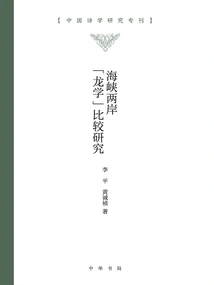
海峡两岸“龙学”比较研究(中国诗学研究专刊)
Li Ping Huang Chengzhen
"Dragonism" is a common learning on both sides of the Taiwan Strait. As the first academic monograph on the comparative study of "Dragonism" across the Taiwan Straits, this book sorts out and analyzes the cultural background, guiding ideology, research paths, academic methods, development trends, content results, and classic cases of "Dragonism" on both sides of the Taiwan Strait in the second half of the 20th century. It summarizes each other's styles and characteristics, summarizes their respective gains and losses, and demonstrates the relationship between the two. It has many achievements and has important academic value. The first part of the introduction discusses the similarities, differences, and reasons from the perspective of the background thoughts and approaches of "Dragonism" on both sides of the Taiwan Strait. The middle part of the general chapter analyzes the similarities, differences, and complementarity of "Dragonism" on both sides of the Taiwan Strait based on an overall statement of the development process and spatial distribution of "Dragonism" on both sides of the Taiwan Strait. The next part is a case study, conducting in-depth and specific research on the representative figures, academic views, and inheritance relationships in the development of "Dragonism" on both sides of the Taiwan Strait. The book contains both high-level macro-level generalizations and summaries, as well as detailed case analysis and exploration. It contains in-depth research and unique insights into the integration and complementarity of "Dragonism" on both sides of the Taiwan Strait, the symbiosis of each other, and the mutual learning, criticism and debate among "Dragonism" scholars on both sides of the Taiwan Strait.
"Dragonism" is a common learning on both sides of the Taiwan Strait. As the first academic monograph on the comparative study of "Dragonism" across the Taiwan Straits, this book sorts out and analyzes the cultural background, guiding ideology, research paths, academic methods, development trends, content results, and classic cases of "Dragonism" on both sides of the Taiwan Strait in the second half of the 20th century. It summarizes each other's styles and characteristics, summarizes their respective gains and losses, and demonstrates the relationship between the two. It has many achievements and has important academic value. The first part of the introduction discusses the similarities, differences, and reasons from the perspective of the background thoughts and approaches of "Dragonism" on both sides of the Taiwan Strait. The middle part of the general chapter analyzes the similarities, differences, and complementarity of "Dragonism" on both sides of the Taiwan Strait based on an overall statement of the development process and spatial distribution of "Dragonism" on both sides of the Taiwan Strait. The next part is a case study, conducting in-depth and specific research on the representative figures, academic views, and inheritance relationships in the development of "Dragonism" on both sides of the Taiwan Strait. The book contains both high-level macro-level generalizations and summaries, as well as detailed case analysis and exploration. It contains in-depth research and unique insights into the integration and complementarity of "Dragonism" on both sides of the Taiwan Strait, the symbiosis of each other, and the mutual learning, criticism and debate among "Dragonism" scholars on both sides of the Taiwan Strait.
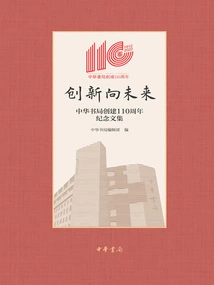
创新向未来:中华书局创建110周年纪念文集
Zhonghua Book Company Editorial Department
This book is a collection commemorating the 110th anniversary of the founding of Zhonghua Book Company. It includes a total of 34 memoirs written by well-known contemporary scholars such as Jin Chongji, Sun Changwu, An Pingqiu, Shi Jinbo, Xiang Chu, Yu Yunguo, Deng Xiaonan, Zhang Guogang, Du Zexun, Qian Wanyue, Kang Zhen, etc. The content covers many aspects such as the history of Zhonghua Book Company, experience in editing and publishing publications, and past exchanges between authors and editors.
This book is a collection commemorating the 110th anniversary of the founding of Zhonghua Book Company. It includes a total of 34 memoirs written by well-known contemporary scholars such as Jin Chongji, Sun Changwu, An Pingqiu, Shi Jinbo, Xiang Chu, Yu Yunguo, Deng Xiaonan, Zhang Guogang, Du Zexun, Qian Wanyue, Kang Zhen, etc. The content covers many aspects such as the history of Zhonghua Book Company, experience in editing and publishing publications, and past exchanges between authors and editors.
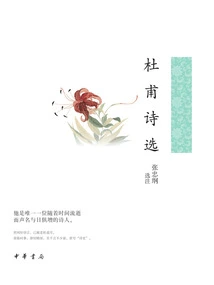
杜甫诗选(中华古典文学选本丛书)
Selected Notes On Zhang Zhonggang
Du Fu, also known as Zimei, was born in Xiangyang, and called himself Shaoling Yelao. He was a great realist poet in the Tang Dynasty. Together with Li Bai, he was known as "Li Du". Du Fu lived during the transitional period of the Li and Tang Dynasties from prosperity to decline, and used his poems to extensively and profoundly reflect the great changes in the vast society of the Tang Dynasty before and after the "An-Shi Rebellion". Therefore, his poems are known as "the history of poetry". In terms of art, Du Fu is the master of Chinese classical poetry, possessing both styles and styles. At the same time, he made a lot of developments in the genres and techniques of poetry, and was revered as the "Sage of Poetry" by later generations. This annotation focuses on comprehensively reflecting the characteristics of various styles and genres of Du Fu's poetry, and uses concise annotations and comments to assist reading.
Du Fu, also known as Zimei, was born in Xiangyang, and called himself Shaoling Yelao. He was a great realist poet in the Tang Dynasty. Together with Li Bai, he was known as "Li Du". Du Fu lived during the transitional period of the Li and Tang Dynasties from prosperity to decline, and used his poems to extensively and profoundly reflect the great changes in the vast society of the Tang Dynasty before and after the "An-Shi Rebellion". Therefore, his poems are known as "the history of poetry". In terms of art, Du Fu is the master of Chinese classical poetry, possessing both styles and styles. At the same time, he made a lot of developments in the genres and techniques of poetry, and was revered as the "Sage of Poetry" by later generations. This annotation focuses on comprehensively reflecting the characteristics of various styles and genres of Du Fu's poetry, and uses concise annotations and comments to assist reading.
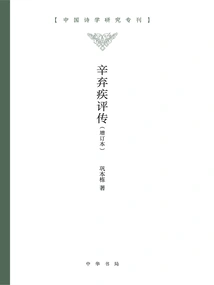
Critical Biography of Xin Qiji: Updated Edition (Special Issue on Chinese Poetics Research)
Literature辛弃疾评传:增订本(中国诗学研究专刊)
Gong Bendong
The era Xin Qiji lived in was a tragic era, and his life was also tragic. After Xin Qiji returned to the south, his ambition of recovery was impossible to realize, and his ideals and reality were in conflict. He entered and exited with twists and turns, and his mentality also changed accordingly. He wrote poems, which may mean "setting sun, smokey willows", or "straight to grab Cao Tun and Liu". They are vigorous and sparse, but also profound and graceful, showing a deep sense of worry and responsibility for the future and destiny of the country and nation. Therefore, although his lyrics were learned from Wu and Cai, and inherited from Su Shi, he was able to combine hardness and softness, and created his own high style. He occupies an important position in the history of Chinese literature and has far-reaching influence. This book attempts to place the study of Xin Qiji in the historical background and conditions of the long-term confrontation between the Song and Jin Dynasties. By grasping his mentality after returning to the south, he enters the world of his literary creation, reveals the anxiety and sense of responsibility expressed in his lyrics, displays the majestic, profound and elegant style of his lyrics, summarizes and abstracts his stylistic concepts and aesthetic tastes, traces the artistic origins of his lyrics, and discusses his status and influence in the history of Chinese literature. In addition, this book also has a special discussion on Xin Qiji's poetry creation.
The era Xin Qiji lived in was a tragic era, and his life was also tragic. After Xin Qiji returned to the south, his ambition of recovery was impossible to realize, and his ideals and reality were in conflict. He entered and exited with twists and turns, and his mentality also changed accordingly. He wrote poems, which may mean "setting sun, smokey willows", or "straight to grab Cao Tun and Liu". They are vigorous and sparse, but also profound and graceful, showing a deep sense of worry and responsibility for the future and destiny of the country and nation. Therefore, although his lyrics were learned from Wu and Cai, and inherited from Su Shi, he was able to combine hardness and softness, and created his own high style. He occupies an important position in the history of Chinese literature and has far-reaching influence. This book attempts to place the study of Xin Qiji in the historical background and conditions of the long-term confrontation between the Song and Jin Dynasties. By grasping his mentality after returning to the south, he enters the world of his literary creation, reveals the anxiety and sense of responsibility expressed in his lyrics, displays the majestic, profound and elegant style of his lyrics, summarizes and abstracts his stylistic concepts and aesthetic tastes, traces the artistic origins of his lyrics, and discusses his status and influence in the history of Chinese literature. In addition, this book also has a special discussion on Xin Qiji's poetry creation.
Walk with You Along the Way to Zhejiang
Literature浙一路·陪你走过
Editor-in-chief Chen Shaohua
The medical stories told in this book are all about the humanistic care for life by clinical frontline medical staff. The authors of this book include doctors, nurses, and students, and the protagonists of the story are our lovely and respectable patient friends. No matter what their endings are, we can feel their love for life, their desire to recover, and their yearning for a happy life through these simple words. We asked medical staff working on the frontline of clinical practice to truly record their simplest emotions and thoughts about patients and diseases. If you feel a little moved when reading a certain story, or even have some thoughts, and have a better understanding of the work of doctors and nurses, our purpose of writing this book will have been achieved.
The medical stories told in this book are all about the humanistic care for life by clinical frontline medical staff. The authors of this book include doctors, nurses, and students, and the protagonists of the story are our lovely and respectable patient friends. No matter what their endings are, we can feel their love for life, their desire to recover, and their yearning for a happy life through these simple words. We asked medical staff working on the frontline of clinical practice to truly record their simplest emotions and thoughts about patients and diseases. If you feel a little moved when reading a certain story, or even have some thoughts, and have a better understanding of the work of doctors and nurses, our purpose of writing this book will have been achieved.
Seeking Truth for Children: the Story of the Class of 1946, Zhejiang University School of Medicine
Literature求是儿女:浙江大学医学院1946级的故事
Chen Yizhang
This book introduces the study, work and friendship between the first class of Zhejiang University School of Medicine (Grade 1946) during their time at school and 6070 years after they left school. Contents include: Zhejiang University Medical School; 1946 classmates of Zhejiang University Medical School (15 biographies, individual and group photos). This class of students wrote "Memories of Zhejiang University" in 2003. Scanned copies of three rounds of "chain letters" selected from nearly 20 rounds of "chain letters" written by this class of 15 students after they left Zhejiang University from 1993 to 2010. Records of this class of classmates meeting to visit their alma mater twice. These accounts are all written by the students themselves. There are deep feelings between the classmates and Zhejiang University, between the classmates and the teachers, so they have a real sense of human and family ties.
This book introduces the study, work and friendship between the first class of Zhejiang University School of Medicine (Grade 1946) during their time at school and 6070 years after they left school. Contents include: Zhejiang University Medical School; 1946 classmates of Zhejiang University Medical School (15 biographies, individual and group photos). This class of students wrote "Memories of Zhejiang University" in 2003. Scanned copies of three rounds of "chain letters" selected from nearly 20 rounds of "chain letters" written by this class of 15 students after they left Zhejiang University from 1993 to 2010. Records of this class of classmates meeting to visit their alma mater twice. These accounts are all written by the students themselves. There are deep feelings between the classmates and Zhejiang University, between the classmates and the teachers, so they have a real sense of human and family ties.
田纳西·威廉斯后期剧作研究
Yan Weiwei
This book is the result of the humanities and social sciences planning fund project of the Ministry of Education. Tennessee Williams was "the first person in American theater" after the war. This book examines Williams' later plays in the context of American society, history and culture, and at the same time looks at the author's unique life experience, ideological orientation and drama creation path. It focuses on comparison with the playwright's early plays and explores it from various methods and perspectives such as post-theatrical theater theory, gender studies, cruel theater theory, etc. The ideological implication of Williams' later plays summarizes its artistic characteristics, assesses its artistic value, and searches for its historical coordinates in the history of American drama. It then explores the reasons for the failure of Williams' later plays on the American stage and their long-term rejection by critics. It summarizes the achievements of Williams' late drama creations and points out its flaws and deficiencies.
This book is the result of the humanities and social sciences planning fund project of the Ministry of Education. Tennessee Williams was "the first person in American theater" after the war. This book examines Williams' later plays in the context of American society, history and culture, and at the same time looks at the author's unique life experience, ideological orientation and drama creation path. It focuses on comparison with the playwright's early plays and explores it from various methods and perspectives such as post-theatrical theater theory, gender studies, cruel theater theory, etc. The ideological implication of Williams' later plays summarizes its artistic characteristics, assesses its artistic value, and searches for its historical coordinates in the history of American drama. It then explores the reasons for the failure of Williams' later plays on the American stage and their long-term rejection by critics. It summarizes the achievements of Williams' late drama creations and points out its flaws and deficiencies.
学术人生:浙大中文学者访谈录
Hu Kexian Editor-in-chief Shi Wenlei
2020 is the 100th anniversary of the establishment of the Chinese Department of Zhejiang University. In the current Chinese Studies Department of Zhejiang University, language, literature and literature go hand in hand, forming a research pattern based on historical documents and integrating literature and language, tradition and modernity, documents and cultural relics, literature and images, compilation and research. It integrates the past and the present, and is compatible with the Chinese and the Western. It is a discipline among the humanities and social sciences at Zhejiang University that has both a long historical heritage and a strong modern flavor. As a century-old history of Chinese literature at Zhejiang University, the author specially collected 24 interviews with 20 scholars. These interviews not only highlight the academic contributions of the interviewees in terms of the inheritance of academic research, the hardships of the academic path, the pursuit of academic research, and the bounden duty of teaching and educating people, but also provide many inspirations beyond academic achievements through the interviews, including the interviewees' academic background, academic experience, academic concepts, academic personality, scholarship methods, etc., And can also provide guidance on teaching and educating people and strategies for teaching students in accordance with their aptitude. This interview record reflects certain academic and educational history significance in the century-old development of the Chinese language discipline of Zhejiang University.
2020 is the 100th anniversary of the establishment of the Chinese Department of Zhejiang University. In the current Chinese Studies Department of Zhejiang University, language, literature and literature go hand in hand, forming a research pattern based on historical documents and integrating literature and language, tradition and modernity, documents and cultural relics, literature and images, compilation and research. It integrates the past and the present, and is compatible with the Chinese and the Western. It is a discipline among the humanities and social sciences at Zhejiang University that has both a long historical heritage and a strong modern flavor. As a century-old history of Chinese literature at Zhejiang University, the author specially collected 24 interviews with 20 scholars. These interviews not only highlight the academic contributions of the interviewees in terms of the inheritance of academic research, the hardships of the academic path, the pursuit of academic research, and the bounden duty of teaching and educating people, but also provide many inspirations beyond academic achievements through the interviews, including the interviewees' academic background, academic experience, academic concepts, academic personality, scholarship methods, etc., And can also provide guidance on teaching and educating people and strategies for teaching students in accordance with their aptitude. This interview record reflects certain academic and educational history significance in the century-old development of the Chinese language discipline of Zhejiang University.
清晨之前的月亮:W.S.默温诗集
(u. S.) W. S. Merwin
Merwin, winner of the National Book Award and the Pulitzer Prize for Poetry, wrote "Garden Time" when he was nearly ninety years old. He gradually became blind and unable to write, so he dictated it to his wife Paula. The book contains 61 poems. As was his usual signature style, there is not a single punctuation mark throughout the collection. Most of the poems in this collection are short poems, focusing on the passage of time and the continued impact of past memories on current life. He stitches together the distant past and the present, and switches freely between the two, displaying the airy lightness and Zen-like enlightenment that are consistent in his poetry. "The Moon Before Morning" includes his works when he was in his eighties. Some readers commented on this collection of poems and said: "Merwin's poems discuss aging, memory, life, death and legacy. These are topics that a craftsman thinks about when he is ninety years old. If these were spoken by a young man, they would not have such weight."
Merwin, winner of the National Book Award and the Pulitzer Prize for Poetry, wrote "Garden Time" when he was nearly ninety years old. He gradually became blind and unable to write, so he dictated it to his wife Paula. The book contains 61 poems. As was his usual signature style, there is not a single punctuation mark throughout the collection. Most of the poems in this collection are short poems, focusing on the passage of time and the continued impact of past memories on current life. He stitches together the distant past and the present, and switches freely between the two, displaying the airy lightness and Zen-like enlightenment that are consistent in his poetry. "The Moon Before Morning" includes his works when he was in his eighties. Some readers commented on this collection of poems and said: "Merwin's poems discuss aging, memory, life, death and legacy. These are topics that a craftsman thinks about when he is ninety years old. If these were spoken by a young man, they would not have such weight."
老舍话剧选:谁先到了重庆
Lao She
"Who Arrives in Chongqing First" has four scenes. The protagonist Wu Fengming helps his younger brother Feng Yu escape from the occupied areas of Peiping and go to Chongqing to participate in the Anti-Japanese War. He stays in Peiping to assassinate Japanese officers and traitors, and finally dies for his country. Before his death, the protagonist said, "I got to Chongqing first." Here, Chongqing has become the center and spiritual symbol of the Anti-Japanese War. The first thing that comes to Chongqing is to devote oneself to the Anti-Japanese War.
"Who Arrives in Chongqing First" has four scenes. The protagonist Wu Fengming helps his younger brother Feng Yu escape from the occupied areas of Peiping and go to Chongqing to participate in the Anti-Japanese War. He stays in Peiping to assassinate Japanese officers and traitors, and finally dies for his country. Before his death, the protagonist said, "I got to Chongqing first." Here, Chongqing has become the center and spiritual symbol of the Anti-Japanese War. The first thing that comes to Chongqing is to devote oneself to the Anti-Japanese War.