Library
Browse and search books
133 novels found
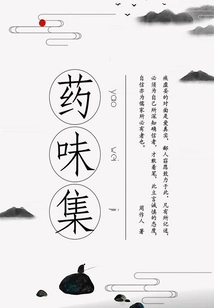
周作人经典作品:药味集
Zhou Zuoren
"In the four years from Ding Chou to Gengchen, more than sixty articles were written successively. Due to the needs of the bookstore, one-third of them were selected, resulting in twenty-one articles, which were published to the world and titled "Medicinal Flavor Collection." This is the origin of this book. Zhou Zuoren's prose style has always been classified as "leisure", but he said in "The Collection of Medicinal Flavors": "The clumsy prose seems to be leisurely, which often misleads people. Only two old friends know its bitter taste. Fei Ming has briefly mentioned it in the past articles, and has recently seen Japan." A friend commented on the poor article and said that it was quite depressing to read at times, and I am deeply touched by what he said. Now I am talking about the taste of medicine, and I do not deny that it is bitter. If it is said to be beneficial to the disease, it is not necessarily true. The selection here is mostly based on the articles that are close to leisure. "
"In the four years from Ding Chou to Gengchen, more than sixty articles were written successively. Due to the needs of the bookstore, one-third of them were selected, resulting in twenty-one articles, which were published to the world and titled "Medicinal Flavor Collection." This is the origin of this book. Zhou Zuoren's prose style has always been classified as "leisure", but he said in "The Collection of Medicinal Flavors": "The clumsy prose seems to be leisurely, which often misleads people. Only two old friends know its bitter taste. Fei Ming has briefly mentioned it in the past articles, and has recently seen Japan." A friend commented on the poor article and said that it was quite depressing to read at times, and I am deeply touched by what he said. Now I am talking about the taste of medicine, and I do not deny that it is bitter. If it is said to be beneficial to the disease, it is not necessarily true. The selection here is mostly based on the articles that are close to leisure. "
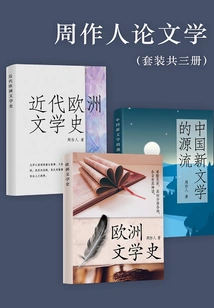
周作人论文学(套装共三册)
Zhou Zuoren
"History of Modern European Literature" is a companion volume to "History of European Literature". It is a compilation of the "History of European Literature in the Nineteenth Century" lecture notes given by Zhou Zuoren for the second-year Chinese students of Peking University after "History of European Literature". The content ranges from the Middle Ages to the 19th century, with a special focus on European legendary and realist literature of the 19th century that had a profound influence on the scholars of the May 4th generation. Zhou's work on literary history has profound insights, elegant writing, and easy-to-understand explanations. It is known as the work that started "Chinese Enlightenment Literature." "The Origin of Chinese New Literature" is a systematic summary of Zhou Zuoren's theory on the May 4th New Literature Movement and the entire history of Chinese literature. It has thorough reasoning and exquisite writing. As a Chinese scholar, you must read it carefully. The origin, course, and significance of the Chinese New Literature Movement will be explained based on what Zhou Zuoren knows and has seen. "Literature is something that conveys the author's unique thoughts and feelings in a beautiful form, so that people who read it can get pleasure from it."
"History of Modern European Literature" is a companion volume to "History of European Literature". It is a compilation of the "History of European Literature in the Nineteenth Century" lecture notes given by Zhou Zuoren for the second-year Chinese students of Peking University after "History of European Literature". The content ranges from the Middle Ages to the 19th century, with a special focus on European legendary and realist literature of the 19th century that had a profound influence on the scholars of the May 4th generation. Zhou's work on literary history has profound insights, elegant writing, and easy-to-understand explanations. It is known as the work that started "Chinese Enlightenment Literature." "The Origin of Chinese New Literature" is a systematic summary of Zhou Zuoren's theory on the May 4th New Literature Movement and the entire history of Chinese literature. It has thorough reasoning and exquisite writing. As a Chinese scholar, you must read it carefully. The origin, course, and significance of the Chinese New Literature Movement will be explained based on what Zhou Zuoren knows and has seen. "Literature is something that conveys the author's unique thoughts and feelings in a beautiful form, so that people who read it can get pleasure from it."
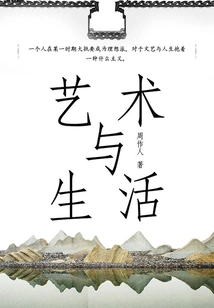
周作人经典作品:艺术与生活
Zhou Zuoren
"Art and Life" is a collection of Zhou Zuoren's essays from 1917 to 1926. There are 20 articles in total. The articles are relatively long and have a more serious attitude. Since Zhou Zuoren's opinions on literature, art and life are mostly here, it is titled "Art and Life". Zhou Zuoren is one of the representatives of the May Fourth New Literature Movement, and "Art and Life" mainly reflects his appearance as a thinker and literary theorist during that period.
"Art and Life" is a collection of Zhou Zuoren's essays from 1917 to 1926. There are 20 articles in total. The articles are relatively long and have a more serious attitude. Since Zhou Zuoren's opinions on literature, art and life are mostly here, it is titled "Art and Life". Zhou Zuoren is one of the representatives of the May Fourth New Literature Movement, and "Art and Life" mainly reflects his appearance as a thinker and literary theorist during that period.
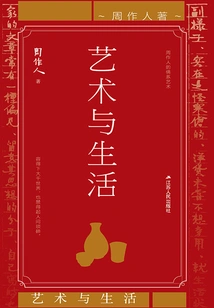
Art and Life
Literature艺术与生活
Zhou Zuoren
"Art and Life" is a long collection of essays among all Zhou Zuoren's works, which establishes his humanitarian ideological tone. In "Art and Life", Zhou Zuoren discusses the relationship between literature and life from the perspective of a thinker. His focus is no longer limited to thinking about literature itself, but also involves the impact of women, children, and exotic folk literature on real life.
"Art and Life" is a long collection of essays among all Zhou Zuoren's works, which establishes his humanitarian ideological tone. In "Art and Life", Zhou Zuoren discusses the relationship between literature and life from the perspective of a thinker. His focus is no longer limited to thinking about literature itself, but also involves the impact of women, children, and exotic folk literature on real life.
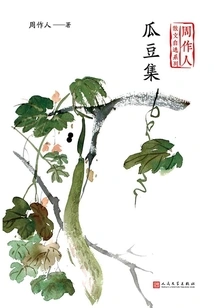
瓜豆集(周作人散文自选系列)
Zhou Zuoren
"Gua Dou Ji" contains thirty-three essays by Zhou Zuoren, written from May to December 1936. In addition to essays such as "The Bean" and "Talking About Raising Birds", there are also several works recalling characters. Moreover, Zhou Zuoren also put forward his own views on family and women's issues, reflecting his consistent sympathetic attitude.
"Gua Dou Ji" contains thirty-three essays by Zhou Zuoren, written from May to December 1936. In addition to essays such as "The Bean" and "Talking About Raising Birds", there are also several works recalling characters. Moreover, Zhou Zuoren also put forward his own views on family and women's issues, reflecting his consistent sympathetic attitude.
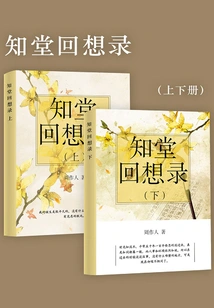
Memoirs of Zhitang (set of Two Volumes)
Literature知堂回想录(套装共两册)
Zhou Zuoren
This book is Zhou Zuoren's review of his important life experiences in his later years, detailing the important modern historical events he experienced personally, such as the Revolution of 1911, Zhang Xun's Restoration, the New Culture Movement, May 30, March 18th, the Northern Expedition, the Qing Party, etc. It is a must-read for understanding the history and culture of modern China, with both literary and historical materials. Initially, there were only a few sections of "Jiu Lu of Peking University". Later, I was invited by Cao Juren to start "Reminiscing on a Lifetime", which lasted more than two years and was completed in 207 sections. The overall title of the manuscript was "Talk about the past in Yaotang", but it was renamed "Reminiscences of Zhitang" when it was published. Mr. Cao Juren said: "If such a good memoir is buried and not seen by the world, how can I stand up to the Chinese cultural world thousands of years later?"
This book is Zhou Zuoren's review of his important life experiences in his later years, detailing the important modern historical events he experienced personally, such as the Revolution of 1911, Zhang Xun's Restoration, the New Culture Movement, May 30, March 18th, the Northern Expedition, the Qing Party, etc. It is a must-read for understanding the history and culture of modern China, with both literary and historical materials. Initially, there were only a few sections of "Jiu Lu of Peking University". Later, I was invited by Cao Juren to start "Reminiscing on a Lifetime", which lasted more than two years and was completed in 207 sections. The overall title of the manuscript was "Talk about the past in Yaotang", but it was renamed "Reminiscences of Zhitang" when it was published. Mr. Cao Juren said: "If such a good memoir is buried and not seen by the world, how can I stand up to the Chinese cultural world thousands of years later?"
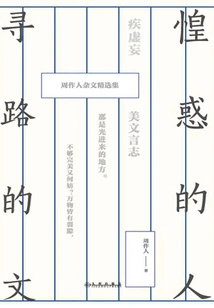
惶惑的人,寻路的文:周作人杂文精选集
Zhou Zuoren
Zhou Zuoren's articles are among the most interesting. His reputation is much higher than that of his contemporaries, and his intellectual power is no less than that of Lu Xun. He combined the thoughts of a thinker and the inspiration of an artist, and appeared in the form of essays, describing the world's longitude and latitude, and discussing the past events of the world, forming an independent writing style. This book contains Zhou Zuoren's "Hand of Glory", "Japanese Peeps", "Imprisonment in a Women's College" and many other classic essays, short essays, and miscellaneous talks. The articles are exquisite and sophisticated, allowing you and me who read and appreciate words to feel the emotional threads of their calm words and find a little bit of light in the boring literature and history.
Zhou Zuoren's articles are among the most interesting. His reputation is much higher than that of his contemporaries, and his intellectual power is no less than that of Lu Xun. He combined the thoughts of a thinker and the inspiration of an artist, and appeared in the form of essays, describing the world's longitude and latitude, and discussing the past events of the world, forming an independent writing style. This book contains Zhou Zuoren's "Hand of Glory", "Japanese Peeps", "Imprisonment in a Women's College" and many other classic essays, short essays, and miscellaneous talks. The articles are exquisite and sophisticated, allowing you and me who read and appreciate words to feel the emotional threads of their calm words and find a little bit of light in the boring literature and history.
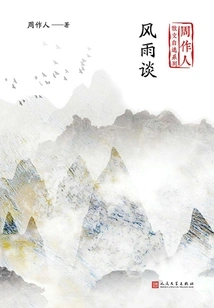
风雨谈(周作人散文自选系列)
Zhou Zuoren
"Talk about Wind and Rain" contains thirty-seven essays by Zhou Zuoren, written from November 1935 to May 1936. Most of them are articles written by Zhou Zuoren after carefully reading his own collection of Ming and Qing notes, such as "Miscellaneous Records of Duyin" and "Yanjing Chronicles". Based on the principle of "emphasis on emotion and reason", he "picked out gold from the sand" to rediscover the literary and ideological value of these Ming and Qing notes.
"Talk about Wind and Rain" contains thirty-seven essays by Zhou Zuoren, written from November 1935 to May 1936. Most of them are articles written by Zhou Zuoren after carefully reading his own collection of Ming and Qing notes, such as "Miscellaneous Records of Duyin" and "Yanjing Chronicles". Based on the principle of "emphasis on emotion and reason", he "picked out gold from the sand" to rediscover the literary and ideological value of these Ming and Qing notes.
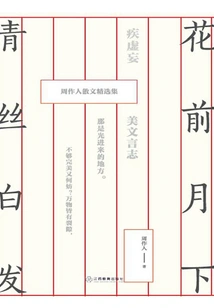
花前月下,青丝白发:周作人散文精选集
Zhou Zuoren
Zhou Zuoren's articles are among the most interesting. His reputation is much higher than that of his contemporaries, and his intellectual power is no less than that of Lu Xun. He combined the thoughts of a thinker and the inspiration of an artist, and appeared in the form of essays, describing the world's longitude and latitude, and discussing the past events of the world, forming an independent writing style. This book contains Zhou Zuoren's "My Own Garden", "Bitter Rain", "Wooden Boat" and many other classic prose, essays, and miscellaneous talks. The chapters are exquisite and precise, allowing you and me who read and appreciate words to feel the emotional threads of their calm words and find a little bit of light in the boring literature and history.
Zhou Zuoren's articles are among the most interesting. His reputation is much higher than that of his contemporaries, and his intellectual power is no less than that of Lu Xun. He combined the thoughts of a thinker and the inspiration of an artist, and appeared in the form of essays, describing the world's longitude and latitude, and discussing the past events of the world, forming an independent writing style. This book contains Zhou Zuoren's "My Own Garden", "Bitter Rain", "Wooden Boat" and many other classic prose, essays, and miscellaneous talks. The chapters are exquisite and precise, allowing you and me who read and appreciate words to feel the emotional threads of their calm words and find a little bit of light in the boring literature and history.
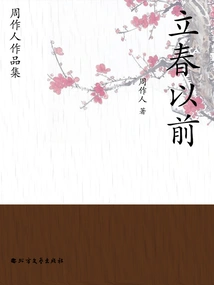
周作人作品集:立春以前
Zhou Zuoren
"Before the Beginning of Spring" is unordered, has a postscript, and contains thirty-three articles ("Several Inscriptions and Postscripts" are divided into eight articles), "almost all written in half a year", and almost all of them are "serious articles" with the same content as other "main collections". The content of the article includes discussions on women, children, human cultivation, article writing, descriptions of plants, trees, fish and insects, experiences and lessons on seeking knowledge and learning, and beautiful words. They are all rare and good articles.
"Before the Beginning of Spring" is unordered, has a postscript, and contains thirty-three articles ("Several Inscriptions and Postscripts" are divided into eight articles), "almost all written in half a year", and almost all of them are "serious articles" with the same content as other "main collections". The content of the article includes discussions on women, children, human cultivation, article writing, descriptions of plants, trees, fish and insects, experiences and lessons on seeking knowledge and learning, and beautiful words. They are all rare and good articles.
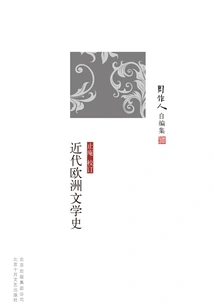
周作人自编集:近代欧洲文学史
Zhou Zuoren
"Zhou Zuoren's Collected Works: History of Modern European Literature" is a companion volume to "History of European Literature". It is a compilation of the "History of European Literature in the Nineteenth Century" lecture notes that Zhou Zuoren taught for the second-year students of Chinese Literature at Peking University after "History of European Literature". The content ranges from the Middle Ages to the 19th century, with a special focus on European legendary and realist literature of the 19th century that had a profound influence on the scholars of the May 4th generation. The lecture notes were not published at the time. A copy of the lecture notes was first discovered in the National Library by scholar Zhi'an in 2005. It was compiled and published in a single volume in 2007, and this time it is included in a self-edited collection for the first time. Zhou's work on literary history has extensive knowledge, profound insights, elegant writing, and easy-to-understand explanations. It is known as the work that started "Chinese Enlightenment Literature."
"Zhou Zuoren's Collected Works: History of Modern European Literature" is a companion volume to "History of European Literature". It is a compilation of the "History of European Literature in the Nineteenth Century" lecture notes that Zhou Zuoren taught for the second-year students of Chinese Literature at Peking University after "History of European Literature". The content ranges from the Middle Ages to the 19th century, with a special focus on European legendary and realist literature of the 19th century that had a profound influence on the scholars of the May 4th generation. The lecture notes were not published at the time. A copy of the lecture notes was first discovered in the National Library by scholar Zhi'an in 2005. It was compiled and published in a single volume in 2007, and this time it is included in a self-edited collection for the first time. Zhou's work on literary history has extensive knowledge, profound insights, elegant writing, and easy-to-understand explanations. It is known as the work that started "Chinese Enlightenment Literature."
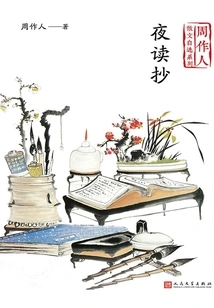
夜读抄(周作人散文自选系列)
Zhou Zuoren
This book contains 47 essays by Zhou Zuoren, which can be regarded as his cultural criticism works. The author chose "articles that combine sound physics and profound human thoughts, and mix the simplicity of prose with the beauty of parallel prose", establishing a new style of "Book Talk", which takes reading as an opportunity, relies on the extension of knowledge and the collision of ideas, and expands into the fields of culture, history and society; in terms of method, he excerpts large sections of the original work and adds a few notes. Therefore, Zhou Zuoren also called himself "Wen Chao Gong". This book embodies this characteristic of Zhou Zuoren.
This book contains 47 essays by Zhou Zuoren, which can be regarded as his cultural criticism works. The author chose "articles that combine sound physics and profound human thoughts, and mix the simplicity of prose with the beauty of parallel prose", establishing a new style of "Book Talk", which takes reading as an opportunity, relies on the extension of knowledge and the collision of ideas, and expands into the fields of culture, history and society; in terms of method, he excerpts large sections of the original work and adds a few notes. Therefore, Zhou Zuoren also called himself "Wen Chao Gong". This book embodies this characteristic of Zhou Zuoren.
周作人经典作品:药堂杂文
Zhou Zuoren
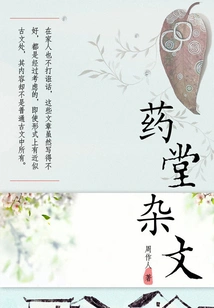
"Yao Tang Zawen" contains a total of twenty-seven articles, including fifteen articles written in the 29th year of the Republic of China, and twelve articles written later by the author. It was originally named "Yilaoxuan Notes" and was later renamed "Yao Tang Zawen". The content is all-encompassing. It is Zhou Zuoren's combing of his own thoughts when he was stranded in the enemy-occupied area at that time, including the traditional future of Chinese literature, women's studies, enlightenment, morality, Chinese thoughts, as well as memories of studying abroad and feelings about old friends.
"Yao Tang Zawen" contains a total of twenty-seven articles, including fifteen articles written in the 29th year of the Republic of China, and twelve articles written later by the author. It was originally named "Yilaoxuan Notes" and was later renamed "Yao Tang Zawen". The content is all-encompassing. It is Zhou Zuoren's combing of his own thoughts when he was stranded in the enemy-occupied area at that time, including the traditional future of Chinese literature, women's studies, enlightenment, morality, Chinese thoughts, as well as memories of studying abroad and feelings about old friends.
周作人集外文:1904~1945
Zhou Zuoren
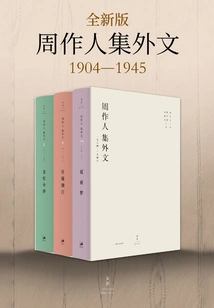
The new edition of "Zhou Zuoren's Collection of Foreign Writings" consists of two volumes. This is the first volume, which includes the collected foreign writings from 1904 to 1945, including prose, old poems, new poems, as well as inscriptions, postscripts, notes written for his own or other people's articles and translations, and other works that have not been included in the self-edited collection. Compared with the previous edition, the new edition of "Zhou Zuoren's Collection of Foreign Languages 1904-1945" took six years of collection, arrangement and revision. It includes the newly discovered Zhou Zuoren's lost writings in recent years, and adds more than 170 articles with more than 100,000 words. In terms of content, articles such as the early "Novel Series" series, "The Meaning of New Literature" in the early days of the May Fourth New Literature Movement, and several open letters discussing "love problems" deserve special attention. In particular, it should be mentioned that the original origin of the famous harmonious poems by Hu Shi and Zhou Zuoren after the outbreak of the Anti-Japanese War has never been clear, which has become an unsolved case in Zhou Zuoren's research. Now a newly published article, "Fang Wai Sing He Shi Chao", provides a new answer to this question. The publication of the new edition of "Zhou Zuoren's Collection of Foreign Languages" is of irreplaceable value to the study of Zhou Zuoren and even to the study of Chinese literary history in the 20th century.
The new edition of "Zhou Zuoren's Collection of Foreign Writings" consists of two volumes. This is the first volume, which includes the collected foreign writings from 1904 to 1945, including prose, old poems, new poems, as well as inscriptions, postscripts, notes written for his own or other people's articles and translations, and other works that have not been included in the self-edited collection. Compared with the previous edition, the new edition of "Zhou Zuoren's Collection of Foreign Languages 1904-1945" took six years of collection, arrangement and revision. It includes the newly discovered Zhou Zuoren's lost writings in recent years, and adds more than 170 articles with more than 100,000 words. In terms of content, articles such as the early "Novel Series" series, "The Meaning of New Literature" in the early days of the May Fourth New Literature Movement, and several open letters discussing "love problems" deserve special attention. In particular, it should be mentioned that the original origin of the famous harmonious poems by Hu Shi and Zhou Zuoren after the outbreak of the Anti-Japanese War has never been clear, which has become an unsolved case in Zhou Zuoren's research. Now a newly published article, "Fang Wai Sing He Shi Chao", provides a new answer to this question. The publication of the new edition of "Zhou Zuoren's Collection of Foreign Languages" is of irreplaceable value to the study of Zhou Zuoren and even to the study of Chinese literary history in the 20th century.
周作人经典作品:药堂语录
Zhou Zuoren
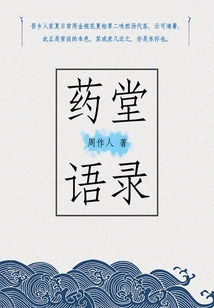
"Yaotang Quotations" contains 50 essays written by Zhou Zuoren around 1940. It is a new attempt in his prose writing style. It is short in length and is close to "notes written by predecessors". Zhou Zuoren said: "Originally, according to the old rules of Confucianism and Buddhism, quotations are the daily words and deeds of the master recorded by his disciples. Wang Zhongyan of Yangzi wrote the book himself, which is very criticized by future generations. Why should we learn it again? This so-called quotation is actually just a name with the same name, and there is no similarity in content. This is what we should do It needs to be explained. "As for the name of the Herbal Medicine Hall, it is meaningless, but it can be said that there is some reason why there is no other name here. Even if it is meaningful, it is fair to say that the articles are not meant to be critical, but the books mentioned in them are all ancient Chinese books, especially there are many notes. These articles all reveal the author's comments and sorting out of ideological and cultural aspects, from which we can see some flashes of the author's thoughts, which should be read frequently and always new.
"Yaotang Quotations" contains 50 essays written by Zhou Zuoren around 1940. It is a new attempt in his prose writing style. It is short in length and is close to "notes written by predecessors". Zhou Zuoren said: "Originally, according to the old rules of Confucianism and Buddhism, quotations are the daily words and deeds of the master recorded by his disciples. Wang Zhongyan of Yangzi wrote the book himself, which is very criticized by future generations. Why should we learn it again? This so-called quotation is actually just a name with the same name, and there is no similarity in content. This is what we should do It needs to be explained. "As for the name of the Herbal Medicine Hall, it is meaningless, but it can be said that there is some reason why there is no other name here. Even if it is meaningful, it is fair to say that the articles are not meant to be critical, but the books mentioned in them are all ancient Chinese books, especially there are many notes. These articles all reveal the author's comments and sorting out of ideological and cultural aspects, from which we can see some flashes of the author's thoughts, which should be read frequently and always new.
周作人经典散文集(套装共7册)
Zhou Zuoren
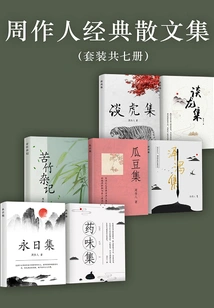
This set of books includes a total of seven volumes: "Tanlong Collection", "Tanhu Collection", "Guandou Collection", "Bitter Bamboo Miscellaneous Notes", "Yongri Collection", "Alismatis Collection" and "Yaowei Collection". Mr. Zhou Zuoren's large number of prose works are "comments on all human affairs". These works are rich in content, covering a wide range of topics, and the writing style is vivid and smooth. They may seem disorganized but contain exquisite details, which fully demonstrates the author's ability to control words. It has high literary quality, artistic quality and readability. The article has a clear stance and fierce language, fully demonstrating the appearance of a social critic.
This set of books includes a total of seven volumes: "Tanlong Collection", "Tanhu Collection", "Guandou Collection", "Bitter Bamboo Miscellaneous Notes", "Yongri Collection", "Alismatis Collection" and "Yaowei Collection". Mr. Zhou Zuoren's large number of prose works are "comments on all human affairs". These works are rich in content, covering a wide range of topics, and the writing style is vivid and smooth. They may seem disorganized but contain exquisite details, which fully demonstrates the author's ability to control words. It has high literary quality, artistic quality and readability. The article has a clear stance and fierce language, fully demonstrating the appearance of a social critic.
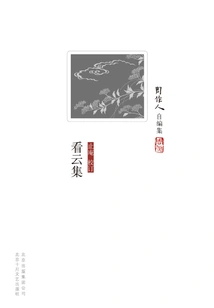
周作人自编集:看云集
Zhou Zuoren
"Zhou Zuoren's Collected Works: Looking at the Clouds" contains a total of forty-one essays by Zhou Zuoren, which reflects the author's profound education and extensive knowledge. Whether they are entertaining and leisurely sketches or King Kong's angry comments on current affairs, they are all truth-seeking works with "appreciation mixed with criticism". Words of worry, anger, depression and pain can be seen everywhere. For example, he said, "I think moral control in a civilized society should be very broad, but honesty should be required... I think it is better for us to be true evil than to be hypocritical. For true evil, we still have to be responsible and take risks." This is also a good medicine for China today. "Zhou Zuoren's Collected Works: Kanyun Ji" has been carefully edited by Zhi'an, making it the most comprehensive and authoritative collection of Zhou's essays on the market.
"Zhou Zuoren's Collected Works: Looking at the Clouds" contains a total of forty-one essays by Zhou Zuoren, which reflects the author's profound education and extensive knowledge. Whether they are entertaining and leisurely sketches or King Kong's angry comments on current affairs, they are all truth-seeking works with "appreciation mixed with criticism". Words of worry, anger, depression and pain can be seen everywhere. For example, he said, "I think moral control in a civilized society should be very broad, but honesty should be required... I think it is better for us to be true evil than to be hypocritical. For true evil, we still have to be responsible and take risks." This is also a good medicine for China today. "Zhou Zuoren's Collected Works: Kanyun Ji" has been carefully edited by Zhi'an, making it the most comprehensive and authoritative collection of Zhou's essays on the market.
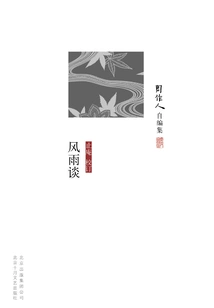
周作人自编集:风雨谈
Zhou Zuoren
"Zhou Zuoren's Collected Works: Wind and Rain Talk" collects Zhou Zuoren's works from November 1935 to May 1936. In the book, Zhou focused on a careful examination of ancient Chinese writings, covering a wide range of fields and investing a lot of energy. Although the articles he wrote were all short, the work was systematic. This kind of examination is first of all ideological, and the author's literary concepts are also reflected from time to time. His skill is "picking gold from sand", and his attitude is "praise and criticism are obvious". He has seen many disadvantages and also found some advantages in the works of the ancients. The criteria for choosing among them are the always-emphasized "disease against illusion" and "emphasis on emotion and reason"; in other words, his stance is scientific spirit and humanism, or modern civilization together.
"Zhou Zuoren's Collected Works: Wind and Rain Talk" collects Zhou Zuoren's works from November 1935 to May 1936. In the book, Zhou focused on a careful examination of ancient Chinese writings, covering a wide range of fields and investing a lot of energy. Although the articles he wrote were all short, the work was systematic. This kind of examination is first of all ideological, and the author's literary concepts are also reflected from time to time. His skill is "picking gold from sand", and his attitude is "praise and criticism are obvious". He has seen many disadvantages and also found some advantages in the works of the ancients. The criteria for choosing among them are the always-emphasized "disease against illusion" and "emphasis on emotion and reason"; in other words, his stance is scientific spirit and humanism, or modern civilization together.
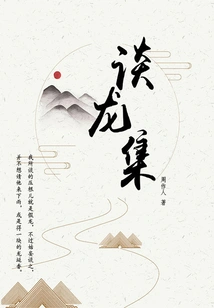
周作人经典作品:谈龙集
Zhou Zuoren
"Talking about the Dragon" contains several essays by Zhou Zuoren, the contents of which are "slightly related to literature and art", including literary criticism, commemorations of writers, Chinese and foreign folk songs, Japanese ancient history and short poems, Greek myths and short poems, obscene ballads, translation issues, etc. It is also the main work of Zhou Zuoren as a literary theorist. Since then, his essay writing has been more closely related to "Tan Long Ji" in terms of his points of interest and approach.
"Talking about the Dragon" contains several essays by Zhou Zuoren, the contents of which are "slightly related to literature and art", including literary criticism, commemorations of writers, Chinese and foreign folk songs, Japanese ancient history and short poems, Greek myths and short poems, obscene ballads, translation issues, etc. It is also the main work of Zhou Zuoren as a literary theorist. Since then, his essay writing has been more closely related to "Tan Long Ji" in terms of his points of interest and approach.
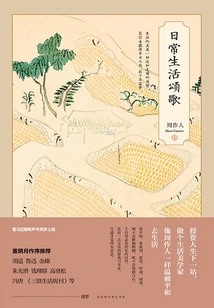
Ode to Everyday Life
Literature日常生活颂歌
Zhou Zuoren
Life is interesting only when you watch the sunset, watch the autumn river, see flowers, listen to the rain, smell the fragrance, drink wine that doesn't satisfy your thirst, eat snacks that don't fill you up, and have some useless games and pleasures in addition to the daily necessities. Zhou Zuoren said that one should treat life as an art and live subtly and beautifully. "Ode to Daily Life" is the essence of Zhou Zuoren's leisurely style of writing. Drinking tea, enjoying the rain and talking about the sky, hometown delicacies, local customs, and every indescribable plant, tree, insect, and fish in the world are all full of long-lasting affection and meaning in his writing. Whether Zhou Zuoren talks about food or things, the important thing is not the things he talks about, but the leisurely and leisurely way he treats life at this time. The beauty of life is an almost useless leisure. May you also have half a day of leisure, which is worth ten years of mortal dreams.
Life is interesting only when you watch the sunset, watch the autumn river, see flowers, listen to the rain, smell the fragrance, drink wine that doesn't satisfy your thirst, eat snacks that don't fill you up, and have some useless games and pleasures in addition to the daily necessities. Zhou Zuoren said that one should treat life as an art and live subtly and beautifully. "Ode to Daily Life" is the essence of Zhou Zuoren's leisurely style of writing. Drinking tea, enjoying the rain and talking about the sky, hometown delicacies, local customs, and every indescribable plant, tree, insect, and fish in the world are all full of long-lasting affection and meaning in his writing. Whether Zhou Zuoren talks about food or things, the important thing is not the things he talks about, but the leisurely and leisurely way he treats life at this time. The beauty of life is an almost useless leisure. May you also have half a day of leisure, which is worth ten years of mortal dreams.
They Are All Pitiful Human Beings
Literature都是可怜的人间
Zhou Zuoren
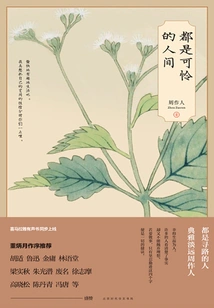
Zhou Zuoren said, "I am lucky to be born as a human being." He also said, "Many people see the facts clearly but cannot abandon their ideals, so they are just bored." However, despite his disappointment, he still believed that "knowing yourself is not easy, but I still want to work hard." Articles such as "What I Can Do", "One of the Dreams", "The Uselessness of Lessons" and "Useless Feelings" were selected from "They Are All Poor Humans". Everyone in this world is pitiful. Zhou Zuoren is a "pessimist with ideals", but he still firmly believes that "if you want to do something, the four words of perseverance and diligence are the shortcut to everything."
Zhou Zuoren said, "I am lucky to be born as a human being." He also said, "Many people see the facts clearly but cannot abandon their ideals, so they are just bored." However, despite his disappointment, he still believed that "knowing yourself is not easy, but I still want to work hard." Articles such as "What I Can Do", "One of the Dreams", "The Uselessness of Lessons" and "Useless Feelings" were selected from "They Are All Poor Humans". Everyone in this world is pitiful. Zhou Zuoren is a "pessimist with ideals", but he still firmly believes that "if you want to do something, the four words of perseverance and diligence are the shortcut to everything."
周作人经典作品:木片集
Zhou Zuoren
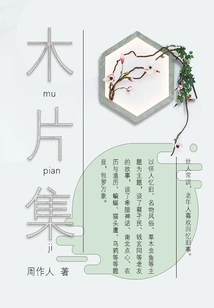
"Woodchip Collection" takes themes such as nostalgia, famous things and customs, plants, trees, insects and fish as its themes. It tells the stories of old friends Cai Jiemin, Qian Xuandong, Greek mythology, northern and southern snacks, lunar and fishing calendars, bats, owls, crows and other topics, covering everything. This book does not have long essays or a large number of quotations from ancient texts. The articles are concise and clear, sometimes mixed with humorous remarks. It is a representative work of Zhou Zuoren's later prose.
"Woodchip Collection" takes themes such as nostalgia, famous things and customs, plants, trees, insects and fish as its themes. It tells the stories of old friends Cai Jiemin, Qian Xuandong, Greek mythology, northern and southern snacks, lunar and fishing calendars, bats, owls, crows and other topics, covering everything. This book does not have long essays or a large number of quotations from ancient texts. The articles are concise and clear, sometimes mixed with humorous remarks. It is a representative work of Zhou Zuoren's later prose.
相见时,愿好生看待
Zhou Zuoren
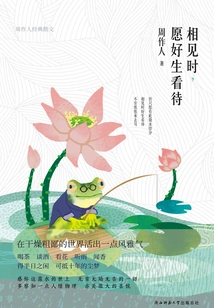
This book is a youth version of Zhou Zuoren's prose collection. It selects the most representative works of Zhou Zuoren in each period of his creation, including the leisurely sketches for which Zhou is famous in the literary world, the sharp and impetuous essays, the essays about folk customs and old friends in the literary world, and the "wenchaogongti" essays that Zhou himself treasures.
This book is a youth version of Zhou Zuoren's prose collection. It selects the most representative works of Zhou Zuoren in each period of his creation, including the leisurely sketches for which Zhou is famous in the literary world, the sharp and impetuous essays, the essays about folk customs and old friends in the literary world, and the "wenchaogongti" essays that Zhou himself treasures.
周作人作品集:风雨谈
Zhou Zuoren
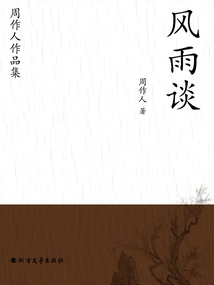
"Talk about Wind and Rain" contains thirty-seven essays by Zhou Zuoren, written from November 1935 to May 1936. Most of them are articles written by Zhou Zuoren after carefully reading his own collection of Ming and Qing notes, such as "Miscellaneous Records of Duyin" and "Yanjing Chronicles". Based on the principle of "emphasis on emotion and reason", he "picked out gold from the sand" to rediscover the literary and ideological value of these Ming and Qing notes.
"Talk about Wind and Rain" contains thirty-seven essays by Zhou Zuoren, written from November 1935 to May 1936. Most of them are articles written by Zhou Zuoren after carefully reading his own collection of Ming and Qing notes, such as "Miscellaneous Records of Duyin" and "Yanjing Chronicles". Based on the principle of "emphasis on emotion and reason", he "picked out gold from the sand" to rediscover the literary and ideological value of these Ming and Qing notes.
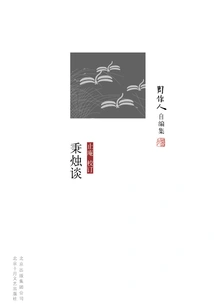
周作人自编集:秉烛谈
Zhou Zuoren
"Zhou Zuoren's Collected Works: Bingzhu Tan" collects Zhou Zuoren's works from November 1936 to April 1937. In his later years, the author looked back on his writings and emphasized the concentration of cultural criticism works such as "Fu De Mao". The materials are drawn from ancient and modern times, Chinese and foreign, and are all based on the author's special knowledge, special interests and special discoveries. It can be said that discovery is due to knowledge, and interest is due to discovery, and both discovery and knowledge are included in taste. Because they are interesting articles, they are written in a casual style. Although they are heavy in weight and profound in conception, these articles are among Zhou Zuoren's best works and best represent his characteristics, both in terms of artistry and ideological considerations.
"Zhou Zuoren's Collected Works: Bingzhu Tan" collects Zhou Zuoren's works from November 1936 to April 1937. In his later years, the author looked back on his writings and emphasized the concentration of cultural criticism works such as "Fu De Mao". The materials are drawn from ancient and modern times, Chinese and foreign, and are all based on the author's special knowledge, special interests and special discoveries. It can be said that discovery is due to knowledge, and interest is due to discovery, and both discovery and knowledge are included in taste. Because they are interesting articles, they are written in a casual style. Although they are heavy in weight and profound in conception, these articles are among Zhou Zuoren's best works and best represent his characteristics, both in terms of artistry and ideological considerations.
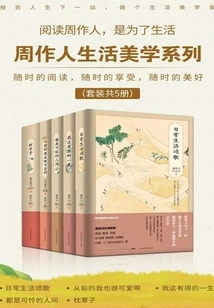
周作人生活美学系列(套装共5册)
Zhou Zuoren
The elegance of life needs to be adhered to. Reading Zhou Zuoren is for living. "Zhou Zuoren's Life Aesthetics Series" includes three works by Zhou Zuoren: "Ode to Daily Life", "My Limited Life" and "It's All a Poor World" and two translations of "Pillow" and "I Was Lovely Too". The selected articles from the three books focus on Zhou Zuoren's articles about life, himself and others' life experiences. Regarding life, he said: I just hope and pray that my state of mind will no longer be rough and desolate. This is my greatest wish. It is quite pleasant to drink clear spring green tea with two or three people under the paper windows of the tiled house and talk about insignificant things. He said: Life should be lived subtly and beautifully. I hope that those who read Zhou Zuoren can have half a day's leisure, which is worth ten years of mortal dreams. To understand Zhou Zuoren, reading this set of books is enough.
The elegance of life needs to be adhered to. Reading Zhou Zuoren is for living. "Zhou Zuoren's Life Aesthetics Series" includes three works by Zhou Zuoren: "Ode to Daily Life", "My Limited Life" and "It's All a Poor World" and two translations of "Pillow" and "I Was Lovely Too". The selected articles from the three books focus on Zhou Zuoren's articles about life, himself and others' life experiences. Regarding life, he said: I just hope and pray that my state of mind will no longer be rough and desolate. This is my greatest wish. It is quite pleasant to drink clear spring green tea with two or three people under the paper windows of the tiled house and talk about insignificant things. He said: Life should be lived subtly and beautifully. I hope that those who read Zhou Zuoren can have half a day's leisure, which is worth ten years of mortal dreams. To understand Zhou Zuoren, reading this set of books is enough.
Zhou Zuoren's Prose
General Fiction周作人散文
Zhou Zuoren
This book is one of the collections of Chinese prose collections, and includes 90 of Zhou Zuoren's famous prose works such as "Wild Vegetables in Hometown", "Wooden Boat" and "Drinking Tea", which fully demonstrates the author's rich life experience, profound literary foundation and "peaceful dilution" artistic style.
This book is one of the collections of Chinese prose collections, and includes 90 of Zhou Zuoren's famous prose works such as "Wild Vegetables in Hometown", "Wooden Boat" and "Drinking Tea", which fully demonstrates the author's rich life experience, profound literary foundation and "peaceful dilution" artistic style.
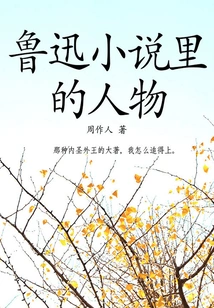
周作人经典作品:鲁迅小说里的人物
Zhou Zuoren
"Characters in Lu Xun's Novels", like "Lu Xun's Hometown", focuses on exploring the various characters in Lu Xun's novels, such as character prototypes, background deeds, etc. On the surface, it is doing index research, but in fact it sheds light on customs, introduces interesting local dialects, and comments on the relationship between poetry and reality. The insights are very insightful and can often reveal the wonderful features of Lu Xun's novels that others cannot see.
"Characters in Lu Xun's Novels", like "Lu Xun's Hometown", focuses on exploring the various characters in Lu Xun's novels, such as character prototypes, background deeds, etc. On the surface, it is doing index research, but in fact it sheds light on customs, introduces interesting local dialects, and comments on the relationship between poetry and reality. The insights are very insightful and can often reveal the wonderful features of Lu Xun's novels that others cannot see.
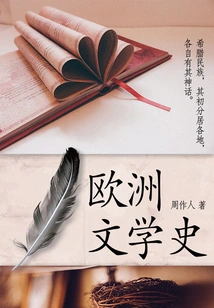
周作人经典作品:欧洲文学史
Zhou Zuoren
"History of European Literature" is a compilation of the lecture notes given by Zhou Zuoren, who was employed as a professor of liberal arts at Peking University in 1917 and taught the "History of European Literature" course in the first-year Chinese Studies course. Narrating the development history of European literature from ancient Greece to the 18th century, it is an important achievement of Zhou Zuoren and his brother Lu Xun's "search for new voices in foreign countries" after they jointly translated "Collection of Foreign Novels". It is also China's first relatively systematic history of European literature. Zhou Zuoren's advocacy of "human literature" and ideological revolution during the May Fourth Movement can all be traced back to this, and he made great contributions to the New Culture Movement.
"History of European Literature" is a compilation of the lecture notes given by Zhou Zuoren, who was employed as a professor of liberal arts at Peking University in 1917 and taught the "History of European Literature" course in the first-year Chinese Studies course. Narrating the development history of European literature from ancient Greece to the 18th century, it is an important achievement of Zhou Zuoren and his brother Lu Xun's "search for new voices in foreign countries" after they jointly translated "Collection of Foreign Novels". It is also China's first relatively systematic history of European literature. Zhou Zuoren's advocacy of "human literature" and ideological revolution during the May Fourth Movement can all be traced back to this, and he made great contributions to the New Culture Movement.
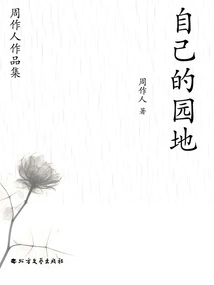
周作人作品集:自己的园地
Zhou Zuoren
This book is a collection of Zhou Zuoren's early self-selected essays, divided into three series, with a total of 56 essays. The collected articles are mostly landscape sketches and essays, with a calm style. Among them, "My Own Garden" and "Oasis" are close to literary criticism, while "Tea Talk" is a miscellaneous essay. "Oasis" is full of interest, and its technique has been followed by many of the author's subsequent essay creations; "My Own Garden" is a mirror of the author's literary and artistic thoughts at this stage, and a few argumentative essays express the author's unique insights into literary issues.
This book is a collection of Zhou Zuoren's early self-selected essays, divided into three series, with a total of 56 essays. The collected articles are mostly landscape sketches and essays, with a calm style. Among them, "My Own Garden" and "Oasis" are close to literary criticism, while "Tea Talk" is a miscellaneous essay. "Oasis" is full of interest, and its technique has been followed by many of the author's subsequent essay creations; "My Own Garden" is a mirror of the author's literary and artistic thoughts at this stage, and a few argumentative essays express the author's unique insights into literary issues.
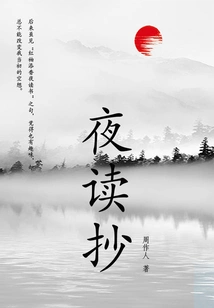
周作人经典作品:夜读抄
Zhou Zuoren
"Ye Du Chao" contains nearly 50 essays by Zhou Zuoren, which can be regarded as works of cultural criticism. Among Zhou Zuoren's many works, "Ye Du Chao" has a particularly important position, because from the beginning of "Ye Du Chao", Zhou Zuoren established his own mature and stereotyped style.
"Ye Du Chao" contains nearly 50 essays by Zhou Zuoren, which can be regarded as works of cultural criticism. Among Zhou Zuoren's many works, "Ye Du Chao" has a particularly important position, because from the beginning of "Ye Du Chao", Zhou Zuoren established his own mature and stereotyped style.
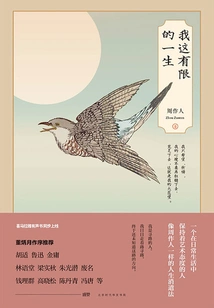
My Limited Life
Literature我这有限的一生
Zhou Zuoren
Zhou Zuoren said that his ideal was just an ordinary and real life, and he disliked anything that was fanatical or vain, whether good or evil. Zhou Zuoren longed for leisure in his heart-heating a bowl over a charcoal fire, drinking tea, and chatting with friends-but these were just fantasies after all. He said to himself: His mind was unfocused, like expired shochu, with no flavor at all. Zhou Zuoren calls himself the Kucha Old Man, the owner of "Kucha Temple", but he has a bitter view of his life full of hesitation and helplessness. He regards everything as floating clouds and lives happily, just hoping that his state of mind will no longer be rough and desolate. "My Limited Life" selects dozens of articles by Zhou Zuoren, including memories of the days of freedom and relaxation, observations on the suffering of life, and analysis of one's own thoughts and destiny. Zhou Zuoren wears the clothes of moderation and plain clothes, and has his own way of entertainment in the bitter life.
Zhou Zuoren said that his ideal was just an ordinary and real life, and he disliked anything that was fanatical or vain, whether good or evil. Zhou Zuoren longed for leisure in his heart-heating a bowl over a charcoal fire, drinking tea, and chatting with friends-but these were just fantasies after all. He said to himself: His mind was unfocused, like expired shochu, with no flavor at all. Zhou Zuoren calls himself the Kucha Old Man, the owner of "Kucha Temple", but he has a bitter view of his life full of hesitation and helplessness. He regards everything as floating clouds and lives happily, just hoping that his state of mind will no longer be rough and desolate. "My Limited Life" selects dozens of articles by Zhou Zuoren, including memories of the days of freedom and relaxation, observations on the suffering of life, and analysis of one's own thoughts and destiny. Zhou Zuoren wears the clothes of moderation and plain clothes, and has his own way of entertainment in the bitter life.
周作人作品集:药味集
Zhou Zuoren
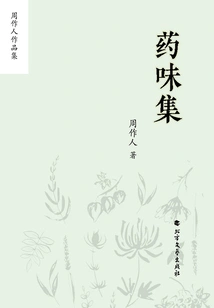
"Collection of Medicinal Flavors" contains more than 20 classic prose works by Mr. Zhou Zuoren. Most of his articles describe ordinary fragments of life. The lines are full of tranquility and tranquility, but they can penetrate people's hearts. They often fascinate readers with just a few words. Zhou Zuoren in "The Collection of Medicinal Flavors" is a person who understands life. The plants, trees, flying insects, rain and dew in his works are full of aura, distant but not distorted. Through "Collection of Medicinal Flavors", he opened a window for the world. Through that window, we can still see the original state of the ancient market and the style of the times.
"Collection of Medicinal Flavors" contains more than 20 classic prose works by Mr. Zhou Zuoren. Most of his articles describe ordinary fragments of life. The lines are full of tranquility and tranquility, but they can penetrate people's hearts. They often fascinate readers with just a few words. Zhou Zuoren in "The Collection of Medicinal Flavors" is a person who understands life. The plants, trees, flying insects, rain and dew in his works are full of aura, distant but not distorted. Through "Collection of Medicinal Flavors", he opened a window for the world. Through that window, we can still see the original state of the ancient market and the style of the times.
苦竹杂记(周作人散文自选系列)
Zhou Zuoren
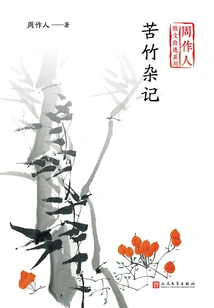
"Bitter Bamboo Miscellaneous Notes" was first published in October 1935. It contains fifty-one essays by Zhou Zuoren, including leisurely essays such as "Winter Flies", "Persimmon Seeds" and "Childhood Memories", as well as essays such as "Fear of Heaven and Compassion for Man", "Emotions and Reasons" and "Common Sense". It contains compassion in conciseness and remoteness, and is a work of temperament with emotional depth.
"Bitter Bamboo Miscellaneous Notes" was first published in October 1935. It contains fifty-one essays by Zhou Zuoren, including leisurely essays such as "Winter Flies", "Persimmon Seeds" and "Childhood Memories", as well as essays such as "Fear of Heaven and Compassion for Man", "Emotions and Reasons" and "Common Sense". It contains compassion in conciseness and remoteness, and is a work of temperament with emotional depth.
周作人论鲁迅(套装共三册)
Zhou Zuoren
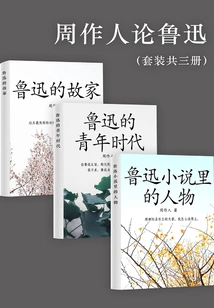
"Lu Xun's Youth" is a collection of commemorative texts written by Zhou Zuoren at the invitation of newspapers and magazines on the 20th anniversary of Lu Xun's death. In addition to the "Lu Xun's Hometown" and "Characters in Lu Xun's Novels" he has written, some new content has also been added. Zhou Zuoren, the second brother of Lu Xun, is an encyclopedic figure in the history of modern Chinese literature and one of the people who knows Lu Xun best. Therefore, this book is different from other works about Lu Xun. It more systematically introduces Lu Xun's early life, academic interests, and the foundation of his thoughts, etc., Allowing readers to understand a different Lu Xun.
"Lu Xun's Youth" is a collection of commemorative texts written by Zhou Zuoren at the invitation of newspapers and magazines on the 20th anniversary of Lu Xun's death. In addition to the "Lu Xun's Hometown" and "Characters in Lu Xun's Novels" he has written, some new content has also been added. Zhou Zuoren, the second brother of Lu Xun, is an encyclopedic figure in the history of modern Chinese literature and one of the people who knows Lu Xun best. Therefore, this book is different from other works about Lu Xun. It more systematically introduces Lu Xun's early life, academic interests, and the foundation of his thoughts, etc., Allowing readers to understand a different Lu Xun.
周作人作品集:苦竹杂记
Zhou Zuoren
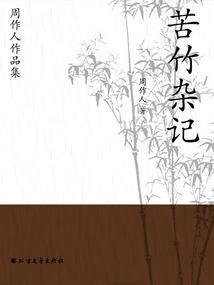
"Bitter Bamboo Miscellaneous Notes" was first published in October 1935. It contains fifty-one essays by Zhou Zuoren, including leisurely essays such as "Winter Flies", "Persimmon Seeds" and "Childhood Memories", as well as essays such as "Fear of Heaven and Compassion for Man", "Emotions and Reasons" and "Common Sense". It contains compassion in conciseness and remoteness, and is a work of temperament with emotional depth.
"Bitter Bamboo Miscellaneous Notes" was first published in October 1935. It contains fifty-one essays by Zhou Zuoren, including leisurely essays such as "Winter Flies", "Persimmon Seeds" and "Childhood Memories", as well as essays such as "Fear of Heaven and Compassion for Man", "Emotions and Reasons" and "Common Sense". It contains compassion in conciseness and remoteness, and is a work of temperament with emotional depth.
周作人作品集:苦茶随笔
Zhou Zuoren
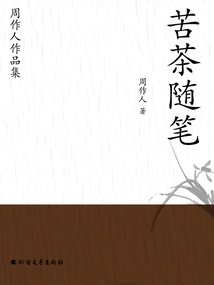
This book contains about 50 prose essays by Zhou Zuoren, such as "About Bitter Tea", "Old Notes", "Analects of Confucius", "Changdian No. 2", "Scientific Essays" and "Modern Prose Short Preface", which contain the author's sober thinking about tea and life. The whole book gives people a sense of artistic freshness. Reading "Essays on Bitter Tea" is like tasting a cup of real bitter tea.
This book contains about 50 prose essays by Zhou Zuoren, such as "About Bitter Tea", "Old Notes", "Analects of Confucius", "Changdian No. 2", "Scientific Essays" and "Modern Prose Short Preface", which contain the author's sober thinking about tea and life. The whole book gives people a sense of artistic freshness. Reading "Essays on Bitter Tea" is like tasting a cup of real bitter tea.
周作人自编集:谈虎集
Zhou Zuoren
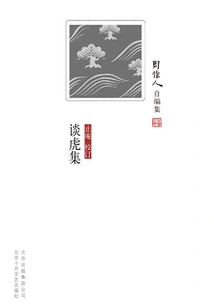
"Tan Hu Ji" contains 132 essays written by the author from 1919 to 1927, "comments on all human affairs". During the May Fourth era, Zhou Zuoren appeared as an advocate of "ideological revolution". The "ideological revolution" and "ancestor worship" in this episode are its main symbols. The articles in "Tan Hu Ji" have clear stances and fierce words, fully demonstrating the appearance of a social critic.
"Tan Hu Ji" contains 132 essays written by the author from 1919 to 1927, "comments on all human affairs". During the May Fourth era, Zhou Zuoren appeared as an advocate of "ideological revolution". The "ideological revolution" and "ancestor worship" in this episode are its main symbols. The articles in "Tan Hu Ji" have clear stances and fierce words, fully demonstrating the appearance of a social critic.
雨天的书:周作人作品精选集
Zhou Zuoren
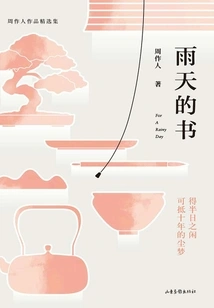
"Books on Rainy Days" selects more than 80 works by Zhou Zuoren. Including famous works such as "Tea Food in Beijing", "Wild Vegetables in Hometown" and "Drinking Tea". Most of them talk about drinking, tea, snacks, and various gadgets. There are also some of the bonds he has with people, the impact he has as a bystander. Write about his first love, his young daughter who fell ill and died, or the fate of one or two ordinary villagers. The article is "dilute in artistic conception but profound in thought", just like he said that his ideal is just an ordinary and real life, and he dislikes anything that is fanatical and vain, whether good or evil.
"Books on Rainy Days" selects more than 80 works by Zhou Zuoren. Including famous works such as "Tea Food in Beijing", "Wild Vegetables in Hometown" and "Drinking Tea". Most of them talk about drinking, tea, snacks, and various gadgets. There are also some of the bonds he has with people, the impact he has as a bystander. Write about his first love, his young daughter who fell ill and died, or the fate of one or two ordinary villagers. The article is "dilute in artistic conception but profound in thought", just like he said that his ideal is just an ordinary and real life, and he dislikes anything that is fanatical and vain, whether good or evil.
Collected by Zhou Zuoren: Essays on Children's Literature: the Origin of Chinese New Literature
Literature周作人自编集:儿童文学小论中国新文学的源流
Zhou Zuoren
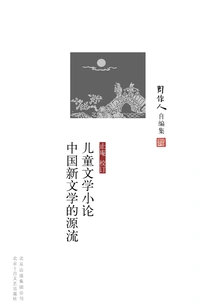
Zhang Yiqujun was my classmate when I was teaching at No. 5 Middle School in this province. It was from the second to the sixth year of the Republic of China. I came to Beijing in the spring of the sixth year and never went back. Zhang Jun had already graduated and left. In the winter of 1991, I suddenly received a letter from Zhang Jun, saying that a children's bookstore was now established in Shanghai, specializing in all kinds of books for children, and asked me to help him. This is something I am very willing to do, because providing children's books is a very important job nowadays, and I have also wanted to get involved in it. However, the teaching profession is really busy. I have verbally agreed for a long time, but I always have no results. To be honest, I haven't started yet. Seeing that twenty years would be over, I felt that such a procrastination would not be a problem, so I decided to compile a booklet first to make up for my responsibilities, and then plan other work after the new year. I wrote to Zhang Jun and he agreed, and the result was this volume "A Brief Treatise on Children's Literature".
Zhang Yiqujun was my classmate when I was teaching at No. 5 Middle School in this province. It was from the second to the sixth year of the Republic of China. I came to Beijing in the spring of the sixth year and never went back. Zhang Jun had already graduated and left. In the winter of 1991, I suddenly received a letter from Zhang Jun, saying that a children's bookstore was now established in Shanghai, specializing in all kinds of books for children, and asked me to help him. This is something I am very willing to do, because providing children's books is a very important job nowadays, and I have also wanted to get involved in it. However, the teaching profession is really busy. I have verbally agreed for a long time, but I always have no results. To be honest, I haven't started yet. Seeing that twenty years would be over, I felt that such a procrastination would not be a problem, so I decided to compile a booklet first to make up for my responsibilities, and then plan other work after the new year. I wrote to Zhang Jun and he agreed, and the result was this volume "A Brief Treatise on Children's Literature".
周作人作品集:夜读抄
Zhou Zuoren
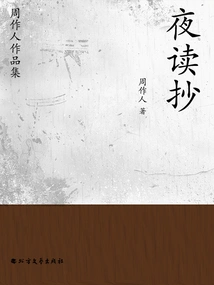
This book contains 47 essays by Zhou Zuoren, which can be regarded as his cultural criticism works. The author chose "articles that combine sound physics and profound human thoughts, and mix the simplicity of prose with the beauty of parallel prose", establishing a new style of "Book Talk", which takes reading as an opportunity, relies on the extension of knowledge and the collision of ideas, and expands into the fields of culture, history and society; in terms of method, he excerpts large sections of the original work and adds a few notes. Therefore, Zhou Zuoren also called himself "Wen Chao Gong". This book embodies this characteristic of Zhou Zuoren.
This book contains 47 essays by Zhou Zuoren, which can be regarded as his cultural criticism works. The author chose "articles that combine sound physics and profound human thoughts, and mix the simplicity of prose with the beauty of parallel prose", establishing a new style of "Book Talk", which takes reading as an opportunity, relies on the extension of knowledge and the collision of ideas, and expands into the fields of culture, history and society; in terms of method, he excerpts large sections of the original work and adds a few notes. Therefore, Zhou Zuoren also called himself "Wen Chao Gong". This book embodies this characteristic of Zhou Zuoren.
Collected by Zhou Zuoren: Lu Xun's Youth
Literature周作人自编集:鲁迅的青年时代
Zhou Zuoren
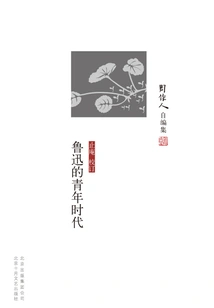
Zhou Zuoren, the second brother of Lu Xun, is an encyclopedic figure in the history of modern Chinese literature and one of the people who knows Lu Xun best. "Lu Xun's Youth" is a collection of commemorative texts written by Zhitang at the invitation of newspapers and magazines on the 20th anniversary of Lu Xun's death. It is another kind of work about Lu Xun after "Lu Xun's Hometown" and "Characters in Lu Xun's Novels". On the basis of the former, it adds new facts and more systematically introduces Lu Xun's early life, cultural interests, and the foundation of his thoughts. Different from many one-sided and conceptual works that deified Lu Xun at that time, Zhitang particularly emphasized the "human" side of Lu Xun, such as "Lu Xun's Smile" and "Lu Xun and His Brothers", which allow us to see the "angry" but "amiable" Lu Xun.
Zhou Zuoren, the second brother of Lu Xun, is an encyclopedic figure in the history of modern Chinese literature and one of the people who knows Lu Xun best. "Lu Xun's Youth" is a collection of commemorative texts written by Zhitang at the invitation of newspapers and magazines on the 20th anniversary of Lu Xun's death. It is another kind of work about Lu Xun after "Lu Xun's Hometown" and "Characters in Lu Xun's Novels". On the basis of the former, it adds new facts and more systematically introduces Lu Xun's early life, cultural interests, and the foundation of his thoughts. Different from many one-sided and conceptual works that deified Lu Xun at that time, Zhitang particularly emphasized the "human" side of Lu Xun, such as "Lu Xun's Smile" and "Lu Xun and His Brothers", which allow us to see the "angry" but "amiable" Lu Xun.
周作人作品集:书信集
Zhou Zuoren
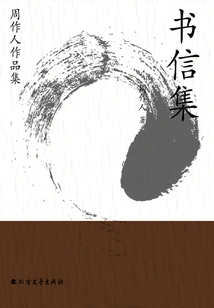
In addition to epistolary prose, "Letters of Zhou Zuoren" also contains seventy-seven published private letters, all of which are leisurely and natural expressions and reflect Zhou Zuoren's interests and hobbies at that time: writing, searching for books, collecting stamps, talking about dreams, having dinner parties, drinking, admiring the moon, looking at flowers, engraving, making paper, etc. Through these, you can see the author's life, which is very interesting.
In addition to epistolary prose, "Letters of Zhou Zuoren" also contains seventy-seven published private letters, all of which are leisurely and natural expressions and reflect Zhou Zuoren's interests and hobbies at that time: writing, searching for books, collecting stamps, talking about dreams, having dinner parties, drinking, admiring the moon, looking at flowers, engraving, making paper, etc. Through these, you can see the author's life, which is very interesting.
周作人自编集:知堂回想录
Zhou Zuoren
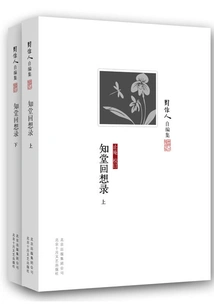
This book is a rich masterpiece written by Zhou Zuoren in his later years, reviewing his important life experiences. At first, there were only a few sections of "Jiu Lu of Peking University". When Cao Juren was running the "Cycle Daily" in Hong Kong, Zhou Zuoren sent it as a manuscript and published it in the supplement, which attracted attention. Later, he was invited by Cao Juren to start a "lifetime review", which lasted for more than two years and was completed in 207 chapters. The overall title of the manuscript was "Talk about the past in Yaotang", but it was renamed "Reminiscences of Zhitang" when it was published. As a master of modern literature, Zhou Zuoren personally experienced and participated in many important historical events in modern Chinese history, such as the activities of Qiu Jin and Xu Xilin during the Restoration of the late Qing Dynasty, the Revolution of 1911, Zhang Xun's Restoration, the New Culture Movement, etc. The records of his life are important historical materials. It is also based on the Zhitang style of writing, which can be said to be both literary and historical.
This book is a rich masterpiece written by Zhou Zuoren in his later years, reviewing his important life experiences. At first, there were only a few sections of "Jiu Lu of Peking University". When Cao Juren was running the "Cycle Daily" in Hong Kong, Zhou Zuoren sent it as a manuscript and published it in the supplement, which attracted attention. Later, he was invited by Cao Juren to start a "lifetime review", which lasted for more than two years and was completed in 207 chapters. The overall title of the manuscript was "Talk about the past in Yaotang", but it was renamed "Reminiscences of Zhitang" when it was published. As a master of modern literature, Zhou Zuoren personally experienced and participated in many important historical events in modern Chinese history, such as the activities of Qiu Jin and Xu Xilin during the Restoration of the late Qing Dynasty, the Revolution of 1911, Zhang Xun's Restoration, the New Culture Movement, etc. The records of his life are important historical materials. It is also based on the Zhitang style of writing, which can be said to be both literary and historical.
周作人经典作品:苦茶随笔
Zhou Zuoren
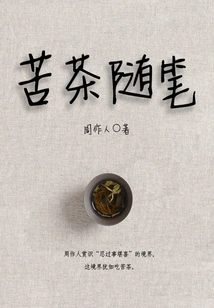
"Bitter Tea Essays" contains fifty-one articles by Zhou Zuoren, most of which are essays. The articles mostly emphasize the freedom and independence of thought, and there are quite a few counter-criticisms directed at other people's criticisms, which is unprecedented. It is called bitter tea, which shows the bitterness of its heart and the bitterness of its writing. Zhou Zuoren appreciated the state of "being happy after enduring things", which is like drinking bitter tea. It is painful but refreshing, but it is the pitiful point of adults. You all know the taste of it. "Tolerance is a word, the door to all the wonderful things. When you are an official, especially when you are doing things first, if you can be more tolerant in addition to being honest and diligent, there is nothing you can do. "Book" says, there must be tolerance to be helpful. This is the root of things. The proverb says, "Tolerance is the enemy of disaster." Shaoling poem says, "Tolerance is a joy."
"Bitter Tea Essays" contains fifty-one articles by Zhou Zuoren, most of which are essays. The articles mostly emphasize the freedom and independence of thought, and there are quite a few counter-criticisms directed at other people's criticisms, which is unprecedented. It is called bitter tea, which shows the bitterness of its heart and the bitterness of its writing. Zhou Zuoren appreciated the state of "being happy after enduring things", which is like drinking bitter tea. It is painful but refreshing, but it is the pitiful point of adults. You all know the taste of it. "Tolerance is a word, the door to all the wonderful things. When you are an official, especially when you are doing things first, if you can be more tolerant in addition to being honest and diligent, there is nothing you can do. "Book" says, there must be tolerance to be helpful. This is the root of things. The proverb says, "Tolerance is the enemy of disaster." Shaoling poem says, "Tolerance is a joy."
周作人散文论文(全集)
Zhou Zuoren
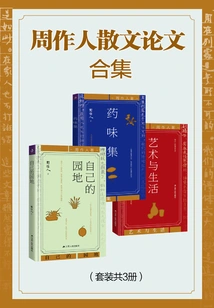
"Medicine Collection" is one of Zhou Zuoren's very representative subsets. It contains more than 20 classic prose works by Zhou Zuoren. Most of his articles describe the most ordinary fragments of life. The lines are full of tranquility and tranquility, but they can penetrate people's hearts. They often fascinate readers with just a few words. Most of the collections in "My Own Garden" are landscape sketches and essays. Some of the essays also have very unique insights into art. They not only discuss the creative concepts of excellent foreign literature, but also comparatively study the shortcomings of domestic literary creation. They have a clear attitude and sincere words. In terms of expression, they continue his usual casual and peaceful writing style. "Art and Life" is a long collection of essays among all Zhou Zuoren's works, which establishes his humanitarian ideological tone. In "Art and Life", Zhou Zuoren discusses the relationship between literature and life from the perspective of a thinker. His focus is no longer limited to thinking about literature itself, but also involves the impact of women, children, and exotic folk literature on real life.
"Medicine Collection" is one of Zhou Zuoren's very representative subsets. It contains more than 20 classic prose works by Zhou Zuoren. Most of his articles describe the most ordinary fragments of life. The lines are full of tranquility and tranquility, but they can penetrate people's hearts. They often fascinate readers with just a few words. Most of the collections in "My Own Garden" are landscape sketches and essays. Some of the essays also have very unique insights into art. They not only discuss the creative concepts of excellent foreign literature, but also comparatively study the shortcomings of domestic literary creation. They have a clear attitude and sincere words. In terms of expression, they continue his usual casual and peaceful writing style. "Art and Life" is a long collection of essays among all Zhou Zuoren's works, which establishes his humanitarian ideological tone. In "Art and Life", Zhou Zuoren discusses the relationship between literature and life from the perspective of a thinker. His focus is no longer limited to thinking about literature itself, but also involves the impact of women, children, and exotic folk literature on real life.
Own Garden
Literature自己的园地
Zhou Zuoren
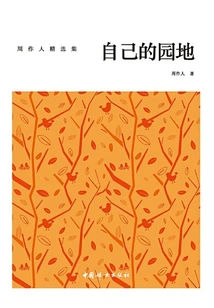
The book "Selected Collection of Zhou Zuoren: My Own Garden" contains Zhou Zuoren's most classic works. Among them, the "First Volume: Family·Homeland Past" contains documentary narrative prose; the "Second Volume: Japan·Cultural Insights" contains the author's articles on Japanese culture, which are of extremely high value; and the "Third Volume: Beautiful Articles·Dilute Peace" contains short stories Comprehensive essays, extremely enlightening; "Fourth Series: Research: Lu Xun's Posthumous Life" contains the author's articles about Lu Xun; "Fifth Series: Old Friends: Contacts and Confucianism" includes the author's articles commemorating Xu Zhimo, Li Dazhao, Gu Hongming and others.
The book "Selected Collection of Zhou Zuoren: My Own Garden" contains Zhou Zuoren's most classic works. Among them, the "First Volume: Family·Homeland Past" contains documentary narrative prose; the "Second Volume: Japan·Cultural Insights" contains the author's articles on Japanese culture, which are of extremely high value; and the "Third Volume: Beautiful Articles·Dilute Peace" contains short stories Comprehensive essays, extremely enlightening; "Fourth Series: Research: Lu Xun's Posthumous Life" contains the author's articles about Lu Xun; "Fifth Series: Old Friends: Contacts and Confucianism" includes the author's articles commemorating Xu Zhimo, Li Dazhao, Gu Hongming and others.
周作人作品集:艺术与生活
Zhou Zuoren
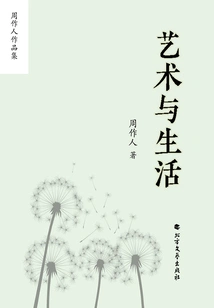
"Art and Life" is a long collection of essays among all Zhou Zuoren's works, which establishes his humanitarian ideological tone. In "Art and Life", Zhou Zuoren discusses the relationship between literature and life from the perspective of a thinker. His focus is no longer limited to thinking about literature itself, but also involves the impact of women, children, and exotic folk literature on real life. It can be said that "Art and Life" is not only one of the foundation works of "New Literature", but also an important material for studying New Literature and Zhou Zuoren's thoughts.
"Art and Life" is a long collection of essays among all Zhou Zuoren's works, which establishes his humanitarian ideological tone. In "Art and Life", Zhou Zuoren discusses the relationship between literature and life from the perspective of a thinker. His focus is no longer limited to thinking about literature itself, but also involves the impact of women, children, and exotic folk literature on real life. It can be said that "Art and Life" is not only one of the foundation works of "New Literature", but also an important material for studying New Literature and Zhou Zuoren's thoughts.
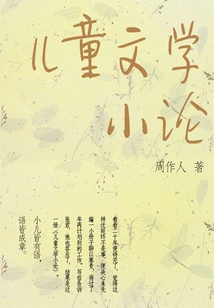
周作人经典作品:儿童文学小论
Zhou Zuoren
Children's studies and children's literature were of great concern to Zhou Zuoren, who called him "a special literary activity". There are a total of eleven articles collected here. The first four articles were all written in the 23rd year of the Republic of China and were written in classical Chinese. In the ninth year of the Republic of China, the Confucius School in Beijing asked Zhou Zuoren to give a lecture, which was the fifth article "Children's Literature." The remaining six articles were all written in 1123. From then on, more and more people paid attention to children's literature, and people who specialized in it gradually appeared. To study and discuss children's literature, one must have considerable accomplishments in anthropology, folklore, and childhood studies. Zhou Zuoren said: "Although these articles are superficial, they look at the meaning of myths based on the theories of the anthropology school and the application of fairy tales based on child psychology. This direction is always good and is not useless in the current world of children's literature."
Children's studies and children's literature were of great concern to Zhou Zuoren, who called him "a special literary activity". There are a total of eleven articles collected here. The first four articles were all written in the 23rd year of the Republic of China and were written in classical Chinese. In the ninth year of the Republic of China, the Confucius School in Beijing asked Zhou Zuoren to give a lecture, which was the fifth article "Children's Literature." The remaining six articles were all written in 1123. From then on, more and more people paid attention to children's literature, and people who specialized in it gradually appeared. To study and discuss children's literature, one must have considerable accomplishments in anthropology, folklore, and childhood studies. Zhou Zuoren said: "Although these articles are superficial, they look at the meaning of myths based on the theories of the anthropology school and the application of fairy tales based on child psychology. This direction is always good and is not useless in the current world of children's literature."