Library
Browse and search books
358 novels found
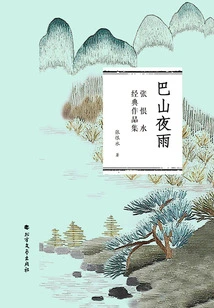
巴山夜雨(张恨水经典作品集)
Zhang Henshui
"Bashan Night Rain" is a novel. The novel is set in Chongqing during the Anti-Japanese War, with Li Nanquan, a professor with a profound literary temperament, as the center. It shows the poverty of civil servants, teachers, and intellectuals who make a living by selling literature, and the luxury and corruption of wealthy businessmen and officials. It presents a picture of all living beings in a mountain village in eastern Sichuan. It profoundly analyzes the social problems at that time, and has rich critical and social significance.
"Bashan Night Rain" is a novel. The novel is set in Chongqing during the Anti-Japanese War, with Li Nanquan, a professor with a profound literary temperament, as the center. It shows the poverty of civil servants, teachers, and intellectuals who make a living by selling literature, and the luxury and corruption of wealthy businessmen and officials. It presents a picture of all living beings in a mountain village in eastern Sichuan. It profoundly analyzes the social problems at that time, and has rich critical and social significance.
Bashan Night Rain (10)
General Fiction巴山夜雨(10)
Zhang Henshui
"Bashan Night Rain" was written in 1946 after the victory of the Anti-Japanese War and began to be serialized in 1946. It took more than three years to complete at the end of 1948. It is Zhang Henshui's "painful lesson" work. With a cold and rational writing style, the author takes the lead in exploring the national psychology while accusing the war atrocities of the Japanese invaders. The novel takes the protagonist Li Nanquan as the axis and shows readers a picture of all living beings in the mountain village of eastern Shu. The characters are lifelike, the language is humorous and sharp, and the novel's descriptive skills have reached a level of proficiency.
"Bashan Night Rain" was written in 1946 after the victory of the Anti-Japanese War and began to be serialized in 1946. It took more than three years to complete at the end of 1948. It is Zhang Henshui's "painful lesson" work. With a cold and rational writing style, the author takes the lead in exploring the national psychology while accusing the war atrocities of the Japanese invaders. The novel takes the protagonist Li Nanquan as the axis and shows readers a picture of all living beings in the mountain village of eastern Shu. The characters are lifelike, the language is humorous and sharp, and the novel's descriptive skills have reached a level of proficiency.
Bashan Night Rain (8)
General Fiction巴山夜雨(8)
Zhang Henshui
"Bashan Night Rain" was written in 1946 after the victory of the Anti-Japanese War and began to be serialized in 1946. It took more than three years to complete at the end of 1948. It is Zhang Henshui's "painful lesson" work. With a cold and rational writing style, the author takes the lead in exploring the national psychology while accusing the war atrocities of the Japanese invaders. The novel takes the protagonist Li Nanquan as the axis and shows readers a picture of all living beings in the mountain village of eastern Shu. The characters are lifelike, the language is humorous and sharp, and the novel's descriptive skills have reached a level of proficiency.
"Bashan Night Rain" was written in 1946 after the victory of the Anti-Japanese War and began to be serialized in 1946. It took more than three years to complete at the end of 1948. It is Zhang Henshui's "painful lesson" work. With a cold and rational writing style, the author takes the lead in exploring the national psychology while accusing the war atrocities of the Japanese invaders. The novel takes the protagonist Li Nanquan as the axis and shows readers a picture of all living beings in the mountain village of eastern Shu. The characters are lifelike, the language is humorous and sharp, and the novel's descriptive skills have reached a level of proficiency.
Bashan Night Rain (9)
General Fiction巴山夜雨(9)
Zhang Henshui
"Bashan Night Rain" was written in 1946 after the victory of the Anti-Japanese War and began to be serialized in 1946. It took more than three years to complete at the end of 1948. It is Zhang Henshui's "painful lesson" work. With a cold and rational writing style, the author takes the lead in exploring the national psychology while accusing the war atrocities of the Japanese invaders. The novel takes the protagonist Li Nanquan as the axis and shows readers a picture of all living beings in the mountain village of eastern Shu. The characters are lifelike, the language is humorous and sharp, and the novel's descriptive skills have reached a level of proficiency.
"Bashan Night Rain" was written in 1946 after the victory of the Anti-Japanese War and began to be serialized in 1946. It took more than three years to complete at the end of 1948. It is Zhang Henshui's "painful lesson" work. With a cold and rational writing style, the author takes the lead in exploring the national psychology while accusing the war atrocities of the Japanese invaders. The novel takes the protagonist Li Nanquan as the axis and shows readers a picture of all living beings in the mountain village of eastern Shu. The characters are lifelike, the language is humorous and sharp, and the novel's descriptive skills have reached a level of proficiency.
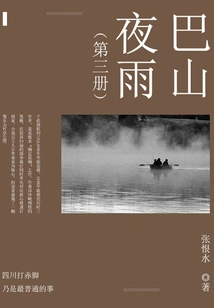
Bashan Night Rain (3)
General Fiction巴山夜雨(3)
Zhang Henshui
"Bashan Night Rain" was written in 1946 after the victory of the Anti-Japanese War and began to be serialized in 1946. It took more than three years to complete at the end of 1948. It is Zhang Henshui's "painful lesson" work. With a cold and rational writing style, the author takes the lead in exploring the national psychology while accusing the war atrocities of the Japanese invaders. The novel takes the protagonist Li Nanquan as the axis and shows readers a picture of all living beings in the mountain village of eastern Shu. The characters are lifelike, the language is humorous and sharp, and the novel's descriptive skills have reached a level of proficiency.
"Bashan Night Rain" was written in 1946 after the victory of the Anti-Japanese War and began to be serialized in 1946. It took more than three years to complete at the end of 1948. It is Zhang Henshui's "painful lesson" work. With a cold and rational writing style, the author takes the lead in exploring the national psychology while accusing the war atrocities of the Japanese invaders. The novel takes the protagonist Li Nanquan as the axis and shows readers a picture of all living beings in the mountain village of eastern Shu. The characters are lifelike, the language is humorous and sharp, and the novel's descriptive skills have reached a level of proficiency.
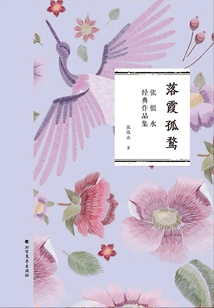
Solitary Duck in the Sunset
General Fiction落霞孤鹜
Zhang Henshui
In the early years of the Republic of China, Luoxia and Yuru were two miserable women who met in a nursing home. They were separated from their parents when they were young, and were sold by traffickers to work as servants in officials' families. They could not bear all kinds of abuse from wealthy families. Luoxia, who wanted to die, lost her mother in childhood. Yuru, who was bullied by her stepmother and regarded as a burden by her relatives, fell in love at first sight and became sisters with different surnames; but a trick of fate made them fall in love with the same outstanding man Jiang Qiuyu. It is this simple and unpretentious writing style that reached the realm of "natural and real". Therefore, after the novel was published, it was immediately adapted and made into a movie, starring the famous movie queen Hu Die.
In the early years of the Republic of China, Luoxia and Yuru were two miserable women who met in a nursing home. They were separated from their parents when they were young, and were sold by traffickers to work as servants in officials' families. They could not bear all kinds of abuse from wealthy families. Luoxia, who wanted to die, lost her mother in childhood. Yuru, who was bullied by her stepmother and regarded as a burden by her relatives, fell in love at first sight and became sisters with different surnames; but a trick of fate made them fall in love with the same outstanding man Jiang Qiuyu. It is this simple and unpretentious writing style that reached the realm of "natural and real". Therefore, after the novel was published, it was immediately adapted and made into a movie, starring the famous movie queen Hu Die.
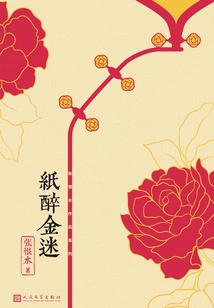
Zhang Henshui's Work Series: Lively and Rich
General Fiction张恨水作品系列:纸醉金迷
Zhang Henshui
Starting from the late period of the Anti-Japanese War, Zhang Henshui shifted his creative focus from romance to social criticism, and his writing style became increasingly heavy and sharp. "Intoxication" is a representative work of this period. In 1945, the National Government made Chongqing its capital. A group of drunken and dreamy dead gathered here. Everyone wants to get rich overnight. Small businessmen, bankers, courtesans, civil servants, old ladies, and even coolie workers are all involved in the "golden trend" caused by inflation. In the context of national speculation, human nature is distorted, and emotions and bodies become the weights of speculation and gambling. Tian Peizhi, a high-spirited and beautiful female student, was deceived and abducted by her lover and fell into a world of flowers. In the end, she couldn't stand the temptation and sank. Taking the history of her depravity as the main line, "Falling Out" tells a big story about people's mentality that took place in this era. It reproduces the crazy reality that on the eve of the victory of the Anti-Japanese War, the entire rear society was obsessed with sex and it was difficult to make money for the country.
Starting from the late period of the Anti-Japanese War, Zhang Henshui shifted his creative focus from romance to social criticism, and his writing style became increasingly heavy and sharp. "Intoxication" is a representative work of this period. In 1945, the National Government made Chongqing its capital. A group of drunken and dreamy dead gathered here. Everyone wants to get rich overnight. Small businessmen, bankers, courtesans, civil servants, old ladies, and even coolie workers are all involved in the "golden trend" caused by inflation. In the context of national speculation, human nature is distorted, and emotions and bodies become the weights of speculation and gambling. Tian Peizhi, a high-spirited and beautiful female student, was deceived and abducted by her lover and fell into a world of flowers. In the end, she couldn't stand the temptation and sank. Taking the history of her depravity as the main line, "Falling Out" tells a big story about people's mentality that took place in this era. It reproduces the crazy reality that on the eve of the victory of the Anti-Japanese War, the entire rear society was obsessed with sex and it was difficult to make money for the country.
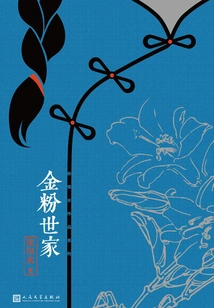
张恨水作品系列:金粉世家(全2册)
Zhang Henshui
"The Golden Fen Family" is Zhang Henshui's first chapter novel out of the Mandarin Duck and Butterfly School, and it is also his first popular masterpiece with modern significance. The novel takes as the main line the tragedy of marriage between Jin Yanxi, the seventh young master of the Jin family, the Prime Minister of Beijing, and Leng Qingqiu, a woman from a poor family. It focuses on the depiction of the decay of the wealthy and powerful family. It is neither a mere exposure nor an indulging in the rendering of a gorgeous life. Different from other popular works, the story tries its best to explore the understanding of society and life. It is full of a moral ideal and the sadness caused by the ruthless destruction of this moral ideal by reality. The detailed description of the characters in the book, the beginning of the flashback, and the semi-open ending of the million-word novel all go beyond the structure of ordinary chapter novels and are connected with new literary works. As a novel about a large family, "The Golden Family" is often compared not only with "A Dream of Red Mansions" but also with Ba Jin's "Family".
"The Golden Fen Family" is Zhang Henshui's first chapter novel out of the Mandarin Duck and Butterfly School, and it is also his first popular masterpiece with modern significance. The novel takes as the main line the tragedy of marriage between Jin Yanxi, the seventh young master of the Jin family, the Prime Minister of Beijing, and Leng Qingqiu, a woman from a poor family. It focuses on the depiction of the decay of the wealthy and powerful family. It is neither a mere exposure nor an indulging in the rendering of a gorgeous life. Different from other popular works, the story tries its best to explore the understanding of society and life. It is full of a moral ideal and the sadness caused by the ruthless destruction of this moral ideal by reality. The detailed description of the characters in the book, the beginning of the flashback, and the semi-open ending of the million-word novel all go beyond the structure of ordinary chapter novels and are connected with new literary works. As a novel about a large family, "The Golden Family" is often compared not only with "A Dream of Red Mansions" but also with Ba Jin's "Family".
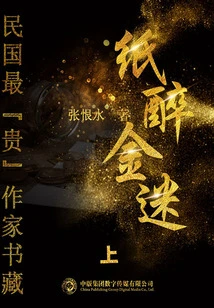
The Most Expensive Writers of the Republic of China: Part 1
General Fiction纸醉金迷:上(民国最“贵”作家书藏)
Zhang Henshui
"Intoxication" is Zhang Henshui's most influential masterpiece in his later period. The story takes place in Chongqing, the capital of the Nationalist Government in 1945. Here gathered a group of people who were feasting, feasting, and living in intoxication. Everything revolves around money. Corruption of officials, speculation by businessmen and bankers, and women being swindlers have become a common trend. The novel uses the clues of Wei Duanben, a young civil servant, and his beautiful but vain wife Tian Peizhi as they live together and break up. It takes the opportunity of many characters to rush to buy gold savings certificates to make the country's hard-earned wealth, and unfolds a complicated story. When the Anti-Japanese War was won, everything for the speculators was in vain. There are three volumes in total of "Intoxication", and this volume is the first volume.
"Intoxication" is Zhang Henshui's most influential masterpiece in his later period. The story takes place in Chongqing, the capital of the Nationalist Government in 1945. Here gathered a group of people who were feasting, feasting, and living in intoxication. Everything revolves around money. Corruption of officials, speculation by businessmen and bankers, and women being swindlers have become a common trend. The novel uses the clues of Wei Duanben, a young civil servant, and his beautiful but vain wife Tian Peizhi as they live together and break up. It takes the opportunity of many characters to rush to buy gold savings certificates to make the country's hard-earned wealth, and unfolds a complicated story. When the Anti-Japanese War was won, everything for the speculators was in vain. There are three volumes in total of "Intoxication", and this volume is the first volume.
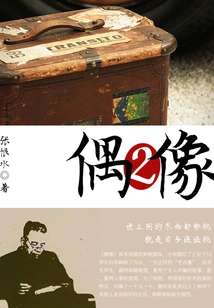
Idol(2)
General Fiction偶像(2)
Zhang Henshui
"Idol" has a strong sense of irony. The novel describes the story of Ding Guyun, a serious "old antique" who is about 50 years old, who pursues female students, but is eventually defrauded by two women, Lan and Xia. Lan and Xia assessed the situation, and for the sake of money, they took advantage of men's lustful and weak characteristics to defraud one after another, and finally lived a acceptable life compared to other people in troubled times. The irony is extremely strong. The details of the story are vividly depicted, especially the psychological changes of the characters, which is consistent with Zhang Henshui's style.
"Idol" has a strong sense of irony. The novel describes the story of Ding Guyun, a serious "old antique" who is about 50 years old, who pursues female students, but is eventually defrauded by two women, Lan and Xia. Lan and Xia assessed the situation, and for the sake of money, they took advantage of men's lustful and weak characteristics to defraud one after another, and finally lived a acceptable life compared to other people in troubled times. The irony is extremely strong. The details of the story are vividly depicted, especially the psychological changes of the characters, which is consistent with Zhang Henshui's style.
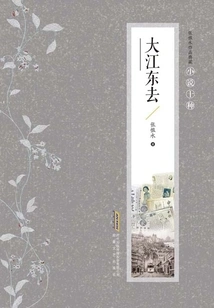
张恨水作品典藏·小说十种:大江东去
Zhang Henshui
This book is a collection of Zhang Henshui's works. The novel describes a young soldier whose wife left him and his family was destroyed due to the war. The book also describes the bloody atrocities of the battle to defend China Gate and the massacre of civilians in Nanjing by the Japanese army, making a vivid record of the bloodthirsty crimes of the invaders.
This book is a collection of Zhang Henshui's works. The novel describes a young soldier whose wife left him and his family was destroyed due to the war. The book also describes the bloody atrocities of the battle to defend China Gate and the massacre of civilians in Nanjing by the Japanese army, making a vivid record of the bloodthirsty crimes of the invaders.
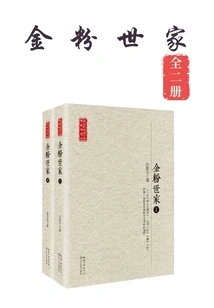
The Golden Fen Family (two Volumes in Total)
General Fiction金粉世家(全二册)
Zhang Henshui
This is a touching love story. This is a sad and tragic epic. The story is written by Mr. Zhang Henshui, the "master of popular literature" - the whole book is based on the tragic story of Jin Yanxi, the youngest son of the Prime Minister, and Qingqiu, a commoner woman, from free love, marriage to separation. It depicts the rise and fall of a wealthy family and the human condition of the world. It can be called a classic, and it still has immortal artistic charm when I read it today. It is known as the "Dream of Red Mansions" in the 20th century. This book is known as the "Dream of Red Mansions" in the 20th century. This love epic that touched countless people comprehensively presents the Chinese society intertwined with family status, power and money in the first half of the 20th century. The work takes the love and marriage tragedy of Jin Yanxi, the son of the Prime Minister of Beiyang, and Xiaojiabiyu Leng Qingqiu as the main line. It describes the feudal family's wives and concubines, and the decadent and declining life of their children's debauchery. It reveals the darkness and transformation of human nature in a complex environment, just like a history of the rise and fall of wealthy nobles in the turbulent years.
This is a touching love story. This is a sad and tragic epic. The story is written by Mr. Zhang Henshui, the "master of popular literature" - the whole book is based on the tragic story of Jin Yanxi, the youngest son of the Prime Minister, and Qingqiu, a commoner woman, from free love, marriage to separation. It depicts the rise and fall of a wealthy family and the human condition of the world. It can be called a classic, and it still has immortal artistic charm when I read it today. It is known as the "Dream of Red Mansions" in the 20th century. This book is known as the "Dream of Red Mansions" in the 20th century. This love epic that touched countless people comprehensively presents the Chinese society intertwined with family status, power and money in the first half of the 20th century. The work takes the love and marriage tragedy of Jin Yanxi, the son of the Prime Minister of Beiyang, and Xiaojiabiyu Leng Qingqiu as the main line. It describes the feudal family's wives and concubines, and the decadent and declining life of their children's debauchery. It reveals the darkness and transformation of human nature in a complex environment, just like a history of the rise and fall of wealthy nobles in the turbulent years.
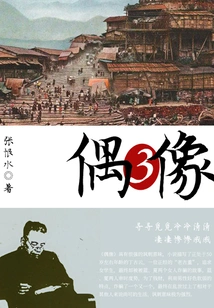
Idol (3)
General Fiction偶像(3)
Zhang Henshui
"Idol" has a strong sense of irony. The novel describes the story of Ding Guyun, a serious "old antique" who is about 50 years old, who pursues female students, but is eventually defrauded by two women, Lan and Xia. Lan and Xia assessed the situation, and for the sake of money, they took advantage of men's lustful and weak characteristics to defraud one after another, and finally lived a acceptable life compared to other people in troubled times. The irony is extremely strong. The details of the story are vividly depicted, especially the psychological changes of the characters, which is consistent with Zhang Henshui's style.
"Idol" has a strong sense of irony. The novel describes the story of Ding Guyun, a serious "old antique" who is about 50 years old, who pursues female students, but is eventually defrauded by two women, Lan and Xia. Lan and Xia assessed the situation, and for the sake of money, they took advantage of men's lustful and weak characteristics to defraud one after another, and finally lived a acceptable life compared to other people in troubled times. The irony is extremely strong. The details of the story are vividly depicted, especially the psychological changes of the characters, which is consistent with Zhang Henshui's style.
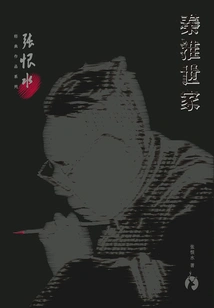
Zhang Henshui's Classic Works Series: Qinhuai Family
General Fiction张恨水经典作品系列:秦淮世家
Zhang Henshui
Nanjing. By the Qinhuai River. Singing girl Mrs. Tang has two daughters, one is Erchun and the other is Xiaochun, both of whom are pretty and lovely. Xiaochun has an outstanding singing voice and becomes a singer. She is very popular. Yang Yuquan, a Shanghai money merchant, fell in love with Xiaochun and molested her many times. After being rejected, he harbored a grudge. He kidnapped and raped Erchun, and then gave Erchun to his prostitute Wei Laoba. Erchun waited for an opportunity to take revenge and finally killed Wei Laoba and injured Yang Yuquan. Unfortunately, he was shot to death. Yang Yuquan intensified his efforts and exerted all his lustful force on Mrs. Tang and Xiaochun, forcing the mother and daughter to suffer unspeakably. The people of the lower class along the Qinhuai River were so angry that they united...
Nanjing. By the Qinhuai River. Singing girl Mrs. Tang has two daughters, one is Erchun and the other is Xiaochun, both of whom are pretty and lovely. Xiaochun has an outstanding singing voice and becomes a singer. She is very popular. Yang Yuquan, a Shanghai money merchant, fell in love with Xiaochun and molested her many times. After being rejected, he harbored a grudge. He kidnapped and raped Erchun, and then gave Erchun to his prostitute Wei Laoba. Erchun waited for an opportunity to take revenge and finally killed Wei Laoba and injured Yang Yuquan. Unfortunately, he was shot to death. Yang Yuquan intensified his efforts and exerted all his lustful force on Mrs. Tang and Xiaochun, forcing the mother and daughter to suffer unspeakably. The people of the lower class along the Qinhuai River were so angry that they united...
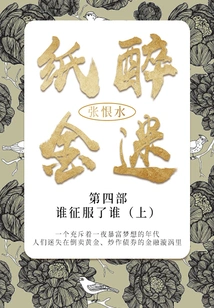
纸醉金迷·第四部:谁征服了谁·上(张恨水经典文学)
Zhang Henshui
As a satirical work that exposes reality, "Intoxication" directly criticizes the ugly and despicable world conditions in the Kuomintang-controlled areas on the eve of the victory of the Anti-Japanese War. On the eve of the victory of the Anti-Japanese War, the fate of Wei Duanben, a young civil servant, and his "anti-war wife" Tian Peizhi in Chongqing, the capital of the Anti-Japanese War, are used as clues to describe the twisted human nature and the bleakness of the world lost in the "golden dream" of vanity and corruption. Tian Peizhi, a most beautiful but extremely vain woman, sent her husband to prison and was almost sentenced to death for money and good food and clothing. In order to escape from a life without money, she did not need her husband and disowned her children. She finally hooked up with a rich and prestigious gentleman. The wife who was about to become the center of attention suddenly became the fiancée and mistress of a traitor after the war of resistance against Japan was suddenly won. It reveals the loss and struggle in the face of human nature and money in a special era. Zhang Henshui (May 18, 1895 - February 15, 1967), whose original name was Xinyuan, Henshui was his pen name, which was taken from the poem "Meeting Happily" written by Li Yu in the Southern Tang Dynasty, which means "I will grow up in life and hate the water in the east". Zhang Henshui is a famous chapter novelist and a representative writer of the Mandarin Duck and Butterfly School. He is honored as the first "master of chapter novels" and "master of popular literature" in the history of modern literature. The plot of the work is tortuous and complex, and the structure is rigorous and complete. It integrates traditional Chinese chapter novels with new techniques in Western novels. He is also famous for his prolific output. In his fifty-year writing career, he created more than 100 popular novels, most of which are medium and long chapter novels with a total of 30 million words, which can be regarded as a book in his lifetime.
As a satirical work that exposes reality, "Intoxication" directly criticizes the ugly and despicable world conditions in the Kuomintang-controlled areas on the eve of the victory of the Anti-Japanese War. On the eve of the victory of the Anti-Japanese War, the fate of Wei Duanben, a young civil servant, and his "anti-war wife" Tian Peizhi in Chongqing, the capital of the Anti-Japanese War, are used as clues to describe the twisted human nature and the bleakness of the world lost in the "golden dream" of vanity and corruption. Tian Peizhi, a most beautiful but extremely vain woman, sent her husband to prison and was almost sentenced to death for money and good food and clothing. In order to escape from a life without money, she did not need her husband and disowned her children. She finally hooked up with a rich and prestigious gentleman. The wife who was about to become the center of attention suddenly became the fiancée and mistress of a traitor after the war of resistance against Japan was suddenly won. It reveals the loss and struggle in the face of human nature and money in a special era. Zhang Henshui (May 18, 1895 - February 15, 1967), whose original name was Xinyuan, Henshui was his pen name, which was taken from the poem "Meeting Happily" written by Li Yu in the Southern Tang Dynasty, which means "I will grow up in life and hate the water in the east". Zhang Henshui is a famous chapter novelist and a representative writer of the Mandarin Duck and Butterfly School. He is honored as the first "master of chapter novels" and "master of popular literature" in the history of modern literature. The plot of the work is tortuous and complex, and the structure is rigorous and complete. It integrates traditional Chinese chapter novels with new techniques in Western novels. He is also famous for his prolific output. In his fifty-year writing career, he created more than 100 popular novels, most of which are medium and long chapter novels with a total of 30 million words, which can be regarded as a book in his lifetime.
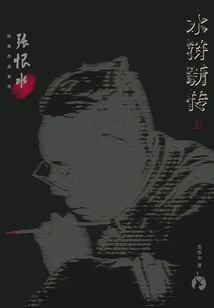
Zhang Henshui's Classic Works Series: Water Margin (part 1)
General Fiction张恨水经典作品系列:水浒新传(上)
Zhang Henshui
This book is the continuation of the 70-chapter version of "Water Margin" written by Jin Shengtan. It was created during the Anti-Japanese War and was published as a single volume by Chongqing Jianzhong Publishing House in 1943. The book tells the story of the Liangshan heroes who gathered together to help the Song Dynasty resist the Jin invasion. The book has sixty-eight chapters in total.
This book is the continuation of the 70-chapter version of "Water Margin" written by Jin Shengtan. It was created during the Anti-Japanese War and was published as a single volume by Chongqing Jianzhong Publishing House in 1943. The book tells the story of the Liangshan heroes who gathered together to help the Song Dynasty resist the Jin invasion. The book has sixty-eight chapters in total.
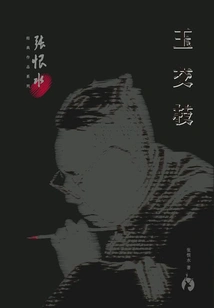
Jade Jiaozhi
General Fiction玉交枝
Zhang Henshui
This book tells the adventure story of the protagonist Kang Baichuan, biologist Dr. Xu Kanran, geologist Dr. Ouyang Pu and poet Xu Binru in the mysterious valley under Tianzhu Mountain. The four people had a clear division of labor, actively planned, went through hardships, and discovered the Ming Dynasty survivors living in the Secret Valley. The local people live a self-sufficient life, men and women are equal, they are simple and hard-working, and they receive warm hospitality. At the same time, they were also involved in local regional struggles, helping to resolve disputes and capture the enemy emperor Pu Zuwang and his queen. The four of them took Emperor Pu Zuwang and the Queen out of the valley and returned to Nanjing. Along the way, they attracted attention from all walks of life and became popular. However, soon Pu Zuwang and the Queen were no longer cared about and lived on the streets. Pu Zuwang was hit by a car and died. At the Queen's strong request, the four people discussed that Kang Baichuan would eventually send him back to the Secret Valley to live a safe and self-sufficient life.
This book tells the adventure story of the protagonist Kang Baichuan, biologist Dr. Xu Kanran, geologist Dr. Ouyang Pu and poet Xu Binru in the mysterious valley under Tianzhu Mountain. The four people had a clear division of labor, actively planned, went through hardships, and discovered the Ming Dynasty survivors living in the Secret Valley. The local people live a self-sufficient life, men and women are equal, they are simple and hard-working, and they receive warm hospitality. At the same time, they were also involved in local regional struggles, helping to resolve disputes and capture the enemy emperor Pu Zuwang and his queen. The four of them took Emperor Pu Zuwang and the Queen out of the valley and returned to Nanjing. Along the way, they attracted attention from all walks of life and became popular. However, soon Pu Zuwang and the Queen were no longer cared about and lived on the streets. Pu Zuwang was hit by a car and died. At the Queen's strong request, the four people discussed that Kang Baichuan would eventually send him back to the Secret Valley to live a safe and self-sufficient life.
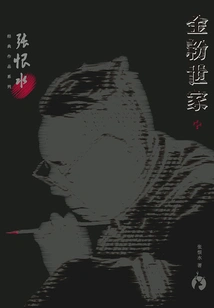
张恨水经典作品系列:金粉世家(中)
Zhang Henshui
The novel is based on the feudal family of Beiyang warlord Jin Quan, Prime Minister, and takes the marriage between Jin Quan's son Jin Yanxi and the commoner woman Leng Qingqiu from love, marriage to estrangement and divorce as the main line. It reveals the empty, degenerate spiritual world and declining and decadent life of the feudal bureaucrats and their wives and children, and describes a living history of the rise and fall of the wealthy aristocrats.
The novel is based on the feudal family of Beiyang warlord Jin Quan, Prime Minister, and takes the marriage between Jin Quan's son Jin Yanxi and the commoner woman Leng Qingqiu from love, marriage to estrangement and divorce as the main line. It reveals the empty, degenerate spiritual world and declining and decadent life of the feudal bureaucrats and their wives and children, and describes a living history of the rise and fall of the wealthy aristocrats.
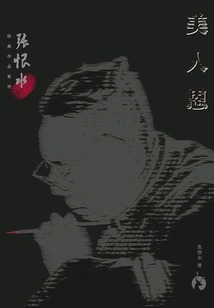
Zhang Henshui's Classic Works Series: Beauty's Grace
General Fiction张恨水经典作品系列:美人恩
Zhang Henshui
The story of "Beauty's Grace" takes place in Beijing in the 1920s. The heroine Chang Xiaonan was born in a poor family at the bottom of the class and made a living by collecting coal cores. Once, he met the unemployed and down-and-out Hong Shiyi. He deeply sympathized with her fate and used his meager income from working as a substitute at a charity to support the Chang family. The two began to fall in love. The beautiful Chang Xiaonan was later spotted by the foreman of the Yangliu Song and Dance Ensemble. From then on, she changed her mind in love. She successively dumped Hong Shiyi and musician Wang Sun, and finally fell into the hands of the playboy Chen Siye, causing the Chang family to be ruined.
The story of "Beauty's Grace" takes place in Beijing in the 1920s. The heroine Chang Xiaonan was born in a poor family at the bottom of the class and made a living by collecting coal cores. Once, he met the unemployed and down-and-out Hong Shiyi. He deeply sympathized with her fate and used his meager income from working as a substitute at a charity to support the Chang family. The two began to fall in love. The beautiful Chang Xiaonan was later spotted by the foreman of the Yangliu Song and Dance Ensemble. From then on, she changed her mind in love. She successively dumped Hong Shiyi and musician Wang Sun, and finally fell into the hands of the playboy Chen Siye, causing the Chang family to be ruined.
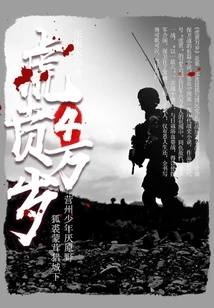
Long Live Huben (4)
General Fiction虎贲万岁(4)
Zhang Henshui
"Long Live Tiger Ben" is the first full-length novel to directly describe the famous frontal battlefield battle of the Kuomintang - the Battle of Changde. It is also China's first modern war history novel. The work describes how the 57th Division of the 74th Army, code-named "Hu Ben", was surrounded by more than 60,000 Japanese troops. They shared the same hatred and fought tooth and nail, "one against eight". They fought hard for more than ten days and fought bloody street battles with the Japanese aggressors. They were able to encircle the reinforcements and defend Changde. There were more than 8,000 people in the division, but only 83 survived. The whole story is so evocative and majestic.
"Long Live Tiger Ben" is the first full-length novel to directly describe the famous frontal battlefield battle of the Kuomintang - the Battle of Changde. It is also China's first modern war history novel. The work describes how the 57th Division of the 74th Army, code-named "Hu Ben", was surrounded by more than 60,000 Japanese troops. They shared the same hatred and fought tooth and nail, "one against eight". They fought hard for more than ten days and fought bloody street battles with the Japanese aggressors. They were able to encircle the reinforcements and defend Changde. There were more than 8,000 people in the division, but only 83 survived. The whole story is so evocative and majestic.
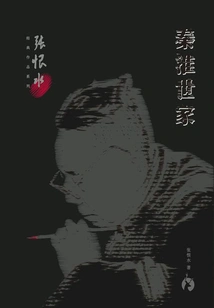
Qinhuai Family
General Fiction秦淮世家
Zhang Henshui
This book describes the story of the singing girl Tang Dasao who had two daughters by the Qinhuai River in Nanjing, one was Erchun and the other was Xiaochun, both of whom were beautiful and lovely. Xiaochun has an outstanding singing voice and becomes a singer. She is very popular. Yang Yuquan, a Shanghai money merchant, took a liking to Xiaochun and molested her many times. After being rejected, he harbored a grudge. He kidnapped and raped Erchun in a poisonous plan, and then gave Erchun to his bodyguard Wei Laoba. Erchun waited for an opportunity to take revenge and finally killed Wei Laoba and injured Yang Yuquan. Unfortunately, he was also shot to death. Yang Yuquan intensified his efforts and exerted all his lustful force on Mrs. Tang and Xiaochun, forcing the mother and daughter to suffer unspeakably.
This book describes the story of the singing girl Tang Dasao who had two daughters by the Qinhuai River in Nanjing, one was Erchun and the other was Xiaochun, both of whom were beautiful and lovely. Xiaochun has an outstanding singing voice and becomes a singer. She is very popular. Yang Yuquan, a Shanghai money merchant, took a liking to Xiaochun and molested her many times. After being rejected, he harbored a grudge. He kidnapped and raped Erchun in a poisonous plan, and then gave Erchun to his bodyguard Wei Laoba. Erchun waited for an opportunity to take revenge and finally killed Wei Laoba and injured Yang Yuquan. Unfortunately, he was also shot to death. Yang Yuquan intensified his efforts and exerted all his lustful force on Mrs. Tang and Xiaochun, forcing the mother and daughter to suffer unspeakably.
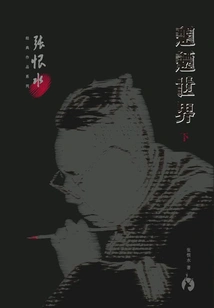
The World of Monsters (part 2)
General Fiction魍魉世界(下)
Zhang Henshui
This book describes the situation of an old man's family in Chongqing District, the capital of China during the Anti-Japanese War, and reflects the dark, chaotic and ghost-ridden social status quo. During the Anti-Japanese War. Accompany the capital Chongqing. Dark and chaotic, ghosts are rampant. Mr. Ou has been studying all his life and has taught his four children to study hard and make a living using the knowledge they have learned. However, prices in Chongqing have skyrocketed, supplies are in short supply, and people are in dire straits, making it difficult to live on wages. As a result, Mr. Ou's third son abandoned Wen and drove a truck and made a fortune; his second son abandoned medicine and went into business and lived a well-off life; and his eldest son was still a civil servant and was in poverty. The friends, colleagues, neighbors, and relatives around him are all speculative and profit-seeking, working hard day and night to make money. It is truly "tight ahead, tight behind"!
This book describes the situation of an old man's family in Chongqing District, the capital of China during the Anti-Japanese War, and reflects the dark, chaotic and ghost-ridden social status quo. During the Anti-Japanese War. Accompany the capital Chongqing. Dark and chaotic, ghosts are rampant. Mr. Ou has been studying all his life and has taught his four children to study hard and make a living using the knowledge they have learned. However, prices in Chongqing have skyrocketed, supplies are in short supply, and people are in dire straits, making it difficult to live on wages. As a result, Mr. Ou's third son abandoned Wen and drove a truck and made a fortune; his second son abandoned medicine and went into business and lived a well-off life; and his eldest son was still a civil servant and was in poverty. The friends, colleagues, neighbors, and relatives around him are all speculative and profit-seeking, working hard day and night to make money. It is truly "tight ahead, tight behind"!
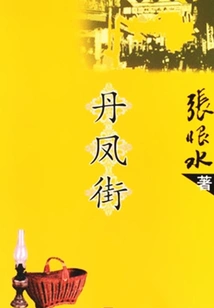
Danfeng Street
General Fiction丹凤街
Zhang Henshui
Mr. Zhang Henshui plays an important role in the history of modern Chinese literature. He wrote more than 100 novels in his life, and his works had a profound influence. Since the 1980s, his works have remained popular. In the past few years, many of his works have been put on the screen, once again demonstrating his profound cultural charm and artistic appeal, and have gained considerable status among many readers and viewers.
Mr. Zhang Henshui plays an important role in the history of modern Chinese literature. He wrote more than 100 novels in his life, and his works had a profound influence. Since the 1980s, his works have remained popular. In the past few years, many of his works have been put on the screen, once again demonstrating his profound cultural charm and artistic appeal, and have gained considerable status among many readers and viewers.
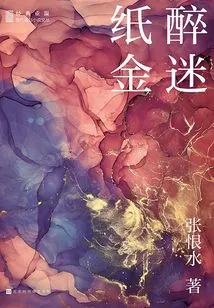
Lively and Luxurious
General Fiction纸醉金迷
Zhang Henshui
On the eve of the victory of the Anti-Japanese War in Chongqing, the capital of the country, Tian Peizhi, the most beautiful woman, was extremely vain. She was deeply in debt because of her gambling habit, and she did not hesitate to abandon her husband and son, and sold her sex. Later, she was forced to take refuge with Grandma Zhu Si, who specialized in speculating on male and female intercourse. She completely degenerated and went to a dead end... Speculators gathered in Chongqing to buy gold savings certificates to make a fortune for the country, and the gold vortex they got lost in was actually a large casino run by the Ministry of Finance. The work directs criticism at the ugly and humble world in the Kuomintang-controlled areas on the eve of the victory of the Anti-Japanese War, revealing the loss and struggle of human nature in the face of money in a special era.
On the eve of the victory of the Anti-Japanese War in Chongqing, the capital of the country, Tian Peizhi, the most beautiful woman, was extremely vain. She was deeply in debt because of her gambling habit, and she did not hesitate to abandon her husband and son, and sold her sex. Later, she was forced to take refuge with Grandma Zhu Si, who specialized in speculating on male and female intercourse. She completely degenerated and went to a dead end... Speculators gathered in Chongqing to buy gold savings certificates to make a fortune for the country, and the gold vortex they got lost in was actually a large casino run by the Ministry of Finance. The work directs criticism at the ugly and humble world in the Kuomintang-controlled areas on the eve of the victory of the Anti-Japanese War, revealing the loss and struggle of human nature in the face of money in a special era.
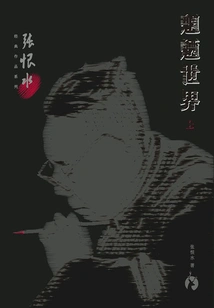
张恨水经典作品系列:魍魉世界(上)
Zhang Henshui
During the Anti-Japanese War. Accompany the capital Chongqing. Dark and chaotic, ghosts are rampant. Mr. Ou has been studying all his life and has taught his four children to study hard and make a living using the knowledge they have learned. However, prices in Chongqing have skyrocketed, supplies are in short supply, and people are in dire straits, making it difficult to live on wages. As a result, Mr. Ou's third son abandoned Wen and drove a truck and made a fortune; his second son abandoned medicine and went into business and lived a well-off life; and his eldest son was still a civil servant and was in poverty. The friends, colleagues, neighbors, and relatives around him are all speculative and profit-seeking, working hard day and night to make money. It is truly "tight ahead, tight behind"!
During the Anti-Japanese War. Accompany the capital Chongqing. Dark and chaotic, ghosts are rampant. Mr. Ou has been studying all his life and has taught his four children to study hard and make a living using the knowledge they have learned. However, prices in Chongqing have skyrocketed, supplies are in short supply, and people are in dire straits, making it difficult to live on wages. As a result, Mr. Ou's third son abandoned Wen and drove a truck and made a fortune; his second son abandoned medicine and went into business and lived a well-off life; and his eldest son was still a civil servant and was in poverty. The friends, colleagues, neighbors, and relatives around him are all speculative and profit-seeking, working hard day and night to make money. It is truly "tight ahead, tight behind"!
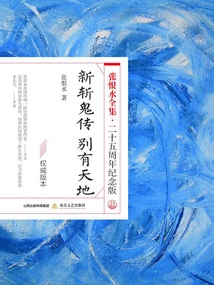
New Ghost Slayer: a Different World (the Complete Works of Zhang Henshui, 25th Anniversary Edition)
Literature新斩鬼传·别有天地(张恨水全集·25周年纪念版)
Zhang Henshui
In "The New Legend of Ghost Slayer", Sun Wukong caused a revolution and the heaven became a republic. Despite the change of dynasties, Zhong Kui still performed his duty of exorcising ghosts. Because the previous plaque of the temple was replaced, Zhong Kui and his subordinates began to investigate the lower world, and thus launched a different kind of ghost exorcism operation. Opium ghosts, metaphysical ghosts, hollow ghosts, cruel ghosts, faceless ghosts, etc. All appear on the stage, each showing their true colors and magical powers. After a battle with all the ghosts, the number of ghosts in the world has decreased, but Zhong Kui still has a long way to go in exorcising ghosts. "A Different World" tells the story of Song Yangquan, a rich man who wanted to be an official, but he didn't know that there was a different world in officialdom and was deceived twice. Song Yangquan, a wealthy local man, came to the city to seek an official position. Through the introduction of the clan brothers in the provincial capital, I met the fake Director Zhao, Section Chief Hao, Director Zhang and others, and I was intoxicated in the social officialdom and gentle countryside arranged by these people. Little did I know that everything was a scam.
In "The New Legend of Ghost Slayer", Sun Wukong caused a revolution and the heaven became a republic. Despite the change of dynasties, Zhong Kui still performed his duty of exorcising ghosts. Because the previous plaque of the temple was replaced, Zhong Kui and his subordinates began to investigate the lower world, and thus launched a different kind of ghost exorcism operation. Opium ghosts, metaphysical ghosts, hollow ghosts, cruel ghosts, faceless ghosts, etc. All appear on the stage, each showing their true colors and magical powers. After a battle with all the ghosts, the number of ghosts in the world has decreased, but Zhong Kui still has a long way to go in exorcising ghosts. "A Different World" tells the story of Song Yangquan, a rich man who wanted to be an official, but he didn't know that there was a different world in officialdom and was deceived twice. Song Yangquan, a wealthy local man, came to the city to seek an official position. Through the introduction of the clan brothers in the provincial capital, I met the fake Director Zhao, Section Chief Hao, Director Zhang and others, and I was intoxicated in the social officialdom and gentle countryside arranged by these people. Little did I know that everything was a scam.
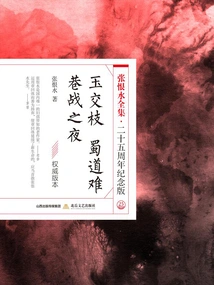
玉交枝·蜀道难·巷战之夜(张恨水全集·25周年纪念版)
Zhang Henshui
The book "Night of Street Fighting" tells the story of the bloody battle between the people of Tianjin and Qianshan and the invaders during the Japanese invasion of China. It writes about an ordinary teacher who grew into a guerrilla captain during a brave struggle against the Japanese army and led the people to severely attack the invading enemies. The protagonist of the novel is the ideal figure in the author's mind for the Anti-Japanese War, and expresses the author's strong desire to unite in the Anti-Japanese War. "The Road to Shu is Difficult" tells the story of people from Jiangdong who fled to Shu one after another during the Anti-Japanese War. On the way, young employee Feng Zian met Miss Bai Yuzhen. Feng Diabai fell in love at first sight and was attentive in every possible way. The ship arrived in Chongqing, and when Feng Zian was preparing to marry Miss Bai, Bai Yuzhen had already "lost her tail"... A dream of love finally came to nothing. "Jade Crossing Branches" tells the adventure story of the protagonist Kang Baichuan, biologist Dr. Xu Kanran, geologist Dr. Ouyang Pu and poet Xu Binru in the mysterious valley under Tianzhu Mountain. The four people had a clear division of labor, actively planned, went through hardships, and discovered the Ming Dynasty survivors living in the Secret Valley. The local people live a self-sufficient life, men and women are equal, they are simple and hard-working, and they receive warm hospitality. At the same time, they were also involved in local regional struggles, helping to resolve disputes and capture the enemy emperor Pu Zuwang and his queen. The four of them took Emperor Pu Zuwang and the Queen out of the valley and returned to Nanjing. Along the way, they attracted attention from all walks of life and became popular. However, soon Pu Zuwang and the Queen were no longer cared about and lived on the streets. Pu Zuwang was hit by a car and died. At the Queen's strong request, the four people discussed that Kang Baichuan would eventually send him back to the Secret Valley to live a safe and self-sufficient life.
The book "Night of Street Fighting" tells the story of the bloody battle between the people of Tianjin and Qianshan and the invaders during the Japanese invasion of China. It writes about an ordinary teacher who grew into a guerrilla captain during a brave struggle against the Japanese army and led the people to severely attack the invading enemies. The protagonist of the novel is the ideal figure in the author's mind for the Anti-Japanese War, and expresses the author's strong desire to unite in the Anti-Japanese War. "The Road to Shu is Difficult" tells the story of people from Jiangdong who fled to Shu one after another during the Anti-Japanese War. On the way, young employee Feng Zian met Miss Bai Yuzhen. Feng Diabai fell in love at first sight and was attentive in every possible way. The ship arrived in Chongqing, and when Feng Zian was preparing to marry Miss Bai, Bai Yuzhen had already "lost her tail"... A dream of love finally came to nothing. "Jade Crossing Branches" tells the adventure story of the protagonist Kang Baichuan, biologist Dr. Xu Kanran, geologist Dr. Ouyang Pu and poet Xu Binru in the mysterious valley under Tianzhu Mountain. The four people had a clear division of labor, actively planned, went through hardships, and discovered the Ming Dynasty survivors living in the Secret Valley. The local people live a self-sufficient life, men and women are equal, they are simple and hard-working, and they receive warm hospitality. At the same time, they were also involved in local regional struggles, helping to resolve disputes and capture the enemy emperor Pu Zuwang and his queen. The four of them took Emperor Pu Zuwang and the Queen out of the valley and returned to Nanjing. Along the way, they attracted attention from all walks of life and became popular. However, soon Pu Zuwang and the Queen were no longer cared about and lived on the streets. Pu Zuwang was hit by a car and died. At the Queen's strong request, the four people discussed that Kang Baichuan would eventually send him back to the Secret Valley to live a safe and self-sufficient life.
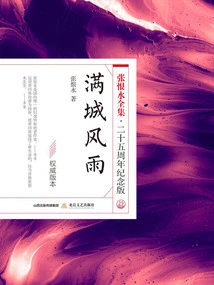
满城风雨(张恨水全集·25周年纪念版)
Zhang Henshui
This book tells the tragedy of Zeng Bojian, a college student in the Republic of China. He was captured as a young man in a city where warlords were fighting, but accidentally became the secretary of the division commander. He witnessed their ugly behavior of killing, robbing, and raping women in the warlords' troops. Until the Japanese army invaded the city, he escaped from a devil's cave and fell into the public opinion of being a traitor. Finally, he left his hometown and organized a guerrilla group to fight to the death with the Japanese army.
This book tells the tragedy of Zeng Bojian, a college student in the Republic of China. He was captured as a young man in a city where warlords were fighting, but accidentally became the secretary of the division commander. He witnessed their ugly behavior of killing, robbing, and raping women in the warlords' troops. Until the Japanese army invaded the city, he escaped from a devil's cave and fell into the public opinion of being a traitor. Finally, he left his hometown and organized a guerrilla group to fight to the death with the Japanese army.
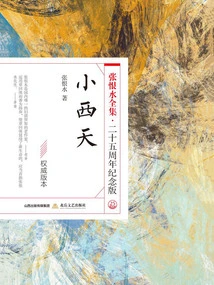
小西天(张恨水全集·25周年纪念版)
Zhang Henshui
During the Republic of China, intellectual Cheng Zhiqian and job seekers Li Shilian, Zhang Jiefu and others took a German car to Xi'an and settled in the city's hotel "Little West Sky". In Xiaoxitian, Li Shilian and Zhang Jiefu learned that Cheng Zhiqian had relationships with many senior officials in Shaanxi, so they fawned over Zhiqian and were despised by Zhiqian. Jia Duocai, a banker living in "Xiaoxitian", fell in love with Hu Yueying, a woman who had fled from Gansu, and wanted to buy it. Wang Beihai, a student of Cheng Zhiqian, also fell in love with Hu Yueying, which led to various troubles. Li Shilian, Zhang Jiefu and the down-and-out girl Yang Huanhua all wanted Jia Duocai, so they worked together to accomplish this for Jia Duocai. However, Jia Duocai was not at peace after buying Hu Yueying, and thus got into trouble with the commissioner's wife. At the same time, he asked Wang Beihai for bank business, and finally let Yueying go. Yueying and Beihai finally got married, while Cheng Zhiqian left Xiaoxitian and continued his inspection trip to the northwest. The hotel "Xiao Xitian" in Xi'an is still hosting all kinds of people, and stories of joys and sorrows are happening there.
During the Republic of China, intellectual Cheng Zhiqian and job seekers Li Shilian, Zhang Jiefu and others took a German car to Xi'an and settled in the city's hotel "Little West Sky". In Xiaoxitian, Li Shilian and Zhang Jiefu learned that Cheng Zhiqian had relationships with many senior officials in Shaanxi, so they fawned over Zhiqian and were despised by Zhiqian. Jia Duocai, a banker living in "Xiaoxitian", fell in love with Hu Yueying, a woman who had fled from Gansu, and wanted to buy it. Wang Beihai, a student of Cheng Zhiqian, also fell in love with Hu Yueying, which led to various troubles. Li Shilian, Zhang Jiefu and the down-and-out girl Yang Huanhua all wanted Jia Duocai, so they worked together to accomplish this for Jia Duocai. However, Jia Duocai was not at peace after buying Hu Yueying, and thus got into trouble with the commissioner's wife. At the same time, he asked Wang Beihai for bank business, and finally let Yueying go. Yueying and Beihai finally got married, while Cheng Zhiqian left Xiaoxitian and continued his inspection trip to the northwest. The hotel "Xiao Xitian" in Xi'an is still hosting all kinds of people, and stories of joys and sorrows are happening there.
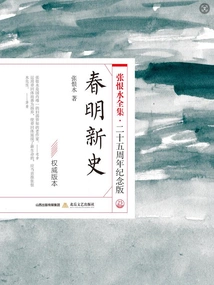
春明新史(张恨水全集·25周年纪念版)
Zhang Henshui
Beijing Qiantai flower farmer Liu Desheng, because of the opportunity to sell flowers, worked under the manager Wang of the bookstore and became a gardener. Because he offended the manager's distinguished guests, he changed his job to become a third-class soldier in the automobile team of the commander Xue Youpan. Once, because of his storytelling, he was highly appreciated by the commander-in-chief and was promoted to the commander of the advancing battalion. After fighting a few bad battles and appeasing a few bandits, he was promoted from regiment commander and brigade commander to division commander. He was powerful and wealthy. He rode in cars, lived in a western-style mansion, smoked big cigarettes, had sex with women, drank and drank, had fun and did whatever he wanted. Unexpectedly, there was a mutiny, betrayal and separation, and he became a mere commander. So with 800,000 silver dollars in savings, he returned to Beijing to find his concubine, the famous actor Wu Yueqing, and agreed to get married on an auspicious day. Unexpectedly, during the preparations for the wedding, he suddenly saw his immediate boss, Brigadier Bao, living on the street. Sun Dujun cut him to death with a sharp knife. He also learned that Wu Yueqing had an affair with someone else and did not love him. She felt disheartened. On the wedding day, she actually cut off her green hair and walked out with a flick of her sleeves...
Beijing Qiantai flower farmer Liu Desheng, because of the opportunity to sell flowers, worked under the manager Wang of the bookstore and became a gardener. Because he offended the manager's distinguished guests, he changed his job to become a third-class soldier in the automobile team of the commander Xue Youpan. Once, because of his storytelling, he was highly appreciated by the commander-in-chief and was promoted to the commander of the advancing battalion. After fighting a few bad battles and appeasing a few bandits, he was promoted from regiment commander and brigade commander to division commander. He was powerful and wealthy. He rode in cars, lived in a western-style mansion, smoked big cigarettes, had sex with women, drank and drank, had fun and did whatever he wanted. Unexpectedly, there was a mutiny, betrayal and separation, and he became a mere commander. So with 800,000 silver dollars in savings, he returned to Beijing to find his concubine, the famous actor Wu Yueqing, and agreed to get married on an auspicious day. Unexpectedly, during the preparations for the wedding, he suddenly saw his immediate boss, Brigadier Bao, living on the street. Sun Dujun cut him to death with a sharp knife. He also learned that Wu Yueqing had an affair with someone else and did not love him. She felt disheartened. On the wedding day, she actually cut off her green hair and walked out with a flick of her sleeves...
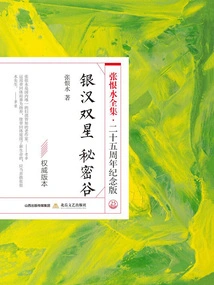
Yinhan Double Star·secret Valley (the Complete Works of Zhang Henshui·25th Anniversary Edition)
Literature银汉双星·秘密谷(张恨水全集·25周年纪念版)
Zhang Henshui
"Yinhan Double Star" mainly tells the story of the innocent and beautiful "Fairy Wushou" Li Yueying, who fell in love with Yang Yiyun under the pursuit of "prodigal son" Yang Yiyun. However, Yang Yiyun later found a new love. After this relationship, Yueying left the film industry and lived a peaceful life with her father again. "Secret Valley" tells the adventure story of the protagonist Kang Baichuan, biologist Dr. Xu Kanran, geologist Dr. Ouyang Pu and poet Xu Binru in the mysterious valley under Tianzhu Mountain. The four people had a clear division of labor, actively planned, went through hardships, and discovered the Ming Dynasty survivors living in the Secret Valley. The local people live a self-sufficient life, men and women are equal, they are simple and hard-working, and they receive warm hospitality. At the same time, they were also involved in local regional struggles, helping to resolve disputes and capture the enemy emperor Pu Zuwang and his queen. The four of them took Emperor Pu Zuwang and the Queen out of the valley and returned to Nanjing. Along the way, they attracted attention from all walks of life and became popular. However, soon Pu Zuwang and the Queen were no longer cared about and lived on the streets. Pu Zuwang was hit by a car and died. At the Queen's strong request, the four people discussed that Kang Baichuan would eventually send him back to the Secret Valley to live a safe and self-sufficient life.
"Yinhan Double Star" mainly tells the story of the innocent and beautiful "Fairy Wushou" Li Yueying, who fell in love with Yang Yiyun under the pursuit of "prodigal son" Yang Yiyun. However, Yang Yiyun later found a new love. After this relationship, Yueying left the film industry and lived a peaceful life with her father again. "Secret Valley" tells the adventure story of the protagonist Kang Baichuan, biologist Dr. Xu Kanran, geologist Dr. Ouyang Pu and poet Xu Binru in the mysterious valley under Tianzhu Mountain. The four people had a clear division of labor, actively planned, went through hardships, and discovered the Ming Dynasty survivors living in the Secret Valley. The local people live a self-sufficient life, men and women are equal, they are simple and hard-working, and they receive warm hospitality. At the same time, they were also involved in local regional struggles, helping to resolve disputes and capture the enemy emperor Pu Zuwang and his queen. The four of them took Emperor Pu Zuwang and the Queen out of the valley and returned to Nanjing. Along the way, they attracted attention from all walks of life and became popular. However, soon Pu Zuwang and the Queen were no longer cared about and lived on the streets. Pu Zuwang was hit by a car and died. At the Queen's strong request, the four people discussed that Kang Baichuan would eventually send him back to the Secret Valley to live a safe and self-sufficient life.
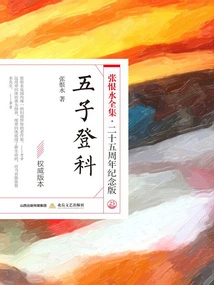
Five Sons Passed the College (the Complete Works of Zhang Henshui·25th Anniversary Edition)
Literature五子登科(张恨水全集·25周年纪念版)
Zhang Henshui
This book uses the allusion that all five sons of Dou Yanshan were admitted to the imperial examination during the Five Dynasties, and takes the family history of Jin Ziyuan, the reception commissioner in Peking, as a clue. It makes a bitter mockery of a series of shameless and shameless behaviors of Kuomintang reception officials who frantically demanded and possessed "gold, houses, cars, women, and money." It is a "record of the officialdom on the eve of the collapse of the Kuomintang regime."
This book uses the allusion that all five sons of Dou Yanshan were admitted to the imperial examination during the Five Dynasties, and takes the family history of Jin Ziyuan, the reception commissioner in Peking, as a clue. It makes a bitter mockery of a series of shameless and shameless behaviors of Kuomintang reception officials who frantically demanded and possessed "gold, houses, cars, women, and money." It is a "record of the officialdom on the eve of the collapse of the Kuomintang regime."
上下古今谈(张恨水全集·25周年纪念版)
Zhang Henshui
"Shang Xia Ancient and Modern Talk", the whole book has a unique style, the writing is diluted to the level of proficiency, the humor is humorous, and the solemnity is mixed with humor. It is really full of laughter and curses, making the readers laugh and laugh, but also feel the heartfelt pleasure.
"Shang Xia Ancient and Modern Talk", the whole book has a unique style, the writing is diluted to the level of proficiency, the humor is humorous, and the solemnity is mixed with humor. It is really full of laughter and curses, making the readers laugh and laugh, but also feel the heartfelt pleasure.
最后关头(张恨水全集·25周年纪念版)
Zhang Henshui
Zhang Henshui is a representative writer of the "Mandarin Duck and Butterfly School". He has always been overshadowed by his great reputation as a novelist. Not many prose has been published in the world, and few people in the world know about it. This is the first time that Zhang Henshui's prose works have been published in a complete collection. The "Complete Collection" is divided into seven volumes, namely "The Last Moment", "Little Moon Day", "Shanchuang Sketch", "Essays of Beijingers", "Shang Xia Ancient and Modern Talk", "Pearl" and "Memories of Writing Career". The lines of these works are filled with the beauty of poetry and painting, revealing a light, elegant and leisurely style. Reading these daily conversation-style works, one can clearly feel Zhang Henshui's deep sense of the vicissitudes of his family and country that resides in the ordinary alleys of the old city.
Zhang Henshui is a representative writer of the "Mandarin Duck and Butterfly School". He has always been overshadowed by his great reputation as a novelist. Not many prose has been published in the world, and few people in the world know about it. This is the first time that Zhang Henshui's prose works have been published in a complete collection. The "Complete Collection" is divided into seven volumes, namely "The Last Moment", "Little Moon Day", "Shanchuang Sketch", "Essays of Beijingers", "Shang Xia Ancient and Modern Talk", "Pearl" and "Memories of Writing Career". The lines of these works are filled with the beauty of poetry and painting, revealing a light, elegant and leisurely style. Reading these daily conversation-style works, one can clearly feel Zhang Henshui's deep sense of the vicissitudes of his family and country that resides in the ordinary alleys of the old city.
丹凤街(张恨水全集·25周年纪念版)
Zhang Henshui
"Danfeng Street" is a long masterpiece written by Zhang Henshui during the Anti-Japanese War. It was originally called "Biographies of Negative Vendors". From the title of the book, it can be seen that the author wanted to write biographies for the lower class hawkers. The novel tells the story of a group of self-reliant vegetable vendors and bartenders on Danfeng Street headed by Tong Laowu. They are not afraid of power and are willing to go bankrupt and run around just to rescue the poor girl Chen Xiujie who was sold by her uncle to Deputy Chief Zhao as his concubine. Underneath the poor and rough appearance of the protagonists, there is a chivalrous spirit of magnanimity, sincerity, and promise. Although the novel is not about martial arts, it uses folk ideas of "chivalry" throughout. From the title to the story content and the spoken dialect in the book, "Danfeng Street" is full of pure Nanjing flavor. In the long corridor of Chinese new literature, there is no novel that can vividly depict the urban culture and customs of Nanjing, the capital of the Republic of China, like Zhang Henshui's "Danfeng Street". Although "Danfeng Street" is not Zhang Henshui's particularly famous masterpiece, it shows his skill in the description of genre paintings, style paintings and landscape paintings. It is the "Along the River During Qingming Festival" in Nanjing during the Republic of China.
"Danfeng Street" is a long masterpiece written by Zhang Henshui during the Anti-Japanese War. It was originally called "Biographies of Negative Vendors". From the title of the book, it can be seen that the author wanted to write biographies for the lower class hawkers. The novel tells the story of a group of self-reliant vegetable vendors and bartenders on Danfeng Street headed by Tong Laowu. They are not afraid of power and are willing to go bankrupt and run around just to rescue the poor girl Chen Xiujie who was sold by her uncle to Deputy Chief Zhao as his concubine. Underneath the poor and rough appearance of the protagonists, there is a chivalrous spirit of magnanimity, sincerity, and promise. Although the novel is not about martial arts, it uses folk ideas of "chivalry" throughout. From the title to the story content and the spoken dialect in the book, "Danfeng Street" is full of pure Nanjing flavor. In the long corridor of Chinese new literature, there is no novel that can vividly depict the urban culture and customs of Nanjing, the capital of the Republic of China, like Zhang Henshui's "Danfeng Street". Although "Danfeng Street" is not Zhang Henshui's particularly famous masterpiece, it shows his skill in the description of genre paintings, style paintings and landscape paintings. It is the "Along the River During Qingming Festival" in Nanjing during the Republic of China.
写作生涯回忆(张恨水全集·25周年纪念版)
Zhang Henshui
"Memories of Writing Career" is the autobiography of Zhang Henshui, a modern cultural celebrity. The main contents include: childhood memories, when I was a child, looking at the lanterns to remember my childhood, nostalgia for old years, family treasures, drummers, my three ancient gentlemen, my family does not exchange Spring Festival couplets, my second brother cries during the Qingming Festival, the New Year in my hometown, Peach Blossom Fan, miscellaneous feelings of my life, nostalgia for the old years, Dan Weng and I, "Jing Bao" and me, Qingliang Ancient Road, etc.
"Memories of Writing Career" is the autobiography of Zhang Henshui, a modern cultural celebrity. The main contents include: childhood memories, when I was a child, looking at the lanterns to remember my childhood, nostalgia for old years, family treasures, drummers, my three ancient gentlemen, my family does not exchange Spring Festival couplets, my second brother cries during the Qingming Festival, the New Year in my hometown, Peach Blossom Fan, miscellaneous feelings of my life, nostalgia for the old years, Dan Weng and I, "Jing Bao" and me, Qingliang Ancient Road, etc.
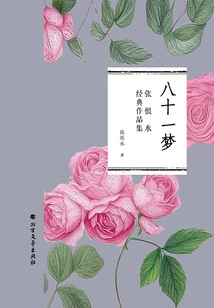
八十一梦(张恨水经典作品集)
Zhang Henshui
"Eighty-One Dreams" is a novel. The novel draws on the writing style of modern condemnation novels, and adopts the form of dreams to structure the novel. Each dream forms its own chapter, focusing on satirizing a certain aspect of society. The manuscript uses the absurdity of form to integrate falsehood and reality. The freedom of form expands the social capacity of the novel and makes the novel's attack on current ills more profound. The whole work is rich in connotation and profound in meaning.
"Eighty-One Dreams" is a novel. The novel draws on the writing style of modern condemnation novels, and adopts the form of dreams to structure the novel. Each dream forms its own chapter, focusing on satirizing a certain aspect of society. The manuscript uses the absurdity of form to integrate falsehood and reality. The freedom of form expands the social capacity of the novel and makes the novel's attack on current ills more profound. The whole work is rich in connotation and profound in meaning.
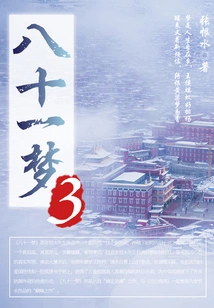
Eighty-one Dreams (3)
General Fiction八十一梦(3)
Zhang Henshui
"Eighty-One Dream" is a new stage in Mr. Zhang Henshui's works. This new stage breaks through the barriers of old novels from the old era and opens up a new situation. The meaning is far-reaching, implicit and heroic. This is a true portrayal of Mr. Zhang Henshui's mentality of persisting in resisting Japan and serving the country to the death during the Anti-Japanese War. After the Nanjing Massacre, Zhang Henshui submitted a petition to the government, requesting to go to the mountains to fight guerrillas at his own expense, but there was no way out. He put his strong patriotic enthusiasm and loneliness on paper, and created a large number of anti-Japanese novels based on real people and true stories, leaving many precious histories of the Chinese nation's resistance to foreign invaders. "Eighty-One Dream" is a work that reflects the "painful lessons" of the Anti-Japanese War. Together with "Bashan Night Rain", it is called the "pinnacle work" of Zhang Henshui's works.
"Eighty-One Dream" is a new stage in Mr. Zhang Henshui's works. This new stage breaks through the barriers of old novels from the old era and opens up a new situation. The meaning is far-reaching, implicit and heroic. This is a true portrayal of Mr. Zhang Henshui's mentality of persisting in resisting Japan and serving the country to the death during the Anti-Japanese War. After the Nanjing Massacre, Zhang Henshui submitted a petition to the government, requesting to go to the mountains to fight guerrillas at his own expense, but there was no way out. He put his strong patriotic enthusiasm and loneliness on paper, and created a large number of anti-Japanese novels based on real people and true stories, leaving many precious histories of the Chinese nation's resistance to foreign invaders. "Eighty-One Dream" is a work that reflects the "painful lessons" of the Anti-Japanese War. Together with "Bashan Night Rain", it is called the "pinnacle work" of Zhang Henshui's works.
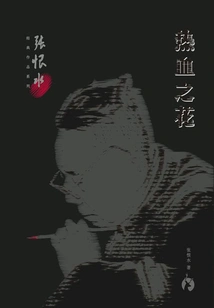
Flower of Passion
General Fiction热血之花
Zhang Henshui
This book is a classic masterpiece of Zhang Henshui's anti-war novels. This book was written in Peiping after the "January 28th Incident" in 1932, pioneering the patriotic spy war theme. The heroine of the novel, Shu Jianhua, is a spy of the military and police intelligence agency. She accepts the order of the garrison commander to spy on the enemy's secrets. She interacts with Yu Heming, the captain of the pirate team, which causes the leader of the volunteer army, Hua Guoxiong, to misunderstand and break with Shu Jianhua. However, Hua Guoxiong did not know that the reason why their volunteer army was able to defeat the pirates at Jia Shikou was precisely because Shu Jianhua obtained information from Yu Heming in advance. When the pirates were about to launch a massive counterattack, Shu was ordered to sneak into the county to spy on the enemy's military situation. Unfortunately, he fell into the clutches of Yu Heming and died heroically.
This book is a classic masterpiece of Zhang Henshui's anti-war novels. This book was written in Peiping after the "January 28th Incident" in 1932, pioneering the patriotic spy war theme. The heroine of the novel, Shu Jianhua, is a spy of the military and police intelligence agency. She accepts the order of the garrison commander to spy on the enemy's secrets. She interacts with Yu Heming, the captain of the pirate team, which causes the leader of the volunteer army, Hua Guoxiong, to misunderstand and break with Shu Jianhua. However, Hua Guoxiong did not know that the reason why their volunteer army was able to defeat the pirates at Jia Shikou was precisely because Shu Jianhua obtained information from Yu Heming in advance. When the pirates were about to launch a massive counterattack, Shu was ordered to sneak into the county to spy on the enemy's military situation. Unfortunately, he fell into the clutches of Yu Heming and died heroically.
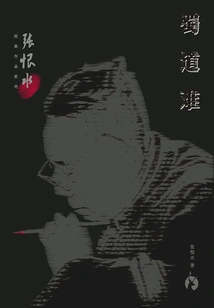
张恨水经典作品系列:蜀道难
Zhang Henshui
"The Road to Shu Is Difficult" tells the story of people from Jiangdong who fled to Shu one after another during the Anti-Japanese War. On the way, young employee Feng Zian met Miss Bai Yuzhen. Feng Diabai fell in love at first sight and was attentive in every possible way. The ship arrived in Chongqing, and when Feng Zian was preparing to marry Miss Bai, Bai Yuzhen had already "lost her tail"... A dream of love finally came to nothing.
"The Road to Shu Is Difficult" tells the story of people from Jiangdong who fled to Shu one after another during the Anti-Japanese War. On the way, young employee Feng Zian met Miss Bai Yuzhen. Feng Diabai fell in love at first sight and was attentive in every possible way. The ship arrived in Chongqing, and when Feng Zian was preparing to marry Miss Bai, Bai Yuzhen had already "lost her tail"... A dream of love finally came to nothing.
Night Rain in Bashan (part 2)
General Fiction巴山夜雨(下)
Zhang Henshui
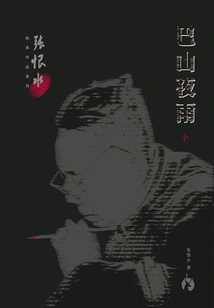
This book is Zhang Henshui's work of "learning from painful experiences". Serialization began in 1946 after the victory of the Anti-Japanese War and was completed at the end of 1948, which lasted more than three years. With a cold and rational writing style, the author accuses the Japanese atrocities of war and at the same time takes the lead in exploring the national psychology and dissecting the "evil character" displayed by the Chinese people in the war of resistance. The novel takes the protagonist Li Nanquan as the axis, showing readers a picture of all living beings in the mountain village of eastern Shu. The characters are lifelike, expressive, and Adu's language is humorous and sharp, and his descriptive skills in the novel have reached a level of proficiency. Ms. Zhao Xiaoxuan, a Taiwanese scholar, called the book "Zhang Henshui's most important masterpiece and the pinnacle of his life's works."
This book is Zhang Henshui's work of "learning from painful experiences". Serialization began in 1946 after the victory of the Anti-Japanese War and was completed at the end of 1948, which lasted more than three years. With a cold and rational writing style, the author accuses the Japanese atrocities of war and at the same time takes the lead in exploring the national psychology and dissecting the "evil character" displayed by the Chinese people in the war of resistance. The novel takes the protagonist Li Nanquan as the axis, showing readers a picture of all living beings in the mountain village of eastern Shu. The characters are lifelike, expressive, and Adu's language is humorous and sharp, and his descriptive skills in the novel have reached a level of proficiency. Ms. Zhao Xiaoxuan, a Taiwanese scholar, called the book "Zhang Henshui's most important masterpiece and the pinnacle of his life's works."
The Legend of White Snake
General Fiction白蛇传
Zhang Henshui
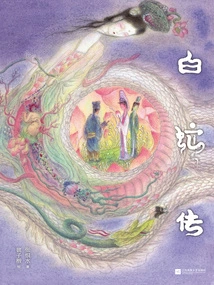
This book is a novel created by Zhang Henshui, a master of popular literature, based on the folklore story "The Legend of the White Snake". It has 50 shocking illustrations hand-painted by the popular painter Guo Zikai. It is a model version of the "Legend of the White Snake" with excellent pictures and text that can be passed down to the world. The full text has 18 chapters in total, detailing the whole process of visiting the lake during the Qingming Festival, borrowing and returning umbrellas, getting married, opening a shop in Suzhou, performing medical consultations with experts, fighting wits with old Taoists, the sudden change during the Dragon Boat Festival, stealing grass in Kunlun, flooding the Jinshan Mountains, white snakes giving birth, collecting snakes in a bowl, Xu Xian crying at the Pagoda, and Leifeng Pagoda falling down. This version of "The Legend of White Snake" not only has a complete plot, smooth logic, and beautiful writing, it is also a beautiful and shocking picture. In the book, readers can not only relive the love classics that Chinese people have been obsessed with for thousands of years, but also re-experience the charm of ancient legends through transcendent images. No matter how the world changes, "The Legend of White Snake" always tells people's eternal pursuit of self and love.
This book is a novel created by Zhang Henshui, a master of popular literature, based on the folklore story "The Legend of the White Snake". It has 50 shocking illustrations hand-painted by the popular painter Guo Zikai. It is a model version of the "Legend of the White Snake" with excellent pictures and text that can be passed down to the world. The full text has 18 chapters in total, detailing the whole process of visiting the lake during the Qingming Festival, borrowing and returning umbrellas, getting married, opening a shop in Suzhou, performing medical consultations with experts, fighting wits with old Taoists, the sudden change during the Dragon Boat Festival, stealing grass in Kunlun, flooding the Jinshan Mountains, white snakes giving birth, collecting snakes in a bowl, Xu Xian crying at the Pagoda, and Leifeng Pagoda falling down. This version of "The Legend of White Snake" not only has a complete plot, smooth logic, and beautiful writing, it is also a beautiful and shocking picture. In the book, readers can not only relive the love classics that Chinese people have been obsessed with for thousands of years, but also re-experience the charm of ancient legends through transcendent images. No matter how the world changes, "The Legend of White Snake" always tells people's eternal pursuit of self and love.
Zhang Henshui's Classic Works Series: Meng Jiangnu
General Fiction张恨水经典作品系列:孟姜女
Zhang Henshui
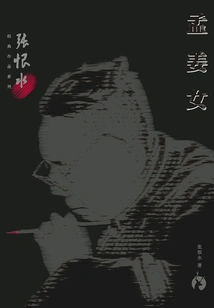
The novel was written by Mr. Zhang Henshui, a representative writer of the Mandarin Duck and Butterfly School, a literary master of the Republic of China. It was written from 1955 to 1957 and is adapted from the traditional folk tale Meng Jiangnu.
The novel was written by Mr. Zhang Henshui, a representative writer of the Mandarin Duck and Butterfly School, a literary master of the Republic of China. It was written from 1955 to 1957 and is adapted from the traditional folk tale Meng Jiangnu.
Time Flies
General Fiction似水流年
Zhang Henshui
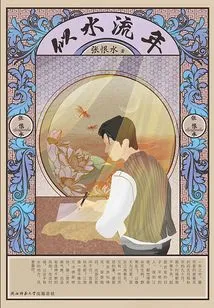
"Homecoming", also known as "The Golden Age", tells the story of family and money, innocence and vanity, love and body, degradation and repentance. The author chose the word "hate water" as his pen name to encourage himself to cherish time. "Hate water" is just to "cherish time." The name of the protagonist of this book is Huang Xishi, which is profound and thought-provoking. Huang Xishi, a young student, fell in love at first sight with Bai Xingsu, a girl from his hometown. After going to Beijing, they fell in love with each other at the same school and in the same class. Soon, Huang Xishi met the beautiful socialite Mi Jinhua, and then ignored his father's hard work, pretended to be a young man, and spent extravagantly, leaving Bai Xingsu behind. In the end, the lie was exposed, and Huang Xishi was poor and ill. His love, studies, and career were all in vain. He deeply regretted it and became a hiker angrily.
"Homecoming", also known as "The Golden Age", tells the story of family and money, innocence and vanity, love and body, degradation and repentance. The author chose the word "hate water" as his pen name to encourage himself to cherish time. "Hate water" is just to "cherish time." The name of the protagonist of this book is Huang Xishi, which is profound and thought-provoking. Huang Xishi, a young student, fell in love at first sight with Bai Xingsu, a girl from his hometown. After going to Beijing, they fell in love with each other at the same school and in the same class. Soon, Huang Xishi met the beautiful socialite Mi Jinhua, and then ignored his father's hard work, pretended to be a young man, and spent extravagantly, leaving Bai Xingsu behind. In the end, the lie was exposed, and Huang Xishi was poor and ill. His love, studies, and career were all in vain. He deeply regretted it and became a hiker angrily.
The New Story of Water Margin (part 2)
General Fiction水浒新传(下)
Zhang Henshui
This book is the continuation of the 70-chapter version of "Water Margin" written by Jin Shengtan. It was created during the Anti-Japanese War and was published as a single volume by Chongqing Jianzhong Publishing House in 1943. The book tells the story of the Liangshan heroes who gathered together to help the Song Dynasty resist the Jin invasion. The book has sixty-eight chapters in total.
This book is the continuation of the 70-chapter version of "Water Margin" written by Jin Shengtan. It was created during the Anti-Japanese War and was published as a single volume by Chongqing Jianzhong Publishing House in 1943. The book tells the story of the Liangshan heroes who gathered together to help the Song Dynasty resist the Jin invasion. The book has sixty-eight chapters in total.
北雁南飞·第三部分(张恨水经典小说)
Zhang Henshui
"Northern Wild Geese Flying to the South" is a chapter novel by Zhang Henshui. It is based on the author's study experience in a private school in Sanhu Town, Jiangxi Province when he was a boy. It describes the love tragedy of the girl Yao Chunhua and the boy Li Xiaoqiu. With sincere feelings and delicate writing style, it makes people sigh. The plot, as well as the vivid outline of the folk customs, sentiments and customs of Sanhu Town, provide us with the social scene and school life records of Xiaoqing Jiangnan Town. From these descriptions, it is not difficult to find the footprints of the writer Zhang Henshui, which is a relatively typical old-style novel of talents and beauties. Zhang Henshui (May 18, 1895 - February 18, 1967), whose original name was Xinyuan, Henshui was his pen name, which was taken from the poem "Meeting Happily" written by Li Yu in the Southern Tang Dynasty, which means "I will grow up in life and hate the water in the east". Zhang Henshui is a famous chapter novelist and a representative writer of the Mandarin Duck and Butterfly School. He is honored as the first "master of chapter novels" and "master of popular literature" in the history of modern literature. The plot of the work is tortuous and complex, and the structure is rigorous and complete. It integrates traditional Chinese chapter novels with new techniques in Western novels. He is also famous for his prolific output. In his fifty-year writing career, he created more than 100 popular novels, most of which are medium and long chapter novels with a total of 30 million words, which can be regarded as a book in his lifetime.
"Northern Wild Geese Flying to the South" is a chapter novel by Zhang Henshui. It is based on the author's study experience in a private school in Sanhu Town, Jiangxi Province when he was a boy. It describes the love tragedy of the girl Yao Chunhua and the boy Li Xiaoqiu. With sincere feelings and delicate writing style, it makes people sigh. The plot, as well as the vivid outline of the folk customs, sentiments and customs of Sanhu Town, provide us with the social scene and school life records of Xiaoqing Jiangnan Town. From these descriptions, it is not difficult to find the footprints of the writer Zhang Henshui, which is a relatively typical old-style novel of talents and beauties. Zhang Henshui (May 18, 1895 - February 18, 1967), whose original name was Xinyuan, Henshui was his pen name, which was taken from the poem "Meeting Happily" written by Li Yu in the Southern Tang Dynasty, which means "I will grow up in life and hate the water in the east". Zhang Henshui is a famous chapter novelist and a representative writer of the Mandarin Duck and Butterfly School. He is honored as the first "master of chapter novels" and "master of popular literature" in the history of modern literature. The plot of the work is tortuous and complex, and the structure is rigorous and complete. It integrates traditional Chinese chapter novels with new techniques in Western novels. He is also famous for his prolific output. In his fifty-year writing career, he created more than 100 popular novels, most of which are medium and long chapter novels with a total of 30 million words, which can be regarded as a book in his lifetime.
Night Rain in Bashan (part 1)
General Fiction巴山夜雨(上)
Zhang Henshui
This book is Zhang Henshui's work of "learning from painful experiences". Serialization began in 1946 after the victory of the Anti-Japanese War and was completed at the end of 1948, which lasted more than three years. With a cold and rational writing style, the author accuses the Japanese atrocities of war and at the same time takes the lead in exploring the national psychology and dissecting the "evil character" displayed by the Chinese people in the war of resistance. The novel takes the protagonist Li Nanquan as the axis, showing readers a picture of all living beings in the mountain village of eastern Shu. The characters are lifelike, expressive, and Adu's language is humorous and sharp, and his descriptive skills in the novel have reached a level of proficiency. Ms. Zhao Xiaoxuan, a Taiwanese scholar, called the book "Zhang Henshui's most important masterpiece and the pinnacle of his life's works."
This book is Zhang Henshui's work of "learning from painful experiences". Serialization began in 1946 after the victory of the Anti-Japanese War and was completed at the end of 1948, which lasted more than three years. With a cold and rational writing style, the author accuses the Japanese atrocities of war and at the same time takes the lead in exploring the national psychology and dissecting the "evil character" displayed by the Chinese people in the war of resistance. The novel takes the protagonist Li Nanquan as the axis, showing readers a picture of all living beings in the mountain village of eastern Shu. The characters are lifelike, expressive, and Adu's language is humorous and sharp, and his descriptive skills in the novel have reached a level of proficiency. Ms. Zhao Xiaoxuan, a Taiwanese scholar, called the book "Zhang Henshui's most important masterpiece and the pinnacle of his life's works."
Drunk and Rich (part 1) (collection of Popular Novels of the Republic of China·zhang Henshui Volume)
General Fiction纸醉金迷(第一部)(民国通俗小说典藏文库·张恨水卷)
Zhang Henshui
One of Zhang Henshui's representative works. The story takes place in Chongqing, the capital of the Nationalist Government in 1945. Here gathered a group of people who were feasting, feasting, and living in intoxication. Everything revolves around money. Corruption of officials, speculation by businessmen and bankers, and women being swindlers have become a common trend. The novel uses the clues of Wei Duanben, a young civil servant, and his beautiful but vain wife Tian Peizhi as they live together and break up. It takes the opportunity of many characters to rush to buy gold savings certificates to make the country's hard-earned wealth, and unfolds a complicated story. When the Anti-Japanese War was won, everything for the speculators was in vain. The work directs criticism towards the ugly, humble world in the Kuomintang-controlled areas on the eve of the victory of the Anti-Japanese War. It reveals the loss and struggle in the face of human nature and money in a special era.
One of Zhang Henshui's representative works. The story takes place in Chongqing, the capital of the Nationalist Government in 1945. Here gathered a group of people who were feasting, feasting, and living in intoxication. Everything revolves around money. Corruption of officials, speculation by businessmen and bankers, and women being swindlers have become a common trend. The novel uses the clues of Wei Duanben, a young civil servant, and his beautiful but vain wife Tian Peizhi as they live together and break up. It takes the opportunity of many characters to rush to buy gold savings certificates to make the country's hard-earned wealth, and unfolds a complicated story. When the Anti-Japanese War was won, everything for the speculators was in vain. The work directs criticism towards the ugly, humble world in the Kuomintang-controlled areas on the eve of the victory of the Anti-Japanese War. It reveals the loss and struggle in the face of human nature and money in a special era.
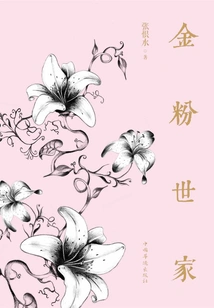
Jinfenshijia (upper and Lower)
General Fiction金粉世家(上下)
Zhang Henshui
By describing the life of the upper-class aristocratic family in the capital, "The Golden Fen Family" touched upon an area that was ignored by ordinary writers at the time (including revolutionary writers), and provided later generations with real visual materials of the upper class society at that time. In the Jin family, a big and grand family, Mrs. Jin and Jin Quan's concubine Cui Cui were fighting openly and secretly; Jin Yanxi was married for only a few days before pursuing another girl; Usury loans were issued; Jin Quan's sons were idle, uneducated, and lived a life of drunkenness and lavish spending. They visited brothels, married concubines, held Kunjiao, and ate, drank, and had fun all day long...
By describing the life of the upper-class aristocratic family in the capital, "The Golden Fen Family" touched upon an area that was ignored by ordinary writers at the time (including revolutionary writers), and provided later generations with real visual materials of the upper class society at that time. In the Jin family, a big and grand family, Mrs. Jin and Jin Quan's concubine Cui Cui were fighting openly and secretly; Jin Yanxi was married for only a few days before pursuing another girl; Usury loans were issued; Jin Quan's sons were idle, uneducated, and lived a life of drunkenness and lavish spending. They visited brothels, married concubines, held Kunjiao, and ate, drank, and had fun all day long...