Fanqie library
Browse
- Titles
- 1.3k
Every Fanqie book we index, searchable by title, author or tag.
-
 Mei Mengyuan
"Mei Meng Yuan" is also known as "The Wonders of Romance", "The Fate of Qiao Yan" and "The History of Romance", with forty chapters. The manuscript is signed "Feng Yuexuan and Xuan Zi", the Xiao Feng Xuan version or other later editions are signed "Feng Yue Xuan Xuan Zi". According to this book, each chapter has a general review at the end of the chapter, and the reviewer often calls himself "You Xuanzi", even in the edition signed "Feng Yuexuan Ru Xuanzi". It can be seen that it was originally
—Reads9.3Score—Shelves
Mei Mengyuan
"Mei Meng Yuan" is also known as "The Wonders of Romance", "The Fate of Qiao Yan" and "The History of Romance", with forty chapters. The manuscript is signed "Feng Yuexuan and Xuan Zi", the Xiao Feng Xuan version or other later editions are signed "Feng Yue Xuan Xuan Zi". According to this book, each chapter has a general review at the end of the chapter, and the reviewer often calls himself "You Xuanzi", even in the edition signed "Feng Yuexuan Ru Xuanzi". It can be seen that it was originally
—Reads9.3Score—Shelves
-
 100 Folk Feng Shui Taboos
Be sure to pay attention to the Feng Shui taboos passed down from generation to generation! Otherwise, you will be in trouble! Feng Shui is originally the art of looking at the ground, which is a method of checking geography on the spot. It is also called geography and the ancient name of Kanyu. It is said that the founder of Feng Shui is Jiutian Xuannv. The relatively complete Feng Shui knowledge originated in the Warring States Period. The core idea of Feng Shui is the harmony between man an
—Reads9.5Score—Shelves
100 Folk Feng Shui Taboos
Be sure to pay attention to the Feng Shui taboos passed down from generation to generation! Otherwise, you will be in trouble! Feng Shui is originally the art of looking at the ground, which is a method of checking geography on the spot. It is also called geography and the ancient name of Kanyu. It is said that the founder of Feng Shui is Jiutian Xuannv. The relatively complete Feng Shui knowledge originated in the Warring States Period. The core idea of Feng Shui is the harmony between man an
—Reads9.5Score—Shelves
-
 Drops of Tianmui
"Drip Tianmui" is an ancient Chinese numerology work. According to legend, it was written by Jing Tu in the Song Dynasty, and some people say it was written by Liu Ji in the early Ming Dynasty. During the Daoguang period of the Qing Dynasty, Ren Tieqiao spent his whole life studying numerology. In view of the problem that numerology at that time deviated from the principle of restraint of Yin and Yang and the Five Elements, was confusing and focused on patterns and gods, he added chapters and ch
—Reads9.4Score—Shelves
Drops of Tianmui
"Drip Tianmui" is an ancient Chinese numerology work. According to legend, it was written by Jing Tu in the Song Dynasty, and some people say it was written by Liu Ji in the early Ming Dynasty. During the Daoguang period of the Qing Dynasty, Ren Tieqiao spent his whole life studying numerology. In view of the problem that numerology at that time deviated from the principle of restraint of Yin and Yang and the Five Elements, was confusing and focused on patterns and gods, he added chapters and ch
—Reads9.4Score—Shelves
-
 Complete Collection of Traditional Chinese Metaphysics (10 Volumes in Total)
This encyclopedia is like a systematic "treasure house of traditional culture". It takes you deep into the horoscopes of the Book of Changes, explores the wisdom of the unity of nature and man in Feng Shui, interprets the life information contained in face and palm reading, and sorts out the ingenious deduction of personal characteristics from horoscopes. This book is not a simple divination manual, but is dedicated to analyzing the cosmology, symbol system and practical logic behind these knowl
—Reads9.1Score—Shelves
Complete Collection of Traditional Chinese Metaphysics (10 Volumes in Total)
This encyclopedia is like a systematic "treasure house of traditional culture". It takes you deep into the horoscopes of the Book of Changes, explores the wisdom of the unity of nature and man in Feng Shui, interprets the life information contained in face and palm reading, and sorts out the ingenious deduction of personal characteristics from horoscopes. This book is not a simple divination manual, but is dedicated to analyzing the cosmology, symbol system and practical logic behind these knowl
—Reads9.1Score—Shelves
-
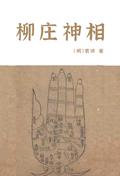 Liuzhuang Shenxiang
It is said that this book was written by Yuan Gong in the Ming Dynasty. Because Yuan Gong called himself Liuzhuang layman in his later years, it was named "Liuzhuang Shenxiang", also known as "Liuzhuang Xiangfa". This book not only inherits and develops the essence of "Ma Yi Shen Xiang", but also pioneers the study of female physiognomy. It can be called a pioneering work that stands side by side with "Ma Yi Shen Xiang". Because "Liuzhuang Shenxiang" is very effective, everyone from the princes
—Reads9.4Score—Shelves
Liuzhuang Shenxiang
It is said that this book was written by Yuan Gong in the Ming Dynasty. Because Yuan Gong called himself Liuzhuang layman in his later years, it was named "Liuzhuang Shenxiang", also known as "Liuzhuang Xiangfa". This book not only inherits and develops the essence of "Ma Yi Shen Xiang", but also pioneers the study of female physiognomy. It can be called a pioneering work that stands side by side with "Ma Yi Shen Xiang". Because "Liuzhuang Shenxiang" is very effective, everyone from the princes
—Reads9.4Score—Shelves
-
 Guiguzi's Modern Lessons: Contemporary Social Survival Rules
[How to survive in the workplace + interpersonal communication + insight into people's hearts] In a contemporary society with information explosion and fierce competition, do you long for a "ruler" to accurately grasp interpersonal relationships? How to win unexpectedly in workplace struggles and navigate interpersonal relationships with ease? This book cleverly integrates the profound wisdom of the pre-Qin strategist Gui Guzi with the modern workplace and social life scenes. It uses humorous an
—Reads8.7Score—Shelves
Guiguzi's Modern Lessons: Contemporary Social Survival Rules
[How to survive in the workplace + interpersonal communication + insight into people's hearts] In a contemporary society with information explosion and fierce competition, do you long for a "ruler" to accurately grasp interpersonal relationships? How to win unexpectedly in workplace struggles and navigate interpersonal relationships with ease? This book cleverly integrates the profound wisdom of the pre-Qin strategist Gui Guzi with the modern workplace and social life scenes. It uses humorous an
—Reads8.7Score—Shelves
-
 Tao Te Ching
The wisdom in the Tao Te Ching stems from Lao Tzu's profound insight and deep thinking about the world and human relationships. Social turmoil, personnel disputes, and the impermanence of life have accumulated bit by bit into Laozi's wisdom on human cultivation, philosophy of life, governance, military philosophy, and health preservation. On the basis of being loyal to the original work, this book has detailed annotations and translations of the original text, with comprehensive and detailed ana
—Reads9.4Score—Shelves
Tao Te Ching
The wisdom in the Tao Te Ching stems from Lao Tzu's profound insight and deep thinking about the world and human relationships. Social turmoil, personnel disputes, and the impermanence of life have accumulated bit by bit into Laozi's wisdom on human cultivation, philosophy of life, governance, military philosophy, and health preservation. On the basis of being loyal to the original work, this book has detailed annotations and translations of the original text, with comprehensive and detailed ana
—Reads9.4Score—Shelves
-
 Silk Book Laozi
"Laozi", also known as "The Tao Te Ching", is said to have been written by Laozi during the Spring and Autumn Period. It proposed the Taoist philosophy of "quietness and inaction" and had a profound influence. It is said to be the most widely translated Chinese masterpiece besides the Bible and has been translated into foreign languages. However, in December 1973, two sets of "Laozi" silk books were suddenly unearthed from the Mawangdui Han Tomb in Hunan. Not only were the contents different fro
—Reads9.4Score—Shelves
Silk Book Laozi
"Laozi", also known as "The Tao Te Ching", is said to have been written by Laozi during the Spring and Autumn Period. It proposed the Taoist philosophy of "quietness and inaction" and had a profound influence. It is said to be the most widely translated Chinese masterpiece besides the Bible and has been translated into foreign languages. However, in December 1973, two sets of "Laozi" silk books were suddenly unearthed from the Mawangdui Han Tomb in Hunan. Not only were the contents different fro
—Reads9.4Score—Shelves
-
 She Jing (Free Public Edition Book)
A monograph on archery technology from the Tang Dynasty, detailing shooting methods, equipment and training essentials, and is an ancient military sports document.
—Reads8.5Score—Shelves
She Jing (Free Public Edition Book)
A monograph on archery technology from the Tang Dynasty, detailing shooting methods, equipment and training essentials, and is an ancient military sports document.
—Reads8.5Score—Shelves
-
 Yin Fu Jing
"The Yellow Emperor's Yin Fu Jing", referred to as the "Yin Fu Jing", was written by the Yellow Emperor and later generations relied on it. The year of its completion is unknown. It became popular in the world in the Tang Dynasty. Words and deeds coincide with the way of heaven. If you follow the opportunity, success will come true. Included in the text category of the Dongzhen Book of the Zhengtong Daozang, more than 400 words are divided into three chapters, and there are also more than 300 wo
—Reads9.4Score—Shelves
Yin Fu Jing
"The Yellow Emperor's Yin Fu Jing", referred to as the "Yin Fu Jing", was written by the Yellow Emperor and later generations relied on it. The year of its completion is unknown. It became popular in the world in the Tang Dynasty. Words and deeds coincide with the way of heaven. If you follow the opportunity, success will come true. Included in the text category of the Dongzhen Book of the Zhengtong Daozang, more than 400 words are divided into three chapters, and there are also more than 300 wo
—Reads9.4Score—Shelves
-
 Compendium of Materia Medica - Complete Collection
Li Shizhen, the best pharmacologist in the Ming Dynasty, "has been addicted to classics as much as eating sugarcane syrup" and "searched and collected extensively" for more than thirty years and traveled thousands of miles until he was compiled in his sixtieth year. It is a collection of the great achievements of Chinese herbal medicine before the 16th century. It is a well-deserved "magnificent book of oriental medicine" and has an immeasurable influence on the development of modern pharmacolog
—Reads9.5Score—Shelves
Compendium of Materia Medica - Complete Collection
Li Shizhen, the best pharmacologist in the Ming Dynasty, "has been addicted to classics as much as eating sugarcane syrup" and "searched and collected extensively" for more than thirty years and traveled thousands of miles until he was compiled in his sixtieth year. It is a collection of the great achievements of Chinese herbal medicine before the 16th century. It is a well-deserved "magnificent book of oriental medicine" and has an immeasurable influence on the development of modern pharmacolog
—Reads9.5Score—Shelves
-
 Tao Te Ching (Good Luck and Good Luck Edition)
The philosophical poems written by Laozi during the Spring and Autumn Period formed the core framework of Chinese Taoist thought. This book uses "Tao" to explain the evolution of all things in the universe, and puts forward the profound proposition that "Tao follows nature" and "governs by doing nothing". It advocates the wisdom of being flexible, humble and contented, and contains the dialectical law of unity of opposites and return to nature. This is not only a classic that discusses the art o
—Reads8.7Score—Shelves
Tao Te Ching (Good Luck and Good Luck Edition)
The philosophical poems written by Laozi during the Spring and Autumn Period formed the core framework of Chinese Taoist thought. This book uses "Tao" to explain the evolution of all things in the universe, and puts forward the profound proposition that "Tao follows nature" and "governs by doing nothing". It advocates the wisdom of being flexible, humble and contented, and contains the dialectical law of unity of opposites and return to nature. This is not only a classic that discusses the art o
—Reads8.7Score—Shelves
-
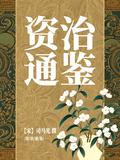 Zizhi Tongjian (Original Full Version)
A masterpiece of chronological general history edited by Sima Guang of the Northern Song Dynasty. Starting from King Weilie of Zhou Dynasty and ending with the Five Dynasties Later Zhou Dynasty, it records the rise and fall of history in 1362 years. The title of the book means "in view of the past, it is qualified to govern", and the purpose of compilation is to provide historical experience and lessons for rulers. It takes time as the outline and events as the purpose, with clear narrative stru
—Reads9.3Score—Shelves
Zizhi Tongjian (Original Full Version)
A masterpiece of chronological general history edited by Sima Guang of the Northern Song Dynasty. Starting from King Weilie of Zhou Dynasty and ending with the Five Dynasties Later Zhou Dynasty, it records the rise and fall of history in 1362 years. The title of the book means "in view of the past, it is qualified to govern", and the purpose of compilation is to provide historical experience and lessons for rulers. It takes time as the outline and events as the purpose, with clear narrative stru
—Reads9.3Score—Shelves
-
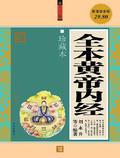 The Complete Huangdi Neijing (Complete Collection)
"The Complete Huangdi Neijing (Complete Collection)" is not only a medical masterpiece, but also a health-preserving manual. The book talks about how to treat diseases, but more importantly, it talks about how not to get sick. "If you don't treat the disease, you can treat the disease; if you don't treat it, you can treat the disorder." How to make people healthy and long-lived without taking medicine. "Huangdi Neijing" believes that human beings are closely related to nature. "Human beings are
—Reads9.5Score—Shelves
The Complete Huangdi Neijing (Complete Collection)
"The Complete Huangdi Neijing (Complete Collection)" is not only a medical masterpiece, but also a health-preserving manual. The book talks about how to treat diseases, but more importantly, it talks about how not to get sick. "If you don't treat the disease, you can treat the disease; if you don't treat it, you can treat the disorder." How to make people healthy and long-lived without taking medicine. "Huangdi Neijing" believes that human beings are closely related to nature. "Human beings are
—Reads9.5Score—Shelves
-
 Compendium of Materia Medica
It is a masterpiece of pharmacology compiled by Li Shizhen of the Ming Dynasty on the basis of inheriting and summarizing the achievements of materia medica before the Ming Dynasty, combined with the author's long-term and extensive study and interviews with working people such as herb farmers, folk doctors, hunters, fishermen, etc., With reference to more than 800 kinds of classics, and after long-term hard practice and study, which lasted for decades. "Compendium of Materia Medica" was publish
—Reads9.5Score—Shelves
Compendium of Materia Medica
It is a masterpiece of pharmacology compiled by Li Shizhen of the Ming Dynasty on the basis of inheriting and summarizing the achievements of materia medica before the Ming Dynasty, combined with the author's long-term and extensive study and interviews with working people such as herb farmers, folk doctors, hunters, fishermen, etc., With reference to more than 800 kinds of classics, and after long-term hard practice and study, which lasted for decades. "Compendium of Materia Medica" was publish
—Reads9.5Score—Shelves
-
 Yellow Emperor's House Classics
[Ancient magic number books, traditional Yangzhai Fengshui originals, ancient Chinese studies books, classics collected in Siku] "The Classic of Huangdi's House" is the earliest extant classical classic in China that systematically discusses the human settlement environment. The book is divided into two volumes and contains the original text of the ancient version. It was compiled in the name of Huangdi by later generations. It was written around the Tang Dynasty and was included in "Sikuquanshu
—Reads7.9Score—Shelves
Yellow Emperor's House Classics
[Ancient magic number books, traditional Yangzhai Fengshui originals, ancient Chinese studies books, classics collected in Siku] "The Classic of Huangdi's House" is the earliest extant classical classic in China that systematically discusses the human settlement environment. The book is divided into two volumes and contains the original text of the ancient version. It was compiled in the name of Huangdi by later generations. It was written around the Tang Dynasty and was included in "Sikuquanshu
—Reads7.9Score—Shelves
-
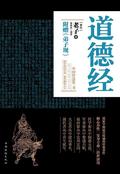 Tao Te Ching (Comes with a New Collection-Rights Translation of "Disciple Rules")
The Tao Te Ching is a classic work of Chinese culture, and scholars of all ages have made studying the Tao Te Ching a required course. The "Tao Te Ching" has a total of eighty-one chapters, mostly in verse, and is divided into two parts: "Tao Jing" and "De Jing". The Tao Te Ching has five thousand words. It is not long but has incisive discussions. It contains profound meanings and broad ideas. Its content discusses the ontology of the universe, the origin of all things, the laws of nature, etc.
—Reads9.4Score—Shelves
Tao Te Ching (Comes with a New Collection-Rights Translation of "Disciple Rules")
The Tao Te Ching is a classic work of Chinese culture, and scholars of all ages have made studying the Tao Te Ching a required course. The "Tao Te Ching" has a total of eighty-one chapters, mostly in verse, and is divided into two parts: "Tao Jing" and "De Jing". The Tao Te Ching has five thousand words. It is not long but has incisive discussions. It contains profound meanings and broad ideas. Its content discusses the ontology of the universe, the origin of all things, the laws of nature, etc.
—Reads9.4Score—Shelves
-
 Chronicles of the Three Kingdoms·wu Shu
The complete official history of "Three Kingdoms·Wu Shu" is compiled! One book to understand Soochow's century-old hegemony: Sun Jian raised an army, Sun Ce decided Jiangdong, and Sun Quan made a trip to the Three Kingdoms Defeating Cao at Chibi, the Battle of Jingzhou, and the Great Victory at Yiling The strategies of Zhou Yu, Lu Su, Lu Meng, Lu Xun and other famous generals are all recorded in it. No drama, no romance, restore the true history of Jiangdong in the Three Kingdoms Public version
—Reads8.4Score—Shelves
Chronicles of the Three Kingdoms·wu Shu
The complete official history of "Three Kingdoms·Wu Shu" is compiled! One book to understand Soochow's century-old hegemony: Sun Jian raised an army, Sun Ce decided Jiangdong, and Sun Quan made a trip to the Three Kingdoms Defeating Cao at Chibi, the Battle of Jingzhou, and the Great Victory at Yiling The strategies of Zhou Yu, Lu Su, Lu Meng, Lu Xun and other famous generals are all recorded in it. No drama, no romance, restore the true history of Jiangdong in the Three Kingdoms Public version
—Reads8.4Score—Shelves
-
 Enduring Family Wisdom: Yan Family Motto
"Yan Family Instructions" is a landmark work in the history of family education in ancient China. It was written by Yan Zitui, a famous scholar from the Southern and Northern Dynasties to the early Sui Dynasty. As the earliest and most complete monograph on family mottos in existence, it is known as the "ancestor of ancient and modern family mottos." Yan Zhitui personally experienced dynasty changes, wars, and displacements. Combining his rich experience and profound education, he earnestly set
—Reads8.2Score—Shelves
Enduring Family Wisdom: Yan Family Motto
"Yan Family Instructions" is a landmark work in the history of family education in ancient China. It was written by Yan Zitui, a famous scholar from the Southern and Northern Dynasties to the early Sui Dynasty. As the earliest and most complete monograph on family mottos in existence, it is known as the "ancestor of ancient and modern family mottos." Yan Zhitui personally experienced dynasty changes, wars, and displacements. Combining his rich experience and profound education, he earnestly set
—Reads8.2Score—Shelves
-
 Sun Tzu's Art of War (Most Complete Version)
This book completely contains the 13 original texts of "Sun Tzu's Art of War" + translations one by one + analysis of corresponding historical battle cases, realizing the trinity of "theory-explanation-practical combat". It adopts a combination of literal translation and free translation to accurately convey the core ideas. Each article matches historical combat examples and explains the practice of military art. The whole book follows the classic structure of "Initial Plan", "Operation", "Attac
—Reads9.2Score—Shelves
Sun Tzu's Art of War (Most Complete Version)
This book completely contains the 13 original texts of "Sun Tzu's Art of War" + translations one by one + analysis of corresponding historical battle cases, realizing the trinity of "theory-explanation-practical combat". It adopts a combination of literal translation and free translation to accurately convey the core ideas. Each article matches historical combat examples and explains the practice of military art. The whole book follows the classic structure of "Initial Plan", "Operation", "Attac
—Reads9.2Score—Shelves
-
 Military Code
The book focuses on research on preparations for war, command and initiative, tactical geography, strategic geography, espionage and counterinsurgency.
—Reads8.7Score—Shelves
Military Code
The book focuses on research on preparations for war, command and initiative, tactical geography, strategic geography, espionage and counterinsurgency.
—Reads8.7Score—Shelves
-
 Huangdi Neijing (Original Version)
The Huangdi Neijing is the earliest existing medical classic in China and the first of the four major classics of traditional Chinese medicine. It is divided into two parts, Suwen and Lingshu, with 81 chapters each, for a total of 162 chapters. The book is based on the Yellow Emperor's dialogue with Qi Bo and Lei Gong, and systematically constructs a complete theory of yin and yang and the five elements, viscera and meridians, causes and pathogenesis, diagnosis and treatment principles, acupunct
—Reads8.3Score—Shelves
Huangdi Neijing (Original Version)
The Huangdi Neijing is the earliest existing medical classic in China and the first of the four major classics of traditional Chinese medicine. It is divided into two parts, Suwen and Lingshu, with 81 chapters each, for a total of 162 chapters. The book is based on the Yellow Emperor's dialogue with Qi Bo and Lei Gong, and systematically constructs a complete theory of yin and yang and the five elements, viscera and meridians, causes and pathogenesis, diagnosis and treatment principles, acupunct
—Reads8.3Score—Shelves
-
 Huang Di Nei Jing: Vernacular Version
"The Yellow Emperor's Internal Classic" is the foundation work of ancient Chinese medicine and is known as the "ancestor of medical doctors." Written from the Warring States Period to the Han Dynasty, it is the earliest existing medical theory classic in China. It established a unique theoretical system of traditional Chinese medicine and provided a steady stream of theoretical guidance and inspiration for the development of traditional Chinese medicine for more than two thousand years. It is no
—Reads9.5Score—Shelves
Huang Di Nei Jing: Vernacular Version
"The Yellow Emperor's Internal Classic" is the foundation work of ancient Chinese medicine and is known as the "ancestor of medical doctors." Written from the Warring States Period to the Han Dynasty, it is the earliest existing medical theory classic in China. It established a unique theoretical system of traditional Chinese medicine and provided a steady stream of theoretical guidance and inspiration for the development of traditional Chinese medicine for more than two thousand years. It is no
—Reads9.5Score—Shelves
-
 I Ching: the Simpler, the More Practical It Is
It is never too late to study the I Ching. Master Confucius once said: "There is no big mistake in learning the Book of Changes when you are fifty." Halfway through life, you have accumulated a lot of experience and lessons. At this time, you will have a better understanding of the Book of Changes, and it is the right time to study the Book of Changes. Having said that, it would of course be more ideal if young friends could draw precious water of wisdom from the deep well of the "Book of Change
—Reads9.6Score—Shelves
I Ching: the Simpler, the More Practical It Is
It is never too late to study the I Ching. Master Confucius once said: "There is no big mistake in learning the Book of Changes when you are fifty." Halfway through life, you have accumulated a lot of experience and lessons. At this time, you will have a better understanding of the Book of Changes, and it is the right time to study the Book of Changes. Having said that, it would of course be more ideal if young friends could draw precious water of wisdom from the deep well of the "Book of Change
—Reads9.6Score—Shelves
-
 Qing Dynasty Records of the Xuantong Dynasty (Free Public Edition)
It is a chronicle of historical materials about the reign of Emperor Xuantong of the Qing Dynasty. It records in detail the political, economic, military, diplomatic, cultural and other major events of the Xuantong Dynasty. Including imperial edicts, the appointment and dismissal of officials, the occurrence of major events, etc., It provides important original data for studying the history and social changes in the late Qing Dynasty.
—Reads8.6Score—Shelves
Qing Dynasty Records of the Xuantong Dynasty (Free Public Edition)
It is a chronicle of historical materials about the reign of Emperor Xuantong of the Qing Dynasty. It records in detail the political, economic, military, diplomatic, cultural and other major events of the Xuantong Dynasty. Including imperial edicts, the appointment and dismissal of officials, the occurrence of major events, etc., It provides important original data for studying the history and social changes in the late Qing Dynasty.
—Reads8.6Score—Shelves
-
 Remains of the Ming Dynasty (Free Public Edition Book)
This book describes the historical events of the Southern Ming Dynasty. The first volume describes the origin and end of Li Zicheng's uprising, the second and third volumes describe the beginning and end of the Hongguang regime, and the fourth volume describes the beginning and end of the Longwu and Yongli regimes. Well organized and complete from beginning to end. In particular, he criticized the political corruption of Ma Shiying and Ruan Dacheng during the reign of King Fu, and he spoke bitte
—Reads8.5Score—Shelves
Remains of the Ming Dynasty (Free Public Edition Book)
This book describes the historical events of the Southern Ming Dynasty. The first volume describes the origin and end of Li Zicheng's uprising, the second and third volumes describe the beginning and end of the Hongguang regime, and the fourth volume describes the beginning and end of the Longwu and Yongli regimes. Well organized and complete from beginning to end. In particular, he criticized the political corruption of Ma Shiying and Ruan Dacheng during the reign of King Fu, and he spoke bitte
—Reads8.5Score—Shelves
-
 A Brief Account of the Fall of the Ming Dynasty (Free Public Edition Book)
"A Brief Account of the Fall of the Ming Dynasty" records the historical facts of the fall of the Ming Dynasty. The first volume describes the benevolent deeds of Emperor Chongzhen and his ministers Zhou Yanru and Wen Ti. It also describes the story of Sun Chengzong, Hong Chengchou, Lu Xiangsheng, Yang Sichang, Sun Chuanting, Cai Maode, Zhou Yuji, Qin Liangyu and others encircling and suppressing the peasant army of Li Zicheng and Zhang Xianzhong, as well as the beginning and end of the peasant
—Reads8.5Score—Shelves
A Brief Account of the Fall of the Ming Dynasty (Free Public Edition Book)
"A Brief Account of the Fall of the Ming Dynasty" records the historical facts of the fall of the Ming Dynasty. The first volume describes the benevolent deeds of Emperor Chongzhen and his ministers Zhou Yanru and Wen Ti. It also describes the story of Sun Chengzong, Hong Chengchou, Lu Xiangsheng, Yang Sichang, Sun Chuanting, Cai Maode, Zhou Yuji, Qin Liangyu and others encircling and suppressing the peasant army of Li Zicheng and Zhang Xianzhong, as well as the beginning and end of the peasant
—Reads8.5Score—Shelves
-
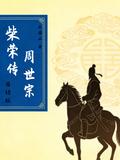 History of the Old Five Dynasties-The Biography of Zhou Shizong Chai Rong (Vernacular Version)
He was originally the adopted son of Later Zhou Dynasty, but he stirred up the turmoil of the Five Dynasties in five and a half years. In the battle of Gaoping, he personally led fifty cavalry to defeat the enemy and killed the fleeing generals to establish his military power; in the southern expedition to Huainan, he controlled the water army and expanded the territory, and all fourteen states were in his pocket; in the northern expedition to Khitan, he recovered three states and seventeen coun
—Reads8.5Score—Shelves
History of the Old Five Dynasties-The Biography of Zhou Shizong Chai Rong (Vernacular Version)
He was originally the adopted son of Later Zhou Dynasty, but he stirred up the turmoil of the Five Dynasties in five and a half years. In the battle of Gaoping, he personally led fifty cavalry to defeat the enemy and killed the fleeing generals to establish his military power; in the southern expedition to Huainan, he controlled the water army and expanded the territory, and all fourteen states were in his pocket; in the northern expedition to Khitan, he recovered three states and seventeen coun
—Reads8.5Score—Shelves
-
 Classic of Mountains and Seas
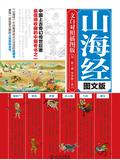
"The Classic of Mountains and Seas" is a strange book in ancient China. The author and the time of its completion are unknown. There are 18 chapters in the book, about 31,000 words. It records the names and geographical locations of more than 500 famous mountains, the names, origins and directions of rivers of more than 300 rivers, the names of more than 40 countries and the customs and customs of distant foreign peoples, more than 100 historical mythological figures, more than 100 species of me
—Reads9.3Score—Shelves
Classic of Mountains and Seas
"The Classic of Mountains and Seas" is a strange book in ancient China. The author and the time of its completion are unknown. There are 18 chapters in the book, about 31,000 words. It records the names and geographical locations of more than 500 famous mountains, the names, origins and directions of rivers of more than 300 rivers, the names of more than 40 countries and the customs and customs of distant foreign peoples, more than 100 historical mythological figures, more than 100 species of me
—Reads9.3Score—Shelves
-
 Collected Works of Liu Song
Liu Song (1321-1381) was born in Taihe, Jiangxi Province at the end of the Yuan Dynasty and the beginning of the Ming Dynasty. His original name was Chu and his courtesy name was Zigao. In the third year of Hongwu's reign, he was awarded the title of "Fangsi Langzhong" in the Ministry of War. He was relegated to work, and he was found and released. In the thirteenth year, he was summoned to worship the Minister of Rites and promoted to Minister of the Ministry of Personnel. Looking for an offici
—Reads8.5Score—Shelves
Collected Works of Liu Song
Liu Song (1321-1381) was born in Taihe, Jiangxi Province at the end of the Yuan Dynasty and the beginning of the Ming Dynasty. His original name was Chu and his courtesy name was Zigao. In the third year of Hongwu's reign, he was awarded the title of "Fangsi Langzhong" in the Ministry of War. He was relegated to work, and he was found and released. In the thirteenth year, he was summoned to worship the Minister of Rites and promoted to Minister of the Ministry of Personnel. Looking for an offici
—Reads8.5Score—Shelves
-
 Collected Works of Wei Xi
Wei Xi (March 2, 1624 - November 17, 1680) was a prose writer in the late Ming and early Qing dynasties. Together with Wang Wan and Hou Fangyu, he was known as the three major prose writers in the early Qing Dynasty. His nickname is Uncle Bing, his nickname is Uncle, and his nickname is Yuzhai. A native of Ningdu, Jiangxi Province, he lived in seclusion in Shaoting, Cuiweifeng during the late Ming Dynasty. He was known as Mr. Shaoting. Later, he traveled to the south of the Yangtze River, met fr
—Reads8.6Score—Shelves
Collected Works of Wei Xi
Wei Xi (March 2, 1624 - November 17, 1680) was a prose writer in the late Ming and early Qing dynasties. Together with Wang Wan and Hou Fangyu, he was known as the three major prose writers in the early Qing Dynasty. His nickname is Uncle Bing, his nickname is Uncle, and his nickname is Yuzhai. A native of Ningdu, Jiangxi Province, he lived in seclusion in Shaoting, Cuiweifeng during the late Ming Dynasty. He was known as Mr. Shaoting. Later, he traveled to the south of the Yangtze River, met fr
—Reads8.6Score—Shelves