Fanqie library
Browse
- Titles
- 1.6k
Every Fanqie book we index, searchable by title, author or tag.
-
 Medical Records of Chinese Ginseng and Western Medicine
[A medical masterpiece with high practical value and that can withstand the test of history] [A masterpiece of clinical medicine in TCM in the 20th century, a representative work of Zhang Xichun, a leading medical figure in the field of TCM in modern China] Zhang Xichun (1860-1933) was born in Yanshan County, Hebei Province. He was one of the representatives of the school of integration of traditional Chinese and Western medicine, and a leading medical figure in the field of traditional Chinese
—Reads9.4Score—Shelves
Medical Records of Chinese Ginseng and Western Medicine
[A medical masterpiece with high practical value and that can withstand the test of history] [A masterpiece of clinical medicine in TCM in the 20th century, a representative work of Zhang Xichun, a leading medical figure in the field of TCM in modern China] Zhang Xichun (1860-1933) was born in Yanshan County, Hebei Province. He was one of the representatives of the school of integration of traditional Chinese and Western medicine, and a leading medical figure in the field of traditional Chinese
—Reads9.4Score—Shelves
-
 Yan Family Motto
"Yan Family Instructions" is a work written during the Southern and Northern Dynasties of China that records personal experiences, thoughts, and knowledge to warn future generations. Combining his own life experience and philosophy of life, he wrote the book "Yan Family Instructions" to warn his descendants. "Yan's Family Instructions" is the first family instruction with rich content and grand system in Chinese history. It is also an academic work. Its content covers many fields. It emphasizes
—Reads8.1Score—Shelves
Yan Family Motto
"Yan Family Instructions" is a work written during the Southern and Northern Dynasties of China that records personal experiences, thoughts, and knowledge to warn future generations. Combining his own life experience and philosophy of life, he wrote the book "Yan Family Instructions" to warn his descendants. "Yan's Family Instructions" is the first family instruction with rich content and grand system in Chinese history. It is also an academic work. Its content covers many fields. It emphasizes
—Reads8.1Score—Shelves
-
 Shen Nong's Herbal Classic of One Hundred Types
"Shen Nong's Materia Medica", a pharmaceutical work. One roll. Written by Xu Dachun of the Qing Dynasty. Published in 1736. This book selects 100 main medicines from "Shen Nong's Materia Medica" and gives brief annotations based on clinical practice. There are now publications such as "Xu Lingtai Medical Encyclopedia".
—Reads9.2Score—Shelves
Shen Nong's Herbal Classic of One Hundred Types
"Shen Nong's Materia Medica", a pharmaceutical work. One roll. Written by Xu Dachun of the Qing Dynasty. Published in 1736. This book selects 100 main medicines from "Shen Nong's Materia Medica" and gives brief annotations based on clinical practice. There are now publications such as "Xu Lingtai Medical Encyclopedia".
—Reads9.2Score—Shelves
-
 The Cultivation of Chinese People (Chinese Famous Masters Talk About Life Series)
This book consists of three parts: Essays on national cultivation (such as aesthetic education and life, scientific cultivation, obligations and rights, etc.), Middle school self-cultivation textbooks (Part 1 and 2), and Chinese Industrial School handouts (30 chapters on moral education and 10 chapters on intellectual education). This is the essence of Cai Yuanpei's talk about life, morality, education, and cultivation. It is of great significance for carrying forward traditional moral education
—Reads8.4Score—Shelves
The Cultivation of Chinese People (Chinese Famous Masters Talk About Life Series)
This book consists of three parts: Essays on national cultivation (such as aesthetic education and life, scientific cultivation, obligations and rights, etc.), Middle school self-cultivation textbooks (Part 1 and 2), and Chinese Industrial School handouts (30 chapters on moral education and 10 chapters on intellectual education). This is the essence of Cai Yuanpei's talk about life, morality, education, and cultivation. It is of great significance for carrying forward traditional moral education
—Reads8.4Score—Shelves
-
 Tai Ping Hui Min He Ji Bureau Prescription
"Taiping Huimin Hejiju Prescription", the name of the prescription book. A "Heji Bureau Prescription". Ten volumes. Compiled by the Imperial Medical Bureau of the Song Dynasty. First published after 1078. This book is a prescription version of a patent medicine from the pharmacy affiliated to the Great Medical Bureau of the Song Dynasty. It was supplemented, revised and published many times in the Song Dynasty, and the title and volume of the book were also adjusted many times. It was first call
—Reads8.6Score—Shelves
Tai Ping Hui Min He Ji Bureau Prescription
"Taiping Huimin Hejiju Prescription", the name of the prescription book. A "Heji Bureau Prescription". Ten volumes. Compiled by the Imperial Medical Bureau of the Song Dynasty. First published after 1078. This book is a prescription version of a patent medicine from the pharmacy affiliated to the Great Medical Bureau of the Song Dynasty. It was supplemented, revised and published many times in the Song Dynasty, and the title and volume of the book were also adjusted many times. It was first call
—Reads8.6Score—Shelves
-
 Su Ling Wei Yun
This work "Su Ling Wei Yun" is written by Huang Yuanyu
—Reads8.7Score—Shelves
Su Ling Wei Yun
This work "Su Ling Wei Yun" is written by Huang Yuanyu
—Reads8.7Score—Shelves
-
 Wenyuange Bibliography
—Reads7.8Score—Shelves
Wenyuange Bibliography
Wenyuange Bibliography
—Reads7.8Score—Shelves
-
 Huayangji
This work "Huayang Collection" was written by Gu Kuang
—Reads7.7Score—Shelves
Huayangji
This work "Huayang Collection" was written by Gu Kuang
—Reads7.7Score—Shelves
-
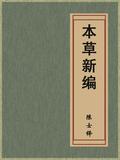 New Materia Medica (Free Public Edition Book)
The book uses a question-and-answer format to discuss the clinical application and compatibility of drugs. Mainly the author's experience, experience and personal opinions, and the answers to questions are detailed and thorough. When the preparation of certain medicines in the book is related to their medicinal properties, they will be brought up for discussion.
—Reads9.5Score—Shelves
New Materia Medica (Free Public Edition Book)
The book uses a question-and-answer format to discuss the clinical application and compatibility of drugs. Mainly the author's experience, experience and personal opinions, and the answers to questions are detailed and thorough. When the preparation of certain medicines in the book is related to their medicinal properties, they will be brought up for discussion.
—Reads9.5Score—Shelves
-
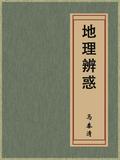 Geography Discrimination (Free Public Edition Book)
The art of Kanyu has been studied and speculated by famous teachers since ancient times. It is both precise and detailed, and can be said to be extremely advanced. However, famous teachers come from this world and are never encountered. They have been taught by mouth and heart, but they have not been widely heard in this world. Those who pretend to rely on famous teachers and falsely claim secrets have spread wildly.
—Reads9.4Score—Shelves
Geography Discrimination (Free Public Edition Book)
The art of Kanyu has been studied and speculated by famous teachers since ancient times. It is both precise and detailed, and can be said to be extremely advanced. However, famous teachers come from this world and are never encountered. They have been taught by mouth and heart, but they have not been widely heard in this world. Those who pretend to rely on famous teachers and falsely claim secrets have spread wildly.
—Reads9.4Score—Shelves
-
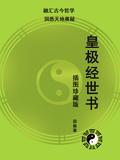 Huangji Jingshishu (Illustrated Collector's Edition; Blends Ancient and Modern Philosophy to Gain Insight into the Mysteries of Heaven and Earth)
"Huangji Jingshi Shu" is a philosophical work created by Shao Yong, a scholar of the Song Dynasty, who spent his life studying the Zhouyi. The book uses the "Yi Gua" to deduce the Xiangmathematical system to explain the generation of all things, the origin of morality and the governance of the world. Through the use of Yili and Yijiao, we can study the origin of the universe, natural evolution and social and historical changes, and reveal it to the world with the learning of Heluo and Xiangshu.
—Reads9.3Score—Shelves
Huangji Jingshishu (Illustrated Collector's Edition; Blends Ancient and Modern Philosophy to Gain Insight into the Mysteries of Heaven and Earth)
"Huangji Jingshi Shu" is a philosophical work created by Shao Yong, a scholar of the Song Dynasty, who spent his life studying the Zhouyi. The book uses the "Yi Gua" to deduce the Xiangmathematical system to explain the generation of all things, the origin of morality and the governance of the world. Through the use of Yili and Yijiao, we can study the origin of the universe, natural evolution and social and historical changes, and reveal it to the world with the learning of Heluo and Xiangshu.
—Reads9.3Score—Shelves
-
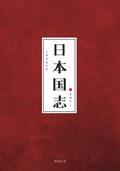 National Chronicle of Japan
"Japanese National Chronicle" is a masterpiece written by Huang Zunxian, a modern Chinese diplomat and poet, who took eight years to write. The book has a total of 40 volumes and more than 500,000 words. It systematically and in-depth studies the history and current situation of Japan, especially the various systems after the Meiji Restoration. With its rich content, unique insights and profound thinking, this book has become an important window for China to understand Japan. It has had a profou
—Reads8.6Score—Shelves
National Chronicle of Japan
"Japanese National Chronicle" is a masterpiece written by Huang Zunxian, a modern Chinese diplomat and poet, who took eight years to write. The book has a total of 40 volumes and more than 500,000 words. It systematically and in-depth studies the history and current situation of Japan, especially the various systems after the Meiji Restoration. With its rich content, unique insights and profound thinking, this book has become an important window for China to understand Japan. It has had a profou
—Reads8.6Score—Shelves
-
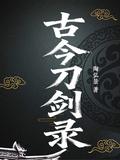 Records of Swords and Swords in Ancient and Modern Times
"Records of Ancient and Modern Swords" is an ancient weapons document written by Tao Hongjing, a famous Taoist priest and scholar in the Liang Dynasty of the Southern Dynasty. It is a one-volume book that systematically records the deeds of swords forged or used by emperors, princes and famous generals from the Xia Dynasty to the Liang Dynasty. The content is divided into parts such as "Emperor's Swords", "Swords of Various Kingdoms", "Wu Jiang's Sword", "Shu's General's Sword" and "Wei's Genera
—Reads8.6Score—Shelves
Records of Swords and Swords in Ancient and Modern Times
"Records of Ancient and Modern Swords" is an ancient weapons document written by Tao Hongjing, a famous Taoist priest and scholar in the Liang Dynasty of the Southern Dynasty. It is a one-volume book that systematically records the deeds of swords forged or used by emperors, princes and famous generals from the Xia Dynasty to the Liang Dynasty. The content is divided into parts such as "Emperor's Swords", "Swords of Various Kingdoms", "Wu Jiang's Sword", "Shu's General's Sword" and "Wei's Genera
—Reads8.6Score—Shelves
-
 Li Wenxiang's Memorials and Literary Transmissions
Chinese traditional cultural thoughts have a long history and are highly original, original and literary. The early ideological forms were very distinctive, with extensive and profound contents such as religious theology, Chinese medicine classics, ancient military art, Confucianism, Taoism, Buddhism and hundreds of schools of thought, Feng Shui metaphysics, Twenty-Four Histories, customs and geography, etc. This series of "Original Books on Classic Chinese Studies and Essence Culture" retains t
—Reads7.7Score—Shelves
Li Wenxiang's Memorials and Literary Transmissions
Chinese traditional cultural thoughts have a long history and are highly original, original and literary. The early ideological forms were very distinctive, with extensive and profound contents such as religious theology, Chinese medicine classics, ancient military art, Confucianism, Taoism, Buddhism and hundreds of schools of thought, Feng Shui metaphysics, Twenty-Four Histories, customs and geography, etc. This series of "Original Books on Classic Chinese Studies and Essence Culture" retains t
—Reads7.7Score—Shelves
-
 Rongcunji
Forty volumes. Written by Li Guangdi of the Qing Dynasty. This collection was published by his grandson Li Qingzhi in the first year of Qianlong (1736), with a preface by his disciple Li Fu. Only the words of your own choice are included in the poems, and the rest are all edited and edited. There is one volume of "Guanlan Lu", one volume of "Book Notes" and "Study Notes", one volume of "Spring and Autumn Days" and "Spring and Autumn Essays", one volume of "Shang Shu Ju Du", one volume of "Zhou G
—Reads—Score—Shelves
Rongcunji
Forty volumes. Written by Li Guangdi of the Qing Dynasty. This collection was published by his grandson Li Qingzhi in the first year of Qianlong (1736), with a preface by his disciple Li Fu. Only the words of your own choice are included in the poems, and the rest are all edited and edited. There is one volume of "Guanlan Lu", one volume of "Book Notes" and "Study Notes", one volume of "Spring and Autumn Days" and "Spring and Autumn Essays", one volume of "Shang Shu Ju Du", one volume of "Zhou G
—Reads—Score—Shelves
-
 Golden Elixir Points Directly
Ancient Chinese medical works are a shining pearl in the treasure house of Chinese medicine. They have high guiding significance and practical value, and have made significant contributions and far-reaching influences on the development of medicine in later generations.
—Reads8.4Score—Shelves
Golden Elixir Points Directly
Ancient Chinese medical works are a shining pearl in the treasure house of Chinese medicine. They have high guiding significance and practical value, and have made significant contributions and far-reaching influences on the development of medicine in later generations.
—Reads8.4Score—Shelves
-
 Daily Common Words
Written by Pu Songling in the Qing Dynasty. This book combines words used in daily life into seven-character sentences for easy recitation. Among them, the Diet Chapter, Vegetable Chapter, and Fruit Chapter are dietary contents, and sometimes mention food pickling, cooking terms, etc., Which are of historical value for studying the dietary life of the Qing Dynasty. "Daily Common Characters" is a compilation of ballad-style daily characters written by Pu. "Daily Common Characters Preface" says: "
—Reads8.0Score—Shelves
Daily Common Words
Written by Pu Songling in the Qing Dynasty. This book combines words used in daily life into seven-character sentences for easy recitation. Among them, the Diet Chapter, Vegetable Chapter, and Fruit Chapter are dietary contents, and sometimes mention food pickling, cooking terms, etc., Which are of historical value for studying the dietary life of the Qing Dynasty. "Daily Common Characters" is a compilation of ballad-style daily characters written by Pu. "Daily Common Characters Preface" says: "
—Reads8.0Score—Shelves
-
 Urging Officials (Free Public Edition Book)
The Feng Shui classics of the Song Dynasty use the sand and water of dragon caves to discuss geographical good and bad luck, and focus on the relationship between the location of the Yangzhai and the official fortune.
—Reads8.6Score—Shelves
Urging Officials (Free Public Edition Book)
The Feng Shui classics of the Song Dynasty use the sand and water of dragon caves to discuss geographical good and bad luck, and focus on the relationship between the location of the Yangzhai and the official fortune.
—Reads8.6Score—Shelves
-
 Leisure Record
"Xianju Lu" is a collection of notes written by Wu Qiuyan (named Zhenbai, Zhufang), a scholar in the Yuan Dynasty. It contains his daily observations and thoughts as well as his experience in ancient Chinese literature, epigraphy, seal studies and other knowledge. The book is not as tightly structured as a historical narrative, but is composed of scattered entries: he may describe the wind and moonlight in the pine trees during his leisure time, record the meanings of ancient inscriptions, or pu
—Reads—Score—Shelves
Leisure Record
"Xianju Lu" is a collection of notes written by Wu Qiuyan (named Zhenbai, Zhufang), a scholar in the Yuan Dynasty. It contains his daily observations and thoughts as well as his experience in ancient Chinese literature, epigraphy, seal studies and other knowledge. The book is not as tightly structured as a historical narrative, but is composed of scattered entries: he may describe the wind and moonlight in the pine trees during his leisure time, record the meanings of ancient inscriptions, or pu
—Reads—Score—Shelves
-
 Guo's Yuan Jing
"Guo Shi Yuan Jing" is a Feng Shui classic written by Guo Pu in the Jin Dynasty and annotated by his disciple Zhao Zai. The book mainly introduces the usage and avoidance methods of dozens of kinds of evil spirits such as Tai Sui, Yue Jian, Nian Ming, Lu Ma Guiren, Xing Hu, Jin Shen, etc., And for the first time puts forward the theory of flying palace. These contents make "Guo Shi Yuan Jing" have an important position in the field of Feng Shui, and it is known as the stronghold of Shensha.
—Reads9.2Score—Shelves
Guo's Yuan Jing
"Guo Shi Yuan Jing" is a Feng Shui classic written by Guo Pu in the Jin Dynasty and annotated by his disciple Zhao Zai. The book mainly introduces the usage and avoidance methods of dozens of kinds of evil spirits such as Tai Sui, Yue Jian, Nian Ming, Lu Ma Guiren, Xing Hu, Jin Shen, etc., And for the first time puts forward the theory of flying palace. These contents make "Guo Shi Yuan Jing" have an important position in the field of Feng Shui, and it is known as the stronghold of Shensha.
—Reads9.2Score—Shelves
-
 Notes on the Yellow Emperor's Yin Fu Sutra - Zhang Guo
—Reads8.4Score—Shelves
Notes on the Yellow Emperor's Yin Fu Sutra - Zhang Guo
Notes on the Yellow Emperor's Yin Fu Sutra - Zhang Guo
—Reads8.4Score—Shelves
-
 Medical Theory
Ancient Chinese medicine books are a shining pearl in the treasure house of Chinese medicine. They have high guiding significance and practical value, and have made significant contributions and far-reaching influences on the development of medicine in later generations.
—Reads8.0Score—Shelves
Medical Theory
Ancient Chinese medicine books are a shining pearl in the treasure house of Chinese medicine. They have high guiding significance and practical value, and have made significant contributions and far-reaching influences on the development of medicine in later generations.
—Reads8.0Score—Shelves
-
 Zhang Guoxingzong
[Explore the code of destiny and unlock the wonderful book of astrology] "Zhang Guo Xing Zong" originates from mysterious legends. It is a treasure book for interpreting the mysteries of astrology and gaining insight into the trajectory of destiny. Turning the pages of the book, you can use the astrology to analyze the ups and downs of your career and plan your career direction in advance; you can also gain insight into the relationship trend based on the astrology chart and gain sweet love. The
—Reads8.4Score—Shelves
Zhang Guoxingzong
[Explore the code of destiny and unlock the wonderful book of astrology] "Zhang Guo Xing Zong" originates from mysterious legends. It is a treasure book for interpreting the mysteries of astrology and gaining insight into the trajectory of destiny. Turning the pages of the book, you can use the astrology to analyze the ups and downs of your career and plan your career direction in advance; you can also gain insight into the relationship trend based on the astrology chart and gain sweet love. The
—Reads8.4Score—Shelves
-
 Zhang Guoxingzong
This work "Zhang Guo Xing Zong" was written by Zhang Guo.
—Reads8.7Score—Shelves
Zhang Guoxingzong
This work "Zhang Guo Xing Zong" was written by Zhang Guo.
—Reads8.7Score—Shelves
-
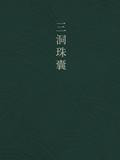 Three-Hole Bead Sac
Three-hole bead sac, ancient Chinese religious book. It was revised with the title "Lu Hai Yu Ke Wang Xuanhe of the Tang Dynasty". This book compiles the essence of 212 kinds of Three-Dong Taoism, hence the name "Three-Dong Bead Bag". Emperor Wu of the Northern Zhou Dynasty, Yuwen Yong, once ordered Taoist priest Wang Yan, who was a Taoist priest in the Taoist temple, to compile the three-hole sutra map. Wang Yan wrote seven volumes of "Three-hole Pearl Bag", which has been lost. Wang Xuanhe was
—Reads8.2Score—Shelves
Three-Hole Bead Sac
Three-hole bead sac, ancient Chinese religious book. It was revised with the title "Lu Hai Yu Ke Wang Xuanhe of the Tang Dynasty". This book compiles the essence of 212 kinds of Three-Dong Taoism, hence the name "Three-Dong Bead Bag". Emperor Wu of the Northern Zhou Dynasty, Yuwen Yong, once ordered Taoist priest Wang Yan, who was a Taoist priest in the Taoist temple, to compile the three-hole sutra map. Wang Yan wrote seven volumes of "Three-hole Pearl Bag", which has been lost. Wang Xuanhe was
—Reads8.2Score—Shelves
-
 Yin Fu Jing Lecture Notes
—Reads8.4Score—Shelves
Yin Fu Jing Lecture Notes
Yin Fu Jing Lecture Notes
—Reads8.4Score—Shelves
-
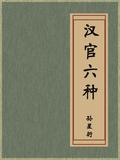 Six Types of Han Officials (Free Public Edition Book)
10 Volumes. Edited and edited by Sun Xingyan, a native of the Qing Dynasty. It includes 1 volume of "Han Guan", written by Wang Long of the Eastern Han Dynasty; 1 volume of "Han Guan Jiexe", annotated by Hu Guang of the Eastern Han Dynasty; 2 volumes of "Han Guan Jiu Yi" (also known as "Han Guan Jiu Yi"), written by Wei Hong of the Eastern Han Dynasty; 2 volumes of "Han Guan Yi", Written by Ying Shao of the Eastern Han Dynasty; "Selection of Ceremonies for the Ceremony of Officials of the Han Dy
—Reads8.6Score—Shelves
Six Types of Han Officials (Free Public Edition Book)
10 Volumes. Edited and edited by Sun Xingyan, a native of the Qing Dynasty. It includes 1 volume of "Han Guan", written by Wang Long of the Eastern Han Dynasty; 1 volume of "Han Guan Jiexe", annotated by Hu Guang of the Eastern Han Dynasty; 2 volumes of "Han Guan Jiu Yi" (also known as "Han Guan Jiu Yi"), written by Wei Hong of the Eastern Han Dynasty; 2 volumes of "Han Guan Yi", Written by Ying Shao of the Eastern Han Dynasty; "Selection of Ceremonies for the Ceremony of Officials of the Han Dy
—Reads8.6Score—Shelves
-
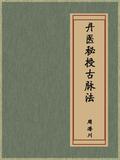 Ancient Pulse Method Secretly Taught by Alchemy Doctors (Free Public Edition Book)
Books on religious philosophy. The Origin of Dividing Meridians and Waiting for Pulses There is a big difference between the ancient method of dividing and waiting for pulses and the current method of using Cunkou to cut pulses alone. Meridian division not only has many advantages, but is also well-founded in the theory of traditional Chinese medicine. Wang Shuhe's "Mai Jing" and Gao Yangsheng's "Mai Jue" are two earlier monographs on pulse science in my country. Prior to this, records about pul
—Reads8.6Score—Shelves
Ancient Pulse Method Secretly Taught by Alchemy Doctors (Free Public Edition Book)
Books on religious philosophy. The Origin of Dividing Meridians and Waiting for Pulses There is a big difference between the ancient method of dividing and waiting for pulses and the current method of using Cunkou to cut pulses alone. Meridian division not only has many advantages, but is also well-founded in the theory of traditional Chinese medicine. Wang Shuhe's "Mai Jing" and Gao Yangsheng's "Mai Jue" are two earlier monographs on pulse science in my country. Prior to this, records about pul
—Reads8.6Score—Shelves
-
 A Brief Introduction to Zhouyi (Free Public Edition Book)
Eight volumes, written by Chen Menglei of the Qing Dynasty. The book was written in the Jiashu Year of Kangxi (1694). Written by Chen Menglei (1650-1741) of the Qing Dynasty. Chen Menglei's courtesy name is Zezhen, and his later nickname is Songhe Laoren. A native of Min County, Fujian Province. Shunzhi Ji Chou became a Jinshi. From official to Hanlin, he edited and edited. In the 21st year of Kangxi's reign (1682), he was banished to Shangyang Fort in Shenyang. More than 18 years later, he was
—Reads8.6Score—Shelves
A Brief Introduction to Zhouyi (Free Public Edition Book)
Eight volumes, written by Chen Menglei of the Qing Dynasty. The book was written in the Jiashu Year of Kangxi (1694). Written by Chen Menglei (1650-1741) of the Qing Dynasty. Chen Menglei's courtesy name is Zezhen, and his later nickname is Songhe Laoren. A native of Min County, Fujian Province. Shunzhi Ji Chou became a Jinshi. From official to Hanlin, he edited and edited. In the 21st year of Kangxi's reign (1682), he was banished to Shangyang Fort in Shenyang. More than 18 years later, he was
—Reads8.6Score—Shelves
-
 Materia Medica Mengquan (Free Public Edition Book)
An introductory book that introduces the properties, taste, and efficacy of medicines in the form of verses.
—Reads8.7Score—Shelves
Materia Medica Mengquan (Free Public Edition Book)
An introductory book that introduces the properties, taste, and efficacy of medicines in the form of verses.
—Reads8.7Score—Shelves
-
 Complete Book of Changes
This work "The Complete Book of Changes" is written by Hu Guang
—Reads8.2Score—Shelves
Complete Book of Changes
This work "The Complete Book of Changes" is written by Hu Guang
—Reads8.2Score—Shelves
-
 Complete Collection of Books and Biographies
This work "Collection of Biography" is written by Hu Guang
—Reads7.9Score—Shelves
Complete Collection of Books and Biographies
This work "Collection of Biography" is written by Hu Guang
—Reads7.9Score—Shelves
-
 Complete Poems
This work "The Complete Collection of Poems" was written by Hu Guang, Ming Dynasty. The "Collection of Poems" is a cultural relic of the Ming Dynasty and is now in the Nanjing Museum.
—Reads7.7Score—Shelves
Complete Poems
This work "The Complete Collection of Poems" was written by Hu Guang, Ming Dynasty. The "Collection of Poems" is a cultural relic of the Ming Dynasty and is now in the Nanjing Museum.
—Reads7.7Score—Shelves
-
 Emperor Jian Illustrated Commentary (Free Public Edition Book)
The book traces back to Tang and Yu, and ends with Han, Tang and Song. It is edited by Tang Yao, Yu Shun, Xia Yu, Shang Miao, Zhou Wenwu, Xuan Wang, Han Gao, Han Wen, Han Wu, Han Zhao, Han Xuan, Han Cheng, Han Guangwu, Han Ming, Han Zhaolie, Tang Taizong, Tang Xuanzong, Tang Suzong, Tang Xuanzong, Tang Xianzong, Song Tai There are more than 100 deeds of emperors such as Ancestor, Song Taizong, Song Renzong, Song Shenzong, Song Zhezong, etc., Including 117 items including appointing virtuous peop
—Reads8.5Score—Shelves
Emperor Jian Illustrated Commentary (Free Public Edition Book)
The book traces back to Tang and Yu, and ends with Han, Tang and Song. It is edited by Tang Yao, Yu Shun, Xia Yu, Shang Miao, Zhou Wenwu, Xuan Wang, Han Gao, Han Wen, Han Wu, Han Zhao, Han Xuan, Han Cheng, Han Guangwu, Han Ming, Han Zhaolie, Tang Taizong, Tang Xuanzong, Tang Suzong, Tang Xuanzong, Tang Xianzong, Song Tai There are more than 100 deeds of emperors such as Ancestor, Song Taizong, Song Renzong, Song Shenzong, Song Zhezong, etc., Including 117 items including appointing virtuous peop
—Reads8.5Score—Shelves
-
 Direct Interpretation of the Book
"Shu Jing Zhi Jie" is an interpretation of "Shang Shu" co-written by Zhang Juzheng, an important minister of the Ming Dynasty, and a Hanlin lecturer during the Longqing period. This book was originally designed for the young emperor Wanli's "daily lecture", which was used for daily reading and explanation in the court. Later, it gradually spread among the government and the public and became an influential Confucian auxiliary teaching material at that time. In the book, Zhang Juzheng uses straig
—Reads7.7Score—Shelves
Direct Interpretation of the Book
"Shu Jing Zhi Jie" is an interpretation of "Shang Shu" co-written by Zhang Juzheng, an important minister of the Ming Dynasty, and a Hanlin lecturer during the Longqing period. This book was originally designed for the young emperor Wanli's "daily lecture", which was used for daily reading and explanation in the court. Later, it gradually spread among the government and the public and became an influential Confucian auxiliary teaching material at that time. In the book, Zhang Juzheng uses straig
—Reads7.7Score—Shelves
-
 Daming Huidian (Free Public Edition Book)
A complete collection of regulations and systems compiled by officials in the Ming Dynasty, covering etiquette, law, officialdom, etc.
—Reads8.7Score—Shelves
Daming Huidian (Free Public Edition Book)
A complete collection of regulations and systems compiled by officials in the Ming Dynasty, covering etiquette, law, officialdom, etc.
—Reads8.7Score—Shelves
-
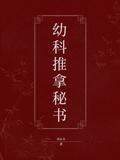 Kindergarten Massage Secretary
"Kindergarten Massage Secretary", also known as "Massage Secretary", was written by Luo Rulong in the Qing Dynasty in 1691 and published in 1784. The first volume contains a list of songs and poems such as "Bao Ying Fu", a miscellaneous discussion of pediatric diagnosis methods, the second volume discusses massage acupoints, the third volume discusses various massage techniques, the fourth volume includes massage treatments for various diseases, and pediatric prescriptions are attached at the en
—Reads8.5Score—Shelves
Kindergarten Massage Secretary
"Kindergarten Massage Secretary", also known as "Massage Secretary", was written by Luo Rulong in the Qing Dynasty in 1691 and published in 1784. The first volume contains a list of songs and poems such as "Bao Ying Fu", a miscellaneous discussion of pediatric diagnosis methods, the second volume discusses massage acupoints, the third volume discusses various massage techniques, the fourth volume includes massage treatments for various diseases, and pediatric prescriptions are attached at the en
—Reads8.5Score—Shelves
-
 Deficiency Qi Wei
"Xu Shi Qi Wei" is a monograph on the treatment of consumptive fatigue. It was written by Hong Ji'an, a physician in the Qing Dynasty. It was published in the Xinsi year of Qianlong in the Qing Dynasty (AD 1761) and consists of two volumes.
—Reads9.1Score—Shelves
Deficiency Qi Wei
"Xu Shi Qi Wei" is a monograph on the treatment of consumptive fatigue. It was written by Hong Ji'an, a physician in the Qing Dynasty. It was published in the Xinsi year of Qianlong in the Qing Dynasty (AD 1761) and consists of two volumes.
—Reads9.1Score—Shelves
-
 Taishang Cave Xuan Ling Bao Red Book Jade Jue Miao Jing
At that time, Yuanshi Tianzun, Taishang Daodaojun, Five Old Gods, and the Great Gods of the Ten Directions will gather in the upper pavilion of Nandan Dongyang and sit on the seven-color throne of the pearl. At that time, there were five emperors, great sages, Xuanhe and Jade Girl, and fifty-two thousand five hundred people seated on the throne. Fragrances are sprinkled from the sky, dragons and prostitutes are enjoying themselves, there are countless people without martingale, purple clouds are
—Reads7.8Score—Shelves
Taishang Cave Xuan Ling Bao Red Book Jade Jue Miao Jing
At that time, Yuanshi Tianzun, Taishang Daodaojun, Five Old Gods, and the Great Gods of the Ten Directions will gather in the upper pavilion of Nandan Dongyang and sit on the seven-color throne of the pearl. At that time, there were five emperors, great sages, Xuanhe and Jade Girl, and fifty-two thousand five hundred people seated on the throne. Fragrances are sprinkled from the sky, dragons and prostitutes are enjoying themselves, there are countless people without martingale, purple clouds are
—Reads7.8Score—Shelves
-
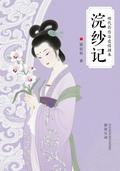 The Story of Huansha
"The Story of Huansha" is a legendary script created by the Ming Dynasty dramatist Liang Chenyu. It is also the first literary legend sung in Kunshan accent. It is a milestone in the history of Chinese opera. The whole play is based on the struggle for hegemony between Wu and Yue during the Spring and Autumn Period, and revolves around the love tragedy between Fan Li and Xi Shi. Fan Li, a doctor from the State of Yue, met Xi Shi, a girl with ruffled hair, by the Ruoye River, and the two fell in
—Reads8.6Score—Shelves
The Story of Huansha
"The Story of Huansha" is a legendary script created by the Ming Dynasty dramatist Liang Chenyu. It is also the first literary legend sung in Kunshan accent. It is a milestone in the history of Chinese opera. The whole play is based on the struggle for hegemony between Wu and Yue during the Spring and Autumn Period, and revolves around the love tragedy between Fan Li and Xi Shi. Fan Li, a doctor from the State of Yue, met Xi Shi, a girl with ruffled hair, by the Ruoye River, and the two fell in
—Reads8.6Score—Shelves
-
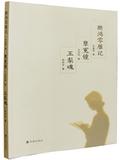 The Story of Broken Wild Goose
There is Jin'ou Mountain in Baiyue, which stands majestically to the south of the coast. Every day, the sky is clear and cloudless, and among the green hills at the foot of the mountain, the red tiles and scales can be faintly distinguished, and the ancient temple is covered with sea clouds. According to legend, at the time of the death of the Song Dynasty, Lu Xiufu carried the young emperor to die on Yashan Mountain, and some of his elders fled there. He wished to be a monk and shouted to the s
—Reads7.9Score—Shelves
The Story of Broken Wild Goose
There is Jin'ou Mountain in Baiyue, which stands majestically to the south of the coast. Every day, the sky is clear and cloudless, and among the green hills at the foot of the mountain, the red tiles and scales can be faintly distinguished, and the ancient temple is covered with sea clouds. According to legend, at the time of the death of the Song Dynasty, Lu Xiufu carried the young emperor to die on Yashan Mountain, and some of his elders fled there. He wished to be a monk and shouted to the s
—Reads7.9Score—Shelves
-
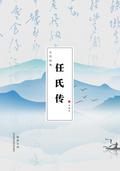 Biography of Ren Family
"The Biography of the Ren Family" is a classic legendary work written by Shen Jiji, a writer of the Tang Dynasty. It was written around 781 AD. It is a pioneer work in ancient China that used the fox fairy theme to write stories about love and human nature. It takes the intricate emotional entanglement between the demon fox Ren and the human scholar Zheng Liu as the main line. It not only integrates fantasy colors, but also profoundly presents the characters' psychology and social reality. It is
—Reads—Score—Shelves
Biography of Ren Family
"The Biography of the Ren Family" is a classic legendary work written by Shen Jiji, a writer of the Tang Dynasty. It was written around 781 AD. It is a pioneer work in ancient China that used the fox fairy theme to write stories about love and human nature. It takes the intricate emotional entanglement between the demon fox Ren and the human scholar Zheng Liu as the main line. It not only integrates fantasy colors, but also profoundly presents the characters' psychology and social reality. It is
—Reads—Score—Shelves
-
 Si Xuan Fu
The lyrical poems created by Zhang Heng of the Eastern Han Dynasty express his dissatisfaction with real politics and his desire to avoid harm through his imagination of traveling to heaven.
—Reads8.6Score—Shelves
Si Xuan Fu
The lyrical poems created by Zhang Heng of the Eastern Han Dynasty express his dissatisfaction with real politics and his desire to avoid harm through his imagination of traveling to heaven.
—Reads8.6Score—Shelves
-
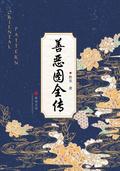 The Complete Picture of Good and Evil
"The Complete Story of Good and Evil" is a popular novel created by an unknown author in the Qing Dynasty. It integrates historical legends, religious beliefs, moral education and other elements. It aims to convey the concept of cause and effect that "good will be rewarded with good and evil will be rewarded with evil" through vivid stories. The novel has a twists and turns plot, vivid characters, and easy-to-understand language. It has strong readability and educational significance. As one of
—Reads8.6Score—Shelves
The Complete Picture of Good and Evil
"The Complete Story of Good and Evil" is a popular novel created by an unknown author in the Qing Dynasty. It integrates historical legends, religious beliefs, moral education and other elements. It aims to convey the concept of cause and effect that "good will be rewarded with good and evil will be rewarded with evil" through vivid stories. The novel has a twists and turns plot, vivid characters, and easy-to-understand language. It has strong readability and educational significance. As one of
—Reads8.6Score—Shelves
-
 Zhutian Zhuan
This work "Zhutian Zhuan" is written by an unknown author
—Reads8.0Score—Shelves
Zhutian Zhuan
This work "Zhutian Zhuan" is written by an unknown author
—Reads8.0Score—Shelves
-
 Lin Gongan
"Lin Gongan" is a public case novel starring Lin Zexu, a famous minister in the Qing Dynasty. The work starts from Lin Zexu's early career and narrates his journey from being a marquis in Fujian to officialdom. With his extraordinary wisdom and upright character, he repeatedly solved strange cases, punished rape and eliminated evil. Through a series of twists and turns and bizarre cases such as "The Case of Du Cheng's Jealousy Killing of Ni Gen", "The Unjust Case of the Widow Wang Zhou" and "The
—Reads—Score—Shelves
Lin Gongan
"Lin Gongan" is a public case novel starring Lin Zexu, a famous minister in the Qing Dynasty. The work starts from Lin Zexu's early career and narrates his journey from being a marquis in Fujian to officialdom. With his extraordinary wisdom and upright character, he repeatedly solved strange cases, punished rape and eliminated evil. Through a series of twists and turns and bizarre cases such as "The Case of Du Cheng's Jealousy Killing of Ni Gen", "The Unjust Case of the Widow Wang Zhou" and "The
—Reads—Score—Shelves
-
 Collected Works of Emperor Xuanzong of Tang Dynasty
The collected works of Li Longji, Emperor Xuanzong of the Tang Dynasty, were compiled according to "Quan Tangwen", with a total of 930 articles. Among them, there are 212 imperial edicts, 357 edicts, 154 edicts, 13 imperial edicts, 64 batches, 51 volumes, and 29 books; there are 15 articles about Prime Minister Zhang Shuo, 57 Prime Minister Zhang Jiuling, 13 Emperor Xuanyuan (Laozi), and 20 articles about Taoist Li Hanguang. Among them are the "Edict forbidding hunting", "Edict forbidding huntin
—Reads8.0Score—Shelves
Collected Works of Emperor Xuanzong of Tang Dynasty
The collected works of Li Longji, Emperor Xuanzong of the Tang Dynasty, were compiled according to "Quan Tangwen", with a total of 930 articles. Among them, there are 212 imperial edicts, 357 edicts, 154 edicts, 13 imperial edicts, 64 batches, 51 volumes, and 29 books; there are 15 articles about Prime Minister Zhang Shuo, 57 Prime Minister Zhang Jiuling, 13 Emperor Xuanyuan (Laozi), and 20 articles about Taoist Li Hanguang. Among them are the "Edict forbidding hunting", "Edict forbidding huntin
—Reads8.0Score—Shelves
-
 Farewell Biography of Zhao Feiyan
"Farewell to Zhao Feiyan" is a legendary novel written by Qin Chun, a scholar in the Song Dynasty. It is based on the palace story of Zhao Feiyan and his sister Zhao Hede in the Han Dynasty. In the form of a notebook novel, this article narrates the complete experience of the Zhao sisters from the time they entered the palace and were favored to the tragic ending. It focuses on describing the emotional bond between the two, the treacherous means of competing for favor in the harem, and the final
—Reads7.6Score—Shelves
Farewell Biography of Zhao Feiyan
"Farewell to Zhao Feiyan" is a legendary novel written by Qin Chun, a scholar in the Song Dynasty. It is based on the palace story of Zhao Feiyan and his sister Zhao Hede in the Han Dynasty. In the form of a notebook novel, this article narrates the complete experience of the Zhao sisters from the time they entered the palace and were favored to the tragic ending. It focuses on describing the emotional bond between the two, the treacherous means of competing for favor in the harem, and the final
—Reads7.6Score—Shelves
-
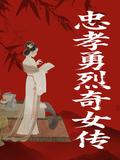 Biography of a Loyal, Filial, Brave and Strange Woman
"The Legend of the Loyal, Filial, Brave and Strange Women" is a chapter-style novel with the ancient Chinese legendary heroine Hua Mulan as the core character. The work expands and interprets the traditional story of Mulan joining the army on behalf of her father, integrating historical romance, gods, monsters, and ethical education into one, creating an image of a female hero who combines loyalty, filial piety, courage, and fidelity. The novel takes Mulan's family origins as the starting point
—Reads8.0Score—Shelves
Biography of a Loyal, Filial, Brave and Strange Woman
"The Legend of the Loyal, Filial, Brave and Strange Women" is a chapter-style novel with the ancient Chinese legendary heroine Hua Mulan as the core character. The work expands and interprets the traditional story of Mulan joining the army on behalf of her father, integrating historical romance, gods, monsters, and ethical education into one, creating an image of a female hero who combines loyalty, filial piety, courage, and fidelity. The novel takes Mulan's family origins as the starting point
—Reads8.0Score—Shelves
-
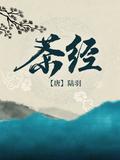 Tea Classic
This book is a comprehensive treatise on the history, origin, current situation, production technology, tea drinking techniques, and tea ceremony principles of tea production. It is an epoch-making monograph on tea science, an incisive agricultural work, and a book that explains tea culture. Elevating the ordinary tea ceremony into a wonderful cultural art has promoted the development of Chinese tea culture.
—Reads8.5Score—Shelves
Tea Classic
This book is a comprehensive treatise on the history, origin, current situation, production technology, tea drinking techniques, and tea ceremony principles of tea production. It is an epoch-making monograph on tea science, an incisive agricultural work, and a book that explains tea culture. Elevating the ordinary tea ceremony into a wonderful cultural art has promoted the development of Chinese tea culture.
—Reads8.5Score—Shelves