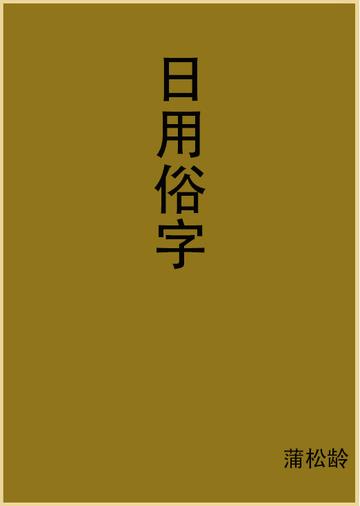
Written by Pu Songling in the Qing Dynasty. This book combines words used in daily life into seven-character sentences for easy recitation. Among them, the Diet Chapter, Vegetable Chapter, and Fruit Chapter are dietary contents, and sometimes mention food pickling, cooking terms, etc., Which are of historical value for studying the dietary life of the Qing Dynasty. "Daily Common Characters" is a compilation of ballad-style daily characters written by Pu. "Daily Common Characters Preface" says: "Every time I need something, I can't write its name. There is an old "Zhuang Nong Miscellaneous Characters", which is recited by village children. No matter how many omissions there are, the owner is the owner. Examine his stippling. , Are all fabricated. Therefore, he decided to research the "Cihui" in detail and compiled this book. "Pu Songling referred to the Ming Dynasty calligraphy book "Cihui" and recorded the daily life in rural areas into ballads, divided into 31 chapters, with a total of 1,588 sentences, totaling 11,116 words.
Reader comments
This book "Daily Common Words" is very practical! It uses the form of a song to string together words from daily life, making it easy to remember and fun. And the content is very rich, which is also helpful for studying the dietary life of the Qing Dynasty. Even though some of the words in it are too unfamiliar, you can still gain knowledge. I especially like the description of the characters in it, which is very vivid. I feel like this book is like a small encyclopedia of life, worth reading.

This book "Daily Common Words" is very practical! It uses the form of a song to string together words from daily life, making it easy to remember and fun. And the content is very rich, which is also helpful for studying the dietary life of the Qing Dynasty. Even though some of the words in it are too unfamiliar, you can still gain knowledge. I especially like the description of the characters in it, which is very vivid. I feel like this book is like a small encyclopedia of life, worth reading.