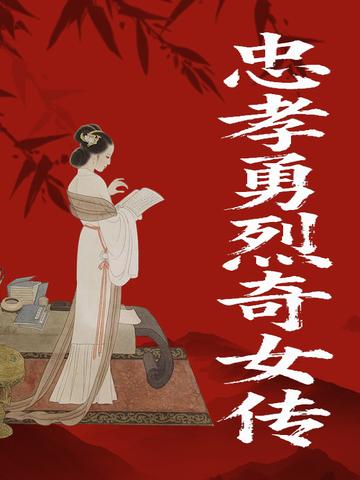
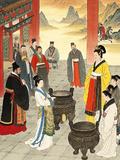
"The Legend of the Loyal, Filial, Brave and Strange Women" is a chapter-style novel with the ancient Chinese legendary heroine Hua Mulan as the core character.
The work expands and interprets the traditional story of Mulan joining the army on behalf of her father, integrating historical romance, gods, monsters, and ethical education into one, creating an image of a female hero who combines loyalty, filial piety, courage, and fidelity.
The novel takes Mulan's family origins as the starting point and describes the virtues and family traditions of her grandfather Zhu Ruoxu, which lays the ethical foundation for Mulan's birth and growth. The main plot revolves around the classic story of Mulan, who disguises herself as a man, joins the army on her father's behalf, fights on the battlefield, and makes meritorious deeds on the frontier. It vividly depicts her military talents of being proficient in bow and horse, proficient in strategy, and her heroic deeds of fighting in the desert and accumulating extraordinary achievements.
The story further extends to the tragic ending when Mulan is framed by slanderous ministers after her triumphant return. In order to show her innocence, she has her heart cut out and is named the "God of Loyalty and Filial Piety of the Thunder Department" after her death. This pushes her image of a "wonderful woman" to the spiritual pinnacle of loyalty, filial piety and martyrdom.
The work not only focuses on Mulan as an individual, but also intersperses the historical background and group portraits of the late Sui and early Tang Dynasties, such as Li Jing, Yu Chigong, Wei Zheng, Tang Taizong, etc., Showing the encounters between monarchs and ministers, court disputes and chivalry in the grand historical narrative.
At the same time, the book incorporates magical elements such as dream induction, divine revelation, Taoist art of war, causal reincarnation, etc., Making the story more fantasy and destiny metaphor in addition to historical romance.
Through the creation of Mulan, a "wonderful person, strange deeds, strange things, and strange writings", the whole book profoundly explains the Confucian ethics and life philosophy, and praises the moral ideals of loyalty to the emperor, patriotism, filial piety, bravery, justice and integrity. It is a classical novel in the Qing Dynasty that combines the characteristics of heroic legends, historical romances, and fantasy of gods and demons.