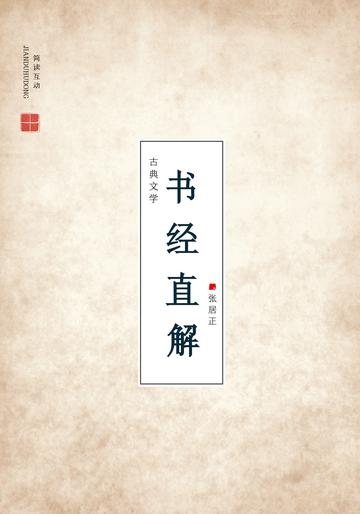
"Shu Jing Zhi Jie" is an interpretation of "Shang Shu" co-written by Zhang Juzheng, an important minister of the Ming Dynasty, and a Hanlin lecturer during the Longqing period. This book was originally designed for the young emperor Wanli's "daily lecture", which was used for daily reading and explanation in the court. Later, it gradually spread among the government and the public and became an influential Confucian auxiliary teaching material at that time.
In the book, Zhang Juzheng uses straightforward and popular language to "directly explain" the classic chapters of "Shangshu". He not only interprets the ancient texts word by word, but also intersperses his own ideas and annotations between the chapters. He does not stick to boring exegesis, but focuses on linking the spirit of ancient literature with realistic politics, religion, and self-cultivation, so that the principles of classics no longer hang high in the sky, but are closer to the practical significance of monarchs and ministers, governance, and morality.
Although it does not have a complete narrative structure, the whole book has an atmosphere of "teaching by an imperial teacher": readers feel as if they are in a palace classroom, listening to Zhang Juzheng's narration and extension of the ethics and historical governance of the previous kings. He emphasized the political precepts, laws and moral essentials in the Book of Documents, trying to enable the emperor to be exposed to the essence of Confucian classics at an early age, and to enable later readers to see the connection between Confucian classics and political enlightenment.
As a classic direct interpretation work with both academic and political purposes, "Shu Jing Direct Interpretation" not only had dissemination value in the Ming Dynasty, but was also regarded as an important reading book for future generations to understand "Shang Shu", Zhang Juzheng's thought and the Ming Dynasty's thought and culture. If you are interested in the popularization of classics, the official academic system of the Ming Dynasty, or Zhang Juzheng's Confucian philosophy, this book will be a good entry point.