Fanqie catalogue
Books by ai重歌
- Matches
- 15
Fanqie books matched on the author's name.
Explore
- A Deep Analysis of the Classic Philosophies in Romance of the Three Kingdoms 深度解析三国演义经典哲思 The Romance of the Three Kingdoms is rich in philosophical insights. It vividly portrays the rise and fall of dynasties, the dialectic of human effort and the will of heaven, the lesson that one should not commit even a small evil, and the importance of talent, strategy, and teamwork. It is not only a historical novel, but also a classic brimming with wisdom and inspiration. 14Reads—Score—14d adds
- A Deep Analysis of the Four Great Classical Novels: Dream of the Red Chamber 深度解析四大名著红楼梦 Dream of the Red Chamber is one of the Four Great Classical Novels of China and the pinnacle of classical Chinese fiction. It was written by Cao Xueqin. Set against the rise and fall of the four great families of Jia, Shi, Wang, and Xue, the novel centers on the tragic love and marriage of Jia Baoyu, Lin Daiyu, and Xue Baochai. It reveals the beauty and tragedy of human nature and paints a vast, detailed portrait of society and everyday life. A treasure of Chinese literary history, it possesses 11Reads—Score—14d adds
- Era Coins 年号钱 Era-name coins are an important type of currency in ancient China. Named after an emperor's reign title, they first appeared with the Hanxing coins of Li Shou, ruler of Cheng Han during the Sixteen Kingdoms period of the Eastern Jin dynasty. Throughout history, dynasties minted era-name coins, such as the Qianfeng Quanbao and Qianyuan Zhongbao of the Tang dynasty, and the Taiping Tongbao and Chongning Tongbao of the Song dynasty. The development of era-name coins reflects the political, economic 7Reads—Score—14d adds
- The Philosophical Wisdom of Qimen Dunjia 奇门遁甲蕴哲思 Synopsis of The Philosophical Wisdom of Qimen Dunjia In a mysterious world, the art of Qimen Dunjia is like a veil shrouding the unknown. Driven by curiosity and a desire to explore, the protagonist sets out on a journey to uncover its true meaning. Along this challenging and wondrous journey, the protagonist encounters all manner of fantastical sights and extraordinary people. They travel through the marvelous world of Qimen Dunjia, discovering its mysteries and wonders. Every experience deepe 6Reads—Score—14d adds
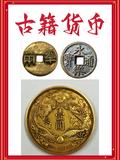
- Currency in Ancient Books 古籍货币 Ancient texts contain extensive records of currency. From the earliest cowrie shells, currency went through a long process of development. Copper coins, gold, silver, and other forms of money appeared in succession, reflecting the economic characteristics of different dynasties. The texts describe the role currency played in people's lives and its close ties to society, the economy, and politics. Currency was not only an important vehicle for economic activity, but also a witness to history and 6Reads—Score—14d adds
- The Philosophy of the Book of Changes 周易哲学 The philosophy of the Book of Changes is an important part of ancient Chinese philosophy, containing rich and profound ideas. Centered on the transformations of yin and yang, the Book of Changes explores how all things in the universe come into being, develop, and change. It emphasizes the ways things both oppose and transform into one another, such as yin and yang, strength and softness, and movement and stillness. It also reflects on life, morality, and ethics, offering many insights and princ 2Reads—Score—14d adds
- The Philosophical Spirit of Journey to the West 西游记哲魂 A Philosophical Spirit: Journey to the West Journey to the West is a monumental work filled with philosophical meaning. Using a fantastical pilgrimage as its vehicle, it explores self-growth and transcendence. Sun Wukong's transformation from a stone monkey into the Victorious Fighting Buddha symbolizes how people continually overcome themselves and break through their limitations. The teamwork among the four master and disciples shows the strength of unity and the advantages of complementary ab 2Reads—Score—14d adds
- A Philosophical Analysis of the Thirty-Six Stratagems 三十六计哲学解析 The Thirty-Six Stratagems is a remarkable work of military strategy that sums up thirty-six tactics and insights. These include strategies such as appearing weak to mislead the enemy and creating a diversion to attack elsewhere; clever ploys like taking advantage of a crisis and fishing in troubled waters; tactics such as luring the tiger from its mountain lair and capturing the ringleader; and ways to respond, such as escaping by deception and knowing when to retreat. These stratagems cover man 1Reads—Score—14d adds
- An In-Depth Analysis of the Yellow Emperor's Inner Canon 深度解析皇帝内经 The Yellow Emperor's Inner Classic is a medical text of great historical value and academic significance. From a medical perspective, it systematically expounds theories and methods concerning human physiology, pathology, diagnosis, and treatment, profoundly influencing the development of traditional Chinese medicine. Its understanding of the body's meridians, qi and blood, and internal organs demonstrates deep insight and distinctive perspectives. Philosophically, The Yellow Emperor's Inner Cla 1Reads—Score—14d adds
- A Tribute to Liu Rendao’s Ink Paintings 刘人岛水墨画礼赞 Qian Li Ge is a retired migratory bird who enjoys writing financial books and is a fan of Liu Rendao, a renowned Chinese ink painter. Deeply moved by the artistic vision in his teacher’s Chinese ink paintings, Qian Li Ge has written this tribute in the form of ci poetry and prose. —Reads—Score—14d adds
- Ancient Coins Bearing Era Names 古籍国号钱 Ancient Chinese reign-title coins are coins whose inscriptions bear the name of a state or dynasty. Here is a closer look: 1. Historical origins: Reign-title coins have a long history. The earliest such coins in China are generally considered to be the Liangzao Xinquan coins cast by the Zhang regime of Former Liang during the Sixteen Kingdoms period. Their appearance marked the birth of a new way of naming coins and laid the foundation for the development of reign-title coins in later generation —Reads—Score—14d adds
- The Philosophical Wisdom of Strange Tales from a Chinese Studio 聊斋志异蕴哲思 Strange Tales from a Chinese Studio contains rich philosophical ideas, which are mainly reflected in the following areas: Philosophy of Life - Ideal character: It advocates virtues such as simplicity, generosity, integrity, serenity, wisdom, and courage. For example, The Temple Ghost shows that evil spirits cannot harm the pure and honest, while Planting a Pear satirizes the miserly. Through this praise and censure, the author reveals his pursuit of an ideal character. - Philosophy of conduct: I —Reads—Score—14d adds
- New Insights into the Thirty-Six Stratagems 三十六计新哲思 "New Philosophical Insights into the Thirty-Six Stratagems" is an extension of the in-depth philosophical exploration and modern interpretation of "The Thirty-Six Stratagems," and a sequel to "A Philosophical Analysis of the Thirty-Six Stratagems." It goes beyond traditional analysis of military strategy, offering fresh interpretations rooted in modern contexts such as business competition, social relationships, and workplace maneuvering. Each stratagem is given a new perspective. For instance, —Reads—Score—14d adds
- The I Ching in Poetry and Painting 周易综诗画神韵 The finest traditions of Chinese culture shine like a brilliant river of stars. They are our spiritual home and the very foundation and lifeblood of our people. The Book of Changes, a dazzling treasure of this excellent traditional culture, is like an ancient sacred tree rooted deep in Chinese soil. It has permeated the blood of the nation, nourishing every person's heart and forging the noble character of our people. In modern times, the Book of Changes is not only an important representative o —Reads—Score—14d adds
- The Philosophy of the I Ching's Hexagram Pairs 周易综卦哲学 The Philosophy of Hexagram Reversals in the Book of Changes: Profound Wisdom and a Vision of the Universe The philosophy of hexagram reversals in the Book of Changes is a treasure of ancient Chinese wisdom, containing profound principles and a vision of the universe. By completely reversing the six lines of a hexagram, a reversed hexagram reveals another side of things and illuminates the fundamental laws of yin and yang transforming into each other, and of opposition and unity throughout the u —Reads—Score—14d adds