Fanqie library
Browse
- Titles
- 14
Every Fanqie book we index, searchable by title, author or tag.
-
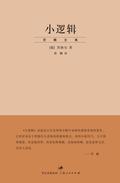 Little Logic (Complete Works of He Lin)
"Little Logic (The Complete Works of He Lin)" is the first part of the "Outline of the Encyclopedia of Philosophy", commonly known as "Little Logic" to distinguish it from "Big Logic" (i. E. Logic). In addition to the introduction, the book is divided into three chapters: ontology, essence, and concept, which reflect the basic framework of Hegel's philosophical system. Hegel's "Small Logic" is a major link that constitutes his "Encyclopedia of Philosophy". Its advantage lies in grasping the outl
446Reads9.3Score147Shelves
Little Logic (Complete Works of He Lin)
"Little Logic (The Complete Works of He Lin)" is the first part of the "Outline of the Encyclopedia of Philosophy", commonly known as "Little Logic" to distinguish it from "Big Logic" (i. E. Logic). In addition to the introduction, the book is divided into three chapters: ontology, essence, and concept, which reflect the basic framework of Hegel's philosophical system. Hegel's "Small Logic" is a major link that constitutes his "Encyclopedia of Philosophy". Its advantage lies in grasping the outl
446Reads9.3Score147Shelves
-
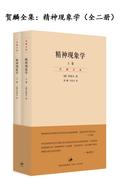 The Complete Works of He Lin: Phenomenology of Spirit (Two Volumes)
"The Phenomenology of Spirit" is the first major programmatic work in which Hegel, the master of classical German philosophy, expounds his philosophical views and methodological principles. Hegel regarded this book as the introduction to his philosophical system. Marx praised "The Phenomenology of Spirit" as "the true origin and secret of Hegel's philosophy" and "the Bible of Hegel's philosophy". Through this book, Hegel proposed that the phenomenology of spirit is a science about the path to ac
302Reads9.3Score—Shelves
The Complete Works of He Lin: Phenomenology of Spirit (Two Volumes)
"The Phenomenology of Spirit" is the first major programmatic work in which Hegel, the master of classical German philosophy, expounds his philosophical views and methodological principles. Hegel regarded this book as the introduction to his philosophical system. Marx praised "The Phenomenology of Spirit" as "the true origin and secret of Hegel's philosophy" and "the Bible of Hegel's philosophy". Through this book, Hegel proposed that the phenomenology of spirit is a science about the path to ac
302Reads9.3Score—Shelves
-
 Philosophy Forest-Spiritual Phenomenology
The concept of "spirit" in this book is based on the dialectical movement of human and social relations. The desire and teleological nature of human self-awareness ensure that "spirit" develops with itself as its goal.
224Reads8.9Score—Shelves
Philosophy Forest-Spiritual Phenomenology
The concept of "spirit" in this book is based on the dialectical movement of human and social relations. The desire and teleological nature of human self-awareness ensure that "spirit" develops with itself as its goal.
224Reads8.9Score—Shelves
-
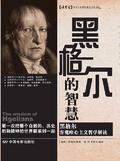 Hegel's Wisdom
Hegel (1770~1831), a famous German philosopher in the 19th century. Known as "the culmination of German classical philosophy", Hegel's philosophy has encyclopedic richness and is considered a peak in the development of bourgeois philosophical thought. This book is a brief general introduction to Hegel's main doctrines. The main contents include: Hegel's logic; Hegel's natural philosophy; Hegel's spiritual philosophy; and Hegel's philosophy of law. Although some of Hegel's thoughts are inevitably
198Reads9.3Score—Shelves
Hegel's Wisdom
Hegel (1770~1831), a famous German philosopher in the 19th century. Known as "the culmination of German classical philosophy", Hegel's philosophy has encyclopedic richness and is considered a peak in the development of bourgeois philosophical thought. This book is a brief general introduction to Hegel's main doctrines. The main contents include: Hegel's logic; Hegel's natural philosophy; Hegel's spiritual philosophy; and Hegel's philosophy of law. Although some of Hegel's thoughts are inevitably
198Reads9.3Score—Shelves
-
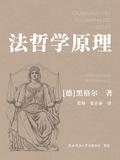 Principles of Legal Philosophy
The masterpiece of the philosophical giant Hegel! It relatively systematically reflects its views on law, morality, ethics, etc., And is a good choice for beginners in political philosophy. It is highly recommended by professors from Peking University, Fudan University, and many other universities. This version adopts the widely circulated translation of Fan Yang and Zhang Qitai, former professors of the Shanghai Academy of Social Sciences. The expression is smooth and easy to read. It not only
193Reads8.8Score103Shelves
Principles of Legal Philosophy
The masterpiece of the philosophical giant Hegel! It relatively systematically reflects its views on law, morality, ethics, etc., And is a good choice for beginners in political philosophy. It is highly recommended by professors from Peking University, Fudan University, and many other universities. This version adopts the widely circulated translation of Fan Yang and Zhang Qitai, former professors of the Shanghai Academy of Social Sciences. The expression is smooth and easy to read. It not only
193Reads8.8Score103Shelves
-
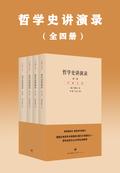 The Complete Works of He Lin: Lectures on the History of Philosophy (Four Volumes)
"Lectures on the History of Philosophy" is one of the masterpieces of Hegel, the master of classical German philosophy. It is the pioneer work of "History of Philosophy" and a must-read book for philosophers. On the one hand, Hegel incorporated the history of philosophy into the framework of his objective idealism system and attributed the history of philosophy to the absolute spiritual stage in which ideas return to themselves; on the other hand, Hegel implemented dialectics in the study of the
86Reads9.2Score—Shelves
The Complete Works of He Lin: Lectures on the History of Philosophy (Four Volumes)
"Lectures on the History of Philosophy" is one of the masterpieces of Hegel, the master of classical German philosophy. It is the pioneer work of "History of Philosophy" and a must-read book for philosophers. On the one hand, Hegel incorporated the history of philosophy into the framework of his objective idealism system and attributed the history of philosophy to the absolute spiritual stage in which ideas return to themselves; on the other hand, Hegel implemented dialectics in the study of the
86Reads9.2Score—Shelves
-
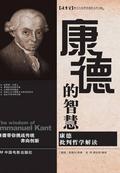 Kant's Wisdom
In the era of Kant, there were two main important theories in European philosophical thought: empiricism developed by Locke, Hume and others, and rationalism by Descartes and others. Empiricists believe that human understanding and knowledge of the world come from human experience, while rationalists believe that human knowledge comes from human reason. Kant combined the two views to a certain extent. Kant believed that knowledge is obtained by human beings through both senses and reason. Experi
25Reads8.4Score—Shelves
Kant's Wisdom
In the era of Kant, there were two main important theories in European philosophical thought: empiricism developed by Locke, Hume and others, and rationalism by Descartes and others. Empiricists believe that human understanding and knowledge of the world come from human experience, while rationalists believe that human knowledge comes from human reason. Kant combined the two views to a certain extent. Kant believed that knowledge is obtained by human beings through both senses and reason. Experi
25Reads8.4Score—Shelves
-
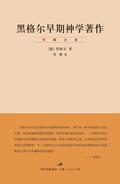 The Complete Works of He Lin: Hegel's Early Theological Works
"Hegel's Early Theological Works" (Volume 8 of "The Complete Works of He Lin") is one of the important translations of the famous philosopher and translator He Lin. It was translated from the original German version of Hegel's "Early Theological Works" compiled by Noel at the age of eighty, and with reference to the English translation by Knox and Kroner. "Hegel's Early Theological Works" is also the last Hegel-related translation by Mr. He Lin, who was the first person to translate and introduc
6Reads8.7Score—Shelves
The Complete Works of He Lin: Hegel's Early Theological Works
"Hegel's Early Theological Works" (Volume 8 of "The Complete Works of He Lin") is one of the important translations of the famous philosopher and translator He Lin. It was translated from the original German version of Hegel's "Early Theological Works" compiled by Noel at the age of eighty, and with reference to the English translation by Knox and Kroner. "Hegel's Early Theological Works" is also the last Hegel-related translation by Mr. He Lin, who was the first person to translate and introduc
6Reads8.7Score—Shelves
-
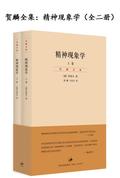 The Complete Works of He Lin: Phenomenology of Spirit (Two Volumes)
"The Phenomenology of Spirit" is the first major programmatic work in which Hegel, the master of classical German philosophy, expounds his philosophical views and methodological principles. Hegel regarded this book as the introduction to his philosophical system. Marx praised "The Phenomenology of Spirit" as "the true origin and secret of Hegel's philosophy" and "the Bible of Hegel's philosophy". Through this book, Hegel proposed that the phenomenology of spirit is the science of realizing the p
—Reads8.4Score—Shelves
The Complete Works of He Lin: Phenomenology of Spirit (Two Volumes)
"The Phenomenology of Spirit" is the first major programmatic work in which Hegel, the master of classical German philosophy, expounds his philosophical views and methodological principles. Hegel regarded this book as the introduction to his philosophical system. Marx praised "The Phenomenology of Spirit" as "the true origin and secret of Hegel's philosophy" and "the Bible of Hegel's philosophy". Through this book, Hegel proposed that the phenomenology of spirit is the science of realizing the p
—Reads8.4Score—Shelves
-
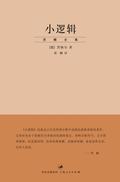 Little Logic (Complete Works of He Lin)
"Little Logic (The Complete Works of He Lin)" is the first part of the "Outline of the Encyclopedia of Philosophy", commonly known as "Little Logic" to distinguish it from "Big Logic" (i. E. Logic). In addition to the introduction, the book is divided into three chapters: ontology, essence, and concept, which reflect the basic framework of Hegel's philosophical system. Hegel's "Small Logic" is a major link that constitutes his "Encyclopedia of Philosophy". Its advantage lies in grasping the outl
—Reads8.5Score—Shelves
Little Logic (Complete Works of He Lin)
"Little Logic (The Complete Works of He Lin)" is the first part of the "Outline of the Encyclopedia of Philosophy", commonly known as "Little Logic" to distinguish it from "Big Logic" (i. E. Logic). In addition to the introduction, the book is divided into three chapters: ontology, essence, and concept, which reflect the basic framework of Hegel's philosophical system. Hegel's "Small Logic" is a major link that constitutes his "Encyclopedia of Philosophy". Its advantage lies in grasping the outl
—Reads8.5Score—Shelves
-
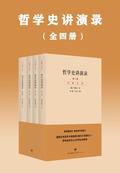 The Complete Works of He Lin: Lectures on the History of Philosophy (Four Volumes)
"Lectures on the History of Philosophy" is one of the masterpieces of Hegel, the master of classical German philosophy. It is the pioneer work of "History of Philosophy" and a must-read book for philosophers. On the one hand, Hegel incorporated the history of philosophy into the framework of his objective idealism system and attributed the history of philosophy to the absolute spiritual stage in which ideas return to themselves; on the other hand, Hegel implemented dialectics in the study of the
—Reads8.4Score—Shelves
The Complete Works of He Lin: Lectures on the History of Philosophy (Four Volumes)
"Lectures on the History of Philosophy" is one of the masterpieces of Hegel, the master of classical German philosophy. It is the pioneer work of "History of Philosophy" and a must-read book for philosophers. On the one hand, Hegel incorporated the history of philosophy into the framework of his objective idealism system and attributed the history of philosophy to the absolute spiritual stage in which ideas return to themselves; on the other hand, Hegel implemented dialectics in the study of the
—Reads8.4Score—Shelves
-
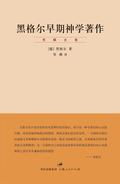 The Complete Works of He Lin: Hegel's Early Theological Works
"Hegel's Early Theological Works" (Volume 8 of "The Complete Works of He Lin") is one of the important translations of the famous philosopher and translator He Lin. It was translated from the original German version of Hegel's "Early Theological Works" compiled by Noel at the age of eighty, and with reference to the English translation by Knox and Kroner. "Hegel's Early Theological Works" is also the last Hegel-related translation by Mr. He Lin, who was the first person to translate and introduc
—Reads8.6Score—Shelves
The Complete Works of He Lin: Hegel's Early Theological Works
"Hegel's Early Theological Works" (Volume 8 of "The Complete Works of He Lin") is one of the important translations of the famous philosopher and translator He Lin. It was translated from the original German version of Hegel's "Early Theological Works" compiled by Noel at the age of eighty, and with reference to the English translation by Knox and Kroner. "Hegel's Early Theological Works" is also the last Hegel-related translation by Mr. He Lin, who was the first person to translate and introduc
—Reads8.6Score—Shelves
-
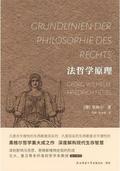 Principles of Legal Philosophy
The masterpiece of the philosophical giant Hegel! It relatively systematically reflects its views on law, morality, ethics, etc., And is a good choice for beginners in political philosophy. It is highly recommended by professors from Peking University, Fudan University, and many other universities. This version adopts the widely circulated translation of Fan Yang and Zhang Qitai, former professors of the Shanghai Academy of Social Sciences. The expression is smooth and easy to read. It not only
—Reads8.5Score—Shelves
Principles of Legal Philosophy
The masterpiece of the philosophical giant Hegel! It relatively systematically reflects its views on law, morality, ethics, etc., And is a good choice for beginners in political philosophy. It is highly recommended by professors from Peking University, Fudan University, and many other universities. This version adopts the widely circulated translation of Fan Yang and Zhang Qitai, former professors of the Shanghai Academy of Social Sciences. The expression is smooth and easy to read. It not only
—Reads8.5Score—Shelves
-
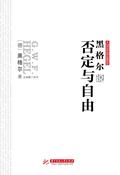 Hegel Talks About Negation and Freedom
Hegel (1770-1831), the master of German classical philosophy, a representative of modern German objective idealist philosophy, and a political philosopher, founded logic, natural philosophy, and spiritual philosophy. He wrote extensively throughout his life, including: Phenomenology of Spirit, Logic, and Principles of Legal Philosophy. This book mainly interprets and analyzes Hegel's entire system from the perspective of negation and freedom, pointing out that negation and freedom play an import
—Reads8.5Score—Shelves
Hegel Talks About Negation and Freedom
Hegel (1770-1831), the master of German classical philosophy, a representative of modern German objective idealist philosophy, and a political philosopher, founded logic, natural philosophy, and spiritual philosophy. He wrote extensively throughout his life, including: Phenomenology of Spirit, Logic, and Principles of Legal Philosophy. This book mainly interprets and analyzes Hegel's entire system from the perspective of negation and freedom, pointing out that negation and freedom play an import
—Reads8.5Score—Shelves