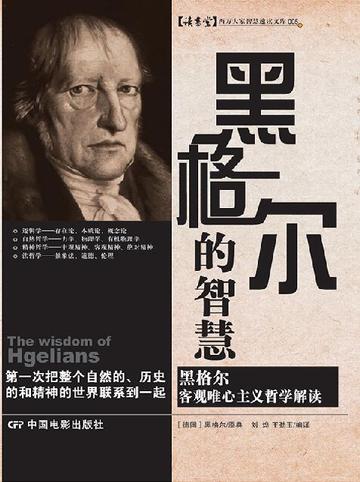
Hegel (1770~1831), a famous German philosopher in the 19th century. Known as "the culmination of German classical philosophy", Hegel's philosophy has encyclopedic richness and is considered a peak in the development of bourgeois philosophical thought.
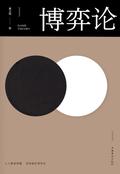
This book is a brief general introduction to Hegel's main doctrines. The main contents include: Hegel's logic; Hegel's natural philosophy; Hegel's spiritual philosophy; and Hegel's philosophy of law. Although some of Hegel's thoughts are inevitably obscure and difficult to understand, the in-depth and simple interpretation method of this book can still allow readers to quickly recognize and understand the essence of Hegel's philosophical thoughts and have a glimpse of the spiritual world of this master of thought.
Reader comments
As the master of German classical philosophy, the historical deduction law of positive-negative-sum makes Hegel's logic a peak that every introductory philosopher must climb; although its language is obscure and difficult to understand, it covers many fields and the depth and breadth of his thoughts are breathtakingi, The three stages of the development of the absolute spirit include logic, natural philosophy and spiritual philosophy respectively; what encompasses the absolute spirit is a principle of dialectics. Whether it is the background of the times in Germany or similar thoughts, Hegel is the brightest pearl in the hall of fame.
I really like a passage in the book about Hegel's philosophy of law. It says that freedom refers to independence, that is to say, one is in oneself, one depends on oneself, and one is one's own decision maker. On the contrary, if there is an external other thing that determines "my" actions, or that I exist in that other thing and is dominated by that other thing, then "I" is not free. One of my thoughts is that when people live in this world, they rely on their parents, but in the end they still have to rely on themselves. Only by relying on yourself can you be free and unrestrained.
Hegel was an important German philosopher and thinker whose works had a profound impact on the fields of philosophy, political science, and social sciences. Hegel proposed the concept of dialectics, believing that the development and change of things are achieved through the struggle and unity between opposites. He applied dialectics to the fields of society, history and thinking, emphasizing the opposition of opposites and the unity of unity. There is an absolutely spiritual process, including intellectual, historical and cultural developments. He regarded absolute spirituality as the highest form of the real world, achieving wholeness through the realization of reason and freedom.
Hegel, a German classical philosophy master, created a complete objective idealist philosophical system. Marx and Engels critically inherited the rational core of Hegelian dialectics and created materialist dialectics. Engels even spoke highly of him: "Modern German philosophy reached its peak in Hegel's system." So don't miss this book if you want to get started with philosophy. This book introduces Hegel's life, as well as his ontology, essentialism, concept theory, natural philosophy, spiritual philosophy and legal philosophy.
When it comes to Hegel, everyone knows it. This great philosopher and writer left us too many treasures. During his lifetime, he also brought us too many precious thoughts and amazing and admirable surprises. This book condenses and summarizes his thoughts and theories very well. It not only allows us to better study Hegel's theories and knowledge, but also allows us to further understand this great man, and allows us to further enter the spiritual world of this great man and talk with her.
As one of the sources of development of Marxist philosophy, Hegel can be said to be a representative figure in German classical philosophy. His thoughts are bold and avant-garde, with profound dialectical thinking. In order to make this great figure's philosophical thoughts more understandable, the author's writing is relatively straightforward, but he still lacks some practical cases to help understand. Moreover, I personally feel that Hegel's philosophical thoughts can be compared with Marxist philosophical theories to help understand and achieve the purpose of thoroughly interpreting Hegel's thoughts.
Philosophy, by its very nature, is universalizable; because its soil is thinking, and that is why people become people.
This book provides a brief but comprehensive introduction to Hegel's philosophical thought, allowing people to quickly understand its essence. The book mentions the objective idealism system established by Hegel and the dialectical principle he implemented throughout, which is amazing. I especially like what Hegel said, "Existence is rationality." This sentence embodies his philosophical point of view and also gives us a new perspective on thinking about problems. All in all, this is an introductory book on philosophy worth reading.
Philosophy is the bridge to the soul and an in-depth analysis of life.

As the master of German classical philosophy, the historical deduction law of positive-negative-sum makes Hegel's logic a peak that every introductory philosopher must climb; although its language is obscure and difficult to understand, it covers many fields and the depth and breadth of his thoughts are breathtakingi, The three stages of the development of the absolute spirit include logic, natural philosophy and spiritual philosophy respectively; what encompasses the absolute spirit is a principle of dialectics. Whether it is the background of the times in Germany or similar thoughts, Hegel is the brightest pearl in the hall of fame.
I really like a passage in the book about Hegel's philosophy of law. It says that freedom refers to independence, that is to say, one is in oneself, one depends on oneself, and one is one's own decision maker. On the contrary, if there is an external other thing that determines "my" actions, or that I exist in that other thing and is dominated by that other thing, then "I" is not free. One of my thoughts is that when people live in this world, they rely on their parents, but in the end they still have to rely on themselves. Only by relying on yourself can you be free and unrestrained.
Hegel was an important German philosopher and thinker whose works had a profound impact on the fields of philosophy, political science, and social sciences. Hegel proposed the concept of dialectics, believing that the development and change of things are achieved through the struggle and unity between opposites. He applied dialectics to the fields of society, history and thinking, emphasizing the opposition of opposites and the unity of unity. There is an absolutely spiritual process, including intellectual, historical and cultural developments. He regarded absolute spirituality as the highest form of the real world, achieving wholeness through the realization of reason and freedom.
Hegel, a German classical philosophy master, created a complete objective idealist philosophical system. Marx and Engels critically inherited the rational core of Hegelian dialectics and created materialist dialectics. Engels even spoke highly of him: "Modern German philosophy reached its peak in Hegel's system." So don't miss this book if you want to get started with philosophy. This book introduces Hegel's life, as well as his ontology, essentialism, concept theory, natural philosophy, spiritual philosophy and legal philosophy.
When it comes to Hegel, everyone knows it. This great philosopher and writer left us too many treasures. During his lifetime, he also brought us too many precious thoughts and amazing and admirable surprises. This book condenses and summarizes his thoughts and theories very well. It not only allows us to better study Hegel's theories and knowledge, but also allows us to further understand this great man, and allows us to further enter the spiritual world of this great man and talk with her.
As one of the sources of development of Marxist philosophy, Hegel can be said to be a representative figure in German classical philosophy. His thoughts are bold and avant-garde, with profound dialectical thinking. In order to make this great figure's philosophical thoughts more understandable, the author's writing is relatively straightforward, but he still lacks some practical cases to help understand. Moreover, I personally feel that Hegel's philosophical thoughts can be compared with Marxist philosophical theories to help understand and achieve the purpose of thoroughly interpreting Hegel's thoughts.
Philosophy, by its very nature, is universalizable; because its soil is thinking, and that is why people become people.
This book provides a brief but comprehensive introduction to Hegel's philosophical thought, allowing people to quickly understand its essence. The book mentions the objective idealism system established by Hegel and the dialectical principle he implemented throughout, which is amazing. I especially like what Hegel said, "Existence is rationality." This sentence embodies his philosophical point of view and also gives us a new perspective on thinking about problems. All in all, this is an introductory book on philosophy worth reading.
Philosophy is the bridge to the soul and an in-depth analysis of life.