I want to read a book similar to "A Guide to Enlightenment and Becoming an Immortal in the Human World (Top Secret: Ling Tian Ji)". Understand the way of heaven, understand the way of humanity, and understand the secrets of the world
The Tao is Tao, very Tao! It's a very enjoyable novel. Dual cultivation or multiple cultivation, you have the final say. The plot can be customized. The customization of the Guizhou Rongjiang chapter has been completed. What else needs to be customized? Come on, you have the final say!
After reading it, you will be guaranteed to ascend where you are, and there will be a place for you in the fairy world in the future. [Laughing][laughing]
This is the most distinctive cross-border book you can find. Follow the plot and it will contain the most useful knowledge from 17 hard-core subjects such as psychology, economics, logic, game theory, and advanced mathematics, as well as cutting-edge mainstream scientific explanations. It will quickly build your thinking framework and improve your cognitive level. Feng Shui metaphysics, divination and fortune-telling and other market smarts will no longer be able to fool you. (If you have any questions, jump directly to Chapter 134, explain the problem from the root, and rub the charlatan on the ground.) The story is funny, but not ridiculous. The group of protagonists is not normal. The reason why readers laugh has nothing to do with the author. As for the plot, it's up to you to guess it. Even if you put aside the knowledge, the plot of the whole book is a suspense story with strict logic, with a lot of foreshadowing. The second and third chapters are all interesting. It is not a scattered plot put together to teach subject knowledge. To put it bluntly, you feel tired when reading some chapters because the content of these chapters itself is designed to train multiple thinking. You feel tired because you are growing your brain. If you find that you are tired from reading because the plot logic is illogical, the author lies on the floor and lets you beat him! Good things have different opinions. The author became bald just to write this book! I don't dare to advertise like this if I don't have anything. You have seen this, it shows that he is willing to use his brain. There are not many readers like this.
Multi-dimensional cognition: deconstructing the deep logic of "inner sage and outer king" and "kingly way". "Inner sage and outer king" and "kingly way", as the core categories of Confucianism, are not isolated conceptual labels, but contain the complex tension between individual and group, inner and outer, ideal and reality, tradition and modernity. Approaching cognition from multiple dimensions can not only peel off the shell of its historical context, but also touch the deep texture of traditional Chinese political philosophy and personality ideals. 1. The Dimension of Body and Function: From "Mind Nature Noumenon" to "Practical Function" The "non-duality of body and function" is the core thinking of Chinese philosophy. Under this dimension, "inner sage" is "body", "outer king" is "yong", and "kingly way" is the typical presentation of "yong" in the political field. The "body" of "inner sage" is the inherent existence of "benevolence, righteousness, propriety, wisdom, and faith" in an individual's mind - as Mencius said, "Everyone has a heart of compassion." This is the ontological basis of morality. It is not an imposed norm, but a self-sufficient "goodness" in human nature, which needs to be awakened through "introspection" and "self-denial" (that is, "clarification of mind"). This awakening of the "body" constitutes the source of legitimacy for all external practices: without the "body" of the inner sage, the journey of the outer king will lose its value foundation and may become a utilitarian "hegemony"; without the "use" of the outer king and the royal way, the "body" of the inner sage will become an empty spiritual self-entertainment, which violates the Confucian practical character of "the road is not far away from people". As the core use case of "outer king", the king's way is a direct embodiment of "the mutual development of body and use": the ruler takes the benevolence cultivated by the "inner sage" as the "body", and through practices such as "protecting the people and kingship" and "controlling the people's property" as the "use", the value of the "body" is revealed in the "use". Just like Confucius' metaphor of "governing with virtue" - Beichen lives in its place and all the stars share it, the correctness of "body" naturally leads to the orderliness of "use". 2. The internal and external dimension: Expansion from "closed loop of self-cultivation" to "open world" The essence of "Inner Saint and External King" is the dialectical interaction between "inside" and "outside". This dimension shows the dynamic relationship between individual spiritual growth and social governance. The "inside" of "inner sage" is the process of self-cultivation of an individual's inward convergence: from the self-examination of "I examine myself three times a day" to the awakening of the original heart of "reaching conscience", forming a closed loop of "self-denial and restoration of propriety" - through restraining selfish desires and understanding the way of heaven, personality self-sufficiency and perfection are achieved. However, this closed loop is not closed, but has natural "extrapolation": Confucianism believes that the essence of "benevolence" is to "respect oneself to others" ("I am old, I am old, and others are old"). The individual's recognition of "benevolence" must break through the limitations of "benefiting oneself" and move towards an open practice of "benefiting the world". The "outer" of "outer king" and "royal way" is exactly the result of this extrapolation: from "cultivation" to "regulating the family" and then to "ruling the country and bringing peace to the world", forming an expanding chain from near to far, from small to large. The essence of Wangdao's "benevolence through virtue" is to externalize the individual's "benevolence" into political systems and governance practices - the ruler's "inner sage" cultivation (such as "cultivating oneself") is externalized into "people's livelihood-based" policies, and the individual's "shame and disgust" are externalized into the just principle of "appointing talents and appointing talents." This transformation from "inside" to "outside" is not a simple linear projection, but the practice of "outside" in turn deepens the understanding of "inside": in the process of "pacifying people", individuals can more deeply understand the connotation of "benevolence". As Wang Yangming said, "hardening things" can "become a conscience." 3. The dimension of public and private: the integration from "individual virtue" to "public ethics" In Confucianism, "private" and "public" are not opposites, but are connected through the "inner saint and outer king" and the "kingly way". This dimension reveals the unity of individual value and public responsibility. At first glance, the cultivation of "inner sage" is a "private" domain - the individual's refinement of his or her own moral character, such as the self-restraint of "a gentleman be cautious in independence", which seems to have nothing to do with public affairs. But Confucian "private" always contains the seeds of "public": the core of "benevolence" is concern for others, the essence of "righteousness" is the persistence of public justice, and the cultivation of individual virtue itself is preparation for assuming public responsibilities. Just as "The Great Learning" says, "From the emperor to the common people, everything is based on self-cultivation." The individual "private" of "self-cultivation" is the starting point of the "public" of "ordering the family, governing the country, and bringing peace to the world." The "king way" is a concentrated expression of the "public" domain: it takes "the world" as the object of care and pursues the public welfare of "the happiness of the people" and the stability of the world, rather than the selfish interests of the rulers. This kind of "public" is not an abstract concept separated from individuals, but is supported by the virtues of countless "inner sages" individuals - the ruler's "public heart" comes from his "inner sage" cultivation, the officials' "justice" comes from their practice of "righteousness", and the people's "public order" comes from their recognition of "rituals". From "private morality" to "public morality", from "cultivating oneself" to "pacifying others", the integration of public and private dimensions is the ethical foundation of the Confucian ideal of "great harmony". 4. The dimension of ancient and modern times: the tension and continuation from "traditional governance" to "modern transformation" Stripping away the specific historical form, the core spirit of "inner sage and outer king" and "kingly way" are still vital in modern society. This dimension shows the adaptability of traditional thought to the times. In the traditional context, the practitioners of "inner saints and outer kings" were mostly scholars or monarchs. The carrier of "royal way" was the governance system of the feudal dynasty, and its specific measures (such as "controlling the people's property") bear the imprint of an agricultural society. But in modern society, its core can still be transformed: "Inner Saint" can be understood as an individual's moral consciousness and spiritual growth (such as integrity, responsibility, empathy), "Outer King" can be extended to professional responsibility and social contribution (such as the social responsibility of entrepreneurs, the knowledge dissemination of scholars); "The King's Way" "Putting the people first" and "ruling the country by virtue" echo the "people's livelihood first" and "combination of the rule of law and the rule of virtue" in modern governance - the former emphasizes "protecting the people and ensuring peace of the people", while the latter pursues "people's happiness"; the former advocates "guiding the people towards good", while the latter attaches importance to "social moral construction". This transformation is not a simple comparison, but is based on the continuation of core values: the pursuit of "complete personality" (inner sage and outer king) and "good governance ideals" (kingly way) in traditional thought, and modern society's demands for "all-round individual development" and "common progress of society" are essentially the eternal exploration of "how people can exist better" and "how society can operate better". 5. The dimension of ideal and reality: the tension and balance from "should be" to "actually is" As the ideal form of Confucianism, "inner sage and outer king" and "kingly way" always have tension with reality. This dimension reveals the practicality and inclusiveness of thought. At the ideal level, the "inner sage" points to the realm of "sages", and the "kingly way" pursues "the world is unified", which is the ultimate "as it should be". But in reality, the perfect "inner sage" is difficult to achieve, and the pure "king way" is rarely realized - in history, it is more of a "king and hegemony" (for example, Emperor Xuan of the Han Dynasty "The Han family has its own system, which is based on the overlord's way"). This tension precisely reflects the vitality of thought: ideals provide critical standards for reality (such as criticizing tyranny with the "king way"), while reality forces ideals to remain flexible (such as Xunzi's recognition of the necessity of combining "ritual and law"). For individuals, this tension means the attitude of "although it is impossible to achieve, but the heart yearns for it" - there is no need to be demanding to become a saint, but one needs to stick to the moral bottom line; for society, it means finding a balance between "ideal guidance" and "realistic conditions" - there is no need to reproduce the traditional royal way, but "for the people" and "virtue" must be the principles of governance. This wisdom of "ideals being reflected in reality" is the key to Confucianism's ability to transcend thousands of years. Conclusion: The significance of multi-dimensional cognition. From body and use to inside and outside, from public and private to ancient and modern times, from ideals and reality, multi-dimensional cognition of "inner saint and outer king" and "kingly way" is not for the sake of retro, but to strip away its essence in the historical context and activate its value in the modern perspective. The vitality of these concepts lies in the fact that they connect individuals and society, spirit and practice, tradition and modernity, and provide us with a complete framework for understanding the relationship between "people" and "the world" - which not only requires individuals to cultivate deeply inward, but also encourages outward responsibilities; they not only pursue the light of ideals, but also take root in the soil of reality. This wisdom of balance and continuity may be the important inspiration that Chinese civilization has left to the contemporary era.
 The Return of the Dragon Clan
48.3kReads9.5Score8.6kShelves
The Return of the Dragon Clan
48.3kReads9.5Score8.6kShelves
 **
17.8kReads5.8Score2.1kShelves
**
17.8kReads5.8Score2.1kShelves
 Quickly Wear: I Don't Want to Always Dress Like the Best.
9.4kReads9.1Score710Shelves
Quickly Wear: I Don't Want to Always Dress Like the Best.
9.4kReads9.1Score710Shelves
 Guizhou Road Crazy Biao
43Reads6.7Score—Shelves
Guizhou Road Crazy Biao
43Reads6.7Score—Shelves
 Phoenix in the Night: Ten Beauties
919Reads7.5Score—Shelves
Phoenix in the Night: Ten Beauties
919Reads7.5Score—Shelves
 Immortal Emperor Master
745.3kReads9.4Score92kShelves
Immortal Emperor Master
745.3kReads9.4Score92kShelves
 The Way of Heaven Returns to Ruins: All Dharmas Return to One
—Reads8.4Score—Shelves
The Way of Heaven Returns to Ruins: All Dharmas Return to One
—Reads8.4Score—Shelves
 Origin**
—Reads5.8Score—Shelves
Origin**
—Reads5.8Score—Shelves
 I Received Death Emails from the Future
—Reads8.6Score—Shelves
I Received Death Emails from the Future
—Reads8.6Score—Shelves
 Human Awakening Day: We Remove Hate Programs
—Reads8.4Score—Shelves
Human Awakening Day: We Remove Hate Programs
—Reads8.4Score—Shelves
 Shangqing Bone Marrow Spiritual Text Ghost Law
34Reads8.5Score—Shelves
Shangqing Bone Marrow Spiritual Text Ghost Law
34Reads8.5Score—Shelves
 Yin Zhenren Donghua Zhengmai Huangji Hepizhengdao Immortal Sutra
—Reads8.7Score—Shelves
Yin Zhenren Donghua Zhengmai Huangji Hepizhengdao Immortal Sutra
—Reads8.7Score—Shelves
 Huang Ting*
—Reads5.8Score—Shelves
Huang Ting*
—Reads5.8Score—Shelves
 Dafa in the Purple Book of the Supreme Divine Sky Jade Pure King
—Reads8.7Score—Shelves
Dafa in the Purple Book of the Supreme Divine Sky Jade Pure King
—Reads8.7Score—Shelves
 Wen Shi Zhen Jing
—Reads9.4Score—Shelves
Wen Shi Zhen Jing
—Reads9.4Score—Shelves
 Yunji Seven Lot
—Reads9.3Score—Shelves
Yunji Seven Lot
—Reads9.3Score—Shelves
 Huashu
—Reads9.1Score—Shelves
Huashu
—Reads9.1Score—Shelves
 Lingbao Jingming's New Secret Method of Cultivating the Seal of the Nine Elders to Subdue Demons
—Reads8.6Score—Shelves
Lingbao Jingming's New Secret Method of Cultivating the Seal of the Nine Elders to Subdue Demons
—Reads8.6Score—Shelves
 Xuantian God's Enlightenment Record
—Reads8.4Score—Shelves
Xuantian God's Enlightenment Record
—Reads8.4Score—Shelves
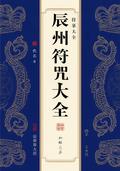 Complete Collection of Chenzhou Spells
2kReads8.9Score—Shelves
Complete Collection of Chenzhou Spells
2kReads8.9Score—Shelves
 Qing Jing Sutra
—Reads9.4Score—Shelves
Qing Jing Sutra
—Reads9.4Score—Shelves
 From Nothing to Business Empire
—Reads7.0Score—Shelves
From Nothing to Business Empire
—Reads7.0Score—Shelves
 Endless Heaven
—Reads6.4Score—Shelves
Endless Heaven
—Reads6.4Score—Shelves
 Dying Wish
1.4kReads5.8Score482Shelves
Dying Wish
1.4kReads5.8Score482Shelves
 Secret**
—Reads5.8Score—Shelves
Secret**
—Reads5.8Score—Shelves
 Daomen***
—Reads5.8Score—Shelves
Daomen***
—Reads5.8Score—Shelves
 Idiom*************
—Reads5.8Score—Shelves
Idiom*************
—Reads5.8Score—Shelves
 Workplace************
—Reads5.8Score—Shelves
Workplace************
—Reads5.8Score—Shelves
 Not for the Faint of Heart: Courier Vs. Ghost Sadako
—Reads8.5Score—Shelves
Not for the Faint of Heart: Courier Vs. Ghost Sadako
—Reads8.5Score—Shelves
 **
—Reads5.8Score—Shelves
**
—Reads5.8Score—Shelves
 **
—Reads5.8Score—Shelves
**
—Reads5.8Score—Shelves
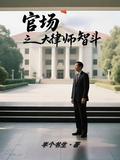 The Battle of Wits Among Barristers in Officialdom
736Reads5.8Score106Shelves
The Battle of Wits Among Barristers in Officialdom
736Reads5.8Score106Shelves
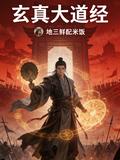 Xuanzhen***
—Reads5.8Score—Shelves
Xuanzhen***
—Reads5.8Score—Shelves