Stats
Synopsis
No synopsis yet.
We haven’t got an English blurb for this one. It appears once the source description has been translated.
Reader comments
In booklists 10
Authentic Taoist Novels (No System), Be Normal and Don't Become a God

Sanqing Only Needs Clay Body, but Buddha Needs Gold Plating.
Sanqing only needs clay body, but Buddha needs gold plating. In troubled times, the Bodhisattva does not come into the world, but the old Taoist carries his sword to save the common people. In the prosperous age, Buddhists visited pilgrims, while Taoists retreated to the mountains and forests.
Buddhism, Taoism, Confucianism
Are there any novels about Buddhism, Taoism, and Confucianism that are so short of books!!?!?!?
I Want to Read Books About Taoism, Magic, Catching Ghosts, Cultivating Immortals, Etc.
The protagonist needs to know a few things at the beginning, and then gradually becomes stronger later on, from a boy's perspective
A Sacred Book About True Spiritual Practice + Exercises + Life Philosophy
I want to read a book similar to "A Guide to Enlightenment and Becoming an Immortal in the Human World".
Novels About Edicts to Invite Gods, Chanting Mantras to Invite Gods, Taoist Mantras, Taoist Priests
The Tao Can Be Taught, but It Is Not the Eternal Tao.
Road
Are There Any Books on Taoist Mantras? Reciting Incantations
It Is Realistic and Feasible for Real People to Cultivate Immortality
Looking for Novels Written by True Practitioners
Read too many novels! Is there a novel written by a true practitioner? Really
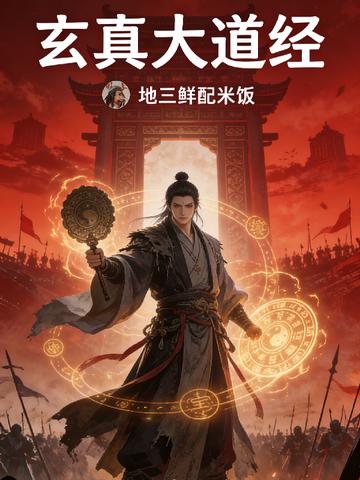
The content of the novel is based on Eastern fantasy. Take the historical background of the Five Chaos in the Southern and Northern Dynasties. What shocked me was this sentence: Heaven and earth are closed, and the laws are incomplete. If you want to seek the great road, you can only accumulate merit and make up for the heaven! The protagonist has completed the transformation from the small self to the big self. Taking it as his own duty to save the people of the world, he assisted Yang Jian to unify the troubled times. [Like][Like][Like]
A very good historical cultivation novel that integrates characters into history and takes you through the three hundred years of troubled times from the perspective of a small person. Friends who like history and traditional Taoist novels can read it.
This is a work that embeds a grand fairy tale into the folds of real history. It breaks away from the narrative inertia of the traditional fairy tale of "personal ascension" and disassembles the ultimate proposition of "repairing the sky" into concrete "rescues" in three hundred years of troubled times. The author uses the words "bloody world" to lay the most solid foundation for the story. The crazy mother who exchanged her children for food, and the Hu chieftain who drank from his skull. These details with historical weight are not used as backgrounds, but as the "fire of karma" that the protagonist Li Xuanxin must face on his way to spiritual practice.
It breaks away from the traditional novels about cultivating immortals and deeply binds the protagonist Li Xuanxin's path of cultivation with real historical nodes such as the Yongjia Rebellion and the Yi Guan's Southern Crossing, so that "seeking the Tao" and "saving the nation" are closely intertwined. It reads with both the elegance of an immortal and the weight of history. Li Xuanxin's growth line is clear and heavy from an abandoned baby in Zhongnan Mountain, to a monk under the throne of Qingxuzi, and then to a guardian stepping into the bloody world. Master's prophecy of "Only accumulate merit and replenish the sky" made his practice no longer focus on taking care of himself alone, but rather protect all living beings with a Taoist heart. He saves scholars, hides scriptures, and helps Yang Jian. Every choice he makes is asking about the true meaning of "the great road" - not to ascend to immortality, but to keep the fire of civilization and the glimmer of humanity in the chaotic world where the way of heaven is incomplete. The most moving thing about the novel is the depiction of all living beings in troubled times: the mother who exchanged her children for food, the Hu chieftain who drank wine with human skulls, the scholars who traveled south in attire... These details make the cruelty of the "Five Husbands" no longer a cold historical term, but a human purgatory that the protagonist must face head-on. This writing method of "writing history with immortals" not only broadens the boundaries of Eastern immortals, but also makes the protagonist's path of "merits" more weighty. If you are tired of the same boring articles about cultivating immortals, you might as well open this book and see how Li Xuanxin repairs the sky with his Taoist heart and protects his family and country with his blood on the road of spiritual cultivation by sailing against the current.
It's a good-looking, quite special cultivation novel, with great simplicity. The writing style is delicate and smooth, the story plot is rich and vivid, and the characters are vividly portrayed. Please wait for further updates [Chigua][Chigua][Chigua]
The writing style of this book abandons the accumulation of flashy rhetoric and pursues a kind of simplicity and purity that "turns the splendid to the ordinary". It does not win with the weirdness of the plot, but with the profound and moving artistic conception. When reading, readers can not only feel the ups and downs of the story, but also appreciate an aesthetic conception and spiritual tolerance unique to Eastern culture. A five-star masterpiece, worth reading carefully! !
This is the first time I read a historical cultivation novel. This kind of subject matter is quite novel. There are no traditional fairy tale routines. The author introduces some real historical nodes and incorporates them. I feel that it is very immersive and I have to admire the author's writing skills.
This novel is as beautiful as poetry and painting. The opening chapter is gripping and the characters are vivid. The story has a grand scene. Li Xuanxin, an abandoned baby in Zhongnan Mountain, tramples on the bloody world during the Yongjia Rebellion, and uses his merits to make up for the defects in the way of heaven. After three hundred years of saving the common people and protecting the cultural heritage, he finally used his ascension as a watchman to write about cultivating immortality as the star of civilization. It is profound and heart-breaking! Highly recommended.
This book breaks the clichés of cultivating immortals and takes the troubled times of the Southern and Northern Dynasties as the background. The protagonist makes up for the sky with his merits. From an ordinary person who seeks enlightenment to a strong man who protects the common people, the pattern is full, passionate and thick, and it is refreshing and not cliché [Like][Like][Like]
This is an excellent work that combines the practice of immortals with the three hundred years of troubled times in China. The protagonist proves the Tao through merit and virtue and protects the long history of civilization. The layout is grand and full of warmth. Five-star recommendation!
Li Xuanxin's Three Hundred Years tells us: The real immortal is the fire that keeps civilization alive in troubled times, the light that ignites hope in the darkness, and the character that still chooses to protect the common people despite knowing it is harming oneself.
Abandoned Infants in Zhongnan Mountain [laughs] Xiu Xuanzhen Avenue [Like] A very good setting [Chigua] The author's writing style is smooth, the narrative style is unique, the characters are delicately portrayed, and the moves are varied and gorgeous [Like] It is worth recommending with five stars [laughs]
The theme of the story is novel, the plot is compact and not sloppy, the author is very imaginative, and the plot is very creative. It gives people a sense of painting and is very attractive. The protagonist's character is likeable, the plot advances layer by layer, and the twists and turns are surprising. Highly recommended!
Full of Taoism! The system of cultivation is rigorous and complete, the artistic conception of Xuanzhen Dao is far-reaching, the protagonist's enlightenment and practice are solid step by step, the plot is atmospheric and not watery, the more you read, the more interesting it becomes. It is a sincere work among Eastern fantasy cultivation novels!
Xuanyuan's Qi Dao penetrates the Hongmeng, he is quiet and inactive, and he is in the center. He refines the spirit and combines the Dao with all transformations and returns to the sect. Good!
A unique alternative to cultivating immortals, integrating three hundred years of history of the Southern and Northern Dynasties, and advancing layer by layer. It is an imaginative book about the world of immortals, and it is worth reading [Adore][Adore]
Yes, yes, it is a good book and the plot is quite interesting.
This is a novel about immortality with a historical background. The protagonist Li Xuanxin, under the teachings of his master, Taoist Qingxu, accumulates great merits in order to save the people's livelihood under the iron heel. In the author's writing, we seem to see the era when the people were in dire straits, the figures of the soldiers fighting passionately, and the protagonist's mental journey, the moment when 300 finally became a great hero and flew away. Beautiful, recommended!
Those who like to read cultivation novels are in luck. This is really a rare classic work with rich content, compact plot and very personal characters. Support.
A very exciting novel about cultivating immortals. The spiritual energy of heaven and earth is exhausted. Li Xuanxin, who was born with Taoism, and Juxia Feisheng are very good reading experiences. Recommended The author's writing style is smooth and delicate, and the characters are vividly drawn. It is a rare novel. Follow up
The characters are vivid, the images are vivid, and there is a sense of simplicity and simplicity. It is particularly touching and highly recommended.