If you are not a self-disciplined person, you can practice from these books, even if you read one page every day, stick to it and you will be more dazzling today than you were yesterday! If you need other books, you can go to my bookshelf to have a look and pick the books you like. The book atmosphere is very wide, you can find what you like.
After reading the first and second books, especially the second one, your self-discipline will be at least temporarily improved. In the third book, starting from chapter 69, your self-discipline will be consolidated.
The six levels of stock trading are like the six levels of stairs that people climb up and down in the world. Each layer contains different understandings of "market" and "self". Only at the end of the climb do you understand: the so-called rank is never a medal for defeating the market, but a clear understanding that "driving" and "walking" are the same thing. 1. Gambler's mood: step on the accelerator when the light turns green. When they first enter the market, everyone is like a novice touching the steering wheel for the first time. When the K line is red, my heart beats faster, when it is green, my fists are clenched, I want to chase when it rises, and I want to carry it when it falls - I only see "you can make money when the green light is on", regardless of whether the front is a cliff or a crossroads. The rise is due to luck, and the fall is attributed to the unfairness of the market. The emotions are like a roller coaster, and the account is like a fallen leaf blown by the strong wind. This is very similar to the first time you encounter temptation in life: you will be jealous when you see others making quick money, rush forward when you hear the "wind", regard chance as inevitable, and regard luck as ability. The "red" at this time is ecstasy, and the "green" is despair, but I don't understand: the traffic lights never let you bet on the direction, but let you see the road clearly under your feet. 2. Technical prison: Breaking through the fog with a map. Later, I started to learn MACD and KDJ, draw trend lines, and calculate support levels, thinking that I had mastered the "password". The K-line pattern has become a dogma, and the indicator deviation has become an edict. If it rises above the moving average, it is called "takeoff", and if it falls below the support, it is called "crash." But the market did not follow the script: it was obvious that the golden cross should rise, but it fell like a dog; it was obvious that it should run after breaking the position, but it rebounded and rose. This is very similar to the obsession I had when I was young: I thought that if I memorized the "successful learning formula", I would be able to pass the level, and I thought that if I did things according to the "standard answers", I would not go wrong. We regard technology as a cage and laws as shackles, but we forget: the map shows the road in the past, and you have to open your eyes to see the fog of the present. 3. Tactical strategy: Learn to look at rearview mirrors and reflectors. After suffering several losses, I finally understood that "relying on indicators alone is not enough." Start learning position management: dare to reduce your position when it goes up, dare to cover your position when it goes down; learn to take profit and stop loss: leave when you reach the target, and withdraw when the bottom line is broken; learn to watch the sector rotation: follow where the funds are flowing. It's like an experienced driver who has learned to "turn on the lights, change lanes and look in the mirror" and no longer rush forward alone. This is exactly the stage in life where you know how to "plan before you act": you no longer just focus on "what I want", but start to think about "what I can bear"; you no longer do things based on passion, and start to leave three points of leeway. Tactics is not about calculation, it is about knowing "when to step on the accelerator and when to step on the brake." 4. Above discipline: When the red light is on, your foot must be on the brake. After you have mastered the tactics, you find that the most difficult thing is "doing it". You have clearly set a stop loss line, but when it falls below, you always comfort yourself by "waiting a little longer"; you clearly plan to reduce your position, but when it rises, you are greedy for "making more money". So I finally understood: no matter how good the strategy is, it can't beat the "clumsy hands"; discipline is the seat belt on the steering wheel - not a restraint, but a life-saving thing. This is very similar to the self-discipline of middle-aged people: if you know that staying up late will harm your body, go to bed on time; if you know that impulsiveness will cause trouble, take a deep breath first. Discipline is not asceticism. It is understanding after countless "thinking about making exceptions" that holding the bottom line is more important than seizing opportunities. 5. Probability Master: Know which road is less likely to be stuck in traffic. After passing the discipline barrier, you finally understand the essence of the market: there is no "certain rise", only "high probability of rise"; there is no "absolute right", only "risk-return ratio is cost-effective". We no longer pursue "being right every time" but accept "if we are right six times out of ten, we will win"; we no longer dwell on "why we were wrong this time" but instead calculate "whether the winning rate is enough in the long run." This is precisely the transparency of seeing through the world: understanding that there are no "sure-win games" in life, only "bets worth betting on". Some people are successful at a young age, while others are late bloomers. It's not who is luckier, but who knows better about "walking slowly on the path that is most likely to be correct." 6. The Law of Enlightenment: The car is a tool and the road is a mirror. When I climbed to this level, I suddenly discovered that it is not important to solve the problem, nor is it important to catch the daily limit. When the K line is red, it is not an "opportunity", but "someone is partying, and risks are gathering." When it is green, it is not a "disaster," but "someone is panicking, and opportunities are settling." As the saying goes, "stop when the light is red, go when the light is green." Red and green are neither good nor bad. It is the human heart that labels them. Looking at the market at this time is like looking at a mirror: when it rises, it reflects greed, when it falls, it reflects fear; when it makes money, it reflects luck, and when it loses, it reflects unwillingness. And I am just the driver holding the steering wheel - the car is a tool for making money, and the road is a place of spiritual practice. It doesn't matter where I drive, the important thing is "the car didn't turn over, but the person is still there." In the final analysis, the six levels of stock trading are the six levels of life practice: from being led by emotions, to being controlled by rules, and finally to following the rules. The market is never a casino, it is a school - it does not teach you how to make money, it only teaches you how to be a human being: not greedy, because you have seen too many "people who make quick money, they fall even worse"; not panic, because you understand that "all fluctuations are normal"; not stubborn, because you understand that "whether it is red or green, the road is always there, the important thing is whether you can keep going." Where is stock trading? It is clearly about learning to hold the steering wheel firmly at the traffic lights of life.
 After Winning a Lottery of 100 Million, I Became the Savior of the Company
2.3kReads5.9Score134Shelves
After Winning a Lottery of 100 Million, I Became the Savior of the Company
2.3kReads5.9Score134Shelves
 I Will Punish the Evil Neighbor
3.4kReads9.5Score—Shelves
I Will Punish the Evil Neighbor
3.4kReads9.5Score—Shelves
 Good Boss Chinese
496Reads8.9Score—Shelves
Good Boss Chinese
496Reads8.9Score—Shelves
 After My Husband Came Back from a Business Trip in Chengdu, I Posted a Short Video That Went Viral.
22.2kReads9.6Score123Shelves
After My Husband Came Back from a Business Trip in Chengdu, I Posted a Short Video That Went Viral.
22.2kReads9.6Score123Shelves
 After I Cut My Salary and Lost Everything, My Boss Knelt Down and Begged Me for Forgiveness Overnight.
219.9kReads5.8Score1.1kShelves
After I Cut My Salary and Lost Everything, My Boss Knelt Down and Begged Me for Forgiveness Overnight.
219.9kReads5.8Score1.1kShelves
 After a Flash Marriage, I Became a Rich Woman and Didn't Have to Work the Night Shift.
16.1kReads9.7Score136Shelves
After a Flash Marriage, I Became a Rich Woman and Didn't Have to Work the Night Shift.
16.1kReads9.7Score136Shelves
 After My Husband Cheated on Me, I Bankrupted the Company
6.4kReads9.4Score—Shelves
After My Husband Cheated on Me, I Bankrupted the Company
6.4kReads9.4Score—Shelves
 After I Was Demoted and Failed, My Idiot Leader Begged Me for a Promotion.
3kReads9.4Score—Shelves
After I Was Demoted and Failed, My Idiot Leader Begged Me for a Promotion.
3kReads9.4Score—Shelves
 Perfect AA System
1.6kReads9.3Score—Shelves
Perfect AA System
1.6kReads9.3Score—Shelves
 My Husband, Who Is in a Vegetative State, Was Awakened by My Excitement
4kReads9.2Score—Shelves
My Husband, Who Is in a Vegetative State, Was Awakened by My Excitement
4kReads9.2Score—Shelves
 The Mother-In-Law Who Did Not Listen to the Advice Returned to the West
1.6kReads9.0Score—Shelves
The Mother-In-Law Who Did Not Listen to the Advice Returned to the West
1.6kReads9.0Score—Shelves
 Test Room Maid
1.4kReads9.0Score—Shelves
Test Room Maid
1.4kReads9.0Score—Shelves
 During Confinement, I Drove Away My Mother-In-Law
756Reads9.0Score—Shelves
During Confinement, I Drove Away My Mother-In-Law
756Reads9.0Score—Shelves
 Landscape Travel Notes
864Reads8.2Score116Shelves
Landscape Travel Notes
864Reads8.2Score116Shelves
 How to Make Money
35Reads5.8Score—Shelves
How to Make Money
35Reads5.8Score—Shelves
 Common Knowledge of Ancient Chinese Culture
—Reads5.8Score—Shelves
Common Knowledge of Ancient Chinese Culture
—Reads5.8Score—Shelves
 I Can Only Become Stronger with Self-Discipline
30Reads—Score—Shelves
I Can Only Become Stronger with Self-Discipline
30Reads—Score—Shelves
 After Binding the Learning System, I Won an Iron Rice Bowl
3.1kReads9.0Score356Shelves
After Binding the Learning System, I Won an Iron Rice Bowl
3.1kReads9.0Score356Shelves
 A Must-Know Guide to Changing Your Life Every Day
28Reads5.8Score—Shelves
A Must-Know Guide to Changing Your Life Every Day
28Reads5.8Score—Shelves
 Learn Feng Shui from Third Grandpa
22.1kReads8.8Score2.3kShelves
Learn Feng Shui from Third Grandpa
22.1kReads8.8Score2.3kShelves
 End of Ten Days
2MReads9.9Score269.2kShelves
End of Ten Days
2MReads9.9Score269.2kShelves
 Become Stronger with Self-Discipline Every Day
79Reads—Score—Shelves
Become Stronger with Self-Discipline Every Day
79Reads—Score—Shelves
 After Three Years of Self-Discipline, the Start Shocked the Whole Family of My Online Dating Partner
11kReads8.3Score1.2kShelves
After Three Years of Self-Discipline, the Start Shocked the Whole Family of My Online Dating Partner
11kReads8.3Score1.2kShelves
 Seeing Through the Essence Is Not Complicated
10Reads5.8Score—Shelves
Seeing Through the Essence Is Not Complicated
10Reads5.8Score—Shelves
 Ternary Consciousness and Memory Mapping Principle
1.4kReads9.2Score510Shelves
Ternary Consciousness and Memory Mapping Principle
1.4kReads9.2Score510Shelves
 Questions and Answers About the Spirit World
398Reads5.8Score—Shelves
Questions and Answers About the Spirit World
398Reads5.8Score—Shelves
 A Guide to Human Enlightenment and Becoming an Immortal
1.1kReads5.8Score138Shelves
A Guide to Human Enlightenment and Becoming an Immortal
1.1kReads5.8Score138Shelves
 The Way Forward for Doctors
34Reads5.8Score—Shelves
The Way Forward for Doctors
34Reads5.8Score—Shelves
 Secret Words to Awaken the World: Travels of the Spirit
44Reads5.8Score—Shelves
Secret Words to Awaken the World: Travels of the Spirit
44Reads5.8Score—Shelves
 The Battle of Changjin Lake: the Turning Point of the Korean War
542Reads9.4Score—Shelves
The Battle of Changjin Lake: the Turning Point of the Korean War
542Reads9.4Score—Shelves
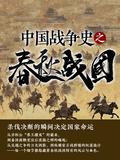 Chinese War History: Spring and Autumn and Warring States Period
89Reads9.2Score—Shelves
Chinese War History: Spring and Autumn and Warring States Period
89Reads9.2Score—Shelves
 The Secret History of the Four Beauties
201Reads9.2Score—Shelves
The Secret History of the Four Beauties
201Reads9.2Score—Shelves
 This Book on Chinese History Is Enough
56Reads8.3Score—Shelves
This Book on Chinese History Is Enough
56Reads8.3Score—Shelves
 King of the Battlefield, the Key to Victory in the Cold Weapon Era
27Reads8.1Score—Shelves
King of the Battlefield, the Key to Victory in the Cold Weapon Era
27Reads8.1Score—Shelves
 The Truth Covered up by the Japanese Army: the Sinking of the Lisbon Maru
114Reads8.7Score—Shelves
The Truth Covered up by the Japanese Army: the Sinking of the Lisbon Maru
114Reads8.7Score—Shelves
 Social Arts of the Ten Gods
53Reads5.8Score—Shelves
Social Arts of the Ten Gods
53Reads5.8Score—Shelves
 Taoist Medical Clinic Notes
188.8kReads9.5Score53.4kShelves
Taoist Medical Clinic Notes
188.8kReads9.5Score53.4kShelves
 The Path to Advanced Leeks
136Reads5.8Score—Shelves
The Path to Advanced Leeks
136Reads5.8Score—Shelves
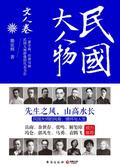 Great Figures of the Republic of China·literati Volume
65Reads9.4Score—Shelves
Great Figures of the Republic of China·literati Volume
65Reads9.4Score—Shelves
 Masters in the Wilderness: a Century of Chinese Archeology
94Reads9.3Score—Shelves
Masters in the Wilderness: a Century of Chinese Archeology
94Reads9.3Score—Shelves
 The True History of Zen
19Reads8.2Score—Shelves
The True History of Zen
19Reads8.2Score—Shelves
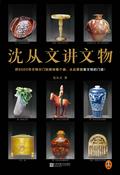 Shen Congwen Talks About Cultural Relics
102Reads9.2Score—Shelves
Shen Congwen Talks About Cultural Relics
102Reads9.2Score—Shelves
 Kodansha·china's History
238Reads9.3Score—Shelves
Kodansha·china's History
238Reads9.3Score—Shelves
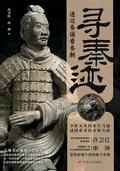 Looking for Traces of the Qin Dynasty: Looking at the Qin Dynasty Through the Qin Terracotta Warriors
14Reads8.4Score—Shelves
Looking for Traces of the Qin Dynasty: Looking at the Qin Dynasty Through the Qin Terracotta Warriors
14Reads8.4Score—Shelves
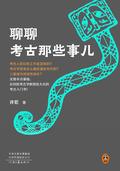 Let's Talk About Archeology
88Reads7.9Score—Shelves
Let's Talk About Archeology
88Reads7.9Score—Shelves
 Traceability to China
15Reads8.8Score—Shelves
Traceability to China
15Reads8.8Score—Shelves
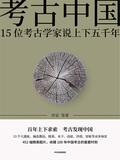 Archeology of China - 15 Archaeologists Say It Lasted for Five Thousand Years
45Reads9.2Score—Shelves
Archeology of China - 15 Archaeologists Say It Lasted for Five Thousand Years
45Reads9.2Score—Shelves
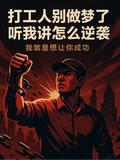 Workers, Stop Dreaming, Listen to Me and Tell You How to Counterattack
107Reads5.8Score—Shelves
Workers, Stop Dreaming, Listen to Me and Tell You How to Counterattack
107Reads5.8Score—Shelves
 Meet an Ancient Person Every Day
938Reads5.8Score152Shelves
Meet an Ancient Person Every Day
938Reads5.8Score152Shelves
 Secret Decoding
4Reads5.8Score—Shelves
Secret Decoding
4Reads5.8Score—Shelves