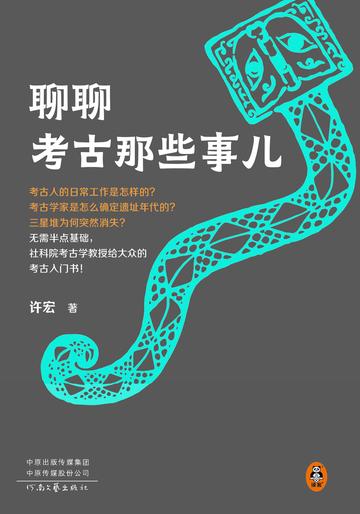
What is the daily life of an archaeologist?
Often disgraced, occasionally earth-shattering.
The archaeological team members made up a jingle to joke with themselves: "From a distance, they look like refugees, but up close, they look like beggars. Upon closer inspection, they are from the Academy of Social Sciences, and it turns out they are engaged in cultural relic investigation and exploration." Archaeologists care about the daily lives of ordinary people, and some details of their lives, such as what they eat, what they use, and what they throw away. In a sense, archeology is a science about garbage. Our excavation objects are often ruins and garbage dumps, but we can find many treasures from them.
What is the use of archeology?
Human history is at least two to three million years old. If these two to three million years are assumed to be 24 hours, then we will not enter written history until after 11:57 in the middle of the night. As for the long history of human development beyond this, if we want to understand its process, restore its trajectory, and answer questions such as who we are and how we came to be, we can only rely on archeology.
Reader comments
The author's subjectivity is too high and contains too much personal information.
I originally wanted to take the essence and discard the dross, and just focus on the author's academic research results. As a result, the author has been sparing no effort to export historical nihilism, and every few paragraphs he makes a spiel about the claim that Chinese history comes from the West. It was unbearable.
The author claims that history must be objective and based on facts, but in his heart he cannot erase his flattery towards the West. As long as the research results of Chinese scholars are questioned in every possible way, as long as the findings of Western scholars do not need to distinguish the authenticity, they can be directly regarded as unquestionable historical facts. No wonder the author mentioned in the article that the word "public knowledge" has been stigmatized, because it was people like the author who stigmatized it.
Three stars to the author for his contribution to archeology and the scant amount of archaeological knowledge in the text.
This book gave me a new understanding of archeology! It turns out that archeology is not just about digging for treasures, but also exploring human history from garbage! The book also mentions the interesting daily life of the archaeological team. As the author said, they look like refugees from a distance and beggars from up close, but they can unearth amazing treasures from the ruins. Moreover, I was deeply impressed by the composition of the archaeological team in the book. It turns out that archeology requires the joint efforts of people from different majors. I really recommend this book, it will make you curious about archeology! 😃


The author's subjectivity is too high and contains too much personal information. I originally wanted to take the essence and discard the dross, and just focus on the author's academic research results. As a result, the author has been sparing no effort to export historical nihilism, and every few paragraphs he makes a spiel about the claim that Chinese history comes from the West. It was unbearable. The author claims that history must be objective and based on facts, but in his heart he cannot erase his flattery towards the West. As long as the research results of Chinese scholars are questioned in every possible way, as long as the findings of Western scholars do not need to distinguish the authenticity, they can be directly regarded as unquestionable historical facts. No wonder the author mentioned in the article that the word "public knowledge" has been stigmatized, because it was people like the author who stigmatized it. Three stars to the author for his contribution to archeology and the scant amount of archaeological knowledge in the text.
This book gave me a new understanding of archeology! It turns out that archeology is not just about digging for treasures, but also exploring human history from garbage! The book also mentions the interesting daily life of the archaeological team. As the author said, they look like refugees from a distance and beggars from up close, but they can unearth amazing treasures from the ruins. Moreover, I was deeply impressed by the composition of the archaeological team in the book. It turns out that archeology requires the joint efforts of people from different majors. I really recommend this book, it will make you curious about archeology! 😃
Great, recommended
Great writing.