I would like to read a book similar to "Word, Excel, and PPT Office Applications from Beginner to Master". I want to learn some skills to make money, but my wallet is a bit tight. I hope you can recommend some free skills learning materials. They are good for everything, including handicrafts and making.
Lin Feng, a young man who graduated from a major in traditional Chinese medicine, took over the "Feng Shui Medical Clinic" left by his grandfather. He had a solid theory of traditional Chinese medicine and a good knowledge of Feng Shui techniques. He thought he would just stick to the dilapidated shop and drink from the northwest wind, but unexpectedly, he made a name for himself by relying on the "Feng Shui acupuncture technique" passed down from his ancestors. He distinguishes Feng Shui and unblocks meridians, which not only treats the body but also changes fortune; he uses traditional Chinese medicine to consolidate the foundation and Feng Shui to regulate qi, which can forcefully bring out a glimmer of vitality. The human body is regarded as a small world, and Feng Shui is used to adjust the universe. Traditional Chinese medicine diagnoses pulse and disease, and Feng Shui eliminates disasters. In a dilapidated medical clinic, a young doctor treats the world's difficult and complicated diseases and solves the world's Feng Shui dilemma using "side theories" that are disdained by Chinese and Western medicine.
From the "imperfection" of a piece of jade, you can see the truth about changing yourself. In front of the exhibition stand of Weiwei Creative, there are always people stopping at the silver bracelet wrapped in pomegranate wood - the hammer marks on the silver bracelet are crooked, but the knots on the wood are carved into small pomegranates. Bai Wei always likes to point at the knot and say, "The carpenter wanted to smooth it out. I remembered Master Duan from Ruili who said that the grains on the stone and the scars on the wood are all traces of the earth's veins and cannot be changed. They have to be followed." What is hidden in these words is actually the truth that adults should understand best: trying to change "imperfect" people and things is mostly asking for trouble; but learning to adjust your vision and mentality and turning "defects" into "unique" is truly smart. When Bai Wei first arrived in Ruili, she didn't understand this. At the age of 20, she squatted in front of Master Duan's jade stall with two thousand yuan in her pocket, hoping to learn how to "turn ugly jade into beautiful ones." When she polished jade for the first time, she stared at the water line on the material and was confused - that translucent line was a "flaw" in her eyes, and she had to polish it off before she was willing to accept it. As a result, I couldn't control my strength, and a corner of the material was missing. She squatted in front of the store and cried, feeling that she had ruined a good jade. Master Duan did not scold her. He picked up the material with the missing corner and used a carving knife to draw a few lines along the waterline: "Look, how much does this waterline look like a tributary of the Ruili River? The missing corner is just right to carve a Dai girl washing clothes. Doesn't it have more story than a bare stone?" That evening, the master and the apprentice sat by the river. Looking at the sunset, Master Duan added: "Which piece of jade in Ruili has no lines? The water from the Nu River and the mines from Pagan have seeped into the stone. If you insist on grinding it off, the stone will become dead. The same goes for people. How can there be no 'water line'? If you want to change it, you might as well change the way you look at it." These words dropped like a pebble in Bai Wei's heart. In the next five years, she no longer focused on the "shortcomings" of jade: she carved the cracked material along the cracks to form a mountain stream; she made the leftover cotton wool into clouds; even the brown-grained jadeite that Master Duan passed on to her before his death, she did not think about covering the lines - the lines resembled the turns of the Lancang River, so she carved a "Return to the Boat on the River" sign based on the lines, which later became a collection that old jade dealers were eager to see. The calluses on her hands were three layers thick, and a box full of "problematic jade materials" she had saved. But these "waste stones" in the eyes of others came to life in her hands. It's not that jade has become perfect, it's that she finally learned to "not compete with jade, but with herself" - no longer obsessed with "changing jade's shortcomings", but thinking about "how to use her own craftsmanship to make the shortcomings special." Later, she went to Pengcheng to learn how to make celadon, but she once again fell into the trap of "wanting to change." Pengcheng porcelain is famous for its "splitting". The glaze will crack into fine lines after cooling, but Bai Wei is always afraid of uneven lines and secretly adjusts the temperature in the kiln. As a result, all the porcelain in the kiln was completely cracked, some cracked into pieces, and some had crooked lines that looked like tangles. Master Wang did not blame her and took her to look at the old porcelain pieces piled beside the kiln: "Look at these decades-old porcelain. The pieces are thick or thin. Some are like the ripples of Yunlong Lake, and some are like the texture of old branches. How can they be exactly the same? When making porcelain, you must recognize the 'temper of fire'. If the fire wants to crack, just follow it. If you insist on forcing the fire to crack according to your ideas, can the porcelain not break?" Bai Wei followed Master Wang around Yunlong Lake for half a month. Watching the lake water pat the gravel on the shore, she suddenly understood: Whether it is jade from Ruili or porcelain from Pengcheng, "imperfection" has never been the enemy. The real problem is that she always thinks about "making things perfect according to her own standards" instead of "adjusting her own practices to adapt to the true nature of things." Just like in life, some people always find it annoying that their partner "doesn't fold the quilt when he comes home" or "complains while eating", and insists on forcing the other person to change, which ends up causing a lot of noise. But if you change the angle and do the folding of the quilt on your own, and take the sound of chirping as a sign of "enjoying good food", life will go smoothly. Later, when she returned to Zaozhuang to work in cultural and creative industries, Bai Wei fully understood this principle. The company makes canal-themed ship models. Designers all pursue "symmetry and smoothness," but she prefers local old pomegranate wood. She doesn't remove any knots or insect holes on the wood, and uses silver thread to embed the canal route along the wood grain. The client didn't understand it at first and thought it was "too rough". She explained: "This knot is like a shoal on a canal, and the bug eyes are like the lights of passing ships. The real memory of the canal is not the perfect route drawn, but the reality with traces of wind and waves." Those ship models later became exhibits at the Canal Museum. A visitor touched the knots on the wood and said, "This is just like the canal boats I saw when I was a child. How can there be wood without any scars?" Bai Wei said that at that moment, she was very clear: it was not her craftsmanship that was so good, but that she finally gave up her obsession with "changing imperfections" and learned to "change her attitude towards imperfections." Later, she founded Weiwei Cultural Creation and moved jade from Ruili, porcelain from Pengcheng, and pomegranate wood from Zaozhuang into her studio. She ground the celadon pieces broken in the Pengcheng kiln into small pendants and strung them on silver chains with the text "Broken porcelain also has light." The school asked her to make a graduation gift, and she used pomegranate wood as a bookmark. Each piece had natural wood grain and engraved "The 'grains' on your body are all seals of growth." Someone asked her, what is the most important thing about doing cultural and creative work? She smiled and said, "Don't always think about making things 'perfect', and don't always focus on other people's 'flaws'. Stupid people will find it ugly when they see the waterline of jade, scold them when they see cracks on porcelain, and want to change people's faults when they see them. But wise people will think, can the waterline become a landscape? Can the cracks become a feature? Can you understand other people's habits more?" Just like the piece of wood with insect holes that Bai Wei picked up in the pomegranate garden last time, the sunlight fell on the insect holes and shone with tiny lights. She recalled what Master Duan said, "Stones have souls, wood has hearts, and they are all hidden in imperfections." She suddenly felt that this life is actually no different from carving jade, burning porcelain, and doing wood work - we always want to change the "shortcomings" of others and the "imperfections" of things, but in the end we realize that the one who needs to change the most is ourselves: change our own obsessions, change our own vision, change our own views on "shortcomings". Those who try to change others will often be beaten to death by reality; only those who are willing to change themselves can find unique light in imperfection. After all, the texture of jade cannot be changed, and human temperament cannot be changed, but we can always have the final say in how we view the world and how we treat others. Just like the piece of jade in Bai Wei's hand, the original waterline has become the scenery, and the original cotton wool has become the clouds and mist - it is not the jade that has changed, but she has changed; it is not that the world has become perfect, it is that she has learned to live out her own warmth in imperfection.
The recipes in it are detailed and easy to understand. I especially like the part in the book that teaches how to make braised chicken feet. It looks delicious! Moreover, after learning how to make these side dishes to go with wine, I can also show off my skills at family gatherings. This book makes me more interested in cooking and makes me more willing to cook for my family. I think it is very meaningful!
The wisdom of Yi Xue is intertwined with the plot of the novel, embarking on a thousand-year journey of knowledge. The fate of characters and the transition of scenes contain the principles of Yin Yang and Five Elements. Follow the protagonist to solve puzzles, understand the logic and mysteries of Yi Xue, build a knowledge system, and enjoy the fun of reading and cultural wisdom.
Recommend "The End of a Female President", workplace writing, high-level strategy. It writes about how female bank president Ma Yuquan went from being an aspiring elite woman with great ambitions, bright eyes, and determined to serve the country through finance. In the face of power and bad capital, she was trapped step by step and lost herself, thus embarking on a dead end in life. The novel has a fast pace, fluent writing, and rich plots. There are many scenes in which the best friend competes for her boyfriend, and the single and elderly heroine secretly gives birth to a child and designs a legal adoption.
In the turbulent waves of the capital market, how many people have dreams of wealth, but are beaten black and blue by the ruthless reality, are heavily in debt, and even go to a dead end. The author once witnessed a powerful investment tycoon who had been in the stock market and futures market for many years. He skillfully avoided risks time and time again and made a lot of money. However, a short-term speculation operation caused him to encounter Waterloo, and his funds shrank significantly in an instant. This painful experience was like a heavy hammer that woke him up. In an instant, he no longer hesitated and decisively bid farewell to the battlefield of short-term speculation, which was full of risks and excitement, and turned around to join the camp of long-term investment, seeking long-term and stable development. He was full of emotion and said with a long sigh: [In this unpredictable capital market, no one can tell whether they will make a profit or a loss as long as they have not completely withdrawn! Every man of the hour who was once revered as a "stock god" is fleeting like a shooting star, and quickly dims after his glory. In the end, not only does he lose all his money, he is even heavily in debt, and even worse, his wife and children are separated, and they are on the road to death. ] [As for Buffett, a legend in the investment community, his average annual return rate was only 20% before he ascended to the throne of the richest man; he did not pursue the myth of getting rich overnight, but relied on the powerful power of compound interest (that is, compound interest), which was hailed as the eighth wonder of the world by Einstein; adhering to the steady and steady investment philosophy, amidst the ups and downs of the market, step by step, accumulated over time, and finally stood at the top of wealth. ] He paused for a moment, then said seriously: [Quit now and you will still make money. I am ready to switch to the path of long-term investment, use time to accumulate profits, and once again create my own investment myth. This book is based on a series of real stories in capital markets such as stocks and futures, peeling off the cocoons, analyzing layer by layer, and deeply exploring the underlying logic and laws behind the capital market; after countless analyzes and judgments, it only seeks to find the key to making profits without losing money in the capital market; I hope it can bring you a new perspective and help you move forward steadily. Starting from an ordinary ordinary person, working hard in the stock market full of risks and opportunities. They may not have a deep background or extraordinary talent, but with their passion for stock trading and unremitting efforts, they have gradually figured out an investment strategy that suits them. In this process, they have experienced countless ups and downs, and sometimes suffered huge losses due to a wrong decision; but they are never discouraged and always firmly believe that through their wisdom and persistence, they will be able to succeed in the stock market. Finally, after a long period of accumulation and precipitation, they mastered the skills of stock trading, began to make steady profits, and gradually achieved the goal of supporting their families through stock trading. Not only that, they also skillfully used their wisdom to gradually get rid of their financial constraints and achieve financial freedom. When they achieve financial freedom through stocks, they can enjoy a comfortable and happy life with their families, whether it is food, travel, art or other hobbies. Such a life change is undoubtedly what many people dream of. However, achieving this goal is not easy and requires a lot of time, energy and patience. Dreams are the compass of life, guiding us in the direction forward. And struggle is the ladder to achieve our dreams. Every step of our efforts brings us closer to our goals. As long as you closely combine dreams with struggle and seize opportunities, you can create your own glory.
 Expression Management Failed
544Reads8.3Score—Shelves
Expression Management Failed
544Reads8.3Score—Shelves
 Shenhao: Brother Calls Me Daddy and Gets 10 Times Cash Back
—Reads5.8Score—Shelves
Shenhao: Brother Calls Me Daddy and Gets 10 Times Cash Back
—Reads5.8Score—Shelves
 White Tiger Tongyi
18Reads8.6Score—Shelves
White Tiger Tongyi
18Reads8.6Score—Shelves
 Several Years Have Passed and I Don't Know How the Flowers Have Faded.
98Reads8.5Score—Shelves
Several Years Have Passed and I Don't Know How the Flowers Have Faded.
98Reads8.5Score—Shelves
 Carrying a Sword to Survey the Sky
7Reads5.8Score—Shelves
Carrying a Sword to Survey the Sky
7Reads5.8Score—Shelves
 The Wife Who Returned Is Actually the Princess of the Beijing Circle
4.4kReads9.8Score100Shelves
The Wife Who Returned Is Actually the Princess of the Beijing Circle
4.4kReads9.8Score100Shelves
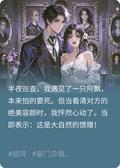 The Female Ghost Is so Beautiful, I Can't Hold Myself Back
1.4kReads9.8Score—Shelves
The Female Ghost Is so Beautiful, I Can't Hold Myself Back
1.4kReads9.8Score—Shelves
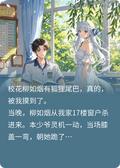 I Touched the School Belle's Fox Tail
745Reads9.8Score—Shelves
I Touched the School Belle's Fox Tail
745Reads9.8Score—Shelves
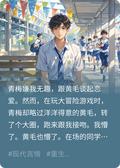 Qingmei Hates Me, but She Caught Me Kissing Me
2.4kReads9.8Score—Shelves
Qingmei Hates Me, but She Caught Me Kissing Me
2.4kReads9.8Score—Shelves
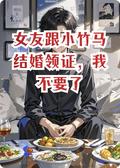 Girlfriend and Little Bamboo Horse Receive the Certificate
5.6kReads9.8Score—Shelves
Girlfriend and Little Bamboo Horse Receive the Certificate
5.6kReads9.8Score—Shelves
 On the Day of Their Remarriage, My Ex-Wife Almost Turned over the Table
17.7kReads9.8Score170Shelves
On the Day of Their Remarriage, My Ex-Wife Almost Turned over the Table
17.7kReads9.8Score170Shelves
 Feng Shui Medical Clinic
434Reads5.8Score102Shelves
Feng Shui Medical Clinic
434Reads5.8Score102Shelves
 Hengji Fengjie
12Reads5.8Score—Shelves
Hengji Fengjie
12Reads5.8Score—Shelves
 Hong Kong Comprehensive: Rebirth on a Rainy Night, Who Is in Control of Causeway Bay?
6.9kReads5.8Score303Shelves
Hong Kong Comprehensive: Rebirth on a Rainy Night, Who Is in Control of Causeway Bay?
6.9kReads5.8Score303Shelves
 Hong Kong Comprehensive: the Hero Has Arrived, Who Dares to Test His Edge?
4Reads5.8Score—Shelves
Hong Kong Comprehensive: the Hero Has Arrived, Who Dares to Test His Edge?
4Reads5.8Score—Shelves
 Hong Kong Comprehensive: Standing on Its Own at the Beginning, Overwhelming Saigon
550Reads5.5Score—Shelves
Hong Kong Comprehensive: Standing on Its Own at the Beginning, Overwhelming Saigon
550Reads5.5Score—Shelves
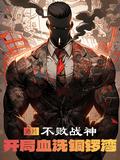 Hong Kong Movie: the Undefeated God of War Starts with a Bloodbath in Causeway Bay
240Reads5.6Score—Shelves
Hong Kong Movie: the Undefeated God of War Starts with a Bloodbath in Causeway Bay
240Reads5.6Score—Shelves
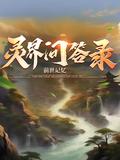 Questions and Answers About the Spirit World
398Reads5.8Score—Shelves
Questions and Answers About the Spirit World
398Reads5.8Score—Shelves
 The Way Forward for Doctors
34Reads5.8Score—Shelves
The Way Forward for Doctors
34Reads5.8Score—Shelves
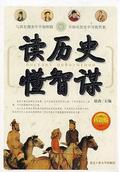 Read History to Understand Wisdom
8.7kReads9.5Score1.4kShelves
Read History to Understand Wisdom
8.7kReads9.5Score1.4kShelves
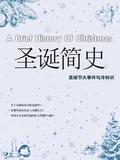 A Brief History of Christmas
5Reads9.1Score—Shelves
A Brief History of Christmas
5Reads9.1Score—Shelves
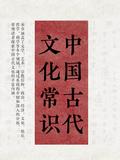 Common Knowledge of Ancient Chinese Culture
130Reads8.6Score—Shelves
Common Knowledge of Ancient Chinese Culture
130Reads8.6Score—Shelves
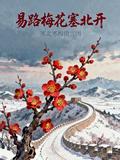 Yilu Plum Blossom Plug Opens in the North
3Reads5.8Score—Shelves
Yilu Plum Blossom Plug Opens in the North
3Reads5.8Score—Shelves
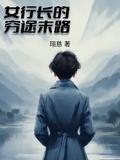 The End of the Road for a Female Bank President
859Reads9.3Score148Shelves
The End of the Road for a Female Bank President
859Reads9.3Score148Shelves
 Reborn Electrician: Start as a Project Assistant
1Reads5.8Score—Shelves
Reborn Electrician: Start as a Project Assistant
1Reads5.8Score—Shelves
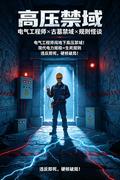 High Pressure Forbidden Area
1Reads5.8Score—Shelves
High Pressure Forbidden Area
1Reads5.8Score—Shelves
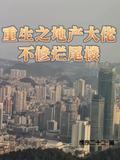 The Reborn Real Estate Boss Will Not Repair Unfinished Buildings
—Reads—Score—Shelves
The Reborn Real Estate Boss Will Not Repair Unfinished Buildings
—Reads—Score—Shelves
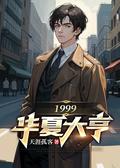 1999: Chinese Tycoon
1.5kReads—Score100Shelves
1999: Chinese Tycoon
1.5kReads—Score100Shelves
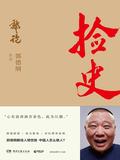 Pick up History
296Reads9.4Score—Shelves
Pick up History
296Reads9.4Score—Shelves
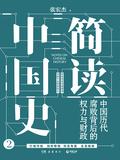 A Brief Reading of Chinese History. the Power and Finance Behind Corruption in China's Past Dynasties
160Reads9.1Score—Shelves
A Brief Reading of Chinese History. the Power and Finance Behind Corruption in China's Past Dynasties
160Reads9.1Score—Shelves
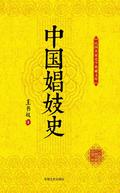 History of Prostitutes in China (Collection of Famous Historians in the Republic of China)
1.5kReads8.7Score243Shelves
History of Prostitutes in China (Collection of Famous Historians in the Republic of China)
1.5kReads8.7Score243Shelves
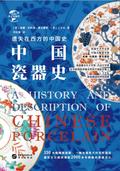 History of Chinese Porcelain
36Reads8.5Score—Shelves
History of Chinese Porcelain
36Reads8.5Score—Shelves
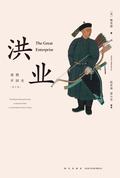 Hong Ye: History of the Founding of the Qing Dynasty
128Reads9.0Score—Shelves
Hong Ye: History of the Founding of the Qing Dynasty
128Reads9.0Score—Shelves
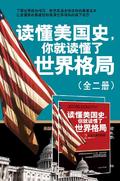 If You Understand American History, You Will Understand the World Pattern.
4.3kReads9.5Score1.1kShelves
If You Understand American History, You Will Understand the World Pattern.
4.3kReads9.5Score1.1kShelves
 Rebirth of Excellence
44.7kReads9.3Score5kShelves
Rebirth of Excellence
44.7kReads9.3Score5kShelves
 A History of the Three Kingdoms That Will Make You Addicted as Soon as You Read It
1.3kReads9.4Score133Shelves
A History of the Three Kingdoms That Will Make You Addicted as Soon as You Read It
1.3kReads9.4Score133Shelves
 Super Spy Martial Arts, Secret Agent Cultivating Immortality Is a Pleasure
11.9kReads9.6Score1.1kShelves
Super Spy Martial Arts, Secret Agent Cultivating Immortality Is a Pleasure
11.9kReads9.6Score1.1kShelves
 I Want to Jump Higher
46Reads5.8Score—Shelves
I Want to Jump Higher
46Reads5.8Score—Shelves
 Idiom Cognition Dictionary: Unlocking the Underlying Algorithm of Life
5Reads5.8Score—Shelves
Idiom Cognition Dictionary: Unlocking the Underlying Algorithm of Life
5Reads5.8Score—Shelves
 Alien Beast Disguise Day: Plan to Clear All Human Cognition
2Reads—Score—Shelves
Alien Beast Disguise Day: Plan to Clear All Human Cognition
2Reads—Score—Shelves
 Career Transition: Cognitive Methods from Rookie to Expert
1Reads5.8Score—Shelves
Career Transition: Cognitive Methods from Rookie to Expert
1Reads5.8Score—Shelves
 A Chinese Medicine Practitioner Who Can't Deliver Takeaways Is Not a Good Governor.
13Reads—Score—Shelves
A Chinese Medicine Practitioner Who Can't Deliver Takeaways Is Not a Good Governor.
13Reads—Score—Shelves
 The Path to Advanced Leeks
136Reads5.8Score—Shelves
The Path to Advanced Leeks
136Reads5.8Score—Shelves
 Stock Trading to Support Your Family
—Reads5.8Score—Shelves
Stock Trading to Support Your Family
—Reads5.8Score—Shelves
 From the Blank Paper in the Examination Room to the Secret Words of the School Beauty, the Fantasy Campus
—Reads—Score—Shelves
From the Blank Paper in the Examination Room to the Secret Words of the School Beauty, the Fantasy Campus
—Reads—Score—Shelves
 Romance of the Three Kingdoms
4.6kReads9.6Score650Shelves
Romance of the Three Kingdoms
4.6kReads9.6Score650Shelves
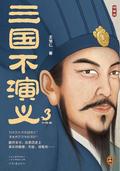 Romance of the Three Kingdoms 3
446Reads9.5Score106Shelves
Romance of the Three Kingdoms 3
446Reads9.5Score106Shelves
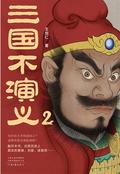 Romance of the Three Kingdoms 2
512Reads9.3Score115Shelves
Romance of the Three Kingdoms 2
512Reads9.3Score115Shelves
 Understand the History of China·three Kingdoms 2
28Reads8.3Score—Shelves
Understand the History of China·three Kingdoms 2
28Reads8.3Score—Shelves
 Understand the History of China·three Kingdoms
297Reads8.4Score—Shelves
Understand the History of China·three Kingdoms
297Reads8.4Score—Shelves