What about this one? Absolutely immortal! The further back you look, the more exciting it becomes! Every starting story and character appearance are interconnected by ultimate cause and effect. I would like to recommend to my family what I consider to be one of the most beautiful novels about another world. It has a high-octane plot, logical and harmonious ingenuity, and ultimate aesthetic skills. It is definitely the most worth-read novel this year.
The first one is really good. I only have more than 300 pictures left to read. Suddenly, the other ones are also quite good. You will know after reading them.
Honest recommendations, they are all good books that I have read. 1. A spy war story, a battle of wits like a chess player, and a sea of undercurrents. With golden fingers as the blade and caution as the shield, we work step by step on the edge of life and death, weaving a sophisticated web of victory. 2. The Three Kingdoms literature is unique and ingenious. It uses historical paradoxes to outline the transformation of the characters' beliefs, and the intertwining of emotion and power. It is both loyal to the historical context and gives new interpretations. The reconstruction of the Three Kingdoms is unique. 3. Science fiction, using hard-core technology as the skeleton, reconstructs the epic of civilization's survival. With the afterimage of the future in mind, he strives to turn back the tide of doomsday, overcome the interstellar confusion with wisdom, use his mortal body to inquire into the sky, and open the way to dawn for mankind in the vast sea of stars. 4. E-sports articles, in the blink of an eye, you are in the past life, your body is young, and e-sports is prosperous. With system assistance, you can win steadily, and the details of the operation are described in detail, perfectly interweaving the passion of e-sports and the rebirth of counterattack. 5. In a romantic novel, a CEO in a suit bravely enters the entertainment industry, and a well-known actress dominates the capital world. This collision between suits and spotlights tempers the sincerity of going both ways in the storm of public opinion. 6. In a historical novel, a man pretends to be Langya and walks alone in troubled times, just to survive. However, the situation is changing, and the wheel of history never stops. In order to survive, one has to make powerful moves. This imposter game, which began with survival, finally forged a wise man who transcended the times in the blood of the clan. 7. In a novel from another world, light and darkness confront each other, split into two, and the rules of survival are polished on the rotten stone of the lower world, and unwillingness is made into a sharp blade that reaches the sky and pierces the prison of the upper world. He has quick thinking, good strategies, and can dexterously break through crises at all levels. 8. A suspenseful novel, the bloody mystery of thirty years is like a mirror maze. Only by breaking through the lens of lies can one get a glimpse of the truth. In order to redress the injustice and avenge the injustice, he had no choice but to set his own example, play chess, and deal with dangers. One wrong step would lead to an abyss. Cthulhu recommends "Lord of Mysteries", but it's not available here. Other apocalyptic novels or similar novels can never meet what I want. Often there is a scary atmosphere at the beginning, but no matter the rhythm, plot or atmosphere, it no longer attracts me. After the protagonist is strong, he no longer has the fear of the unknown. If you read it again, it will be tasteless.
Personally, I think it's very good. You can give it a try. The first one needs no introduction and is relatively famous. The second one has a protagonist with a high IQ. It doesn't reduce the intelligence and the characters are quite flesh-and-blood. The third one is a survival story with very high quality.
The first book, a rare masterpiece of immortal literature and scenery, tells you what it means to cultivate immortality. The second book uses several chapters to criticize reality and also has its own unique content. The third book is not suitable for everyone, but it is also very good.
This book is a new work by platinum writer Wang Yu, who is known for his slow-burn narrative and has the charm of "The Story of a Mortal's Cultivation of Immortality". The setting is delicate and nuanced, demonstrating the author's ingenuity. The system construction is logically rigorous, well-founded and convincing. The profound knowledge and careful polishing revealed between the lines make people look forward to it. Overall, this book is worth reading carefully
A masterpiece, 550,000 people follow it online! [Top post][Top post] Liu Fusheng has lived in the shadow of the Zhang family all his life. Even though he became the secretary of the provincial party committee through his own efforts, he could not hold his head high in front of the Zhang family and suffered humiliation. In the end, as Zhang Zhengting's political bargaining chip and abandoned son, he carried a huge blame and died in depression, ending his precious life in his forties!
Story summary: The first book seems to be more enjoyable. The second book Revenge and Counterattack is very interesting until the end. The third book is very interesting in the early stage and a bit tired in the middle and late stages. The fourth one is also a counterattack.
There are various types, whether it is knives, small sweets, or 12 packs, you are guaranteed to be satisfied. Some types have been brushed more than once. The last sentence is that the fire will flow in July and the empire will be evergreen.
When history turns around and holds your hand - why you must read "From Ordinary to Legendary" Late at night, you close the last page of this book, and there is only one desk lamp on in the room. The strange thing is that you don't feel like you have finished reading a novel, but rather like saying goodbye to a relative and welcoming a promise. The lights of the city outside the window are as usual, but at this moment, every light seems to be telling something - about a certain trench eighty-one years ago, about the last gaze of a thirty-one-year-old officer, about everything that he never saw with his own eyes until his death, and that is now so commonplace that we almost ignore it. This is the first shock that "From Ordinary to Legendary" leaves every reader with: it makes history come out of textbooks and hold your hand. 1. It is not history, it is a heartbeat. We have read too many works on the theme of the Anti-Japanese War, and they often focus on the smoke and heroes. But this book is different - it writes backwards from the moment Fu Bikang died in 1943, about those left behind, about today eighty years later, and about how the spirit travels through time. You will follow Fu Nian'an, the daughter who has never seen her father, return to Qinglong Ridge at the age of eighty-seven. When you read that she spread the soil brought by the border soldiers in front of her father's monument, and when you read that the ninety-four-year-old man tremblingly returned a pocket watch that had stopped running for eighty years, you will suddenly understand: history has never passed, it just lives in a different way. The most tearful thing in the book is not the sacrifice itself, but the "later" after the sacrifice - · The hand of the pocket watch always stops at 10:17, which may be the moment of Fu Bikang's sacrifice · Fu Shuiheng wrote in his diary: "From today on, I will live as two people - myself, and your unfinished will" · Lin Wanning sewed a suicide note into her daughter's swaddling clothes: "May she inherit the aspirations of her parents" · In 2024, a 19-year-old border guard said: "We are today's 'Ghost Squad.'" These conversations spanning eighty years are connected by the author with extremely delicate strokes. You will see that heroes are not out-of-reach statues, but individual choices with warmth: the choice to carve a letter to the unborn child in the trench, the choice to continue to treat the wounded after the death of her husband, and the choice to spend his life fulfilling the promise of "passing on the pocket watch." 2. It answers the ultimate question: "Is it worth it?" The core question of the book is what Fu Bikang wrote in a letter to his future children: "If you ask, is it worth it? My child, it is worth it." But the author did not let the answer stay in the trenches of 1943. She spent three hundred chapters and nearly a million words to answer with the reality eighty years later: · Qinglong Ridge has been transformed from scorched earth into a national forest park. Fu Bikang's promise to "build roads and schools in the village" has long been realized · The grandson of the wounded soldier Lin Wanning saved is now a top surgeon · After Fu Biyue's battlefield diary was digitized, it was read by more than half a million young people in three days · At the border post, the young soldiers planted a field of sunflowers - "The mountains and rivers that General Fu Bikang protected are now in full bloom." The most remarkable thing about this book is that it does not stop at the level of "remembering the martyrs", but unfolds a value justification that spans time and space. When you read in the book that the children in Qinglongling Village today are running in the newly built school, that the high-speed train passes by the foot of the mountain where fierce battles were fought, and that countless ordinary people continue the same "guarding" spirit in their respective positions, you will have an epiphany with Fu Nian'an: individual life can end, but the spirit gains eternity through realization. 3. Those scenes that you will never forget. Some literary works rely on plot, while others rely on depth of thought. "From Ordinary to Legend" has both, but the most touching scenes are those that are engraved in the bones: Scene 1: Memorial Hall for Three Generations Fu Nian'an took her daughter Lin Xiao to the Anti-Japanese Martyrs Memorial Hall. In front of the wall with more than 7,000 names engraved on it, they found the names of Fu Bikang, Lin Wanning, Fu Shuiheng, and Fu Biyue. There were no tears, only a soft voice: "They are all here. Fighting side by side during life, and keeping their names together after death." At that moment, you suddenly understood what "death is still alive". Scene 2: The unopened oath. Before Fu Bikang died, he carved on the inside of the pocket watch cover: "Ning: If you see me at this moment, I have lived up to my oath. When Nian'an grew up, he told her that his father's love is like a mountain." This watch was kept in the hometown for 81 years, and it was not returned to the original owner until Fu Nian'an was 87 years old. Eighty-one years of waiting, just for the words "Your father has always loved you." Scene 3: Chorus in front of the everlasting lantern. At the inauguration ceremony of the Memorial Park, when the radio rang out "The beacon fire they lit will forever be in the spirit of the nation -", during the three seconds of pause, countless voices from border soldiers to primary school students, from the masses at the scene to readers thousands of miles away shouted at the same time: "Eternal Light!" It was a spontaneous outpouring of recognition and the materialization of spiritual resonance. Scene 4: Answers from thousands of lights. At the end of the book, the live broadcast shows the lights across the country: the lanterns in Beijing, the Bund in Shanghai, Jinli in Chengdu, the windows of ordinary families, the emergency rooms of hospitals, the lights of laboratories... There is a protected life under every light. Fu Nian'an said: "Dad, this is the night you bought with your life - no gunshots, no sirens, just calm lights." 4. Why do you need to read this book today? In this era where information is fragmented and meaning is often eliminated, "From Ordinary to Legendary" provides three scarce things: 1. A deep sense of connection. When you read a young programmer saying, "My great-grandfather was a soldier of the Independence Brigade. Before he died, he said that his generation sacrificed their lives for peace, and our generation must use wisdom to build peace. Every line of code I write is building the 'peace' he expected" - you will suddenly realize that your own work, life, and choices are all part of a long inheritance. 2. A clear sense of value. There is no preaching in the book, but through the choices of Fu Bikang, Lin Wanning, Fu Shuiheng, Fu Biyue and others, as well as the practice of countless ordinary people eighty years later, it clearly shows: the real value does not lie in what you get, but in what you pay; not in the length of life, but in the radius of the spirit. 3. A warm sense of belonging. After reading to the end, you will find that you are no longer a bystander to history. When the deliveryman wrote on the "Eternal Bright Wall" "I walk through the city every day and deliver warmth to every household. Is this also a kind of protection?", You will think: What about me? Are my daily life, my work, and my kindness also participating in this eternal protection? 5. This is not the end, it is your beginning. The last page of "From Ordinary to Legendary" reads: "May we all become a beam of light, not necessarily dazzling, but warm enough; not necessarily eternal, but sincere enough. Because the gathering of thousands of glimmers of light is the everlasting beacon." Close the book and walk to the window. The lights of the city are still there, but you know that the beacon that was lit in the trenches in 1943 has been passed on for eighty-one years, passed through countless hands, and is shining in your eyes in some form at this moment. You will think of Fu Nian'an's words: "Every era needs guardians, and every ordinary person can become a hero - not the earth-shattering kind, but the day-to-day kind: guarding kindness, guarding truth, guarding responsibility, guarding promises." The magic of this book is: it tells about the past, but it awakens the present; it describes heroes, but it invites mortals; it records sacrifice, but gives strength. So, open it up. Let Fu Bikang's letter accompany you to re-examine the definition of "worthiness", let Lin Wanning's scalpel make you think about your own "weapon", and let Fu Nian'an's eighty-seven-year-old journey help you see the true meaning of inheritance. This is not a read. This is a claim—claiming your identity as a spiritual torchbearer. This is a dialogue - with the idealists eighty years ago and with the believers in beauty eighty years later. It's an awakening - the realization that every day of your ordinary life, you are participating in a great legend. The mountains and rivers remain the same because we are protecting them. The lights stay on because we are lighting them. What awaits "From Ordinary to Legendary" is not the readers, but the next writer who will protect the story. That person can be you.
Using fate as cargo is a mind-blowing story about time and space trading. Shen Yuan traveled around the world, trading antibiotics for the Forbidden City, and his intelligence took away tens of billions of dollars from Wall Street. Every transaction had a hidden price. The unit drama-style plot is compact and neat, seamlessly switching between the past, present and future, and the laws of equivalence and inequality hide the mystery of fate. In the early stage, urban transactions were carried out step by step, and in the later stage, the pattern went straight to the heavens and all realms. It was full of joking and arrogance, but also revealed a deep questioning of cause and effect. The more you read, the more you get excited!
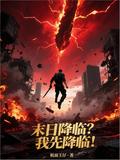 The End Is Coming? I'll Come First!
546.1kReads9.2Score55.7kShelves
The End Is Coming? I'll Come First!
546.1kReads9.2Score55.7kShelves
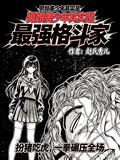 The Beautiful Boy Who Is a Tomboy Is Actually the Strongest Fighter
20.1kReads8.8Score2.6kShelves
The Beautiful Boy Who Is a Tomboy Is Actually the Strongest Fighter
20.1kReads8.8Score2.6kShelves
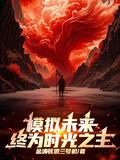 Simulated Future: Lord of Time
51kReads8.7Score5.3kShelves
Simulated Future: Lord of Time
51kReads8.7Score5.3kShelves
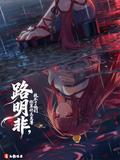 Lu Mingfei, What Kind of Supreme Being Are You If You Can't Save Them?
87.4kReads8.7Score10kShelves
Lu Mingfei, What Kind of Supreme Being Are You If You Can't Save Them?
87.4kReads8.7Score10kShelves
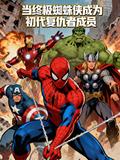 When Ultimate Spider-Man Became a Member of the Original Avengers
14kReads8.7Score1.3kShelves
When Ultimate Spider-Man Became a Member of the Original Avengers
14kReads8.7Score1.3kShelves
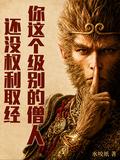 A Monk of Your Level Does Not Have the Right to Obtain Buddhist Scriptures.
172.5kReads9.3Score18.2kShelves
A Monk of Your Level Does Not Have the Right to Obtain Buddhist Scriptures.
172.5kReads9.3Score18.2kShelves
 Back Off, I'm Going to Start Pretending to Be Normal!
10.2kReads8.7Score1.3kShelves
Back Off, I'm Going to Start Pretending to Be Normal!
10.2kReads8.7Score1.3kShelves
 Super IQ Crime
616Reads8.2Score100Shelves
Super IQ Crime
616Reads8.2Score100Shelves
 A Long Journey to Another World
4.3kReads5.8Score189Shelves
A Long Journey to Another World
4.3kReads5.8Score189Shelves
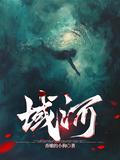 Yuhe
120.6kReads9.5Score15.1kShelves
Yuhe
120.6kReads9.5Score15.1kShelves
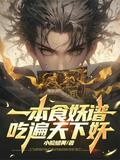 Monster Corpses Are Inedible? Hurry, Send It to My Home for Cremation While It's Still Hot.
120.5kReads8.8Score20.5kShelves
Monster Corpses Are Inedible? Hurry, Send It to My Home for Cremation While It's Still Hot.
120.5kReads8.8Score20.5kShelves
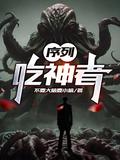 Sequence: God Eater
619kReads9.3Score71.9kShelves
Sequence: God Eater
619kReads9.3Score71.9kShelves
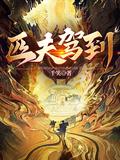 A Common Man Arrives
134.1kReads9.4Score15.8kShelves
A Common Man Arrives
134.1kReads9.4Score15.8kShelves
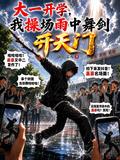 At the Beginning of My Freshman Year, I Danced with My Sword in the Rain on the Playground and Opened the Heavenly Gate.
324.8kReads8.3Score66.1kShelves
At the Beginning of My Freshman Year, I Danced with My Sword in the Rain on the Playground and Opened the Heavenly Gate.
324.8kReads8.3Score66.1kShelves
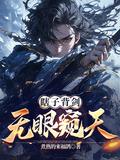 A Blind Man Carries a Sword and Looks into the Sky Without Eyes
395kReads9.2Score31.6kShelves
A Blind Man Carries a Sword and Looks into the Sky Without Eyes
395kReads9.2Score31.6kShelves
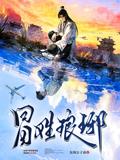 Pretending to Be Surnamed Langya
1.7MReads9.7Score121.3kShelves
Pretending to Be Surnamed Langya
1.7MReads9.7Score121.3kShelves
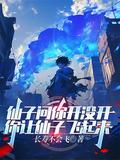 The Fairy Asks You If It Is Open, You Let the Fairy Fly
207.6kReads9.1Score19.5kShelves
The Fairy Asks You If It Is Open, You Let the Fairy Fly
207.6kReads9.1Score19.5kShelves
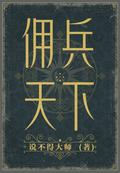 Mercenary World
35.3kReads9.5Score5.4kShelves
Mercenary World
35.3kReads9.5Score5.4kShelves
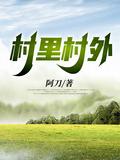 In and Outside the Village
140.8kReads9.6Score16.8kShelves
In and Outside the Village
140.8kReads9.6Score16.8kShelves
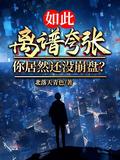 Unrepaying Debts Leads to Technological Hegemony
27.8kReads8.8Score1.8kShelves
Unrepaying Debts Leads to Technological Hegemony
27.8kReads8.8Score1.8kShelves
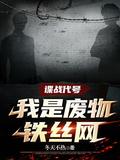 Spy Codename I Am Waste Barbed Wire
196.9kReads9.5Score19.6kShelves
Spy Codename I Am Waste Barbed Wire
196.9kReads9.5Score19.6kShelves
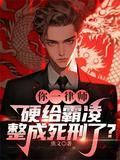 As a Lawyer, You Were Bullied and Sentenced to Death?
104kReads8.9Score11.8kShelves
As a Lawyer, You Were Bullied and Sentenced to Death?
104kReads8.9Score11.8kShelves
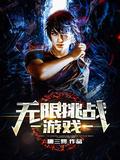 Infinite Challenge Game
727Reads5.8Score—Shelves
Infinite Challenge Game
727Reads5.8Score—Shelves
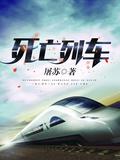 Death Train
29.5kReads8.5Score2.6kShelves
Death Train
29.5kReads8.5Score2.6kShelves
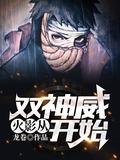 Naruto: Starting with the Twin Kamui
38.9kReads9.2Score4kShelves
Naruto: Starting with the Twin Kamui
38.9kReads9.2Score4kShelves
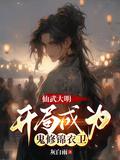 Xianwu Daming, Starting as a Ghost Cultivator and a Royal Guard
80.3kReads9.2Score8.6kShelves
Xianwu Daming, Starting as a Ghost Cultivator and a Royal Guard
80.3kReads9.2Score8.6kShelves
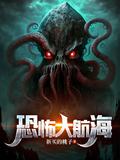 The Great Voyage of Terror
363kReads9.4Score40.9kShelves
The Great Voyage of Terror
363kReads9.4Score40.9kShelves
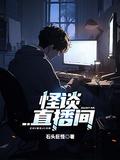 Strange Talk Live Room!
221.3kReads9.7Score24.3kShelves
Strange Talk Live Room!
221.3kReads9.7Score24.3kShelves
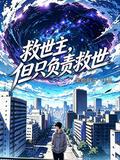 Savior, but Only Responsible for Saving the World
81.8kReads8.3Score8.9kShelves
Savior, but Only Responsible for Saving the World
81.8kReads8.3Score8.9kShelves
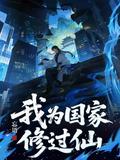 I Have Practiced Immortality for My Country
199.1kReads9.1Score21.8kShelves
I Have Practiced Immortality for My Country
199.1kReads9.1Score21.8kShelves
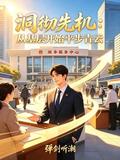 Take the Lead: Start from the Grassroots and Rise to Great Heights
187.1kReads9.4Score18.7kShelves
Take the Lead: Start from the Grassroots and Rise to Great Heights
187.1kReads9.4Score18.7kShelves
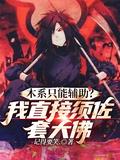 Can Wood Type Only Support? I'll Go Directly to Susanoo Daibutsu
44.8kReads8.8Score5.6kShelves
Can Wood Type Only Support? I'll Go Directly to Susanoo Daibutsu
44.8kReads8.8Score5.6kShelves
 I Have the Hand of God and Steal the Complete Nine Tails at the Beginning
20.4kReads8.7Score1.9kShelves
I Have the Hand of God and Steal the Complete Nine Tails at the Beginning
20.4kReads8.7Score1.9kShelves
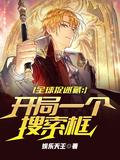 Global Hide and Seek: Start with Cheat Mode!
13.2kReads8.5Score2kShelves
Global Hide and Seek: Start with Cheat Mode!
13.2kReads8.5Score2kShelves
 ,?
3.7kReads7.8Score286Shelves
,?
3.7kReads7.8Score286Shelves
 He Gave up His Studies and Opened a Small Shop, but Found a School Beauty Who Was in Trouble
51.9kReads8.9Score5.1kShelves
He Gave up His Studies and Opened a Small Shop, but Found a School Beauty Who Was in Trouble
51.9kReads8.9Score5.1kShelves
 I Am a Magician, Why Do You Call Me the God of Dharma?
20.9kReads7.7Score3kShelves
I Am a Magician, Why Do You Call Me the God of Dharma?
20.9kReads7.7Score3kShelves
 She Is Soft and Delicious, and the Prince in the Beijing Circle Hugs Her and Refuses to Let Go
33.9kReads9.5Score624Shelves
She Is Soft and Delicious, and the Prince in the Beijing Circle Hugs Her and Refuses to Let Go
33.9kReads9.5Score624Shelves
 The World Is Weird, All My Guests Are Big Guys
9.9kReads8.6Score1.2kShelves
The World Is Weird, All My Guests Are Big Guys
9.9kReads8.6Score1.2kShelves
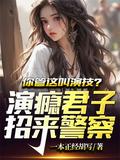 You Call This Acting? Acting as a Drug Addict Attracts the Police
51.4kReads8.3Score8.2kShelves
You Call This Acting? Acting as a Drug Addict Attracts the Police
51.4kReads8.3Score8.2kShelves
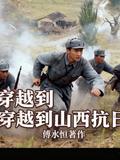 I Traveled to Shanxi to Fight Against Japan
16Reads5.8Score—Shelves
I Traveled to Shanxi to Fight Against Japan
16Reads5.8Score—Shelves
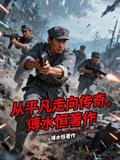 From Ordinary to Legendary
983Reads—Score106Shelves
From Ordinary to Legendary
983Reads—Score106Shelves
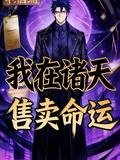 I Sell My Destiny in the Heavens
4.1kReads5.8Score440Shelves
I Sell My Destiny in the Heavens
4.1kReads5.8Score440Shelves
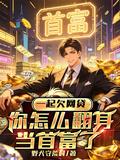 We Both Owed Online Loans, How Did You Become the Richest Man?
—Reads5.8Score—Shelves
We Both Owed Online Loans, How Did You Become the Richest Man?
—Reads5.8Score—Shelves
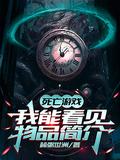 God-Level Hidden Skills at the Beginning! I've Seen Everything
105kReads8.7Score15.5kShelves
God-Level Hidden Skills at the Beginning! I've Seen Everything
105kReads8.7Score15.5kShelves
 The Sword Slashed the Song River, and Wu Song Added a Yellow Robe to My Body
20.3kReads8.2Score1.5kShelves
The Sword Slashed the Song River, and Wu Song Added a Yellow Robe to My Body
20.3kReads8.2Score1.5kShelves
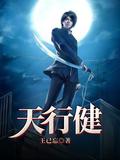 Tian Xingjian
24.6kReads9.1Score3.4kShelves
Tian Xingjian
24.6kReads9.1Score3.4kShelves
 Community Survival, but I Was Pulled into the Management Group
12.3kReads9.2Score1.9kShelves
Community Survival, but I Was Pulled into the Management Group
12.3kReads9.2Score1.9kShelves
 The Whole Village Supports Me Qing Yunzhi, I Give the Villagers Ten Thousand Taels of Gold
47kReads7.8Score4.6kShelves
The Whole Village Supports Me Qing Yunzhi, I Give the Villagers Ten Thousand Taels of Gold
47kReads7.8Score4.6kShelves
 Train Survival: I Can Predict Death
51.5kReads8.8Score7.3kShelves
Train Survival: I Can Predict Death
51.5kReads8.8Score7.3kShelves