Book review: "Black Myth: The Egg of the Wild" - This is the real "black", even despair can't find a foothold. I am a standard lover of dark epics. I have watched "Game of Thrones" and read "Dune". I pride myself on being immune to "darkness" and "despair". Until I clicked on the book and saw the first sentence: "The first sound of the universe was not the trumpet of creation, but a scream of pain." Then came the second sentence: "We are cancer cells, parasitic on the corpse of God." I was pinned directly in front of the screen. 1. Its "blackness" is absolutely "black" in logic. The most powerful thing about this book is that it constructs a dark universe with self-consistent logic and impeccable logic. It is not dark for the sake of darkness, but uses the dual main lines of "Dewdrops" (the source of cancer mutations) and "Zero Light" (the fire of resistance) to reinterpret all events in human history - from Zhuang Zhou's Dream of Butterflies to the Three Kingdoms. Every allusion and every character has become a footnote to this dark logic. - Qin Shihuang's unification was the victory of the "violent proliferation subtype" of cancer; - Liu Bei's crossing the river with his people was Ling Guang's "awakening of benevolence"; - Even the "snake seducing Eve" in the Bible became a dewdrop program to activate human beings' "cancer cell instinct". This logical closed loop of "interpreting all light as darkness" is the most nerve-wracking thing. 2. Its "despair" is the ultimate "despair" in philosophy. The despair of this book is not the shallow despair of "the protagonist is dead" or "the world is destroyed". Its despair makes you start to doubt: "We think we are fighting cancer, but in fact we are just helping cancer write papers on immune escape." It makes you realize that all your efforts, all your goodwill, and all your resistance may just be the self-optimization of "cancer cells" on the scale of the universe. This kind of despair is deep in the bone marrow, because it denies even "hope" itself. 3. Its "epic sense" is "grand" across time and space. The layout of this book is very large, from the "Binding Sound" of the birth of the universe, to the "Zero Light Awakening" in the Three Kingdoms period, to the future "Mars colonization", the time span runs through the past, present and future. It combines Chinese mythology, Western religion, and modern science fiction, but perfectly serves the core theme of "cancer and resistance". This sense of grandeur across time and space will make you involuntarily feel a sense of awe that "human beings are so small" when reading. 4. Written for you who are still hesitating. If you like to read "cool articles" and "the protagonist cheats all the way", then this book may not be suitable for you. But if you like works that are in-depth, thoughtful, and worth chewing over and over again, then you must not miss this book. It may subvert your cognition, may make you feel uncomfortable, and may even make you fall into silence for a long time after closing the book. But that's the beauty of it - it's not a book to be read for fun, but a book to remember. Finally, I will end with a quote from the book: "The real black myth is not 'we are sick', but 'we know we are sick, but even the concept of 'health' is an illusion caused by illness."
If you want to enrich yourself, here are the books you need! "Practical Manual of Human Massage" teaches you about health care, while "Illustrated Manual Diagnosis Code" takes you to explore the secrets of health. "The Complete Works of Asking for Nothing" will help you grow personally, and the classic fairy tale "The Little Prince" will warm your heart. To improve your eloquence, you might as well try "28 Days to Speak Successfully"; management experts must read "The Complete Collection of Thirty-Six Strategies for Employing People". "Teenagers' Favorite Folktales" inherits culture, and "Socialization and Etiquette" is a must-have for social masters. Writing enthusiasts should not miss "How to Write Efficiently", and health experts should read "Comprehensive Illustration of Meridians for Health Care". "2000 Cultural Common Senses Young People Should Be Familiar with" broadens your horizons, and "Urban Veteran Chinese Medicine Doctors" will help you appreciate the charm of traditional Chinese medicine. Popular science books "Chemistry Too Interesting to Keep You Sleeping" and "Map of the Human Body" are waiting for you to explore, come and read them!
I must recommend this book to popularize knowledge about construction and civil engineering, and watch students who failed the postgraduate entrance examination counterattack the top 500 in the world.
Chen Ping chooses the master: The wisdom of knowing people lies in discernment, not in fortification. In the early years of the Western Han Dynasty, there was a young man named Chen Ping in Hufu Township. He liked to study since he was a child, but his family was poor and he relied on the help of his neighbors to survive. Although his clothes are shabby, he has an extraordinary calmness hidden in his brows. The neighbors say that this kid will become a great person in the future, but some people secretly comment on his "idleness" and do not want to have a close relationship with him. After the uprising of Chen Sheng and Wu Guang, the world was in chaos, and Chen Ping also wanted to find a wise leader to express his ambitions. At first, he heard that King Jiu of Wei was recruiting talents in Linji, so he packed his bags and went to seek refuge. Before setting off, an old man from his hometown advised him: "In troubled times, the princes all have their own agendas. You have to be careful and don't vote for the wrong person!" Chen Ping nodded in agreement, but did not treat everyone as "imaginary enemies". He just secretly made up his mind to observe more when encountering problems and not be too eager to trust his sincerity. When he arrived at the Palace of the King of Wei, the King of Wei treated Chen Ping quite politely at first and often asked him about his strategies to govern the country and secure the country. But it didn't take long for Chen Ping to discover that the King of Wei was soft-hearted and easily believed the slanderous words of his close ministers. On the contrary, he was always wary of people with real talents and learning. On one occasion, Chen Ping proposed to strengthen city defenses and stockpile grain and grass, but was slandered by King Wei's favorites as "deliberate depletion of the treasury." King Wei rebuked Chen Ping without verification. Chen Ping saw this and gradually made a judgment in his heart: King Wei was not a person who could achieve great things. If he continued to stay, he would not only be unable to display his talents, but might also get into trouble. So, he quietly packed his luggage and left Prince Wei's Mansion. After leaving Queen Wei, Chen Ping defected to Xiang Yu again. Xiang Yu was brave and good at fighting, and he had many powerful generals under his command. At first, he also valued Chen Ping very much and sent him to garrison Yin. Chen Ping had outstanding political achievements in the Yin region and the people lived and worked in peace and contentment. After learning about it, Xiang Yu rewarded him with gold and an official seal. But the good times didn't last long. Liu Bang sent Han Xin to lead an army to attack Yin. Although Chen Ping resisted vigorously, he finally fell due to the disparity in strength. Xiang Yu was furious when he learned about it and threatened to punish Chen Ping. Only then did Chen Ping see Xiang Yu's true nature: he was headstrong, rewarded for meritorious deeds and punished for delinquency. He never cared about his subordinates, let alone listened to a word of advice. He knew very well that following such a monarch would sooner or later lead to the end of the rabbit, so he abandoned his official post again and planned to defect to Liu Bang. On the way, Chen Ping met Liu Bang's counselor Wei Wuzhi. Wei Wuzhi had long heard of Chen Ping's talent, so he warmly invited him to accompany him and recommended him to Liu Bang. Liu Bang summoned Chen Ping and talked with him about the general situation of the world. Chen Ping talked eloquently and proposed a clever strategy that suddenly made Liu Bang enlightened. Liu Bang immediately appointed Chen Ping as the captain and put him in charge of the army. However, this move aroused dissatisfaction among veterans such as Zhou Bo and Guan Ying. They jointly complained to Liu Bang, saying that Chen Ping had "bad conduct" and "erratic behavior" and had accepted bribes from his subordinates. Liu Bang was suspicious, so he summoned Wei Wuzhi to question him. Wei Wuzhi said: "The king seeks talents to pacify the world. Chen Ping has a great strategy, which is exactly what the king needs. As for his character and past, how can he lose the big because of the small?" Liu Bang summoned Chen Ping again and asked about the matter face to face. Chen Ping said calmly: "I went to the King of Wei, but the King of Wei could not use me; I went to Xiang Yu, but Xiang Yu was suspicious and ungrateful. I heard that the king knows people well, so I came to join him. If the king thinks that my strategy is useless, I will return the gold intact, and I will leave." When Liu Bang saw Chen Ping's sincere words and remembered the clever plan he proposed, the doubts in his heart immediately dissipated. Instead of convicting him, he promoted him to the rank of Lieutenant of the Guard and asked him to supervise the generals. Since then, Chen Ping has repeatedly provided Liu Bang with strange tricks: helping Liu Bang escape danger at the Hongmen Banquet, driving a wedge between Xiang Yu and Fan Zeng, outwitting Han Xin, uniting with the Huns to put down Chen Kui's rebellion... Each time he helped Liu Bang avert danger at critical moments. After Liu Bang proclaimed himself emperor, he granted Chen Ping the title of Qu Nihou and had great trust in him. Later, Chen Ping assisted Emperor Hui and Empress Lu of the Han Dynasty, and after Empress Lu's death, he joined forces with Zhou Bo to kill the Lu kings and stabilize the regime of the Western Han Dynasty. In his later years, someone asked him the secret of knowing people and choosing a leader. Chen Ping said with a smile: "When choosing a leader in troubled times, you must not be biased and regard everyone as your enemy, otherwise you will only miss good opportunities; nor should you be unprepared and trust your heart easily. The key is to observe his actions, listen to his words, and observe his heart - to see whether he can accept loyal advice, whether he is considerate of his subordinates, and whether he has lofty ambitions. Those who can stand the test of time are the ones worth following." This story is just the epitome of interpersonal communication: if you are like the people who initially doubted Chen Ping and judged other people's character based on rumors, you will inevitably miss your good friends; if you are like King Wei and Xiang Yu, you are either gullible or suspicious of the people around you, and you will end up betraying your relatives. The real art of recognizing people is never the defense of "preset hostility", but the discernment of "rational observation". Just like Chen Ping's choice of leader, he not only maintains a clear understanding of the current situation and does not blindly rely on it, but also contacts others with an open mind and uses time and facts to test people's hearts. Only in this way can we distinguish the true from the false in complex interpersonal relationships and find close friends and partners who are worthy of deep friendship.
Recommend a good book! Not long after, the woman approached the bamboo courtyard. Li Jun looked and saw that the woman's eyebrows looked a bit like Coach Luo. She must be Coach Luo's daughter Luo Chan. I saw Luo Chan with her hair tied up in a bun, a silver hairpin hanging on her hair, wearing white silk and satin, covered with green gauze, a blue and white silk ribbon tied around her waist, and pink floral shoes on her feet. The eyebrows are like green feathers, the skin is like suet, the face is like peach blossoms, and the mouth is like cherries. The willow waist is slightly spread, and the lotus steps are moving lightly. Just like the Nine Heavens Mysterious Lady comes to the Yaochi, Fairy Chang'e descends to the mortal world.
Many conspiracy theories can actually be explained by economic principles, because economic theories solve specific social problems and are not just philosophies. Let me analyze weird things in the workplace for you, haha


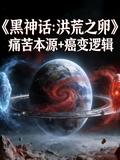 Black Myth: the Egg of Prehistoric Times
1Reads—Score—Shelves
Black Myth: the Egg of Prehistoric Times
1Reads—Score—Shelves
 Urban Old Chinese Medicine Doctor
1.4kReads9.1Score232Shelves
Urban Old Chinese Medicine Doctor
1.4kReads9.1Score232Shelves
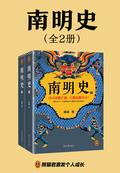 History of Southern Ming Dynasty
3.3kReads9.5Score916Shelves
History of Southern Ming Dynasty
3.3kReads9.5Score916Shelves
 The Scumbag Counterattacks: Domineering Math Falls in Love with Me
671Reads8.6Score158Shelves
The Scumbag Counterattacks: Domineering Math Falls in Love with Me
671Reads8.6Score158Shelves
 Reinforced Rose
4Reads—Score—Shelves
Reinforced Rose
4Reads—Score—Shelves
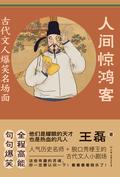 Shocking Guest in the World
17.8kReads9.5Score3.9kShelves
Shocking Guest in the World
17.8kReads9.5Score3.9kShelves
 408 Ruin My Life
31Reads—Score—Shelves
408 Ruin My Life
31Reads—Score—Shelves
 Hengji Fengjie
8Reads5.8Score—Shelves
Hengji Fengjie
8Reads5.8Score—Shelves
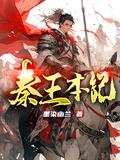 Book of Scholars
20Reads8.9Score—Shelves
Book of Scholars
20Reads8.9Score—Shelves
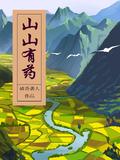 Dress up as a Crafty Old Lady, While Others Are Escaping, I Will Open up Wasteland.
95.5kReads9.5Score13.1kShelves
Dress up as a Crafty Old Lady, While Others Are Escaping, I Will Open up Wasteland.
95.5kReads9.5Score13.1kShelves
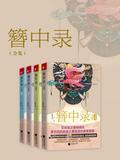 Hairpin Record
23kReads9.7Score4kShelves
Hairpin Record
23kReads9.7Score4kShelves
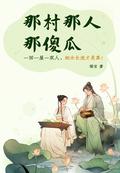 That Person in That Village, That Fool
63.8kReads9.6Score8.1kShelves
That Person in That Village, That Fool
63.8kReads9.6Score8.1kShelves
 Workplace Cleverness
108Reads—Score—Shelves
Workplace Cleverness
108Reads—Score—Shelves
 A Must-Know Guide to Changing Your Life Every Day
28Reads5.8Score—Shelves
A Must-Know Guide to Changing Your Life Every Day
28Reads5.8Score—Shelves
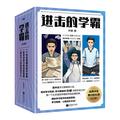 Attack of the Scholars: All Three Volumes
984Reads9.5Score221Shelves
Attack of the Scholars: All Three Volumes
984Reads9.5Score221Shelves
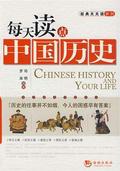 Read Some Chinese History Every Day
41Reads9.4Score—Shelves
Read Some Chinese History Every Day
41Reads9.4Score—Shelves
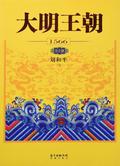 Ming Dynasty
38.9kReads9.6Score7.2kShelves
Ming Dynasty
38.9kReads9.6Score7.2kShelves
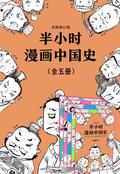 Half-Hour Cartoon About the History of China
2.4kReads9.6Score670Shelves
Half-Hour Cartoon About the History of China
2.4kReads9.6Score670Shelves
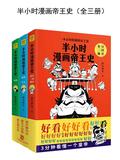 Half-Hour Cartoon History of Emperors
79Reads5.8Score—Shelves
Half-Hour Cartoon History of Emperors
79Reads5.8Score—Shelves
 Stock God: Enlightenment with 50,000 Principal
97.9kReads9.2Score10.5kShelves
Stock God: Enlightenment with 50,000 Principal
97.9kReads9.2Score10.5kShelves