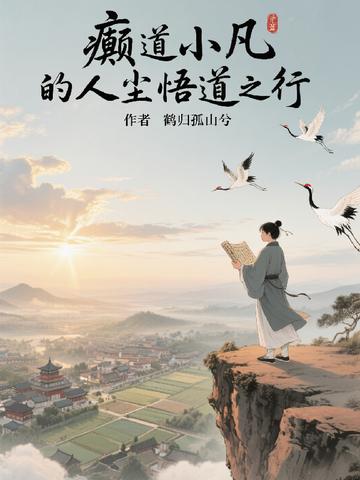
The Mad Daoist Xiaofan’s Journey to Enlightenment in the Mortal World
癫道小凡的人尘悟道之行
- Status
- Completed
- Length
- 336k Words
- Genre
- Historical
- Subgenre
- Historical & Ancient
- Updated
- 12mo ago
- Source
- Fanqie
Stats
Tags
Synopsis
More by this author
In booklists 79
Explore more →
Low-Key Traditional Chinese Medicine Novels. Pure TCM, No Inner Energy or Mythical Elements
No showing off and face-slapping, no System, no transmigration or rebirth, no women, disciples, family, or national politics. No joining any private or government faction. Just a pure traditional Chinese medicine practitioner, quietly traveling around the countryside and small towns to treat people.
Novels Suitable for Older Readers
Books suitable for older readers to listen to.
Chinese Works About Taoism
I really want to read stories that incorporate China's traditional Taoist culture. Any genre is fine.
Fresh and Original Novels About Traditional Chinese Medicine
If you want to learn about traditional Chinese medicine but don’t want to slog through dry, boring material, come on over!
Any Realistic Novels About Taoist Priests? No System-Powered Wish Fulfillment
Looking for books similar to Strange and Wonderful Experiences of a Civil Law Taoist.
Looking for Female-Led Stories With No CP, No Romance, and Genuine Love for Women
Please, can we stop with stories where all the women only love the male lead and his crew? Let every character love women, and stop making the plot casually throw in rape, mistresses, and misogynistic remarks. No plots about exploiting women, either.
Any Recommendations for Beginner Books on Traditional Chinese Medicine?
Novels Related to Taoism, Please
I want novels rooted in orthodox Taoism. Don't recommend cultivation novels that just slap a Taoist label on the usual cultivation path, or I'll get mad.
Philosophical Classics That Are Mind-Bending Enough to Make You Forget to Eat, Any School of Thought
Confucianism, Daoism, and Buddhism.
Books That Teach You Something
Looking for books similar to The Brain in a Vat Theory from the Start, Global Panic! Law, literature, physics, conjectures, and the like. It shouldn't be too dry; it should still feel like a web novel.
Books That Can Change Your Life
Books that can change your life.
Tomato Authors' Book Recommendations
1. I'm a reader trying to make my posts go viral. 2. I'm starting a recommendation thread just for Tomato authors. 3. So people can find something to read when they need it. 4. Of course, I'll also recommend authors I like.
Looking for Books That Teach You Real Skills
I prefer beginner-friendly books on Chinese metaphysics, since I'm a complete novice. Recommendations in other areas are welcome too, but no romance novels.
What Are the Best Song Dynasty Historical Novels on Tomato Novel?
Books with good writing, a good plot, solid logic, and no novice-style writing.
Looking for Gorgeous, High-Quality Novels with Beautiful Writing and Memorable Lines
Looking for Books About Taoist Sects and Priests, with a Focus on Cultivation and the Journey of the Heart
Novels About Traditional Chinese Medicine with Practical Value
I'm looking for books like Becoming a National Medicine Master at a Community Hospital. Traditional Chinese medicine. Don't judge it by the title.
Looking for High-Quality Fortune-Telling Street Vendor Novels
Are there any high-quality novels about setting up a stall or opening a shop to tell fortunes? I'm tired of all the livestream fortune-telling stories. I prefer face-to-face fortune-telling because it feels more realistic.
Looking for Stories About a Female Emperor: Court Intrigue, Nation-Building, and Strategists
Looking for books similar to *Quick Transmigration: Qin Shi Huang Wants Me to Become an Empress*.
Please, Novels Set in the Northern Song Dynasty
Claim territory, win over beauties, and unify the realm
Books That Truly Teach People to Cultivate in the Mortal World
Looking for books similar to A Guide to Enlightenment and Immortality in the Human World.
Novels About Taoist Priests
In times of prosperity, the Buddhist temple gathers incense offerings; in troubled times, Lord Laozi saves the people. Boundless Life Buddha.
Traditional Chinese Medicine! Traditional Chinese Medicine! Traditional Chinese Medicine!
This traditional Chinese medicine novel is something else!
Deep and Thought-Provoking Books About Philosophy
Stories about Taoism or Buddhism.
Reader comments 75
Google Translate
See the Taoist mind in this world. Crane Returns to the Solitary Mountain is set during the reign of Shaosheng in the Northern Song Dynasty. It uses classical Zhang Hui style to pave the way for Xiaofan's enlightenment, breaking out of the stereotypes of the court and focusing on more vivid human situations. The novel can be called a "map of wisdom in the world". The sincerity of learning, the benevolence of medicine, the wisdom of Feng Shui, and the profoundness of strategy are all integrated into the writing. There are no suspended routines, and every word is full of "practical" sincerity. The author uses historical materials as the basis and creativity as the flesh, allowing the virtual characters to take root in real-life experiences, making the core of preaching and helping the world more real. When you read it, you don't see the ambiguity of cultivating immortality, but you can see the essence of cultivation. Understand the truth in the fireworks, and gain enlightenment in the actions. Such writing, with bones and warmth, is truly a masterpiece and deserves to be savored carefully.
After reading this book about seeing the great truth in the mundane world, I really feel that I still have more to say. The author breaks out of the inherent framework of modern online articles and cuts through the history of the Shaosheng period in the middle and late Northern Song Dynasty to the middle of the Southern Song Dynasty, unfolding a unique long scroll of enlightenment. The concept is novel, based on the classical chapter body, and the core of preaching and benefiting the world is hidden in the smooth narrative. The protagonist's "human enlightenment" is not empty talk, but is rooted in specific situations in the world. From the sincerity of seeking knowledge to the benevolence of medical science to save people; from the ingenuity of Feng Shui to the decisiveness of war, the novel uses rich plot dimensions to interpret the true meaning of "Tao is used in daily life". The fourth and fifth volumes show the author's "Taoist medicine" level, and the ninth volume shows the author's "Taoist philosophy" thoroughness. The writing is clear and smooth, with both the excitement of a battle of wits and the delicate sublimation of emotions, making the grand theme of enlightenment enveloped in the warmth of the world. Different from fast-food style novels, the author combines historical materials and creativity to build a unique world view between reality and fiction. When reading, you can not only immerse yourself in the story, but also understand the texture of world affairs between the lines and gain inspiration for action. Just as the author intended, readers will have some understanding and gain. The novel leaves too many "blanks" and I look forward to the author continuing with the second volume!
It's a good book. The author must have spent a lot of time collecting medical science, Feng Shui, numerology and other related information. He spent a lot of time and concentrated on writing it. Taking the protagonist Xiaofan as the main line, it is rare to connect these contents together, covering a wide range of topics and describing it in such detail. However, the lack of ratings and insufficient number of readers makes this book a real pity. If the author could disperse these medical science, Feng Shui, numerology and other true knowledge into the plots of the book, and use the plot to drive the true knowledge, then I would foolishly think that the results would be improved. But no matter what, this is a good book worth reading.
Xiaofan, who is crazy about Dao: Understand the true taste of "Tao" in the fireworks of the world When I first read the title of the book, I thought it was a cliché about cultivating immortals. After reading it, I realized that "epiatric" refers to unconventional transparency, and "dust" is the most poignant background. The protagonist Xiaofan does not have a golden finger, and does not have the talent to destroy heaven and earth. He is just like an ordinary person immersed in the world, struggling in the hustle and bustle of the city, living in daily necessities, but he has realized the "Tao" in a very real way. There is no cool magic weapon, only a little "ecstasy" when encountering problems - not entangled in fairy rules, not obsessed with success or failure, but in the process of helping people solve their difficulties and tasting fireworks, the mysterious "enlightenment" is written into a visible life. Unlike other books about cultivating immortals that fill the screen with killings, the "Tao" of this book is hidden in human feelings. It is relaxing and rewarding to read. The more I read, the more I want to follow Xiaofan and see how he can find his unique "Tao" in the world of mortals.
It took me a long time to come and comment. The author is really knowledgeable and talented, with Taoist thoughts and classical culture at his fingertips. The theory of traditional Chinese medicine and how to deal with the world are even more exquisite. The novel breaks the "upgrade and defeat monsters" routine of cultivation novels, and explores the light of human nature and the subtlety of heaven in the folds of history. Whether it is an in-depth restoration of the history of the Northern and Southern Song Dynasties or an innovative interpretation of "medical ethics and self-cultivation", they all demonstrate the author's creative ambition to "convey the doctrine through writing". As the book says: "The real Tao is not in the clouds, but in the smoke of the market and in the sufferings of the people." This kind of monastic narrative rooted in reality has injected new vitality into the traditional fairy tales. The novel takes the period of Shaosheng Shaosu as the starting point, and truly restores the party struggles in the court after Wang Anshi's reform, the spiritual outlook of scholar-bureaucrats, and the living difficulties of the lower class people under the New Deal. From the debate between Lu Jiawen and Taoist Master Hongchen on "taking advantage of the trend and going against the trend", to the foreshadowing of Song Huizong's policy of advocating Taoism, and finally Zongze's tragic resistance to the Jin Dynasty, historical events and fictional plots are intertwined, forming a unique narrative of "history as the bone and Taoism as the soul". What I admire the most is the author's "selflessness". The original Taoist medical theories and Taoist techniques in the book are very detailed. For those who are interested in traditional Chinese medicine and metaphysics, this is a rare book that can open their minds.
I saw it accidentally. I was bored and came in to take a look, and I was attracted. This book needs to be read slowly and repeatedly. The writing is concise and delicate, with ancient customs and ancient sayings. The description of the environment is very artistic. The explanation of the Tao Te Ching is also simple and very thorough. The word test is quite satisfactory, but there are also innovations. Spells and traditional Chinese medicine are the highlights. Spells are not fantasy, they just serve to "treat diseases and save lives." The prescriptions are real. I asked Doubao about it and he said that the combination is very reasonable and very symptomatic. Taoist philosophy should be what the author wants to express most. It has height and depth. It satirizes the bad phenomena of modern times and provides a subtle guide to life. Recommend!
A masterpiece of conscience and a masterpiece handed down from generation to generation. Regardless of Taoist thought, Taoism, or Taoist medicine, it is all explained in a simple and easy-to-understand manner, and it is full of useful information. Many of the Chinese medicine theories and prescriptions are the author's innovations. There is nothing to say about the writing style, it is at the level of a master. The historical research is quite rigorous and there is no fabrication of history. The ninth volume is the climax of the writing and thinking of the whole book. It uses the small to see the big and creates a grand narrative. It has a strong scientific guiding effect on the entire society and individuals. The author is awesome, the book is awesome.
This book is really great! It's not that it looks good, the threshold for comparison is relatively high, and it requires careful consideration and selection. But this book contains too many things, especially Taoist philosophy, which subtly corrects readers' values. Highly recommended.
It is indeed a painstaking work and cannot be written by ordinary people. It involves a wide range of aspects and is indeed a great test for the author's knowledge. This requires all aspects of cultural heritage. It is indeed a good book and worth recommending.
I feel that Xiaofan is really powerful, he knows everything, and he speaks clearly and logically. There are many things that require careful consideration and cannot be understood in a short while. Especially Feng Shui medicine and the like. It feels so profound. The author knows so much and feels so knowledgeable. It's really amazing. The plot is also very ups and downs, the whole text seems to be in vernacular, and it feels like you are reading a famous book. It has a retro style. I recommend this book to those who like to read vernacular.