Please Write a Novel About the Five Dynasties and Ten Kingdoms, Jin, Southern and Northern Dynasties Period
Views
11.7M
Books
114
Recommendations
812
Updated
1d ago
I'm tired of watching the Tang, Song, Ming and Three Kingdoms. I want to find some less popular historical periods to read and try to complete them. Please recommend~~~
🎉The first book: Xu Mu was originally a scoundrel who lived in the streets, but he got a rich man who had escaped from the run-of-the-mill with a joke. In this troubled era of the Five Dynasties, where "the streets of heaven trample all the bones of public servants", human life is worth less than grass. For the sake of the woman and mother behind him, the little man is forced to pick up a sword and mount a horse. There is no domineering spirit, only the most primitive desire to survive. 🎊The second book: The soul travels through the Southern Dynasties, but there is no golden finger and no memory of the original owner. This is a desperate start! The protagonist bears the fake surname of Langya and makes his way through Jiangnan where there are many powerful families and power is intertwined. The Northern Emperor Xiaowen's cavalry peeked into the river, and it was difficult to guard against hidden arrows in the court. How could he, with his worthless body, break through the inevitable death situation? From sleeping on a dragon bed to becoming a famous king, let's see how a fake nobleman used his true skills to carve out a bloody path in the Southern Dynasties, suppress the country, and mend the cracks in the sky!
Historical texts of the late Tang and Five Dynasties. No cheats, no systems, no stallions, the players' IQs are online throughout the whole process, and it's a realistic war.
Since Weibo was killed, 8,000 households began to flee, from a village to a city. From witnessing the addition of a yellow robe, to finally being put on a yellow robe himself. After more than 40 years and two generations, the Wei flag is finally flying in Central
Highly recommended! Male protagonist, time travel, Jin Dynasty, no golden finger, ancient historical text: ① Li Rui, a modern archery athlete, accidentally traveled to Yongjia for four years and possessed the body of Yiyang City reinforcements Li Rui with the same name. Under the fierce attack of the Xiongnu, he used his excellent archery skills to save Su Yu, the captain of the Zan Army, and Pei Wei, the Marquis of the Tribunal, and thus rose to prominence. With modern military knowledge and superb archery skills, Li Rui rose rapidly in the army, assisted the court in quelling the war, defeated the Xiongnu, and finally established a new dynasty, bringing the Han dynasty to unprecedented glory. ②In the fourth year of Taihe in the Eastern Jin Dynasty, in the middle of the fifth month of the lunar calendar, it was the peak summer season in the south of the Yangtze River. Li Shuo traveled through time to the Gu family in Danyang County of the Eastern Jin Dynasty, and took the pseudonym Li Hui. His family was poor and he used moso bamboo to collect water to solve the drought in Wu County, and he was awarded the position of Prime Minister of Juchao County. After that, he began to secretly prepare military forces, equalize taxes, and finally cross the Yangtze River north to unify the world, create a new dynasty, and realize the revival of the Han Dynasty.
This book is unfolded from the perspective of Gao Wei, the last emperor of the Northern Qi Dynasty, and combines elements such as [Historical Imagination] + [Funjun Liu] + [All Members Crazy Criticism]. The protagonist travels through time and becomes a famous Foolish Emperor but secretly plans to reverse the course of events. 410,000 Words now
There are relatively few books about the Five Dynasties and Ten Kingdoms. There is a book called Ten Kingdoms and Qianjiao that you can definitely read. It is written by the same author as the book "The Spring of the Ming Dynasty" below. The writing is okay and unsystematic.
This novel about the Southern and Northern Dynasties is quite interesting. It tells about the wars and disputes between the Western Wei, Northern Qi and Southern Liang. The protagonist travels to the grandson of Xiao Yan, the Bodhisattva Emperor of the Southern Liang, and fights with Gao Yang and Yu Wentai in a battle of wits and courage. It is a very good story about fighting for hegemony.
It will be finished tomorrow. The story is a bit complicated. The emotional line of the story between Chai Rong and my original girl Xiao Man, which was updated today, made me cry... I feel so sorry for Chai Rong. The magic here is made real, allowing Chai Rong to follow Xiao Man into Youzhou City through reincarnation [crying]
The first one is from the former Qin Dynasty. It is well written, but it is slow to update. The second one is from the Southern Dynasties and Song Dynasties. It is about time travel and is okay.
I recommend these books, they are all pretty good, about time travel💥plots💥war and farming. Traveling through the troubled times of the Northern and Southern Dynasties, communist industrialization is so beautiful, 💢The Baiyue tribe in the Hundred Thousand Demon Mountains, our own people, 🔥The generals of the refugee army with mysterious backgrounds, good brothers, and the high-ranking nobles, I can't kill you.
The soul traveled through the prince of the late Tang Dynasty, just to renew the prosperous age of Zhenguan. A rare long royal novel in the late Tang Dynasty.
Travel through the Qin Dynasty, Spring and Autumn Period, Three Kingdoms, Qing Dynasty, Mongolia, Ottoman (ancient Türkiye), ancient Japan and the Warring States Period, and European countries during World War II
The home page saves 2000+ book shortages. It is a different world of the Three Kingdoms, with ratings of famous assassins from the Three Kingdoms and settings of ghost chronicles and ghost illustrations. The supporting character, a time-traveler, has incomplete memory and is at the bottom of his qualifications, but just wants to fly up; the ghost Zhang Liao is weak in ability and has the bottom of his future, but he keeps laughing all the way and gets 6aad
The focus and penetration of the perspective: always stick to the perspective of the Sima family (especially Sima Yi), and see the changes of the times and the change of power through their eyes. This internal focus allows readers to deeply penetrate the inner world of a "country thief" and experience his complex feelings of glory and sin.
1. Have IQ. During the reign of Sima Rui of the Eastern Jin Dynasty, the male protagonist tended to be the leader of the society. The female protagonist is very smart, so don't be scared away by the title. 2. During the Zhu Wen period, some of Wei Boya's soldiers were gathered to fight the big with small, one county. 3. In the same period as Yi, it was written by a doctor of literature. It has outstanding literary talent, quoted classics, and explanations. Although it is a bit showy, it is indeed a good book. 4. Explained in historical texts, it can supplement historical knowledge.
Blow up the power of the late Tang Dynasty in this chapter! Textbook-level three-party game, the textual research party directly knelt down 😭 Family members, who understands! I originally thought that the time travel stories in the late Tang Dynasty were all about the old routine of holding the emperor hostage at the beginning and pushing forward all the way, but this chapter just made me look stupid! There are no system cheats, no villains who subdue their intelligence, and no brainless fun. There are only three top-level IQs of three troubled heroes competing against each other. Every word is a trap, and every look is a calculation. After watching it, my palms are all sweaty! ✅ This chapter is so cool that you can fill it up immediately, and there is no need to urinate in the whole process 1. Li Zhen becomes a god! The "Owl of the Tang Dynasty" in history turned into the God of Diplomacy. Who would have thought that Li Zhen, the "treacherous minister" who masterminded the disaster of Baimayi in history and was scolded for thousands of years, would become the most dazzling protagonist of this chapter! - Riding alone into the Khitan camp: killing seven horses in six days and six nights, crossing thousands of miles of snow, and going deep into the camp of 30,000 Khitan cavalry alone. Even Yelu Abaoji was stunned by his courage - A verbal battle with Li Keyong: Exposing Li Keyong's lie of "painting cakes to satisfy hunger" in one sentence, which made Li Keyong vomit blood and fainted on the spot, directly disrupting Hedong's alliance plan - White Wolf with Empty Gloves: Without having to cede an inch of land, with only the conditions of mutual trade and canonization, the life-and-death covenant between Li Keyong and Yelu Abaoji was broken up, and the Khitan became an "ally" of the Tang Dynasty. The most amazing thing is that the author did not write Li Zhen as a perfect saint. He still doesn't believe in "supporting the Tang Dynasty" and is still full of resentment towards this decadent dynasty, but he chooses to temporarily believe in Wang Zuo. This complex character arc is ten thousand times more real than those flat "loyal ministers"! 2. The three-party IQ is online throughout the entire process, and there is no fool. This is the real Machiavellian article! No villain is a tool for subduing intelligence, and everyone's actions have their own logic and motivations: - Li Keyong: He is not a reckless man who only loses his temper. He led the Khitans into the country as a desperate act. His anger, unwillingness, and despair are all vividly written - Yelu Abaoji: the real hero of the grassland! He never thought about sincerely helping Li Keyong from the beginning, and deliberately delayed the alliance just to wait for Wang Zuo's envoy, let the two sides compete for bids, and reap the benefits - Wang Zuo: Although he did not appear directly, all the games revolved around him. He accurately calculated Yelu Abaoji's ambition, Li Keyong's dilemma, and Li Zhen's ability, and strategized to win a decisive victory thousands of miles away. The three people calculated and used each other, forming a perfect closed loop. You think you are on the first level, but in fact the opponent is on the fifth level. This kind of IQ crushing is a hundred times more enjoyable than watching the protagonist chop melons and vegetables! 3. There are so many foreshadowings, and they are full of echoes. This chapter contains N foreshadowings at once, and every one of them is amazing: - The signs of Yelu Lage's rebellion: The author did not say it directly, but through Li Zhen's eyes, he observed Yelu Abaoji's "play hard to get" plan little by little, which laid the groundwork for the subsequent civil strife in Khitan - Li Zhen's inner struggle: His final doubts about the "pure minister line" paved the way for the subsequent ideological conflict between him and Wang Zuo - the century-old game between Khitan and Datang: This alliance not only solved the immediate crisis, but also established the pattern of the northern frontier for more than a hundred years 📜 Hard-core historical research! The author is definitely a major in Tang history. What shocked me the most about this chapter was not the tactics, but the author's historical research skills. The details were so rigorous that it was outrageous. As a lover of Tang history, I kneeled down directly to the author! 1. The true history of the Yunzhou Huimeng. Historically, Li Keyong and Yelu Abaoji did make a treaty as brothers in the Yunzhou Huimeng in the second year of Tang Tianyou (905) and agreed to jointly attack Zhu Wen. But later Yelu Abaoji betrayed the alliance and defected to Zhu Wen, which led to Li Keyong's defeat and death, which became Li Keyong's lifelong regret. The author cleverly advanced this historical event to the third year of Guanghua (900), and adapted it into the plot of a three-party game. It not only respects history, but also creates new ideas. I give this adaptation full marks! 2. Yelu Abaoji pacified the rebellion of his brothers. In the story, Yelu Abaoji deliberately condoned the Yelu Lage rebellion, which completely restored history! Historically, in order to abolish the rotation system of the eight Khitan tribes and establish centralized rule, Yelu Abaoji put down the rebellions of his younger brother Yelu Lage and others three times. He deliberately allowed his brothers to reveal their strength, and then eradicated all the old nobles who opposed him in one fell swoop, laying the foundation for the unification of Khitan. The author perfectly integrates this period of history into the plot, making Yelu Abaoji's character more three-dimensional and greatly enhancing the historical quality of the entire story. 3. Accurate calculation of the mileage of post roads in the Tang Dynasty. The article mentioned that "the total distance from Huazhou to Yunzhou is 1,310 miles, and it would take six days and six nights to reach it by light horse at the fastest in winter." This number is completely consistent with the records in Yan Gengwang's "Transportation Illustration of the Tang Dynasty"! One Tang Rio in the Tang Dynasty was equal to 531 meters today, and 1310 Tang Rio was equal to 696 kilometers today. In winter, the snow is knee-deep in Saibei, and the post roads are icy. A light bike can travel 218 Tangli (about 116 kilometers) a day, and the round trip takes exactly 12 days. This detail cannot be accomplished in 99% of historical texts! 4. Accurate restoration of the Khitan military system. The "Pishi Army" and "Oruduo" mentioned in the article are both the real military systems of the Khitan: - Pishi Army: Yelu Abaoji's personal army, composed of selected warriors from various ministries, is the most elite force of the Khitan - Orudo: The Khitan "palace guard" system is the emperor's private tribe. It not only has the army, but also households, land and slaves, and is the core pillar of the Khitan imperial power. Although these details are inconspicuous, you can see the author's intentions. They are completely different from those historical articles that just make up "Khitan Iron Cavalry" to fool readers! 5. The rigor of the clothing system of the late Tang Dynasty. The clothing of all characters in the article strictly follows the records in the "Old Tang Book·Yufu Zhi": - Officials of the third rank and above wear purple robes and gold fish bags - Officials of the fifth rank and above wear scarlet robes and silver fish bags - Wear silk cotton robes in winter instead of cotton robes that do not conform to the times (cotton was only widely cultivated in the Song Dynasty) 🆚 Compared with other historical articles, this article directly reduces the dimensionality Nowadays, most of the historical articles on Tomato are based on the old formula of starting system, flat promotion all the way, three thousand harems, villains outwit, and plot suspension. After reading two chapters, you will get tired of it. But this article is different: - It has no system, the protagonist's golden finger only has an understanding of history - It does not outwit the villain, every opponent is a real hero - It has no brainless cool points, all victories are obtained by IQ and strategy - Its historical research is rigorous to the details, allowing you to truly experience the troubled times of the late Tang Dynasty. The quality of this chapter not only beats 99% of Tomato's historical articles, but is even comparable to the first-line historical articles of Qidian! 💬 A few final words. After reading this chapter, I was really impressed by the author's talent. He not only wrote a wonderful game of power, but also wrote about the complexity of human nature in troubled times. Li Keyong's unwillingness, Yelu Abaoji's ambition, Li Zhen's struggle, Wang Zuo's perseverance, every character has flesh and blood, which is impressive. If you are tired of reading the same cool articles, if you like historical articles with real depth and texture, you must read this book! Trust me, you won't be disappointed! Brothers and sisters who have read this chapter, are there any fans of Li Zhen like me? Deduct 1 in the comment area! Author update soon! Can't wait to read the next chapter! 🔥
In the first book, the protagonist came to the early stage of the Five Dynasties and Ten Kingdoms, and the politics were extremely chaotic. He originally wanted to hold on to the world, but when he looked up, everything was insects, so he simply took over the world by himself and created peace for all ages. In the second book, the protagonist traveled to the new dynasty and wanted to live his life according to his duties. However, the world was stolen by national thieves and the world was in chaos. The protagonist led thousands of untouchables to create a prosperous age.
A martial arts fantasy novel set in the Five Dynasties and Ten Kingdoms. High school students travel to the martial arts world and experience martial arts love and hatred, Jianghu grievances, troubled times, and the tenderness of beautiful women!
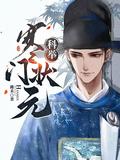 Imperial Examination, Number One Scholar from a Poor Family
30.6kReads9.2Score3kShelves
Imperial Examination, Number One Scholar from a Poor Family
30.6kReads9.2Score3kShelves
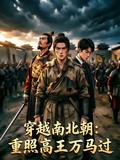 Traveling Through the Southern and Northern Dynasties: Re-Illuminating the Journey of King Gao and His Thousands of Horses
468Reads5.8Score—Shelves
Traveling Through the Southern and Northern Dynasties: Re-Illuminating the Journey of King Gao and His Thousands of Horses
468Reads5.8Score—Shelves
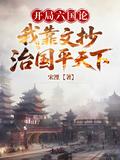 At the Beginning of the Six Kingdoms Theory, I Rely on Writing to Rule the Country and Bring Peace to the World.
16.5kReads8.5Score1.4kShelves
At the Beginning of the Six Kingdoms Theory, I Rely on Writing to Rule the Country and Bring Peace to the World.
16.5kReads8.5Score1.4kShelves
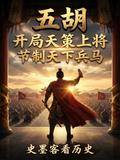 Wuhu: Starting with 31,000 Yuan, Fu Jian Will Be Guaranteed to Death.
1.9kReads8.2Score—Shelves
Wuhu: Starting with 31,000 Yuan, Fu Jian Will Be Guaranteed to Death.
1.9kReads8.2Score—Shelves
 A Small Country in the Five Dynasties: Not Only Did It Not Surrender, It Dared to Fight Back
1.1kReads8.2Score—Shelves
A Small Country in the Five Dynasties: Not Only Did It Not Surrender, It Dared to Fight Back
1.1kReads8.2Score—Shelves
 Zhujinou
4.2kReads8.2Score359Shelves
Zhujinou
4.2kReads8.2Score359Shelves
 Great Zhou Dynasty
39Reads—Score—Shelves
Great Zhou Dynasty
39Reads—Score—Shelves
 Story of Survival in the Eastern Jin Dynasty
32.1kReads8.6Score3.9kShelves
Story of Survival in the Eastern Jin Dynasty
32.1kReads8.6Score3.9kShelves
 Five Dynasties and Ten Kingdoms: Starting from Wei Bo, the Struggle for World Hegemony Begins
333Reads5.8Score—Shelves
Five Dynasties and Ten Kingdoms: Starting from Wei Bo, the Struggle for World Hegemony Begins
333Reads5.8Score—Shelves
 Traveling to the Jin Dynasty, I Became a Divination Master
12Reads8.7Score—Shelves
Traveling to the Jin Dynasty, I Became a Divination Master
12Reads8.7Score—Shelves
 Zhaowu Zhongxing: King Gui Saves the Ming Dynasty
38Reads—Score—Shelves
Zhaowu Zhongxing: King Gui Saves the Ming Dynasty
38Reads—Score—Shelves
 Zhuge Liang, the Rebellious Son of the Shu Han Dynasty, Called Him a Monster
563Reads8.7Score—Shelves
Zhuge Liang, the Rebellious Son of the Shu Han Dynasty, Called Him a Monster
563Reads8.7Score—Shelves
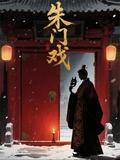 Zhumenxi
995Reads7.8Score102Shelves
Zhumenxi
995Reads7.8Score102Shelves
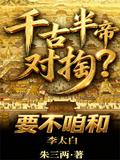 Datang: I Am in Suiye City, My Younger Brother Li Taibai?
8.2kReads8.7Score690Shelves
Datang: I Am in Suiye City, My Younger Brother Li Taibai?
8.2kReads8.7Score690Shelves
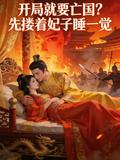 Will the Country Be Destroyed at the Beginning? Let's Take a Nap First with My Concubine in My Arms.
6.8kReads6.2Score480Shelves
Will the Country Be Destroyed at the Beginning? Let's Take a Nap First with My Concubine in My Arms.
6.8kReads6.2Score480Shelves
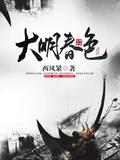 Ming Dynasty Spring Scenery
106Reads5.8Score—Shelves
Ming Dynasty Spring Scenery
106Reads5.8Score—Shelves
 Gou Fought Guerrillas in the Eastern Jin Dynasty
98Reads—Score—Shelves
Gou Fought Guerrillas in the Eastern Jin Dynasty
98Reads—Score—Shelves
 The Han Dynasty at the End of Jin Dynasty: from Rescuing the Crown Prince to Reviving the Great Han Dynasty
1.5kReads7.0Score112Shelves
The Han Dynasty at the End of Jin Dynasty: from Rescuing the Crown Prince to Reviving the Great Han Dynasty
1.5kReads7.0Score112Shelves
 I Am a Direct Grandson in Nanliang
994Reads8.0Score—Shelves
I Am a Direct Grandson in Nanliang
994Reads8.0Score—Shelves
 Seek Advancement
—Reads5.8Score—Shelves
Seek Advancement
—Reads5.8Score—Shelves
 Liturgical Dance Fellowship: Smoke and Clouds in the Mobei
21Reads—Score—Shelves
Liturgical Dance Fellowship: Smoke and Clouds in the Mobei
21Reads—Score—Shelves
 Wu Hu Cries Blood Record: Don't Be a Two-Legged Sheep
11.6kReads8.6Score1kShelves
Wu Hu Cries Blood Record: Don't Be a Two-Legged Sheep
11.6kReads8.6Score1kShelves
 The Hegemony of the Former Qin Dynasty
—Reads5.8Score—Shelves
The Hegemony of the Former Qin Dynasty
—Reads5.8Score—Shelves
 Rebirth: a Fierce Warrior and an Iron Horse, Swallowing Thousands of Miles Like a Tiger
2.4kReads5.8Score159Shelves
Rebirth: a Fierce Warrior and an Iron Horse, Swallowing Thousands of Miles Like a Tiger
2.4kReads5.8Score159Shelves
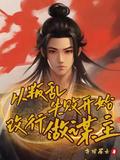 Struggle for Hegemony in the Northern and Southern Dynasties: Rebel Leader Re-Employed
2.2kReads8.4Score120Shelves
Struggle for Hegemony in the Northern and Southern Dynasties: Rebel Leader Re-Employed
2.2kReads8.4Score120Shelves
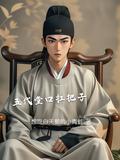 Zhao Kuangyin? He Has to Call Me Big Brother
16Reads5.8Score—Shelves
Zhao Kuangyin? He Has to Call Me Big Brother
16Reads5.8Score—Shelves
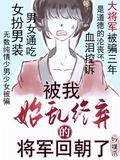 The General Who Was Abandoned by Me from Beginning to End Has Returned to the Court.
1.9kReads9.1Score245Shelves
The General Who Was Abandoned by Me from Beginning to End Has Returned to the Court.
1.9kReads9.1Score245Shelves
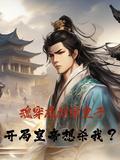 The Soul Was Transformed into Emperor Xiaowu of the Song Dynasty, and the Iron-Blooded Liu Song Dynasty Was Created.
533Reads—Score—Shelves
The Soul Was Transformed into Emperor Xiaowu of the Song Dynasty, and the Iron-Blooded Liu Song Dynasty Was Created.
533Reads—Score—Shelves
 The Hunter of the Tang Dynasty
4.1kReads7.5Score297Shelves
The Hunter of the Tang Dynasty
4.1kReads7.5Score297Shelves
 Traveling Through the Qin Dynasty Four Times: Who Gave Birth to Fusu? Why Rely on Me?
14.4kReads9.5Score2.8kShelves
Traveling Through the Qin Dynasty Four Times: Who Gave Birth to Fusu? Why Rely on Me?
14.4kReads9.5Score2.8kShelves
 Time Travel: Five Dynasties and Ten Kingdoms
—Reads5.8Score—Shelves
Time Travel: Five Dynasties and Ten Kingdoms
—Reads5.8Score—Shelves
 Looking Back at a Moment, It Has Been a Thousand Years
180Reads8.4Score—Shelves
Looking Back at a Moment, It Has Been a Thousand Years
180Reads8.4Score—Shelves
 Qin's Country
122Reads—Score—Shelves
Qin's Country
122Reads—Score—Shelves
 Three Kingdoms: I Hold the Urn to Suppress the Ghost Path
109Reads5.8Score—Shelves
Three Kingdoms: I Hold the Urn to Suppress the Ghost Path
109Reads5.8Score—Shelves
 Traveling Through the Eastern Jin Dynasty: Bringing Eternal Peace to the Han People
56Reads—Score—Shelves
Traveling Through the Eastern Jin Dynasty: Bringing Eternal Peace to the Han People
56Reads—Score—Shelves
 Chu Youjing's Daughter
132Reads7.8Score—Shelves
Chu Youjing's Daughter
132Reads7.8Score—Shelves
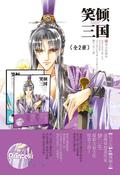 Laughing at the Three Kingdoms
779Reads9.1Score136Shelves
Laughing at the Three Kingdoms
779Reads9.1Score136Shelves
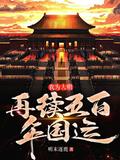 General Fengguo of the Ming Dynasty
2kReads8.6Score122Shelves
General Fengguo of the Ming Dynasty
2kReads8.6Score122Shelves
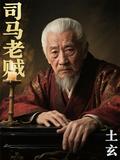 Sima Old Thief
503Reads9.3Score—Shelves
Sima Old Thief
503Reads9.3Score—Shelves
 Dawei Fanghua
149Reads5.8Score—Shelves
Dawei Fanghua
149Reads5.8Score—Shelves
 Sister Lin Fell from the Sky
157Reads8.8Score—Shelves
Sister Lin Fell from the Sky
157Reads8.8Score—Shelves
 From Luoyang to Health, the Moving History of the Sima Family
7Reads—Score—Shelves
From Luoyang to Health, the Moving History of the Sima Family
7Reads—Score—Shelves
 Anyone Who Openly Offends a Strong Man Will Be Punished No Matter How Far Away He Is.
46Reads5.8Score—Shelves
Anyone Who Openly Offends a Strong Man Will Be Punished No Matter How Far Away He Is.
46Reads5.8Score—Shelves
 Zhaozong Xingtang
15Reads5.8Score—Shelves
Zhaozong Xingtang
15Reads5.8Score—Shelves
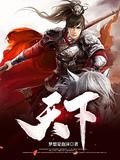 World
3.4kReads8.0Score197Shelves
World
3.4kReads8.0Score197Shelves
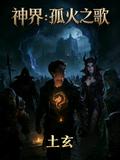 Divinity: Song of the Lonely Fire
1.5kReads9.4Score137Shelves
Divinity: Song of the Lonely Fire
1.5kReads9.4Score137Shelves
 Red Flag
825Reads7.3Score—Shelves
Red Flag
825Reads7.3Score—Shelves
 Wentianzhijiangshan Picturesque
3Reads—Score—Shelves
Wentianzhijiangshan Picturesque
3Reads—Score—Shelves
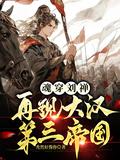 Three Kingdoms: I, Liu Adou, Am Really Not Cao Cao's Son.
6.7kReads8.8Score644Shelves
Three Kingdoms: I, Liu Adou, Am Really Not Cao Cao's Son.
6.7kReads8.8Score644Shelves
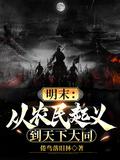 Late Ming Dynasty: from Peasant Rebellion to Universal Harmony
9.1kReads8.7Score533Shelves
Late Ming Dynasty: from Peasant Rebellion to Universal Harmony
9.1kReads8.7Score533Shelves