In the sixteenth year of Jian'an, Zhang Song arrives in Gong'an to offer a map. Emperor Zhaolie Liu Bei suddenly sits bolt upright in his tent. In a previous life, his soul had wandered through the underworld, where he saw Guan Yu defeated at Maicheng and Kongming die at Wuzhang Plains. He had also witnessed the bone-chilling sight of the Han banner falling from Luoyang's walls when Adou surrendered to Wei. The judge declared that the Han dynasty's four-hundred-year fortune had not yet run out, and allowed him to return to life with his memories of a past life, at the critical juncture when the decision to enter Yi Province had to be made.
This time, he casts aside misplaced compassion. He refuses to take Pang Tong into Shu, leaving him to assist Zhuge Liang in guarding Jingzhou and averting the disaster of the "Fledgling Phoenix's fall." He orders Mi Fang and Fu Shiren to resign their posts in Jingzhou and join the campaign, cutting off the source of treachery. At the banquet in Fucheng, he signals by hurling a cup; his guards draw their ring-pommel sabers, seize Liu Zhang on the spot, and take control of Yi Province. Shu is pacified in three months, sparing them a three-year war.
Knowing that Shu Han is weak in cavalry and constrained by its terrain, he sends Zhang Qian's descendants to the Western Regions to bring the rulers of Shanshan and Khotan's sons to Shu as hostages. He recruits heavy cavalry in chainmail and mounted archers from the Western Regions, making up for Shu Han's military shortcomings. At the Battle of Hanzhong, Zhuge Liang's repeating crossbows fire in volleys to defeat the enemy; at Mount Dingjun, Xiahou Yuan is swiftly slain, and Hanzhong is brought under control a year earlier than in the original history. He also abandons the perilous plan of "Guan Yu's northern expedition," ordering Zhuge Liang to train a navy in Jingzhou while he and Ma Chao command separate forces in Hanzhong and the Western Regions. Catapults batter Tong Pass as light cavalry harass Wei's supply lines, steadily closing in on Luoyang.
From the rattan-armored troops' mountain warfare during the suppression of rebellions in Yi Province, to the clash of heavy cavalry on the south bank of the Wei River, to the engagement of tower ships beneath the walls of Jianye, every battle reflects the geography of the Three Kingdoms and recreates the practical details of ring-pommel sabers, long spears, and Zhuge Liang's repeating crossbows. In the end, Liu Bei captures Ye and brings Sun Quan to heel. As he performs the Fengshan sacrifice at Mount Tai, he looks back: the vision of a fallen dynasty he saw in the underworld has become the prelude to the Han's resurgence. The four-hundred-year Han dynasty is finally reunified under his hand.

 The Real Story of the World War II Battlefield
 The Di Renjie Case Files: Mysteries Across the Nine Provinces
 After the Divorce, I Married My Nemesis
 The Phoenix and the Plot
 Chronicles of the Crimson Jade
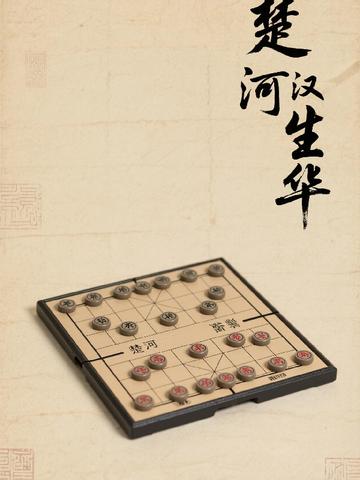 Where Chu River Blossoms
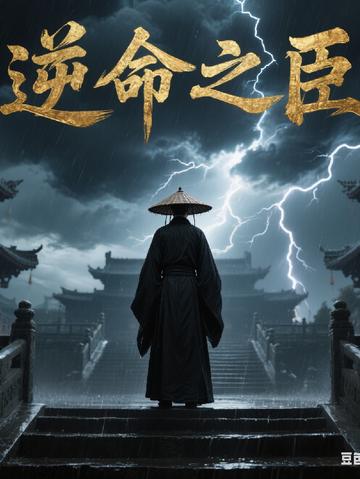 The Minister Who Defied Fate
 Reborn Twice: Baoyu Defies Fate and Changes His Destiny
 Strange Tales of Reincarnation: A Hundred Trials of Love
 Tales from the Alley: The Book of the Fate Defier
 Chasing the Dream: Lu Minglü's Legendary Career as an Agent
 Mirrors of Time and Space: Redemption on Both Sides