In 1983, on the loess slopes of Huangtupo Village along the Yellow River in southern Shanxi, the spring breeze of household farming contracts swept across the fields, but it could not disperse the gloom hanging over the slopes, where people still depended on the weather for their harvests. Li Gensheng, a farmer with cracked, calloused hands, gazed at his family’s five mu of poor land and made a vow: he would terrace the slopes and build an irrigation canal fed by a tributary of the Yellow River, so that the loess hills could yield a golden harvest.
Standing behind him was Wang Xiulian, the bold and clear-headed director of the women’s federation. And bound up in it all was the unbreakable bond between siblings: his eldest brother, Li Genfu, was kept on a tight leash by his domineering wife and wanted to help but didn’t dare; his second sister, Li Genmei, had married in a neighboring village and was caught between her in-laws and her own family; his youngest sister, Li Genhua, clutched her middle-school textbooks, looked to her third brother as her pillar, and secretly saved her dowry money, hoping to contribute.
From wild ideas at spring planting to the struggle to break ground; from the desperate moment when a minor Yellow River flood washed away the canal embankment to the warmth of the siblings pooling their money to repair the breach; from Li Ergou’s scornful jeers to the whole village eagerly pitching in... Gensheng and his siblings tramped through the loess and sweated under the sun, packing the small troubles of family life, the ties of kinship, and the surging tide of the times into every earthen brick of the canal. At last, when water spilled over the field ridges, it not only revived the crops but also nourished the people of Huangtupo’s new hopes for a better life.


 The Dark Road: Every Step Carefully Planned
 Five Minutes in the Grandfather Clock on Watchmaker’s Alley, 1986
 Cultivating Immortality in Jiangcheng
 Echoes from the Abyss of Anti-Corruption
 The Great Eunuch of the Ming Dynasty
 The Isle of Forgetting: I Am the Deserted Island
 72 Hours to Redemption in the Memory Cage
 Laundry in the Dust
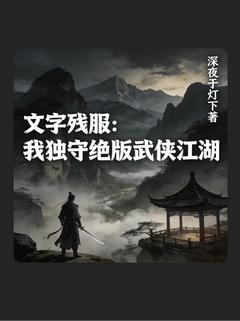 Text-Based Abandoned Server: I Alone Guard the Classic Wuxia World
 No Divide Between Good and Evil: Li Kuikui's Road to Redemption
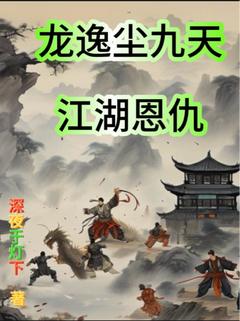 Long Yichen in the Nine Heavens: Jianghu Feuds
 An Ordinary Life: The Road to a Comeback





Average
It's just so-so, nothing particularly outstanding.