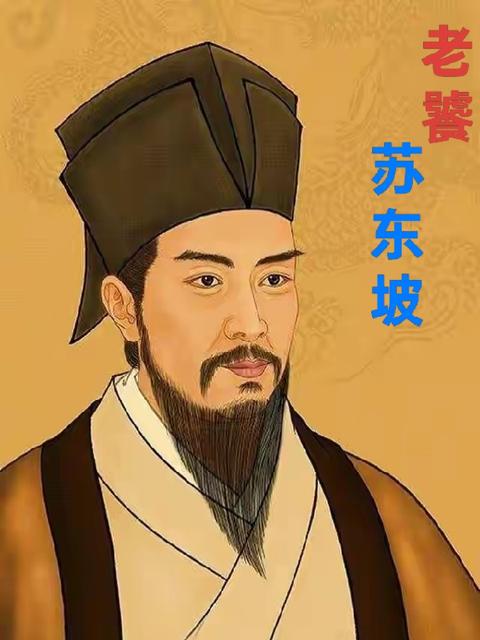
The Epicurean Su Dongpo is a historical biographical novel in six volumes and sixty chapters. Food is its lens and flavor its thread as it unfolds the story of Su Shi’s sixty-six years of gourmand living.
This is no cookbook. It is an epic that weaves the history of a scholar’s eating into the very fabric of his fate. Su Shi was born in Shu, where his mother, Madam Cheng, tasted every dish before serving it, instilling in him a lifelong devotion to the true flavor of food. At seven, he watched cooks stir-fry spring bamboo shoots over a roaring flame and simmer river catfish over a low one, first grasping the mysteries of heat and ingredients. At sixteen, he shared bitter bamboo shoots and spring pancakes with Wang Fu. Their bitterness turned sweet, becoming a footnote to a lifelong love. At the Qionglin Banquet, presented with crab-stuffed oranges, he could only think, “They’re not as good with rice as the pickles at home.” What matters in food is flavor, not ceremony; sincerity, not refinement.
For thirty years, he measured the Northern Song landscape with his palate and felt the people’s joys and sorrows through taste. In Fengxiang, he prayed for rain and ate wild-vegetable porridge alongside starving villagers. In Mizhou, amid locusts and drought, he gathered wolfberries and ate chrysanthemums. In Xuzhou, after fighting the floods, he was gifted fish stuffed with lamb. Eating was never just eating for him; it was his way into understanding politics.
During the Crow Terrace Poetry Trial, he spent more than a hundred days in prison chewing food that tasted like wax. After his release, a bowl of hot noodles felt like a taste of another world. Exiled to Huangzhou, he worked the land at Dongpo and turned cheap pork into the legendary Dongpo pork with his method of “low heat and little water.” At Snow Hall, they called him an epicurean, and he laughed and accepted the name. Eating became his way of defying fate. Lychees in Huizhou, seeking the taste of crab in sheep’s spine, oysters in Danzhou, and writing The Epicurean’s Rhapsody at the Areca Palm Hermitage: his exiles in three prefectures brought his philosophy of food to its fullest expression.
With food as its warp and his official career as its weft, the novel weaves a record of Northern Song upheavals, told through the palate. Every dish is a metaphor for his circumstances, every taste a commentary on his fate. Through the life of one man, it transforms “epicurean,” once an insult, into a title of honor, elevating the simple act of eating into a philosophy of life. Life offers every flavor, and each must be savored.