Synopsis of The Great Literary Master of the Ages: A Biography of Han Yu
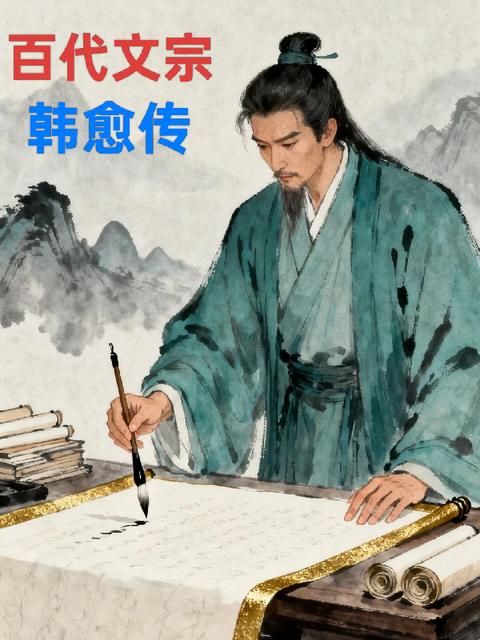
This is an epic of a scholar-hero, built on language as its framework and historical fact as its flesh and blood. With the creation of idioms as its distinctive thread, the novel follows the tumultuous life of Han Yu, the “Great Literary Master of the Ages.”
He came from a lonely childhood in Heyang, enduring a life of “solitude” and “burning the candle late into the night.” Through the ups and downs of the civil service examinations and the humiliation of seeking patrons, he forged an “unyielding” will and the integrity of a “gentleman who remains steadfast in poverty.” His career in government was fraught with danger, and he was often punished for the slightest offense, yet he remained “loyal even when it angered the ruler.” His memorial “On the Buddha’s Bone” shook the court and earned him exile to the south, where he penned the immortal lines of “Snowbound at Blue Pass.” Yet hardship gave rise to greatness. In the wilderness of Chaozhou, he made offerings to the crocodiles and established schools, forever enshrining in history his legend of “ridding the people of harm” and his achievements in “spreading education far and wide.”
He was also the standard-bearer of the Classical Prose Movement, whose life’s work “revived literature after eight dynasties of decline.” His “Teacher’s Discourse” shocked the world and restored the dignity of teachers who “transmit the Way and impart knowledge.” Within a single essay, “Jinxue Jie,” more than thirty idioms poured forth, including “savoring the finest essence” and “scraping away grime and polishing to a shine,” creating a magnificent literary spectacle. His preface to “Farewell to Meng Dongye” proclaimed that “injustice must find a voice,” becoming a model for writers through the ages. His writing was not only exquisite prose, but also a living wellspring of the national language.
This book takes you into the Middle Tang, where you can experience the clash of ideas in an age when literature served the Way and feel the solitary courage of one who would press on even against ten thousand foes. See how Han Yu lived by the maxim that “excellence in one’s work comes from diligence,” and how his ideas and words enriched later generations, making him an “unshakable pillar of learning.” This is not merely one man’s biography, but a stirring tale of how language shapes culture and how the spirit transcends time.