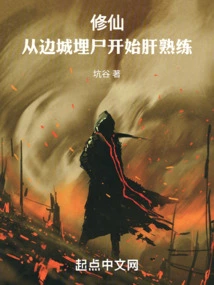
Obsession: the Liver is Extremely Clear!
by Pit Valley
About This Novel
Immortals compete for hegemony, just to become immortals; all living beings are fuel, and they have been burning for a long time! As time goes by, evil obstacles abound; heaven and earth fall, and resentment arises in the world! Du En was reincarnated as a human, traveled here, and became a low-level monk in the southern border city of Luoyu Xianmen, responsible for burying corpses. He saw that the people at the bottom harmed each other, their bad natures persisted, and evil abounded. He saw that the strong were unkind, that all souls were sacrificed, and that they were fighting for supremacy. In this world of immortality, dangers are everywhere, the weak are at risk, benevolence has long been lost, and evil is twisted! Fortunately, Dune has a proficiency panel. As long as you put in the effort, practice makes perfect, and success will come naturally. So, let's get started! Gan practices cultivation of immortality, starting from burying corpses in the border town, until one day sooner or later, he will make everything return to its place and make the world clear again! PS: The original title of this book is "Cultivation of Immortality: Starting from Burying Corpses in the Border Town to Become Proficient!"
Official Sources
What Readers Think
Rating
Community(0)
Official(12)Scraped 2mo ago
Pretty good. I hope there won't be any plots involving mysterious girls, beautiful senior sisters, teachers, elders and captains. Simply put, there won't be any beautiful girls backing them up.
I don't understand. Immortal cultivators can just use a fireball or a fire charm to deal with the corpse. Why do they need people to deal with it? Isn't it a waste of manpower?
Regarding the issue of combat power
As the title states, this book is strictly stratified according to five levels of combat power/talent, which are inferior, outstanding (subdivided into third-rate, third-rate to first-rate), genius, genius, and top. Among them, among the top three grades, the strong, general and weak subdivisions of each layer have obvious differences in quantity, especially the top three grades. Because the difference is too big, they are further subdivided into first-rate to third-rate. The first official mention was in Chapter 96, using the evil cultivator's words to reveal the protagonist's combat power stratification at that time. The formal and comprehensive mention is in Chapter 186. When the plot has developed, I will use the reasonable character Meng Changqing to explain it (this chapter seems to have a lot of settings and is quite watery. It is caused by later remediation. I didn't want to write too much in the first place. Sorry) I have always felt that there is no need to separate grading levels such as realm and talent stratification if there are no obvious outstanding differences in quality or quantity. Therefore, in this book, the advantages of large realms are obvious, and the stratification of combat power is even more stringent. Only "what can be done and what can be achieved can be evaluated as to which tier"! Therefore, in this book, there is no possibility of killing enemies by different levels of combat strength. It is always about crushing the people at the lower level according to the level of combat strength. However, in the first volume of the early stage of the plot, because the status of the protagonist is too low, it is impossible to know this knowledge, so I did not elaborate it in the article, and I was afraid that there would be too many settings and it would appear too superficial. But in this way, the protagonist is always at a lower level than the others, which makes the sense of combat power somewhat collapsed. This is my fault for not constantly emphasizing the side, that is, the special level of skill mastery. But even so, the protagonist still does not have the possibility of killing enemies at a higher level until the current plot is released, that is, Chapter 235, because the increase in a large level can smooth out some of the talent gaps. But in terms of plot, I will not create any obstacles for myself or the readers, making the protagonist's liver training seem meaningless, so the protagonist can always maintain a balance or superiority with the enemies on the scene! Finally, let's talk about the strength stratification of early characters. The poor and hard-working people at the bottom of the general public, including those who are hard workers and gangsters, are all ordinary, low-level people. Therefore, when the protagonist's strength reaches the third level, that is, when the low-level skills are mastered, he can basically kill indiscriminately, just like a small stone can break a big egg. The weak third-rate people are the supervisors. Those who are able to cultivate to the perfection of Qi refining on their own have already touched the threshold of being a leader. The template for third-rate people is the stewards outside the city during the foundation building period. In other words, if you can build the foundation, you will be rated as a leader. Therefore, after this, there will be no unqualified people. In the foundation building period of the outer city of the small town, it is basically a strong third-rate city because the resources are better. The old guards on the outpost and the inner city elites ranged in strength from second-rate weak to second-rate strong. The camp leaders are at the first-class level, and those in the Jindan stage at the end of the south are all people with at least some first-class talents. The evil cultivators were quite special. They were distributed from the strongest first-rate to the second-rate. Their average quality actually crushed the monks in the southern border city.
The setting is extremely disgusting. During the Qi training period, it is used as consumables, during the foundation building period, it is used as cannon fodder, and during the golden elixir period, it is used as cannon fodder on the battlefield. Nascent Soul Stage
It's so boring. The protagonist's leveling up is very slow, and it looks like a martial arts world, not like a world of immortality.
Yeah, hurry up, hurry up, hurry up
The only shortcoming of this book is that it is a bit slow to read, but it is still okay to read it calmly.
Not good-looking
Let me tell you, the author who dominates the screen in the comment section usually doesn't look good.
It was very exciting in the early stage but became incomprehensible in the later stage.
The burying of corpses at the beginning is very creative, and the plot of the protagonist's continuous upgrading in the early stage is very interesting and reasonable. But in the later period, the writing was so confusing that it was like a mortal reading the Immortal Sutra and not knowing what you wrote. . . . . .
Yes, why are there so many herbs next to the burial site that no one is picking up? Why don't people at the bottom pick them up and sell them for money if their lives are so difficult? Are there too many people dying every day in the border town, dozens of them at every turn?
Rating
Community(0)
Official(12)Scraped 2mo ago
Pretty good. I hope there won't be any plots involving mysterious girls, beautiful senior sisters, teachers, elders and captains. Simply put, there won't be any beautiful girls backing them up.
I don't understand. Immortal cultivators can just use a fireball or a fire charm to deal with the corpse. Why do they need people to deal with it? Isn't it a waste of manpower?
Regarding the issue of combat power
As the title states, this book is strictly stratified according to five levels of combat power/talent, which are inferior, outstanding (subdivided into third-rate, third-rate to first-rate), genius, genius, and top. Among them, among the top three grades, the strong, general and weak subdivisions of each layer have obvious differences in quantity, especially the top three grades. Because the difference is too big, they are further subdivided into first-rate to third-rate. The first official mention was in Chapter 96, using the evil cultivator's words to reveal the protagonist's combat power stratification at that time. The formal and comprehensive mention is in Chapter 186. When the plot has developed, I will use the reasonable character Meng Changqing to explain it (this chapter seems to have a lot of settings and is quite watery. It is caused by later remediation. I didn't want to write too much in the first place. Sorry) I have always felt that there is no need to separate grading levels such as realm and talent stratification if there are no obvious outstanding differences in quality or quantity. Therefore, in this book, the advantages of large realms are obvious, and the stratification of combat power is even more stringent. Only "what can be done and what can be achieved can be evaluated as to which tier"! Therefore, in this book, there is no possibility of killing enemies by different levels of combat strength. It is always about crushing the people at the lower level according to the level of combat strength. However, in the first volume of the early stage of the plot, because the status of the protagonist is too low, it is impossible to know this knowledge, so I did not elaborate it in the article, and I was afraid that there would be too many settings and it would appear too superficial. But in this way, the protagonist is always at a lower level than the others, which makes the sense of combat power somewhat collapsed. This is my fault for not constantly emphasizing the side, that is, the special level of skill mastery. But even so, the protagonist still does not have the possibility of killing enemies at a higher level until the current plot is released, that is, Chapter 235, because the increase in a large level can smooth out some of the talent gaps. But in terms of plot, I will not create any obstacles for myself or the readers, making the protagonist's liver training seem meaningless, so the protagonist can always maintain a balance or superiority with the enemies on the scene! Finally, let's talk about the strength stratification of early characters. The poor and hard-working people at the bottom of the general public, including those who are hard workers and gangsters, are all ordinary, low-level people. Therefore, when the protagonist's strength reaches the third level, that is, when the low-level skills are mastered, he can basically kill indiscriminately, just like a small stone can break a big egg. The weak third-rate people are the supervisors. Those who are able to cultivate to the perfection of Qi refining on their own have already touched the threshold of being a leader. The template for third-rate people is the stewards outside the city during the foundation building period. In other words, if you can build the foundation, you will be rated as a leader. Therefore, after this, there will be no unqualified people. In the foundation building period of the outer city of the small town, it is basically a strong third-rate city because the resources are better. The old guards on the outpost and the inner city elites ranged in strength from second-rate weak to second-rate strong. The camp leaders are at the first-class level, and those in the Jindan stage at the end of the south are all people with at least some first-class talents. The evil cultivators were quite special. They were distributed from the strongest first-rate to the second-rate. Their average quality actually crushed the monks in the southern border city.
The setting is extremely disgusting. During the Qi training period, it is used as consumables, during the foundation building period, it is used as cannon fodder, and during the golden elixir period, it is used as cannon fodder on the battlefield. Nascent Soul Stage
It's so boring. The protagonist's leveling up is very slow, and it looks like a martial arts world, not like a world of immortality.
Yeah, hurry up, hurry up, hurry up
The only shortcoming of this book is that it is a bit slow to read, but it is still okay to read it calmly.
Not good-looking
Let me tell you, the author who dominates the screen in the comment section usually doesn't look good.
It was very exciting in the early stage but became incomprehensible in the later stage.
The burying of corpses at the beginning is very creative, and the plot of the protagonist's continuous upgrading in the early stage is very interesting and reasonable. But in the later period, the writing was so confusing that it was like a mortal reading the Immortal Sutra and not knowing what you wrote. . . . . .
Yes, why are there so many herbs next to the burial site that no one is picking up? Why don't people at the bottom pick them up and sell them for money if their lives are so difficult? Are there too many people dying every day in the border town, dozens of them at every turn?
Featured in 1 Booklist
You Might Also Like
Reborn Female General
Qianshan Tea Guest
Dou Mi Xian Yuan
Noyost
Longevity Begins with Learning
Half Chapter Ink
Ten Thousand Long Distances
The Brain Is Hollowed Out
Begin Liver Proficiency with Alchemy
Fishing In March
Gou Zai Shen Seeks Immortality
Strange Eyes And Clouds
Changsheng: I Planted the Nine-grade Green Lotus
Run The Small Universe
The Lord of Time: from the Five Elements to the Hunyuan Ten Thousand Paths
March Is Like Nine
Beginning from the Sidelines and Becoming the Taoist Lord of Ten Thousand Dharmas
Old Seal Kk

I Rely on Length to Achieve Immortality
Sweet And Sour Avocado