In 1976, Dilizar and Ayihan in Xinjiang are bitterly at odds over irrigation and house construction. Their feud spreads to the younger generation. Alia, who grew up with Song Xiangshang, no longer lets him ride her big white horse to school and makes things difficult for him at every turn. Later, amid the wave of educated youth returning to their hometowns, Alia follows her father back to the city and begins living like a city girl. She also becomes the person Song Xiangshang pursues.
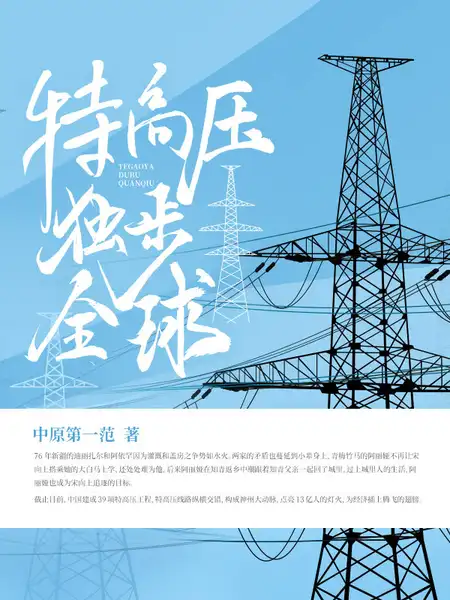
Song Jianguo, an electrician, is furious about the "Eight-Nation Allied Forces Project," a disgrace for the power industry, and changes his son Song Xiangshang's university application to electrical engineering. Song Xiangshang also learns that ultra-high-voltage transmission technology is essential to the nation's rise, but developing it is as difficult as building the two bombs and one satellite. Major powers such as the United States, Japan, and Europe have poured enormous sums of money, manpower, and resources into it, yet after half a century of research, they have all failed.
But Song Xiangshang and three generations of power engineers, young and old, refuse to be daunted by hardship. They bring together dozens of members of the Chinese Academy of Sciences and the Chinese Academy of Engineering from across the country's machinery and power industries, along with thousands of power experts. After twenty-three years, they break countless foreign monopolies, set countless world records, and finally solve the world's supposedly impossible challenge of ultra-high-voltage transmission. They achieve an extraordinary leap in the power industry, moving from falling behind, to catching up, to keeping pace, and finally surpassing others. To this day, China is the only country in the world to have independently mastered and applied this technology.
So far, China has built 39 ultra-high-voltage projects. The network of transmission lines crisscrosses the country, forming the arteries of the nation and lighting the homes of 1.3 billion people, while giving the economy wings to soar.
Song Xiangshang actively takes part in building Xinjiang's power infrastructure, helping deliver vast amounts of wind and solar power to 21 provinces via ultra-high-voltage transmission, with electricity reaching as far as Shanghai. It is a romantic story of "Xinjiang's wind and sunshine lighting up Shanghai."


 Dragon Blade
 The Law of Half-Rationality
 A Match Made in Gold and Jade
 The Happy Dining Hall
 Warm Sunlight Through Smoke Over Hetian Jade
 The Poverty Alleviation Team Leader
 Asking the Azure on Paper
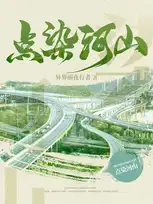 Painting the Rivers and Mountains
 Let's Date, Alien
 Frostpoint, Burning Notes
 The Girl Who Dances Saye'erhe
 Panda Census Taker
 The Song of Tianma: The Life of Chen Chi
 A Letter from the Northern Frontier
 Dying Again
 Operation Nibiru
 Fireflies Shine on the Bright Moon
 A Path Fragrant with Fruit
 The Immortal Qin Emperor
 Restoring Beams and Painting Buildings