Xianxia Must-eat List
仙侠必吃榜
Mainly recommend classical fairy tales
 1
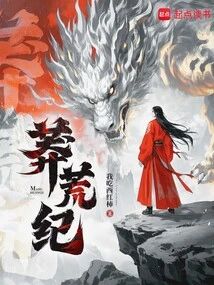
1The Wilderness
Xianxia莽荒纪
I Eat Tomatoes
After Ji Ning died, he came to the underworld. After being judged by the judge about his past life and the afterlife, he was reincarnated into the Ji family of the tribe. Here, there are Kua Fu chasing the sun... Hou Yi shooting the golden crow... And countless immortal cultivators who have experienced three disasters and nine tribulations and died without regrets in order to live a long and happy life... Ji Ning also became an immortal cultivator and began his journey to immortality...
After Ji Ning died, he came to the underworld. After being judged by the judge about his past life and the afterlife, he was reincarnated into the Ji family of the tribe. Here, there are Kua Fu chasing the sun... Hou Yi shooting the golden crow... And countless immortal cultivators who have experienced three disasters and nine tribulations and died without regrets in order to live a long and happy life... Ji Ning also became an immortal cultivator and began his journey to immortality...
515 half-price event full booking replenishment ticket
 2
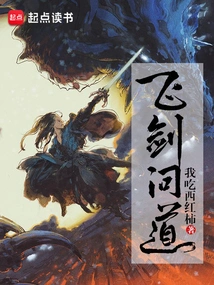
2Feijian Asked
Xianxia飞剑问道
I Eat Tomatoes
Tomato's ninth novel after "Swallowing the Stars", "The Wilderness" and "Snow Eagle Lord". ---- In this world, there are fox fairies, river gods, water monsters, great demons, as well as practitioners seeking immortality. Practitioners, With Dharma eyes open, you can see demons and ghosts. Refining a flying sword can kill enemies from thousands of miles away. He has clairvoyance and ears, and can explore all directions. ... The second son of Qin Mansion, 'Qin Yun', is a practitioner...
Tomato's ninth novel after "Swallowing the Stars", "The Wilderness" and "Snow Eagle Lord". ---- In this world, there are fox fairies, river gods, water monsters, great demons, as well as practitioners seeking immortality. Practitioners, With Dharma eyes open, you can see demons and ghosts. Refining a flying sword can kill enemies from thousands of miles away. He has clairvoyance and ears, and can explore all directions. ... The second son of Qin Mansion, 'Qin Yun', is a practitioner...
It should be over after Qin Yuncheng becomes a Sanxian...
清光宝鉴
A Piece Of Sage Leaf
"Invite Yin Han to the nine heavens and the moon to enjoy the eternal spring of the human world. Regardless of the troubles in the world of mortals, I have cultivated in half a lifetime to rob the outer body..." ---- The moon in the water is like a dreamy mirror flower. Even Meng Tong knew that the moon in the water could only be seen but not touched. But Qin Xuan, he can pick up the moon... ...
"Invite Yin Han to the nine heavens and the moon to enjoy the eternal spring of the human world. Regardless of the troubles in the world of mortals, I have cultivated in half a lifetime to rob the outer body..." ---- The moon in the water is like a dreamy mirror flower. Even Meng Tong knew that the moon in the water could only be seen but not touched. But Qin Xuan, he can pick up the moon... ...
The new book by "One Su Ye", a top author on the martial arts circuit, has gone beyond martial arts fan fiction and chosen a classical fairy tale with an original world view, which tests the world structure and plot design capabilities. What would it be like for an author who is good at martial arts and good at writing to write about classical fairy tales? Personally I'm quite looking forward to it. Interested book friends can go to Kangkang~
 4
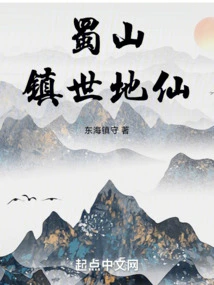
4Shushan Town World Immortal
Xianxia蜀山镇世地仙
East China Sea Guard
The world is vast and infinite, with beautiful bells and bells. There are Eastern Taoist sects that have a long history, and there are also Western Shu Taoist sects that have suddenly emerged, such as the Quanzhen sect of the North, the Danding sect of the South, the Sword sect, and the Zen sect. However, in this world there are hundreds of schools of thought contending, and there are also demons causing trouble. The southern faction is cunning, the northern faction is ferocious, and there are also a group of overseas monsters watching with eager eyes. Even among the decent sects, there are also disputes between Daoxuan and Daoxuan, and the differences between north and south are surging undercurrents. In this land, calamities, killings, and demons take turns taking turns, and there has never been any real peace. Until one day, on the border of Dongfang Yuzhang, a fifteen-year-old boy worshiped at the Sanqing Fairy Mountain and advanced all the way, practicing the Hunyuan of Ten Thousand Dharma. Taoist priests do not seek to ascend, and are not subject to heaven's decrees. They only wish to be a resident immortal, vowing to control the world forever and eliminate all harmful insects. As a result, the four seas were turbulent and the five continents were shaken. A wise man is invincible.
The world is vast and infinite, with beautiful bells and bells. There are Eastern Taoist sects that have a long history, and there are also Western Shu Taoist sects that have suddenly emerged, such as the Quanzhen sect of the North, the Danding sect of the South, the Sword sect, and the Zen sect. However, in this world there are hundreds of schools of thought contending, and there are also demons causing trouble. The southern faction is cunning, the northern faction is ferocious, and there are also a group of overseas monsters watching with eager eyes. Even among the decent sects, there are also disputes between Daoxuan and Daoxuan, and the differences between north and south are surging undercurrents. In this land, calamities, killings, and demons take turns taking turns, and there has never been any real peace. Until one day, on the border of Dongfang Yuzhang, a fifteen-year-old boy worshiped at the Sanqing Fairy Mountain and advanced all the way, practicing the Hunyuan of Ten Thousand Dharma. Taoist priests do not seek to ascend, and are not subject to heaven's decrees. They only wish to be a resident immortal, vowing to control the world forever and eliminate all harmful insects. As a result, the four seas were turbulent and the five continents were shaken. A wise man is invincible.
Classical Xianxia · Shushan Fans · Genius Stream · Non-gangster Cultivation of Immortals · Amazing Writing · Slow Heat · Literary Youth The author studied under the guidance of "The Legend of the Swordsman of Shushan" written by the owner of Huanzhu Tower during the Republic of China, and developed an original story line based on the demonic transformation of Shushan's worldview. The protagonist Cheng Yunqi eats breath with six breaths and reaches the top of the genius list of Sanqing Mountain. He seizes the land in southern Xinjiang, seizes the Fei Jian Tao Capital, and becomes enemies with Li Yingqiong of Emei. Later, he explores the imperial tomb and reveals the origin of Jianwen's descendants, and deals with the dispute between Sanqing Mountain and the Emei sect's orthodoxy. The main plot revolves around suppressing the Blood God Sect and fighting against the devil. It is interspersed with multi-line interactions with Zhou Qingyun (the suspected heroine) and the daughter of the Bai Yujing family. The sect group portrait scene is intertwined with the secrets of the dynasty. The world view combines the basic settings of Shushan Swordsman Legend and the original Taoist folk custom system, focusing on the orthodox cultivation logic of "suppressing the evil spirits and refining swords to prove the Tao". Return to the bright world of Xianxia, not dark or mentally retarded. Although some characters are borrowed from the book "The Legend of Shushan Swordsman", it makes breakthroughs and does not fall into the stereotypes. It has greatly transformed the world view and the main story line is also brand new, making this book transcend the category of fan fiction and make people's eyes shine. Readers like me who are not familiar with Shushan's original works can easily immerse themselves in it. The author has the Taoist system and folklore allusions at his fingertips, and his writing style is excellent, half-literate but not obscure. The descriptions of star visualization and thunder and sword techniques are full of the charm of ancient immortals. It is fresh and refined, with a rare fairy spirit, and a bit of chivalrous spirit of martial arts novels. It has the same feeling as when I first read Fairy Gourd, Asking the Mirror, and Resurrecting Evil. The genius flows but does not fall into the cliché. The protagonist acts aboveboard and aboveboard, and relies on moral deduction rather than brainless crushing to solve the problem. The atmosphere of the Sanqingshan sect is pure and clean, with masters and disciples getting along well with each other and fellow disciples helping each other, recreating the atmosphere of the classical Taoist sect. The controversial points are: the manual-like opening, the first 20 chapters intensively describe the training system, the world view is too much, and the narrative is dull; it is relatively slow, and the plot progress is not fast. In the 20 chapters, I am still learning Taoism, and it is not until Cheng Yunqi goes out to experience that there are some fighting scenes; the world view is too grand, there are too few hooks, the main line is vague, and major events are like a sea. The overseas travels are chopped into pieces and lack the sense of being unable to stop; some descriptions are too ostentatious - the appearance of the White Tiger Qisu star official is written in a thousand words, and the introduction of the Eight Great Principles is like a travel guide; the protagonist is too talented and has a weak image, and the magic setting is changed. Generally speaking, this book does not have the "anti-routine" found in many fairy tale novels today. The decent people are generally good people, and the people in the magic sect are generally bad guys. There is a clear distinction between good and evil, and cultivation depends on one's temperament and experience. It is refreshing and straightforward. The master cared for him, and the brothers and sisters he met in the sect were all good people, and he felt as if he was attending a university for cultivating immortals. I have read too many abortion books like "Xuan Jian Xian Clan", and it is quite novel to read this kind of classical style text again... This book is definitely worth a read for readers of fairy tales who are tired of the underworld cultivating immortals, prefer the classical fairy tale style, are willing to appreciate the setting and writing style carefully, and pursue the coexistence of chivalrous and fairy qualities. If you are a gangster cultivator who likes "killing people and grabbing treasures all the way to have fun", readers who are keen on fast-paced slaps in the face, are tired of ancient texts and are looking forward to the original Shushan fanfic, it is best to enter with caution.
 5
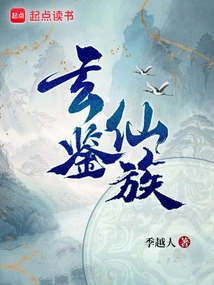
5Xuanjian Immortal Clan
Xianxia玄鉴仙族
Jiyue People
Lu Jiangxian died suddenly after staying up late, but his remaining soul was attached to a cracked blue-gray bronze mirror and fell into the vast world of immortality. In the dangerous and unpredictable Dali Mountains, in a small village beside the Meichi River, a small family picked up this mirror, and then spread the immortal way and taught the immortal method, ushering in a magnificent new era. (Family cultivating immortality, not having a holy mother, farming, no system, group portrait)
Lu Jiangxian died suddenly after staying up late, but his remaining soul was attached to a cracked blue-gray bronze mirror and fell into the vast world of immortality. In the dangerous and unpredictable Dali Mountains, in a small village beside the Meichi River, a small family picked up this mirror, and then spread the immortal way and taught the immortal method, ushering in a magnificent new era. (Family cultivating immortality, not having a holy mother, farming, no system, group portrait)
Family cultivation·Group portraits·Farming·No system·Excellent writing·No mercy on the sword This is a portrait of a family cultivating immortals in the genre of mortals, using the method of writing family history to write novels about cultivating immortals. The original title of the book was "Family Cultivation of Immortality: Becoming a Clan-Suppressing Magical Weapon at the Beginning". Maybe this name dissuaded some readers. I once watched "The Road to the Head of a Cultivation Sect", and the biggest surprise was that it conveyed the sense of time passing by. The members of the sect passed through each generation from childhood to youth, adulthood and even old age. Looking back on the past, it is quite vicissitudes of life. However, the protagonist remains the same and never changes. The difference between Xuanjian and Zhangmenlu is that Zhangmenlu has a protagonist who is always with the readers; while Xuanjian's nominal protagonist, Lu Jiangxian, has almost no role. It is essentially a family portrait novel with generations of immortal cultivators from the Li family in Lijing as the protagonists. The author has written an epic feeling of "the change of generations and the succession of generations", which is very rare. Starting from four mortal brothers in a village, they gradually grew up in this dark and cruel immortal jungle. This rise comes at a price, and readers will watch as generations of characters grow up and then endure different pains and even sacrifices, just so that the family can go further. The author, Ji Yueren, said that he used to write short stories with realistic themes for magazines and public accounts, but because he got tired of the mainstream clichéd online articles, he ended up writing them himself. Because I am still new to writing long online articles, the writing style of this book is a bit more physical. Many supporting characters are written with flesh and blood, but the author likes to send swords, which means that no matter how much they look like the protagonist, every family member may die. Many readers think that the characters who will shine later will die as soon as they say they will, and they will never be sloppy. But there is also a problem with this, that is, there is no perspective character accompanying the reader, and the sense of immersion will be missing. In terms of world setting and story alone, this book is almost faultless. From the beginning, it is slowly laid out until the genius Li Chijing is eaten, revealing a corner of the dark and cruel world of immortality. Then on the road to the rise of the Li family, they had intrigues and intrigues with neighboring families. They had to make close and distant contacts and develop allies, and at the same time, they had to be wary of enemies' plots and allies' rebellion at all times. The setting of the novel is very complex. Whether it is the traditional Qi-Building Fund-Building Pill System of Immortal Cultivation, or Buddhist or Demonic Cultivation, it is all innovative and unprecedented. It is mysterious and subtle, jaw-dropping, and has endless suspense. It also incorporates a lot of philosophical and sociological thinking. It is hard to believe that this was actually written by a college student. The author's writing power is amazing, and he can write an impressive image with just a few strokes. Let's just say that each of the second generation and four brothers of the Li family has a distinct personality that will always be remembered. The younger generation Li Xuanfeng, Li Yuanxiu, Li Qinghong, etc. Are all also lovable. Especially the endings of these characters, each one is unforgettable. Li Tongya was seriously injured and died in a cave, Li Xuanfeng died of exhaustion while fighting against the monks alone, Li Yuanjiao listened to the thunder in a silent place and traded his life for the enemy... Several impressive characters emerge in almost every generation. What's even more rare is that the author also writes down various rules and concerns for the development of a family. This is more than just a fairy tale.
 6
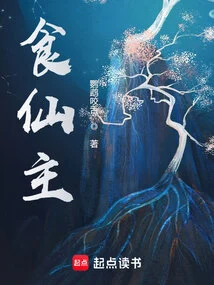
6Food Fairy Lord
Xuanhuan食仙主
Parrot Biting Tongue
The mysterious swords scattered across the earth are waiting for their world-famous sword master. Who can understand the miraculous menopause that has been passed down through the ages? There are people hiding in the hundreds of buildings in Chang'an who are capable of raising fire and swallowing the sun. In the Central Plains, there are huge and decadent millennium-old families. In the north, the deserted people are sharpening their swords in silence and fighting fiercely. In the south, the countries in the south are singing and dancing to make peace and fight with each other... And above the distant Qingming, a pair of blue eyes covering the world are slowly opening. Pei Ye raised his head and pulled out the long sword from his belly: "Taiyi True Dragon Immortal Lord... Let us see who is whose food."
The mysterious swords scattered across the earth are waiting for their world-famous sword master. Who can understand the miraculous menopause that has been passed down through the ages? There are people hiding in the hundreds of buildings in Chang'an who are capable of raising fire and swallowing the sun. In the Central Plains, there are huge and decadent millennium-old families. In the north, the deserted people are sharpening their swords in silence and fighting fiercely. In the south, the countries in the south are singing and dancing to make peace and fight with each other... And above the distant Qingming, a pair of blue eyes covering the world are slowly opening. Pei Ye raised his head and pulled out the long sword from his belly: "Taiyi True Dragon Immortal Lord... Let us see who is whose food."
Classical fairy tale·Substantial style·Chivalrous spirit·Old martial arts style·Amazing writing style·No mercy on the sword Leave the secluded small town and face the complicated world. If you want to see gods, you must first see ghosts. You should know how to cultivate your sword and then your body. This is the story of a passionate young man who prayed for the strength to fight back in the abyss of despair, and finally received a response. The author's writing skills are profound, full of ancient style but not obscure, and have exquisite texture and freehand brushwork, like ink paintings. It has the beauty of Mao Ni's writing style, but it is fresher and sharper. If I have to say it is similar, it is more like Mao Ni when he was a teenager. The ability of multi-line narrative and ambush writing is very strong. The beginning of the novel is amazing and the story is fast-paced. The protagonist has a heroic spirit and a benevolent spirit, and the supporting characters who appear one after another also have their own characteristics. They can be portrayed three-dimensionally and vividly with just a few strokes. The protagonist's struggle to survive in death and the humorous spirit of the supporting characters are all very well portrayed. The overall writing style is more substantial, a bit similar to the martial arts novels I read in "Legends of Modern and Ancient Times" in the early years. The book "Xia Gu Can", which has been highly praised by many readers, is similar to Gu Zhenren's "Human Ancestor Biography" and must be read. It should be noted that: suspense is used to guide the development of the plot at the beginning. The villain feels too oppressive; But precisely because of this, when you see the foreshadowing come together and the fate of the characters intertwining, you will feel a sense of "that's how it is". After the second volume, the plot jumps from high martial arts to low martial arts, and the plot changes from rapid to slow. It is not as depressing as the first volume, and enters the development rhythm common in online novels, but it is not as compact as the first volume. Moreover, the plot is too long and can be divided into three volumes, and the controversy has become a lot bigger. In a word, "The Immortal Eater" is a fairy novel full of martial arts flavor. Nowadays, martial arts are withering away, and there are too few authors who can write with martial arts flavor. This book is good because it has a natural martial arts flavor and youthful spirit. Although the author calls himself a newcomer, this writing style inherited from the ancient dragon Wen Ruian and carried forward in "Legends of Modern and Ancient Times: Martial Arts Edition" cannot be hidden. "The Immortal Eater" proves one thing: Even if the writing method was used in the era of physical magazines twenty years ago, as long as it looks good, readers can still like it. At present, the novel has roughly completed three volumes, and it has been serialized for nearly three years. The first volume of Dragon Tiger Shadow turned out to be amazing; the second volume of Swords and Swords was steady and solid, with its ups and downs, and its rules; the third volume, which was finally completed after procrastination, is not as stunning as the first volume, but the overall quality is still good; the fourth volume is being serialized, but the author's updates are still weak, so it is not recommended to catch up, and it is more suitable to read one volume at a time. For book friends who have high requirements on writing, have patience in reading, and like classical style and old-school martial arts novels, if they miss the style of "modern and ancient legends", this book is definitely worth reading. If you prefer book lovers with a strong sense of upgrading, a distinct power system, or cool and simple writing, I don't recommend reading it.
 7
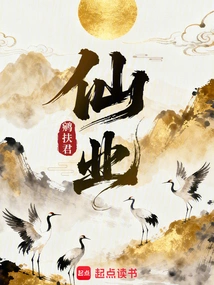
7Immortality
Xianxia仙业
Quan Fujun
The dream crosses the dry mulberry trees from the bottom of the sea and reads the wind and waves of the Milky Way. ------ Jiuzhou and the four seas, Xuanzong's Demon Sect, gods and heretics, and the Pure Land Sangha. Refining Qi, teaching pots, taking bait, fortune-telling... Enter the gate of infinity, swim in the infinite wilderness, shine with the sun and the moon, and be at peace with the heaven and earth. We are all guests in the past, and we will be human beings again. This time. I just want to live forever!
The dream crosses the dry mulberry trees from the bottom of the sea and reads the wind and waves of the Milky Way. ------ Jiuzhou and the four seas, Xuanzong's Demon Sect, gods and heretics, and the Pure Land Sangha. Refining Qi, teaching pots, taking bait, fortune-telling... Enter the gate of infinity, swim in the infinite wilderness, shine with the sun and the moon, and be at peace with the heaven and earth. We are all guests in the past, and we will be human beings again. This time. I just want to live forever!
Classical fairy tale·Excellent writing·Fighting like a great road·Genius flow·Decisive killing·Shura field·Father is kind and son is filial The author is very good at writing about the extraordinary world with an oriental background. The quality of the previous work "High Dimensional Seeker" was quite good. This new work of classical fairy tales is obviously a step forward. The plot at the beginning was full of ups and downs. The protagonist Chen Heng took the script of a peerless pretty boy. He was originally the incarnated heir of Chunyang Taoist Lord, used to prevent the three tribulations of enlightenment. When he traveled down the mountain, he was forcibly adopted by a female cultivator. Unfortunately, he was robbed and killed. Only the protagonist Kakuhara survived, but was angered by the nun's father. After his death, he was time-traveled by the protagonist. Goldfinger is a golden cicada and jade sculpture. There is a simulated space with ten times the time flow rate, which generates the projection of the target character and can practice magic or enlightenment. The writing style is sophisticated, gorgeous and classical, the layout is grand, the style is half-literary and half-white, and the techniques and Taoist techniques are all very fairy-like. The protagonist is very beautiful, but he is devoted to the Tao. He has a ruthless personality and a first-class temperament. He has a feeling of "The Great Road", but he has richer emotions than Zhang Yan, such as childhood sweethearts and the Shura field plot of the heroine who descended from the sky. It should be noted that some of the plots are relatively old-fashioned; the protagonist's level has been slowly improved, and the foundation has not been established after more than 100 chapters, but other Taoist masters from all walks of life will appear on stage after singing, and the gifted father (enemy) is still eyeing it, which may seem insecure; the update is slow, and it was interrupted several times in the middle. It took more than three years to write more than 2 million words. Book friends who are too slow recommend reading it after gaining weight. ... Ps: If nothing else happens, starting from June this year, the cycle will be three months. The first two months will be updated daily, and the third month will be updated every two or three days, and so on.
 9
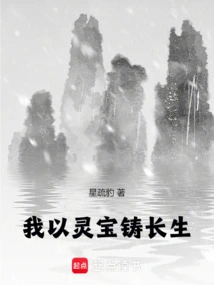
9我以灵宝铸长生
Star Sparse Leopard
Explore the tangle of life and death and descend into this world. The body is in line with Lingbao's Taoism, and he desires the beauty of the Tao.
Explore the tangle of life and death and descend into this world. The body is in line with Lingbao's Taoism, and he desires the beauty of the Tao.
Classical fairy tale·Xinxing flow·Genius flow·Full of fairy spirit·Eunuch "Taojun: Starting from the High-grade Golden Elixir" is a work by the author of "Golden Elixir Removal Surgery" and "Xian Yang". A very classic fairy tale novel with good writing style, fresh and refined, and full of fairy spirit. Cultivation pays more attention to xinxing, and there is no cunning competition for resources like the underworld cultivators. The plot is simple. It tells the story of the protagonist Ying Chan who comes to the Xuandu Palace of the Taoist sect and follows his master in the process of cultivating truth and refining his Qi. This sect is very majestic and treats people and spirits equally. The protagonist meets a talking bird on the road, becomes his friend, and brings him in to practice together. The master cared for him, and the brothers and sisters he met in the sect were also good people. I have read too many books about gangsters who cannibalize people and cultivate immortality, so reading this kind of classical style novel has a unique flavor. The theory of cultivation is well written, but the overall story is bland. In the end, as expected, Danzi hit the eunuch again...
 10
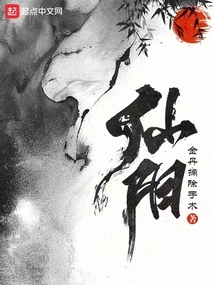
10Xianyang
Xianxia仙阳
Golden Elixir Removal Surgery
Subduing the dragon and tiger, adjusting Kanli, and cultivating the aura to shine through the room. Entering the trance and participating in the mysteries, cultivating the celestial yang and unraveling the underworld. After a hundred refinements, all the Taoist skills will be completed, and only after a thousand kalpas will they grow and bear fruit. From then on, it soared to the distant Qingming, and ascended to the nine heavens to rank among the immortals. -- In ancient times, "heng" came from "moon", and the moon was between heaven and earth, so it had the meaning of long-lasting and eternity. Now that he is reincarnated as a human being, Xu Heng must write his own story to live up to his name. It tells the story of a man who has lived in two lifetimes and sought immortality.
Subduing the dragon and tiger, adjusting Kanli, and cultivating the aura to shine through the room. Entering the trance and participating in the mysteries, cultivating the celestial yang and unraveling the underworld. After a hundred refinements, all the Taoist skills will be completed, and only after a thousand kalpas will they grow and bear fruit. From then on, it soared to the distant Qingming, and ascended to the nine heavens to rank among the immortals. -- In ancient times, "heng" came from "moon", and the moon was between heaven and earth, so it had the meaning of long-lasting and eternity. Now that he is reincarnated as a human being, Xu Heng must write his own story to live up to his name. It tells the story of a man who has lived in two lifetimes and sought immortality.
Classical fairy tale·Xinxing flow·Genius flow·Full of fairy spirit·Eunuch Subduing the dragon and tiger, adjusting Kanli, and cultivating the aura to shine through the room. Entering the trance and participating in the mysteries, cultivating the celestial yang and unraveling the underworld. After a hundred refinements, all the Taoist skills will be completed, and only after a thousand kalpas will they grow and bear fruit. From then on, it soared to the distant Qingming, and ascended to the nine heavens to rank among the immortals. Personally, I feel that Xianyang is the pinnacle of Danzi. It's a pity that the story ends abruptly in the middle of the writing. It's really difficult to let go...
 11
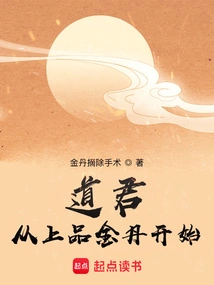
11道君:从上品金丹开始
Golden Elixir Removal Surgery
At the age of eight, he was granted the Dao, ten years to build the foundation, thirty years of practice, and at the age of sixty, he became a top-grade golden elixir. Eliminating the false and retaining the true, cultivating the pure yang, the immortal Taoist fruit, are still on the way. A story that begins with the refinement of a high-grade golden elixir and the promotion to the true biography of the Taoist sect.
At the age of eight, he was granted the Dao, ten years to build the foundation, thirty years of practice, and at the age of sixty, he became a top-grade golden elixir. Eliminating the false and retaining the true, cultivating the pure yang, the immortal Taoist fruit, are still on the way. A story that begins with the refinement of a high-grade golden elixir and the promotion to the true biography of the Taoist sect.
Classical Xianxia · Xinxing flow · Genius flow · Invincible flow · Dao-like struggle · Decisive killing · Unfinished After reading The Great Way of Fighting, it was not enough, and I wanted to read a similar classical fairy tale, so I found this book. Compared to The Great Way of Fighting, the nature of this book's invincible flow is more thorough. The author has taken a different approach. The protagonist takes the sect's genius route. He starts with a top-grade golden elixir and is promoted to the true successor of the Taoist sect. There is no sad scene of a small character struggling at the bottom. He is invincible at the same level and can kill monsters by leapfrogging levels from time to time. It is a smooth journey and passive pretentiousness. Therefore, it makes sense for some book friends to complain that it is boring. I don't like it. The writing is full of ancient meaning, and it has a bit of the flavor of Dao Zheng Zheng and De Lun Illustration. Personally, I feel that the writing skills are worse than Da Dao and Xianye. The character of the protagonist is not established, and the description of decisive killing and Taoist tenacity is a bit simple and crude. In the end, it sucks (too) and ends (supervises), so let's go high and then go low overall. The powerful Xu Zhuang, who walks on both sides of the road, has infinite greed in his chest, and wants to see the beauty of the road. After all, he has not walked a complete road. It is really a pity...
 12
12Battle of the Avenues
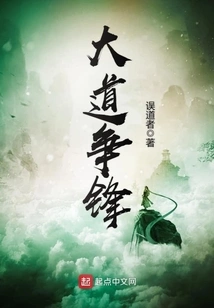
Xianxia大道争锋
Misguided Person
The new book "Xuanhun Daozhang" has been released! ... ... Don't fall into reincarnation and enter the great thousand, A message from the heart is in the human world. I am willing to kill thousands of calamities with one sword, Replace ruthlessness with love! ... ... Ordinary book club group: Dao Zhengfeng (217929481) (old group) Mingcang Sect (124680866) (old group) ... ...
The new book "Xuanhun Daozhang" has been released! ... ... Don't fall into reincarnation and enter the great thousand, A message from the heart is in the human world. I am willing to kill thousands of calamities with one sword, Replace ruthlessness with love! ... ... Ordinary book club group: Dao Zhengfeng (217929481) (old group) Mingcang Sect (124680866) (old group) ... ...
Classical fairy tale, flowing mind, excellent writing style, decisive killing "It is difficult for the earthly mind to realize on its own and open up a path to heaven from the human world. I only hope that all living beings will live forever, and that the sky will be the master of the Tao for eternity!" "The Great Road" can be said to be one of my personal favorite classical fairy tales. "Thousands of years are like smoke and clouds, and the Dao Tianyan swords are competing for the edge." The full text focuses on the word "struggle", from the dispute between the master-disciple line and the family line within the sect to the dispute between Taoism and Xuanmen outside the sect. Misdao's writing is profound, the text is antique, and it has the flavor of a classic fairy tale. The character description is full of dots and lines, and it breaks away from the fairy tale mask. The protagonist Zhang Yan, who has traveled from the apocalypse, has a first-class character and a murderous character. Decisive, brave and diligent, but with the sword in his hand, he can cut through thousands of miles of clouds, break through thorns and thorns, and swim upstream. He uses his spiritual foundation and spirit as stepping stones, uses the ingenious ideas in his heart, and uses the situation as a turning point, advancing step by step to achieve his goal. If there is a destiny, take it, fight without retreating, and be worthy of the title of "seed of cultivation". Many other characters also have their own unique styles, and their writing is rigorous and mature, describing their different talents and situations. Moreover, Enlightenment is able to control the plot settings with ease. Its fellow sects, sects, and the battle between Tao and demons, the world's chessboard, no matter the internal fighting or external fighting, are all rational and legal, with their own rules and regulations, and finally become a self-justifying Taoist world. In general, "The Great Road" can be regarded as a superior work in terms of plot and writing style. Some book lovers may think that the ending is a little weak, the rhythm is dragging, and the fighting method is a bit mysterious, but the overall level is very high, and it is still worth a try.
 13
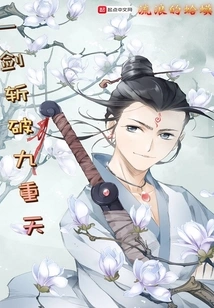
13一剑斩破九重天
Wandering Toad
The whale's drink has not yet swallowed the sea, but the sword energy has already spread. The hero is old and strong, and he is a little swordsman under the moon. This is a "serious" fairy tale novel. Reader QQ group: 703480517
The whale's drink has not yet swallowed the sea, but the sword energy has already spread. The hero is old and strong, and he is a little swordsman under the moon. This is a "serious" fairy tale novel. Reader QQ group: 703480517
Classical fairy tale·Shushan type fairy tale·Anticlimactic ending The protagonist is well versed in world affairs, decisive in killing, and free-spirited. Although he comes from a demonic family, he has his own persistence and is not objectionable. The Golden Finger is more magical. It was the boss of the Demon Sect who failed to escape the tribulation, turned into a dzi bead and traveled back, becoming the Golden Finger of his youth (my Golden Finger is myself~) The story is also very simple. As the third-rate cannon fodder of the Demon Sect, the protagonist was sent to Shushan as an undercover agent at the beginning. As a result, he obtained the Golden Finger Tianyan Bead, so he rebelled against the Demon Sect in this life and turned to the right path. Unfortunately, good things are hard to come by, and he was born in the Demon Sect. After finding out that the hidden danger was too great, he was driven out of Shushan by Baiyun. Through careful planning, he became a disciple of the Dulong Temple lineage. However, his identity was exposed and he fled to the East China Sea. Finally, he became a disciple of the Xuanzong of the Sea and became a disciple of the headmaster, and he had a new origin~ It should be noted that Toad writes in a more casual style, not in a very rigorous writing style. If you read the book with a magnifying glass, there will be some poisonous points, but I don't care about this. In addition, the plot before becoming a disciple of Tunhai Xuanzong is quite controversial, but the plot after that gradually gets better. Overall, Toad's writing skills are very profound, his writing style is unbridled, his writing is unconstrained, and he is very creative. The writing is delightful, witty and interesting, with ideas and plots, and the updates during the serialization period of this book can be said to be very diligent. Unfortunately, just when I thought Toad would be better this time, he failed again... Book lovers who like classical fairy tales and don't mind bad endings can read this.
 14
14Fairy Gourd
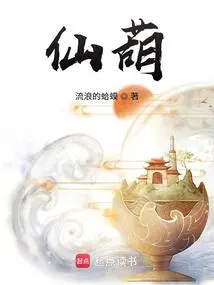
Xianxia仙葫
Wandering Toad
There are thousands of magic spells and infinite avenues. I just ask, can you get immortality?
There are thousands of magic spells and infinite avenues. I just ask, can you get immortality?
The founder of Xianhu flow·Xinxing flow·Swordsman similar to Shushan·Unfinished "Thousands of spells, endless avenues, I just ask, can you get immortality?" With just this sentence, there is no chance of victory. There are thousands of avenues, but I only want eternal life! One sentence tells the story of how a fairy can be revealed, which is a bit otherworldly, elegant and unrestrained. How can you watch the classic Xian Xia without watching Xian Hu? Although "Xianhu" says that Jingqi Shen was born out of the Shushan Swordsman, it has completely found its own path. It is a sublimation and refinement of the Shushan Swordsman's Jingqishen. It is not an exaggeration to say that it established a sect. It is said that it is called Xianhu Liu. I believe many readers will also recognize it. It's a pity that it has the same problem as Shushan Swordsman Legend... It's unfinished... The first half of the novel can be called a masterpiece, but the protagonist in the second half is too invincible, and the plot has some power imbalance, which is just a waste. Overall, this is a masterpiece that can establish itself in the classical fairy tale genre.