Essential Secrets for Time Travel; Real "skills
穿越必备秘籍;真实的“功法”
Martial arts, magic, cooking, witchcraft, five arts...
This catalog of Yongle Dadian compiled by Siku Quanshu golden branch Taiyi Jinhua Mission Tao Te Ching Internal Alchemy Pill Heart Method Medical Zong Jin Jian Taishang Lingbao Pure Brightness Flying Immortal to Save People Sutra Health guidance tips Notes on Sutras in Taishang's Bridal Chamber Maoshan Zhi Youyang Zazu The left hand is "The Wealth of Nations", the right hand is "The Theory of Moral Sentiments" Pharaoh's Spells: Exploring the Mysterious Witchcraft and Religion of Ancient Egypt Mindfulness Illustrated 1000 Questions on Psychotherapy Illustrated Encyclopedia Illustrations for cultivating the mind Illustrated method of changing heart and luck Illustration: Humor and Eloquence Graphic tongue diagnosis 1000 questions about couples' sex life Illustration of the Eight Notes of Zunsheng Illustrated Magic Guide 1000 questions about world culture Notes on the Tao Te Ching The Complete Book of Luban Baopuzi outer chapter The inner chapter of Baopuzi Plum blossoms are easy to count Supplements to Compendium of Materia Medica Annotation of the Classic of Mountains and Seas Taishang Laojun said the Chang Qingjing Sutra Commentary Diagrammatic view of breathing Illustrated explanation of Tibetan secret clumsy fire meditation method Guardian Illustrated Encyclopedia Picture and text encyclopedia of the treasure deity Illustration of the Six Paths of Reincarnation Illustrated Amitabha Sutra Illustrated Tripitaka Illustrated Thangka The Buddha said the Mahayana Sutra on Manna Luo Purification of All Evil Destinies The Story of Thangka: Double Cultivation of Men and Women Big mudra in thangka Illustrated mandala A brief introduction to teaching the three cave sutras and precepts The three sacred vessels of Chiwen Cave in Taishang Zhengyi French Cultivation Purpose Gaoshangdadong Wenchang Silu Ziyang Treasure Urn Taishang Huanglu Zhaiyi The Majesty of the Three-Five-One Alliance Official product of Zhengyi Dharma Scripture Chapter Taishang Zhengyi read the instrument Cognitive awakening: the driving force behind self-change Wushu Huizong Huang Shi Gong Su's Notes Weapons Encyclopedia (color illustrations and hardcover) Drinks & Mixology Complete book of horoscopes Collected Works of Yu Yu Chinese and Japanese Illustrated Classic of Mountains and Seas Uygur: The Joseon royal family records the flower of culture yoga bible Yoga and Meditation (New Edition) Yoga Anatomy (Collection 3rd Edition) Observation of Mind Illustrated Capital ABCs of Philology Sha Guozheng album: Bagua lion-shaped palm, Xingyi chicken-shaped fist, Wudang Eight Immortals Sword Zhang Yejin's Album: Yuejiaquan Martial Arts Zhang Yaozhong Album: Tai Chi Xuanmen Sword An Tianrong Album: Huo's Bajiquan Easy number hook depth chart Nine Essentials of Cultivation Introduction to Taoist Life Sciences Ancient Chinese magic skills Research on Dunhuang Divination Documents and Divination in the Tang and Five Dynasties Full translation of I Ching in vernacular Palmistry and facial reading book of chemistry buildings and structures House Classics (Chinese Collection) Sun Tzu's Art of War Thirty-Six Strategies Tiangongkaiwu Tang poetry, Song lyrics and Yuan music (color illustrations and hardcover) One-Meter Vegetable Garden: A Guide to Growing and Storing Organic Fruit and Vegetables Breeding: Livestock and fishery simultaneously A brief history of human torture dance basics The story of musical instruments Shortcuts to Painting Shamanic culture egyptian book of the dead the power of breathing Feng Shui Guide: 500 Feng Shui common sense you should know The history of witchcraft Feng Shui and Witchcraft cooking tips Junk magic book Mind Reading, Mind Attacking, Mind Relaxing (Complete Collection) Tai Chi ritual internal practice Comprehensive Theory of Tai Chi --Last book list: Contains some real "skills"...
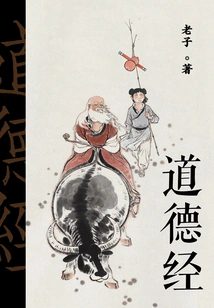
The Tao Te Ching, also known as Lao Tzu, Tao Te Ching, Five Thousand Words, and Lao Tzu's Five Thousand Essays, is a work written by the pre-Qin scholars in ancient China before they split up. It was admired by all the scholars at that time. It is said to have been written by Lao Tzu Li Er (seemingly a collection of authors, annotators, and transcribers) during the Spring and Autumn Period. It is an important source of Taoist philosophical thought. The Tao Te Ching is divided into two parts. The original part is "The De Jing" and the second part is "The Tao Jing". They are not divided into chapters. Later, it was changed to "The Tao Jing" with chapter 37 at the front. From chapter 38 onwards, it is called "The De Jing" and is divided into 81 chapters. It is the first complete philosophical work in Chinese history. According to statistics from the United Nations Educational, Scientific and Cultural Organization, the Tao Te Ching is the cultural masterpiece that has been translated into foreign languages the most and published besides the Bible.
"Yi Zong Jin Jian" was compiled by Emperor Qianlong, and the emperor named it "Yi Zong Jin Jian". 90 Volumes. Wu Qian and Liu Yuduo, the imperial doctors of the Qing Dynasty, were the chief editors. In the seventh year of the Qianlong reign of the Qing Dynasty (1742), the engraving of Wuying Palace was published. This book examines, corrects, corrects, fills in omissions, annotates and interprets the two classic medical works "Treatise on Febrile Diseases" and "Synopsis of the Golden Chamber". It also systematically discusses TCM theories such as syndrome differentiation, diagnosis, meridians, pulse conditions, acupuncture, luck, prescriptions, and drugs. Internal, external, pediatric, gynecological, orthopedic and other diseases and treatment methods are explained in detail. Most prescription formulas are summarized into formulas and annotated to facilitate memory and recitation.
Saddharmapundarika-sutra (Saddharmapundarika-sutra), referred to as "Lotus Sutra". It has been popular in ancient India, Nepal and other places for a long time. There are more than 40 Sanskrit versions in Kashmir, Nepal, China's Xinjiang, Tibet and other places...
This book can be used as a supplementary reading to medical monographs. It covers many aspects such as nourishing the body and prolonging life, taking Qi to treat diseases, guiding massage, etc. It aims to help readers improve their health through simple and easy health methods. Health-preserving guidance is a kind of psychological adjustment through soothing and long movements and breathing, coupled with calming and calming the mind, thereby dredging the meridians and blood, improving the function of the organs, regulating the spirit, and achieving the purpose of strengthening the body, curing diseases and prolonging life. Common guidance methods include Tai Chi, Baduanjin, Wu Qin Xi, Yi Jin Jing, etc.
Used to read the cover. "Contact" is divided into seven parts. The first part is the basic knowledge chapter. There are a total of fourteen articles from the origin of the word martial arts to the study of Wudang martial arts. It mainly reveals the concept, production and development, characteristic functions, boxing schools and some...
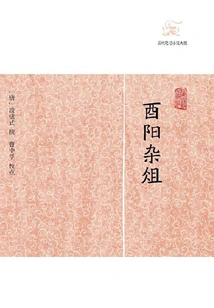
Found it, the public version is free. A collection of ancient Chinese customs and legends. Written by Duan Chengshi (about 803-863) of the Tang Dynasty. Twenty volumes, followed by ten volumes. One thousand, two hundred and eighty-eight articles in total. Chengshi's courtesy name was Kegu, his ancestral home was Zouping (now Shandong), and later moved to Jingzhou (now Jiangling, Hubei).
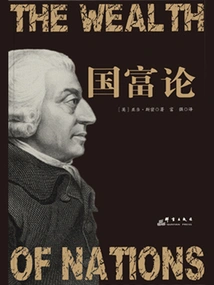
You can make more money without a conscience. Narrated: "The Wealth of Nations", in this masterpiece that took six years to write and three years to revise, Adam Smith critically absorbed the important economic theories of the time and gave a systematic description of the movement process of the entire national economy. It is known as "the first great systematic economic work". Its publication marked the official birth of classical liberal economics. "The Theory of Moral Sentiments" explores various fields of production relations in capitalist society not only from the perspective of ethics and morality, but also from the perspectives of philosophy, law, psychology and economics. It is no exaggeration to say that if one does not understand Adam Smith's "Theory of Moral Sentiments", it is impossible to understand the formation of market economic society and the process of modern Western civilization.
 14
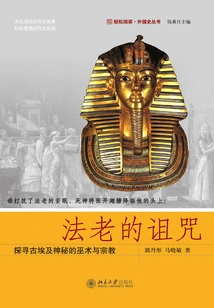
14法老的咒语:探寻古埃及神秘的巫术与宗教
Guo Dantong Ma Xiaomin
On November 4, 1922, British archaeologist Howard Carter discovered the tomb of King Tutankhamen of the 18th Dynasty of ancient Egypt in the Valley of the Kings in Thebes. The tomb shocked the world with the richness and exquisiteness of the unearthed artifacts and the complete preservation of the tomb, making it one of the greatest archaeological discoveries of the last century. Shortly after the discovery of Tutankhamun's tomb, the sponsor of the archaeological excavation, Count Carnarvon, died unexpectedly. This seemed to verify the existence of the "Pharaoh's Curse", which caused panic in the entire Egyptian archaeological community. Tutankhamun's tomb was therefore shrouded in a veil of mystery. In order to solve the mystery of this widespread and mysterious "Pharaoh's Curse", this book will use a scientific attitude, use a large amount of literature and archaeological data, and use the Egyptians' view of the afterlife as an entry point, and then reveal the Egyptian religious beliefs, funeral customs, tomb architectural styles and their functions behind the "Pharaoh's Curse". In order to achieve the purpose of popularizing knowledge about ancient Egyptian civilization to readers.
On November 4, 1922, British archaeologist Howard Carter discovered the tomb of King Tutankhamen of the 18th Dynasty of ancient Egypt in the Valley of the Kings in Thebes. The tomb shocked the world with the richness and exquisiteness of the unearthed artifacts and the complete preservation of the tomb, making it one of the greatest archaeological discoveries of the last century. Shortly after the discovery of Tutankhamun's tomb, the sponsor of the archaeological excavation, Count Carnarvon, died unexpectedly. This seemed to verify the existence of the "Pharaoh's Curse", which caused panic in the entire Egyptian archaeological community. Tutankhamun's tomb was therefore shrouded in a veil of mystery. In order to solve the mystery of this widespread and mysterious "Pharaoh's Curse", this book will use a scientific attitude, use a large amount of literature and archaeological data, and use the Egyptians' view of the afterlife as an entry point, and then reveal the Egyptian religious beliefs, funeral customs, tomb architectural styles and their functions behind the "Pharaoh's Curse". In order to achieve the purpose of popularizing knowledge about ancient Egyptian civilization to readers.
This treasure belongs to the people! On November 4, 1922, British archaeologist Howard Carter discovered the tomb of King Tutankhamen of the 18th Dynasty of ancient Egypt in the Valley of the Kings in Thebes. The tomb shocked the world with the richness and exquisiteness of the unearthed artifacts and the complete preservation of the tomb, making it one of the greatest archaeological discoveries of the last century. Shortly after the discovery of Tutankhamun's tomb, the sponsor of the archaeological excavation, Count Carnarvon, died unexpectedly. This seemed to verify the existence of the "Pharaoh's Curse", which caused panic in the entire Egyptian archaeological community. Tutankhamun's tomb was therefore shrouded in a veil of mystery. In order to solve the mystery of this widespread and mysterious "Pharaoh's Curse", this book will use a scientific attitude, use a large amount of literature and archaeological data, and use the Egyptians' view of the afterlife as an entry point, and then reveal the Egyptian religious beliefs, funeral customs, tomb architectural styles and their functions behind the "Pharaoh's Curse".
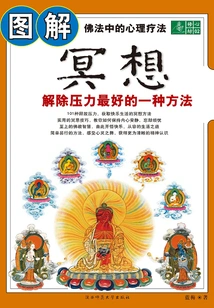
This book inherits the elegant and leisurely style of the Xiuxinfang series. Using the unique editing technique of illustrations, readers not only learn a simple meditation and relaxation method, but also realize a life attitude of valuing life, valuing oneself, and enjoying life, allowing readers to embark on a calm and comfortable spiritual journey with our exquisite drawings.
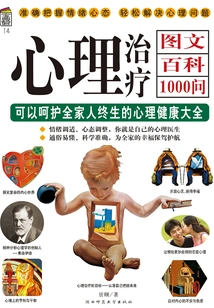
Remember to see a regular doctor. "1000 Pictorial Encyclopedia of Psychotherapy" is a spiritual manual that teaches you how to understand mental illness and adjust yourself. This book is divided into 3 volumes and 14 chapters, which introduces the concepts of psychology, characteristics of schools, and psychological problems and treatments of people in different periods.
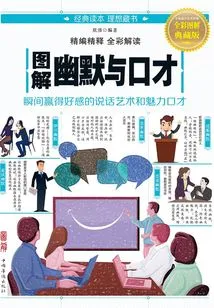
Ah, here, can't we avoid social interaction even through time travel? "Illustrated Humor and Eloquence" compiled by Xin Rong records that humor is the highest state of language. Whether and how much humor can be used in a short speech is an important criterion for measuring a person's language quality.
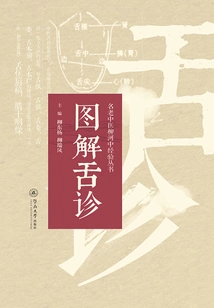
Smile often and naturally build... This book brings together the essence of clinical practice of the author team headed by Liu Hezhong, a famous traditional Chinese medicine doctor in Guangdong Province. It discusses the basic concepts, significance and methods of tongue diagnosis, and describes the relationship between tongue signs and syndrome differentiation of the eight cardinal principles, six evils, qi, blood, body fluid, six meridians, triple burners, and viscera...
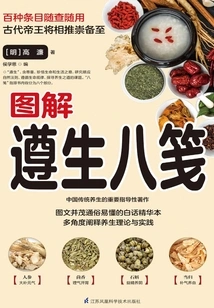
Everyone knows how to maintain health and grow from weeds. "Illustrated Eight Notes on Adhering to Health" is the vernacular essence version of the Ming Dynasty health classic "Eight Notes on Adhering to Health". It was repeatedly translated and compiled by Hou Xuesi, a doctor of medicine at Beijing University of Chinese Medicine, over two years to help more readers read smoothly...
This is real practical learning. "Tiangong Kaiwu" was written by Song Yingxing, a scholar of the Ming Dynasty, and published in the 10th year of Chongzhen in the Ming Dynasty (1637). The book is divided into three parts: upper, middle and lower, and is divided into 18 volumes.
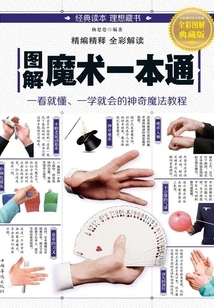
It's not just in the ancient times when there were no demons that it could deceive people. This book selects classic magic and popular magic from the world, and is divided into several parts: card magic, table magic, party magic, match magic, rope magic, mind magic, silk magic, thimble magic, paper magic, coin magic, etc...
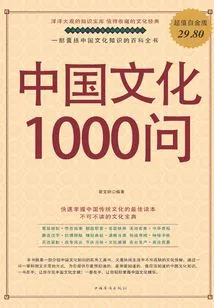
After all, you never know where it will go. The Thousand Questions series and the Illustration series are enough to fill a book list alone; there are knowledge about husband and wife, Zhou Gong's interpretation of dreams, materia medica, architecture, cooking, etc... Search 1000 Questions. This is a treasure trove of knowledge that condenses the common sense of world culture, integrating knowledge, interest and science. The whole book covers a wide range of topics, and has strong reference and guidance...
Mr. Heshang? Weng on the stream! The two definitely have nothing to do with each other, so you can practice with peace of mind. The Tao Te Ching, also known as the Tao Te Ching, Lao Tzu, Five Thousand Words, and Lao Tzu's Five Thousand Essays, is a work written by the pre-Qin scholars in ancient China before they split up. It was admired by all the scholars at that time. It is said to have been written by Lao Tzu (Li Er) during the Spring and Autumn Period, and is an important source of Taoist philosophical thought. The Tao Te Ching is divided into two parts. The original text is the first part "De Jing" and the second part "Tao Jing". They are not divided into chapters. Later, it was changed to "Tao Jing" with chapter 37 at the front. After chapter 38, it is "De Jing" and divided into 81 chapters [1]. The text takes "morality" in the philosophical sense as its outline, and discusses the ways of self-cultivation, governing the country, using military force, and maintaining health. Most of the text focuses on politics. It is the so-called "sage within and king outside". The text is profound and comprehensive. The total number of words in the "Tao Te Ching" varies depending on the version: Mawangdui silk script, version A is 5344 words, version B is 5342 words (plus 124 words of emphasis); the current version is He Shanggong's "Tao Te Ching Chapters and Verses" It is 5201 words (plus 94 words of emphasis), Wang Bi's "Commentary of Laozi's Tao Te Ching" is 5162 words (plus 106 words of emphasis), and Fu Yi's "Ancient Edition of Tao Te Ching" is 5450 words (plus 106 words of emphasis).
"The Number of Plum Blossoms" is one of the ancient Chinese divination methods. Today's Plum Blossom Heart Yi is another name for Plum Blossom Yi Shu. It is said that it was written by Shao Yong, a scholar of the Yi Dynasty in the Song Dynasty. The Plum Blossom Book of Changes originated from the Han Yi. It is a book based on the mathematics in the Yi study and combined with the "Xiang Xue" in the Yi study for divination. It is said that when Shao Yong used it, every hexagram was sure to hit, and it worked repeatedly.
Sure enough, it's still... Materia Medica, 52 volumes. Li Shizhen (Dongbi) of the Ming Dynasty wrote it from the 31st year of Jiajing (1552) to the 6th year of Wanli (1578). The manuscript was written in three changes. When Li Shizhen's eldest son, Li Jianzhong, was the magistrate of Pengxi County, he helped Li Shizhen edit and revise the "Compendium of Materia Medica" and helped publish the book.