Essential Secrets for Time Travel; Real "skillsMr. Heshang? Weng on the stream! The two definitely have nothing to do with each other, so you can practice with peace of mind.
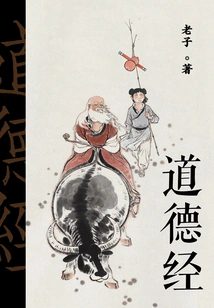
The Tao Te Ching, also known as the Tao Te Ching, Lao Tzu, Five Thousand Words, and Lao Tzu's Five Thousand Essays, is a work written by the pre-Qin scholars in ancient China before they split up. It was admired by all the scholars at that time. It is said to have been written by Lao Tzu (Li Er) during the Spring and Autumn Period, and is an important source of Taoist philosophical thought. The Tao Te Ching is divided into two parts. The original text is the first part "De Jing" and the second part "Tao Jing". They are not divided into chapters. Later, it was changed to "Tao Jing" with chapter 37 at the front. After chapter 38, it is "De Jing" and divided into 81 chapters [1]. The text takes "morality" in the philosophical sense as its outline, and discusses the ways of self-cultivation, governing the country, using military force, and maintaining health. Most of the text focuses on politics. It is the so-called "sage within and king outside". The text is profound and comprehensive. The total number of words in the "Tao Te Ching" varies depending on the version: Mawangdui silk script, version A is 5344 words, version B is 5342 words (plus 124 words of emphasis); the current version is He Shanggong's "Tao Te Ching Chapters and Verses" It is 5201 words (plus 94 words of emphasis), Wang Bi's "Commentary of Laozi's Tao Te Ching" is 5162 words (plus 106 words of emphasis), and Fu Yi's "Ancient Edition of Tao Te Ching" is 5450 words (plus 106 words of emphasis).