Various Classics, Anecdotes and Novels
各种经典著作与怪闻加小说
Personally compiled various works, legends and anecdotes from ancient and modern times, Chinese and foreign, etc... In short, there are all kinds of books. This book list is a catalog type book list. By collecting this book list, you will have the illusion of "I will definitely finish reading these books" and the feeling of "After reading these books, I will be able to...". My ability is limited. If you have any good classics or strange stories, just leave a message! (Emphasis added) The word count and book limit of Qidian's book list make me feel sick to my stomach. I'm thinking about whether I should simply post the introduction at the back of my novel... Why is there a word limit? Ps: If you really want to read it, it's best to read it in physical books. It's all self-explanatory... ( Physical books are the best!) PS: Let me tell you secretly, in fact, most of the book introductions are from Baidu Encyclopedia~... The following is the starting point. There are no books and book lists that cannot be put down (unfinished)... Search for Mystery List, Taiping Guangji, Zhongxing Jianqi Collection, New Tang Book, Shennong Materia Medica Classics, Sanshui Xiaoshu, Ancient and Modern Notes, Annals of the Xuanshi, Hanyuan Yincong, Dadai Liji, Moaning Yu, Shoukang Baojian, Ma and En's Books, Classical Classics, Tao An's Dream Memories, Dracula, The Earliest China, Shuo Yong, Dharma Statement, The Seventh Day, Mustard Seeds, One Hundred Years of Solitude, Love in the Time of Cholera Love, Yin Yun's novels, A Doll's House, Peer Gynt, Dead Branches, Recent Thoughts, Theory of Moral Sentiments, Cat and Mouse Game, Suiyuan Food List, Yu Hua's book, Principle of Population, Augustine's "Confessions", Tolstoy's "Confessions", Disqualification in the World, Golden Bough (Fraser's)
 24
24S
General Fictions
G
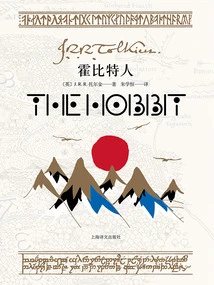
Bilbo Baggins, a hobbit who lives in an underground cave and loves a comfortable life, is suddenly led into an epic adventure by the wise wizard Gandalf one day. Bilbo and the thirteen dwarves went through all kinds of hardships to regain the treasure from the dragon Smaug. During the journey, he also accidentally discovered a small ring that would later change the history of Middle-earth and laid the foundation for the story of the "Lord of the Rings" trilogy. This book contains more than thirty color and black-and-white illustrations drawn by Tolkien for "The Hobbit", many of which are published with the text for the first time and are extremely precious.
Bilbo Baggins, a hobbit who lives in an underground cave and loves a comfortable life, is suddenly led into an epic adventure by the wise wizard Gandalf one day. Bilbo and the thirteen dwarves went through all kinds of hardships to regain the treasure from the dragon Smaug. During the journey, he also accidentally discovered a small ring that would later change the history of Middle-earth and laid the foundation for the story of the "Lord of the Rings" trilogy. This book contains more than thirty color and black-and-white illustrations drawn by Tolkien for "The Hobbit", many of which are published with the text for the first time and are extremely precious.
"The Hobbit" is a novel written by the British writer John Ronald Reel Tolkien, first published in 1937. "The Hobbit" tells the story of a dwarf named Bilbo. During his adventures, Bilbo discovered a magical ring that made him invisible, which allowed him to successfully steal a rare treasure that was plundered by a dragon in the subsequent expedition. The book is not only thrilling and full of childlike innocence, but also projects the spirit of the new era and the author's unique thinking. In 2012, the book was adapted into a film series of the same name.
 25
25Tang Dynasty Weird Stories 3: Shocking Ending
General Fiction唐朝诡事录3:骇人听闻大结局
Wei Fenghua
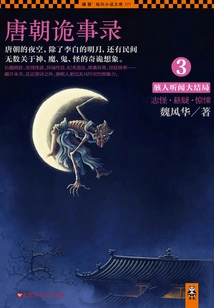
The final work in the series "Records of Strange Stories from the Tang Dynasty". An encyclopedia about the ghosts and secret history of the Tang Dynasty, it unearths 57 supernatural legends from deep night palaces and reveals the historical truth of 34 episodes of the Tang Empire. In the night sky of the Tang Dynasty, in addition to Li Bai's bright moon, there were also countless strange folk imaginations about gods, demons, ghosts, monsters, fairies and demons, strange stories, exotic legends, illusions and Taoism, rare birds and animals, court anecdotes... Open this book and witness that in addition to Tang poetry, the people of the Tang Dynasty had even more unbridled imaginations.
The final work in the series "Records of Strange Stories from the Tang Dynasty". An encyclopedia about the ghosts and secret history of the Tang Dynasty, it unearths 57 supernatural legends from deep night palaces and reveals the historical truth of 34 episodes of the Tang Empire. In the night sky of the Tang Dynasty, in addition to Li Bai's bright moon, there were also countless strange folk imaginations about gods, demons, ghosts, monsters, fairies and demons, strange stories, exotic legends, illusions and Taoism, rare birds and animals, court anecdotes... Open this book and witness that in addition to Tang poetry, the people of the Tang Dynasty had even more unbridled imaginations.
This is an encyclopedic work about the strange stories and secret history of the Tang Dynasty.
 26
26唐朝诡事录2:长安鬼迹
Wei Fenghua
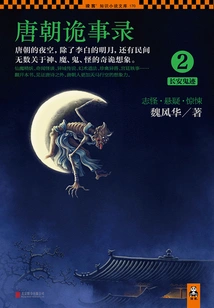
Thousands of years ago, the Tang Dynasty was the undisputed center of the world. Superior material life and diverse cultural integration gave birth to the ultimate imagination of the people of the Tang Dynasty. A generation of legendary poets such as Li Bai, Du Fu, Wang Wei, Meng Haoran, and Bai Juyi used their poems to depict gorgeous paintings of the Tang Dynasty; while the traders and pawns walking through the markets used their more uninhibited imagination to outline the longing phantoms of gods, demons, and monsters in the night of the Tang Dynasty; even the prime minister of the dynasty would close the door after dark, light a candle, and start writing ghost stories.
Thousands of years ago, the Tang Dynasty was the undisputed center of the world. Superior material life and diverse cultural integration gave birth to the ultimate imagination of the people of the Tang Dynasty. A generation of legendary poets such as Li Bai, Du Fu, Wang Wei, Meng Haoran, and Bai Juyi used their poems to depict gorgeous paintings of the Tang Dynasty; while the traders and pawns walking through the markets used their more uninhibited imagination to outline the longing phantoms of gods, demons, and monsters in the night of the Tang Dynasty; even the prime minister of the dynasty would close the door after dark, light a candle, and start writing ghost stories.
This is an encyclopedic work about the strange stories and secret history of the Tang Dynasty. This series of works is based on the Tang Dynasty's "Youyang Zazu", "Legend", "Records", "Yi Shi", "Que History", "Xuanwei Lu", "Xuan Shi Zhi", "Guang Yi Ji", "Du Yi Zhi" and "Collected Yi Ji" " "Bo Yi Zhi", "Zi Yi Ji", "Xiao Xiang Lu", "Hedong Ji", "Collection of Spirits and Monsters", "Wen Qi Lu", "Jing Ting Lu", "Tong You Ji", "Yuan Hua Ji", "Strange Stories", "Qian Zi" and "Shu Xuan Lu". "Collection of Strange News", "Records of Strange Stories", "Ganze Ballads", "Drama Talks", "Rongmu Chats", "Jinxi Chats", "Guiyuan Congtan", "Xu Xuan Wei Lu", "Du Yang Zabian", "Sanshui Xiaoshu" " "Chaos and Wildernesses", "Stories of China and North Korea", "Yutang Gossip", "Xu Xian Biography", "Xian Zhuan Supplements", "Yongcheng Collection of Immortals", etc. Are used as clues to explore the dark and strange stories behind that bright and beautiful era.
 27
27Records of Strange Stories from the Tang Dynasty
General Fiction唐朝诡事录
K
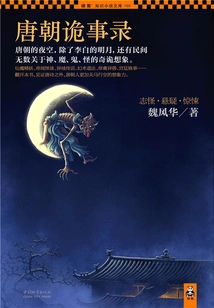
Thousands of years ago, the Tang Dynasty was the undisputed center of the world. Superior material life and diverse cultural integration gave birth to the ultimate imagination of the people of the Tang Dynasty. A generation of legendary poets such as Li Bai, Du Fu, Wang Wei, Meng Haoran, and Bai Juyi used their poems to depict gorgeous paintings of the Tang Dynasty; while the traders and pawns walking through the markets used their more uninhibited imagination to outline the longing phantoms of gods, demons, and monsters in the night of the Tang Dynasty; even the prime minister of the dynasty would close the door after dark, light a candle, and start writing ghost stories. Therefore, when night falls in the Tang Dynasty, if candlelight is still flickering in a certain room, and behind the thin window paper, there are sometimes whispers and sometimes exclaims, then someone must be sharing a secret history, strange story, or shocking rumor that they just heard today.
Thousands of years ago, the Tang Dynasty was the undisputed center of the world. Superior material life and diverse cultural integration gave birth to the ultimate imagination of the people of the Tang Dynasty. A generation of legendary poets such as Li Bai, Du Fu, Wang Wei, Meng Haoran, and Bai Juyi used their poems to depict gorgeous paintings of the Tang Dynasty; while the traders and pawns walking through the markets used their more uninhibited imagination to outline the longing phantoms of gods, demons, and monsters in the night of the Tang Dynasty; even the prime minister of the dynasty would close the door after dark, light a candle, and start writing ghost stories. Therefore, when night falls in the Tang Dynasty, if candlelight is still flickering in a certain room, and behind the thin window paper, there are sometimes whispers and sometimes exclaims, then someone must be sharing a secret history, strange story, or shocking rumor that they just heard today.
This is an encyclopedic work about the strange tales and secret history of the Tang Dynasty written by the author based on his notes on the strange stories of the Tang Dynasty. There are three books in this series, one of which is eight volumes.
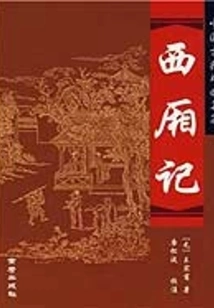 28
28Romance of the West Chamber (a Must-read Series for Primary and Secondary School Students)
General Fiction西厢记(中小学生必读丛书)
K
The story of "The Romance of the West Chamber" originated from the legendary novel "The Legend of Yingying" written by the poet Yuan Zhen of the Tang Dynasty. It was widely circulated in the Song and Jin Dynasties, and some literati and folk artists adapted it into raps and dramas. "The Romance of the West Chamber" was created based on these rich artistic accumulations. It tells the sentimental, ups and downs of the love story between Zhang Sheng and Cui Yingying, and expresses the lovers' best wishes to finally get married.
The story of "The Romance of the West Chamber" originated from the legendary novel "The Legend of Yingying" written by the poet Yuan Zhen of the Tang Dynasty. It was widely circulated in the Song and Jin Dynasties, and some literati and folk artists adapted it into raps and dramas. "The Romance of the West Chamber" was created based on these rich artistic accumulations. It tells the sentimental, ups and downs of the love story between Zhang Sheng and Cui Yingying, and expresses the lovers' best wishes to finally get married.
"The Story of Cui Yingying Waiting for the Moon in the West Chamber" (referred to as "The Story of the West Chamber", also known as "Wang's West Chamber" and "The North West Chamber") is a drama created by Wang Shifu in the Yuan Dynasty. It was probably written during the Yuanzhen and Dade years (1295~1307). The whole play tells the story of scholar Zhang Sheng (Zhang Junrui) and Miss Xiangguo Cui Yingying, with the help of the lady matchmaker, overcoming numerous obstacles from Sun Feihu, Cui's mother, Zheng Heng and others, and finally getting married. The play has a strong anti-feudal etiquette color. The author writes about young people's desire for love, the uncontrollable and legitimate nature of love and desire, and the conflict between young people's own wishes and the will of their parents. It expresses the concept of love that "everything in the world is willing to be loved". The whole play has a grand structure, using five volumes and 20 folds to perform a complete story, which is rare in ancient dramas. The plot of the play is fascinating, the images are vivid and vivid, the writing is brilliant, and it is very poetic.
"The Peony Pavilion's Dream of Resurrection" (referred to as "The Peony Pavilion", also known as "The Dream of Resurrection" or "The Dream of the Peony Pavilion"). The legend (script) written by Tang Xianzu, a playwright of the Ming Dynasty, was published in the forty-fifth year of Wanli in the Ming Dynasty (1617). The play tells the story of Du Liniang, a daughter of an official, who fell in love with Liu Mengmei, a scholar in her dream, and died of grief. She turned into a soul to find her lover in reality, fell in love with ghosts, and finally came back to life, and finally became united with Liu Mengmei forever. The play has elegant diction and beautiful language. The play is one of the outstanding works in the history of Chinese opera. Together with "The Story of Cui Yingying Waiting for the Moon in the West Chamber", "The Injustice of Dou E" and "The Palace of Eternal Life", it is known as the four major Chinese classical dramas.
In the past, people learned to write modern poetry and lyrics as enlightenment books to familiarize themselves with antithesis, rhyme, and organization of words. The author, Li Yu, was named Li Weng, so it was called "Li Weng Duiyun". The whole book is divided into Volume One and Volume Two. It is organized according to rhyme, including virtual and real responses to astronomy, geography, flowers and trees, birds and beasts, people, utensils, etc. From single-character pairs to two-character pairs, three-character pairs, five-character pairs, seven-character pairs to eleven-character pairs, the sounds and rhymes are harmonious and catchy, and you can get training in pronunciation, vocabulary, and rhetoric. From single characters to multi-character pairs. Compared with other three-character and four-character sentences, it has more charm.
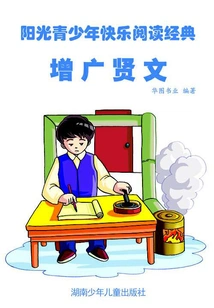
Also known as "Xianwen of the Past" and "Xianwen of the Ancient and Modern Times", it is a children's enlightenment book compiled during the Ming Dynasty in China. The title of the book was first seen in the opera "The Peony Pavilion" during the Wanli period of the Ming Dynasty. From this, it can be inferred that the book was written during the Wanli period at the latest. "Zengguang Xianwen" collects various Chinese mottos and proverbs from ancient times to the present. Later, after continuous additions by literati from the Ming and Qing dynasties, it was changed into its current form, called "Zengguang Xianwen", commonly known as "Zengguang Xianwen". The author has never seen any book records. He only knows that the Confucian scholar Zhou Xitao revised it during the Tongzhi period of the Qing Dynasty. It is likely to be the crystallization of folk creations in the Qing Dynasty.
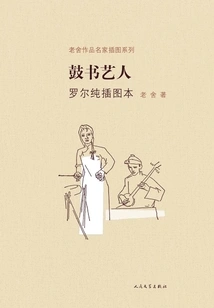 33
33Drum Calligraphy Artist (luo Erchun Illustrated Edition)
General Fiction鼓书艺人(罗尔纯插图本)
Written By Lao She, Translated By Ma Xiaomi, Illustrated By Luo Erchun
This book tells the story of the suffering experience of the Dagu calligraphy artist Fang Baoqing's family: Baoqing's brother Baosen was killed by the Japanese army; his daughter Xiulian was ruined by Zhang Wen after her marriage to the progressive writer Meng Liang fell through; and her married daughter Dafeng was also abandoned.
This book tells the story of the suffering experience of the Dagu calligraphy artist Fang Baoqing's family: Baoqing's brother Baosen was killed by the Japanese army; his daughter Xiulian was ruined by Zhang Wen after her marriage to the progressive writer Meng Liang fell through; and her married daughter Dafeng was also abandoned.
Lao She wrote it in New York between 1948 and 1949. Because the Chinese original manuscript was lost, it was re-translated into Chinese by Ma Xiaomi based on the English translation of The Drum Singers. This book tells the story of the suffering experience of the Dagu calligraphy artist Fang Baoqing's family: Baoqing's brother Baosen was killed by the Japanese army; his daughter Xiulian was ruined by Zhang Wen after her marriage to the progressive writer Meng Liang fell through; and her married daughter Dafeng was also abandoned. "Artists of Drum Calligraphy" tells the story of old-style artists pursuing a new life in the storm of the Anti-Japanese War. It presents the true image of revolutionaries and calls for the arrival of New China.
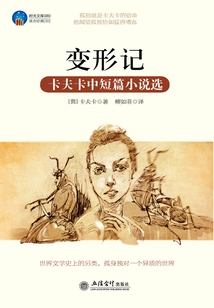 34
34变形记(卡夫卡中短篇小说选)
Kafka
"The Metamorphosis" edited by Austrian Kafka. Kafka is the founder of modernist literature, and "The Metamorphosis" is one of his representative works. If you want to understand modernist literature, the best way is to start by reading "Time Library·Selected Short and Novels by Kafka: Metamorphosis" repeatedly. In "Time Library Kafka's Short Stories and Novels: The Metamorphosis" Kafka describes the absurd plot in which Gregor Samsa, a clerk, suddenly turns into a big beetle that disgusts his family. This reveals the fact that people - including ethics - are affectionate on the surface but extremely lonely and unfamiliar in their hearts. It vividly and profoundly reproduces the indifference between people in capitalist society. Describing all activities of human life and their realistic details in an absurd and illogical world was the genius of the famous novelist Kafka.
"The Metamorphosis" edited by Austrian Kafka. Kafka is the founder of modernist literature, and "The Metamorphosis" is one of his representative works. If you want to understand modernist literature, the best way is to start by reading "Time Library·Selected Short and Novels by Kafka: Metamorphosis" repeatedly. In "Time Library Kafka's Short Stories and Novels: The Metamorphosis" Kafka describes the absurd plot in which Gregor Samsa, a clerk, suddenly turns into a big beetle that disgusts his family. This reveals the fact that people - including ethics - are affectionate on the surface but extremely lonely and unfamiliar in their hearts. It vividly and profoundly reproduces the indifference between people in capitalist society. Describing all activities of human life and their realistic details in an absurd and illogical world was the genius of the famous novelist Kafka.
A novella by Austrian writer Franz Kafka. "Metamorphosis" was completed in 1912 and first published in the October issue of the monthly "White Book" in 1915. The protagonist Gregor Samsa in "The Metamorphosis" works as a traveling salesman in a company. He travels around for many years and works hard to support the entire family's expenses. When Samsa could still support his unsympathetic family with a meager salary, he was the respected eldest son in the family. His parents praised him and his sister loved him. When one day he turned into a beetle, lost his labor force, and no longer contributed materially to the family, his family changed their previous respect for him and gradually showed a face of indifference, disgust, and hatred. His father beat him viciously with an apple, his mother fainted from fright, and his sister disliked him. Gradually, Samsa moved away from society, and finally died silently and painfully of hunger. Kafka used his own unique artistic style to artistically recreate the "incident of man turning into a beetle" using symbols, detailed descriptions and other techniques, giving the work an absurd and incredible tone. Samsa's experience in "The Metamorphosis" is a symbol of the fate of the little people at the bottom in that era of extremely abundant material but as thin as a veil of human kindness. The novel uses the absurd story of the protagonist turning into a beetle to reflect the reality that people in the world are only profit-seeking, worshiping money, disdainful of true love and humanity, and are eventually squeezed and deformed by society. It also reflects the real social life under the capitalist system.
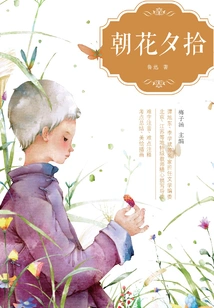
Originally titled "Revisiting Old Things", it is a collection of essays by modern writer Lu Xun.
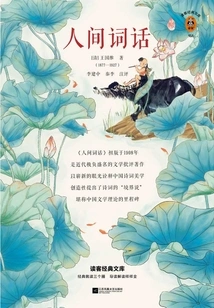 36
36Human Words
Literature人间词话
Wang Guowei
One sentence explains the beauty of poetry! Human Words made me understand what good poetry is! Complete collection of Wang Guowei's manuscripts! Appreciation of comments by famous Wuhan University teachers! "Human Words" is the representative work of Wang Guowei, a master of modern Chinese studies, and the end of traditional Chinese literary theory. It uses the form of traditional words and Western literary theories to comment on traditional Chinese literature and puts forward a novel and unique "realm theory." "Realm Theory" is not only the foundation of "Ren Jian Ci Hua", but also the core of "Ren Jian Ci Hua". The book "Human Words" is divided into 64 texts deleted by Wang Guowei and 48 deleted manuscripts that were not selected. This edition contains a total of 113 original and deleted manuscripts, and an image of the manuscript of "Human Words" is attached at the back of the book. From the current historical perspective, this book provides a unique appreciation of the 113 selected contents one by one, including heartfelt praise and praise, as well as cold criticism and questioning.
One sentence explains the beauty of poetry! Human Words made me understand what good poetry is! Complete collection of Wang Guowei's manuscripts! Appreciation of comments by famous Wuhan University teachers! "Human Words" is the representative work of Wang Guowei, a master of modern Chinese studies, and the end of traditional Chinese literary theory. It uses the form of traditional words and Western literary theories to comment on traditional Chinese literature and puts forward a novel and unique "realm theory." "Realm Theory" is not only the foundation of "Ren Jian Ci Hua", but also the core of "Ren Jian Ci Hua". The book "Human Words" is divided into 64 texts deleted by Wang Guowei and 48 deleted manuscripts that were not selected. This edition contains a total of 113 original and deleted manuscripts, and an image of the manuscript of "Human Words" is attached at the back of the book. From the current historical perspective, this book provides a unique appreciation of the 113 selected contents one by one, including heartfelt praise and praise, as well as cold criticism and questioning.
"Renjian Cihua" is the most famous work on Cihua in modern China. The author Wang Guowei uses traditional word forms and traditional concepts, terminology and thinking logic, and naturally incorporates some new concepts and methods, and the theoretical issues he summarizes have quite universal significance. This caused it to have a major repercussions among readers of the new and old generations at that time, and it has a lofty status in the history of modern Chinese literary criticism.
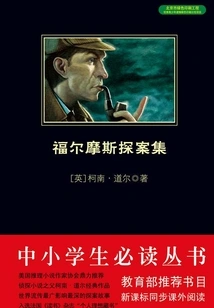
A collection of novels written by British writer Arthur Conan Doyle. The protagonist is named Sherlock Holmes (also translated as Sherlock Holmes). There are 4 novels and 56 short stories in total. The first novel, A Study in Scarlet, was completed in 1886 and was published together with other works in the Beeton Christmas Annual the following year. It has been adapted into movies and TV series many times.
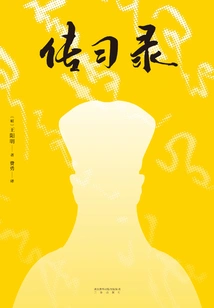
"Zhuan*lu" is a philosophical work written by Wang Shouren (alias Bo'an), a Chinese philosopher from the Ming Dynasty and a representative figure of the Neo-Confucian school in the Song and Ming Dynasties, known as Mr. Yangming in the world. This book records his quotations and academic letters. The word "chuan*" comes from the phrase "chuanbu*hu" in "The Analects of Confucius".
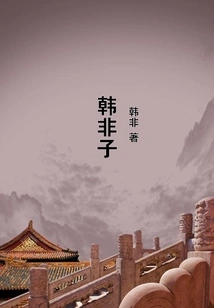
A collection of works by the famous thinker and legalist Han Fei during the Warring States Period. "Han Feizi" was compiled by his descendants after Han Fei's death. According to "Han Shu·Yiwen Zhi", fifty-five chapters of "Han Zi" are recorded, and "Sui Shu·Jing Ji Zhi" records twenty volumes. Zhang Shoujie's "Historical Records Zhengyi" quotes Ruan Xiaoxu's "Qi Lu" (or Liu Xiang's "Qi Lu") and also states that "Han Feizi" has twenty volumes." The number of chapters and volumes are consistent with the current version, which shows that the current version is not incomplete. Many of the folklore and fables of the time in the book have also become the sources of idioms and allusions.
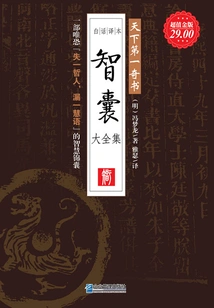
The author was Feng Menglong from the Ming Dynasty. The book was first compiled in the sixth year of Tianqi in the Ming Dynasty (1626). The book contains more than 1,200 stories of think tanks from the pre-Qin Dynasty to the Ming Dynasty. It is a history of the creation and practice of the wisdom of the Chinese people. The characters shown in the book are all using wisdom and strategy to create history. It is not only a wonderful book that reflects the ancient people's clever use of wisdom to solve problems and defeat enemies, but also a huge resource collection in the history of Chinese culture.
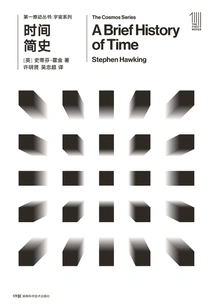
A scientific work by British physicist Stephen William Hawking, first published in 1988. The book has twelve chapters in total, telling the most cutting-edge knowledge about the nature of the universe, including: the image of our universe, space and time, the expanding universe, the uncertainty principle, black holes, the origin and destiny of the universe, etc. It introduces knowledge about distant galaxies, black holes, particles, antimatter, etc. In a simple and easy-to-understand way, and elaborates on the origin of the universe, space and time, and ancient propositions such as the theory of relativity. In the book, Hawking explores unresolved conflicts in existing theories of the universe and points out problems in unifying quantum mechanics, thermodynamics, and general relativity. The book is positioned to make his theory and the mathematics of it accessible to general readers interested in cosmology.
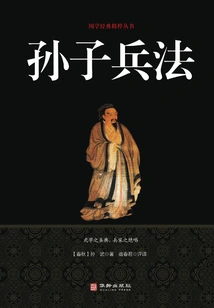
Also known as "Sun Wu's Art of War", "Wu Sun Tzu's Art of War", "Sun Tzu's Art of War", "Sun Wu's Art of War", etc., It is the earliest extant military book in China and the earliest military work in the world. It is known as the "sacred book of military science". There are about 6,000 words in total, and there are thirteen articles in total.
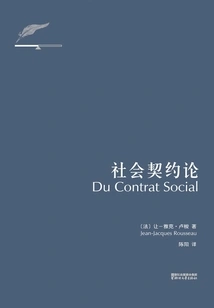
"The Social Contract" (French: Du Contrat Social, also translated as "The Civil Contract", or "The Principles of Political Rights") is a political work published by the French thinker Jean-Jacques Rousseau in 1762. The Social Contract is divided into four volumes: Volume One discusses social structure and the social contract, Volume Two deals with sovereignty and its rights, Volume Three deals with government and its forms of operation, and Volume Four discusses several social organizations. The idea of sovereignty among the people in "The Social Contract" is the cornerstone of the modern democratic system and profoundly influenced the revolutionary movements in Europe and the war of independence in the British North American colonies.
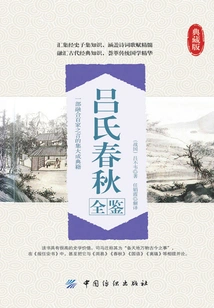
"Lu's Spring and Autumn Annals" is a masterpiece of Huang Lao Taoism compiled by disciples under the auspices of Qin State Prime Minister Lu Buwei. It was written on the eve of Qin Shihuang's unification of China. This book takes Confucianism as its main body, Taoism theory as its basis, and Ming, Dharma, Mohism, Nong, Bing, and Yin-Yang schools of thought as its material. It integrates the theories of hundreds of schools of thought into one furnace, shining with the light of profound and profound wisdom.