Various Classics, Anecdotes and Novels
各种经典著作与怪闻加小说
Personally compiled various works, legends and anecdotes from ancient and modern times, Chinese and foreign, etc... In short, there are all kinds of books. This book list is a catalog type book list. By collecting this book list, you will have the illusion of "I will definitely finish reading these books" and the feeling of "After reading these books, I will be able to...". My ability is limited. If you have any good classics or strange stories, just leave a message! (Emphasis added) The word count and book limit of Qidian's book list make me feel sick to my stomach. I'm thinking about whether I should simply post the introduction at the back of my novel... Why is there a word limit? Ps: If you really want to read it, it's best to read it in physical books. It's all self-explanatory... ( Physical books are the best!) PS: Let me tell you secretly, in fact, most of the book introductions are from Baidu Encyclopedia~... The following is the starting point. There are no books and book lists that cannot be put down (unfinished)... Search for Mystery List, Taiping Guangji, Zhongxing Jianqi Collection, New Tang Book, Shennong Materia Medica Classics, Sanshui Xiaoshu, Ancient and Modern Notes, Annals of the Xuanshi, Hanyuan Yincong, Dadai Liji, Moaning Yu, Shoukang Baojian, Ma and En's Books, Classical Classics, Tao An's Dream Memories, Dracula, The Earliest China, Shuo Yong, Dharma Statement, The Seventh Day, Mustard Seeds, One Hundred Years of Solitude, Love in the Time of Cholera Love, Yin Yun's novels, A Doll's House, Peer Gynt, Dead Branches, Recent Thoughts, Theory of Moral Sentiments, Cat and Mouse Game, Suiyuan Food List, Yu Hua's book, Principle of Population, Augustine's "Confessions", Tolstoy's "Confessions", Disqualification in the World, Golden Bough (Fraser's)
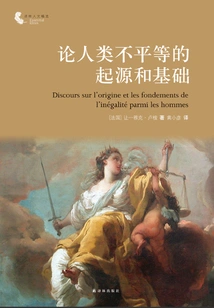
First published in Amsterdam, Netherlands, in April 1755. It discusses the causes of social inequality and methods to overcome it, and criticizes feudal hierarchical relations. Rousseau believed that the development of production and the emergence of private ownership caused mankind to break away from the "state of nature" and gave rise to the social phenomenon of inequality between rich and poor. He speculated that contradictions and struggles would transform into opposites, and that development is a spiral process. He recognized that private ownership is the source of social inequality, and believed that each person's small amount of private property is the basis of social equality. This book provides a theoretical basis for bourgeois political revolution and can be regarded as the foundation of all Rousseau's thoughts and the introduction to "The Social Contract". (I thought there was no such book! What a sudden surprise! Although I don't know why a book like mine is missing.)
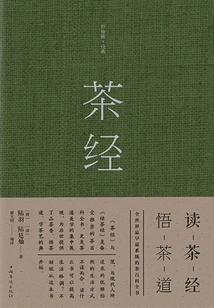
The Book of Tea is the earliest, most complete and comprehensive introduction to tea in China and even the world. It is known as the Encyclopedia of Tea and was written by Lu Yu in the Tang Dynasty.
 4
4Q
General Fictionq
O
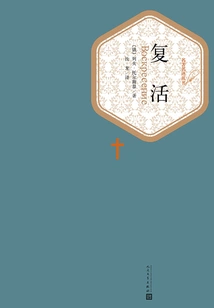
This book is a masterpiece that Leo Tolstoy, the great Russian critical realist writer, worked hard on for more than ten years in his later years. It is also the crystallization of his thoughts and art throughout his life. Through the unjust injustice suffered by Maslova and the "prisoners" in the prison, the novel extensively and profoundly exposed the anti-people nature of the tsar's laws, courts, prisons, officials and the entire state institutions. It is a mirror that reflects the contradictory situation of the Russian peasants in the revolution.
This book is a masterpiece that Leo Tolstoy, the great Russian critical realist writer, worked hard on for more than ten years in his later years. It is also the crystallization of his thoughts and art throughout his life. Through the unjust injustice suffered by Maslova and the "prisoners" in the prison, the novel extensively and profoundly exposed the anti-people nature of the tsar's laws, courts, prisons, officials and the entire state institutions. It is a mirror that reflects the contradictory situation of the Russian peasants in the revolution.
A novel written by Russian writer Leo Tolstoy, first published in 1899. The book is based on a true incident.
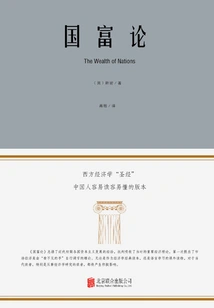
"A Study into the Nature and Causes of National Wealth" Abbreviation: "The Wealth of Nations" It is a popular economics book published by the Commercial Press on December 1, 1972. The author is Adam Smith (UK), and the translators are Guo Dali and Wang Yanan. In November 2015, it was named one of the 20 most influential academic books.
"Three Heroes and Five Righteousness", written by Shi Yukun, is a classic of the classic chivalrous case novels and can be called the originator of Chinese martial arts novels. At the same time, as China's first martial arts novel with real significance, "Three Heroes and Five Righteousness" has many versions and is widely circulated. The popular stories in the book have had a profound impact on the content of modern Chinese storytelling, folk arts, martial arts novels and even literature and art.
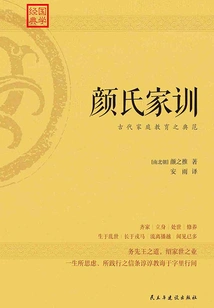
The first family motto with rich content and grand system in the history of the Chinese nation is also an academic work. The author Yan Zhitui was a famous writer and educator in the Southern and Northern Dynasties. The book was written after Emperor Wen of the Sui Dynasty destroyed the Chen Kingdom and before Emperor Yang of the Sui Dynasty came to the throne (about the end of the 6th century AD). This is Yan Zhitui's work describing his personal experiences, thoughts, and knowledge to warn his descendants. There are seven volumes and twenty articles in total. They are the first in preface, the second in raising children, the third in brothers, the fourth in later marriage, the fifth in managing the family, the sixth in conduct, the seventh in cultivating the virtuous, the eighth in encouraging learning, the ninth in writing, the tenth in name and reality, the eleventh in dealing with affairs, the twelfth in saving troubles, the thirteenth in stopping one's feet, the fourteenth in commanding soldiers, the fifteenth in cultivating the heart, the sixteenth in returning to one's heart, the seventeenth in documentary evidence, the eighteenth in music and speech, the nineteenth in miscellaneous arts, and the twentieth in final system.
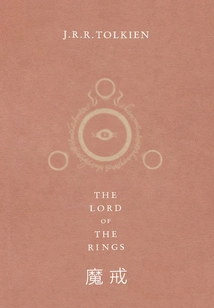 8
8魔戒三部曲(电影《指环王》原著)
H
This is a great epic about fighting against darkness for the sake of a bright future for the world. The Supreme Lord of the Rings has the power to rule all the rings and enslave the world. The Dark Lord Sauron has been looking for it for a long time. In order to protect his homeland, Frodo, the heir to the Lord of the Rings, resolutely left the peaceful and simple Shire and embarked on an uncertain journey. Accompanying him are wise wizards, brave humans, kind elves, persevering dwarves and peace-loving hobbits. The journey witnessed courage and friendship. The shadows in the Prancing Pony Inn, the roaring balrogs at Khazad-dûm Bridge, the brave Rohan steeds, the ancient treebeards in Fangorn Forest, the howling evil Ringwraiths, the giant poisonous spiders beside the steep mountain walls... Everyone resists endless temptations and tribulations, and takes on their own tests of good and evil. An ordinary hobbit trembles in front of the flames of doom. Can he defeat the soul-devouring Supreme Lord of the Rings?
This is a great epic about fighting against darkness for the sake of a bright future for the world. The Supreme Lord of the Rings has the power to rule all the rings and enslave the world. The Dark Lord Sauron has been looking for it for a long time. In order to protect his homeland, Frodo, the heir to the Lord of the Rings, resolutely left the peaceful and simple Shire and embarked on an uncertain journey. Accompanying him are wise wizards, brave humans, kind elves, persevering dwarves and peace-loving hobbits. The journey witnessed courage and friendship. The shadows in the Prancing Pony Inn, the roaring balrogs at Khazad-dûm Bridge, the brave Rohan steeds, the ancient treebeards in Fangorn Forest, the howling evil Ringwraiths, the giant poisonous spiders beside the steep mountain walls... Everyone resists endless temptations and tribulations, and takes on their own tests of good and evil. An ordinary hobbit trembles in front of the flames of doom. Can he defeat the soul-devouring Supreme Lord of the Rings?
"The Lord of the Rings" (The Lord of the Rings), also translated as "The Lord of the Rings", is a full-length fantasy novel written by John Ronald Reel Tolkien, a British writer, linguist, and professor at Oxford University. This book is the sequel to "The Hobbit" and is recognized as the originator of modern fantasy literature. After twelve years of creation and four years of revision, "The Lord of the Rings" was published from 1954 to 1955. The book is divided into three parts: "The Fellowship of the Ring", "The Two Towers" and "The Return of the King".
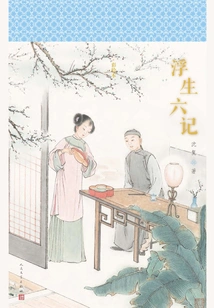 9
9Six Chapters of a Floating Life
Literature浮生六记
Shen Fu
This book is an autobiographical prose written by Shen Fu, a native of Changzhou (now Suzhou) in the Qing Dynasty, in the 13th year of Jiaqing (1808). The content takes the life of the author and his wife as the main line, describing the ordinary but interesting home life and what he saw and heard while traveling around the world. The text expresses the soul uniquely and is informal. It describes the couple's "love in the boudoir and trivial things in the family" in an affectionate and straightforward style, and writes about the sincere love between husband and wife.
This book is an autobiographical prose written by Shen Fu, a native of Changzhou (now Suzhou) in the Qing Dynasty, in the 13th year of Jiaqing (1808). The content takes the life of the author and his wife as the main line, describing the ordinary but interesting home life and what he saw and heard while traveling around the world. The text expresses the soul uniquely and is informal. It describes the couple's "love in the boudoir and trivial things in the family" in an affectionate and straightforward style, and writes about the sincere love between husband and wife.
An autobiographical prose written in the 13th year of Jiaqing (1808) by Shen Fu (also known as Sanbai and Meiyi) from Changzhou in the Qing Dynasty. Yang Yinchuan, the brother-in-law of Wang Tao in the Qing Dynasty, found the remaining manuscript of "Six Chapters of a Floating Life" at a cold stall in Suzhou. There were only four volumes. He gave it to Wang Tao, who was in charge of the Wenzun Pavilion in Shanghai at the time, and published it on a movable type board in 1877. The second dictionary of "Floating Life" comes from Li Bai's poem "Preface to the Spring Night Banquet from My Brother's Peach and Li Garden": "Heaven and earth are the reverse journey of all things; time is the passerby of hundreds of generations. And floating life is like a dream, how much joy is there?".
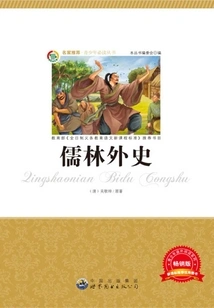
The novel written by Wu Jingzi in the Qing Dynasty was written in the 14th year of Qianlong's reign (1749) or a little before. It was first handed down as a manuscript and was first engraved in the eighth year of Jiaqing's reign (1803). The book's fifty-six chapters use realism to describe the different performances of various people regarding "fame and wealth". On the one hand, it truly reveals the process and reasons for the corruption of human nature, thereby deeply criticizing and ridiculing the corruption of officials at that time, the shortcomings of imperial examinations, and the hypocrisy of ethics; on the other hand, it passionately praises the protection of human nature by a few characters by insisting on themselves, thus embodying the author's ideals. The use of vernacular in the novel has become more proficient, and the characterization of the characters is also quite in-depth and delicate, especially the use of superb satirical techniques, making the book a masterpiece of Chinese classical satirical literature.
A famous book of advice in ancient times, written by Yuan Huang, a famous official and thinker of the Ming Dynasty. "The Four Precepts of Liaofan", also known as "Self-establishment of Destiny", is an educational book on cultivating morality, establishing destiny, cultivating oneself and governing the world. The book was written in 1602 AD. The full text is divided into four parts to explain how to change destiny through the study of destiny, the method of correction, the method of accumulating good deeds, and the effect of modesty. The author was Yuan Huang from the Ming Dynasty, whose courtesy name was Kunyi and later changed his name to Fan. He told the process of changing his destiny through his personal experience. It was originally to teach his son, so he named it "Xun Ziwen"; later, to enlighten the world, he changed his name to this.
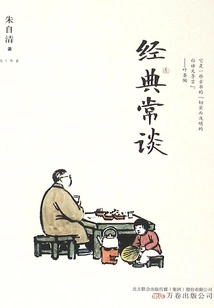
"Classics" was written in 1942 and has been widely circulated for more than 60 years, becoming an enlightenment classic that popularizes Chinese traditional culture. Mr. Zhu Ziqing used clear and practical words to introduce the classic works of our country's cultural heritage in thirteen articles without any hassle. Zhu Ziqing's "Classic Chang Tan" includes thirteen chapters including Shuowen Jiezi, Zhouyi, Shangshu, Book of Songs, Three Rites, Spring and Autumn Annals, Four Books, Warring States Policy, Historical Records and Hanshu, Zhuzi, Ci Fu, Poems, and Wen, which systematically introduces the development and historical context of ancient Chinese literature. The combing and explanation of classics throughout the book are not only concise and insightful in terms of knowledge, but also a model of popular and fluent vernacular writing. It makes ancient texts more approachable and familiar to readers, thus inspiring readers' interest. It is the best choice for readers to get an overview of Chinese classical literature.
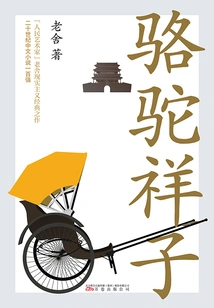 14
14Camel Xiangzi
General Fiction骆驼祥子
Lao She
"Camel Xiangzi" tells the story of Xiangzi, an uneducated, young and powerful rickshaw driver from the countryside of Peking, who experienced ups and downs in his life. The unique Beijing-style spoken language vividly embodies ordinary city life and folk customs, making the characters in the novel more fitting. A display of true vernacular art.
"Camel Xiangzi" tells the story of Xiangzi, an uneducated, young and powerful rickshaw driver from the countryside of Peking, who experienced ups and downs in his life. The unique Beijing-style spoken language vividly embodies ordinary city life and folk customs, making the characters in the novel more fitting. A display of true vernacular art.
A novel written by People's Artist - Lao She (Shu Qingchun). It describes the tragic fate of rickshaw pullers during the warlord war in the 1920s. Xiangzi is a representative figure of the working people in the old society. "Camel Xiangzi" tells the story of the ups and downs of Xiangzi, a young, strong and energetic rickshaw puller in the city of Beiping, China. Xiangzi came from the countryside. He was a bankrupt young farmer who was diligent, simple and kind. He retained everything that the countryside had nurtured and taught him, but he never wanted to go back to the countryside. Xiangzi, who came to the city from the countryside, was eager to buy a car of his own with his honest labor. It was Xiangzi's wish, hope, and even religion to be an independent worker. With diligence and perseverance, he spent three years frugally, and finally realized his ideal and became a self-reliant first-class coachman. But just half a year after pulling the cart, the cart was kidnapped by deserters in the chaos of war. Xiangzi lost the cart and only brought back three camels. Xiangzi was not discouraged. He still stubbornly started from scratch and drove the cart more self-consciously to save money. However, before he could buy another car, all his savings were extorted and robbed by detectives, and his dream of buying a car came to nothing again. When Xiangzi pulled into his car again, it was at the expense of a deformed marriage with Huniu. The good times did not last long, because Huniu died in childbirth, and he had to sell the rickshaw to attend to the funeral. At this point, his life ideal was completely shattered. Coupled with the suicide of his beloved woman Xiao Fuzi, the last spark of hope in his heart was blown out. Suffering repeated blows from life, Xiangzi began to lose any aspirations and confidence in life. He could no longer muster the courage to live. He was no longer proud of pulling carts as before. He hated pulling carts and hated working. Xiangzi, who was teased by life, started playing games, eating, drinking, whoring and gambling. In order to drink, Xiangzi swindled money everywhere and became a "urban garbage". In the end, he made a living by working as a handyman for weddings and funerals. Xiangzi was reduced from a "decent, strong, dreamy, self-interested, personal, strong, and great" lower-class worker to a "degenerate, selfish, unfortunate, born in the womb of social disease, and the end of individualism."
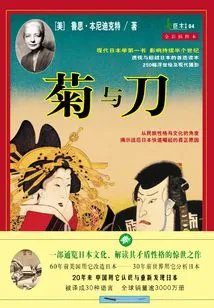
A book on cultural anthropology written by American cultural anthropologist Ruth Benedict, first published in 1946. The book is not long, with a total of thirteen chapters, with some notes on Japanese words and an index to the whole book. In addition to the first and last two chapters mentioned above, it starts with the views on war, moves on to the Meiji Restoration, and then discusses Japanese customs, moral concepts, how to "self-train" (cultivation) and how children learn traditions. In the book, the author uses the research method of cultural anthropology, using the "chrysanthemum", the Japanese royal family crest, and the "sword", which symbolizes the identity of the samurai, as a set of contrasting and contradictory images. He explains and explains the seemingly contradictory aspects of Japanese culture from the perspective of others, and points out that Japanese culture is a culture of shame.
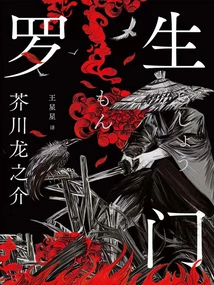 16
16N
General Fictionn
H
Between truth and lies, there is a Rashomon gate. Is it because the truth of the world is too monotonous and boring, so it is dyed with mottled colors by human nature? "Rashomon" is the representative work of the Japanese genius writer Ryunosuke Akutagawa. He uses concise writing, concise language and highly charged details to present the various aspects of Japanese society in the early 20th century, and vividly depicts the selfish desires that swing between life and death, and the absurdity and sublimity of human nature. The book contains 8 representative works of Akutagawa Ryunosuke's writing career, including "Rashomon", "Nose" and "Yam Porridge", allowing readers to experience the swing between good and evil at the critical moment of life and death, and to discover the hope blooming in the subtle humanity in the darkness.
Between truth and lies, there is a Rashomon gate. Is it because the truth of the world is too monotonous and boring, so it is dyed with mottled colors by human nature? "Rashomon" is the representative work of the Japanese genius writer Ryunosuke Akutagawa. He uses concise writing, concise language and highly charged details to present the various aspects of Japanese society in the early 20th century, and vividly depicts the selfish desires that swing between life and death, and the absurdity and sublimity of human nature. The book contains 8 representative works of Akutagawa Ryunosuke's writing career, including "Rashomon", "Nose" and "Yam Porridge", allowing readers to experience the swing between good and evil at the critical moment of life and death, and to discover the hope blooming in the subtle humanity in the darkness.
A short story written by Japanese writer Akutagawa Ryunosuke in 1915. The plot is based on the Japanese classic story collection "The Story of the Past". The work tells the story of a slave under the Rashomon Gate who was waiting for the rain to stop during the twilight period. When he was at a loss as to whether his life or death would be decided, he came across an old woman who made a living by pulling out the hair of dead people. The desperate slave became evil and determined to abandon suffering and follow evil. He took off the old woman's clothes and escaped from Rashomon. The plot of this work is simple, the characters are few, the length is short, and the scenes are small. The time, place, characters, and ending are all displayed in front of the reader. Although the work is a historical novel based on old themes, it is endowed with a certain meaning and describes the people at the bottom of society who are tenaciously struggling to survive. It is not a historical novel in a simple sense.
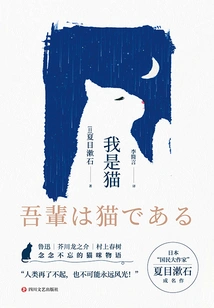 17
17N
General Fictionn
H
"I Am a Cat" is a famous work by Japan's "national master" Natsume Soseki, and is known as "a monument to Japanese critical realism literature." The author uses cat language to expose the nature of human money worship and egoism, and criticizes the society that worships money and the social habits of worshiping foreign things.
"I Am a Cat" is a famous work by Japan's "national master" Natsume Soseki, and is known as "a monument to Japanese critical realism literature." The author uses cat language to expose the nature of human money worship and egoism, and criticizes the society that worships money and the social habits of worshiping foreign things.
The novel written by Japanese writer Natsume Soseki is also his representative work. This work was written from 1904 to September 1906. It was serialized in the magazine "Dujuan" from January 1905, and was later published in three volumes: the first, middle and second volumes. The novel "I Am a Cat" written by Natsume Soseki to vent his years of anger vividly reflects the thoughts and life of Japan's petty and middle-class bourgeoisie at the beginning of the twentieth century, and sharply exposes and criticizes the "civilized and enlightened" capitalist society of the Meiji period. This work takes a poor teacher's cat as the protagonist and observes human psychology from the perspective of this anthropomorphized cat. This is a cat who is good at thinking, knowledgeable, full of justice and literary temperament, but he has never learned to catch mice until his death.
 18
18U
General Fictionu
H
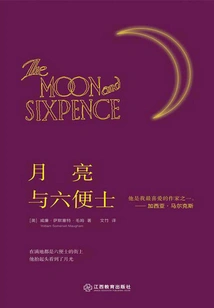
The book "The Moon and Sixpence" translated by Wenzhu is one of the three masterpieces of William Somerset Maugham in the United Kingdom and was completed in 1919. The inspiration for "The Moon and Sixpence" is based on the life of the French post-Impressionist painter Gauguin. The protagonist was originally an accomplished securities broker. After reaching middle age, he suddenly responded to the call of his heart and became obsessed with painting. He gave up everything and went to Tahiti in the South Pacific to live with the indigenous people, gain inspiration, and create amazing masterpieces. Maugham deeply explores the contradictions and interactions between life and art in his novels. After Maugham's novel came out, it became a sensation in the literary world for its fascinating plot and profound writing, and people rushed to read it.
The book "The Moon and Sixpence" translated by Wenzhu is one of the three masterpieces of William Somerset Maugham in the United Kingdom and was completed in 1919. The inspiration for "The Moon and Sixpence" is based on the life of the French post-Impressionist painter Gauguin. The protagonist was originally an accomplished securities broker. After reaching middle age, he suddenly responded to the call of his heart and became obsessed with painting. He gave up everything and went to Tahiti in the South Pacific to live with the indigenous people, gain inspiration, and create amazing masterpieces. Maugham deeply explores the contradictions and interactions between life and art in his novels. After Maugham's novel came out, it became a sensation in the literary world for its fascinating plot and profound writing, and people rushed to read it.
A novel written by the British novelist William Somerset Maugham, written in 1919. The work is based on the life of French Impressionist painter Paul Gauguin. It describes the story of Strickland, an originally ordinary London stockbroker, who suddenly became obsessed with art, abandoned his wife and children, gave up what others thought was a prosperous and happy life, and went to Tahiti in the South Pacific to write his own glorious life with a round pen and inject all the value of life into the gorgeous canvas. He didn't care about the entanglement of poverty and the torment of illness, but regret never visited his consciousness. The work expresses the contradiction between genius, personality and material civilization, as well as modern marriage and family life. It has a broad perspective on life. It uses a scalpel that smells of disinfectant to sharply dissect the human nature wrapped in skin, mixed with the mocking humor and cruel eyes of the spectators.
 20
20Eugenie Grandet (fu Lei Complete Works)
General Fiction欧也妮·葛朗台(傅雷全集)
H
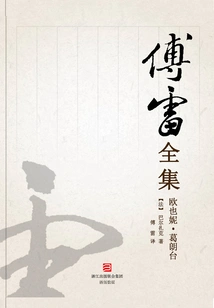
"Eugénie Grandet" tells a story about money destroying humanity and causing family tragedy. Centering around the central event of Eugenie's love tragedy, the novel is connected by three intertwined plot threads: the waves caused by the autocracy within the Grandet family, the open and secret fights between the bankers and notaries outside the family, and Eugenie's love for Charles Grandet, and the painful human experience of Charles' betrayal.
"Eugénie Grandet" tells a story about money destroying humanity and causing family tragedy. Centering around the central event of Eugenie's love tragedy, the novel is connected by three intertwined plot threads: the waves caused by the autocracy within the Grandet family, the open and secret fights between the bankers and notaries outside the family, and Eugenie's love for Charles Grandet, and the painful human experience of Charles' betrayal.
A novel written by the French critical realist novelist Balzac, which is included in "The Human Comedy". The novel narrates a story of money destroying human nature and causing family tragedy. It revolves around the central event of Eugenie's love tragedy, and uses three intertwined plot threads to connect the novel: the waves caused by the autocracy within the Grandet family, the open and secret fights between the bankers and notaries outside the family, and the painful life experience of Eugenie's love for Charles Grandet and Charlie's betrayal. "Eugénie Grandet" is a colorful social custom painting from the French provinces in the first half of the 19th century. It exposes the evils of capitalist society and how money corrodes and destroys people's minds and souls.
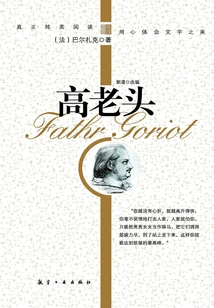
A novel written by French writer Balzac and published in 1834. The story tells the story of the protagonist Goriot, a flour merchant who started his career during the French Revolution. He lost his wife in middle age. He devoted all his love to his two daughters. In order to let them squeeze into the upper class, he gave them a good education since childhood and gave them a dowry of 800,000 francs each when they got married. However, his two daughters lived a dissolute life and spent money like water. His love was easily defeated by the principle of money supremacy. This work is representative in showing the breadth and depth of social life, in reflecting the progress and limitations of the writer's worldview, and in expressing the artistic achievements and shortcomings of "The Human Comedy". Its artistic style is one of the works that best represents Balzac's characteristics.
 22
22Notes on the Small Window
Literature小窗幽记
(ming Dynasty) Chen Jiru, Translated And Annotated By He Pan
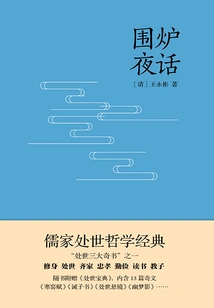
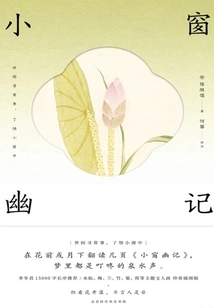
"The Secret of Small Window", "Evening Talk Around the Fireplace" and "Cai Gen Tan" are also known as "the three great books on life". "Cai Gen Tan" is better for its profoundness, "Night Talk around the Fireplace" is better for its plainness, and "The Story of a Small Window" is better for its colorfulness. The whole book is divided into twelve chapters: "awake, emotion, steepness, spirit, element, scenery, rhyme, wonder, beauty, heroism, law, beauty". He writes down the scene in front of his eyes and the emotions in his heart, including the way of life that "makes people happy at first acquaintance, rather than the boredom that lasts forever", the leisurely attitude of "how happy life has been since ancient times", and the charming and wonderful thoughts about singing birds, famous flowers, clear springs and white rocks. The language is sharp and beautiful, every word is precious, looking for happiness and true meaning in the seemingly useless leisure, describing all kinds of interests in life, and the taste is far-reaching. Imagine making yourself a pot of good tea in the lazy afternoon, sitting in front of the flowers and trees with dappled light and shadow, or reading a few pages of "The Secret of the Small Window" under the moonlight, and dreaming of the sound of the spring water.
"The Secret of Small Window", "Evening Talk Around the Fireplace" and "Cai Gen Tan" are also known as "the three great books on life". "Cai Gen Tan" is better for its profoundness, "Night Talk around the Fireplace" is better for its plainness, and "The Story of a Small Window" is better for its colorfulness. The whole book is divided into twelve chapters: "awake, emotion, steepness, spirit, element, scenery, rhyme, wonder, beauty, heroism, law, beauty". He writes down the scene in front of his eyes and the emotions in his heart, including the way of life that "makes people happy at first acquaintance, rather than the boredom that lasts forever", the leisurely attitude of "how happy life has been since ancient times", and the charming and wonderful thoughts about singing birds, famous flowers, clear springs and white rocks. The language is sharp and beautiful, every word is precious, looking for happiness and true meaning in the seemingly useless leisure, describing all kinds of interests in life, and the taste is far-reaching. Imagine making yourself a pot of good tea in the lazy afternoon, sitting in front of the flowers and trees with dappled light and shadow, or reading a few pages of "The Secret of the Small Window" under the moonlight, and dreaming of the sound of the spring water.
The whole book begins with waking up and ends with relaxation. Although he lives in the dust, he still has a high view of the outside world; in his criticism of the world's most vivid trends, he reveals the coldness of a philosopher. His aphorisms are exquisite, short and exquisite, prompting people to be alert and beneficial to the mind. Since its publication, it has spread like wildfire and attracted the attention of readers again and again. Its cultural charm is becoming more and more recognized by readers.