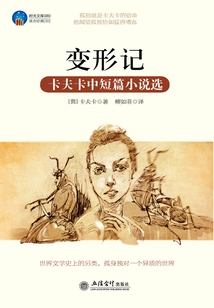
The Metamorphosis (selected Short Stories and Short Stories by Kafka)
by Kafka
About This Novel
"The Metamorphosis" edited by Austrian Kafka. Kafka is the founder of modernist literature, and "The Metamorphosis" is one of his representative works. If you want to understand modernist literature, the best way is to start by reading "Time Library·Selected Short and Novels by Kafka: Metamorphosis" repeatedly. In "Time Library Kafka's Short Stories and Novels: The Metamorphosis" Kafka describes the absurd plot in which Gregor Samsa, a clerk, suddenly turns into a big beetle that disgusts his family. This reveals the fact that people - including ethics - are affectionate on the surface but extremely lonely and unfamiliar in their hearts. It vividly and profoundly reproduces the indifference between people in capitalist society. Describing all activities of human life and their realistic details in an absurd and illogical world was the genius of the famous novelist Kafka.
Official Sources
What Readers Think
Rating
Community(0)
Official(40)Scraped 2mo ago
Regaining "Self" - Comment on "Metamorphosis"
Kafka's works have always been famous for their absurdity, which is inseparable from his identity as a master of expressionist literature. Expressionism advocates writing one's inner subjective feelings and opposes direct description of objective and real real life. It is precisely for this reason that in Kafka's masterpiece "The Metamorphosis", there is an absurd plot that is completely divorced from reality, such that the protagonist Gregor wakes up and finds that he has become a larger version of a beetle. However, although "Metamorphosis" has always been presented as absurd, the real problems hidden behind it are still not outdated even a hundred years later. Behind the absurd life described by Kafka, there may be the cruel reality that many people are experiencing today. The absurd intuition of "Metamorphosis" is to write the surreal plot of people turning into beetles. But in fact, if one's personal vision only stops here, Kafka's ulterior motives will be wasted to a large extent. Kafka's breakthrough lies in setting up a strong contrast. When the abnormal attitude collides with the surreal plot, the absurd flavor naturally spreads. In traditional fantasy novels, when a character encounters a monster or a monster, the first reaction is either to scream in fear or to freeze in fear. This is a normal and normal reaction. But the characters in "Metamorphosis" do the opposite. When Gregor woke up slowly and saw his trembling crawling feet, what he was most worried about was that he would be late for work, not why I turned into a beetle? Although Gregor's family was frightened for a time after seeing the true appearance of the beetle, they did not take any measures after they calmed down. When a scene beyond normal cognition appeared in front of them, everyone accepted it calmly. This kind of violation of common sense is the absurd essence of "Metamorphosis". In addition, the narrative tone of the novel also makes this sense of absurdity even stronger. As a third-person novel, the important task of narration is completed by the invisible narrator. The restrained and calm narrative tone undoubtedly deepens the sense of absurdity in the entire text. It is precisely because of the interaction of plot setting and narrative tone that "Metamorphosis" is filled with a strong flavor of absurdity. Of course, absurdity is just a characteristic, and exploring the real problems hidden behind absurdity is the correct way of thinking when we read literary works. Many literary critics believe that "The Metamorphosis" reflects the oppression and alienation of individuals caused by the concept of money supremacy in capitalist society. It is true that there are plots in the book about the managers of Gregor's company ignoring the physical health of their employees and treating them as working machines. It does reflect the exploitation of individuals by capitalists who uphold the principle of profit first. However, the assertion that "the novel clearly demonstrates the common fate of modern people in capitalist society, which is the inability to escape the sorrow of losing oneself and the futile struggle to find "self" due to alienation, cannot withstand careful scrutiny. If this is an inevitable drawback of social development to a certain extent, and a fate that individuals cannot escape, then Gregor actually fell into this situation because he had no other way out. But the actual situation is exactly the opposite. After reading "The Metamorphosis", I couldn't help but piece together this sentence in my mind, "Absurdity may be the true background of life." There is no other reason. Once you think about the absurd plot described by Kafka, it becomes truly frightening. Reality is often cruel. For Gregor, who has no "self" and places all his hopes on others, the acceptance of his relatives is the key to defeating his insect nature and maintaining his humanity. Therefore, when the sister whom he once doted on said "he is no longer Gregor", the humanity that Gregor struggled to maintain completely dissipated, and he who lived for others also lost the reason for his existence, and his destruction became inevitable. And if readers are more bold in their ideas, the reality behind the absurdity may be even more cruel. The reason why Gregor's family gave up on him was that he had turned into a beetle, that is, "he" was no longer his "self". Following this logic, we can make many extensions. When a former family member becomes a vegetative state or a mentally ill patient, does it also follow the logic that "he" is no longer the "self"? When a millionaire with great success suddenly falls into poverty and falls into poverty, does this also satisfy the above inference? Therefore, it is not difficult for us to find that the situations shown in the book are by no means groundless, and have also been beautified to a certain extent. After all, when Gregor's family could not conceal their disgust and shouted to drive him away, it could still be explained by the fact that Gregor had turned into an ugly beetle and was no longer the living person he was before. This cross-racial alienation neutralizes the cruelty and indifference of the family, preventing readers from gasping after reading the book. However, real life does not have such strange beautification, and people always show their true colors. It's not uncommon for family members to be abandoned due to serious illness. There are many scenarios where a once-mighty rich man is on his last legs, his friends avoid him, and his beloved wife leaves immediately. In the unexplainable reality, we can only face those fragile relationships and those false friendships. How many times more cruel than novels? It seems that many of us were once Gregor, just not in the form of a beetle. The previously mentioned unreasonable plot of the family ignoring Gregor seems to have been "reasonably" explained. After all, nowadays, it is common practice to bury biological mothers alive when they are old. It does not seem to be an inexplicable "absurdity" to not take any active measures after a family member turns into a bug. Jostan Judd once discussed the meaning of the absurd in "Sophie's World": "The characters often find themselves in a very unreal, dream-like situation. When they accept this situation without surprise, the audience cannot help but be surprised by these characters." Why not be surprised? This is a technique that Chaplin often uses in his silent films. The dramatic effect in these silent films often comes from Chaplin's silent acceptance of the absurdity of everything that happens to him, which makes the audience look at themselves and pursue something more real." And what Kafka brought us is undoubtedly the same thing. Faced with this absurdity that is infinitely close to reality, we have to reflect and review and rediscover the original "reality" of life.
Reading Kafka's novels is like listening to a madman's speech. It is extremely absurd and bizarre, but as you listen, you can hear the truth behind the absurdity. Occasionally, we have thought of this or that, but the busy life leaves us no time to think more deeply, but Kafka did it and recorded it. Kafka, what a genius madman!
Metamorphosis
?0?2 ?0?2 ?0?2 ?0?2 From the moment "I" inexplicably turned into a bug, the absurdity started, and the alienation of the relationship between the family and "I" gradually took shape. For our reality, turning into a bug is certainly unbelievable, but the reaction of family members happens from time to time in reality. ?0?2 ?0?2 ?0?2 ?0?2The image of bugs can be completely replaced by illness - yes, we will not turn into bugs, but we are likely to suffer from serious illnesses, and our family members are also likely to waste their minds under the increasingly heavy burden, and in the end they even hope that the patient will die soon so as to relieve themselves. ?0?2 ?0?2 ?0?2 ?0?2 ?0?2Although not everyone is like this, the saying "There is no filial son in bed for a long time" is by no means nonsense. Just like the sister in the article, she was very sympathetic to "me" at first, but changed her attitude after the family fell into financial crisis, and in the end she wished "me" was dead. After the burden of "I" was removed, my parents and sister were so happy that they even asked for leave to go on an outing to celebrate this joyful mood. This is usually unimaginable. ?0?2 ?0?2 ?0?2 ?0?2 ?0?2 Kafka is like this, directly hitting the crux of human nature, making language full of power.
A kind of loneliness, a kind of loneliness that only oneself understands. No one understands, no one can help. Wanting attention from others, but worrying about being framed, this is a complicated psychological state. Yes, this is the pain of loneliness.
What do you think? I think it looks great.
A salesman woke up and found that he had turned into a beetle. He tried his best to communicate with his relatives, but failed. He was eventually abandoned by the world and died alone.
Lack of family education and lack of self-responsibility. The collapse of material, spiritual and soul eventually ruined oneself! Who should pay the bill?
absurd technique
Griegl is quite pitiful, but he always reveals a little bit of hatefulness when reading. The family is very hateful, but also pitiful in the face of survival. This may be a manifestation of a contradiction in Kafka's thought. When the whole world abandons you, is there really no way out?
The greatest tragedy in the world is: the tragedy that is forced by one's own position
In front of the soul, is your love a kind of self-deception?
Rating
Community(0)
Official(40)Scraped 2mo ago
Regaining "Self" - Comment on "Metamorphosis"
Kafka's works have always been famous for their absurdity, which is inseparable from his identity as a master of expressionist literature. Expressionism advocates writing one's inner subjective feelings and opposes direct description of objective and real real life. It is precisely for this reason that in Kafka's masterpiece "The Metamorphosis", there is an absurd plot that is completely divorced from reality, such that the protagonist Gregor wakes up and finds that he has become a larger version of a beetle. However, although "Metamorphosis" has always been presented as absurd, the real problems hidden behind it are still not outdated even a hundred years later. Behind the absurd life described by Kafka, there may be the cruel reality that many people are experiencing today. The absurd intuition of "Metamorphosis" is to write the surreal plot of people turning into beetles. But in fact, if one's personal vision only stops here, Kafka's ulterior motives will be wasted to a large extent. Kafka's breakthrough lies in setting up a strong contrast. When the abnormal attitude collides with the surreal plot, the absurd flavor naturally spreads. In traditional fantasy novels, when a character encounters a monster or a monster, the first reaction is either to scream in fear or to freeze in fear. This is a normal and normal reaction. But the characters in "Metamorphosis" do the opposite. When Gregor woke up slowly and saw his trembling crawling feet, what he was most worried about was that he would be late for work, not why I turned into a beetle? Although Gregor's family was frightened for a time after seeing the true appearance of the beetle, they did not take any measures after they calmed down. When a scene beyond normal cognition appeared in front of them, everyone accepted it calmly. This kind of violation of common sense is the absurd essence of "Metamorphosis". In addition, the narrative tone of the novel also makes this sense of absurdity even stronger. As a third-person novel, the important task of narration is completed by the invisible narrator. The restrained and calm narrative tone undoubtedly deepens the sense of absurdity in the entire text. It is precisely because of the interaction of plot setting and narrative tone that "Metamorphosis" is filled with a strong flavor of absurdity. Of course, absurdity is just a characteristic, and exploring the real problems hidden behind absurdity is the correct way of thinking when we read literary works. Many literary critics believe that "The Metamorphosis" reflects the oppression and alienation of individuals caused by the concept of money supremacy in capitalist society. It is true that there are plots in the book about the managers of Gregor's company ignoring the physical health of their employees and treating them as working machines. It does reflect the exploitation of individuals by capitalists who uphold the principle of profit first. However, the assertion that "the novel clearly demonstrates the common fate of modern people in capitalist society, which is the inability to escape the sorrow of losing oneself and the futile struggle to find "self" due to alienation, cannot withstand careful scrutiny. If this is an inevitable drawback of social development to a certain extent, and a fate that individuals cannot escape, then Gregor actually fell into this situation because he had no other way out. But the actual situation is exactly the opposite. After reading "The Metamorphosis", I couldn't help but piece together this sentence in my mind, "Absurdity may be the true background of life." There is no other reason. Once you think about the absurd plot described by Kafka, it becomes truly frightening. Reality is often cruel. For Gregor, who has no "self" and places all his hopes on others, the acceptance of his relatives is the key to defeating his insect nature and maintaining his humanity. Therefore, when the sister whom he once doted on said "he is no longer Gregor", the humanity that Gregor struggled to maintain completely dissipated, and he who lived for others also lost the reason for his existence, and his destruction became inevitable. And if readers are more bold in their ideas, the reality behind the absurdity may be even more cruel. The reason why Gregor's family gave up on him was that he had turned into a beetle, that is, "he" was no longer his "self". Following this logic, we can make many extensions. When a former family member becomes a vegetative state or a mentally ill patient, does it also follow the logic that "he" is no longer the "self"? When a millionaire with great success suddenly falls into poverty and falls into poverty, does this also satisfy the above inference? Therefore, it is not difficult for us to find that the situations shown in the book are by no means groundless, and have also been beautified to a certain extent. After all, when Gregor's family could not conceal their disgust and shouted to drive him away, it could still be explained by the fact that Gregor had turned into an ugly beetle and was no longer the living person he was before. This cross-racial alienation neutralizes the cruelty and indifference of the family, preventing readers from gasping after reading the book. However, real life does not have such strange beautification, and people always show their true colors. It's not uncommon for family members to be abandoned due to serious illness. There are many scenarios where a once-mighty rich man is on his last legs, his friends avoid him, and his beloved wife leaves immediately. In the unexplainable reality, we can only face those fragile relationships and those false friendships. How many times more cruel than novels? It seems that many of us were once Gregor, just not in the form of a beetle. The previously mentioned unreasonable plot of the family ignoring Gregor seems to have been "reasonably" explained. After all, nowadays, it is common practice to bury biological mothers alive when they are old. It does not seem to be an inexplicable "absurdity" to not take any active measures after a family member turns into a bug. Jostan Judd once discussed the meaning of the absurd in "Sophie's World": "The characters often find themselves in a very unreal, dream-like situation. When they accept this situation without surprise, the audience cannot help but be surprised by these characters." Why not be surprised? This is a technique that Chaplin often uses in his silent films. The dramatic effect in these silent films often comes from Chaplin's silent acceptance of the absurdity of everything that happens to him, which makes the audience look at themselves and pursue something more real." And what Kafka brought us is undoubtedly the same thing. Faced with this absurdity that is infinitely close to reality, we have to reflect and review and rediscover the original "reality" of life.
Reading Kafka's novels is like listening to a madman's speech. It is extremely absurd and bizarre, but as you listen, you can hear the truth behind the absurdity. Occasionally, we have thought of this or that, but the busy life leaves us no time to think more deeply, but Kafka did it and recorded it. Kafka, what a genius madman!
Metamorphosis
?0?2 ?0?2 ?0?2 ?0?2 From the moment "I" inexplicably turned into a bug, the absurdity started, and the alienation of the relationship between the family and "I" gradually took shape. For our reality, turning into a bug is certainly unbelievable, but the reaction of family members happens from time to time in reality. ?0?2 ?0?2 ?0?2 ?0?2The image of bugs can be completely replaced by illness - yes, we will not turn into bugs, but we are likely to suffer from serious illnesses, and our family members are also likely to waste their minds under the increasingly heavy burden, and in the end they even hope that the patient will die soon so as to relieve themselves. ?0?2 ?0?2 ?0?2 ?0?2 ?0?2Although not everyone is like this, the saying "There is no filial son in bed for a long time" is by no means nonsense. Just like the sister in the article, she was very sympathetic to "me" at first, but changed her attitude after the family fell into financial crisis, and in the end she wished "me" was dead. After the burden of "I" was removed, my parents and sister were so happy that they even asked for leave to go on an outing to celebrate this joyful mood. This is usually unimaginable. ?0?2 ?0?2 ?0?2 ?0?2 ?0?2 Kafka is like this, directly hitting the crux of human nature, making language full of power.
A kind of loneliness, a kind of loneliness that only oneself understands. No one understands, no one can help. Wanting attention from others, but worrying about being framed, this is a complicated psychological state. Yes, this is the pain of loneliness.
What do you think? I think it looks great.
A salesman woke up and found that he had turned into a beetle. He tried his best to communicate with his relatives, but failed. He was eventually abandoned by the world and died alone.
Lack of family education and lack of self-responsibility. The collapse of material, spiritual and soul eventually ruined oneself! Who should pay the bill?
absurd technique
Griegl is quite pitiful, but he always reveals a little bit of hatefulness when reading. The family is very hateful, but also pitiful in the face of survival. This may be a manifestation of a contradiction in Kafka's thought. When the whole world abandons you, is there really no way out?
The greatest tragedy in the world is: the tragedy that is forced by one's own position
In front of the soul, is your love a kind of self-deception?