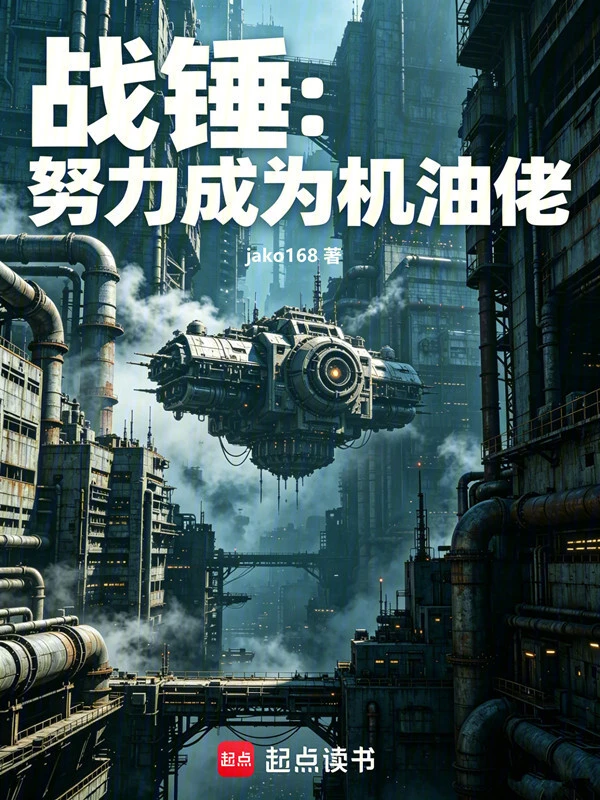
Warhammer: Try to Become a Greaser
战锤:努力成为机油佬
- Status
- Ongoing
- Length
- 977k Words
- Audience
- Male
- Subgenre
- Infinite Flow
- Updated
- 3d ago
- Source
- Qidian
Stats
312Monthly votes
4.9kRecommends
14.6kFans
214Chapters
Tags
Synopsis
Reader comments
Readers also read
 This Ultraman's Style of Painting Is Not Quite Right
 Time Travel at the Same Time, Let's Become a God in Douluo First
 Disasters Flowing Through the Heavens
 Devouring the Starry Sky: Start with an Equipment Slot
 Daming: Attack, Emperor Yongle!
 Warhammer: Reshaping the Golden Age from Farming to Farming
 Warhammer 40K: Soul of the Legion
 I Get a New Character Every Week
 Transform into Tang Monk and Become Stronger Starting from Covering the Sky to Obtain Scriptures
 Warhammer: the Game Starts with a Broken Half-Immortal
 Warhammer 40K, Lords of Shadow
 Warhammer: Buddy Has so Many Secrets!
Fifth-level sages are still operating naval mass-produced ships (1) - On the lack and reconstruction of the Mechanicus fleet system Your fleet has no waist
1. Core Contradiction: A fleet that is an empire from the inside out There is a fundamental contradiction in the protagonist's fleet planning: his identity is a fifth-level sage of the Cult of Mechanicus, and he has the authority to preside over independent casting facilities like Wangshu, and masters core technologies such as adamantine shaping, plasma reactor adjustment, and advanced sensor arrays - but his fleet, from ship selection to combat thinking, completely follows the Imperial Navy. Open the list of existing and under-construction ships in Garros: Moon-class cruisers, ships of the same type manufactured for the Navy, and planned Navy standard destroyers and frigates—not a single ship type exclusive to the Mechanicus. This is equivalent to a sage who has a complete STC debris database and places orders according to the standards of the naval ship repair yard. His advantages in materials science (adamant gold/ceramic steel formula), energy science advantages (plasma reactor adjustment and overload control), and detection technology advantages (special sensor array for the Mechanicum) have not been translated into leadership in ship performance. The navy uses live ammunition macrocannons because they are cheap, reliable, and easy to maintain on a large scale, while the reason why the Mechanicum uses plasma macrocannons and precision light spears is exactly what the protagonist has already mastered - better cooling pipeline layout, higher energy constraint accuracy, and more mature overload tolerance. These technical reserves are never reflected in the ship's armament in the article. More importantly, the reason for this choice is never explained in the article. Is the source of ship blueprints limited? Is he deliberately hiding his strength to avoid attracting the attention of the navy and the Inquisition? Or is it actively sacrificing performance in order to be compatible with the production line of naval orders? No matter which one, as long as it is not explained, it is a setting contradiction hanging on the protagonist's character. Under the premise of this misplaced identity, there are still two fatal gaps in the fleet structure itself. ------------------------------------------------------------------------------------------------ 2. The first gap: the missing "waist" - the light cruiser and auxiliary ship system 1. Why light cruisers are irreplaceable The empire has a vast territory, a tight number of cruisers and above capital ships, and high operating costs, making it impossible to frequently leave the port to perform daily tasks. The light cruiser is responsible for channel security within the star area, escort of the merchant fleet, anti-piracy operations, and long-range patrols in the outer star systems. It usually serves as the flagship of a destroyer/frigate detachment, with a tactical data link terminal and communications array on the bridge sufficient to command a squadron. When the main ship sets sail, it is necessary for the light cruiser to clear out the miscellaneous troops in the front and expand the sensor coverage sector. The precious main cruiser cannot be put into the escort queue to entangle the destroyer-level targets every time. Without light cruisers, this fleet lacks an intermediate link between the main force on the upper level and the small ships on the lower level - cruisers are too expensive to serve as escort flagships, the tonnage of destroyers is not enough, and the command facilities are not enough to coordinate squadron-level tactical operations. The structure of the fleet is like a man with joints and no wrists. No matter how hard his fist is, he can't swing it. The protagonist currently has the Wangshu Forging Asteroid Industrial Platform that can build capital ships, the Metis-class mining ship, and the Forging Ark. However, he only lacks the Mechanicum's exclusive light cruiser and its supporting destroyers and frigates. (It is strongly recommended that the author refer to the Mechanicus exclusive ship system in "Gothic Fleet 2".) 2. Auxiliary ship: not the icing on the cake, but a necessity when going out - Scout destroyer: None. The fleet's voyage to search for enemies relies entirely on the battleship's own sensors, and the detection sector is severely compressed. Without a forward reconnaissance unit, you would be blind if you don't know the enemy's situation. - Communication relay ship: None. Beyond the distance of the conventional communication equipment provided by the cruiser, communication delays and blind spots will occur between fleets and between fleets and bases, making it impossible to coordinate multi-ships or real-time contact between fleets and ground command. - Goliath-class factory ship: None. The fleet cannot synthesize fuel and manufacture spare parts in deep space, and can only rely on the supply lines of Garos Prime or Wangshu. Once the supply line is cut off, the entire fleet comes to a standstill - the maintenance rooms and storage compartments of the combat ships are of little use to fleet-level consumption. - Recovery ship: None. One of the core capabilities of the Mechanicus is the recovery of battlefield debris, but after the battle with the protagonist, the debris is left floating in the void. This is in direct conflict with the Mechanicus' teaching that "technology must not be abandoned". 3. Hidden costs of logistics The absence of auxiliary ships means that the logistical pressure of each voyage is entirely placed on the combat ship's own cargo hold and life support system. A Moon-class cruiser has a staff of 40 to 50,000 people, and the monthly consumption of rations, purified water, medical supplies, and promethium fuel is an astronomical figure. There are no dedicated supply ships accompanying them, and the combat radius is strictly limited to the star sector where Garros is located - this fleet is not a "fleet capable of fighting", but a "fleet that cannot leave home." ------------------------------------------------------------------------------------------------ 3. The second gap: the combat thinking of the Mechanicus - the missing dimension of self-abolishing martial arts This is a deeper structural problem than ship selection. The protagonist's current combat method is completely based on naval thinking: formation, shooting, and charging. But the combat logic of the Mechanicus Sage is not to "fight more accurately", but to turn the war itself into an asymmetric game. He didn't use any of the following four dimensions. 1. Electronic warfare and information warfare The Mechanicus ships should be equipped as standard with: Binary data link jammer - injecting logic viruses into the enemy's fire control system, causing weapon lock deviation and void shield frequency leakage; sensor deception array - creating false signals within the enemy's detection range, making a light cruiser look like a cruiser detachment; communication interception and deciphering system - intercepting the internal communications of the enemy fleet before the engagement, and grasping its chain of command and tactical intentions. These are not magic, they are techniques used by the Adeptus Mechanicus every day. The ship designed by the protagonist should not only have turrets. 2. Pre-war intelligence and tactical preparation The Imperial Navy's standard operating procedures: Patrol → Encounter the enemy → Report → Wait for reinforcements or engage in head-on battle. The Mechanicus' combat preparations: dispatch reconnaissance/research ships to conduct deep space scans → analyze the enemy's fleet composition, energy signal characteristics, and communication protocols → formulate targeted tactics → launch a surprise attack at the enemy's most vulnerable point of time. Intelligence is not an auxiliary, but a precursor to combat effectiveness. The novel has completely skipped this step so far. All encounters are temporary encounters with enemies, which is inconsistent with the character of the sage. 3. Wartime Maintenance and Continuous Operations A ship in the Imperial Navy loses a piece of armor after one shot. The Adeptus Mechanicus ship took a hit, and the recovery ship extracted materials from the wreckage at the rear of the battlefield → The Goliath factory ship produced replacement parts and ammunition → The ship's technician team, assisted by the cogitator, completed the intermediate repairs - welding and repairing armor cracks, replacing ablated plasma nozzles, and restarting the overloaded void shield generator. As long as the battle rhythm is properly controlled, the continuous combat capability of the Mechanicus fleet is not at the same level as that of the Imperial Navy fleet. 4. Recycling of post-war debris - Doctrine-level requirements "Knowledge is sacred, technology cannot be abandoned." The standard process for the Adeptus Mechanicus after a war is completed: the recovery ship cleans the battlefield → the debris is classified → the integrity is assessed → the usable components are put into storage → the non-purifiable debris is returned to the furnace or unified storage and waste management are carried out according to the degree of contamination. Every piece of fine gold, every light spear focusing lens, and every readable data log is an asset. In the novel, the protagonist disassembled the wreckage of the Istvan III to extract blueprints, which shows that the author was conscious, but this set of thinking did not extend to the level of fleet operations. The recovery itself can be written in a lot of hard-core details - the cogitator algorithm for wreckage assessment, the re-smelting process of adamantine and ceramite, the physical cracking of enemy ship data cores and the extraction of intelligence - these are precisely the deep excitement for readers of Taneda. ------------------------------------------------------------------------------------------------ 4. Combined with the official ship type completion plan Based on the protagonist's existing technical reserves, the following ship types should be placed in the construction sequence of Wangshu Dockyard: | Priority | Ship Type | Basis | Attack type, with adamantium-reinforced armor, it can serve as the spearhead of the assault in the main battle | | High | Goliath-class factory ship × 2 | One type of fuel synthesis, one type of material synthesis, forming the logistics core of the fleet | | Medium | Recycling ship × 2 | Recycling of battlefield debris, reducing battle damage costs, recycling technological assets, practicing the teachings of the Mechanicus | | Medium | Inspection Ship × 1 | Deep space exploration, STC debris recovery, pre-war intelligence collection, standard configuration of the Mechanicus exploration fleet | | Medium | Data relay ship × 1 | Maintain fleet binary data link, improve electronic warfare coordination capabilities | | Can be postponed | Mechanicum variant cruiser | Dictator type/Tyrant type/Gothic type, which will be laid after the light cruiser and auxiliary ship systems are formed. —————————————————————————— 5. Implementation problems of engineering, materials and energy systems 1. Light cruisers are not "miniature cruisers" Design needs of light cruisers There are completely different trade-offs to be made between firepower, protection, speed and endurance - the ratio of engine power to hull tonnage, the void shield coverage area threshold, how the armored belt can reduce weight while maintaining the protection level of key compartments. Every cut must be made by understanding naval tactics and ship structure. The protagonist's current knowledge system focuses on the manufacturing side - he knows how to pull out the adamantine beams and how to lay the shell with ceramic steel - but the availability of materials does not mean that the ship design is reasonable. The logic of adamantine frame reinforcement is completely different for a light cruiser than a cruiser. Someone must recalculate the structural stress distribution and load transfer path. The protagonist happens to lack a ship design priest or senior naval architect who can take on this work. 2. Rigid Constraints of Promethium Fuel Light patrols mean that the entire destroyer/frigate squadron will continue to patrol the outer reaches of the system for several months. This requires huge reserves of promethium fuel and plasma reactor coolant. At present, the fleet does not have dedicated fast supply ships at all to transport consumables to patrol formations from Garos or Wangshu. The Goliath-class fuel synthesis ship can collect hydrogen isotopes in the atmosphere of gas giant planets to synthesize promethium on-site - in edge galaxies, this is not called "convenience", but "is there a return ticket?" ------------------------------------------------ 6. The biggest hidden loophole: the talent training system is zero This may be the most easily overlooked fatal shortcoming in the book. The operational logic of the ships of the Mechanicus and the ships of the Imperial Navy are completely different. The Imperial Navy relies on large numbers of rank-and-file sailors and standardized damage control procedures; Mechanicum ships rely heavily on Tech-Priests, binary datalinks, and Cogitator auxiliary systems. Garros' available manpower is currently severely misaligned. 1. The gap between existing personnel and required personnel Currently, the Garos Dominion has: -Retired officers of the Imperial Navy - understand naval tactics, but do not understand the Mechanicus combat system -Administrative and technical bureaucrats trained in Garos - understand management, but do not understand fleet command - The accompanying priests of the Titan Legion sent by Lucis - they know some technical fields, but the number and level are far from enough to support the entire fleet's technical positions on the ship - The protagonist lacks an exclusive echelon of mechanical priests cultivated by his own system, which is never addressed in the article Completely missing personnel categories: - Captains and navigators who understand the operational logic of the Mechanicum ship (external recruitment alone cannot guarantee loyalty and technical and tactical levels) - Sensor officers/priests who can operate advanced detection arrays and electronic warfare systems - Ship-borne technicians who can perform precision damage control in battle - Can cooperate with recovery ships to complete battlefield debris assessments The cogitator operator - A technical relay officer who can maintain binary communications in the fleet data link 2. Hard gap in the number of crew members A Moon-class cruiser has a strength of 40,000 to 50,000 people (the number will rise depending on the specific weapon configuration and mission module), and even if the light cruiser is streamlined, it will still need 20,000 to 30,000 people to start. These cannot be replaced by servitors - servitors will only execute preset procedures. Sudden failures, pipeline leaks and equipment repairs, and ammunition explosion risk assessments that occur every day on the ship must be handled by living people. Living people need to eat food synthesized by promethium, live in pressurized cabins, receive medical treatment, have state priests to comfort them when they have a mental breakdown, and also need complete management arrangements for shipping, chores, and crew replenishment. There has been a shortage of talent in the SDF before, and with the addition of a new batch of ships, the gap will only expand with a multiplier effect. 3. Specific gaps in medical care The fleet patrol cycle is measured in months, and more than 10,000 people live in a closed ship for a long time. The injury rate is several times that of the planet's surface: radiation leakage burns, promethium fuel poisoning, muscle atrophy and bone calcium loss caused by low gravity, respiratory diseases caused by cross-infection in the ventilation system, surgery and post-operative care after combat injuries-each of which requires professional doctors or mechanical priests with biological expertise, pharmaceutical reserves and medical cabin beds. The complexity of the Imperial medical equipment far exceeds civilian standards: the Meditator medical analysis machine for diagnosis, the chemical cabinet for synthesizing broad-spectrum antibiotics, and the plasma exchange device for dealing with radiation sickness. These devices require regular calibration by the Mechanicus priests. According to the minimum configuration, each destroyer is equipped with at least one professional doctor, the light cruiser needs an independent infirmary and pharmacy cabin, and the battleship needs a complete military hospital with all departments. The protagonist's medical and pharmaceutical capabilities are currently not deployed on a fleet scale. 4. Hard bottlenecks at the level of maintenance and support When destroyers and light cruisers cruise for several months, the reactor constraint coils will wear out, the plasma engine nozzles will be ablated, and the void shield generators will be overloaded. It is impossible to send all of these to Wangshu for repair, and the intermediate repairs must be completed by the ship's technician team. The technician team needs to be led by at least a middle- to lower-level mechanical priest, working with ordinary technicians and maintenance workers, and carrying portable plastic steel repair welding equipment and ceramic emergency repair kits. At present, Wangshu Shipyard itself has occupied a large number of technicians, and coupled with the spread of the entire fleet, the gap in grassroots technical personnel is a hard bottleneck.
It would be better if the author could write about these points again
1. The work can describe in detail how the protagonist manages his own ship. If possible, please write down the management affairs of the fleet in detail. You cannot continue to carry out free-range management, as that would be very risky. Chaos must be prevented from corroding high-level personnel. It would be a joke if the starship that the protagonist had worked so hard to build was kidnapped. Moreover, you have to bear joint liability and have all relevant departments review and judge it (it may not necessarily split up the protagonist's fleet and wipe it clean). 2. Also, don't think of the starships in Warhammer as modern merchant ships that can be sailed by dozens of people. The Guangyue-level establishment reaches 40,000 to 50,000 people, and the specific number depends on the configuration. Moreover, eating, drinking, and diarrhea are all included. Bridges, weapons, navigation, energy, power, subspace engines, communications, diplomacy, intelligence, shipping, maintenance, water purification systems, food, production, medical care, carrier-based aircraft units, jump gang and anti-jump gang units, and even courts and schools. The battleship not only fights, but also has many ordinary affairs. What the protagonist needs to manage is a mini city-state flying in space. Just the battleship and fleet management affairs alone are enough for the author to write more than ten chapters. 3. The writing in the current works is still a bit crude. Regarding the protagonist's abilities, he is a bit too specialized (mechanics, production, manufacturing, scientific research, etc.) And lacks professional abilities in space navigation, battleship combat tactics, and fleet warfare (it is best to go to the Fleet Naval Academy for further studies). After all, the protagonist is not omniscient and omnipotent, and the management of people needs to be learned and practiced step by step. 4. There is a relatively lack of description of specific crew planning and national religious beliefs. And: Officer, Navigator, Chief Helmsman, Weapon Officer, Life Support Supervisor, Ships Supervisor. Officer level. Sailors, the bottom labor force, and people in every link mentioned above need to eat, drink water, and have a place to sleep. There is a place for treatment when you are sick, the civilian supplies for all crew members, and the children born on the starship need to be managed and educated. The power section requires manpower with skills and expertise to maintain, the cargo bay requires people to manage the handling servitors, and the life support system pipes have to be drilled in and cleaned. It's impossible to just count on the servitors. There are also daily maintenance and training of the weapons department, carrier-based aircraft navigation, jump gang and anti-jump gang training. These can also lead to many plots. 5. Just to maintain this mini city-state flying in space, the basic monthly consumption is a number that people don't want to look at. Just think about food, water, medical care, wages, livelihood supplies, weapons and ammunition reserves, maintenance and production resources, navigation fuel and energy, or promethium for 30,000 to 50,000 people. There is a lot to describe. 6. The core circle of a fleet is usually between ten and twenty people. The captain is the first. The Adeptus Mechanicus advisor was the second. Then chief military officer, chief financial officer, chief diplomat. Plus intelligence director, logistics director, security director. There are also Navigators and Astropath Advisors, Advocates, Interstellar Trade Commissioners, Boatswains, Ecclesiarchs. You can also write stories about these characters.
The protagonist's costume should also look more like it!
The protagonist's greatest wealth at present is this 20-kilometer top-of-the-line Titan Expedition Ark. This is the most expensive ark! Built so big, this kind of ship can produce new Titans! And considering the stc factor (the empire is basically gone now), the Titan productivity of this ship can be compared with ordinary level II and level Iii casting planets! In addition, the protagonist's Titan is a machine soul, so the Titan battle group will be very strong! Just make pendants for other land combat units! And that casting dock asteroid is unreasonable, but I like naval battles, forget it! And without this, there would be no ships. How can we fight a cosmic war without ships? As for 600,000 sets of power armor, it's a joke! Power armor > Force feedback armor > Carapace armor! And there's also adamantine armor? This is the Legion of Astartes! You said 60,000 vehicles are more reasonable than so many power armors!
Fifth-level sages are still operating naval mass-produced ships (2) - On the lack and reconstruction of the Mechanicus fleet system Your fleet has no waist
5. Building a training system from scratch This is not a matter of "just recruiting people", but a whole set of system engineering from scratch: - Bridge simulator: It is not only a device used by the Imperial Navy to train sailors, but also a simulator that trains captains and officers to command operations in a binary data link environment. To achieve high simulation, the captain and officer management need to receive supporting prosthetic enhancements (if you want to further pursue efficiency, even the grassroots crew members need basic prosthetic implants), and the cogitator mastermind needs to provide computing power support. Wangshu's meditator array can afford it, but it will compete with the shipyard's production schedule for computing power. - Mechanicum Tactics Tutorial: The protagonist needs to write it himself, or obtain it from other forging worlds through knowledge exchange. From sensor contact, identification of friend or foe, firepower distribution, electronic warfare intervention timing, recovery ship entry timing, write it link by link. This is not something that can be accomplished overnight and requires repeated revisions and iterations during training and actual combat. - Real-life training ship: An old ship or a newly built small and medium-sized ship is used as a training platform to allow students to operate in a real void environment. This part of the training function can be undertaken by the newly built SDF in the Garos Autonomous Territory, making the SDF both a defense force and a talent incubator. The training ship consumes fuel, wears out equipment, and occupies berths—all costs, and all good material for farming articles. - Dilemma about the source of instructors: At present, the most likely source is the priests dispatched by allies of the Lucis Forge World, or the Exploration Fleet and Restoration Order Fleet currently operating in the sector. But are there enough of them? Do I need to call for assistance from the Lucis Mechanicus Chapter or Sector Naval Command? Asking for help means owing a favor and exposing one's strength; not asking for help means slow training, limited capabilities, and a longer fleet formation cycle. This is a dilemma worthy of several chapters. ------------------------------------------------------------------------------------------------ 7. Creative suggestions from the reader's perspective Suggestion 1: Use "trigger events" to initiate Move the Mechanicus Fleet Refit Line Arrange a clear turning event - a certain patrol lets the enemy go due to the lack of light cruisers, or a certain space hulk exploration finds the wreckage and blueprint of the Mechanicus' exclusive ship type, which stimulates the protagonist's consciousness: "I can obviously build better ones, why am I still building mass-produced products for the Navy?" Using this as a starting point, a fleet planning meeting was held in Wangshu, and the "Mechanicus Fleet Standard Refit Plan" was officially launched. From light cruisers to auxiliary ships, from shipbuilding to training, from imperial standards to Mechanicus standards - this upgrade process can support more than ten chapters of hard-core farming content. One of the most exciting moments for Gengtian readers is the "version update". Suggestion 2: Write the training system as a clear line with a sense of oppression Turn every bottleneck in the training process into a plot conflict: - The simulator's computing power is occupied by the navy's order schedule. How to coordinate the distribution of computing power between the production line and training? - Where will the first batch of students be recruited? By recruiting retired naval officers and sailors? The navy itself does not have enough qualified officers and sailors, and those who retire must compete with the SDF and Rogue Trader dynasties in other imperial worlds for recruitment. Their ability level is questionable, and their loyalty is out of the question. The transfer from PDF resulted in tight ground defense. What should we do if Commander PDF protested? - An accident occurred during the training ship's first implementation cruise, which exposed the design flaws of the teaching manual. How did the protagonist review and revise it? - Larson - and the naval system, the Inquisition or other imperial forces he represented behind him - smelled the smell and began to inquire about the training content on the grounds of "concern about local defense", and even tried to directly arrange personnel to enter the Garros SDF. How should the protagonist respond? These are not daily routines, but daily routines of construction with external pressure. The core of the farming novel is to build things under layers of constraints. Suggestion 3: Use electronic warfare and recovery warfare to write a "dimensional crushing" fleet debut Arrange an asymmetric battle witnessed by many parties as the debut battle of the Mechanicus system. The enemy is a pirate fleet, a Dark Mechanicus fleet, or a detachment of Chaos Space Marine Reavers, with on paper firepower equal to or even slightly superior to the protagonist's. However, before the war began, the reconnaissance/research ship had completed enemy detection and signal analysis at a long distance, and had mastered the communication frequency band and formation habits of the enemy flagship. When the war started, the data relay ship dropped electronic interference and injected waste codes. The enemy's flagship sensor panel was covered with snowflakes. The subordinate ships could not receive the command signal and fought independently. The protagonist's fleet harvests efficiently under the condition of one-way transparent information. After the battle, the recovery ship came in to clean up, and the wreckage was sorted, evaluated, and returned to the furnace. Weeks later, a shocking report appeared on the desks of the Adeptus Mechanicus Mars, the surrounding Forge Worlds, the Sector Naval Fleet, the Adeptus Militia, the Inquisition, the Ecclesiarchy, the Administratum, the Adeptus Adeptus Advocate, the Adeptus Astartes, the Battle Sisters, and the Rogue Trader Dynasty. The direct result is that the protagonist and the Garros Dominion will be pushed into the sight of the major forces in the empire at the same time - orders, goodwill, temptations and malice will follow. The protagonist does not need to go into battle to kill the enemy in person, but readers will clearly feel: fighting with the sage is a higher level of civilization than the navy. Recommendation 4: Use the capacity planning meeting to write out "resource allocation under limit constraints" The dock berths in Wangshu are limited. The navy's orders are pressing for five moon-class cruisers. The SDF needs to build up from scratch and fill the gap in light cruisers and destroyers. Auxiliary ships (reconnaissance destroyers, supply ships, Goliath factory ships) are also needed to go out. Each item requires berths, man-hours, adamantine and ceramite, and staffing. There is only so much production capacity, how to prioritize? It is recommended to write a special high-level production line planning meeting, and let Ellis, the administrator of Garos, and the supervisory sage sent by Lucis each calculate their own accounts (Louis has assigned production capacity tasks for Wangshu to cast asteroids) - construction period, cost, strategic benefits, political risks - so that readers can see the complete logic of every decision made by the protagonist under the limit of production capacity constraints. This in itself is the ultimate joy of farming writing. Recommendation 5: Use Larson's "technical assistance" to write multiple games The Imperial Navy's supervisory power over the shipyard can be pushed one step further. Larson has a liaison office in Wangshu. He can request to send several "naval technical officers" to "assist" the protagonist's light cruiser design work on the grounds of "ensuring the quality of the order" - the reason is that the light cruiser is a standard naval ship type and they have actual combat experience. These people can provide professional advice, and will also evaluate the true combat capabilities of Garos' existing fleet and the newly built joint SDF. The protagonist needs to walk a tightrope between "accelerating key research with the help of naval talents" and "keeping the core technology secret." The trial and error between characters can create a highly tense drama. Suggestion 6: Write the Goliath factory ship as a counterpart to "Xiao Wangshu" Industrial Party readers are naturally excited about the words "scientific research", "manufacturing" and "factory". The Goliath foundry ship is essentially a condensed version of Wang Shu - it has a built-in smelting furnace, refining chamber and production line. It can conduct preliminary smelting of ore, manufacture plastic steel and ceramic steel components, and synthesize promethium fuel, chemicals, synthetic food, medical equipment and maintenance spare parts in small batches. It is recommended to describe its internal layout in detail: what materials are used for the heat insulation layer of the smelting cabin, how to design the explosion-proof measures for the fuel synthesis cabin, and how to set up the meditator quality control nodes in the material synthesis workshop - these descriptions of industrial processes are the soul of the farming novel. Some readers will even look for Goliath's setting information to compare with it, and once it's written, they'll add popular chapters. Suggestion 7: Use fleet dressing to draw out the completion line of the protagonist's knowledge structure In the article, the protagonist specializes in warship manufacturing, titan manufacturing and some Astartes equipment knowledge, but is missing many important branches of the imperial technology tree. This self-awareness can become the internal factor driving the replacement line. When he found that he did not understand ship design (he could only analyze blueprints from wreckage and splice them together, but did not understand principle derivation and independent design adjustments), he did not understand the writing of fleet tactics tutorials, and he did not understand the construction of electronic warfare systems, he needed to take the initiative to make up for it - asking Lucis allies for advice, digging out relevant STC fragments from the wreckage of space hulks, and even obtaining design principles and tutorial texts through knowledge exchange within the Mechanicus. This not only advances fleet construction, but also advances the protagonist's own character arc. ------------------------------------------------------------------------------------------------ Appendix: Comparison table of the protagonist's existing strengths and known shortcomings Clearly demonstrated areas of ability: - Shipbuilding (Navy version of main cruiser, mining ship, Titan transport ark) - Titan Manufacturing (Emperor, Warlord, Reaver, Warhound) - Adamantite and Ceramic Shaping (Structural Materials Branch in Materials Science) - Astartes Weapons, Power Armor and Terminator Shaping (Power Armor related design blueprints) - Thinker Mastermind Scheduling and computing power allocation Areas that have not yet been reflected or clearly missing: - Ship design (only splicing according to the wreckage analysis blueprint, no understanding of principle derivation and independent design adjustment and matching) - Sensors and electronic warfare systems (the core technical advantages of the Mechanicus, currently is zero) - Manufacturing and in-depth adjustment of plasma weapons and light spears - Biology/biochemical uterus management/prosthetic design principles/rejuvenation -Medical and pharmaceutical (colonial-level and fleet-level medical systems) -Food industry/promethium synthesis Cheng Grain - A complete set of large-scale metallurgical industrial manufacturing system (the production capacity cannot be shaped by the protagonist's personal weakness) - The education level of the colonial people and the systematic training and promotion system of the mechanical priests who forged the world - The soothing and awakening of the machine soul (Titan The machine soul has been covered, but the management and coordination of machine souls of other large machines, such as battleships and large engineering platforms, has not yet been mentioned) ------------------------------------------------------------------------------------------------ The charm of farming has never been in "making things come out", but in the process itself of "making things come out amidst layers of constraints". The light cruiser gap, the auxiliary ship blank, the talent system is zero, and the identity is misplaced-these settings that seem to be loopholes are precisely the most solid plot veins in the next stage.
Additional suggestions on the SDF (Galaxy Defense Fleet) - also on the opportunities and curses brought by "Wangshu"
The author probably forgot that as a planetary governor, in addition to forming a PDF (Planetary Defense Force), the protagonist has full authority to form an SDF (System Defense Fleet). However, if the SDF's warships and personnel are too sophisticated, the risk will be devastating - and the "Wang Shu" line you buried in Chapters 93 to 106 just pushes this risk to the extreme. Let's first sort out the chain of command and relationship full of tension and contradiction between the Planetary Defense Force (PDF), the System Defense Fleet (SDF) and the Imperial Navy (Imperial Navy). What these three constitute is not a strict superior-subordinate system, but a quagmire full of power checks and balances, resource competition and political liquidation - this is the perfect material for the Warhammer 40K story. ------------------------------------------------ 1. Chain of command and affiliation 1. The planetary governor's direct armed forces: PDF and SDF Both of them are the governor's private soldiers and are directly responsible to the governor personally. - Planetary Defense Force (PDF): Responsible for defense from the surface to low-Earth orbit. The boundary of responsibility is the gravitational circle of the planet. - Galaxy Defense Fleet (SDF): Responsible for void defense, channel patrols, defense space station operations within the star system, and star port customs enforcement within the entire star system. The SDF Fleet Commander is also appointed by the Governor and reports directly to the Governor. The existence of SDF is precisely to make up for the fire blind spot of PDF in space. 2. The central mobile force of the empire: the Imperial Navy The Imperial Navy is an independent service affiliated with the Central Military Department of the Empire and is not under the jurisdiction of local governors. - Chain of command: From the admirals of the five highest lords in the solar star field, to the naval lords of each sector, to the squadron commanders, a vertical system is formed that is independent of the planetary government. - Responsibility: Their mission is not to defend a certain planet, but to defend the entire sector. They are a mobile strike force that fights fires everywhere. They are deployed wherever the war is most urgent. - Legal power: When a state of war is declared, the Inquisition intervenes, or when faced with an extinction level threat, senior officers of the Imperial Navy have the right to forcibly take over the supreme command of all armed forces in the system - including the SDF and PDF - in accordance with the "War Emergency Regulations". This is the sword of Damocles hanging over the head of the governor. ------------------------------------------------ 2. The core contradictions and conflicts among the three 1. The conflict between jurisdiction and command: Who has the final say? - Scene: A fleet of Chaos Reavers invades the galaxy, bypasses the planet and goes straight to the mining space station at the edge of the galaxy. The SDF fleet set out to meet the enemy, just as an Imperial Navy cruiser detachment arrived on patrol. - Conflict point: The SDF commander believes that this is a battle within his jurisdiction; the navy captain believes that this battle threatens the safety of the sector's waterways, and he should take over the command, and orders the SDF fleet to serve as vanguard cannon fodder to consume the enemy's forces. If the SDF commander obeys the order, the family fortune he has worked so hard to save may be ruined in one day; if he disobeys the order, he may be sent to a military court by the navy for "disobedience" after the war. The governor was caught in the middle, in a dilemma. 2. Resource plunder and administrative suppression: Pride and Prejudice of the Navy - Abuse of "conscription power": The Imperial Navy has the right to recruit troops and requisition supplies within the sector. When they take a fancy to a well-maintained and powerful frigate in the SDF, they can "recruit" it into the navy with a single order, leaving only a symbolic compensation note to the governor. To the Governor, this is a naked asset grab. - Taking away the elites: The best captains and most talented navigators in the SDF are often recruited by the Imperial Navy in the name of "serving the emperor" or "performing duties on a larger platform", making it difficult to improve the SDF's talent pool. - Deliberate neglect and intelligence black holes: The Navy may deliberately not share important intelligence related to sector defense to local SDFs, allowing them to fight in an information blind spot to highlight the irreplaceable importance of the Navy itself. 3. Political reckoning and chain of suspicion: Evidence of ambition or act of loyalty? - A strong SDF is a signal of "rebellion": If a governor works hard to develop the SDF to be stronger than the local navy squadron, this is not merit in the eyes of the new sector naval lord or inquisitor, but ironclad evidence of your evil intentions. - Continuing with the ideas from my previous suggestion post: - If the protagonist fleet (including the self-built fleet of the Garos Dominion and the main fleet under the jurisdiction of the Lucis field fleet) is infiltrated by Chaos and the entire fleet enters the Eye of Terror, the Inquisitor will ask during the aftermath of the reckoning: "Why is your SDF so powerful that it can cause such huge damage after the rebellion?" - The darker trend is that the navy's competitors will take the opportunity to add insult to injury. They may use political operations to characterize the SDF as a "private illegal armed force", then "confiscate" all the capital ships in the fleet to the navy, and split the small and medium-sized ships to the SDF in other systems. The fruits of the protagonist's hard work were legally dismembered by the bureaucracy overnight. 4. Loyalty is torn: when orders come from both sides - The SDF fleet commander and officer corps will face a split in identity. They are the governor's retainers, but at the same time they also receive direct orders from the navy, and even win over, induce and even threaten them. If a naval officer promises a promotion and requires an SDF captain to "remain neutral" or "hold off on sorties" at a critical moment, how should the captain choose? This top-down test of loyalty is the biggest variable in internal stability. ------------------------------------------------ 3. "Wangshu" is both a gift and a curse - specific risk analysis combined with existing chapters The asteroid comprehensive fortress "Wangshu" with a diameter of several hundred kilometers designed by the author for the protagonist is indeed an excellent world view component. It allows the protagonist to have shipbuilding capabilities that far exceed those of ordinary planetary governors, and can even independently build battleships of the capital ship level. In the 40K universe, this in itself is enough to alert the empire's top brass. In Chapter 105 "The Navy's Gaze", you have already written an excellent start - Navy Review Officer Larson saw Wangshu's shipyard, saw the keels of two Moon-class cruisers being laid, and saw standardized management and stable production capacity. He wrote "passed" in the review report, but the details of his mechanical prosthetic eye's repeated expansion and contraction of focus revealed his inner shock. This means that the risk has quietly arrived. The following are specific ideas that can be immediately implanted in the story: 1. The risk of "legal robbery" of the Imperial Navy - the first layer has been laid The attitude of the Imperial Navy towards the local fleet has always been: What is yours is mine, and what is mine is still mine. When the protagonist's well-equipped SDF, which may even contain private goods of the Adeptus Mechanicus, begins to cruise within the galaxy, the eyes of the sector's naval lords will inevitably be cast upon it. - What has happened: Larson placed an order for "five Moon-class cruisers in ten years" on behalf of the Navy and paid a nominal advance payment. This seems to be an order, but in fact it is also a kind of capacity binding - your shipyard is building navy ships, but there is not so much space for you to build SDF ships. - Possible plot direction: - In the name of "sector defense needs", the Navy will take away the most elite ship in the SDF with a call order. - They might not devour the entire fleet at once - that would be too ugly - but take them one at a time, dismembering your hard work like a slow bloodletting. The imperial bureaucracy had plenty of patience. - If the protagonist refuses, he will be labeled as a "local separatist force"; if he obeys, the ship built by hard work and technology will become someone else's medal. - An entry point that can connect the existing plot: Larson's little daughter is placed to study under the dome of Garros. This is not only his goodwill to the protagonist, but also an invisible card - if the Navy Headquarters takes action against Garros in the future, will Larson tip off the information in advance because of his family? Or will they be forced to cooperate because their family members are being threatened? This line can write a very deep political game. 2. The trial court's "imbalance" review - Wangshu himself is the evidence presented in court Do you still remember the possibility of "fleet defection, the eye of fear" and "black humor" mentioned in my previous suggestion post? This black humor will become even sharper when the protagonist relies on Wang Shu to form a sophisticated SDF that far exceeds the needs of planetary defense. - The Inquisitor will ask three fatal questions: - Why does a planetary governor need an asteroid that has been transformed into a fortress as a private factory? - Your SDF combat effectiveness is enough to pose a real threat to the sector. Does this mean you have other intentions? - Once someone in your SDF falls - no, someone in your people will fall - who is responsible for this? - If the answer to the first question is not pious enough, the last two questions will become a confession. The existence of Wangshu itself is the physical evidence of the first question - you wrote in Chapter 93 that Wangshu has not yet installed thrusters, but it is planned that it will be able to enter the orbit of the main star and become "the strongest fortress on the border of the empire." In the eyes of the Inquisitors, this is not a fortress, it is a production and defensive star fortress for the rebel regime. 3. An excellent breeding ground for internal corrosion - pay attention to the power structure you have written The SDF fleet commander is the most critical and dangerous chess piece in the core decision-making circle of your protagonist. There is naturally a subtle power tension between this character and your Mechanicum Lucis. The more valuable plot line is: the Imperial Navy is likely to take the initiative to intervene in this tension. They will not directly bribe the SDF commander to rebel. This clumsy method is too low-level. But they would give him glory, give him promises, give him a way out "if you serve the Imperial Navy...". This boiling-frog test of loyalty is enough to make for an unsettling chapter. - Combining with your existing settings: In Chapter 105, Larson took the initiative to apply to be stationed at the Garros Liaison Office on the grounds that "the little daughter needs clean air." This reason is warm enough and suspicious enough - does a naval officer who has lived on Lucis for twenty years really come to the border world just for his daughter? Or is it that the real mission he received was to assess the military potential of Garros at close range and find people who could be instigated to rebel? Both interpretations are possible, leaving it to the reader to wonder. 4. Nourish rather than weaken the "sense of farming accomplishment" Every time a technology is advanced and every new ship is launched, readers will sweat: Will they be targeted by the navy this time? Is the messenger from the Inquisition coming again this time? This kind of farming that dances on the tip of a knife is truly worthy of the background of Warhammer 40K. ------------------------------------------------ Summary: Please do not simply let the protagonist "can form the SDF". This is not a setting patch, but a door to infinite story possibilities. If you use it well, your fleet management drama, political game drama, and internal group portrait drama will immediately become more sophisticated. And the two cards "Wangshu" and "Larson" you have written down are the best keys to open this door.
A book written by a greaser using the intelligence of hatred
Opinion post.
If you have any comments or ideas, please post them here. I revise and improve as much as possible. I actually don't know much about Warhammer, but I'm very interested in it. I'm not a senior fan, so I didn't think too much about it.
I have refined the previous suggestions to the author. Please read them carefully and put forward your suggestions.
1. The management of ships and fleets needs to be refined urgently In the work, how the protagonist manages his own flagship is currently only lightly discussed. If conditions permit, the daily management at the fleet level—from personnel deployment and material flow to discipline maintenance—is worth writing about in depth. "Free-range management" can no longer be maintained. The hidden dangers in this model are much greater than they appear on the surface. We have to guard against the corruption of high-level personnel by Chaos: Imagine that the protagonist spent dozens of chapters building a fleet of starships brick by brick, only for a corrupt captain or high-ranking officer to drive them directly into the Eye of Terror - this is not black humor, this is a catastrophic disaster that happens every day in the 40K universe. What's more serious is that according to the regulations of the Imperial Navy, if a ship mutinies or defectes, the fleet commander has the primary and unshirkable joint responsibility. At that time, the Ministry of Justice, the Tribunal, the Admiralty, the State Church, and even the Battle Sisters will take turns to engage in lengthy cross-examinations, with each party representing a huge bureaucratic mouth. In this process, it is common to take the opportunity to split up, seize, and wipe out the protagonist's entire fleet - in the imperial bureaucracy, a fleet that has lost its backer and is stained is just a piece of fat dripping with oil. 2. The warship in Warhammer 40K is not a modern sailing merchant ship, but a flying mini city-state Don't think of the starship in Warhammer 40K as a modern merchant ship that can be operated by dozens of people. The protagonist's current ship is a Gothic-class cruiser, but the ship in the middle and later stages cannot stop there - according to the pace of development, in the middle stage it may be a battlecruiser or a large cruiser, and in the later stage it will be a battleship(I personally like the Oberon-class battleship) or even an Ark Mechanic level existence. In fact, in this process, the author can give the protagonist a unique technical route: for example, adding a large number of maintenance-free automation equipment using nano-repair materials from the dark technology era to the ships he produces, as well as an artificial intelligence assistance system based on wetware technology (so that the protagonist can better control the ships he produces to eliminate hidden dangers), thus alleviating the extreme dependence on manpower while ensuring that the precepts of the Imperial Mechanicus are not shaken. Take a moon-class cruiser as an example. The number of personnel alone reaches 40,000 to 50,000, depending on the configuration. These people's eating, drinking, diarrhea, birth, old age, sickness and death were all done on the ship. The departments that need to be operated on the ship are by no means as simple as a list of words or a chapter: bridge command, fleet staff, weapons array control, navigation helm control, navigation induction, energy distribution, plasma engine and subspace engine maintenance, astropath communication, communication and reconnaissance array, diplomatic etiquette, intelligence analysis, ship scheduling, maintenance workshop, water purification circulation system, food Material synthesis and low-temperature storage, manufacturing, synthesis and low-temperature storage of medical devices and chemical drugs, production and maintenance workshops (responsible for manufacturing materials, chemicals and fuels), shipboard hydroponic farms or ecological cabins, medical cabins, hierarchical personnel living cabins and barracks, HNA carrier-based aircraft wing, jump gang and anti-jump gang troops... There are even courts, schools, and simulated combat training grounds on the ship. A battleship is not only a weapons platform used for fighting, but its daily affairs are so complex that it can be nerve-wracking. What the protagonist has to manage is never a ship, but small city-states sailing in the void. Just writing down the management affairs of battleships and fleets is enough for the author to write dozens of chapters of very heavy daily drama. 3. The protagonist's ability setting is too specialized and lacks comprehensive professional knowledge of fleet command, space warfare and ground warfare The portrayal of the protagonist's abilities in the current work is indeed weak. The production, manufacturing, scientific research and other capabilities of the Mechanicus are fully written, but the professional knowledge in such fields as space navigation, battleship combat tactics, and fleet battle command has been obviously ignored. A more reasonable setting with a growth arc is that the protagonist is not omniscient and omnipotent. He can be extremely good at building ships, equipment and vehicles, but he may not necessarily be born to command them in combat. Shipbuilder and fleet commander are two completely different skill trees. A more self-consistent way to deal with it is to arrange for the protagonist to enter the Star Field Naval Academy for systematic training, or to have long-term guidance from a retired naval officer, a full-time combat command sage from the Reduction Order of the Mechanicum or the Skitarii. The overall management of people and fleets, as well as the deployment of formations in large-scale void battles, maneuvering outflanks, distribution of fire areas, and judgment of the timing of boarding. These are not things that can be grasped by intuition, but abilities that can be mastered step by step, practiced, and even after paying a heavy price. 4. The crew structure and daily ecology need to be emphasized In the current article, the description of the specific crew establishment plan and the national religion belief system is still relatively lacking. The following dimensions are worthy of expansion: - Senior crew level: Navigators and astropaths are mutant nobles who communicate directly with the subspace. They have a transcendent status, but are also regarded as aliens and potential threats by the entire ship. They live in a state of need and extreme isolation. In addition, there are roles such as intelligence chief, chief helmsman or navigator, weapons chief, engineer chief, life support chief, shipping chief, etc., Each of which controls a lifeline on the ship. - Officer level: the chief and deputy chiefs of each department, chief engineer, boatswain, gendarmerie, HNA carrier-based air wing captain, jump gang captain, etc. They are the bridge connecting decision-making and execution. - Sailors and lower-level labor force: There are real people running in every link above. They need food, water, and cabins to sleep in. They need a place to be treated when they are sick, and they need a state priest or nun to comfort them when they have a mental breakdown. Those children born and raised on starships - called "children of the void" - need unified management and education. Many of them will never set foot on a real planet in their lives. The deck is their earth, and the hum of the engine is their lullaby. - Irreplaceable manpower details: The engine room of the power section requires a large number of manpower with skills and professional knowledge to maintain the plasma reactor, including mechanical priests, ordinary technicians and maintenance workers at the middle and lower levels. The cargo hold requires people to classify and manage supplies, materials, food and fuel, and to direct the servitors to carry them. Shipboard hydroponic farms, ecological cabins, and medical cabins require professionals to maintain production operations. Production and maintenance workshops require priests, technicians, and workers to complete the production, handling, and storage of materials, chemicals, and fuels. Every pipe in the life support system requires people to get in and clean it. It is impossible to just count on the servitors. The servitors will only execute the things in the preset program, and a lot of things happen on the battleship every day that are not in the program at all. 5. The cost of operating a "flying city" is stifling Just to maintain this mini city-state flying in the void, the basic monthly consumption is a number that people don't want to look at. What has not yet been taken into account includes (the fleet is not included): rations and clean water rations for 30,000 to 50,000 mouths on a ship (only warships of a higher level than the cruiser level are not included), strategic reserves of medical equipment, supplies and medicines, and salaries of all ship personnel (even low-level sailors must be paid imperial crowns on time) , the continuous consumption of civilian supplies, the standing reserves of weapons, ammunition, missiles, and torpedoes, the inventory of maintenance spare parts and production raw materials, the input of raw materials for the ship's own production of various materials, chemicals, and synthetic food, as well as the huge expenditure on navigation fuel and energy (whether it is promethium or plasma fuel). Each item here alone is an astronomical figure; when added together, it is enough to keep any financial officer of the Rogue Trader dynasty awake at night. The operating costs of the fleet are even more troublesome, unless the protagonist is willing to take risks and covertly introduce artificial intelligence to assist in the management of the fleet and colonial planets - and this in itself is a hidden line that may explode at any time. Where do battleships, fleets, the Astra Militarum on the ground, PDFs, and colonial planets come from, how are they supplied, how are supply lines protected, and how are corruption and losses eliminated? Every point is a heavyweight material that can support a large part of the hard-core plot. 6. Formation of the core circle of the fleet The core decision-making circle of a fleet is usually between ten and twenty people. The captain is the absolute "number one" and the technical advisor (such as a sage from the Adeptus Mechanicus) is the "number two". The power tension between the two is a drama in itself. In addition there are the Chief Petty Officer (Executive Captain), Fleet Staff Officer, Chief Financial Officer, Chief Diplomatic Representative, plus Director of Intelligence, Director of Logistics, and Director of Security. The Navigator Advisor and the Astropath Advisor have special roles - the former controls the "eyes" of the entire fleet's navigation in subspace, and the latter is the "mouthpiece" that communicates between various worlds in the empire. Their right to speak is hidden but extremely important. There are also legal officers, interstellar trade commissioners, boatswain, and the Anglican priests and nuns who accompany the ship. Each of these characters has their own professional stance, interest demands and personality traits. Their stories, conflicts and games can completely derive rich plot lines, rather than just appearing next to the protagonist as called tools. ------------------------------------------------ If the above dimensions can be filled in, the "farming" quality of the entire work will immediately be several orders of magnitude thicker - after all, in the 40K universe, real farming is not about growing crops, but about running a small human civilization that may collapse from the inside or outside at any time.
I really don't understand. After the release of a bunch of free chapters, they were changed to paid ones. Is there any content change?
I've read about 30 chapters, what should I say?
The amount of women in my vagina is too large, and when I meet captains and other women, they are all women, and they are in a kind of crazy state, saying that they need to develop, and if they don't develop, they will die, but they can't develop. Don't know what to do
Ape god! ! Start up! ! !
Fleet Gothic: Armada II is launched!
With such a big problem, you should change your name to "Strive to Become the God of All Opportunities" 🙂
I wasn't even interested in the chapter about the clone, so I skipped it directly.
Please update
{"NickName":"jako168","UserId":1820261} Boss, update quickly
I won't say much more, the writing is very good, I like big scenes and have an epic feel.
About Warhammer Metal.
Warhammer metals are divided into five categories. Yaojin, specifically refers to a metal that is almost unaffected by subspace energy, and is almost exclusively used to make Forbidden Forces power armor. Adamantine is a general term for alloys that are so hard that they are almost indestructible. It does not just refer to a kind of metal. Because it is too heavy, it is generally used for large vehicles or buildings. Ceramic steel, a general name for rigid metals that combines the advantages of ceramics and metals, is heat-resistant and anti-laser gun. It will not deform like metal after being hit by a small-caliber bullet, and will not crack like ceramic after being penetrated by a large-caliber bullet. Plastic steel is a general term for tough metals that combine the advantages of plastic and metal. It is lightweight and has strong toughness. It is a common material for power armor together with ceramic steel. Plastic steel composite material, a general term for low-quality plastic steel, is cheap and is the raw material of carapace. Except Yaojin, the quality of other metals is affected by the place of origin, and the formulas are not uniform.
Please update time
What time is it updated every day?
It's too slow to save money. I can't just create physical currency directly. It's really impossible to sell raw materials.
What a great sleep aid!
Good news for insomniacs. Even though I don't have insomnia, I feel sleepy after watching this. It's as plain as water, no! It should be water like the sea. And I always feel that the direction of your writing is not right. I have read a lot of Warhammer fans, but it is really rare for me to be as bland as you. Well, you are the first one. You can either withdraw and fight, or you can enjoy fighting. You have to choose one, but what you wrote is neither good nor bad, which is too embarrassing. Anyway, there are only a few pictures left until the latest chapter, so let's keep it for now, maybe one hundred and eighty, one or two hundred, and then wait and see.
I want to see the blood flowing into the mouth of the river
As title
Author, if you can't continue writing, just look at the name of this book. The characteristics of the robot are most people's stereotype of the Warhammer 40k robot. Write this down and then add the characteristics you want to give your protagonist. ,,,
Is there any copyright issue? The writing is very good. The writing style is very good, especially the Titan War Hymn, which is super popular! ! ! Write well👍👍
When we get to the throne, don't make a deal with Tzeentch and sell the protagonist.
Update quickly
Is there going to be a spectacle?
There are many people out there, and the Internet Channel is just the right place to use your abilities. It is made of the void anyway, so you can't just have fun and cause trouble.
Author, please update more
Request for update
All invested
Full investment support
Weird, there's no Titan in the Webway War