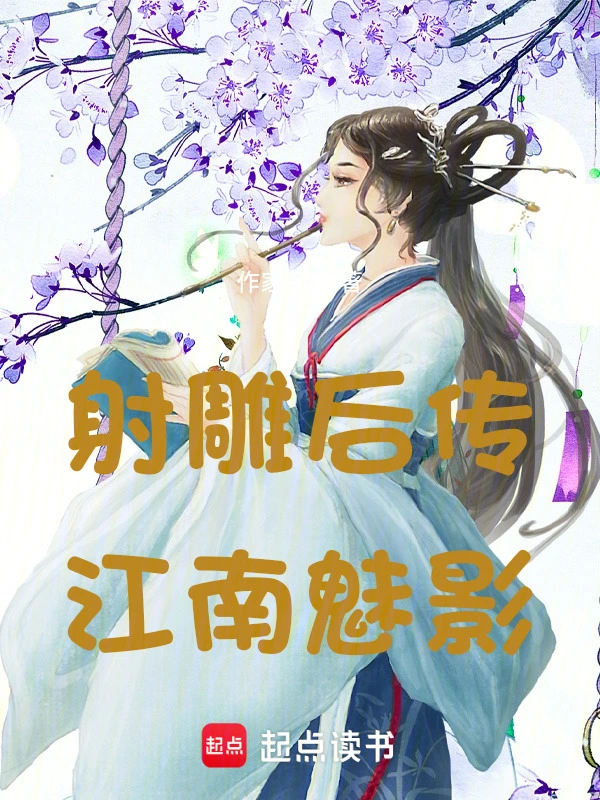
The Phantom of Jiangnan After the Condor Shooting
射雕后传江南魅影
- Status
- Ongoing
- Length
- 89k Words
- Genre
- Martial Arts
- Audience
- Male
- Subgenre
- Traditional Wuxia
- Updated
- 8mo ago
- Source
- Qidian
Stats
0Monthly votes
9Recommends
0Fans
19Chapters
Synopsis
Reader comments
Readers also read
 Auction of the Heavens: Starting from Shooting Condors to White Wolf with Empty Hands
 On the Wedding Night, the System Rewards the Sunflower Book? !
 The Sword Comes Out of Wudang, the Housewife Is a White-Haired Witch
 Common Man in the World
 On My First Day at the Police Station, I Ate Imported Candy from a Police Beauty.
 Night Without Borders
 How Can You Become an Immortal If You Don't Have Money?
 What Should I Do If I Ascend to the Wrong World?
 My Girlfriend Cheated on Her and Got Pregnant, and I Ran Away Nine Months Later
 Corpse Hunter
 Green Hills
 Xuanjian Immortal Clan
 The Favorability Score Is Perfect, I Am Single
 The Broken Sword Proves Loyalty
 Sword Shadow and Flowers
This chapter can be called a wonderful chapter with dense plots and dangers. It combines the joyful revenge of martial arts and the strange and thrilling adventure of adventure. It is dizzying to read and fully demonstrates the tension of the chapter-by-chapter narrative. Let's talk about the interlocking plot design first. From Wu Qiandu's deception and hidden plot, to the breakout crisis of the Mongolian cavalry raid, to the series of traps in Broken Soul Valley (falling into the cave, danger of ten thousand snakes, and water poison), and finally the ultimate confrontation leading to the entrance of the secret mausoleum, every turn is both unexpected and hidden. The reversal of Wu Qiandu's "guidance" is not only in line with his cunning nature, but also naturally leads to the desperate situation of the Ten Thousand Snakes Cave; Yang Guo fell into the cave and not only did not die, but he discovered the secret map of the mural, turning the "crisis" into an "opportunity", fully demonstrating the narrative interest of "surviving after death". The ending of Xuan Jizi guarding the secret mausoleum with two orders instantly detonates the contradictions accumulated in the past (the tokens of the two religions, the Mongol ambitions, the mystery of the secret mausoleum), and hooks the reader's mind. Look at the vivid three-dimensionality of the portraits. Yang Guo's bravery and decisiveness (clearing the way with the Black Iron Sword, quickly killing the giant python), Huang Rong's calmness and cleverness (spreading lime to break the water poison, decisively going down the hole to save people), Guo Jing's calmness and responsibility (cutting off the enemy's rear, blocking the enemy, and fighting against the King of Dharma), They all fit the character's background; even the villains, such as Wu Qiandu's capriciousness, Xuan Jizi's ambition, and Jinlun Dharma King's tyranny, each have their own level of "evil" and are not just mere tools. Zi Yuan's angry shouting, Su Qinghan's clever idea (ringing a bell to distinguish life and death), and Zhao Min's familiarity with the terrain all allow the supporting characters to play their role in troubled times and crises, and the interaction between the group portraits is full of tension. The immersion created by the scene is particularly outstanding. From the rugged breakout of the back mountain path, to the darkness and danger of the Broken Soul Valley, to the spooky and terrifying Ten Thousand Snake Cave ("Colorful Venomous Snakes" and "Dark Green Pool Water"), to the unknown and strange nature of the underground river drift ("Jagged Rocks" and "Water Gu Sucker"), and finally to the solemnity of the Secret Tomb's Stone Gate ("Wolf Head Totem" and "Golden Roar"), every scene carries a strong sensory impact. The head-to-head confrontation between Jinlun Dharma King's "Five Great Spins" and Guo Jing's "Dragon Subduing Palm", the fierceness of Yang Guo's black iron sword splitting the elephant's saddle, the thrilling python's sudden attack and the water poison eating the wood. What's even better is the intertwining of foreshadowing and main line. The past events of the "two religions having the same origin", the secret of the Bronze Order, and the relationship between the secret mausoleum and the dragon vein were vaguely revealed in the previous article. This chapter gradually reveals them through murals and mysteries, allowing the three clues of "token competition", "Mongolian invasion" and "secret mausoleum exploration" to finally converge, pointing to the core conspiracy of "unlocking the dragon vein and unifying the world", which not only consolidates the branches, but also sublimates the pattern - this rivers and lakes dispute is no longer just about the grievances of the sect, but also about the fate of the family and the country. The suspense at the end of "Can Xuan Jizi open the mausoleum" and "How can everyone break the situation" echoes the breakout crisis at the beginning of the chapter, making the whole chapter come to an abrupt end in a tense rhythm. It not only completes the staged conflict, but also leaves ample room for imagination for the follow-up. It can be called a model of connecting the past and the next. On the whole, this chapter takes "danger" as its bones, "wisdom" as its soul, and "emotion" as its veins. It combines the chivalry of martial arts, the excitement of adventure, and the treacherousness of machinations. The characters are vivid and the rhythm is relaxed. It can be called a good read.
This book doesn't even have an introduction 😰