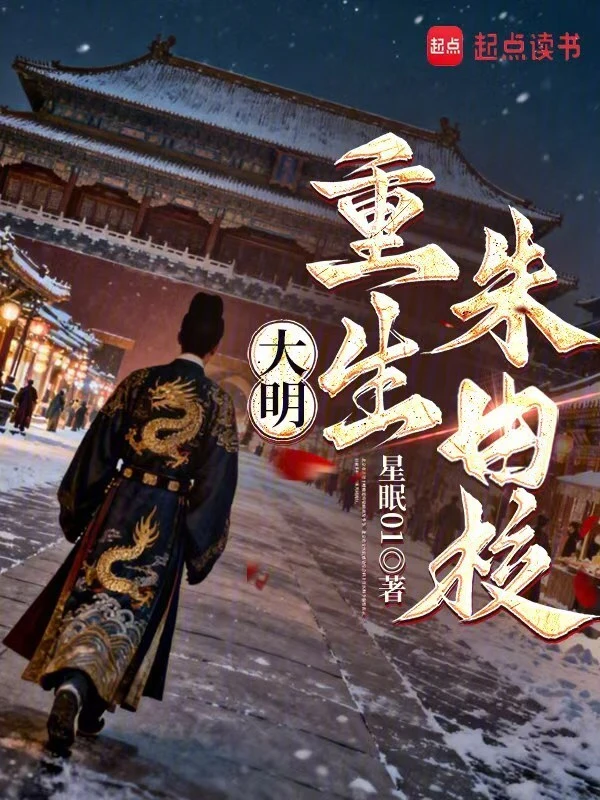
Ming Dynasty, Rebirth of Zhu Youxiao
大明,重生朱由校
- Status
- Completed
- Length
- 629k Words
- Genre
- Historical
- Audience
- Male
- Subgenre
- Song-Yuan-Ming Dynasties
- Updated
- 5mo ago
- Source
- Qidian
Stats
0Monthly votes
738Recommends
99Fans
203Chapters
Tags
Synopsis
Reader comments
Readers also read
 Talker in the Song Dynasty
 Please Call Me Your Majesty the Tsar
 In the Red Mansion: Escort Daiyu to Beijing at the Beginning
 1914 Begins with the Rejection of the Schlieffen Plan
 No One Knows How to Save Daming Better Than Me
 Daming: Moral Kidnapping? I, Chongzhen, Have No Morals!
 What's Wrong with Me, Zhu Changluo, Being a Bit Shabby?
 Nanming, This Emperor Is a Bit Stable
 Huang Ming
 Daming: Emperor Chenghua Is Here to Ascend the Throne First!
 Anti-Qing: Start with a Piece of Stone!
 In the Eighteenth Year of Hongzhi, This Prince Was so Fierce!
 The Ming Dynasty, the Soul Passes Through Zhu Qizhen
What mistakes are easy to make in historical novels❓
Before the Ming Dynasty, the emperor was not called "Emperor". In the Song Dynasty, he was mostly called "Guanjia", and in other dynasties, he was called "Your Majesty". In the Ming Dynasty, the emperor was occasionally called "Emperor", and in most cases he was called "Your Majesty". After Kangxi of the Qing Dynasty, people began to be generally called "Emperor". Princes and princes call themselves: Princes in the pre-Qin and Han Dynasties can be called "Gu", and a few can be called "Ignores". After the Wei, Jin, Southern and Northern Dynasties, the title of "Ignores" gradually became exclusive to the emperor, and princes, princes and princes can only be called "Gu" or "I". Song, Yuan and Ming called themselves "I" or "I". Before the Qing Dynasty, princes and princes rarely called themselves "this king". Starting from the Kangxi year of the Qing Dynasty, princes generally called themselves "this king". In ancient times, women called themselves: "nujia" was a modest name for women after the Song Dynasty. Women in the Han and Tang Dynasties more often called themselves "concubine", and noble women could call themselves "I" and "I". Before the mid-Ming Dynasty, most dynasties used copper coins for daily transactions, with very little gold and silver. It was only in the mid-to-late Ming Dynasty that silver became the mainstream currency. In the late Ming Dynasty, "meeting votes/deposit checks" appeared among the people. There were no unified rules. Most of them were deposits and withdrawals/exchange receipts from acquaintances or local circulation, and were not legal currency. In the early years of Daoguang in the Qing Dynasty (1823): Rishengchang Bank was established, and private banks began to issue standardized banknotes, focusing on cross-regional exchange. They were only circulated in Shanxi merchant trade circles and major commercial ports, and were not yet popular. In the third year of Xianfeng in the Qing Dynasty (1853): the official issued the Ministry of Revenue official banknotes (official banknotes), which were forced to circulate nationwide. At the same time, the network of private banknotes expanded to the whole country, and official and private banknotes ran parallel. The use of banknotes entered an explosive period and became the "starting point of popularization." High-leg tables and chairs only completely replaced the low tables for sitting on the floor in the Song Dynasty. During the Han and Tang dynasties, people knelt and sat on the tables to eat and discuss matters. The furniture was mainly low tables and couches. The memorial system was only established during the Kangxi period of the Qing Dynasty. Officials in the Tang and Song Dynasties used "memorials", "tables" and "statements" when submitting memorials, while in the Ming Dynasty they used "memorials" and "memorials". There is no such thing as "memo" or "zhezi". In ancient formal occasions, the hand-over gesture was performed with the left hand outside and the right hand inside. The right hand outside was a special "unlucky gift" for funerals. "Better greetings" is a unique etiquette of the Qing Dynasty. It was mostly used by subordinates to superiors and juniors to elders. During the Tang and Song dynasties, people often performed cross-hand salutes and bows to greet greetings when they met, and there was no such thing as "sending greetings". {"NickName":"Restriction and Supervision","UserId":417773267} Before the Yuan Dynasty, subordinate officials rarely called superior officials "adult". In some dynasties, subordinates called eunuchs "adult", and in some dynasties, they called their parents and elders "adult". Beginning in the Yuan Dynasty, lower-level officials would occasionally call officials of second-rank and above "sir". From the middle and late Ming Dynasty, only officials of third-rank and above would be called "sir" by their subordinates. Officials with lower ranks could not be called "sir". However, in the late Ming Dynasty, there began to appear a few cases where officials above the fourth rank were called "adult". Before the mid-Qing Dynasty, following the rules of the Ming Dynasty, only officials of third rank or above would be called "adult". Starting from the mid-Qing Dynasty, calling officials "adult" gradually became common for lower-level officials. Attention! ! ! What is mentioned above is that lower-level officials refer to higher-level officials. No matter which dynasty, it is absolutely impossible for higher-level officials to call lower-level officials "sir". Some novels even write about emperors or nobles calling other officials "sir". This is simply contrary to Tiangang! ! ! Finally, let's talk about the problem of civilians calling officials Before the middle and late Qing Dynasty, civilians in various dynasties and generations called officials differently, and most of them called them "officials" and "masters". From the middle to late Qing Dynasty, civilians also called officials "adult".
When the emperor of the Ming Dynasty, especially in the middle and later periods, having more sons was the first priority😏
No, you started conducting private interviews incognito before the situation was stable. Are you showing off?
Apocalypse played a bad hand in history. He took down Xiong, took Ye Xianggao away, and killed Yang Lian. I am really tired of being stupid.
Is it possible to survive without 200-300 million taels of silver and hundreds of system eunuchs? A military reform is all it takes, Baozong Zhengde
Are there any plug-ins? If you don't die, reforming and saving the country will be the final fantasy by default. Especially at the end of the dynasty
Tianqi and Wei Zhongxian in "Apocalypse Palace Ci"
The Twelve Dragon Flags are read over and over, and the champion knows the saint even more. Nine-sided feathers are sent to guard against autumn emergencies, and they are only in Xiliutun. Cabinet minister Shen Yi please resume internal conduct, which is the foundation of loyalty and virtuous internal defense. The sky is covered with embroidered gold, and the rustling wind and drums are like those in Bianzhou. Is it possible to praise the military strength by watching the troops? It clears the vast sky and thousands of miles of autumn. Loyal and virtuous leaders are trained in military affairs, and they are rewarded generously every month by coaxing the imperial guards to conduct internal troops. Tao Duo heard about Weiyang in the morning and ordered him to fight cocks at night. The old minister didn't understand the king's intention, so he just begged for a sermon.
This little thing is so well written. Whose love between the aristocratic young master and the down-and-out daughter is not as strong as this?
I have a plan to secretly organize a group of rebels, specifically to kill the gentry, and divide the territory after killing them, and then the imperial army will come and move to the next place, but this requires very trustworthy people. Unfortunately, if the Jinyiwei World can recruit Brother Qian to do this
Congratulations, brother, for being on the shelves 😊
I want to talk about the army. What is purged in the army is only the soldiers. It removes the influence of nobles and does not massacre the soldiers.
Well written, all for you