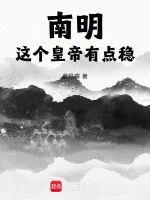
Nanming, This Emperor Is a Bit Stable
南明,这个皇帝有点稳
- Status
- Ongoing
- Length
- 2.3M Words
- Genre
- Historical
- Audience
- Male
- Subgenre
- Song-Yuan-Ming Dynasties
- Updated
- 18h ago
- Source
- Qidian
Stats
Tags
Honours
Synopsis
Reader comments
In booklists 4
Emperor's Hegemony
When autumn comes on September 8th, I will kill all the flowers after they bloom. Thousands of miles of mountains and rivers are picturesque, and there are so many heroes at one time. The throne is withered bones, the imperial road is yellow sand, but it is just a sketch in the history book. "Three Kingdoms: World Hegemony" Little Vest No. 1 "Xianwu Three Kingdoms" Silver Dragon Horse
History Book List, Mainly History.
Mainly history. Full Stars: Ten stars, you can watch it from one star to the next.

The Flow of Reason, Step by Step, Not the Holy Mother
I couldn't find a suitable book during the book shortage, so I created this book list. If anyone has found a better book, please recommend it.


A Bookworm for Ten Years, Mr. Baika Carefully Selected and Recommended
I have carefully selected the books on Taoism, Immortality, Management, Farming, and Group Portraits. Each of them is a work of more than a million words that I have read. I have been a bookworm for ten years and my other works are no longer attractive to my eyes.
Readers also read
 Fu Ming 1627
 Northern Qi, Sage Khan
 After Lying in Bed for Three Years, He Was Forced to Help the Han Dynasty
 Red Mansion: Start Escaping and Farming from the Equipment Bar
 Siheyuan: Start by Picking up Attributes
 Sun and Moon: Yongli 1656
 You Have Really Hurt Me.
 Beastmaster: I Can See the Evolutionary Path
 Immortal Who Seizes the Body
 Huang Ming
 Northern Qi: My Father, Emperor Wenxuan
 Taiping Heavenly Kingdom 1854
For those who say that all feudal dynasties are the same, let them choose one of the Qing Dynasty, Ming Dynasty, Tang Dynasty, and Song Dynasty to be a native. I don't think they can choose the Qing Dynasty. Let it choose between the prosperous age and the last years of the dynasty, and see if it chooses the last years. Only modern countries have human rights, so let them go to the Middle East, Palestine, Ukraine, and become natives in countries like Haiti. Be honest and don't lie to yourself. Go to China, Japan, the United States, the United Kingdom, the Soviet Union, France, Germany, and Argentina during World War I and World War II. That group of people would rather choose Argentina than China. Because Argentina was still a developed country at that time, even if you didn't choose Argentina, you would still choose the United States. No matter how bad the United States was, it still had the strongest economic strength at that time, including Roosevelt. After World War II, China will enter a period of rapid development. Don't always say the same thing everywhere. All the same, would you choose the Qing Dynasty? Would you choose to be a native of Hiroshima, Japan during World War II? You won't. Finally here, let's chat.
Why can't you read the history of Southern Ming Dynasty? Because you know that China will enter the darkest, most barbaric and most depraved two hundred years, and they are just struggling to their death. Why do you like modern history? Because you know that this is just the night before dawn, and the dawn of the country and the nation is ahead.
The more I watch, the more I hate Li Zicheng. He is really too stupid. He can rise up, burn, kill, and loot, but how can you be so good and stupid? ? ? I wish I could pull him out and whip him to death
The writing is very good. It looks like he was an emperor. He behaved exactly the same as I did when I was the emperor 🙂
The writing is quite good, and it avoids the common shortcomings of historical novels that everything revolves around the protagonist. The group portraits are all written with their own characteristics. The protagonist in many historical texts is like a leader on an inspection tour. He goes to one place and gives two sentences of instructions, then goes to the next place and gives two sentences of instructions. After saying a few words, everything is done. The protagonist of this book has just the right sense of presence. After formulating the general policy, it is the historical figures who are driving the changes in the world line.
I think this novel is quite good.
Why is no one watching? This book clearly demonstrates that politics is about personnel and identity. Moreover, conspiracy theories and calculations are relatively weakened, and everything is focused on solving problems.
No one has good books
This book is really the best late Ming Dynasty novel I have read this year. It does not engage in conspiracy theories, is not superficial, does not mess with technology, focuses on personnel matters, does not depress NPCs, and the writing style is not exaggerated. Next door, Daming 1627 is of the same type, but the author's corporate executive vibe is too strong, and it's hard to watch. This one is better.
Seeing Nanming I remembered that the game Late Ming Dynasty was released today It's amazing, there is no Manchu and Qing Dynasty 🤭🤭🤭
To be honest, from what I have read so far, the author's historical knowledge reserve, overall situation deduction and internal affairs description are all top-notch, and I dare say they are no worse than many famous historical writers. But the problem is that the writing is a bit dry. I always feel that it lacks the ups and downs of the novel and lacks the "human touch". I think this should be the reason why the current performance of this book is not particularly good. Those of us who like to read about the history of Nanming can happily read on, but many people who are not interested in this period of history may take a second look and leave. Take the current book 1627 on the list as an example. I think it is not as good as this book in terms of hard skills. However, if an ordinary reader may find that book a bit refreshing and immersive and read it, this one may be gone. I dare not teach the author to write a book, but I sincerely hope that the author can write better and better, and that good articles can be seen by more people. I think the author has great potential (sincerely)
It can be seen that the characters are rich and the history is full of
Personally, I feel that it is closer to human nature than that of Shao Song Dynasty. The emperor will not accept his head just because he kills someone. There is not so much heroism. Of course, there is no young and passionate individual heroism that young people like. In the war, the combat power of the soldiers in the war will not be increased by +1 just because the emperor's flag is pressed forward. The war depends on logistics and the overall situation. The increase in combat power will not increase because the emperor is ruthless enough. Moreover, the real rights are subtle and the real pleasure is the ubiquitous power withdrawal.
I would like to call this article the best of Nanming's articles
The author's historical skills and writing style are really great, and his description of history, general trends, officialdom, and human nature is perfect! However, the excitement of this article may only be obtained by very pure history lovers. Without him, there is indeed no exciting plot. As of now, the writing is logically clear and calm and rational!
If you want to write about overseas affairs, you have to write about naval battles. The warships at this time in the late Ming Dynasty were no match for ocean-going gunboats like the Galen ship. Zheng Zhilong won so many battles by relying on his many ships and places to master tactics. Looking up on Baidu, the Fu Ship was said to be able to go ocean-going. The Fu Ship recorded in historical books had a draft of three to four meters and had black technology such as watertight compartments. However, Zheng He's voyages to the West have always taken a coastal route. The Zheng He Fu Ship recorded in historical books is more than 100 meters long, 50 meters wide, and has a displacement of 2 million. To be honest, the data is the same as in a science fiction movie. There are no drawings or objects, and it cannot be falsified. The author wants to follow this data if he wants to write comfortably. As for being unable to defeat the Galen ship, it is because the Fu ship has cannons at the bow and stern, and the others are mostly fired and flange machines. At this time, the Galen ship was already equipped with 12- and 24-pound guns on both sides. Zheng Zhilong's naval battles often involved dozens of ships. When besieging three or four Galen ships, the main attack method is fire ship blasting. Therefore, if Ming wants to fight naval battles with these established maritime powers, it must not only research naval gun technology, but also large-tonnage ships that can mount many guns and have excellent ocean-going performance. The author can take a look at the ideas of the author of Conquering Paradise next door. Taking advantage of the pointed bottom, bulkhead, eight-sided sails, liftable mast, and high-mobility rudder of the Fuchuan, he built a battlecruiser in the 17th century, reduced gun positions and improved maneuverability to deal with the Galen ships with big bellies and strong firepower that had been developed in the West for hundreds of years. Moreover, the development of the navy is not as good as the training of the army. The century-old navy is indispensable for ships, soldiers, artillery and systems. It is super expensive to burn money. Even the few naval forces currently in Longwu's Atlantic Ocean are not enough to fight others. They can barely maintain the Kingdom of China on the west coast of the Pacific. I don't know if they can beat Dai Ying in India. Also, I mentioned earlier that I wanted to mine silver mines in Peru. It is still too difficult to cross the Pacific Ocean in this era. It might be easier to find the entire transfer station in Hawaii. The book next door is able to open mines in Central America because of a plug-in. In short, I wrote so much just to prevent the author from developing overseas so quickly. There is really nothing you can do with these big naval forces. Just bully the Far East Colonial Fleet. Don't go to the West to pretend to be a kingdom. Wait for the development of science and technology to build a real 17th century ocean-going main fleet and then slap Cromwell in the face. By the way, build an empire on which the sun and the moon never set.
When will the capital be moved? Nanjing is really not suitable to be the capital. One is that the fireworks and willow alleys break people's bones, and the other is that the strategic buffer is too shallow. Beijing at least has the Bohai Sea as a barrier, and Nanjing is just an estuary of the Yangtze River. Although it is necessary to open up the sea, China still has land power as its main power. The northern grasslands and the western regions are also top priorities. Even if you don't go to Beijing, Wuhan, and Luoyang, you can consider it
I originally wanted to say that your book updates are too slow, but I felt relieved after reading Dynasty 1627: The Forever Yongchang First Year next door.
Shennong post, let's briefly evaluate this book.
As of now, I have read Chapter 119. I mainly want to comment and encourage the author. I voted for everyone who could vote monthly. Advantages 1. I have read many books of the Ming Dynasty and the end of the Ming Dynasty. The author of this book is quite rigorous in writing, and most of the characters in the book are sophisticated. 2. There is no random pursuit of technology, which is good. 3. It's not a novel, but sometimes I feel that the protagonist is not a time traveler, a bit dull and not lively enough. 4. The author's deductions and developments are relatively reasonable, but there is a lack of maps. I personally have read a lot of Ming Dynasty books, and I know the places in the book very well, but if it is other readers who read Ming Dynasty books for the first time, they feel very unfamiliar. It's best to use deductions in the text, and you can bring pictures for military matters. Final summary: Liangcao++ I hope the author will continue to work hard. I don't know if the author is a novice author. I feel that he is at this level, which is very good.
The world only knows that Kangxi never increases taxes, but few people know that Hongwu never raises taxes. Judging from the amount of money he spent on people's livelihood projects and frequent military use, Zhu Yuanzhang felt that the annual land tax of 8 to 9 million hectares of 30 million was enough for the court, so he stipulated that no more taxes would be collected on the newly reclaimed land by the common people. Therefore, in the future, taxation It has always fluctuated around 30 million. It is not that the people of the Ming Dynasty were poor, but it was stipulated that no more than this amount was collected and no additional collection was allowed. However, at the peak of the Ming Dynasty's cultivated land, there were about 1.23 Billion acres [see]. However, Zhu Yuanzhang did not expect that corruption would be so serious in later generations. There was no way that 30 million could be fully used as in his era, so the finances in the middle and late Ming Dynasty were always stretched.
I have three views on returning the capital to Beijing: 1. There is no suitable port in the Bohai Sea, which is not conducive to the development of the Age of Discovery and the development of the country into a commercial capital society. 2. If Beijing is the capital and the army eats horses and maintains the extravagant life of the royal officials, it will definitely bring down the country again. Not to mention the extra cost of transporting the wood and grain to build the palace from the south. Don't think that you can work for relief. In the feudal period, there was only one result, that is, the people's taxes went into the pockets of corrupt officials, and the people had to suffer from higher taxes, and this money could have gone to better places. 3. Don't expect that the royal relatives and officials who are accustomed to the north can sympathize with the maritime power of the south. Why did the Ming Dynasty have such a good start on the sea, but it turned from prosperity to decline starting from Zhu Di? The regional gap cannot be settled by the ambition of a generation of emperors. How many people in the comment area are connecting Beijing and Lu Quan, right?
After reading so much, to be honest, the title of the book brought down the level of the book too much.
After looking for a late Ming Dynasty novel for a long time, I turned around and found that this one is still good. There are too few novels from the late Ming Dynasty that I can read. This is an absolute masterpiece.
(There is a shortage of historical books. Those who want to read comments can read my comments.) Evaluation: Excellent group portraits in historical texts
The protagonist, as a time-traveling emperor, essentially assumes a variable in the text. Different from other historical novels, the protagonist is not a god who comes to save the world and change history with both civil and military skills. Instead, the protagonist is familiar with history and controls the general direction of Nanming. He uses his identity as the most orthodox crown prince to make checks and balances and changes, relying on the power of the court to deal with the situation in Nanming more reasonably and finally achieve a break. There are also some cool points, but more of them are brought about by the changes in various officials and the ending of the historical context. The descriptions of the group portraits of various officials are greater than the descriptions of the protagonists. I think this is the biggest feature of this article! The protagonist is like a turning point, and then it is the inertial deduction of history written by the author, giving readers a sense of what the consequences of history would be if the emperor at that time acted like this... Coupled with the element of time travel and the advantage of the prophet, most of the decisions and judgments made are relatively reasonable, creating a sense of "feasibility" for people. I also feel that the author's writing skills and character creation are quite good. There are many, many characters who appear. Some unspoken rules of the officialdom include the IQ of the characters, including various situations that may arise. Not to mention being comprehensive, it also means that you can hardly see any big mistakes when reading. At least when reading, you will not immediately find very big logical loopholes. Whether it is the characters of the Ming Dynasty or the Qing Dynasty, or the current plot of the Korean and Japanese shogunate, among the characters who appear, the IQ is generally online, which is very rare. Of course, the flaws are also obvious. The positioning of the protagonist makes it difficult to have a direct sense of the protagonist in the whole novel. You basically cannot get involved with the protagonist. The pleasure of reading this novel all comes from history. What changes may occur? What kind of changes will there be in the future? I think this is a shortcoming, but it is not a shortcoming, because historical texts may always select a group of pronunciations. Some people like to see beauties in the harem and plotting personal heroes, and some just like to see what would happen in history... Resulting in fun. Each has its own audience. It's a pity that I'm not familiar with this author. This is something I picked up occasionally while reading books. I'm most likely not a newbie. I don't know what his previous works are. Otherwise, it would be good to look at previous works when I'm chasing books...
At present, the political level of the late Ming Dynasty texts I have read is the highest. Some authors are too young to write historical texts and they are very childish.
A little advice about steam engines
Comrades, we are too rigidly focused on the power properties of steam engines, which makes us forget a very important issue - the thing that rides on the horse is a water pump! Its original purpose was never to drive machine looms, but to pump water from one place, or more accurately, water from a low place to a high place. Many people say that the Chinese are too focused on agriculture and that their emphasis on agriculture and suppression of business suppressed the development of the industrial revolution, but in fact this is not the case. In China, the role of early steam engines in agriculture was definitely higher than in industry, because compared to Britain, which has a humid climate, China is a severely water-poor country. Ninety percent or even ninety-nine percent of the land in the country is dry land that depends on the weather for harvest. But is there no water for dry land? No, the water cannot be carried. What did we use to carry water in ancient times? Water wheel? Water drain? Or even just a bucket? These things are inefficient and highly dependent on manpower, so the distance is extremely limited. Maybe everyone will say that water pipelines are too expensive. Not only the British, but also the French and Americans don't use them either? Don't they lack water? Of course it's missing, but what kind of pipeline are they using? Stone, lead, pottery, these things are of course expensive. But don't forget that China is the origin of bamboo and lacquer! Large moso bamboos in the south, which are more than ten or even twenty meters long, are very common. One end of the moso bamboo is opened and connected to the water, and the other end is inserted into a bamboo tube with an inclined opening and sealed with raw paint, tung oil, and hemp rope to connect to the water pump. In this way, a well that can transport water several meters away is completed, and each of these wells is connected in series through a reservoir and a water tower. Think about it, what kind of scene is this? Moreover, the technical requirements of this structure are astonishingly low. It only requires a Newcomen steam engine to operate simply, not even a Watt steam engine!
About Huadu Beijing
I think I still have to go back to Beijing. 1. The economy of the North is not as good as that of the South. This is obvious to all. In Beijing, we can also absorb the south and then help the north. It is the same reason as when Guanzhong was broken down and the Loess Plateau was formed after water and soil erosion, and then some people suggested Xi'an for Dingdu. Attracting the world to revitalize Guanzhong 2. I remember that Xuande's shrinking seemed to be an economic calculation, and then Cochin and other places were not worth doing. If the city is still in Beijing, I don't think it would bring down a country because of the people in Beijing eating horse chews and daily consumption, but if there is a decline. It is possible to advocate abandoning territory and shrinking borders. Therefore, it is necessary to return to Beijing 3. I remember that Nanjing is basically undefeated, while Beijing seems to be a little better, and the Bohai Bay is wrapped. If you build a navy, your defensive capabilities will be stronger. Nanjing Yangtze River Navy, where are you stationed? I don't know much about natural harbor. But as for Beijing, I have heard of Weihaiwei, Shandong, which is a good port. 4. As the son of Emperor Chongzhen, he must visit the north once. Or even return to Beijing to pay homage to the Chongzhen Mausoleum. This is a political time. Maybe instead of returning the capital, you can patrol the north as an old man.
In reality, it would be nice to have this dynasty that is half as good as the novel. In reality, outsiders are provided for. Still the same now
In the Christian worldview, those who did not believe after the birth of Christianity would go to hell, and those who did not believe before the birth of Christianity would also go to hell, but they could find a better place. In other words, if you believe in Christianity, your ancestors will be treated as a joke and you will send your ancestors to hell. In the future, whoever dares to talk about Christianity in the court will be directly labeled as unfilial. Let's talk about the pope's story. A decree of excommunication forced the emperor to kneel down and beg for mercy. This is unfaithful. Relying on killing people to preach is unkind. His own roommates fought against each other and tricked Dong Luo to death. This is unjust. Who can withstand these hats?
There are quite few Nanming articles well written, first of all, this one by the author Then the author of Edo Traveler also wrote a Nanming article in Po, but that author later fell out with the website and accelerated the process of regaining Beijing
Control Myanmar, advance both land and water along the Irrawaddy River, and open up the sea ports of the three southwestern provinces
What will be Xiao Zhu's temple name after his death? Can the evaluation of future generations be comparable to that of Guangwu?
Write more about domestic reforms, changes in ideological trends, exploration of industrial technology, development of productivity, and progress in the business environment. There is so much to write about. Looking forward to it
Irritating
This book is really well written and makes up for the regrets. In reality, the Ming Dynasty is also a pity.