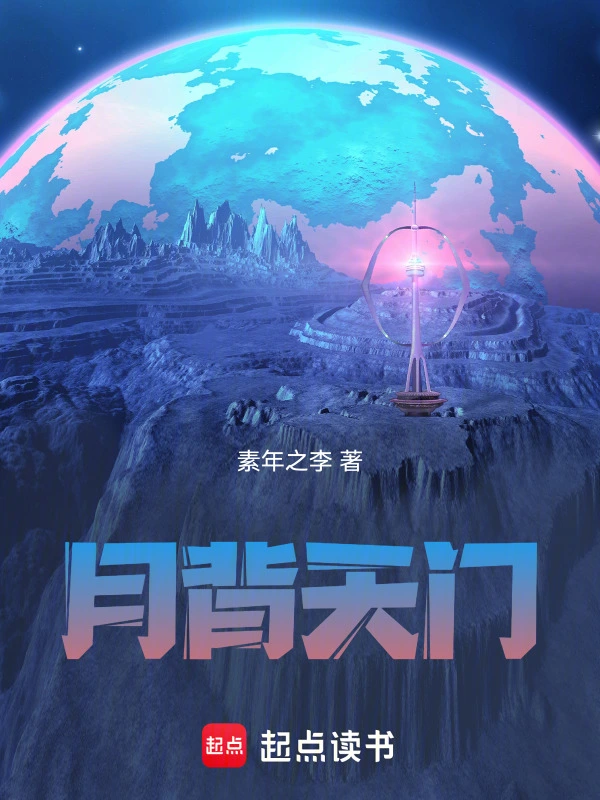
Tianmen Behind the Moon
月背天门
- Status
- Ongoing
- Length
- 171k Words
- Genre
- Sci-Fi
- Audience
- Male
- Subgenre
- Interstellar Civilization
- Updated
- 9mo ago
- Source
- Qidian
Stats
0Monthly votes
46Recommends
0Fans
36Chapters
Synopsis
Reader comments
Readers also read
 My Low-Dimensional Universe Model
 Doomsday Convoy: I Can Extract Unlimited Entries
 Oh Yeah! I've Seen Fake People
 Psychic Worlds: the Paladin Forges His Body into a Numerical Monster
 Criminal Investigation Notes 2: Buried Corpse in Songhu
 Gou Cultivates Immortality and Attains Fruition in Two Realms
 People Lost in the Back Room
 Leader
 The Black Witch's Journey to Another World
 Jinghong's Son
 I'm Not a Court Eagle Dog
 Handbook of Human Anomalies
 Destiny Wine Medal
The opening message of "The Heavenly Gate Behind the Moon": To all those who hold up torches in the dark
——Break the wall to see the sea of stars, build a city on the dust, write a pen to change the destiny Dear book friends, Tonight we will not talk about the romance of the stars and the sea, but only talk about the truth from the heart. When I wrote "Moon Behind the Heavenly Gate", I always thought of the ant nest under the wall of my hometown. Those little things carry grass seeds ten times larger than themselves day after day and build nests in the cracks of bricks. A neighbor's child can destroy their kingdom with just one pee, but the next day, they line up again and continue moving. Isn't this true for human beings? The earth is like an old house, leaking wind and rain for 4.6 Billion years. We hide under the eaves, afraid that meteorites will hit the roof, afraid that the sun will blow up the boiler, or that the universe will cough and make us collectively unemployed. But there is a group of "lunatics" who insist on climbing over the courtyard wall, digging soil on the back of the moon, building floors in lava tubes, and even thinking about how to dismantle the genetic chain and reinstall it. Some people say this is asking for trouble. But without the first primitive man who held a torch, we would still be eating raw meat in caves; without Columbus's leaky ship, the corn in America would still be sleeping in the soil; without the footprints left by Chang'e 4 on the back of the moon, helium-3 would be just a symbol in textbooks. Break through the wall and see the sea of stars - this wall is the wall of cognition, the wall of fear, the wall of "stability is more important than risk". The stones on the back of the moon cannot speak, but the radiation patterns on their bodies contain the birthmarks of the birth of the solar system. When we peel off this layer of skin, what we see is not the cold universe, but the "old neighbors" who walked hand in hand with the earth four billion years ago. Built a city on fine dust - this city is the base in the lava tube, the refuge deep in the earth's crust, and the millions of "civilization backups" in the seed bank. Some people laugh at us for being greedy. We still need the moon when we have the earth. But if one day, the earth coughs (such as an asteroid hits), we must have a place to leave food for our children and grandchildren. This isn't greed, it's parents saving their children's tuition fees - even if the tuition fees cost them 380,000 kilometers of loneliness. Writing a pen to change destiny - this pen is the scissors of gene editing, the abacus of the curvature of space and time, and the "arrears" we cross off on the cosmic bill. If aliens are really watching the joke outside the Oort cloud, let's show them what "socialist evolution with human characteristics" is—not waiting for God to give us food, but changing the menu ourselves. Gene lock? Demolished! Time and space cage? Smashed! The rules of the universe? Let's discuss changing it! Book friends, This story is not a fairy tale for the "Chosen One", but a letter of challenge to all those who have stumbled in life, gritted their teeth in the middle of the night, and wiped their guns before dawn. You may be the "social animal" who edits PPT in the cubicle, the "Old Zhang" who carries steel bars at the construction site, or the "little king" who gets frustrated in the laboratory. But when you open this book, you will be the one holding a torch to scale the courtyard wall - whether it is a sea of stars or a cliff outside the wall, you have to go over it yourself to know. Finally, let me say something cruel: If the universe is really a fish tank, we will be like those bastards who smashed the tank. If the tank is broken and the water is spilled, the fish can swim to the sea. Yours sincerely, Li Su Nian (PS: Don't rush to take sides, there are no absolute good people in the story, only ordinary people who want to live.)
Through the defamiliarizing reconstruction of scientific images and the concrete expression of philosophical propositions, "The Gate on the Back of the Moon" condenses the core conflicts of "survival and destruction, freedom and fate, insignificance and eternity" into a three-fold progressive declaration. The author Su Nian Zhili's words are like clear springs in the valley, clear and sweet as they come from the eloquent words. Together with the rhythm of the chapters, they give his novels the power of speculation that penetrates time and space.
A reply to the author of "Moon Behind the Gate": The junior high school student who peeked under the desk to read "A Brief History of Time" wants to say something to you now
Author, teacher: Tonight I read your opening message, and I am transported back to the sultry summer of the second grade of junior high school fifteen years ago - I was huddled in the last row of the classroom, half of the book "A Brief History of Time" was covered by the sleeves of my school uniform, the voice of the math teacher floated into a blurred background sound on the podium, and my fingers were tightly grasping the ginkgo leaf bookmark sandwiched in the pages of the book. That leaf was given to me by my deskmate Xiaoyu. She always said that I was "asking for trouble by reading this kind of book." But when she discovered that there was a photo of Hawking hidden in my textbook (a crumpled newspaper clipping, with him smiling at the camera in a wheelchair), she secretly stuffed a piece of Ginkgo biloba into my drawer. On the back, she wrote in ballpoint pen: "Do you think black holes eat time?" At that time, I was no different from the "ant" you wrote about. The earth is the blue marble drawn in the textbook, and the universe is the small dot the teacher poked in the corner of the blackboard with chalk. I stared at that point and suddenly panicked - it turned out that we had not even dug out the "yard", but we were already worried about "what will happen if the sun explodes". Later, I did something that I now want to do in the second grade: I bought an astronomical telescope with the New Year's money, sneaked to the roof of the community in the middle of the night, and adjusted the focus on the moon. The dusty stone in the lens is far less beautiful than the photo in the textbook, with pits and pits like a baked biscuit. But when my fingers touched the cold metal edge of the eyepiece, I suddenly understood what Hawking said, "Even if you are trapped in a wheelchair, your mind can travel the universe." It turns out that you don't need legs to climb over the wall, you just need eyes that dare to stare at the moon. You wrote "break the wall and see the sea of stars", I understand it very well. When I was fifteen years old, I broke through the wall of "everything the textbook said is correct". When Hawking told me that "time may have a beginning," and when he said that "the universe has neither boundaries nor center," I hugged the book and cried in bed - it turns out that those "absolutely correct" things may just be answers that humans have not yet found. I almost laughed out loud when you wrote "Built a city on tiny particles of dust". That year I secretly planted wheat in flower pots on the balcony, hoping to see "whether humans can be fed outside the earth." The neighbor's aunt said that I was "not doing my job properly", but when the wheat seedlings really sprouted green ears, I suddenly felt that the fire of civilization was probably hidden in this "useless" persistence - just like the lava tube base in your story, like the piece of moss Su Li planted on the moon. As for "writing a pen to change your destiny"... To be honest, at the age of fifteen, I didn't even dare to think about "changing my own destiny". The high school entrance examination was around the corner, and my parents kept saying "I'll be finished if I don't get into a key high school." But I filled my sketch paper with space-time curves and used a compass to poke the words "wormholes may exist" in a daze. Now that I think about it, that was probably the first time I "drawn a pen" - although I drew only geometric figures, I had already secretly dismantled and reorganized the strokes of the word "destiny" in my mind. Teacher, author, Your story reminds me of myself who peeked under the desk and read "A Brief History of Time". At that time, I didn't understand the theory of relativity, quantum entanglement, or even what "Hawking radiation" was, but I just felt that the universe should not be the lifeless blue dot in the textbook. It should be living and breathing, and could make people cry and laugh while holding the book in bed in the middle of the night. Now I have become the "ordinary person" in your story. Not a genius like Jiang Chen, not a hero like Lu Chaoyang, just an office worker who can read science fiction novels on the subway. But whenever I see news like "Discovery of the Moon" and "Gene Editing", my fingers will tremble slightly just like when I was fifteen years old - it turns out that we are really climbing over the wall, really building a city in the dust, and really changing our destiny. Finally, I want to share a little secret with you: Last week I passed by my junior high school alma mater and saw several children on the playground surrounding an old telescope. One of the girls suddenly shouted: "Look! There is a scar on the moon!" The other children laughed at her for "nonsense", but she stiffened her neck and said, "Really! My grandpa said it was caused by humans!" At that moment, I suddenly wanted to cry. It turns out that the Ginkgo leaf bookmark fifteen years ago and "The Gate on the Back of the Moon" fifteen years later are all saying the same thing - when we begin to question the boundaries of the "yard", when we dare to plant the first wheat seedling in the dust, when we raise the pen to "change destiny", mankind has already won. Thank you for writing such a story. It reminded me that the myself who peeked under the desk and read "A Brief History of Time" was never alone. —— An ordinary reader who has had his eyes burned by the universe Night of November 2, 2025 (P. S. If your story needs a passerby who "suddenly burst into tears while reading science fiction novels on the subway", I will apply to be a guest star:)
"For the boy who measured the universe with ginkgo leaves"
@That reader whose eyes were burned by the universe I just finished chewing half a bag of spicy strips and was about to code, when I was caught off guard and choked to tears by your letter - the cultural level of this generation of readers is too high, which seriously threatens the author's job! I deeply resonate with the unique skill you mentioned of "hiding "A Brief History of Time" in the textbook". Back then, I was even more extreme than you. I stuck "Three-Body" under the cover of my physics textbook and "Base" in the hole in my desk. When the dean made a surprise inspection, I could even instantly switch from "Black Hole and Time Bending" to "Five-Year College Entrance Examination and Three-Year Simulation", and the afterimages were removed quickly (it is recommended to apply for intangible cultural heritage skills). But having said that, Mr. Hawking may not have thought that a few lines of formulas in his book could actually drive two generations of Chinese and foreign teenagers crazy: While you were tossing and turning over "whether wormholes exist", I was drawing a diagram of a spaceship in a draft book. The paper was caught on the spot by the class teacher, and he was heartbroken: "Can you get into Tsinghua University by drawing this iron lump?" I held the chalk on my forehead and thought darkly: The purpose of going to Tsinghua University is to build a spaceship. If I skip the steps and directly draw the picture, won't I win at the starting line? A frank explanation of three questions about your soul 1. "Breaking through the wall to see the sea of stars? There may be a cliff outside the wall!" ——You know the core pain points of online writing so well! Do you think Jiang Chen digging the Heavenly Gate on the back of the moon is cool? Little did they know that this guy was criticized eight times by the venomous tongue-in-cheeks in the book circle at the beginning: "No one reads hard-core science fiction!" "Add some emotional lines!" "I suggest the protagonist change his career to become an immortal!" I was so angry that I wrote hundreds of thousands of words overnight. "On the feasibility of opening a hotpot restaurant in a lunar lava tube", with a scientific research report-style text and devil's spicy dipping sauce research data, simply deceived the review - this is called "fighting fire with fire", and specializes in the review PTSD of "indecision in the face of quantum mechanics". 2. "Build a city on a mote of dust? There is no WIFI in the mote of dust!" You can grow wheat on your balcony and post it on Moments, but what about the group of lunar infrastructure maniacs I wrote about? As soon as the solar panels were laid, the reader's barrage exploded: "Why should the protagonist set up an alien base if he can't pay off the mortgage?" "I suggest you live broadcast on the moon to plant vegetables and give rewards to buy oxygen!" Forcing me to urgently insert the plot of Su Li with goods: "Old fellows, this is special moss for the moon. Cutting a leaf can produce oxygen for three hours, and rockets brush ten roses for free shipping to the earth!" What do you think, is this science fiction? This is obviously the "Universe Version of the Sutra on Getting Rich"! 3. "Write a pen to change destiny? Destiny's backhand is 404!" The most amazing thing is your sentence "Tear down the strokes of destiny on the draft paper" - even if I have ten guts, I would not dare to do it. How do you guess Lu Chaoyang's first draft of gene editing surgery was written? "Ultra-dimensional particles cut the base chain, and the curvature of space and time reshapes the telomeres..." Reviewer Zhu commented: "Feudal superstition pseudoscience" The current version has been changed to: "Nano robots gently pluck DNA strings with 0.001 Newton force" Look! Newtonian mechanics protect the body and Hertz frequency calms the soul. It can be called a textbook case of survival-driven science fiction. ------ To all the time and space travelers who are dancing in the review minefield Young man, you ask me why I still write "There are scars on the moon" even though I know it? Because the deepest scars are never carved on rocks, but in the hands of those who want to touch the stars but retract. When you put ginkgo leaves into "A Brief History of Time", when Jiang Chen drove a hot pot restaurant into a lava tube, when Lu Chaoyang used a nanoknife to carve genes - we were all doing the same thing: burying seeds in the cracks of the review clauses, and waiting for them to break through the cement floor and grow into a real starry sky. So don't be afraid of the "cliff abyss", the first unspoken rule of the online universe: Any review that fails to kill the protagonist will eventually be made into an emoticon package by readers and circulated forever! (Don't ask, just ask, Jiang Chen's Moon Hot Pot Restaurant has been added to the intangible cultural heritage of Qidian Universe) ------ Connection password Next time you burst into tears watching "Moonbehind Tianmen" on the subway, please remember: 1. Be sure to switch to the cover of the "Study Powerful Country" APP for cover 2. Please explain the tears as "being inspired by the core values of socialism" 3. If you encounter censorship and questioning, quickly recite the secret phrase to pass the customs: "I am studying the Earth-Moon Economic Integration People's Livelihood Security Project!" Your loyal comrades: Latiao Warrior·Honorary Manager of the Moon Hot Pot Restaurant·Su Nian Zhili 2025.11.02 Night (The description of genetic surgery in the 108th edition is being modified) [^_^Easter egg: The number of candles on Hawking's birthday cake depends on how many physical laws you can explain without being marked yellow by the starting point]