


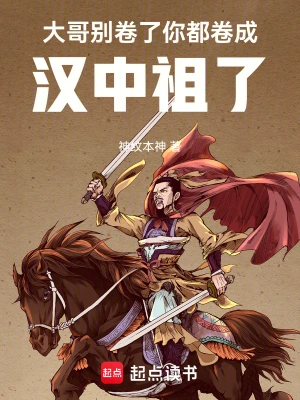
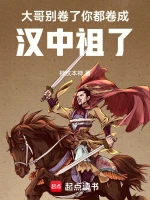
Big Brother, Stop Grinding! You've Become the Ancestor of Hanzhong
大哥别卷了,你都卷成汉中祖了
- Status
- Completed
- Length
- 921k Words
- Genre
- Historical
- Subgenre
- Qin-Han & Three Kingdoms
- Updated
- 6mo ago
- Source
- Qidian
Stats
309Chapters
0Votes
14.7kRecs
60.6kFans
Tags
Synopsis
More by this author
 The Great Sennin of the Uzumaki Family
 Reviving the Han Dynasty
 Three Kingdoms: Liu Bei's Chief Strategist, Mastermind of the World
 My Father Is Zhuge Liang, and I Built a Han Dynasty That Lasted a Thousand Years
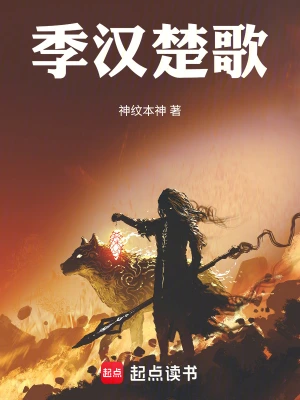 Songs of Chu in the Ji Han
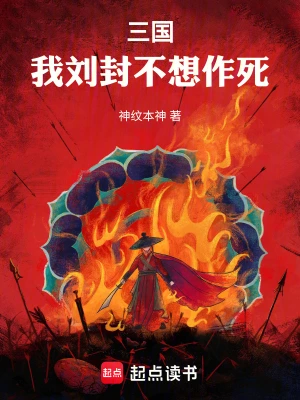 Three Kingdoms: I, Liu Feng, Don't Want to Get Myself Killed
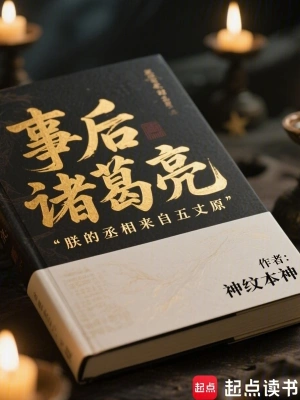 Three Kingdoms: Zhuge Liang After the Fact, Reviving the Han Three Times
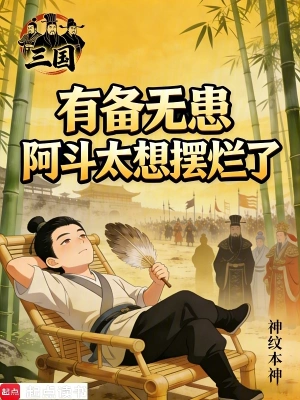 Three Kingdoms: Prepared for Anything, Yet Ah Dou Just Wants to Slack Off
 What Could Liu Bei Possibly Be Up To?
In booklists 3

Three Kingdoms Fiction: Shu-Han Stories
A solid selection of Shu Han stories. Shu Han fans can trust this list.
17Books568Follows6moUpdated

A 10-Year Veteran Reader's Bookshelf: Always Reading
Since creating this list, I've been diligent about it, even though it doesn't have many followers. I don't add books carelessly. My reviews may be short, but every book is carefully selected. I'm just as cautious when assigning stars. I'll do my best to recommend high-quality novels with sound logic and smooth plots. ⭐: Barely makes the cut. Just for fun, or because it updates quickly. ⭐⭐: Decent. The quality is solid, the logic holds up, and it's an enjoyable read. ⭐⭐⭐: Good. On top of the qual
73Books128Follows8moUpdated
Liu Bei Novels from the Three Kingdoms!
Pure Liu Bei, not that Liu Bei
12Books67Follows11moUpdated
Readers also read
 A Guide to Building Civilization in a Primitive Tribe
 Daming: Asking for the Throne at the Beginning, Lao Zhule Went Crazy
 My Father Is Wen Tianxiang, and We Win the Battle of Yashan from the Start
 My Only Method: I Will Add More Points to Become Stronger at the End of Ming Dynasty
 A Record of a Mortal's Journey to Immortality: I Earn Immortality by Grinding Achievements for Rewards
 Three Kingdoms: Me? A Master Strategist Who Never Misses?
 The Han and the Traitor Cannot Coexist, the Royal Cause Will Not Cower in a Corner
 Lord Evolution
 A Record of a Mortal's Journey to Immortality: Choosing Hextech in the Chaotic Star Sea
 Three Kingdoms: My Father Is Xuande, and the King of Guanzhong Has Arrived
 Three Kingdoms: Oh No, I've Become a Seductive Enchantress at the End of the Han Dynasty
 Three Kingdoms: An Eighty-Year-Old Veteran, Advising Liu Bei from the Start
My Father Is Zhuge Liang, and I Built a Han Dynasty That Lasted a Thousand Years
Three Kingdoms: Liu Bei's Chief Strategist, Mastermind of the World
Reviving the Han Dynasty
What Could Liu Bei Possibly Be Up To?
Songs of Chu in the Ji Han
Three Kingdoms: I, Liu Feng, Don't Want to Get Myself Killed
Three Kingdoms: Prepared for Anything, Yet Ah Dou Just Wants to Slack Off
Three Kingdoms: Zhuge Liang After the Fact, Reviving the Han Three Times
Three Kingdoms: An Eighty-Year-Old Veteran, Advising Liu Bei from the Start
My Father Is Zhuge Liang, and I Built a Han Dynasty That Lasted a Thousand Years
Three Kingdoms: Liu Bei's Chief Strategist, Mastermind of the World
Reviving the Han Dynasty
What Could Liu Bei Possibly Be Up To?
Songs of Chu in the Ji Han
Three Kingdoms: I, Liu Feng, Don't Want to Get Myself Killed
Three Kingdoms: Prepared for Anything, Yet Ah Dou Just Wants to Slack Off
Three Kingdoms: Zhuge Liang After the Fact, Reviving the Han Three Times
Reader comments 38
Google Translate
Report this book
Reason for reporting: The title of the book does not match the content Specific phenomenon: The author is not enough
The author, you do not have a thorough understanding of the temple names and posthumous names of ancient emperors. If you knew better, you should not use the temple name of Hanzhongzu. When writing a historical essay, your research must be accurate, otherwise you will make mistakes!
In the ancient temple name system, "Zhongzu" is an extremely rare temple name that is almost never officially used by orthodox dynasties. The fundamental reason is that there is a profound contradiction in the core meanings of the two words "" and "ancestor" in the temple name etiquette system. Why is "Zhongzu" rare? ——The contradiction between word meaning and etiquette To understand this, we need to first clarify the established meanings of "ancestor" and "" in temple names: Keywords Core meaning in temple names Typical examples and uses ancestor To create a foundation. It is used for the founder of a dynasty (Taizu, Gaozu) or the emperor who achieved resurgence and started a new game (Shizu, Chengzu). Liu Bang, Taizu of the Han Dynasty, and Li Yuan, Emperor Gaozu of the Tang Dynasty (founded the construction); Liu Xiu, the ancestor of the Han Dynasty (Zhongxing), and Zhu Di, the founder of the Ming Dynasty (created a new situation). Middle is in the middle to maintain success and connect the previous and the next. It mainly describes the emperor's position in the dynastic genealogy rather than his pioneering achievements. Liu Xun, Zhongzong of the Han Dynasty (Xuan Emperor, connecting the previous and the next), and Li Xian, Zhongzong of the Tang Dynasty (reset and transition). The core of the contradiction: · "Ancestor" emphasizes vertical creation and change, which is the "qualitative point of change" in the development of the dynasty. · "Zhong" emphasizes horizontal stability and inheritance, and is the "middle point" in the dynasty sequence. Therefore, if an emperor's achievements are great enough to be called an "ancestor", then his position should be the pioneering "starting point" or "turning point" rather than the "point" in the middle. If you use "middle" to describe him, it will weaken his pioneering and sacred aura. This is unacceptable in ancient times when people attached great importance to their names and etiquette. The rarity of "Zhongzu" just proves its irrationality. Situations that have been clearly recorded or proposed in history are all marginal or failed cases: 1. Unorthodox or short-lived regimes: · Hou Jing, Emperor of the Han Dynasty in Nanliang: In 551 AD, Hou Jing, who usurped the throne and established himself, built his own temple named "Zhongzu". However, this was generally regarded as the product of arrogance and confusion of etiquette. His regime was quickly overthrown and was not recognized as orthodox by later generations. 2. Discussions by later generations of scholars (informal): · During the Three Kingdoms period, the ministers of the Shu Han Dynasty proposed that Liu Bei should be given the temple title "Zhongzu" because he inherited the Han tradition, which meant "Zhongxing". But in the end, the official temple name given to Liu Bei by the Shu Han Dynasty was "Liezu" ("Lie" describes his brilliant achievements), not "Zhongzu". This proposal itself also reflects the reluctant conceptual integration of "Zhong" and "ancestral". 3. Used to honor ancestors (non-reigning emperors): · During the Sixteen Kingdoms period, Emperor Wu of Later Zhao Shi Hu once honored his father Shi Koumi as "Zhao Zhongzong". This is about honoring ancestors, and the word "Zong" is used instead of "ancestor", which once again confirms that the combination of the word "" and "Zong" is more common. In short, in the orthodox Chinese dynasty temple name system: · "Zhongzu" as an official temple name almost does not exist. ·The fundamental reason is that the semantics of "Zhong" and "Zu" conflict in the ritual system: "Zhong" represents creation and change, and "Zhong" represents preservation and centering. The two are incompatible. · The sporadic examples (such as Hou Jing) or suggestions (such as to Liu Bei) in history just prove that they are not accepted by mainstream etiquette. If an orthodox dynasty wants to commend an emperor who has contributed to the "Zhongxing" and has a special status, it is more common to choose "Shizu" (such as Emperor Guangwu of the Han Dynasty Liu Xiu) or a word with a stronger meaning "zu" (such as "liezu"), but never use the semantically contradictory "Zhongzu".
The most typical lie in history
"Wine ponds and meat forests", wine ponds and meat forests, how can we add wine ponds and meat forests to the country? "Lewd and immoderate", history books record that the emperor who was extravagant and extravagant was used as an excuse for early death. How many wives did he have? How many children do you have? All are almost extinct. On the contrary, how many concubines do powerful ministers have? Even in their 60s and 70s, they still have to take concubines, have dozens of children, and separate families and land. Still live a long life.
To be honest, even if Liu Bei traveled back in time and knew the plot, he might not have done better than him.
You have chosen this subject, wouldn't it be impolite not to set an example and roll it up?
Don't focus on single female protagonists in historical novels. . .
It would be right if Liu Bei, the great Han of Sanxing, calls him Zhongzu, but did you, Emperor Zhao, dig out Liu Fuling and eat him?
It's not bad, but it's okay. Isn't it funny that the Han Dynasty ran for the throne?
Only cows and horses can roll. Which of the real big shots has rolled?
Hiss,,,,,,,,,
It's okay if it's completely unfinished. How can Sanxing Han pass the throne to Zhuge Liang?