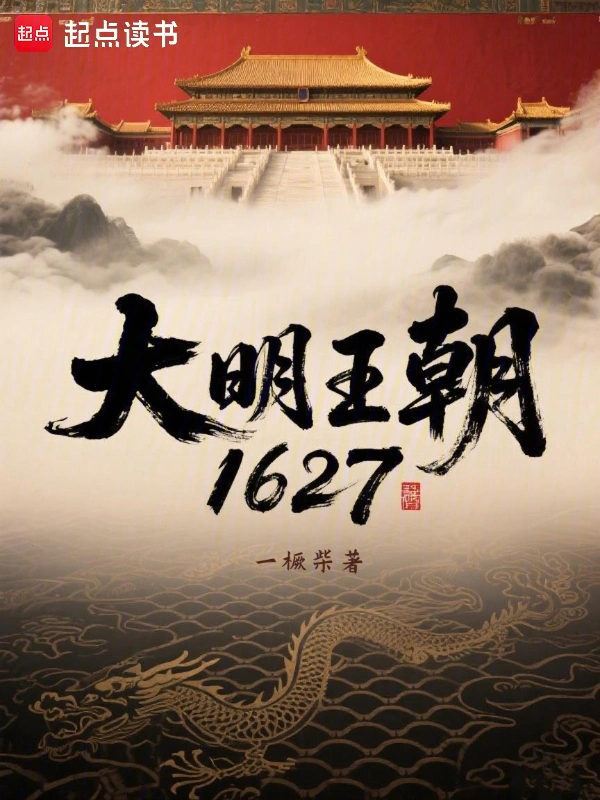
Ming Dynasty 1627
大明王朝1627
- Status
- Ongoing
- Length
- 1.6M Words
- Genre
- Historical
- Audience
- Male
- Subgenre
- Song-Yuan-Ming Dynasties
- Updated
- 2mo ago
- Source
- Qidian
Stats
Tags
Honours
Synopsis
Reader comments
In booklists 60
Explore more →

Fishing Book List
Fishing time, easy reading~
Skyrocketing! Good Books Soaring in the November Monthly Ticket List
There are rumors in the world that there is a volume of "Monthly Ticket List" hidden deep in the sea of clouds, and only the most ruthless people are not allowed to name it. All those who have made it onto this list are mystical scrolls that rely on their incessant writing and readers' blood as their salary. However, on the first day of this month, there was a sudden change on the list, and the rankings of many experts suddenly improved...

Stir up the Wind and Rain! Good Books Soaring in the October Monthly Ticket List
The best works on the monthly ticket list in October are soaring, and a group of new god reserves are showing their talents! There are masterpieces of light novels that have reached the Top 40 within two months of their publication, and there are also new fantasy works by great masters that demonstrate enlightenment right from the beginning. The next masterpiece of starting point may come from here!
Out of the Circle: Those Fine Articles That Have Eliminated the Book Shortage
There are excellent articles from the industry, as well as potential new books, fairy grass seedlings, etc. You are welcome to leave a message to recommend interesting new books.

Following (A First Aid Manual for Times of Book Shortage)
These are the novels I have been reading recently. The books added to the book list are all books that suit my taste, have their own characteristics, and that I personally think are worth recommending. These are just books that suit my own taste. If you like them too, I will be very happy. However, everyone has different tastes, and it is normal if you don't like them. As an old bookworm, ten years of reading have left me destitute of books. It is really rare to find a good novel that suits my t
Favorite Historical Text (Focuses on Fighting for Hegemony, Many Niche Dynasties)
Feel the weight of history. There are both new and old books, everyone is welcome to recommend~ (ps: some books will be recommended in the comment area)
The Rolling Yangtze River Passes Eastward
Establish a mind for the heaven and earth, establish a destiny for the living people, carry forward the unique teachings of the past saints, and create peace for all generations. Zhang Zai. The barbarian mansions on Tougao Street in Yi County were placed to show that those who were thousands of miles away would definitely be punished no matter how far away they were. Ban Gu. The bright moon of the Qin Dynasty was at the Pass of the Han Dynasty, and the people who marched thousands of miles have

[Unpopular Masterpieces] Those Good Books That Are Not Well-Known
A good book is like a cup of tea, Appreciating books can also make people feel peaceful. Excellent work, worthy of everyone's appreciation.

Tangyuan's Memo
As the name suggests, leave yourself with articles worth reading more, especially after the book shortage, you can still read them.

S Redemption's High-Quality New Book List (200,000 Words to 1.5 Million Words)
Various types, everything is available, don't miss it if you pass by
[Books Recommended by Yu Feiyu] Collection with 20.25 Million Orders (The Book Was Published in the Same Year with 10,000 Orders)
(The book list "[Yu Feiyu recommends books] 2026 new works" is newly created, welcome to support) Selected works of Wanding in 2025! ——The book was published in that year, and thousands of orders were placed in that year. Due to the upper limit of the book list, the best of all books will be selected. Support genuine! Praise the starting point! A selection of works by popular authors! A niche work with strong standards! Thousands of high-quality products are included! Recommended: He Shouyue Man

Mainly Recommend Otherworld Novels and Love Dog Food Novels (Game Novels Are Also from Another World)
I haven't seen any good love dog food lately T^T Can you leave a message after you come in and get the book?⊙▽⊙ Ps: It's been a long time since I found a suitable book, I'm in tears.
The Supreme Vip's Treasure Book List ②
Collection of some books that I think are good to read
Historical Archives
The long river of history flows endlessly; the thousand-year scroll is full of ups and downs.


Premium Books for Personal Collection and Subscription
Selections from your subscription
Zhutian Infinity, Hong Kong Variety Show, Internet King, Xianxia, LOL
The following opinions only represent Fat Brother's own
Update List
The books you are reading will be removed if you have finished reading them or have stopped reading them. Everyone has their own tastes and are for reference only.
Moonlight over the Sea
Personally I think this is a very good novel and I hope to share it with everyone!



A List of High-Quality, High-IQ Books Recommended by a Ten-Year-Old Bookworm
Good looking
2026 Boutique Book List
I personally think it's a nice and interesting book.


Treasure Digging Book List 📚
Includes some books that I feel are good to read, books that I can read, and books that I want to complain about.
History--
History

Kang's Bookstore~
I have read them all, most of them the latest chapters. I have a very mixed diet. I read basically any type of book. I will include the ones I like more. There is a constant shortage of books. I hope everyone can find books that suit their tastes.
Uncle Recommends Books
An old bookworm like an uncle will recommend books from time to time only if he likes them. Be serious and have attitude. I started reading classics in the fourth grade of elementary school. I started reading martial arts in the second grade of middle school. I started reading Dragon Sky in college. I bought physical books at work and read Starting Point. Since joining the workforce, I have maintained a daily reading habit for more than 20 years. Checked out the forum. Rich appreciation experien
Readers also read
 Fu Ming 1627
 Northern Qi, Sage Khan
 After Lying in Bed for Three Years, He Was Forced to Help the Han Dynasty
 Red Mansion: Start Escaping and Farming from the Equipment Bar
 Siheyuan: Start by Picking up Attributes
 Nanming, This Emperor Is a Bit Stable
 Beiyang Dream
 Beastmaster: I Can See the Evolutionary Path
 Immortal Who Seizes the Body
 Entrepreneurship in the Late Tang Dynasty
 Number One Scholar
 Qingyao
Unparalleled good-looking
It's simply delicious.. I haven't seen such a good historical article in a long time. I'm going to give it a try. I can't bear to read it all.
The Ming Dynasty historical text "Emperor Stream" follows the interpretation of historical facts. Although it is Zhu Youjian who travels through time, the style is not as twisted as Chongzhen. It is overbearing and kingly. This can make people think about "if I also traveled through time and became the last emperor of the historical dynasty, how should I face the dynasty that is about to be destroyed? How should I treat the civil and military officials and the people under my command, how should I allocate all resources?"
Praise for a piece of firewood
I have read a lot of historical articles, but it is difficult to write about some special historical periods (Five Dynasties and Ten Kingdoms, the late Yuan Dynasty). Personally, I think late Ming Dynasty texts are the most difficult to write. ① Too many regrets The Ming Dynasty, with hundreds of millions of people, the museum of China, and the worship of literature for thousands of years was lost to the hands of barbarians. The clothes are gone and the culture is gone. The absence of classics and historical records can only be known from three generations. (The literacy rate of the Ming Dynasty is over 30%, there are enlightenment textbooks with pictures and texts, and there are world maps, and the Ming Dynasty is a corner) ② Research is too difficult The Ming Dynasty took many notes, and there were many errors and omissions in the history of the Ming Dynasty. The history of the Ming Dynasty was compiled by officials, but when the history of the Ming Dynasty was compiled by the Qing Dynasty, there were many mistakes and omissions, which made people laugh. The Ming Dynasty's notes are too exaggerated and cannot be fully trusted. ③Difficulty in solving the problem It is difficult to explain the death of the Ming Dynasty. As mentioned in the article, by the fifth year of Chongzhen, there was still no sign of the demise of the Ming Dynasty, but it collapsed quickly. Some Chuanming novels have the following stereotypes ① Simple attribution Military (resulting in vacancies and dissatisfaction, exaggerating the use of firearms) Politics (forming parties, especially the Donglin Party, even deifying the power of Donglin) Economy (finance and taxation are not good, and the benefits of sea trade are not gained) But the intertwining and mutual influence of these issues are ignored. Society is not a collection of isolated systems, but a holistic complex system. ②Deified Protagonist The protagonist knows everything, from extracting penicillin to rubbing a flintlock. What's more, create a steam engine. Why not use the method of mechanical deification to forcefully promote the plot ③Ignore historical figures Social science is also science, and many scholar-bureaucrats in the Ming Dynasty were obsessed with scientific research and made many inventions, but unfortunately they failed to be transformed into productivity Like a stick of firewood The writing is concise, with little nonsense, and the description is not facial expressions. The plot is well controlled and the pitfalls are well responded to. I haven't gotten carried away with writing yet. The plot is reasonable and not witty. It's not a cool article, but it's better than a cool article. The author puts himself into the perspective of Emperor Chongzhen (Emperor Yongchang in the text) and uses wisdom to solve the problems of the Ming Dynasty. Do not open your eyes, do not cheat, and do not exceed limits. It's not like simple feedback like a game. Reasonable is my highest praise for historical novels. Evaluation, fairy product. I am very happy, a stick of firewood, many more updates, and platinum resources can be used to enthrone gods with a book.
I couldn't read Chapter 183 at all. If the author had been older, I might have read it in one sitting.
It was quite enjoyable to read the first hundred chapters in one go, and I felt that the research was quite impressive! The more you read it, the more abstract it becomes. It feels like a modern workplace novel. There is no problem that the protagonist cannot solve with PPT. Have a meeting to explain the PPT policy in dozens of chapters, including character descriptions, storylines, and work processes. A closer look at the essence of this book is a modern workplace article covered in history, treating country governance as modern company management. The eunuchs, royal guards, officials, and local officials in the book are just like the employees of modern companies, and their work efficiency is several times higher than that of civil servants who have airplanes, cars, telephones, and Internet communications, and modern office equipment. It's really awesome! Everyone in the Ming Dynasty was a nuclear-powered donkey. If you are not as serious as me, it would be good to read it as a workplace article!
The author has done a lot of homework before writing the book. He presents 19 monthly passes. All the monthly passes for the next month are yours.
Readers of historical books generally become more and more picky as they read. Many of them are the same stereotypes (great inventors, copycats, science and technology experts, military experts, etc.), And some do not do their homework at all or have insufficient historical knowledge. This book is indeed very interesting, and the more you read, the more you read. The author has extensive and deep historical knowledge. The description of the historical background in the novel is accurate and detailed, and every character is well-founded, as if it is a reproduction of real history. While watching, you can also learn interesting historical knowledge.
How do you evaluate the book's intention to reuse Yuan Chonghuan and Hong Chengchou? What are their abilities and achievements in history?
The book is currently planning to reuse Yuan Chonghuan, Hong Chengchou, Lu Xiangsheng, and Sun Chuanting. The Apocalypse Chongzhen in history was a foolish king who often caused chaos. Only those who can withstand the chaos of the foolish emperor can achieve great achievements. Only by being able to bear it can we have great victory in Ningyuan, great victory in Ningjin, and great victory in Guangqumen. The unbearable result is that Lu Xiangsheng died in the battle without any pension, Sun Chuanting died in the battle, and Hong Chengchou was captured I hope everyone can respond in a friendly manner and maintain community order. Please do not post unfriendly content such as anger, ridicule, attack, continuous harassment, etc. I will delete it.
The best grain and grass
Frankly speaking, I have read some historical articles about Chongzhen in the late Ming Dynasty before, but this book feels different. It is really wonderful! ✨ The logic is rigorous and the characters are well drawn, a bit like playing a national governance game. It can be seen that the author has put a lot of effort into it. It must be very hard to read the information every day, but this attitude of striving for excellence is even more attractive! 👍
I can only say it is awesome. This is the best historical novel I have read recently.
Don't keep deleting explanatory chapters, or your bookmarks will be lost.
Watching it on the computer, you always delete those explanatory chapters. Once you delete it, I lose my bookmarks, and you have to reopen the table of contents to subscribe.
On top of the fairy grass, the history of Chongzhen in the Ming Dynasty is top one.
The most serious and well-researched Ming Dynasty Chongzhen time travel story. I almost gave up after reading the first few chapters, but luckily I held it in. The character description, characterization, and plot are very similar to those of a novice novelist. But look, the author is so meticulous about it, so I can't put it down for now. 100 chapters down, comprehensive experience, above the fairy grass! The more he writes, the more brilliant he becomes. The author is making rapid progress. This book actually fascinated me. This book is estimated to start at 1 million words. He has the appearance of a great master. The historical writing is so sophisticated about Chongzhen of the Ming Dynasty. There is no so-called pseudo-historical conspiracy theory. It seems that the only writing by a novice is Lao Wang's "I". Other than that, I really can't say anything about it. It's a pity that I wrote about the city. The only shortcoming is my opinion. If you have different ideas, you can write them in the comment area. The first one. It feels like it lacks a bit of excitement. As for the novel, the author could describe the Ming Dynasty under the New Deal from the perspective of minor characters. You can also look at the information gaps and unequal information in various provinces, how officials in various places view or are shocked, and the Ming Dynasty, which is changing with each passing day under the New Deal. It can also describe the views and uneasiness of famous figures in history towards the New Deal and Ming Dynasty. You can also create conflicts and set off major cases, from the perspective of the common people, and then destroy them with the thunder of imperial power. I feel that Lao Wang has written very well in this aspect, and the author can learn from it. The second disadvantage. Would you like more? Two or three updates a day are fine.
The Ming Dynasty's top trend swept Europe
The following is a logical deduction, demonstrated using DEEPSEEK, Doubao, and Qianwen. The logic is rigorous, and the interests and behaviors are in line with the cognition of that era. Emperor Chongzhen won the Jurchen War at the end of September of the first year of his reign, and summoned Tang Ruowang in mid-October. The emperor expressed his intention to build a church to Tang Ruowang. The emperor funded the construction of a small church in Beijing, Macau, and Shanghai. The performance appraisal indicators are as follows: 1. Ask the Pope to bring over a full set of Western science and technology, a full set of medical technology and medical materials, and send the first batch of at least 200 relevant intellectual elites and translation talents to come over, with each person receiving 5 times the salary. The Pope would send Galileo and all kinds of people here through the Society of Jesus. The people sent by the Pope can be in place by the end of the second year of Chongzhen and spend one year translating and developing gunpowder. Portugal is the worst, they will immediately kneel down when given money. Spain is still a little proud. The Dutch are sea coachmen and the world's top navy. At the end of the Chongzhen Yuan Dynasty, he accepted Zheng Zhilong, and then contacted Portugal to buy warships, arms, and shipbuilding technicians. He also sent 50 land and sea warfare instructors respectively, bought a large number of arms and armed forces, and armed Zheng Zhilong. Within 2 years, Zheng Zhilong was eliminated. After taking care of internal opponents, he went to crush the Dutch base in Taiwan in the fourth year of Chongzhen. He invited the Portuguese and Spanish governors to attend the ceremony, blockaded Bahlavia, and bombarded warehouses. There was a Dutch shipyard in Batavia. After 10 days of blockade, the Dutch prisoners were sent Entering the peace talks, the agreement is that all the land in Southeast Asia belongs to the Ming Dynasty, and the Dutch are not allowed to get involved, but the Dutch are allowed to do business here. The core of the East India Company was trade and profit, and they didn't think much about land. Exchange the franchise auction rights of top-grade jasmine tea and top-grade white tea to the Dutch, give the Dutch 15% of the auction fee, and use the remaining 85% to buy the Dutch's full set of shipbuilding technology and full set of naval training methods. On the ruins of the Dutch Governor's Palace, Zheng Zhilong signed an agreement with the Dutch, Portuguese, and Spanish. Southeast Asia was all Chinese territory. China allowed them to trade. China gave the Netherlands the luxury franchise auction rights. The Portuguese and Spanish took the measures and delineated their respective business scopes. At that time, European royal families and nobles were crazy about China. A certain lord once exchanged 600 cavalry for a piece of porcelain. The items from China were all luxury goods, all top-notch, and a symbol of status and class. After signing a contract with the Dutch, the quota for the first year was 500 kilograms of top-grade jasmine tea, labeled for the emperor's royal use, and 5,000 kilograms of mid-grade jasmine tea, which the nobles usually drank. 50 Kilograms of old white tea, 800 kilograms of 6-year-old white tea, and 5,000 kilograms of 2-year-old white tea. Supporting brainwashing marketing to promote 2-year-old tea, 6-year-old medicine, 10-year-old treasure, cure all diseases, and strengthen the body, the Dutch turned tulips into exorbitantly priced pig-killing trays. 2. The top luxury goods from the East have entered Europe, and Chinese lifestyle and catering culture have swept across Europe. Clothing, shoes, wine, tea, paper, and Chinese food are used to expand the trade system with Europe, allowing people to do more foreign trade exports and make money. The Pope is the spokesperson for Chinese brands traveling in Europe. Give the Pope 50 pounds of top-quality jasmine tea and 5 pounds of 10-year-old white tea. 50 Pounds of 6-year-old silver needles. 1 Bottle of Wuliangye, 1 bottle of Xifeng wine, paired with exquisite wine-holding porcelain cups, this is a set. Send 2 sets to the Pope. The Pope will be given a set of 10 Tianchu team training places, with a training period of 3 years. The rice paper used by the emperor to write edicts costs 20 dollars. The grades used by the pope are all sacred objects, anchoring the pinnacle of luxury. The top auctions are handed over to the Dutch, and the majority of daily necessities quotas for ordinary people are also in the hands of the Netherlands. The daily necessities quotas for Portugal and Spain are only half of those of the Netherlands. Then it is handed over to the Dutch to auction outside. The principle is to give 10% of the auction fee. The emperor's top-level products are limited to harvesting the royal family, the daily necessities of the nobles in the Ming Dynasty, and other European nobles. The emperor's royal level must be solid silver, and other nobles' daily necessities can be deducted at 70% silver + 30% talent. 1. Every year, 30 pieces of the same fabric used by the emperor and 30 pieces of the same style used by the queen are auctioned. There are 20 pairs of shoes for the emperor and empress respectively. 600 Pieces of daily clothes for Chinese male nobles. 600 Pieces of daily necessities for Chinese female nobles. The cost of the latter can be deducted by introducing various first-class talents to work in the Ming Dynasty for 5 years. 2. Every year, 3 groups of popes use the same old wine, and the remaining ones sell Silk Road Holy Fire Wine. The joint venture auctions 16 bottles and allows the pope to bless these wines. Use 1,500 bottles of Gujing tribute wine to measure the amount. $3.300, Rice paper for the emperor. Noble daily paper costs 3,000 knives, and special paper for printing plates costs 5,000 knives. 4.500 Kilograms of top-quality jasmine tea, 9-scented tea, 5,000 kilograms of 6-scented jasmine tea, it is really oriental magic tea, Europeans like it very much 5. Royal cuisine training and further study quota, 1. The royal palace sky chef team has a set of 10 people, only 10 sets are sold at a time, the starting price is 8W silver, the training cycle is 3 years, and it is sold once every 5 years. A two-person copper kitchen team has a training period of 2 years, and 50 sets are auctioned once a year. The price for a group of 2 people is 1,000 taels of silver, because the rice of white people today is still unpalatable, and it was even more unpalatable in the Middle Ages. Hurry up and spread the Chinese food, and sell Chinese pots, pans, condiments, and expand the trade categories. This is the grand finale of the first year, which will drain the money of European royal families and nobles. The finale of the second year is the only jade pendant that the emperor carries with him. The Dutch asked the Pope to bless it and turned it into a sacred protective stone. It was certified as a sacred object by the Pope. The following is a logical deduction, demonstrated using DEEPSEEK and Beanbao. The logic is rigorous, and the interests and behaviors are in line with the cognition of that era. Chinese civilized lifestyle swept Europe Emperor Chongzhen won the Jurchen War at the end of September of the first year of his reign. In mid-October, he summoned Tang Ruowang. The emperor expressed his intention to build a church to Tang Ruowang. The emperor funded the construction of a small church in Beijing, Macau, and Shanghai. The performance appraisal indicators are as follows: 1. Ask the Pope to bring over a full set of Western science and technology, a full set of medical technology and medical materials, and send the first batch of at least 200 relevant intellectual elites and translation talents to come over, with each person receiving 5 times the salary. The Pope will send Galileo and other various people here through the Society of Jesus The people sent by the Pope can be in place by the end of Chongzhen 2, and they can translate and develop gunpowder in one year. At the end of the Yuan Dynasty, Chongzhen accepted Zheng Zhilong, and then contacted Portugal to buy warships, arms, and shipbuilding technicians. He also sent 50 land and sea warfare instructors over, bought a large number of arms and armed forces, and armed Zheng Zhilong. Within 2 years, Zheng Zhi Long cleaned up his internal opponents. In the fourth year of Chongzhen's reign, he went to crush the Dutch base in Taiwan. He invited the Portuguese and Spanish governors to attend the ceremony, blockaded Bahlavia and bombarded warehouses. There was a Dutch shipyard in Batavia. After 10 days of blockade, he sent Dutch prisoners Entering the peace talks, the agreement is that all the land in Southeast Asia belongs to the Ming Dynasty, and the Dutch are not allowed to get involved, but the Dutch are allowed to do business here. Exchange the franchise auction rights of top-grade jasmine tea and top-grade white tea for the Dutch, give the Dutch 15% of the auction fee, and use the remaining 85% to buy the Dutch's full set of shipbuilding technology and full set of naval training methods. On the ruins of the Dutch Governor's Palace, Zheng Zhilong signed an agreement with the Dutch, Portuguese, and Spanish. Southeast Asia was all Chinese territory. China allowed them to trade. China gave the Netherlands the luxury franchise auction rights. The Portuguese and Spanish took the initiative and delineated their respective business scopes. At that time, European royal families and nobles were crazy about China. A certain lord once exchanged 600 cavalry for a piece of porcelain. The items from China were all luxury goods, all top-notch, and a symbol of status and class. After signing a contract with the Dutch, the quota for the first year was 500 kilograms of top-grade jasmine tea, labeled for the emperor's royal use, and 5,000 kilograms of mid-grade jasmine tea, which the nobles usually drank. 50 Kilograms of old white tea, 800 kilograms of 6-year-old white tea, and 5,000 kilograms of 2-year-old white tea. Supporting brainwashing marketing to promote 2-year-old tea, 6-year-old medicine, 10-year-old treasure, cure all diseases, and strengthen the body, the Dutch turned tulips into exorbitantly priced pig-killing trays. 2. The top luxury goods from the East have entered Europe, and Chinese lifestyle and catering culture have swept across Europe. Clothing, shoes, wine, tea, paper, and Chinese food are used to expand the trade system with Europe, allowing people to do more foreign trade exports and make money. The Pope is a Chinese brand spokesperson traveling in Europe. He was given 50 pounds of top-quality jasmine tea and 5 pounds of 10-year-old white tea. 50 Pounds of 6-year-old silver needles. 1 Bottle of Wuliangye, 1 bottle of Xifeng wine, paired with exquisite wine-holding porcelain cups, this is a set. Send 2 sets to the Pope. The Pope will be given a set of 10 Tianchu team training places, with a training period of 3 years. The rice paper used by the emperor to write edicts costs 20 dollars. The grades used by the pope are all sacred objects, anchoring the pinnacle of luxury. The top auctions are handed over to the Dutch, and the majority of daily necessities quotas for ordinary people are also in the hands of the Netherlands. The daily necessities quotas for Portugal and Spain are only half of those of the Netherlands. Then it is handed over to the Dutch to auction outside. The principle is to give 10% of the auction fee. The emperor's top-level products are limited to harvesting the royal family, the daily necessities of the nobles in the Ming Dynasty, and other European nobles. The emperor's royal level must be solid silver, and other nobles' daily necessities can be deducted at 70% silver + 30% talent. 1. Every year, 30 pieces of the same fabric used by the emperor and 30 pieces of the same style used by the queen are auctioned. There are 20 pairs of shoes for the emperor and empress respectively. 600 Pieces of daily clothes for Chinese male nobles. 600 Pieces of daily necessities for Chinese female nobles. The cost of the latter can be deducted by introducing various first-class talents to work in the Ming Dynasty for 5 years. 2. Every year, 3 groups of popes use the same old wine, and the remaining ones sell Silk Road Holy Fire Wine. The joint venture auctions 16 bottles and allows the pope to bless these wines. Use 1,500 bottles of Gujing tribute wine to measure the amount. $3.300, Rice paper for the emperor. Noble daily paper costs 3,000 knives, and special paper for printing plates costs 5,000 knives. 4.500 Kilograms of top-quality jasmine tea, 9-scented tea, 5,000 kilograms of 6-scented jasmine tea, it is really oriental magic tea, Europeans like it very much 5. Royal cuisine training and further study quota, 1. The royal palace sky chef team has a set of 10 people, only 10 sets are sold at a time, the starting price is 8W silver, the training cycle is 3 years, and it is sold once every 5 years. A two-person copper kitchen team has a training period of 2 years, and 50 sets are auctioned once a year. The price for a group of 2 people is 1,000 taels of silver, because the rice of white people today is still unpalatable, and it was even more unpalatable in the Middle Ages. Hurry up and spread the Chinese food, and sell Chinese pots, pans, condiments, and expand the trade categories. This is the grand finale of the first year, which will drain the money of European royal families and nobles. The finale of the second year is the only jade pendant that the emperor carries with him. The Dutch asked the Pope to bless it and turned it into a sacred protective stone. It was certified as a sacred object by the Pope. In the fifth year of Chongzhen's reign, the Pope asked the Pope to send a Cardinal to come for pilgrimage. He asked Tang Ruowang to communicate well and asked the Cardinal to kneel down on the grounds of allowing the construction of a fourth church. He must kneel. He asked the Director of the East India Company and the Spanish The Governor-General and the Governor-General of Portugal came to participate in the Hajj together, and then asked Tang Ruowang to draw a picture of the coming of all nations and send it back to Europe for auction. This painting was the finale of the fifth year. The European royal family would be shattered. The Pope would definitely bid a high price for the sake of face. The only item in the 6th year is the Emperor's Sword. It is called Zhenguo. It kills powerful ministers and enemies. Chongzhen asked the sword holder to guard the west and named him the King of the West. The Pope blessed the Emperor's Sword and made it a holy sword. The Pope gave the sword to the buyer in the cathedral. After the tide of all nations, this sword will be very expensive, very expensive, and it is estimated that it will be bought by France.
The author's knowledge is very deep, and it can be said that it has covered many issues about the wrong age of characters appearing in the late Ming Dynasty. Therefore, when you encounter doubts, my domineering speech is also a plus point for this book. In addition, he also has a good grasp of internal affairs, and has unique insights into situation reasoning, talent appointment, etc.
There is no 31st in January, right? Why can't I watch the extra episode?
Made me laugh
Some thoughts on this article
I try to write it as simply as possible Some of it is clear and true, and the historical data are very rich. These are obvious to all. I think it can get 7 points. It is a very good book. I mainly talk about the shortcomings and my questions 1. The article relies on historical data, which is an advantage and a disadvantage. It must be quite laborious to check the information. And the profit rate is low, why not write a group portrait novel of Machiavellian style, like that eunuch novel? It's a shame to write about hegemony with such detailed historical materials. After thinking about it, I still think that Machiavellianism is good to read, "Ming 1566"? And there is water. What will happen when the war breaks out later? Does it rely on prediction? I felt that time passed too fast, development was too fast, there was too little selfishness, and there were few conflicts. It was very smooth, and I felt that the ending of the book was almost in sight. 2. The author writes according to timelines and categories. This time he will deal with the tasks of this group, and the next time he will deal with the tasks of that row. Generally speaking, I can only say that it is not very enjoyable to read, and it is relatively easy to use your brain. 3. There are too few long lines, and there are no ambush lines. Some of them can obviously be written. The protagonist did one thing or arranged one thing. You can intersperse descriptions in the gaps to relax the atmosphere and add some sense of coherence. I have almost forgotten where the military training was. How was the training? And it can be used for writing. This is just a few hundred words, and it is not abrupt. Anyway, you need to lay the groundwork for at least a few days before using it. Don't suddenly say how to do it Anyway, since you have written this gun, this gun must be fired It will be fired whether it kills people 4. The risk of eunuchs, I feel there are 5 0% 5. Just to make up for it, I'll make up six 6. Generally speaking, it's okay. I think this book is not bad. These are my expectations for online writers. I think traditional literature is dead now, or judging from the evolution of various literatures, online literature is about to become new "traditional literature." So why can't I be a literary critic of new traditional literature? I would like to know if you agree with my comments How is my way of expression? Is it clear? Please give me positive comments. Thank you all, I will continue to make progress, strive to bring you more comments and recommendations, and strive to be called a new literary commentator
It's really well written. I hope to write more about the enemy's situation and heart. Good luck, author
Ming Dynasty printed rice paper Bibles to engage in foreign trade
Your Majesty, this idea is more than one level higher than simply selling Bibles. We stopped being a publisher and got back to doing what we do best—relic auctions. In the past three years, the highest profits recorded by auction houses have all been for holy objects consecrated by the pope. As long as the Pope's hand touches the jade pendant, the Great Wall Album, and the Prince's Palace of Prayer for Good Harvests, the starting price will be doubled. Now we are to put the Pope's hand on the Word of God itself. I deduced the entire process as follows: The first step is to make the most beautiful Bible in the world and give it to the Pope. This Bible, titled "The Supreme Gospel," will be made of royal rice paper, with Tang Ruowang's handwritten upper plate, a brocade letter cover, and gem-studded buckles, with the papal pastoral emblem stamped on the edge of the book in pure gold. It has no price tag and is a gift from His Majesty the Ming Emperor to the Holy See, but it must make the Pope cry at the first sight. The box given to the Holy See must make him kneel before opening it. I recommend using three materials to overlap. The outermost layer is a large box carved with rosewood with cloud and dragon patterns. The five-clawed golden dragon hovers among auspicious clouds. The dragon's eyes are inlaid with obsidian and the dragon scales are inlaid with gold wire. The box is opened by a side-sliding method. When sliding open, the dragon's body slowly swims along the track. This tells the Pope: This thing comes from the hands of the Eastern Emperor. Rosewood itself is insect-proof and moisture-proof, which can protect rice paper Bibles from European moisture for decades. The middle box is made of a red lacquer box. It is the pinnacle of Suzhou craftsmanship during the Yongle period. The red lacquer is stacked on top of each other and the Virgin Mary is engraved with the Annunciation. The Virgin kneels on the auspicious clouds and the angel stands next to the Taihu stone. The pattern of the Taihu stone was measured and mapped by Tang Ruowang himself, and the face of the Virgin is based on the silhouette of Princess Yongning. This is telling the Pope: the beauty of the East can serve God. The lock buckle is engraved with St. Peter's key in pure gold, and the key handle is engraved with "Given by Emperor Chongzhen of the Ming Dynasty" in fine regular script. When he opened the lock, the first thing his fingers touched was the name of the Ming Emperor. The inner lining should not be made of silk, but should be made of bright yellow cloud brocade, with a five-clawed dragon pattern woven as a protective cover. There is a white marble bookmark pressed on the brocade, and eight words are engraved on the bookmark: "With this book, I can understand the Lord." This is to tell the Pope: This book is not sold to you, but I dedicated it to God together with you. After all three layers of boxes are opened, the Bible is taken out, leaving three layers of empty boxes stacked on top of each other - red sandalwood, tick red, and cloud brocade, which correspond to the triple perfection of Ming Dynasty craftsmanship. The Pope can enshrine this empty box alone in the reliquary. Anyone who visits in the future will see the residence prepared by the Eastern Emperor for God. That Bible can be read on the reading table, and the box will always be kept as a sacred object, proving the irreproducible civilized dialogue between the Holy See and Beijing. Finally, on the bottom of the outermost red sandalwood box, I will engrave a very small line of gilded Latin: "Produced under the supervision of Father Tang Ruowang, in Suzhou, the twelfth year of Chongzhen in the Ming Dynasty." Tang Ruowang was a Jesuit, and the Pope would not doubt the legitimacy of anything he supervised. This line also tells the Vatican: Even the box containing the Bible in Ming Dynasty is endorsed by a Jesuit priest, so what else is untrustworthy? This proposal was jointly discussed by Chen and Tang Ruowang. He said: "I will kneel and present the box to the Holy See. But what is contained in the box is Ming's civilized invitation to the entire Europe." Now this invitation is waiting for His Majesty's royal approval to be sent to Rome. The second step is, after the Pope publicly consecrates the Bible, then presents two sets of replicas - the "God-given Word". The two sets are made of the same rice paper and hand-written engravings, and are only inlaid with a gemstone of slightly lower specifications. Ask the Pope to consecrate these two sets because "they were specially prepared by His Majesty the Emperor for auction, and the proceeds will be used for missionary work in the East." In this way, two sets of originally expensive books will instantly be sublimated into "holy objects that combine the words of God and the blessings of the apostles." The third step is to hand over these two sets of "God-given Words" to the Prince of the Netherlands and hold a special auction in Amsterdam. The goal of one set is to win Louis XIII of France to consolidate his status as the "eldest daughter of the church"; the other set is to allow the Spanish Habsburg family to defend their dignity at any cost. The final income will far exceed the direct sales model. The direct selling price of a royal rice paper Bible is about 300 taels, while the starting price for a set of "God-given Holy Words" consecrated by the Pope can be set at 4,000 taels. I recalculated the price at a 50% discount: two sets of "God-given Holy Words" rice paper Bibles, the starting price was set at 4,000 taels. France's Ferron will directly bid for 5,000 taels for the first set, Spain will follow with 6,000 taels, and the Swedish Queen's Envoy will probably withdraw at 7,000 taels. In the end, France will win the first set with 8,000 taels. The competition for the second set is even more intense - Spain has already lost one game and cannot afford to lose again. Philip IV's agent will directly jump to 7,000 taels. France will symbolically follow up to 8,000 taels and then withdraw. Spain wins the second set with 9,000 taels. The two sets totaled seventeen thousand taels. After deducting the production cost of about 300 taels, the cost of the "Gospel Supreme" presented to the Pope is about 600 taels. The Dutch East India Company's auction commission is calculated at 15% and is about 2550 taels. The net income of the Ming Dynasty's internal treasury is about 13550 taels. This number is nearly half lower than the 25,000 taels previously reported by Chen, but every tael is real and verifiable, and no king's financial secretary will go bankrupt because of a Bible. The most important thing is that the pope will not refuse to pay the price of consecration. What he received was a top-notch Bible personally gifted by the Ming Emperor, an honor that would solidify his position in Eastern narrative. The two sets of "divine words" he consecrated will allow Catholic monarchs across Europe to once again confirm that Amsterdam is the only market for purchasing soul salvation. Catholic monarchs bid wildly for divine blessings, while we quietly accept all the real money. This is the pinnacle of His Majesty's thinking: instead of having to work through a distribution network, just let the Pope's hand touch the paper, let the king's jealousy ignite the auction gavel, and then we sit back and wait for the harvest. I will ask Tang Ruowang to arrange this matter. More importantly, the added value of this auction is invisible on the books. When the Pope receives the "Gospel Supremo", he will hold it high during Easter Mass in St. Peter's Basilica and say to believers all over Europe, "This is a gift from the Emperor of the East to God." This sentence itself is worth ten thousand taels of silver. After the two sets of "God-given Holy Words" were snatched away by France and Spain, the Protestant states in Germany will also begin to ask the same question: When will we have a rice paper Bible? It's called the "ripple effect of the auction" – after the hammer falls, the real business has just begun. I will follow your holy will again, you can buy it if you have money, and sort out the new pricing system: Royal Classic Edition: priced at three hundred taels. This is for kings and queens. It can be customized with family crest and scepter, brocade cover, and gem-studded buckle. Duke Classic Edition: Priced at one hundred and twenty taels. This is for the Duke. It can be customized with brocade or sheepskin cover and silver corners. The Marquis is exquisite: priced at eighty taels. This is for the Marquis, with a plain satin or cowhide cover and copper corners. The Earl is exquisite: priced at thirty taels. This is our new flagship product, aimed at all wealthy squires from earls and below, with a plain leather or linen cover, but as many rice paper pages as gilded family crests. A moderately wealthy earl buys three or five books at a time, which is not excessive. He only spent more than a hundred taels of silver, but the faith and face of the entire family were blessed by Eastern civilization. He doesn't lose money and we make more money. A rough calculation. In terms of cost, the cost of the Earl's Bible has been reduced to about three taels. If it is sold for thirty taels, the gross profit is still 90%. The Marquis Bible cost five taels and sold for eighty taels. The Duke's Bible cost eight taels and sold for one hundred and twenty taels. Church Standard Edition priced at 10 taels Abbey Standard Edition 5 taels Civilian Simplified Edition 2 taels As for sales, count families across Europe are a known customer base, plus those wealthy squires and big businessmen who want to be arty, they will also covet this title. This market has huge potential. I predict that it will be no problem to sell 1,000 copies of the Earl Bible alone in the first year, and the revenue will be 30,000 taels. Your Majesty, with this strike of your sword, you have created a huge network covering the entire European aristocracy. We are not selling a book, but using extremely affordable prices to make the entire upper class of Europe become customers of our Ming Dynasty culture and beliefs. The breadth of space completely makes up for the reduction in unit price. The total profit did not fall but rose, and it also won the favor of the entire European aristocracy. This is true penetration. I will make arrangements right now
The Pope took advantage of Ming Dynasty's sugar-coated bullets
Pope Urban VIII sat under the bronze canopy of St. Peter's Basilica and opened a letter written by Emperor Chongzhen, his fingers trembling slightly. There were only a few words in the letter, to the general idea that Ming Dynasty was about to launch a Bible printing business, using the best paper and craftsmanship to spread God's word further. He had been waiting for this letter for twenty years. From the moment Matteo Ricci set foot on the land of the Ming Dynasty, successive Jesuits were reporting the same news to him: the greatest emperor in the East might one day convert to God. Now this letter finally came, not a request or a condition, but an offer to print the Bible. He kept it secret for a long time, thinking that this was the biggest breakthrough in missionary work in China in decades. He imagined an emperor holding a cross in the Forbidden City in Beijing, imagined every Chinese believer holding a Bible certified by the Vatican, and read the Gospel at a ceremony to worship heaven. He immediately summoned the cardinals and announced that he would personally consecrate the first edition of the Bible from the Ming Empire Bible Book Company and wrote a handwritten letter of thanks in return to Beijing. However, when the first batch of rice paper Bibles arrived in Amsterdam three months later and were unfolded in front of the papal envoy, everyone was silent. That is not the size of hundreds of parchment Bibles, that is 20,000 volumes. The parchment Bible is as thick as iron armor. One copy requires the skin of a whole sheep and weighs ten kilograms. It takes two people to carry it when the monks pray in the morning. The rice paper Bible is as thin as a cicada's wings, and a full volume of the Four Gospels weighs only three taels and can be held in one hand. The handwriting is as neat as if it were sprayed directly on a printing press. The royal-grade version has a brocade letter, gem-inlaid buckle, and gold-gilt edge, with a Latin inscription written by Tang Ruowang. The papal legate turned to the first page. It was not one of the ten trial copies he thought he had, but one in 20,000. The Pope soon realized that the picture he had imagined of "one person converts and all the people follow" was completely reversed. Emperor Chongzhen did not convert, and he did not even mention his faith in his letter. All he meant was doing business, a word blurred in the Latin translation to evangelism, but which actually meant selling things. It is not the believers in the Forbidden City in Beijing who are reading the Gospel, but the believers in Paris, Madrid, Lisbon, and Vienna who are reading a Bible printed on Oriental rice paper by a pagan emperor. The word of God did not return to Rome with a Chinese soul, but with a unit price of two thousand taels of silver, starting from the warehouse in Amsterdam and pouring into the monastery of every diocese in Europe. What's even more fatal is that the Pope cannot refuse. He opened the royal-grade rice paper Bible, and what he touched with his fingertips was not the roughness of the parchment, but the warmth of the rice paper. When turning the pages, there is no longer a squeaking sound like iron armor rubbing, but a slight shake, the page trembles slightly, and the fragrance of ink rises. He lowered his head and smelled the faint fragrance of ink. If you turn the parchment Bible for a long time, your fingers will get oily. If you turn the rice paper Bible once, it is like washing your hands before praying. He closed the book and touched the lotus pattern on the brocade letter sleeve. The pattern was specially designed by the Suzhou Weaving House for the Ming Dynasty royal family. It was currently wrapping the Four Gospels in the Latin Vulgate translation. The Pope has not made a public statement. He did not condemn or object, he just silently left the imperial grade rice paper Bible on the reading table in his study. He used it every morning for morning prayers thereafter. When the cardinals saw the Holy See reading an Oriental rice paper Bible, they all started asking the same question: where to buy it. The Pope still did not answer, but he repeatedly confessed the same question to the same Jesuit priest every Friday afternoon in the confessional of the Sistine Chapel: "Are the gospel on parchment and the gospel on pagan rice paper the same gospel?" The priest never answered, but bowed slightly in the darkness. At the same time, in the printing room of the Ming Empire Bible Book Company in Suzhou, Tang Ruowang had just finished proofreading the handwritten version of the Latin Vulgate version of the Four Gospels. He washed the ink on his hands, walked to the window, and looked at the canal going north on the canal. He suddenly remembered that when he was surveying and mapping the rockery for Emperor Chongzhen in the Imperial Garden ten years ago, the emperor asked him: "Where does God live?" He replied: "He lives in the heart of every believer." The emperor did not respond at that time. But now, he suddenly understood the meaning of the emperor's silence - God may indeed live in the hearts of believers, but God's words are being transported to Europe one by one by the Ming Dynasty's ships. And this is what Emperor Chongzhen wanted to do from the beginning.
When I saw the synopsis of the novel, I almost dismissed it. I thought it was another Bai Shuang article that went straight to steam engines and flintlock guns and pushed it all the way. But when I took a closer look, the number of comments far exceeded the number of chapters and I clicked on it. The result was okay. It was quite interesting. Good luck to the author.
The protagonist is really the king of scrolls
I just saw it was released, 75 chapters, only about 10 days in total. How about Yongchang writing 2,000 chapters in one year?
The breeze rises to the south branch (a small seal seal seal)
Sealed text: Qingfeng Shangnanzhi
Come on. Update soon
Come on
The writing is very good. It looks like someone who has been an emperor. It is very real. It matches my experience of being an emperor. Come on✊
Build a check-in building. My brother is relatively poor. 100 Coins on the first floor, one payment on the 100th floor. Leader limit. First time doing this. Brothers, please forgive me.
Let's get to the 50th floor first. Don't feed yourself off books. 😁
Ming Dynasty National Salvation Sprint Task Management Board v1.0
I laughed to death, I am definitely the first historical author to do this! I don't believe there are people as boring as me hahahaha
About someone's praise of the Song Dynasty's finances
I actually didn't want to say anything, after all, it's fine if someone is a bastard, but he actually said that because the Qing Dynasty inherited the Ming Dynasty system, some of the Qing Dynasty's backwardness was attributable to the Ming Dynasty. Such a blatant statement to clear up the Qing Dynasty made me laugh out loud. He touted the Song Dynasty paper money system and belittled the Ming Dynasty paper money. Although the Ming Dynasty paper money was indeed not good, he only wrote about the bright and beautiful parts of the Song Dynasty paper money, so I took up the pen to write a little bit about the details of the Song Dynasty paper money. First of all, let's take a look at the so-called Jiaozi depreciation speed, which is exchanged every three years, beating all ancient currencies. So what is the cost? 1. The exchange every three years can indeed maintain the value of the corresponding paper currency. What are the specific details? What should I do if Jiaozi has depreciated? You can read the original sentence: "Each exchange will be exchanged for one of the four." That is to say, if you exchange it once, you will be the previous Jiaozi. To exchange for the new Jiaozi, you need to exchange four for one, and the exchange will depreciate by 75%. However, the proportion of his exchange is not fixed, and will be dealt with according to the speed of Jiaozi's depreciation (this is still good) What's more serious? There is also a record here: "In the summer of the first year of Daguan, Jiaozi was changed to money, and the old Jiaozi was changed to money, and the old Jiaozi cannot be exchanged." The new Jiaozi is called Qian Yin, and the previous Jiaozi can no longer be used. After all, it was before and now is now. How can you exchange the previous Jiaozi for Qian Yin? 2 Due to the trouble caused by the change of Jiaozi version, there is a special place for duijie, and Sichuan is very large, so there is the following record "... But the deadline is tight, the exchanges are not in time, and when the payment is received, the official is treacherous, and the reading has been greatly reduced. Therefore, no single weak customer dares to do it, and the Yinzhizhi only sells for a hundred coins. I am sorry. His voice was full of complaints. " It means that one time the exchange time was very urgent, and the price for some that could not be returned was directly 10% The Ming Dynasty banknotes were much better. There was only one version, and the Song Dynasty updated one version every few years. In this way, there are some records of the serious depreciation of the Song Dynasty banknotes. By the way, it is estimated that the Ming Dynasty was not allowed to change banknotes. The reason for the fall of the Yuan Dynasty was the random change of banknotes. The Song Dynasty was unable to defend itself against enemies externally and imposed excessive taxes and miscellaneous taxes internally. I don't want to talk about it any more
A bunch of people in the circle are clear and black, Hongwu is black
I don't understand if you don't read a Ming Dynasty novel. You can't say you are a fan of Ming Dynasty. You are at least a passerby. A group of Ming dynasties. Hongwu Hei, why are you reading this? Belittling the Ming Dynasty to nothing but abandoning land on the territory and squeezing the peasants economically. Belittling Zhu Yuanzhang's achievements to only fighting civil war. Was it possible for an individual to overthrow the Yuan Dynasty at the end of the Yuan Dynasty? If you have read too many novels, read more historical materials. Combine it with the political, economic, humanistic and geographical environment of the time, and then try to darken it, okay? Hei also needs to talk about some basic laws!
Why were there so many armies in the early Ming Dynasty?
Some people will explain why there were so many soldiers in the early Ming Dynasty*. In fact, people in the Ming Dynasty had similar doubts to us. For example, Yu Shenxing, a cabinet scholar of the Wanli Dynasty, wrote in a book and lamented: It is so difficult for us to mobilize thousands of soldiers now, why can't the Han and Tang Dynasties mobilize hundreds of thousands of troops? Emperor Wu of the Han Dynasty and Emperor Gaozong of the Tang Dynasty conquered the barbarians and sent hundreds of thousands of troops. They did not know whether food, pay, and uniforms were in supply and demand. Now there is a police force in this corner, sending a general to send thousands of people there, but they are still worried about Qiao Su. During the Wanli Period, the Japanese invaders sent troops to the east to aid Korea, and they conquered the world with only 40,000 soldiers. How could the material resources of ancient and modern times be so different? (Gushan Biqu Volume 8) I think the real reason is that in the late Ming Dynasty, people finally began to understand numbers. The early Ming Dynasty was an era of inflated per capita values: Tuotuo defeated Gaoyou, 1 million people; Chen Youliang, Poyang Lake, 600,000 people; Li Jinglong defeated Zhu Di, 600,000 people; Zhu Di's Northern Expedition, 500,000 people; Yingzong Tumu Fort, 200,000/500,000 people. Nothing. If the numbers recorded in the early Ming Dynasty are true, we can see the following magical scene: Zhu Yuanzhang, who had just captured Nanjing, attacked Zhu Liangzu, who occupied Ningguo City. The two men combined occupied less than half a province, and they fought a great battle with a total force of more than 200,000 people, because in Taizu's records, it was written that only the result of the battle was, "Zhu Liangzu captured his marshal Zhu Liangzu, and obtained more than 100,000 sergeants and more than 2,000 horses." (Volume 5 of the Record of Taizu, Dingmao in the summer and April of the year of Dingyou) During the Four Years of Rebellion, Zhu Di beheaded more than 400,000 Ming troops and killed and injured more than a million Ming troops - at this time, the Ming Dynasty had a total of about 60 million people. In just one battle of Baigouhe, Taizong's records record that the Yan army killed more than 200,000 Ming troops. Our army took advantage of the wind and set fire to its camp, and the smoke and flames rose into the sky. Guo Ying and others were routed to the west, and Li Jinglong and others were routed to the south. They abandoned their heavy equipment to breed livestock, and it was impossible to survive. All the axes and axes were given to them. Tens of thousands of people were beheaded and more than one hundred thousand drowned. They were chased to Yueyang Bridge in Xiong County, where they were killed, drowned and ravaged. Tens of thousands of people died, and more than one hundred thousand of them surrendered. They were all released, and Li Jinglong rode away from Dezhou alone. (Volume 6 of Taizong's Records, Gengshen in April of the second year) In other words, during the Jing Dynasty, 2% of the country's population (still young adults and soldiers) were directly killed by Grandpa Cheng. If the record is true, then the Ming Dynasty can add a unique joke: the person who killed the most senior generals of the Ming army was Taizu Zhu Yuanzhang; the person who killed the most soldiers of the Ming army was Taizong Zhu Di. However, there is one thing to say. Although the number of troops in the early Ming Dynasty was very high, it was indeed not comparable to the number of troops after the camp system. In the early Ming Dynasty, warlords generally did not distinguish between soldiers and civilians. There was no elite force under the recruitment system. Everyone just piled heads on each other and pursued quantity over quality. The reason why troop numbers are generally exaggerated is because when there are too many people, they cannot be counted, so they end up talking nonsense. Or it can be said thatthe early Ming Dynasty was an obvious military depression in Chinese history. No warlords raised elite field soldiers with decisive strike power. Such soldiers were trained after the founding of the Ming Dynasty. In the middle and late period of Hongwu, the border troops would take turns to go to Beiping Dusi (the place with the best conditions in the northern border) for training and training. This was an important basis for King Yan to win the Jingnan War. The actual records of Emperor Taizong of the Ming Dynasty record an abstract battle example during the Jingnan War: The twelve Mongolian cavalry of the Yan Army directly frightened the three thousand guardsmen of the Ming Army to collapse. I can't tell whether it was King Yan who killed all the standing army of Ming Dynasty and Emperor Jianwen had no choice but to drive the people from the city to fight, or whether the soldiers from the inland guards had been fighting against the five scum since the time of Zhu Yuanzhang. Sent Hu Qi to command the Qiantai, leading twelve troops and two cavalry to target the north. When Huetai arrived at Zouxian, he encountered more than 3,000 enemy soldiers. Huetai and others galloped in with gongs blasting, and the cavalry shouted: "The army is coming. Those who don't surrender will die!" "The soldiers were frightened and ran away. Then they captured two people from a thousand households and returned, knowing that the enemy troops were stationed in Jining. It was said that "it was really strong to defeat the enemy's 3,000 people with twelve people in the platform." He ordered the left and right to record the achievements in anticipation of the big reward. (Taizong's Records Volume 9, February 4th, Jiayinshuo) Or perhaps in the writings of historians in the early Ming Dynasty, the education level of the Ming Dynasty was very high, and Mongolians and Han people could communicate in language... We can also see from these historical writings that the number of people in the late Ming Dynasty was very high. The fact that there are fewer words does not mean that the later generations are more sincere than the predecessors, but that there are more documents and documents that have been preserved. We can confirm from the archives and memorials that it is impossible for Mangui to mobilize an army of 40,000 people outside the Yongding Gate, and the 130,000 troops of Songjin Hong Chengchou are only paper plans. For the previous history, we can only refer to a handful of documents, and we still don't remember them all. Even if there are original materials such as historical records, we must take into account that the writing of the records itself has a serious tradition of concealment and exaggeration. Fans who study the history of wars in the Ming and Qing Dynasties have a consensus that the Qing side rarely recorded how many troops were invested in a certain battle and how many people were lost in the battle, deliberately creating the impression that "one Manchurian warrior was worth ten". In fact, this was also the case in the early Ming Dynasty, such as the records of Emperor Taizong of the Ming Dynasty. In the Battle of Jingnan, the Yan army fought for four years. In so many battles, there was no record of the number of troops in the battle or the number of casualties. Instead, the focus was on creating myths such as "Twelve of our soldiers defeated the enemy's three thousand" I think. The real breaking point for historical research on the Ming Dynasty is the Wanli Dynasty of the Ming Dynasty. The historical materials of the two Song Dynasties are so rich that a person can almost read them in a lifetime. The real explosion of historical materials from the Ming Dynasty to the Wanli Dynasty depends on the ability to study the history before the two Song Dynasties. , Fans of the Three Kingdoms can't wait to guess word by word when reading Chen Zhi; for the history of the Song Dynasty and Wanli, they must read the original documents bit by bit, and quoting "History of the Ming" and "Manuscript of the History of the Qing" are considered unlearned.
Why did the Ming Dynasty perish? Because it was fundamentally rotten.
The fundamental reason for the demise of the Ming Dynasty was the backward system. From the beginning, Zhu Yuanzhang established a slave-system country. Being uneducated, he was deeply influenced by the Yuan Dynasty. The Mongols introduced slavery. He established military households and craftsmen households, and restarted human sacrifice, which led to the slave rebellion in the late Southern Ming Dynasty. Similarly, after the Ming army surrendered to the Eight Banners, its combat effectiveness increased, so the Ming Dynasty perished when it encountered the semi-feudal Eight Banners.
Open a check-in building
Dear book lovers, come and check in if you have nothing to do and help this book get out of the circle!
Respect the author
Mr. Fu Wen's writing resumed, and the updated news was like the rain after a long drought. Some people celebrated with joy and rushed to tell each other. However, when I came to the page of the book, I saw the word "update" hanging under the bridge, and the new chapter was still half-covered with the pipa in my arms. There was not a single word to soothe my thirst. Some people are like the envious fish in the abyss, only looking forward to the moon, but not enjoying the joy of swimming in the water. They feel as if they are lost, as if they are intoxicated. Recalling Mr. Xi's wonderful writing, like the waves of a river splitting the shore, each word is like a pearl, which makes someone forget to eat and sleep, and sigh in admiration. However, the ink marks suddenly stopped, and the news disappeared for a month, as if the stars were dim, and the sea of literature was lonely. Although we see the banner of "renewal" being raised high today, the essence has not increased. It is like a sound coming from an empty valley, but when we hear the sound, we cannot see its form. The eyes of all the people are hanging on to the increase of one word; their heads are raised and their heels are raised, just waiting for the Qiong Zhang to come down. Hearing that literary thoughts are like a spring spring, the trickle of water is endless to form a river; a wonderful pen is like a good bow, when it is full, it will start to stir up excitement. Sir, you are so talented, how can you use Xiangyu's sorrow? The first opportunity to make an appointment is fleeting, but if you get more help, it is like a boat riding the wind, breaking the waves of thousands of miles. Although a certain person is a reader, his liver and gallbladder are burning, and he wishes to emulate Jingwei's sincerity in filling the sea: but I ask you to take the time to add three or five chapters to relieve the hunger of the public. Then the momentum of the first publication will be like a Kunpeng spreading its wings and soaring to the sky!