Qingyao
清妖
- Status
- Ongoing
- Length
- 2.8M Words
- Genre
- Historical
- Audience
- Male
- Subgenre
- Qing & Republican Era
- Updated
- 10h ago
- Source
- Qidian
Stats
Tags
Honours
Synopsis
Reader comments
In booklists 21

#NFIBANDANGGU# Mainly Recommends Lao Bai, Anti-Routine and Imaginative. Archive 1#
Except for the first three books, the others are archived from past issues.
I Love History, Although the Real History Is Very Heavy!
Mainly time-travel novels from the late Ming and early Qing dynasties. Of course, I would also recommend good novels from the Tang and Song dynasties.

Unpretentious Personal Collection
This is a purely personal collection of books, all of which I have read and liked. Although everyone's tastes are different, I hope this book list can help you find some books you like but haven't read yet!
Update List
The books you are reading will be removed if you have finished reading them or have stopped reading them. Everyone has their own tastes and are for reference only.
Read and Cherish
It's a book I've read myself and found interesting. Just read


Now Readingappreciation of the Masterpieces of Old Bookworms
The stars of this book are all based on personal taste, and there is no limit on the number of words in the selection.


If You Like Cool Style, You Can Check It Out
Full of useful information. I personally prefer the cold style
Personal Book List, Preferring History and Homology
(Dynamic adjustment) Five stars, top level, I will read it every day and give it priority Four stars, catch-up level, will continue to read the series intermittently Three stars, fattening grade, not attractive enough, so I'm saving it for watching. Two stars, placement level, tasteless and a pity to throw away One star, regrettable, I like it but it's anticlimactic or eunuch So sometimes one-star content can be very good.

Smiling at the World of Mortals ~ a Desert of Books
I've been a bookworm for ten years, I can't say how high my level is, but I have at least some appreciation ability. If this private book list is discovered and liked by you in the vast sea of books, it will be a blessing to me, and I hope it will be a blessing to you too!

Selected Novels for Personal Use
Good
Reject Brain Flow - a Masterpiece with a Tight Plot
A breath of fresh air surrounded by residual brain currents, good news for patients with obsessive-compulsive disorder. When I first started reading online articles, I really liked reading non-fiction articles. Now when I see the titles of books written by so-called great masters, I feel the urge to spit out my overnight meal. The writing style and logic of the books in this book list are very good, and they can at least reach the average level of general physical novels (measured by physical
Decisive in Killing, Logical and Logical, All Heavens Flow
Here you can find all the good books you want, including creativity, decisiveness, and no virgin. We mainly recommend urban and fantasy books, and only recommend high-quality books.
Personal Grass Jelly (Updated from Time to Time)
The personal preference of a ten-year-old bookworm Update and add high-quality works from time to time

God's Work, God's Work, Is It Enough?
Masterpiece
Interesting Soul
The soul is dancing
Recommended History
For personal use, these are all books that are currently being read or are about to be read. You are welcome to like/dislike, and thank you for your help in filtering.


Fusheng Road Is Here, Please Get Off the Car
I have been a bookworm for ten years, but I have nothing to do. I have read some relatively good novels. I recommend them here.

Book List 001
Interesting and boring


Recommended by Bookworms of Ten Years
Real-time updates, only serialization push
Personal Reading List
I'll record the books I read. I hope like-minded book friends can recommend good books to me^_^



Book Friends Communicate and Seek Common Ground While Reserving Differences
Different times have different hobbies, keep the classic ones forever
Readers also read
 Red Mansion: Start Escaping and Farming from the Equipment Bar
 Northern Qi, Sage Khan
 After Lying in Bed for Three Years, He Was Forced to Help the Han Dynasty
 Gou Served as Sima Under Dong Zhuo
 Siheyuan: Start by Picking up Attributes
 Beiyang Dream
 Entrepreneurship in the Late Tang Dynasty
 Immortal Who Seizes the Body
 Devouring the Starry Sky: Infinite Opportunities to Hoard Treasures at the Beginning
 Master, Gao Zai
 Five Generations of Elegance
 Wei Bo Is an Envoy, Even Dogs Are Not Suitable
 Han'er Is Not a Slave
 Master Xian, I Want to Make Progress so Much
 Da Liu Bandits
 Anti-Clearance
 Dongchang
 Handbook of the Living Corpse
 Supervisor of Ceremonies
 Eunuch
Stop being in the water and let the rebellion go outside.
Reminder before viewing
When I read the new chapter, I was filled with emotion and wrote an article to tell everyone who has not fallen into the trap. I don't hesitate to count coins when reading books, and I will always regard the genuine edition as the highest priority. However, at the beginning of the ten years, those who read the eunuchs are like looking at the sand of Hengsha, those who see the unfinished work are like looking at the ordinary scenery, and those who are late for updates will not think it is different. I say that I have read all the strange things in the bookstore, but there is nothing that can move my mind. Of course! This is the first time that the author has delayed and accumulated debts. Those who are usually bad will be questioned and scolded by readers, or they will be excused with clever words, or they will compensate for their mistakes. But this Gongzhen is a strange person: his promise of daily updates has repeatedly turned out to be empty words, and he even destroyed his preface and deleted his notice! ! ! Therefore, I would like to tell my book friends: Although the writing in this book is humorous, there are few stupidities, but you should be careful when entering this pit! Be prepared to read new chapters every day but have unattainable aspirations.
How to break the institutional shackles that restrict China's modernization from the perspective of historical materialism and the fate of the success or failure of the Eight Banners system and from a class perspective
It was very interesting to chat with AI. The integration is consistent with the Qingshan Bian and this book I have read before. I will share my views on the system integration. Let's talk about the conclusion first. The real contradiction between the Manchu and Qing dynasties is not a simple narrative of ethnic conflict, but the triple lock of the dual governance structure of Manchu and Han + the old system of the Eight Banners + the new economic basis of farming in the Central Plains. According to the basic laws of historical materialism, productivity determines production relations, and production relations react on productivity. The economic base determines the superstructure, and the superstructure reacts on the economic base. The Eight Banners system originated from the tribal wars outside the customs. It was essentially a production relationship in which Manchu aristocrats formed a partnership to share spoils and share powers under the nomadic form of fishing and hunting. In the expansion stage of troubled times, this system adapted to the productivity of war, bound the interests of all members, mobilized efficiently, and had extremely strong combat power, supporting the Qing Dynasty to unify the Central Plains. This was the Eight Banners of Chengye. However, after the Manchus took control of the Central Plains, the country's economic foundation completely changed, and the country became a small-scale farming economy dominated by the Han landlord class. This mature, stable, and huge agricultural economic foundation objectively requires a highly centralized, unified, and centralized imperial power superstructure. However, the ruling structure of the Qing Dynasty was very special: it was a dual regime governed by ethnic minority aristocrats and Han landlords and gentry. In this system, the society in the Central Plains relied on the Han landlord and small-peasant system, and national governance security, military power, and core privileges were completely monopolized by the Eight Banners. This formed a fatal structural contradiction. A unified farming society required extreme centralized governance, while the Eight Banners retained the old production relations of tribal decentralization, aristocratic co-governance, and collective shareholding, which naturally rejected complete imperial centralization. The Aixinjueluo royal family is only the largest shareholder of the Eight Banners. It neither dares to completely dismantle the Eight Banners, otherwise it will lose the basic foundation of Manchu rule; nor can it refine and create a direct force within the Eight Banners that is absolutely loyal to the imperial power and has controllable risks. The emperor could only walk a tightrope for more than two hundred years. While continuing to suppress the decentralization of power among banner owners and weakening the old tribal forces, he also used hereditary privileges and hard-core salaries to comprehensively win over the Eight Banners Group and maintain the fragile balance of the Manchu-Han dualist structure. In order to reconcile the deep conflict between the centralization of imperial power and the decentralized privileges of the Eight Banners, the royal family and the Manchu aristocrats reached a tacit political understanding and jointly created a compromise ideological superstructure of "riding and shooting to determine the world." This is not a unilateral traditional obsession of the Eight Banners, but a two-way pursuit of what each wants. The royal family uses "riding and shooting to establish a country" to suppress the professionalization of firearms, limit the rise of new military groups, and prevent the armed forces from counterattacking the imperial power. The Eight Banners aristocrats use this narrative to build ethnic barriers, distinguish themselves from the Han landlord class, and permanently lock in their hereditary privileges. The superstructure formed by this set of compromises eventually caused the entire Qing court system to develop deep-rooted arrogance, contempt, and rejection of new military technologies and scientific innovations, and continued to constrain the development of military productivity. From a historical dialectical perspective, in the more than two hundred years of the Qing Dynasty, there were theoretically only two historical accidental variables that could break the shackles of the Eight Banners and escape the dynasty's destiny. The first type is strong top-level restructuring. Relying on strong heroes, the Eight Banners' production relations were completely reconstructed, the hereditary privileges of sharing spoils were broken, and the tribal aristocratic co-governance was transformed into a professional military system that purely served the imperial power and obeyed the country. The closest person to this condition in the Qing Dynasty was Emperor Yongzheng. Yongzheng had a strong ability to centralize power. By apportioning farmers into acres, returning fire to the public, and allowing the gentry to pay grain as one, he completely reconstructed the country's agricultural production relations, straightened out the governance order of the Han landlord class, and greatly strengthened the central imperial power. Facing the shortcomings of the Eight Banners, he also vigorously rectified flag affairs, restrained bannermen's laziness, weakened the private rights of flag owners, and tried to reform the Eight Banners' accumulated shortcomings. But Yongzheng ultimately did not touch the core production relations of hereditary support and ethnic monopoly privileges. Of course, it is also possible that he died before he started. He only opened the prelude to the Eight Banners rectification, and died suddenly before completing the fundamental system reconstruction. The only window for deep top-down restructuring in the Qing Dynasty was completely closed. The second type is the violent reconstruction of the grassroots: through a large-scale grassroots uprising, the privileged superstructure of the Eight Banners will be completely destroyed from the bottom up, the Manchu ethnic group's monopoly on military power will be overturned, and the normal production relations of the Central Plains' farming society will be reset. The Taiping Rebellion was the only grassroots revolution in the Qing Dynasty that truly had this potential. The uprising swept through the Jiangnan core economic zone, annihilating most of the Eight Banners stationed in other provinces across the country, completely shattering the traditional Eight Banners garrison system of the Qing Dynasty, and severely damaging the foundation of Manchuria's military force. However, this revolution still failed to complete the ultimate subversion: it failed to break through the capital and eliminate the power of the Eight Banners, the core of imperial power. The foundation of the Eight Banners system, the privileges of the Manchu aristocrats, and the ethnic monopoly ruling structure were completely preserved. In the end, the Qing government relied on the armed forces of Han landlords to survive. It only passively decentralized local military power and did not break the old superstructure. Therefore, the Taiping Heavenly Kingdom could only severely damage the Eight Banners, but it could not completely end the Eight Banners system. Throughout the history of the Qing Dynasty, Yongzheng, who was most capable of reform, gave up halfway, and the Taiping Heavenly Kingdom, which was most capable of subversion, fell short of success. The two historical variables that could rewrite the fate of the country have all come to nothing. This set of old production relations of the Eight Banners, which was originally suitable for the nomadic and chaotic times outside the customs and completely lagged behind the prosperous era of great unification, has been continued from generation to generation, solidified layer by layer, and locked up for hundreds of years. The backward production relations continued to suppress the progress of military productivity, and the conservative and compromised superstructure completely restricted technological iteration and institutional innovation, which ultimately resulted in military rigidity, combat power corruption, technological stagnation, and cognitive arrogance in the Qing Dynasty. The Eight Banners system that once laid the foundation for the Qing Dynasty's hegemony eventually evolved into the biggest institutional malaise that hindered the dynasty, hindered modernization, and locked up the country's progress, forming an irreversible historical fate. As the saying goes, the Eight Banners succeed and the Eight Banners fail. From the perspective of class and various strata within the class, it is very difficult to embark on modernization after the mid-Qing Dynasty. The essence of modernization is to re-slice the interest cake, and the choices of each group have long been locked by their own interests. Let's start with the Manchu royal family, which held the highest power and was theoretically the most capable of promoting reforms. But the foundation of imperial power is the Eight Banners. To carry out drastic modernization, it is necessary to take away the money and food that the bannermen have received in vain and redistribute military power, which is tantamount to destroying their own basic base. Yongzheng is the best example. He dared to make drastic tax reforms, but stopped moving forward once the core privileges of the Eight Banners were touched. It is extremely difficult to rely on the emperor to completely transform from top to bottom. Looking at the Eight Banners group, they have lived their whole lives relying on privileges and salaries. Modernization means fair competition and the disappearance of hereditary benefits. The vital interests of this group are completely opposite to the development of the times. They will only try their best to maintain the old system and cannot actively seek change. Then there are the Han landlords and gentry. They are divided into two categories here. The old and conservative landlords just want to maintain stability, while the military landlords of the Hunan Army and the Huai Army have seen Western weapons and are willing to build factories and cannons and learn technology, which is the later Westernization movement. But their bottom line is also very clear. They are only willing to make repairs and do not want to shake the top power structure. They dare not touch the core contradiction of the Eight Banners, and the reform can only stay on the surface. However, early merchants and other industrial and commercial groups were small in scale, scattered in power, and had no military power. They relied on officials and landlords for everything, and did not have the strength to lead social change alone. Although the peasants at the bottom have the power to overthrow the old order, and the Taiping Heavenly Kingdom severely damaged the Eight Banners in various places, but most of the peasants only pursue the distribution of land, and have no idea of building a modern society. The ideal of an ordinary farmer is to become a landlord. If there are other ideals, it is to become a big landowner. They can destroy the old system, but it is difficult to build a new order. If the uprising succeeds, it is easy to reincarnate and form a new old-style dynasty. After sorting it out, it corresponds to the two historical variables mentioned earlier: first, the continued in-depth reform at the top level. An iron-fisted monarch emerged, gradually weakening the privileges of the Eight Banners, uniting the enlightened Han elite, and liberalizing military and technological innovation. Yongzheng made a great start in the Qing Dynasty, but as soon as he passed away, the window for reform was immediately closed. And Qingshanbian continued this possibility. Article 2: The grassroots uprising first broke down the military monopoly of the Eight Banners, and then the gentry and businessmen with broader horizons took over to complete the system transformation. The Taiping Heavenly Kingdom completed part of its sabotage work, but failed to capture the capital and eradicate the core of its rule. The foundation of the Eight Banners still existed, and the chain of change was directly broken. A feasible and complete route should be: the bottom forces first break down the privilege barriers of the Eight Banners, and then let the classes with new ideas take over to promote in-depth reforms. This book explores this possibility. Looking back at the real history, the grassroots resistance failed to reach a final conclusion, and internal reforms did not dare to touch the core interests. Both roads are impassable. The numerous shackles cannot be untied on their own. Modern China can only find a way out amid constant humiliation, silently waiting for the working class to step onto the stage of history.
Come on
Come on
I vote whether I watch it or not.
I will vote whether I watch it or not.
Feeding speed update
Request for update
Can the author update it quickly? This is the only historical article I can read. I can't get enough of it.
Unless the male channel transmigration is completed in one step and becomes a royal family, otherwise it will be absolutely rebellious, and harming the Manchus is the first principle! It's okay not to mention the female channel!
How about this poem?
Looking at the skull, the concave back is that of a wolf, and the protuberance in the front is that of a dog. Look at the buttocks, if they are heavy they are wolves, if they are light they are dogs. Look at the saliva, if you have less saliva you are a wolf, if you have more saliva you are a dog. Look at the mouth, a curved mouth is a wolf, a straight mouth is a dog. Looking at walking, Daoqi is a wolf and Daoguang is a dog. Looking at the eyes, Guangqing is a wolf and Guangxu is a dog.
I hate the Qing Dynasty, I hate the Manchus who entered the country and slaughtered the Han people for 300 years, I hate them for being cowardly and incompetent. Remember the history and never repeat the same mistakes.
"Qing Yao" is a supporting building, please register as soon as possible, free admission
Why do I like reading your novels? In addition to his writing style and solid historical materials, he also likes to kill Tatars and kill Tatars in various ways 😁
I used to think that the title "Qing Yao" was derogatory, but I didn't expect it to describe the facts. Looking at the real portraits of Emperor Kangxi and Qianlong of the Manchu Qing Dynasty, I can see that they all look like monsters. They are obviously the monsters of Tunguska.
Although I have never been an author, I still want to ask if it is difficult to update 100 chapters a day. I can read hundreds of chapters a day. Is it difficult for an author to update 100 chapters a day? As I said at the beginning, I have never been an author😀
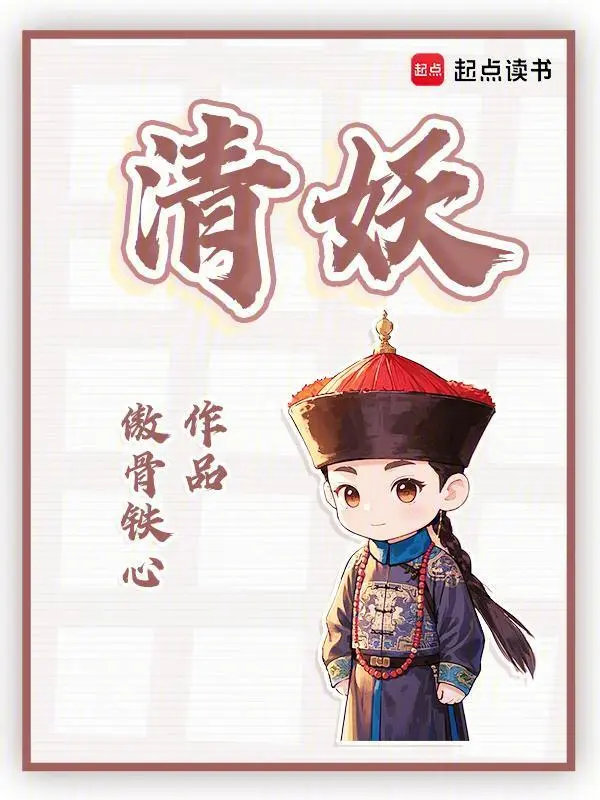
From the cover
There are a lot of idiots in this comment section.
Are you good at writing? Well written but useless. When you come out to hang out, it's about the number of words, and what you're talking about is five updates, ten updates, and one update. It's hard to get a monthly pass, ah, the street boy
I came here from Adults Need Extra Money. I think it is the best satirical novel in the history of online literature. I hope this one can continue the glory of the previous one!
The theory of land contribution that Qingfen is trying so hard to promote does not exist at all.
"Records of Emperor Gaozong of the Qing Dynasty" and "Records of the Unification of the Qing Dynasty" record: From the capital to the four descendants, 8 out of 10 provinces were established, 1,600 prefectures and counties were unified, 7 out of 50 foreign vassal states, and 1 out of 30 tributary states. Qianlong believed that places outside the eighteen provinces of the Han Dynasty were vassal states of foreign vassals. Just look at this record and you will understand. Except for the sphere of influence of the eighteen provinces, the Manchu Qing Dynasty could not compare with the Ming Dynasty.
I remember there was an author who wrote about Besieging and Killing Lafayette, and all of them were kidnapped. How did he come up with the title Qing Yao? Haven't you ever killed any monsters?
Good
I am a fool, good-looking, and love to watch 😍
Everyone who talks about reviving the Tang, Song, Yuan and Ming Dynasties just laughs, but the Manchu Restoration Organization really exists, and it was arrested by the National Security Bureau a few years ago. These Manchu relics really dare to think and do it!
I suspect that those who do not oppose the Qing Dynasty have not received compulsory education...
Hong Kangxi killed the game. There is no national antagonism, only class-struggle. The anti-Qing Dynasty and restoration of the Ming Dynasty and the Tatars have become a joke. The scholar-bureaucrats are much more fierce than the Tatars.
Filial piety is dead
The Qing Dynasty has been dead for more than a hundred years, but filial sons and filial daughters have never been forgotten. People should not travel back and become slaves. They should die filial piety.
The title of this novel is too explicit. Aren't you afraid of being banned by the remnants?
The Eight-Nation Allied Forces attacked the Qing government's proclamation against thieves, saying that they were fighting against the Qing Dynasty and restoring the Ming Dynasty. They said that they were under the command of the governor of Zhejiang and were enshrined as tributes from the Ming Dynasty. They said that the Qing Dynasty was stealing the country, so they were fighting against the Qing Dynasty and restoring the Ming Dynasty. . . .
The Eight-Power Allied Forces attacked the Qing government's appeal against thieves. They said that they were fighting against the Qing Dynasty and restoring the Ming Dynasty. They said that they were under the governor of Zhejiang and were entrusted with the tribute of the Ming Dynasty. They said that the Qing Dynasty was stealing the country, so they were fighting against the Qing Dynasty and restoring the Ming Dynasty
Curious about the endings of Heshen and Qianlong in the book
Although I dislike the Manchus very much, but for this book alone, these two are really the reborn parents of the protagonist. How will they be dealt with when they come to power? It would be too ungrateful to criticize them harshly. It is better to fight them one by one, or in other words, they will be dealt with in one pot. Then how will the identity of this illegitimate child be finally explained?
Learn from Hong Tianwang
If I just learned Hong Xiuquan's route to success, after all, he was only a little bit close to success. The power of faith is too powerful.
Finally, it's time to kill Dazi ruthlessly😁😁😁
The time of Zhao's rebellion in this book should be after Qianlong's death, when Heshen was imprisoned by the Lingqian tree in Jiaqing. After all, he was really tortured to death, and he couldn't bear it! Mr. Zhao, who was the governor of Liangjiang at the time, raised troops as an illegitimate son to the side of the Qing Dynasty. Without much resistance, he successfully defeated the first wave of troops and related forces that maintained the Qing Dynasty. After he ascended the throne and proclaimed himself emperor, he relied on Songun politics to liquidate the Manchu and Qing Dynasty cities one after another!