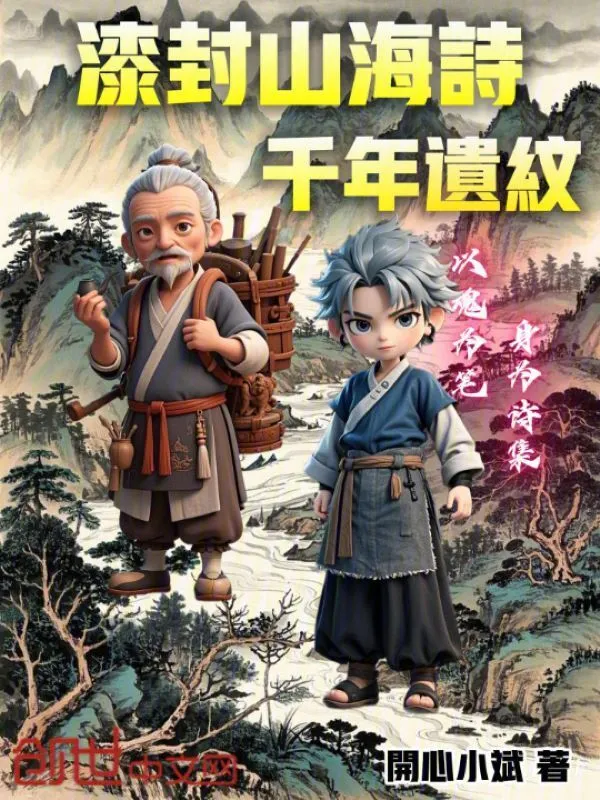
Lacquer Seals the Thousand-Year-Old Traces of Poetry About Mountains and Seas
漆封山海诗千年遗纹
- Status
- Completed
- Length
- 1.6M Words
- Genre
- Western Fantasy
- Audience
- Male
- Subgenre
- Alternative Fantasy
- Updated
- 7mo ago
- Source
- Qidian
Stats
0Monthly votes
9Recommends
0Fans
240Chapters
Synopsis
Reader comments
Readers also read
 This Adventurer Just Wants to Plant Trees
 Wizard: Starting from Immortality
 I Unlocked the Extraordinary Craftsman Panel
 Panlong: the World First Opens, the Souls of the Four Series Mutate
 Never Walk Alone!
 Night Without Borders
 How Can You Become an Immortal If You Don't Have Money?
 Daming: Have I Become Wanli's Portable Grandfather?
 I Am Drawing a Hot-Blooded Episode in the Zhiyu Episode!
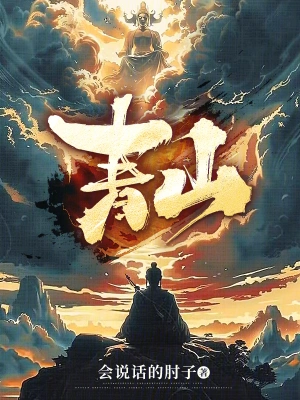 Green Hills
 Xuanjian Immortal Clan
 Alien Hotel
 Hanako, the Novelist of Zhuzi Cloud
 Heal with a Lifetime
From paving the way to building the building: On the narrative transition and cultural construction of "Poems on Mountains and Seas Sealed with Lacquer"
Introduction "Poetry of Painted Mountains and Seas: Millennium Relics" is a full-length fantasy novel that takes China as the stage and interweaves intangible cultural heritage crafts, mountain and sea myths and historical figures to create a unique "artisan fantasy" aesthetic. The book has more than a hundred chapters so far, and its writing trajectory does not advance uniformly. Instead, there is an obvious narrative turning point in Chapter 18 - after the Chinese Valentine's Day and the death of Uncle Chen. From this point of view, we can clearly see how the text moves from "paving the road" to "raising the building", that is, from atmosphere creation to character debate and cultural thinking. Early narrative: paving the way and atmosphere In the first fifteen chapters, the focus of the novel is on the construction of the world. The author focuses on describing the mountains, rivers, folk customs and crafts of Hainan, especially details such as lacquer cutting, utensil making, and lighting. At this stage, the narrative is mainly based on the environment and strange atmosphere, with a strong color of fantasy and myth. For example, the scent of mountains and forests, the illusion of lacquer poison, and the tune of southern opera all create a stage that is "both familiar and unfamiliar" for readers. The disappearance of intangible cultural heritage knowledge: the turning point of narrative function It is worth noting that the small knowledge points of intangible cultural heritage craftsmanship almost disappeared after Chapter 15. Chapter 14 still shows the scene where Uncle Chen teaches craftsmanship, but starting from Chapter 15, this kind of "master-like explanation" no longer exists. The reason is not accidental, but the necessity of narrative logic: Chapter 14 is the moment when Uncle Chen asks Bin to stand on his own feet. From then on, the "Learning Chapter" comes to an end and the "Independence Chapter" begins. Knowledge no longer appears in the form of explanations, but is internalized into actions and decisions. This turning point is extremely symbolic: the structure of the novel itself coincides with the path of intangible cultural inheritance - from "oral transmission and heart teaching" to "independent practice". The intellectual context of the text is intertwined with the fate of the characters, giving the work a deeper cultural realism.